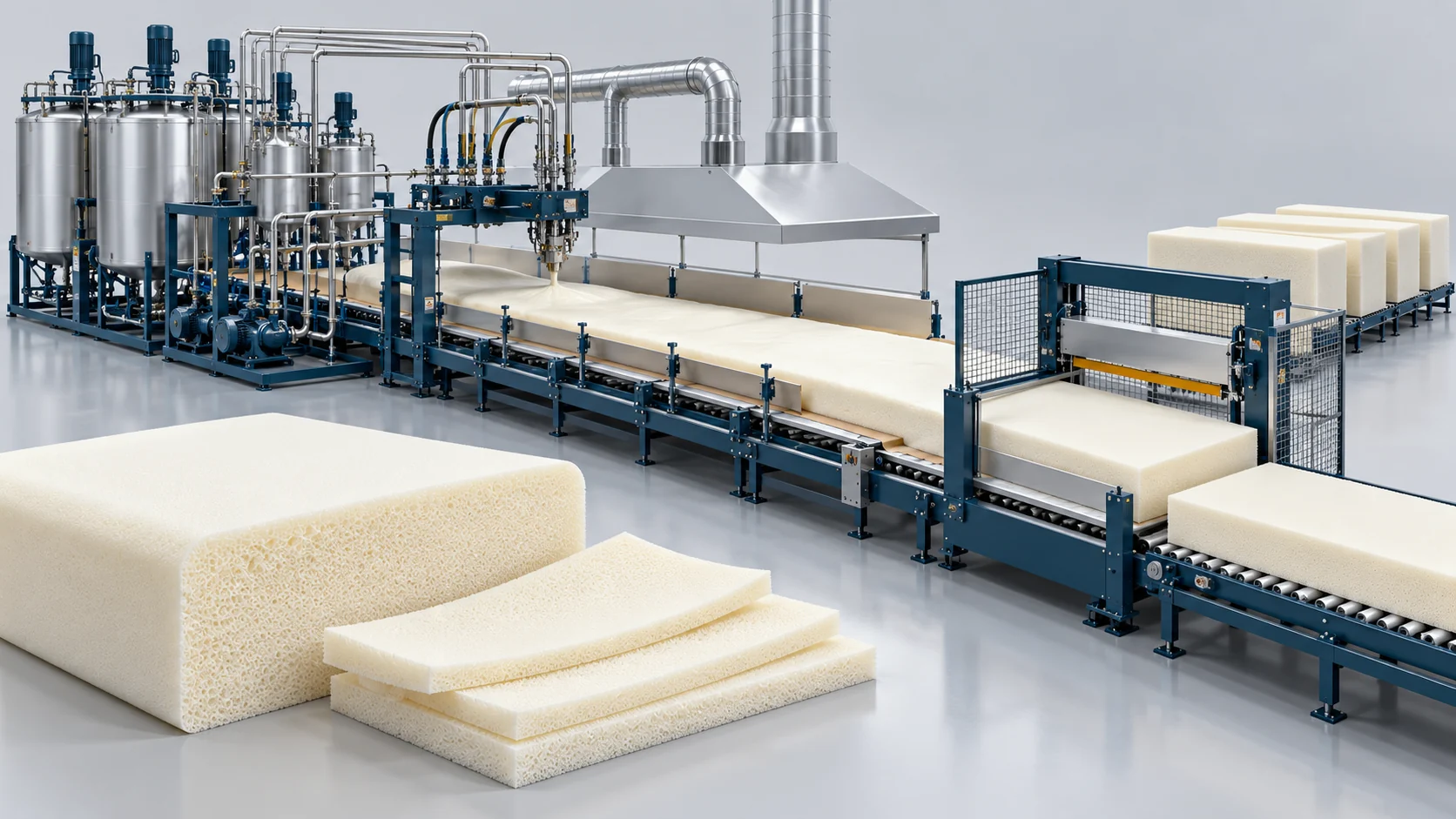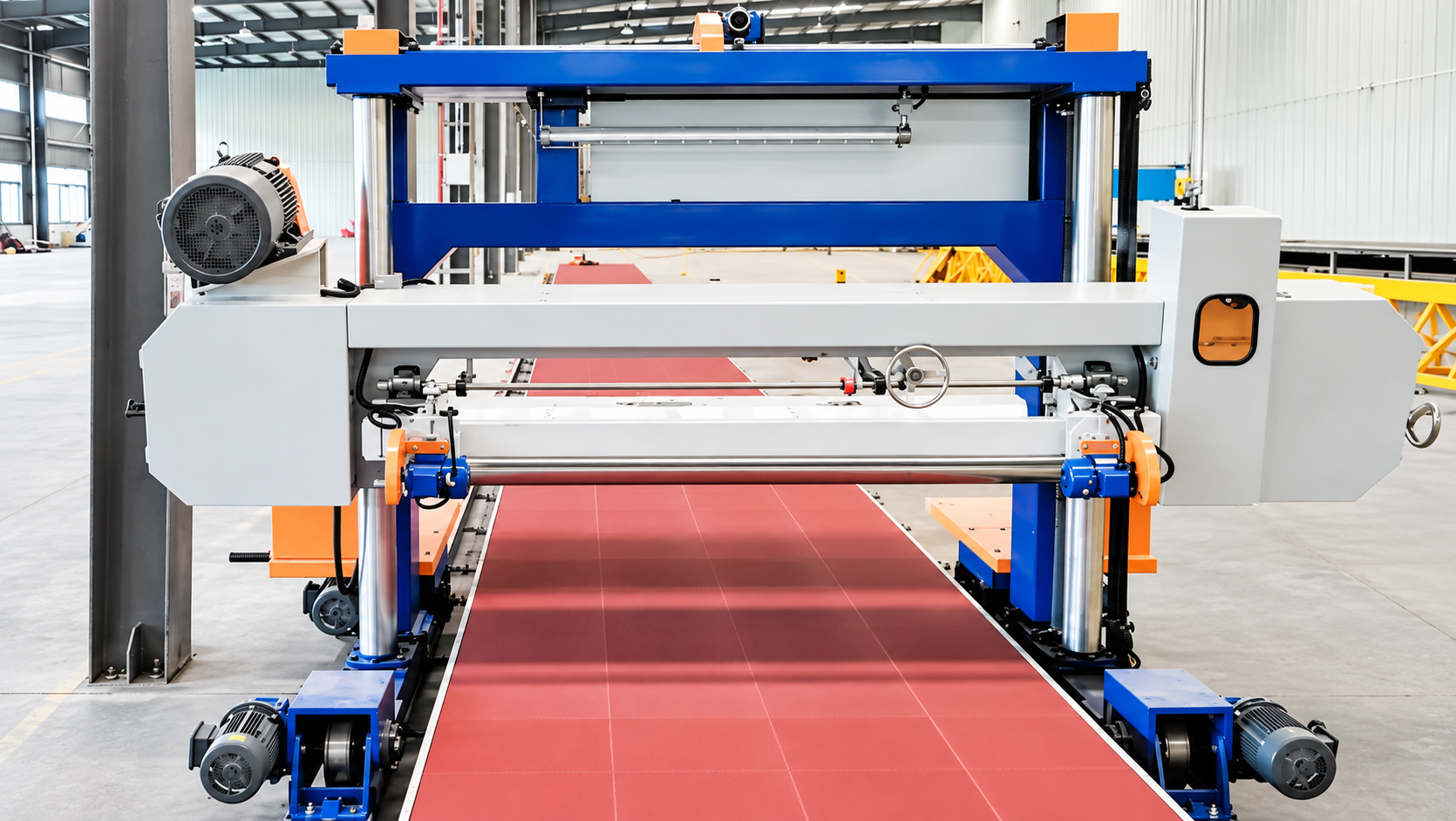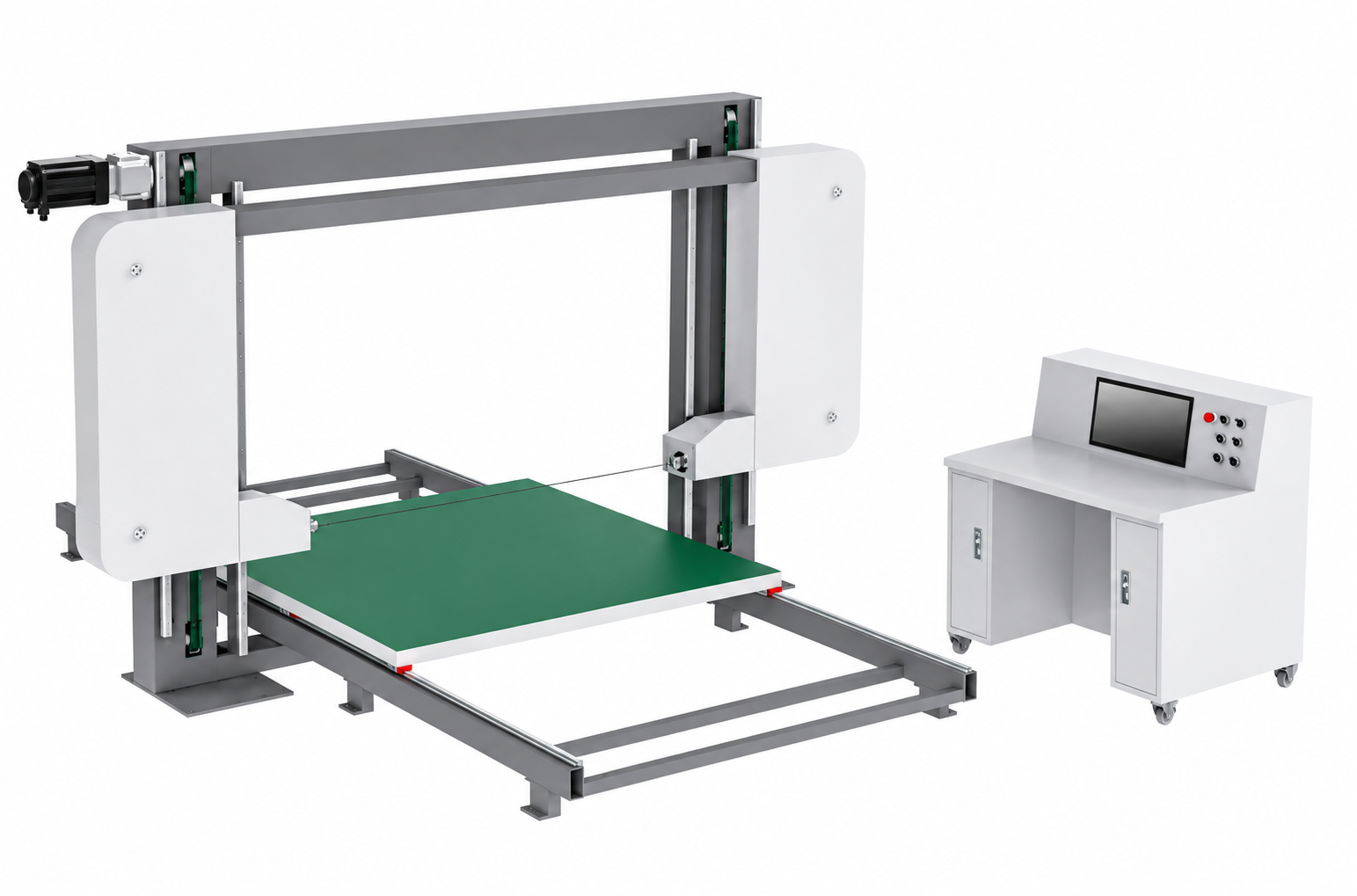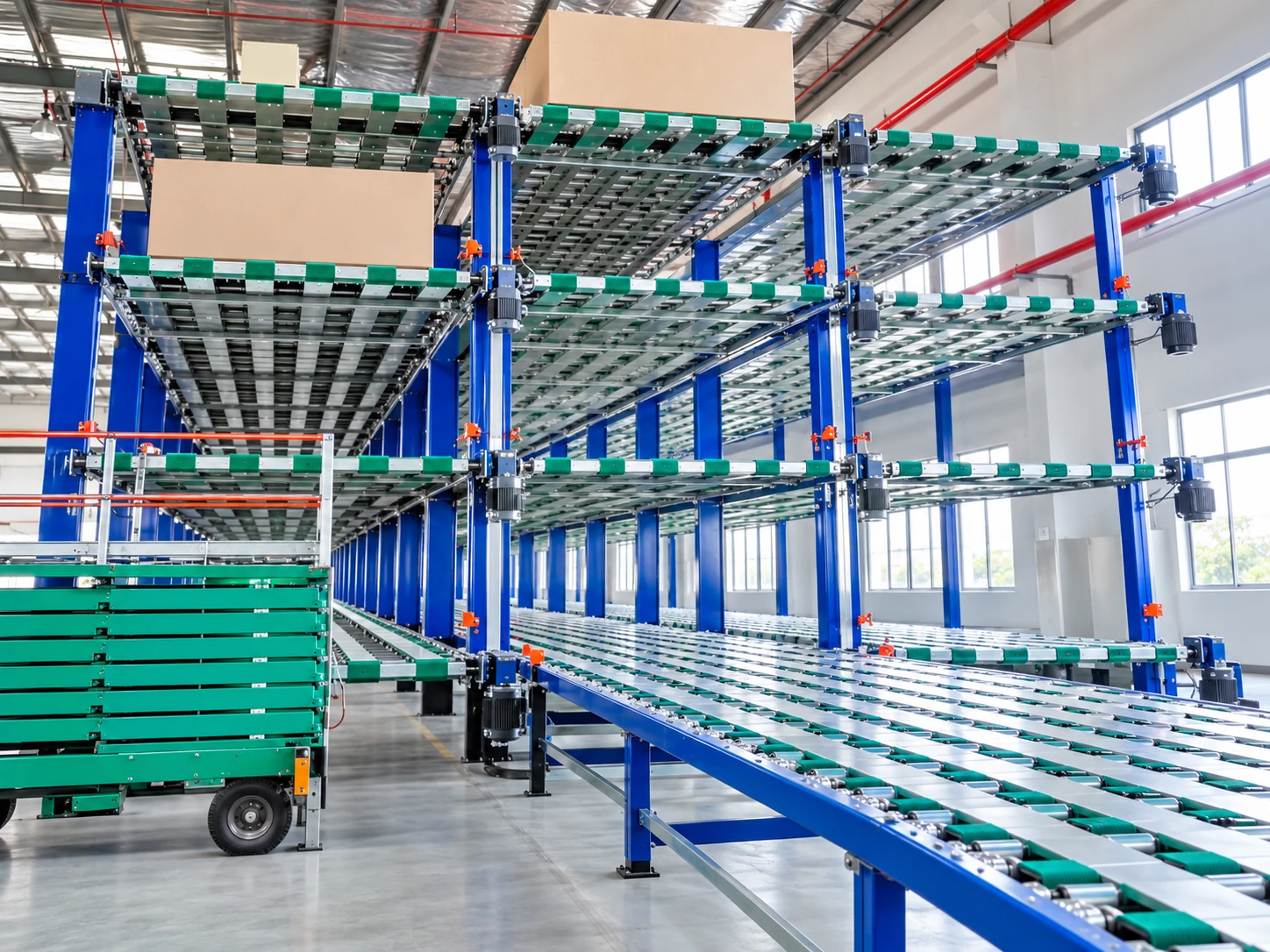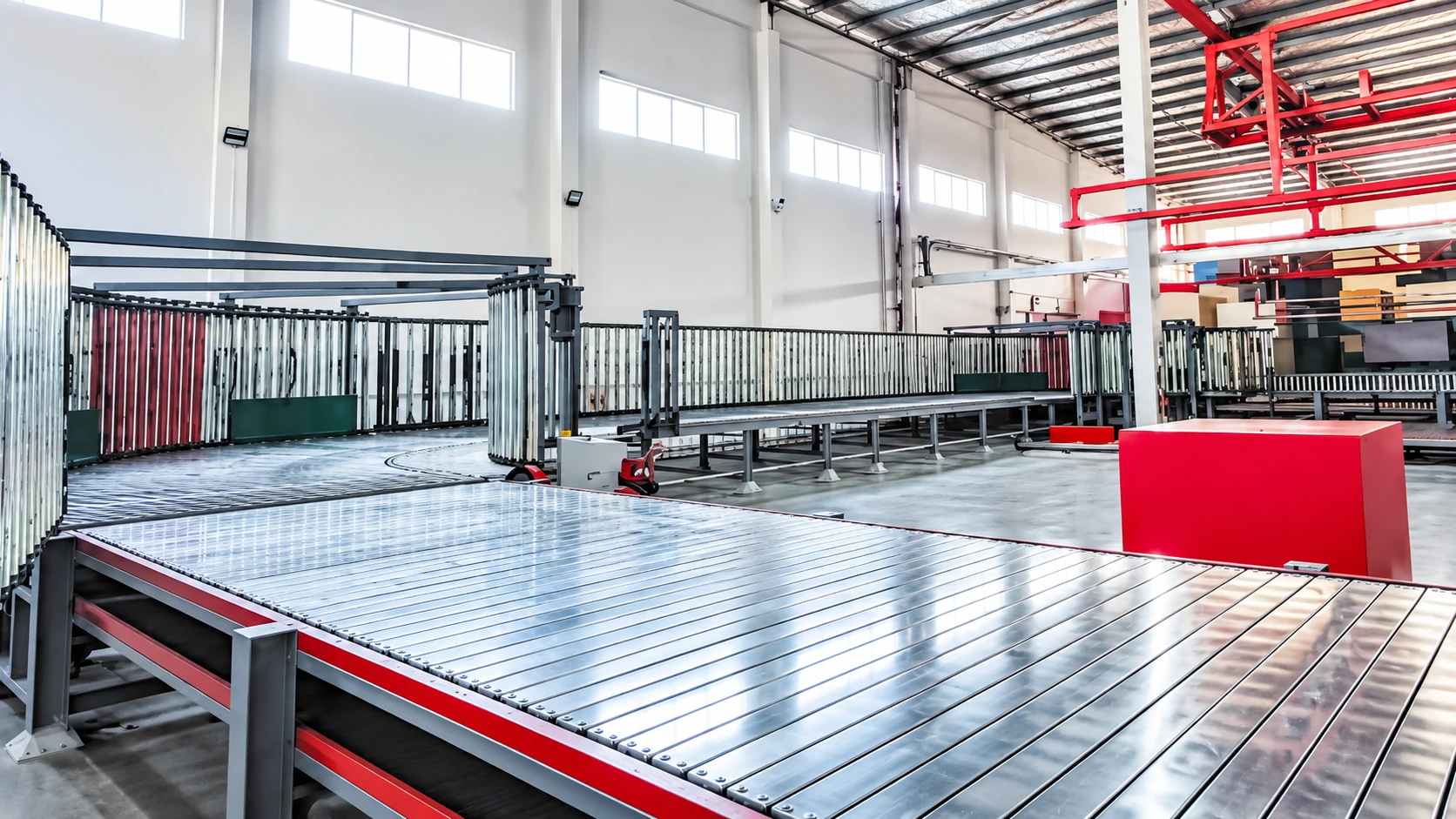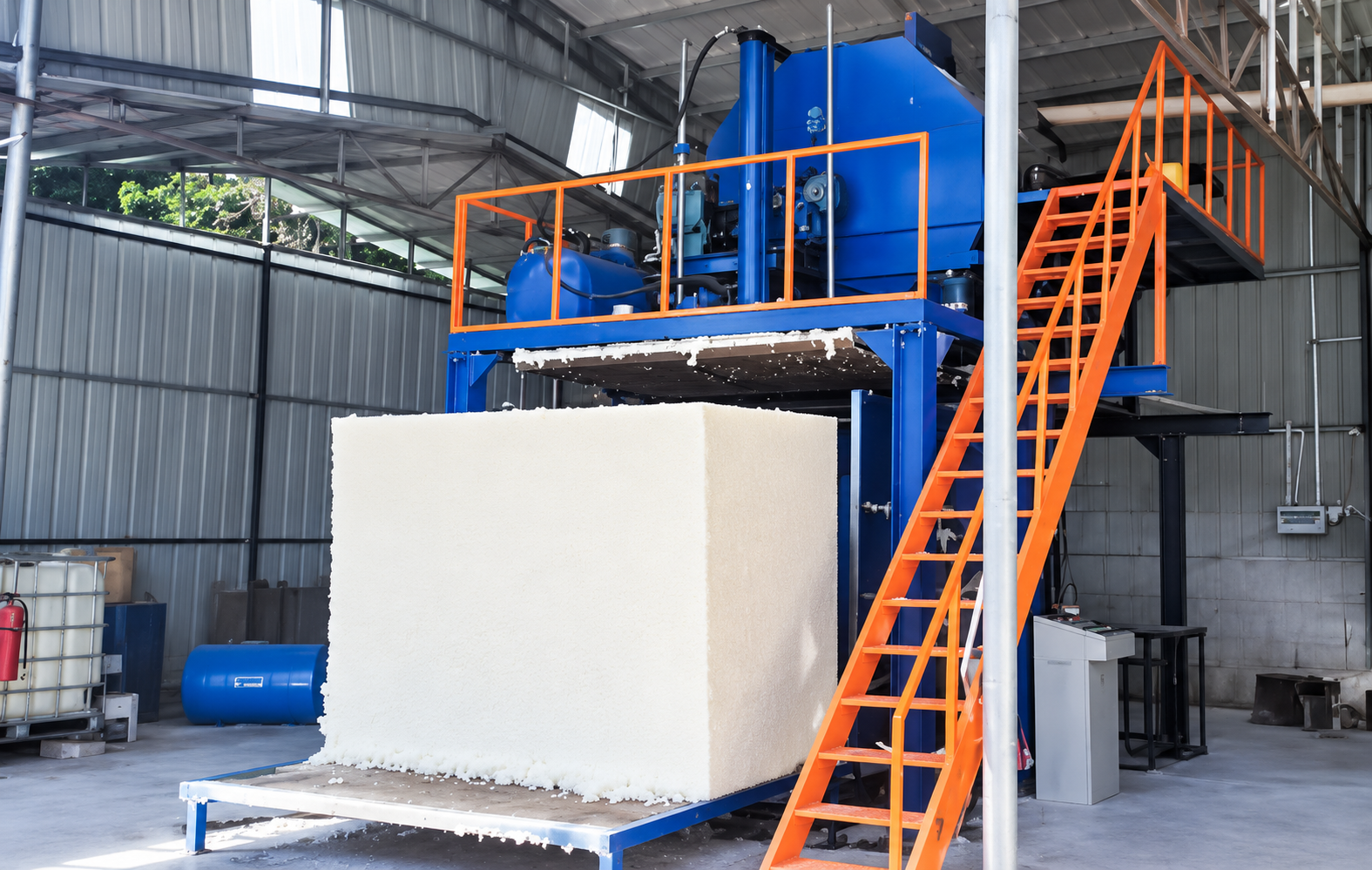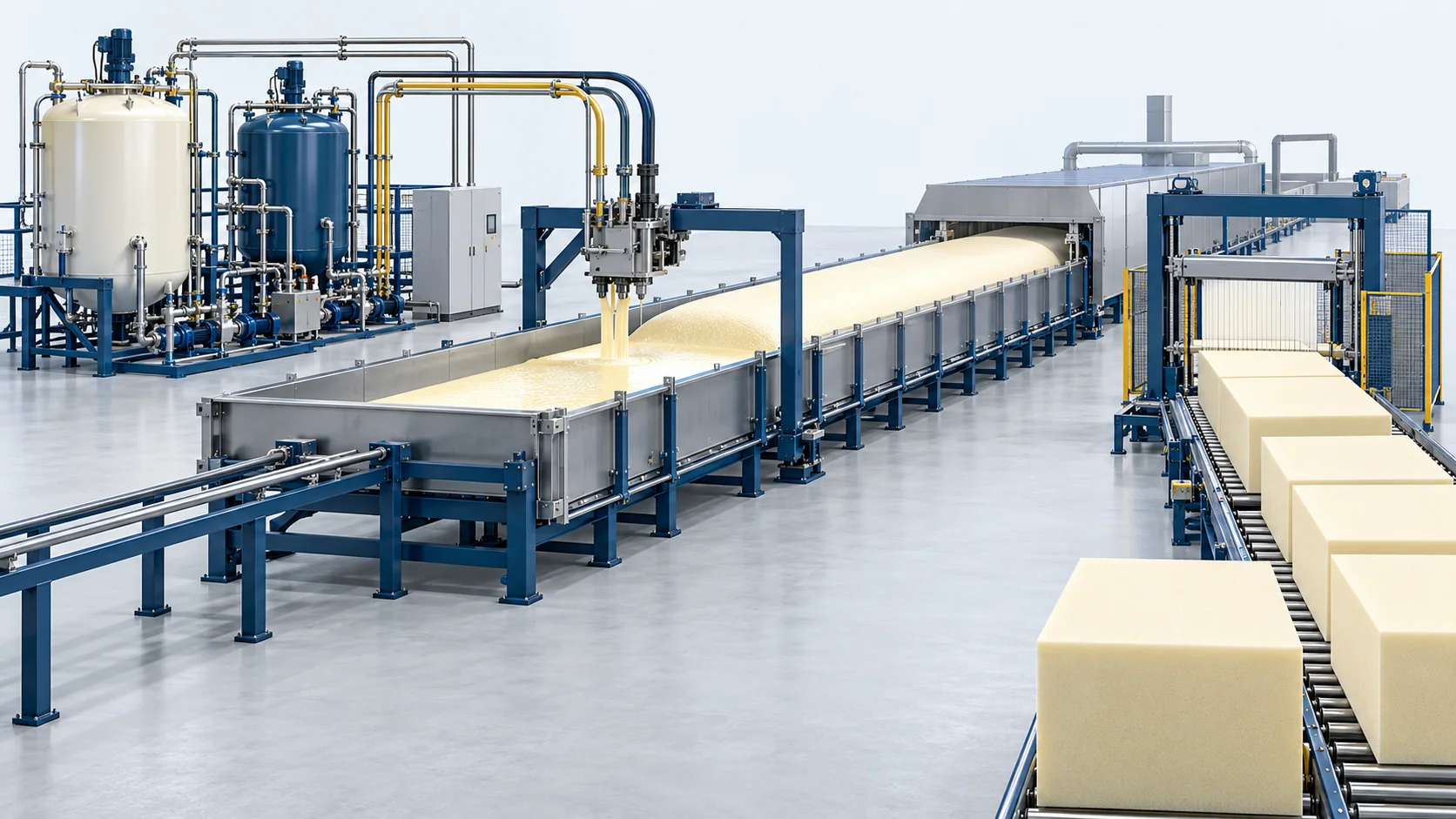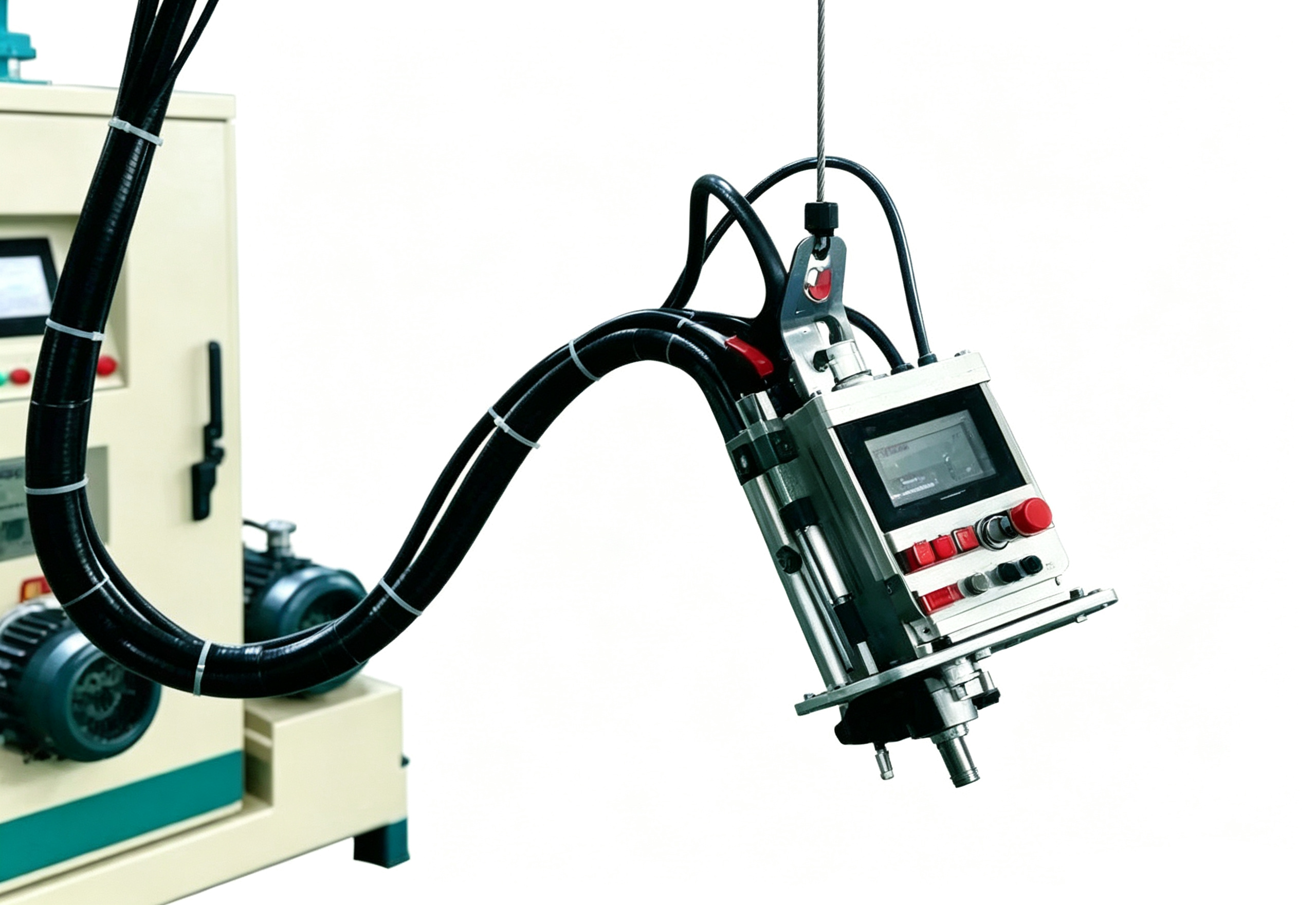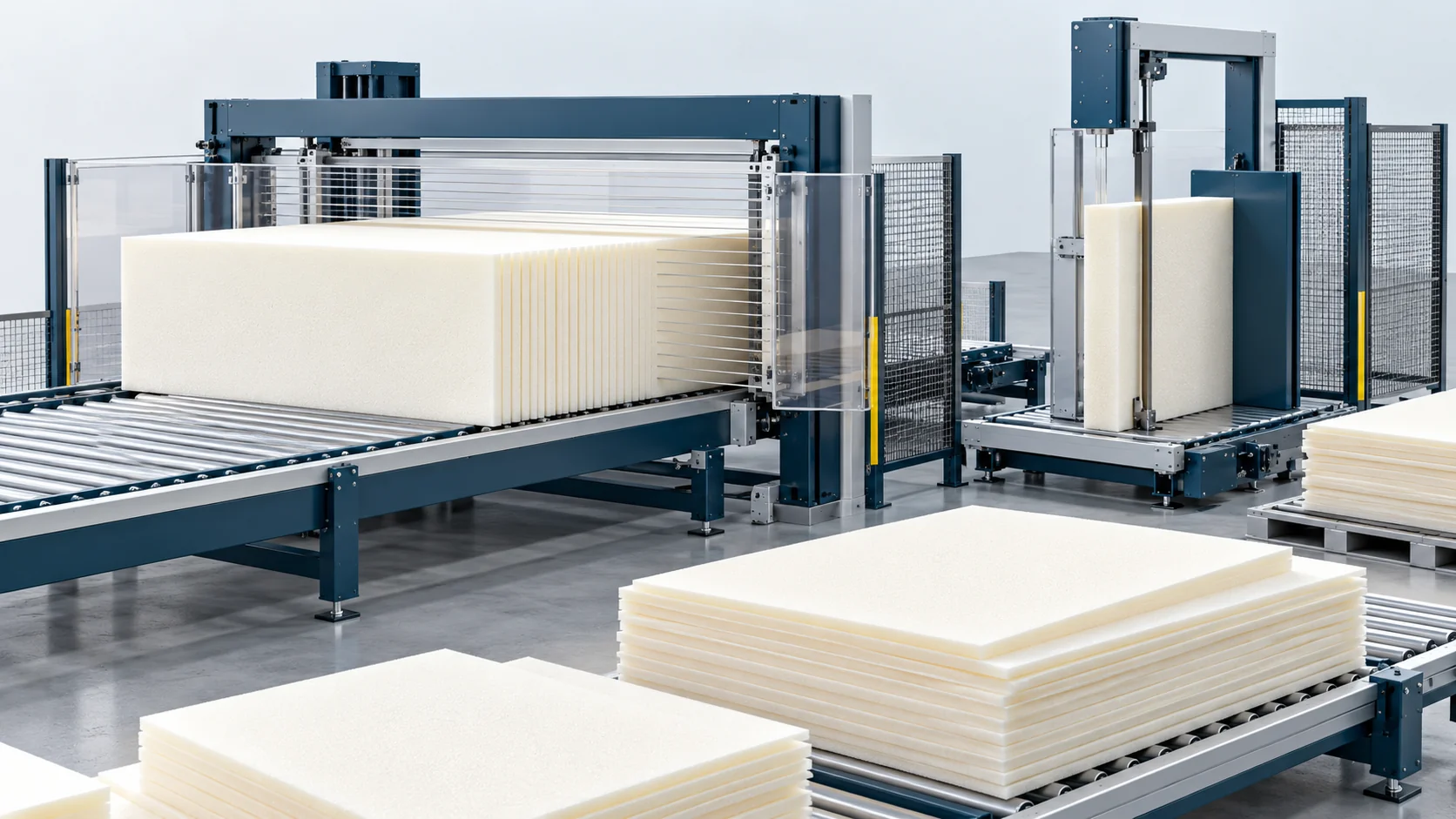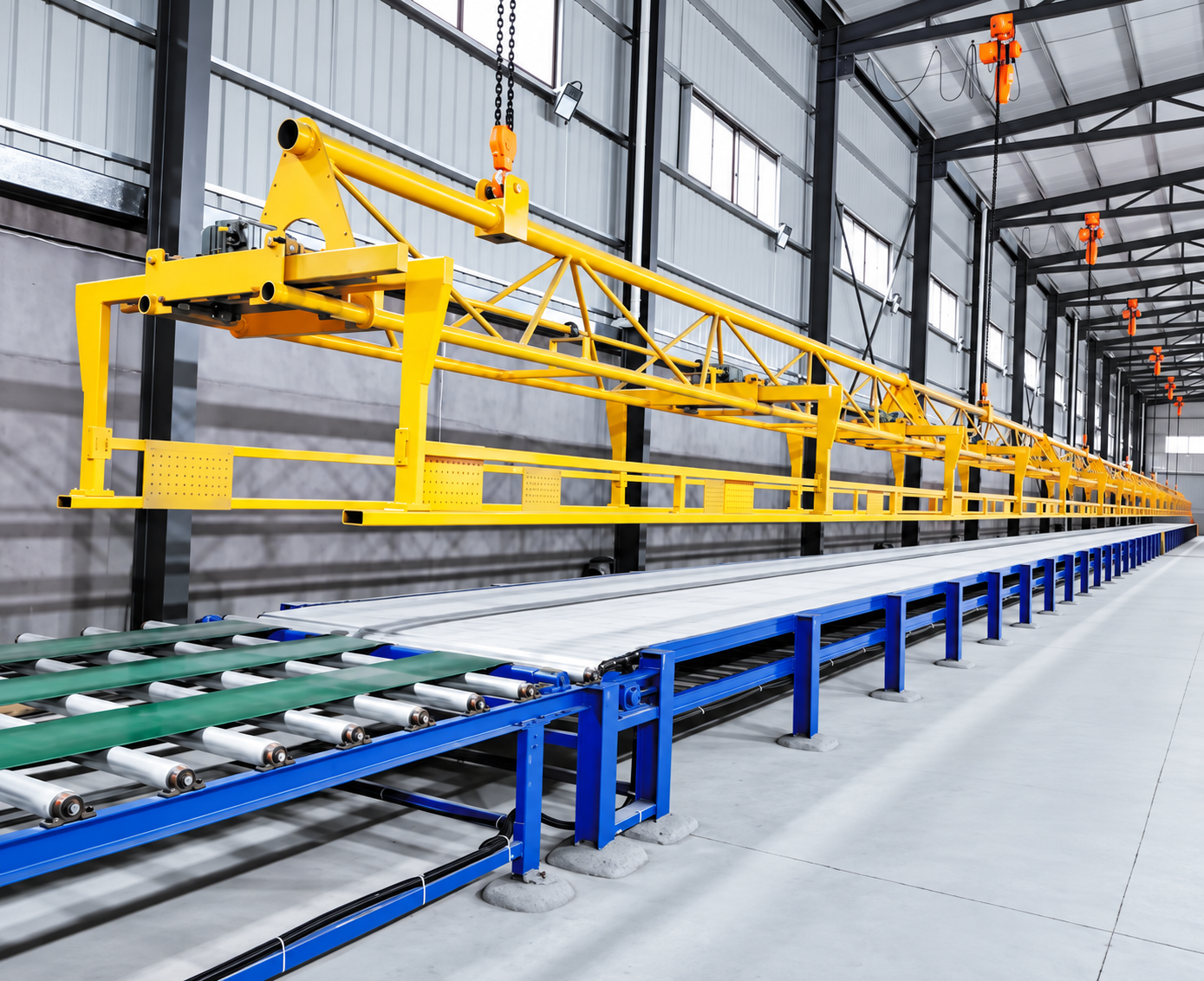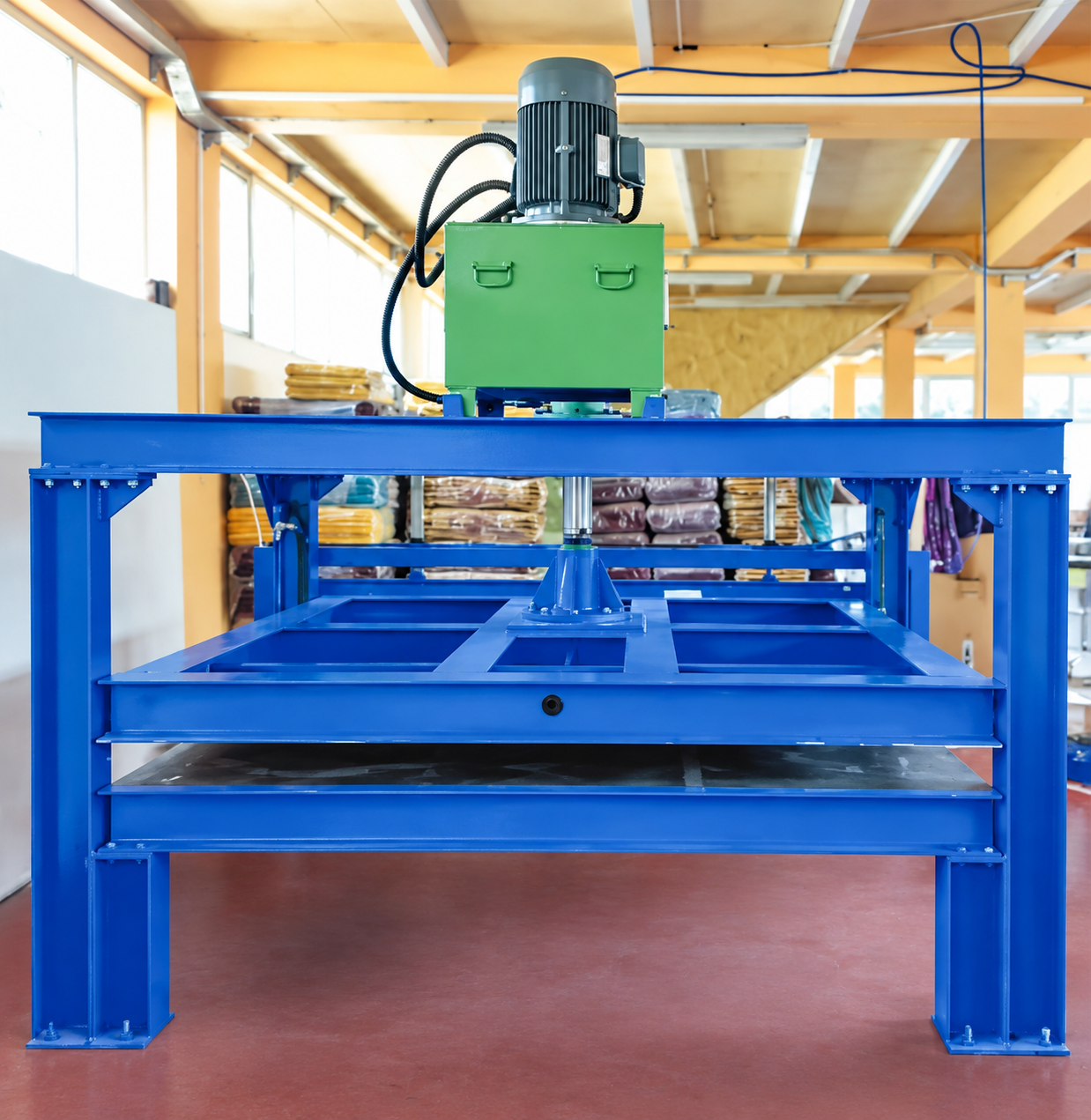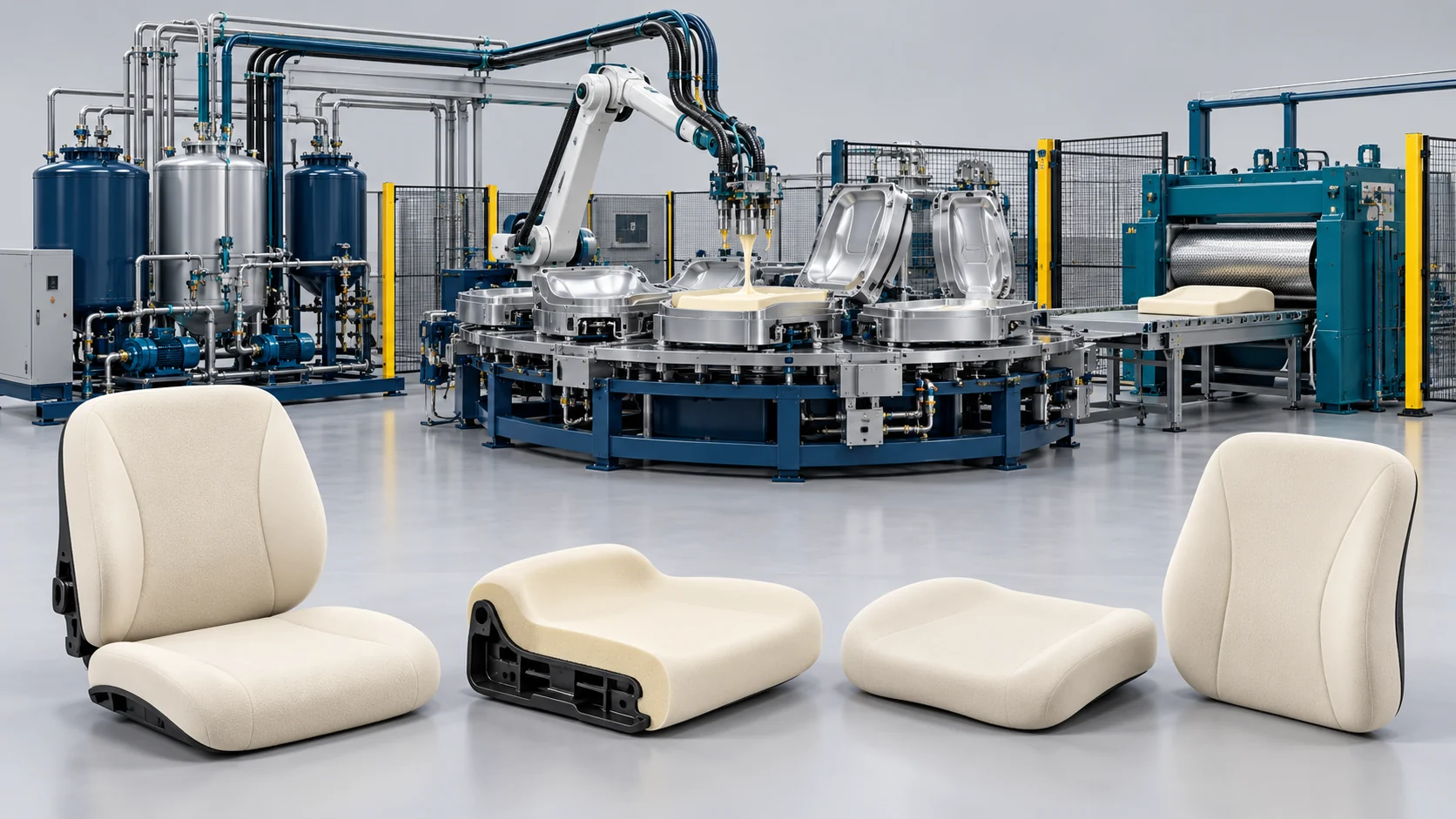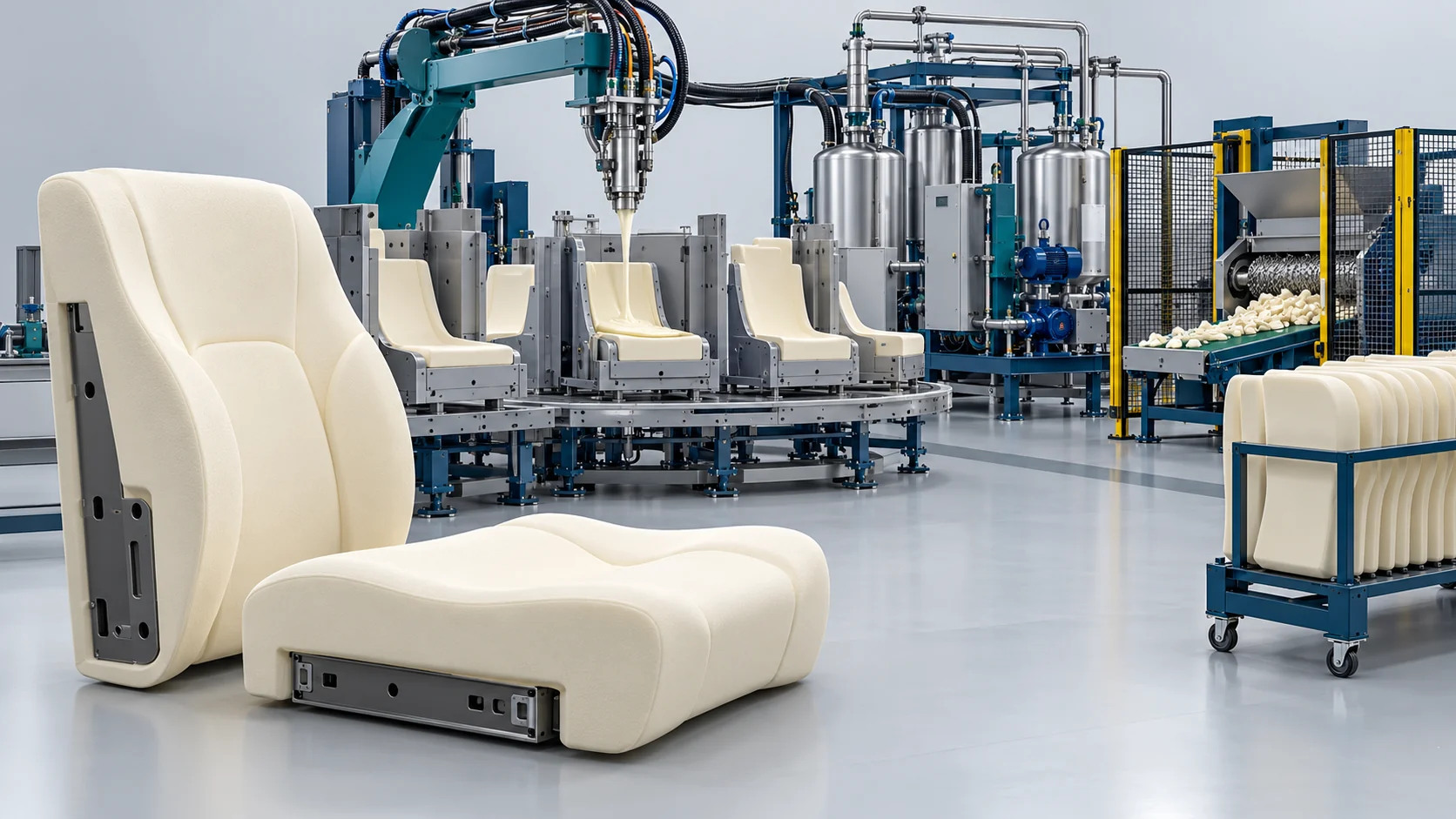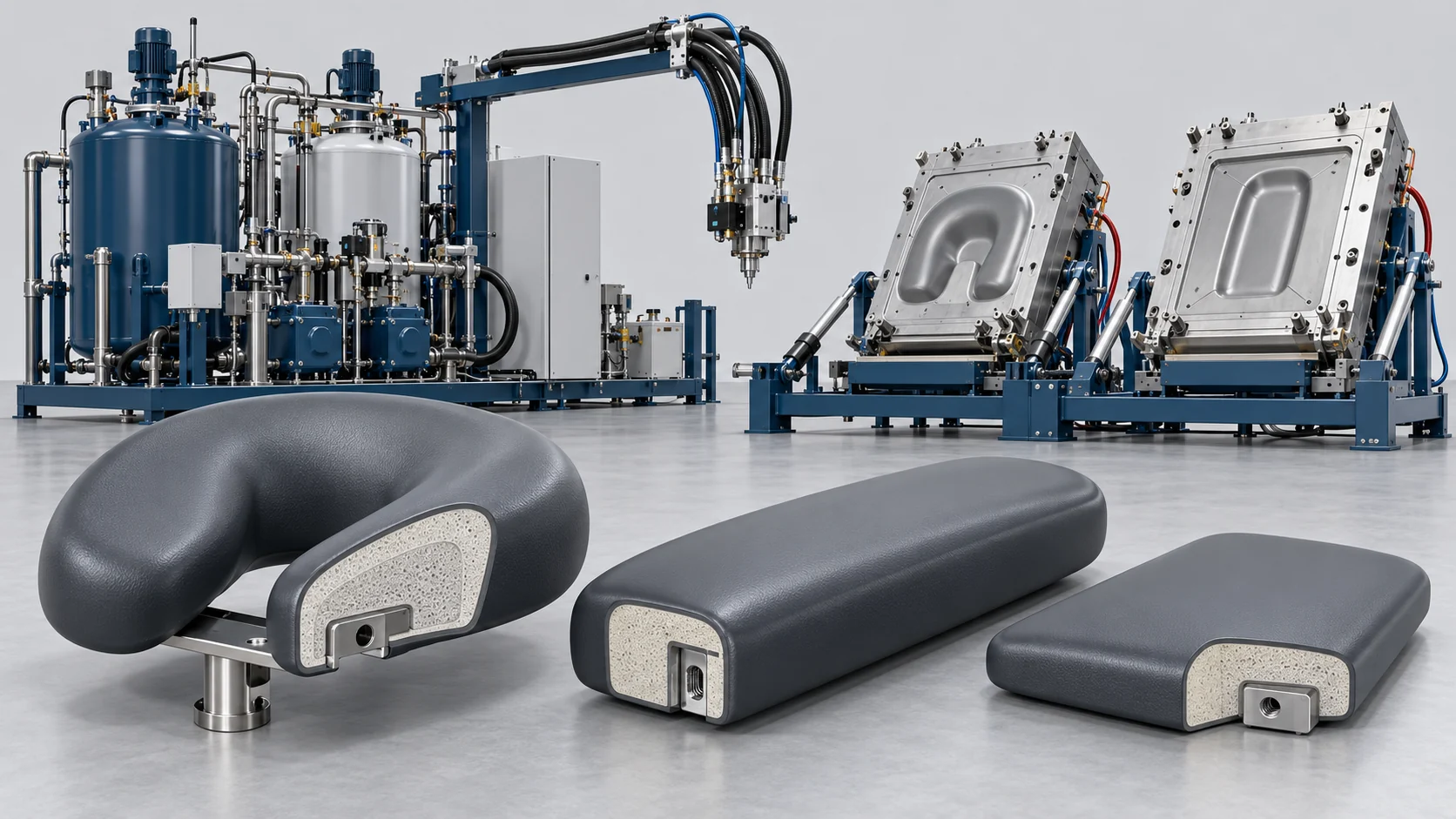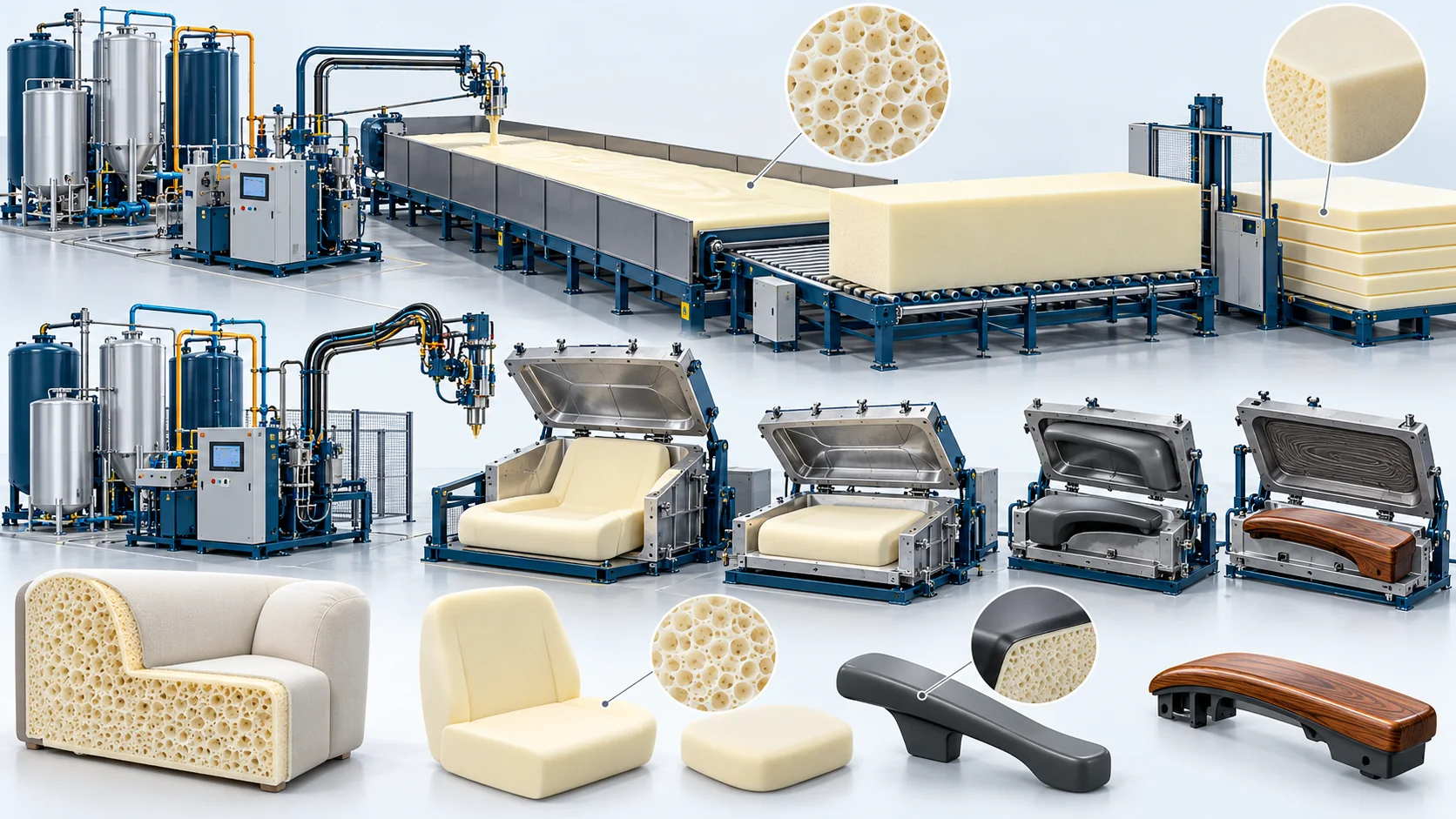
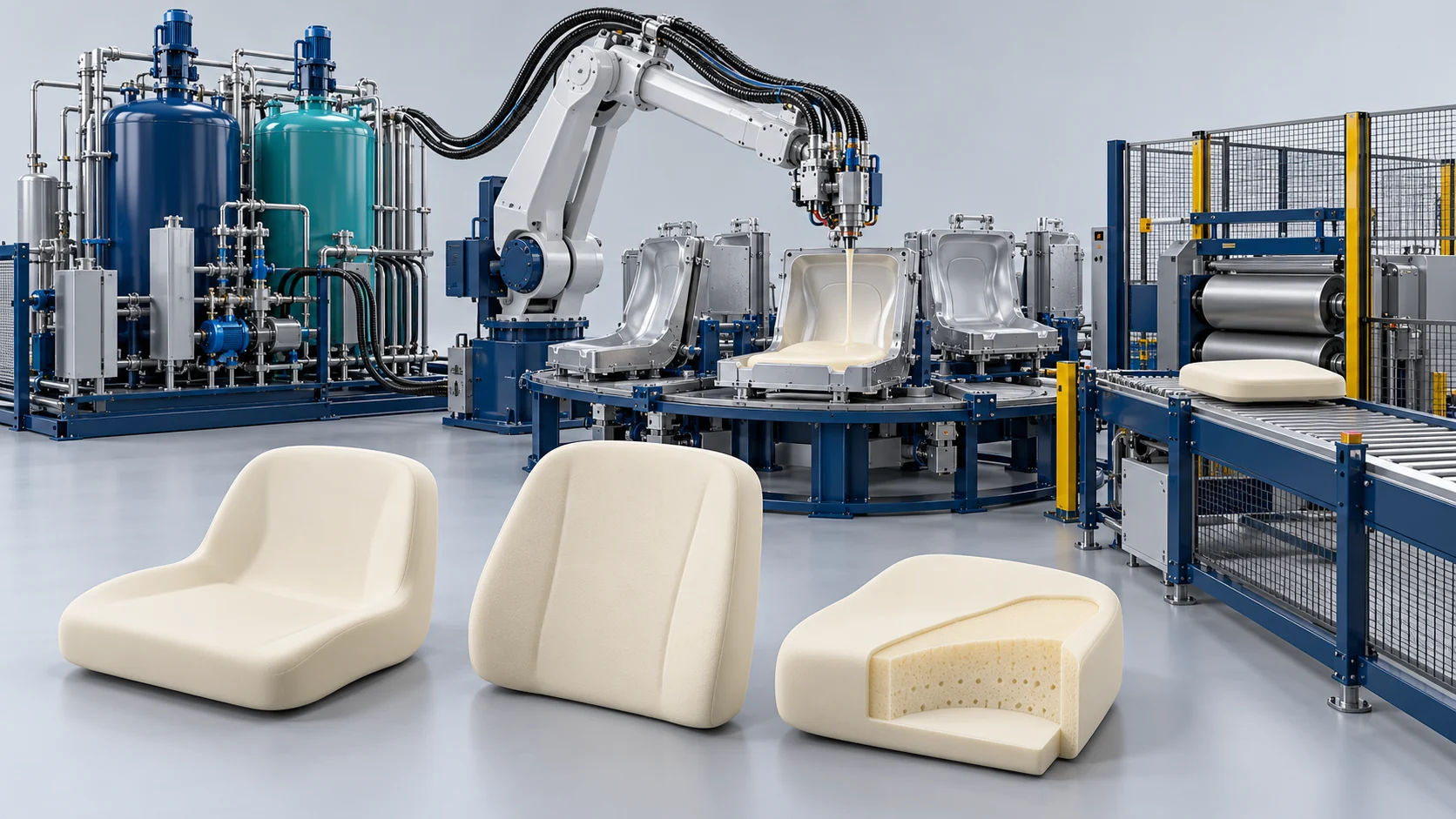
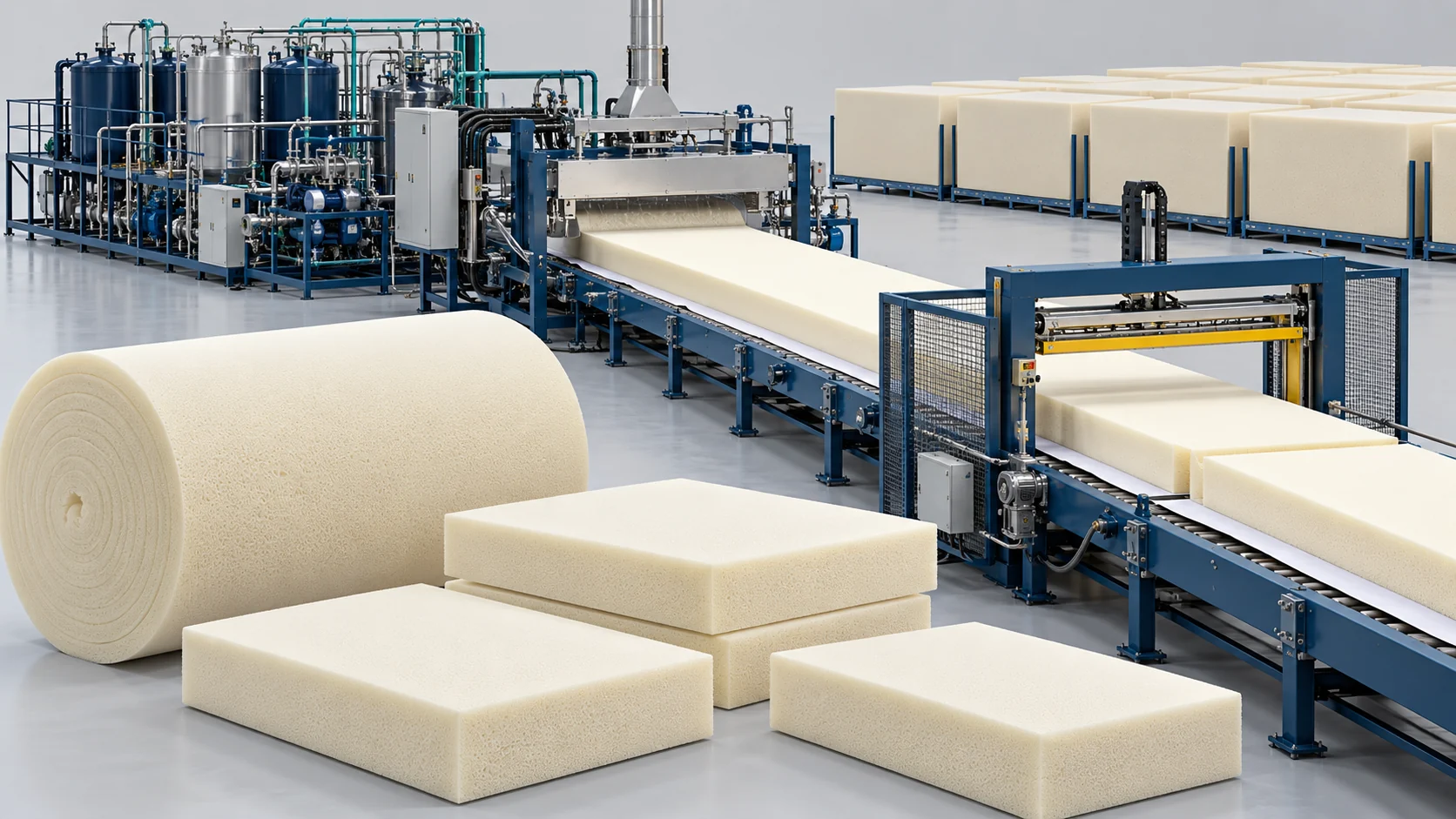
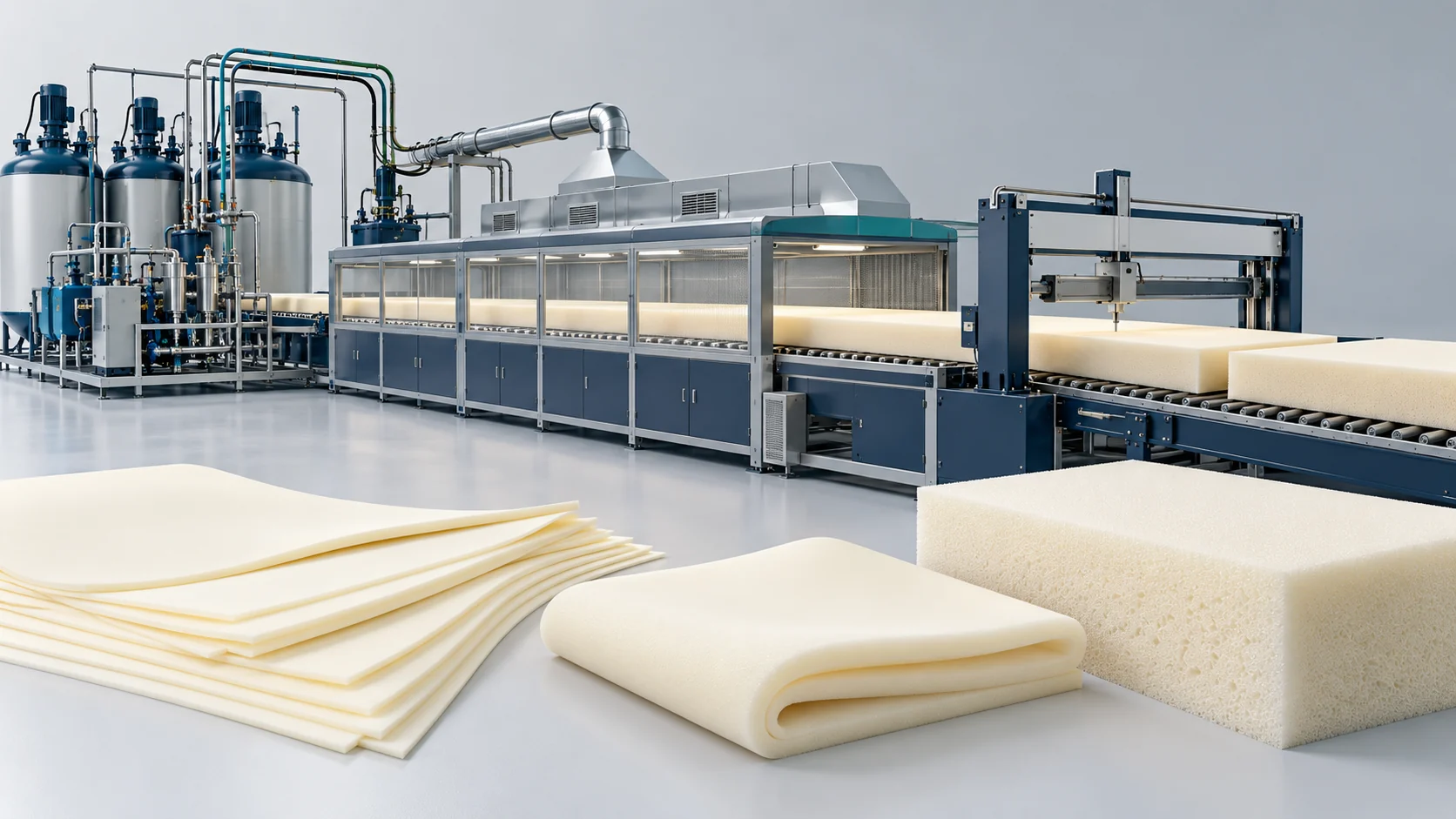
Concept illustration for Furniture & Seating Foam Manufacturing Solutions.
Manufacturing Solutions

Furniture & Seating Foam Manufacturing Solutions

Explore PU foam production and conversion routes for furniture and cushioning. Compare molded parts, slabstock and box foaming with rebonding, cutting, handling and packaging options.

13 Published Solution Pages
19 Selected Equipment Pages
10 Related Application Records

Find Your Production Route

Manufacturing solutions

Explore Foam Production and Conversion Routes

Select by foam type, block or part dimensions, batch size and downstream needs. Separate foam manufacture from recycling, conversion and handling operations.

Molded furniture components

Compare seating foam, integral-skin, imitation-wood and protective parts as separate material and tooling configurations.

Flexible foam block manufacture

Compare batch box foaming with continuous slabstock production.

Cutting, profiling and block handling

These operations process existing foam blocks; they are separate from foam manufacture.

Rebond recycling and packaging

Foam Shredding / Rebonding

Rebond Foam Recycling Solution

Plan scrap preparation, binder mixing, molding and block finishing for recycled foam blocks. Final equipment selection depends on the scrap and binder system.

Process routes & production planning

Planning the Furniture & Seating Foam Production Process

This category combines molded furniture foam, batch and continuous foam blocks, downstream conversion, rebond recycling and compression packaging. The workflow below branches by route; it is not one mandatory six-station line.

01

Choose the Foam Route

Define molded seating, slabstock or box foam, decorative molded parts, rebond foam or the required conversion-only operation.

02

Prepare the Feed

Condition reactive components for foaming, prepare existing foam blocks for cutting, or sort and shred scrap for the selected rebond process.

03

Foam or Rebond

Configure molding, box or continuous foaming as applicable; rebond processing uses its separately specified mixing and forming equipment.

04

Condition and Handle

Arrange cure, cooling, storage, turning and transfer around foam condition, block dimensions and station capacity.

05

Cut and Convert

Select sheet slicing, contour cutting, profiling, perforation or other finishing operations for the actual component geometry.

06

Inspect and Package

Check dimensions and the specified foam properties, then use compatible compression, sealing or roll-packaging equipment where required.

Machinery & process equipment

Equipment for Furniture & Seating Foam

Select molded or block-foaming equipment and the downstream cutters, slicers, profiling systems, scrap preparation and packaging machines relevant to the chosen furniture product. Foam production, rebond recycling and conversion are separate equipment scopes.

Molded-foam metering references

Confirm material, shot size and mold interfaces for the selected part; these references do not establish every furniture molding configuration.

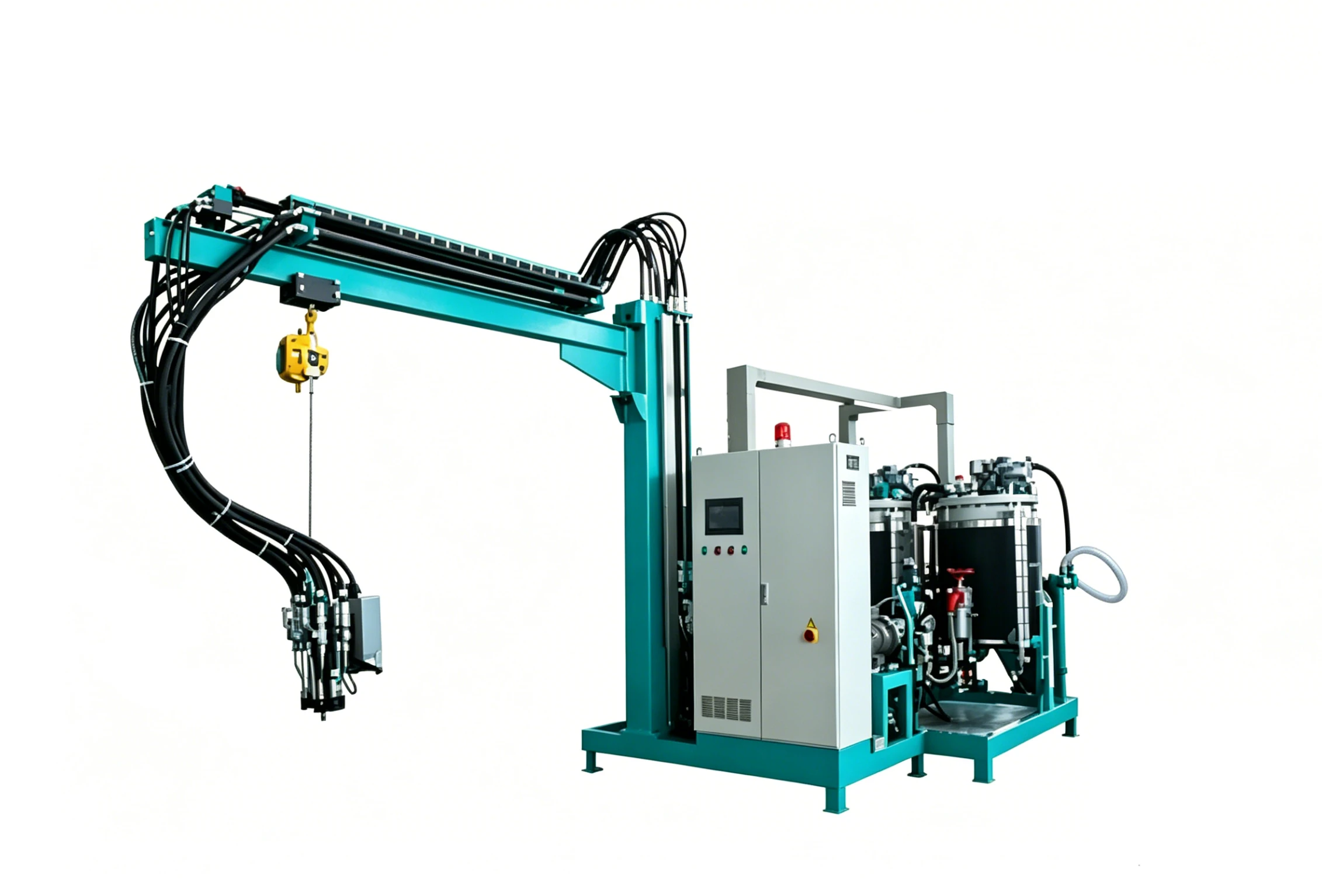
High-Pressure PU Foaming Machine for Car Seat Cushions. Review equipment functions, material requirements and configuration options for your production process.

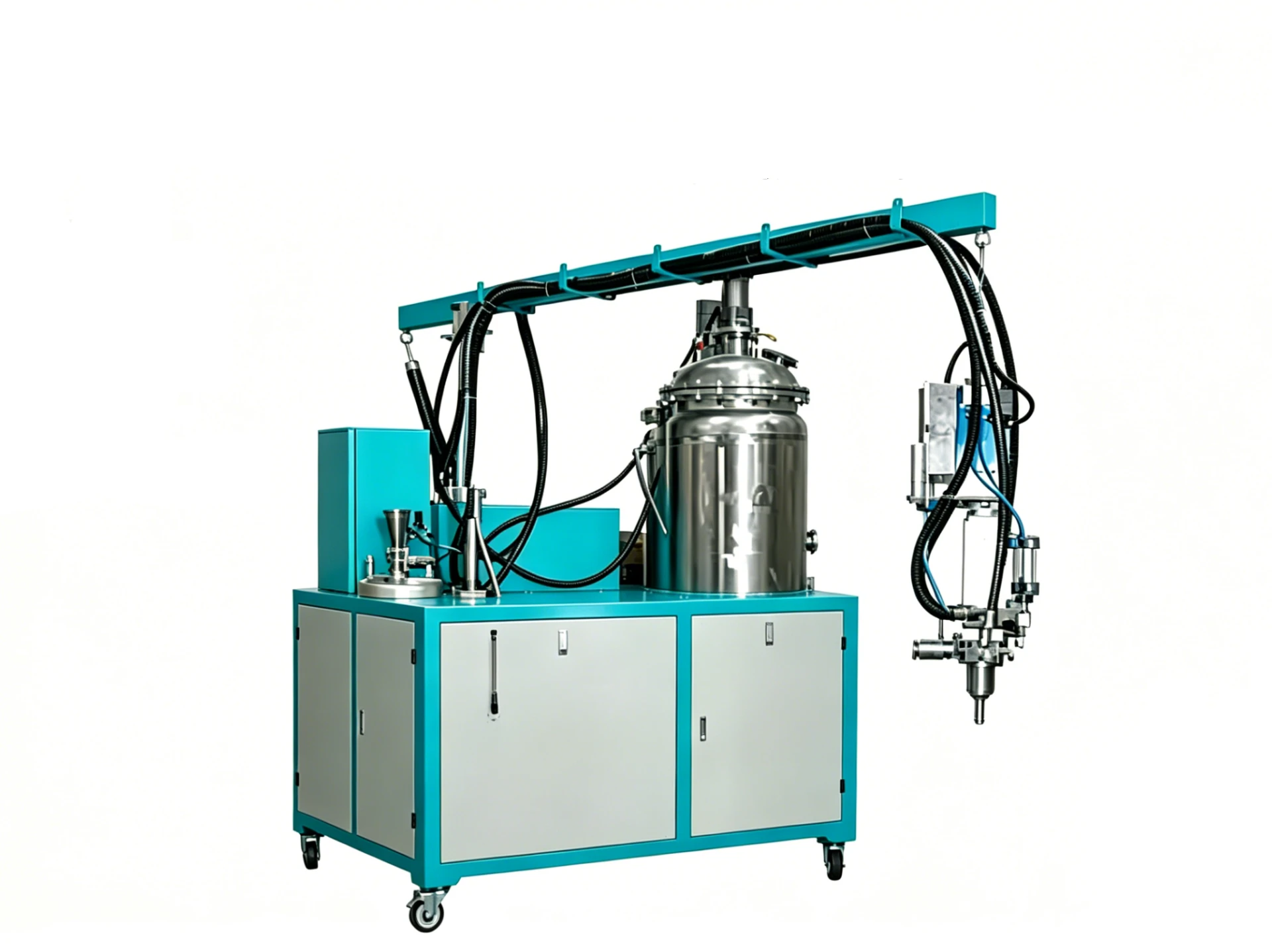
Low-Pressure PU Foaming Machine for Mattress Soft Sponge. Review configuration, material requirements and process interfaces with Haifeng.

Block-foaming equipment

Automatic box foaming equipment for batch production of flexible polyurethane foam. The supplied configuration includes raw-material mixing, foam forming and a touchscreen control system for managing formulations, with automatic and manual operating modes. Foam blocks are produced in individual molds and then transferred to the agreed conditioning and downstream cutting stages.

Continuous Slabstock Foaming line with multi-stream metering, low-pressure dynamic mixing, conveyor forming and cut-off for flexible PU foam blocks.

Low-pressure polyurethane metering and dynamic mechanical mixing for batch Box Foaming. The reactive mixture is poured into a box mold for free rise, then the foam block is cured and conditioned before slicing. Configure the machine to the formulation, block dimensions and required production capacity.

Foam conversion and handling

Haifeng supplies PU foam cutting equipment for slabstock blocks, with synchronized cut-off and configurable slicing or CNC contour modules for furniture padding.

Handles long foam buns. The clamp length can be configured around the handling layout.

Slices foam blocks into sheets using digital thickness settings and a reciprocating worktable. Pressure rollers help retain the foam; a vacuum arrangement is optional.

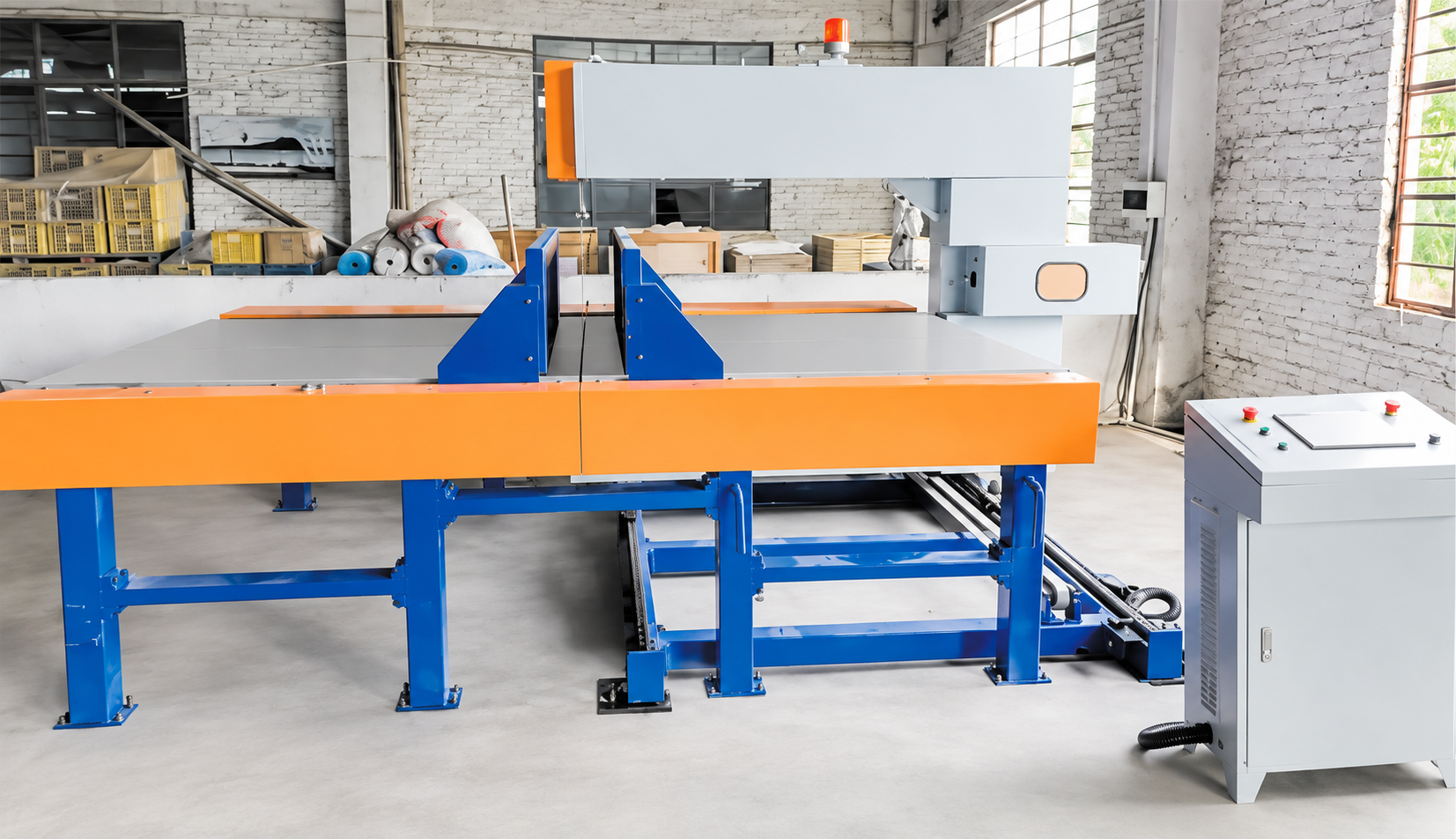
Cuts foam vertically with touchscreen and PLC settings for multiple thicknesses. A fixed aluminum worktable holds foam between retaining plates while the blade carriage travels on linear guides.

Follows programmed contours using computer control, multi-axis motion control and servo drives. A circulating band blade cuts shaped foam components; an automatic pressure-roller arrangement is optional.

Cuts programmed foam contours with computer-controlled multi-axis motion, servo drives and circulating band blades. Front and rear lifting platforms support loading and unloading.

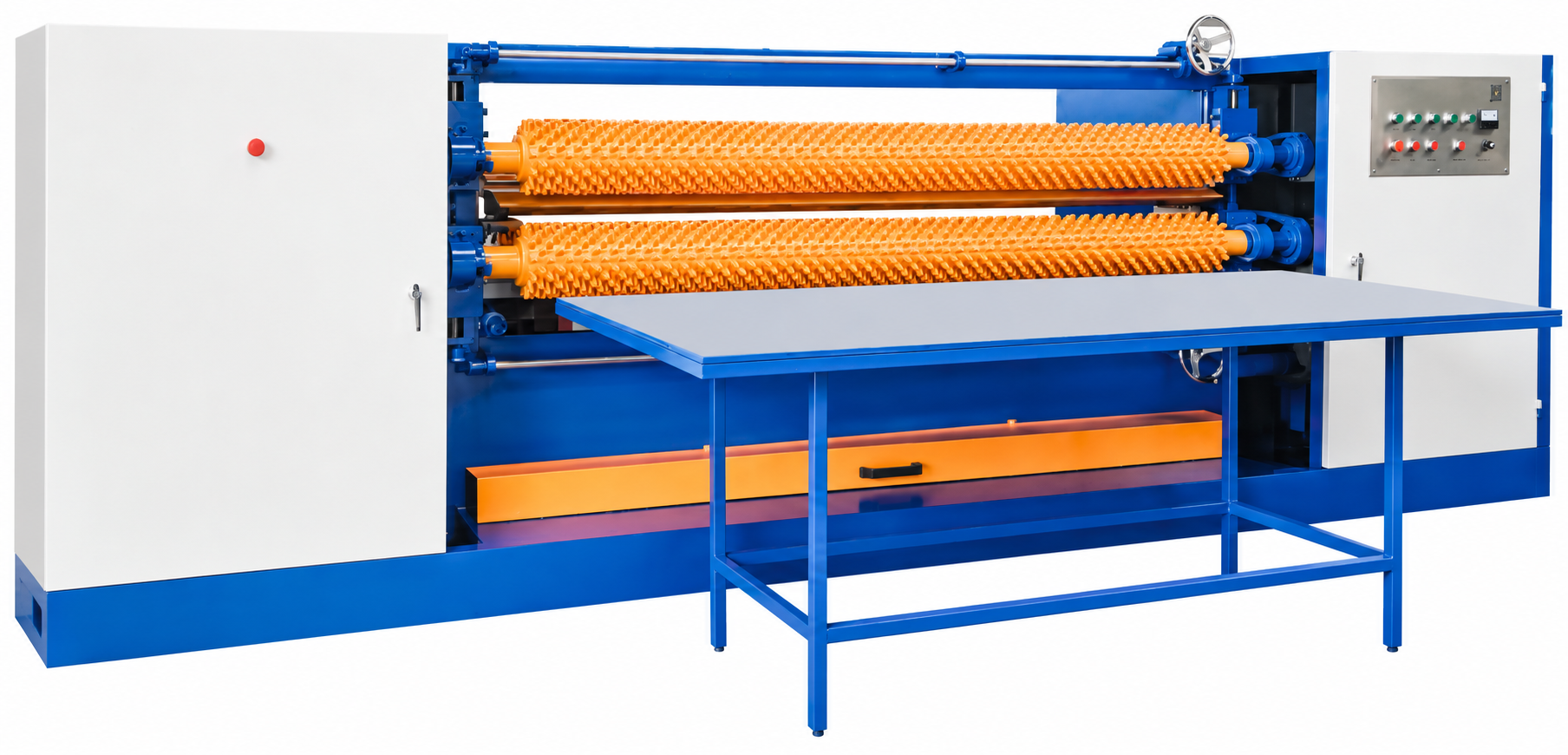
Feeds foam through profiled compression rollers and splits it into two patterned sheets for cushions, mattresses and acoustic lining applications.

Automatic Foam Mattress Perforating Machine for Perforated Foam Mattresses. Review configuration, material requirements and process interfaces with Haifeng.

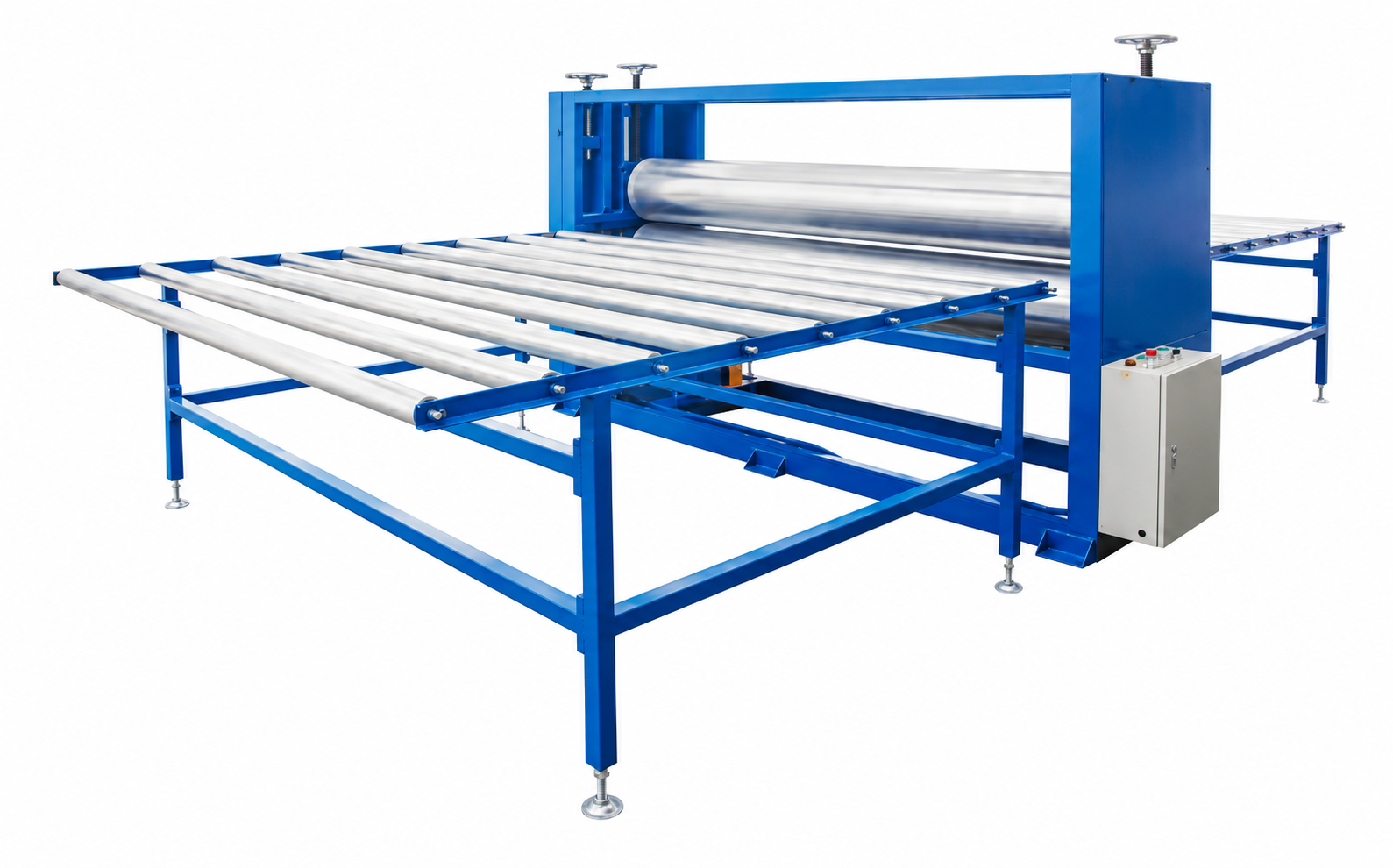
Compresses flexible foam through rollers for cell-opening conditioning. The required compression setting and material response are reviewed for the foam formulation.
Rebond preparation and packaging

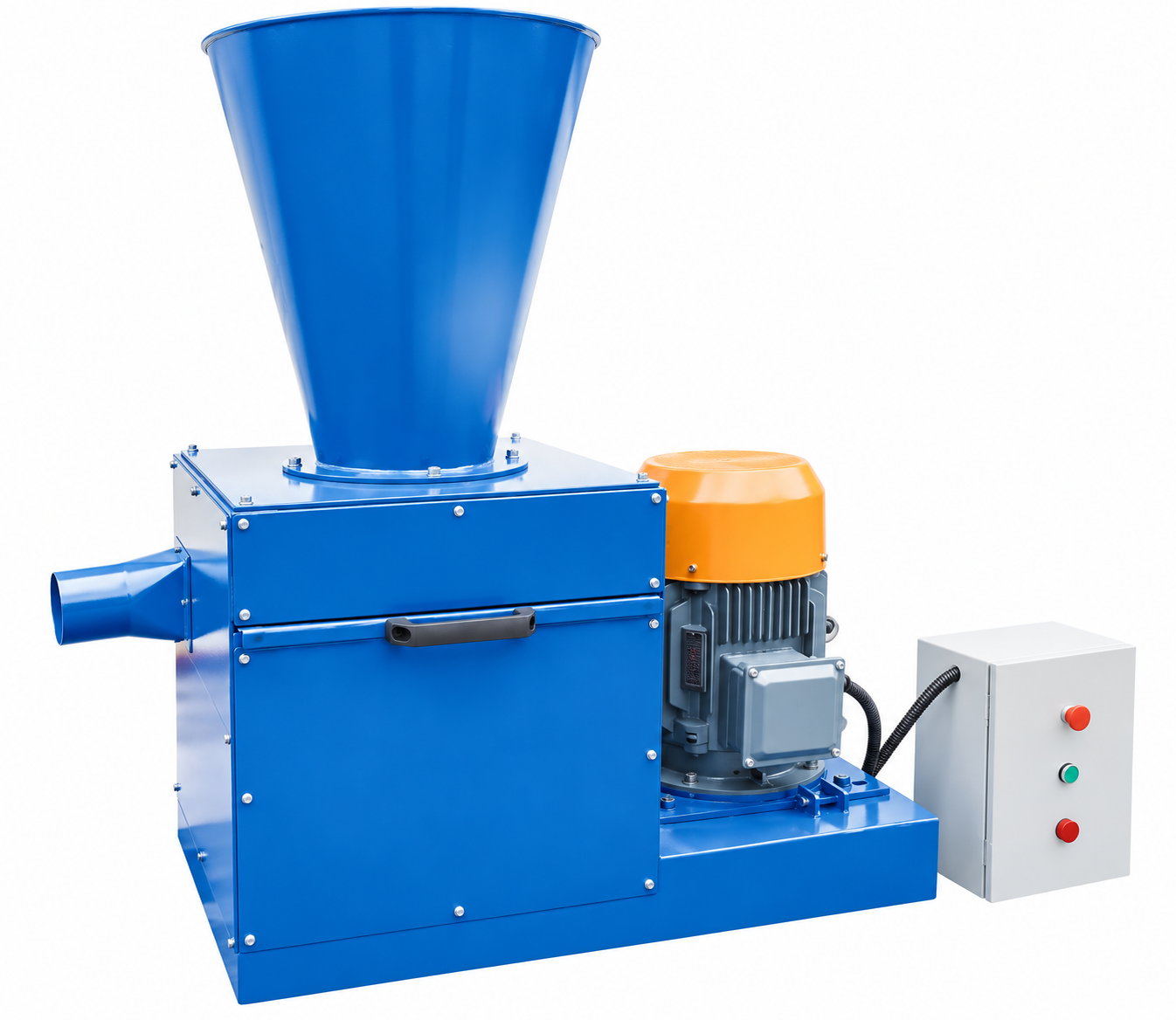
Shreds foam offcuts and waste foam into granules. Interchangeable screens adjust granule size for filling materials or rebonded foam preparation.

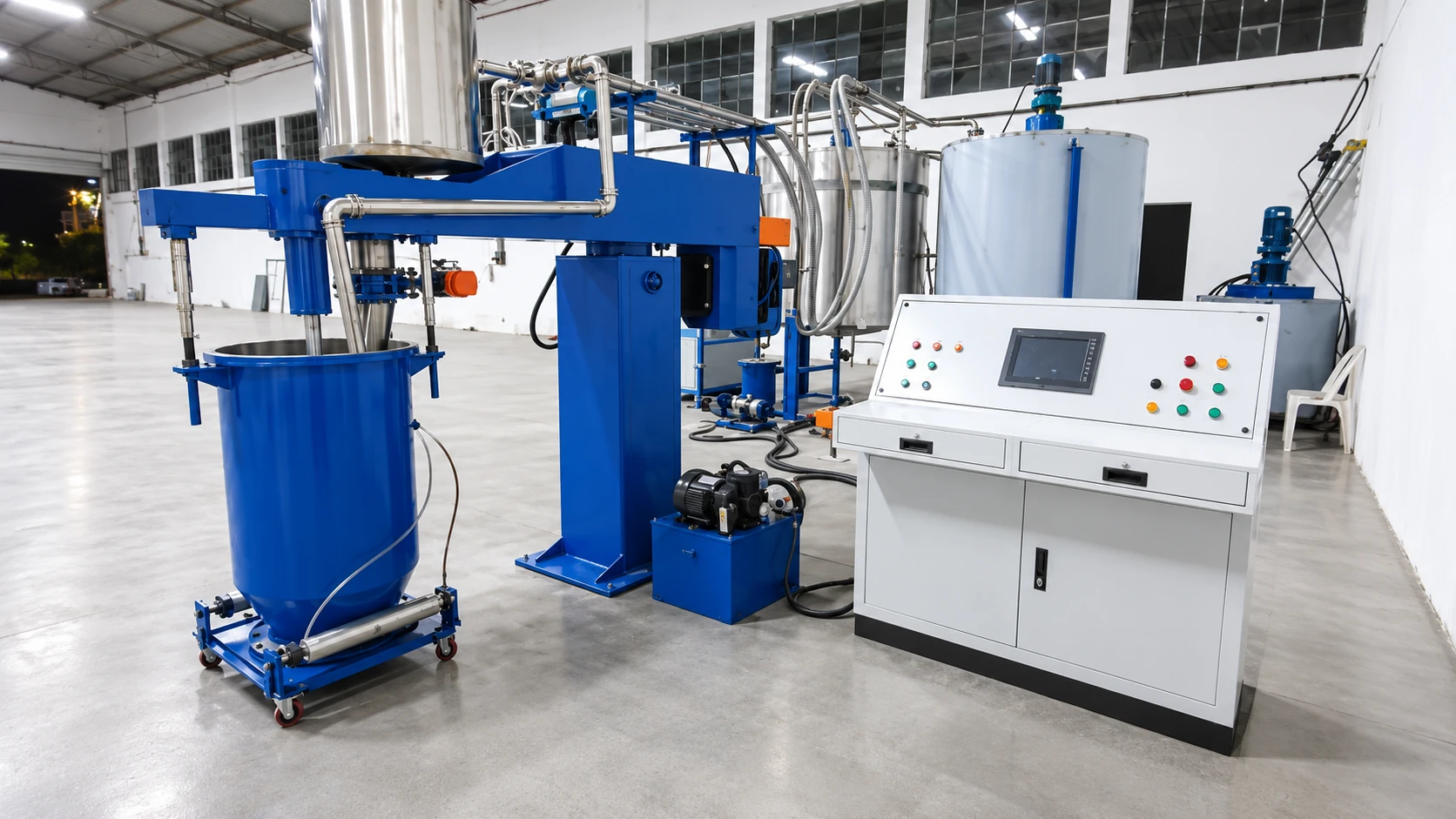
Mixes shredded foam with binder, charges molds and compresses the mixture hydraulically to form rebonded foam blocks. Manual-mold and steam-assisted automatic-mold configurations are described.

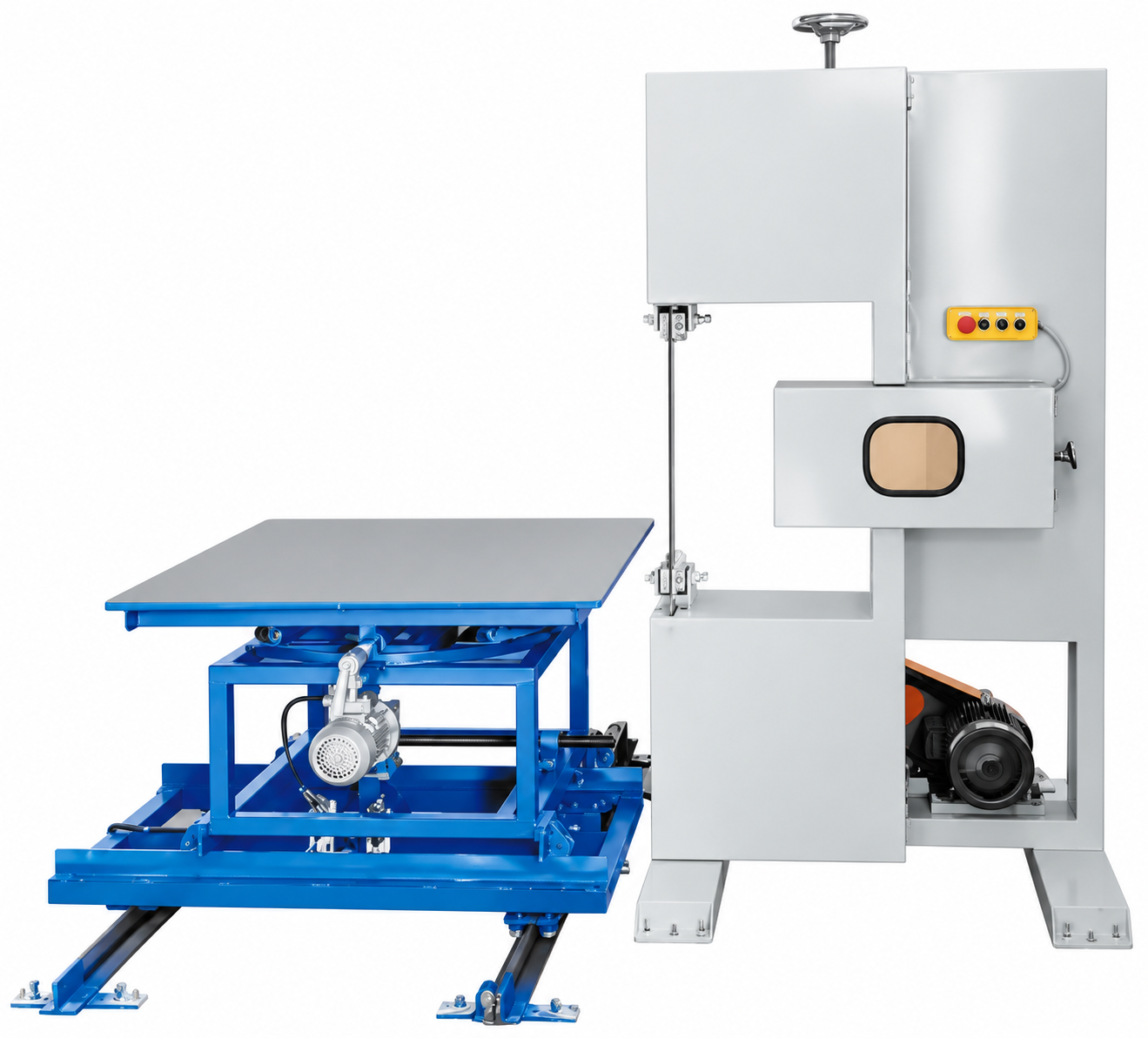
Trims outer skins and edges of foam and rebonded foam blocks. The worktable rotates through 360 degrees and has powered lateral travel for positioning.
Compresses foam blocks and seals their packaging to reduce storage and transport volume.

Foam Roll Compression Packaging Machine for Flexible Foam Roll Packaging. Review configuration, material requirements and process interfaces with Haifeng.
Related applications

Furniture & Seating Foam Application & Project Records

Explore the published furniture & seating foam application and project records selected from this category's solution pages. Each record describes its own material, process and equipment scope; project figures and industry references are not universal machine ratings or independently verified results for a new installation.

Molded furniture application records

Haifeng delivered an 18-station molded PU seating line in Morocco, achieving 65% ball rebound resilience and 180s cycle times for ergonomic office chairs.

Rebound and thickness-loss values come from the supplied brief. Confirm specimens and timing boundaries; submitted demolding time is not automatically line output cadence.

Process illustration; not a verified installation photograph.

Haifeng delivered a 24-station molded PU seating line in Kazakhstan, achieving BS 5852 Crib 5 fire compliance and 62% high-resilience comfort for theater seats.

Fire and rebound results require the tested seating construction, laboratory reports and material formulation; equipment alone does not confer furniture fire compliance.

Process illustration; not a verified installation photograph.

The supplied Russia furniture project brief reports a 100% pass result for the submitted disinfectant-test sample, 0 detected pinholes in the inspected sample and 120s submitted demolding time. Confirm the cleaning agent, inspection and timing records; these are not universal chemical-resistance or defect-free guarantees.

Disinfectant and pinhole results concern the submitted wipe-test and visual-inspection samples; agent concentration, acceptance criteria and original records remain to be confirmed.

Process illustration; not a verified installation photograph.

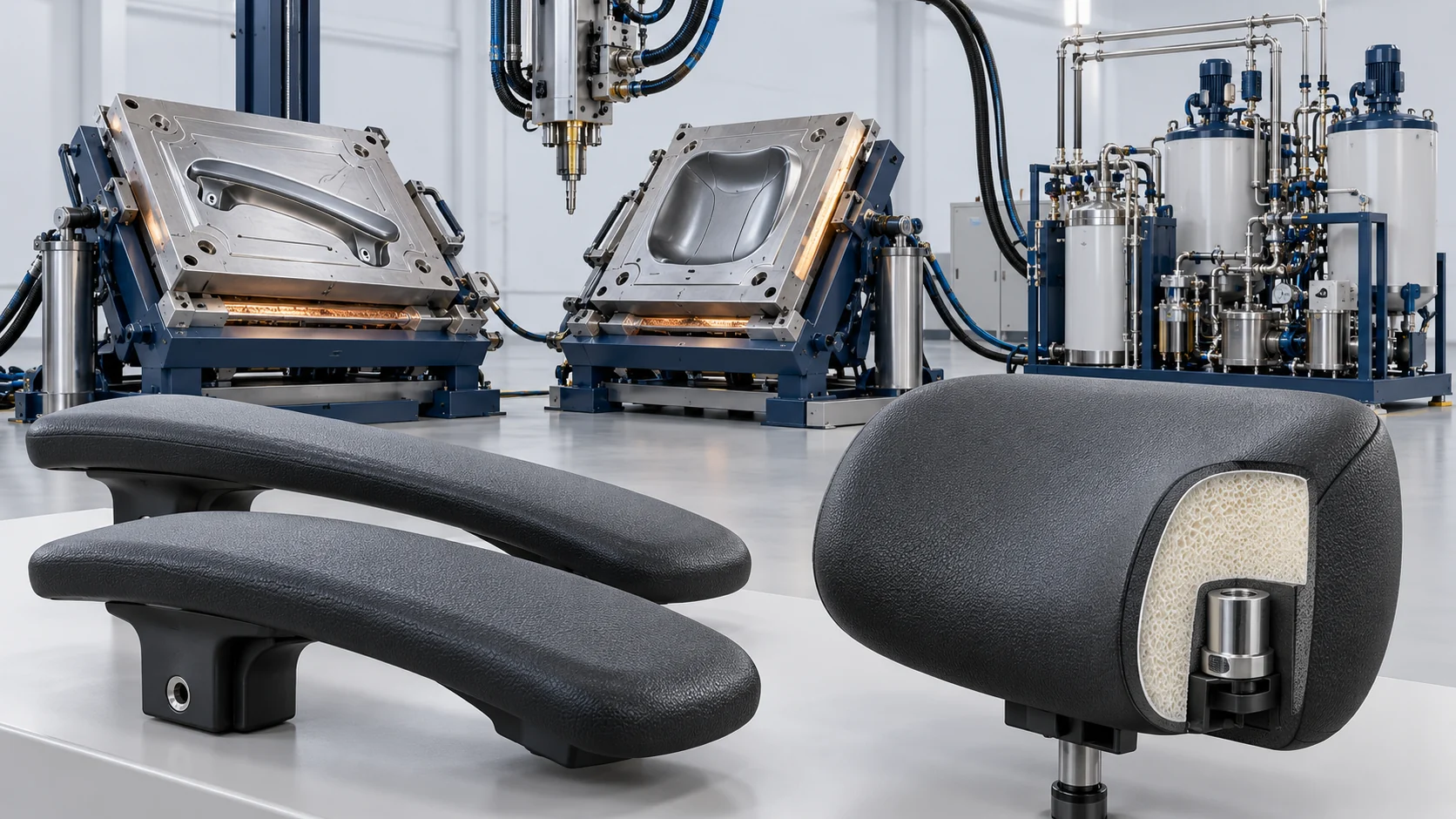
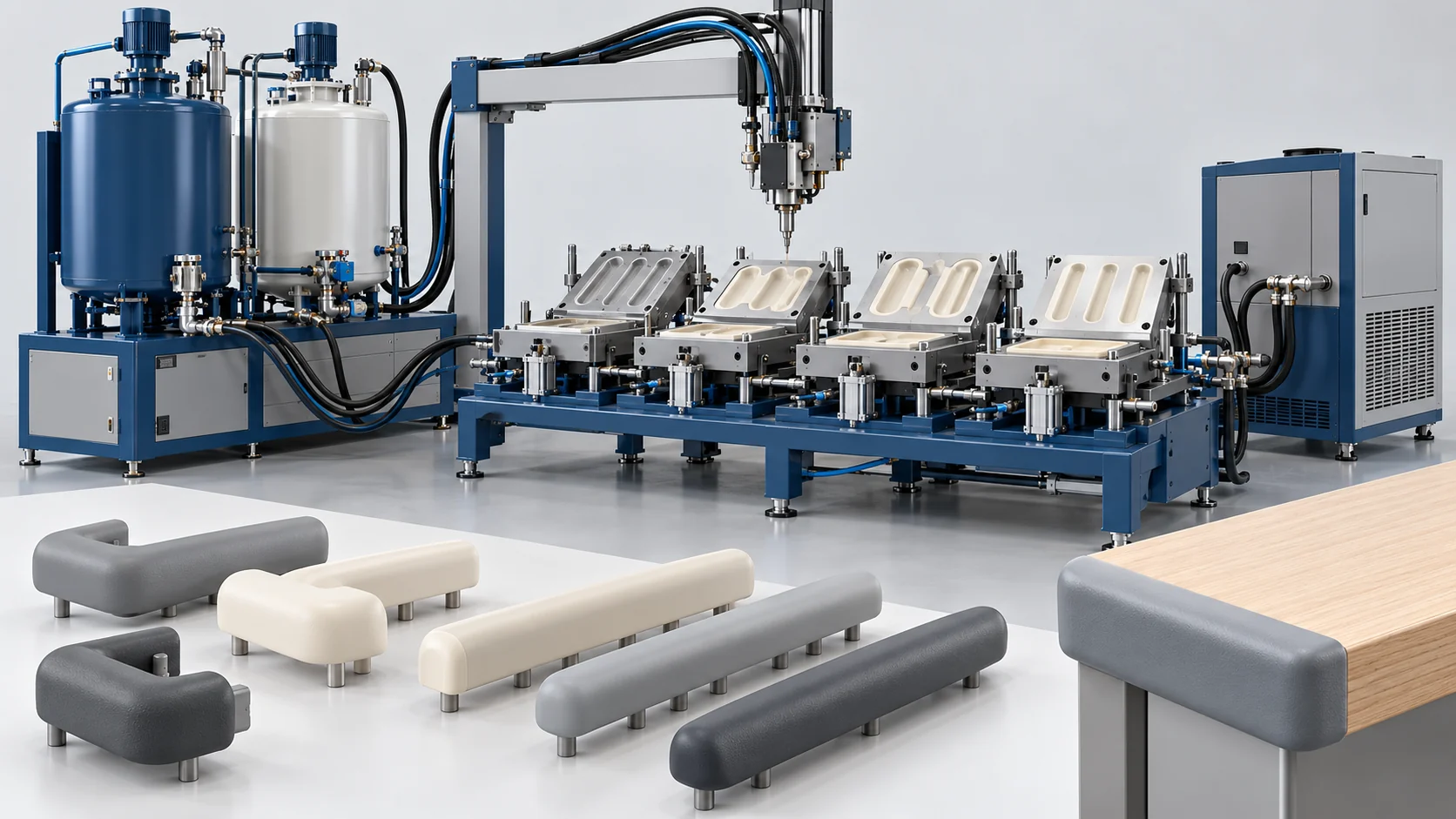
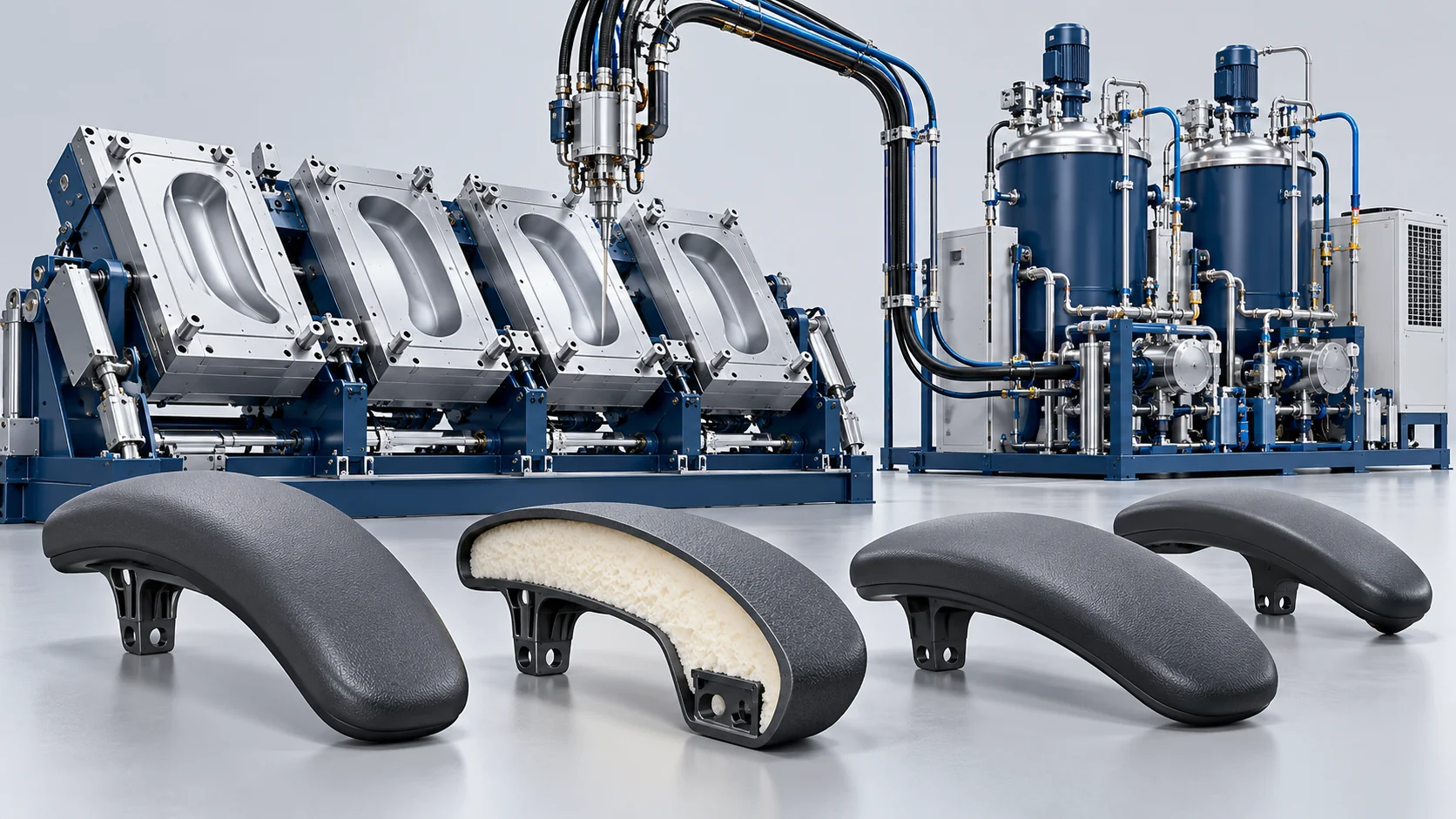
Haifeng upgraded an integral skin PU armrest line in China, boosting capacity by 40% with Shore A 65 (±2) durometer precision and rapid 90-second cycles.

Capacity increase uses the legacy-line baseline; confirm the audited period, mold cavities and hardness sampling before comparison.

Process illustration; not a verified installation photograph.

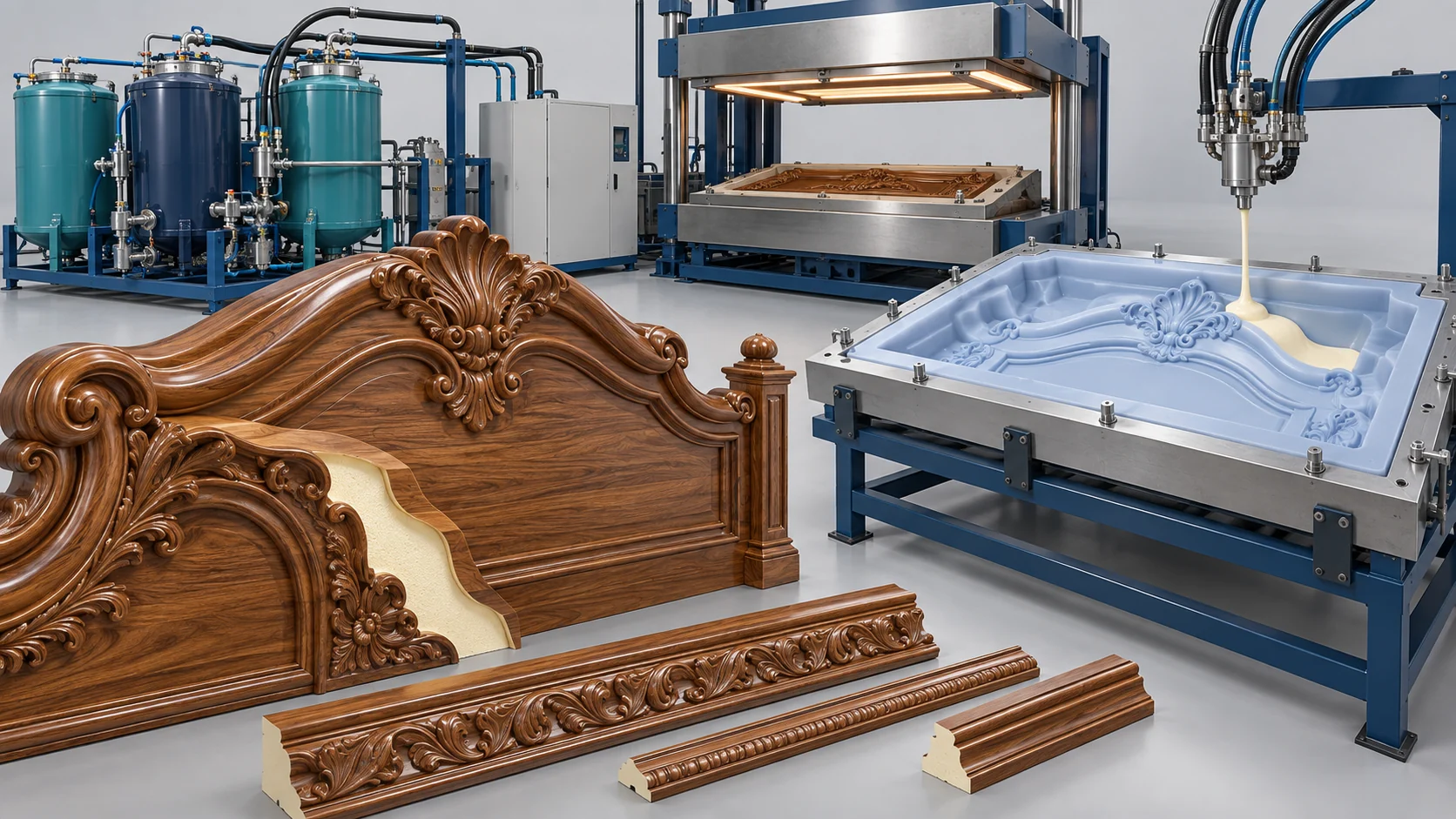
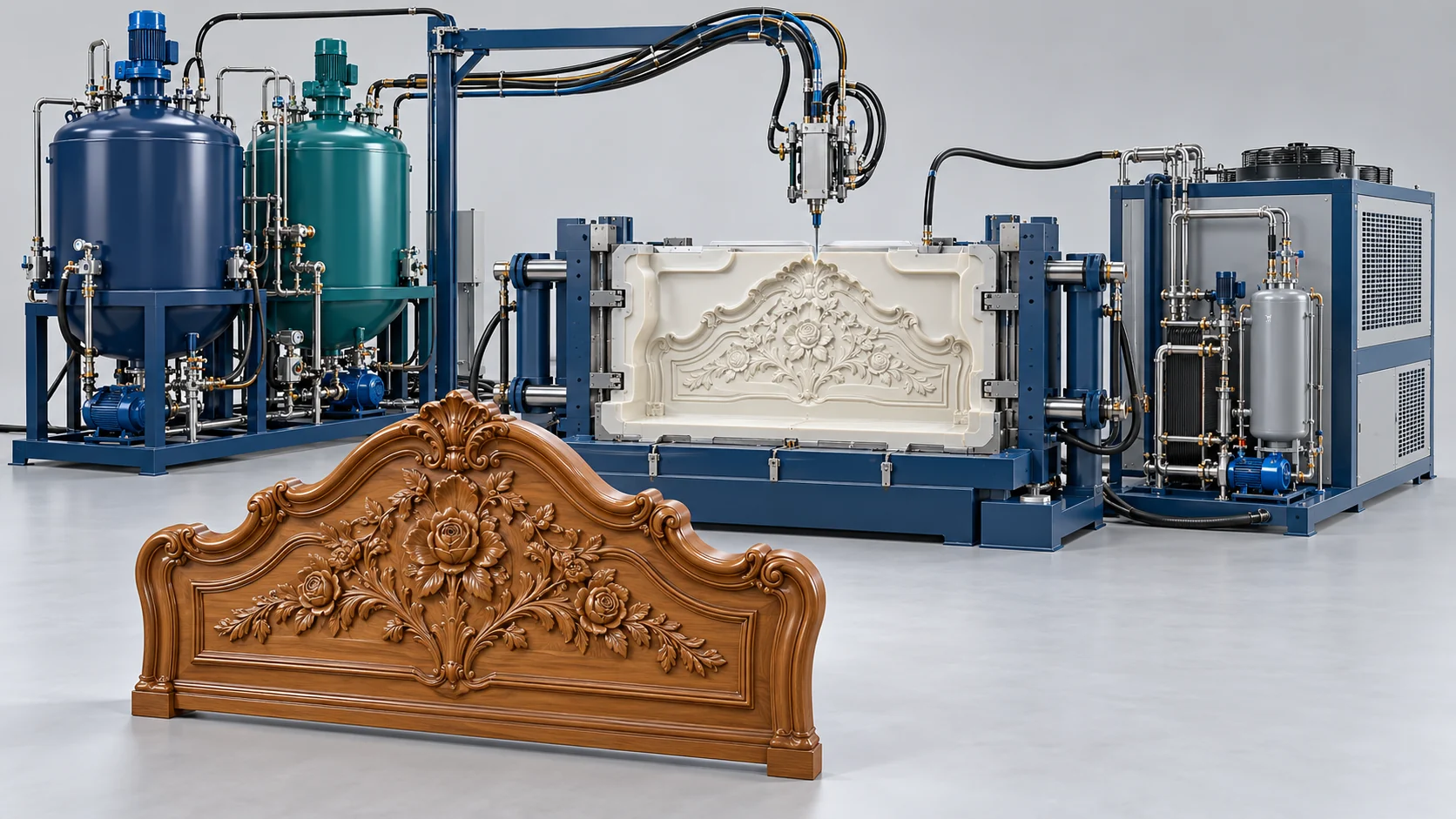
Haifeng delivered a rigid PU imitation wood molding line in Saudi Arabia, achieving 450 kg/m³ solid oak density and 0-cracking durability for royal headboards.

Density is a molded-part reference, not equivalence to oak structural properties. Cracking observations belong to the stated climate and observation period.

Process illustration; not a verified installation photograph.

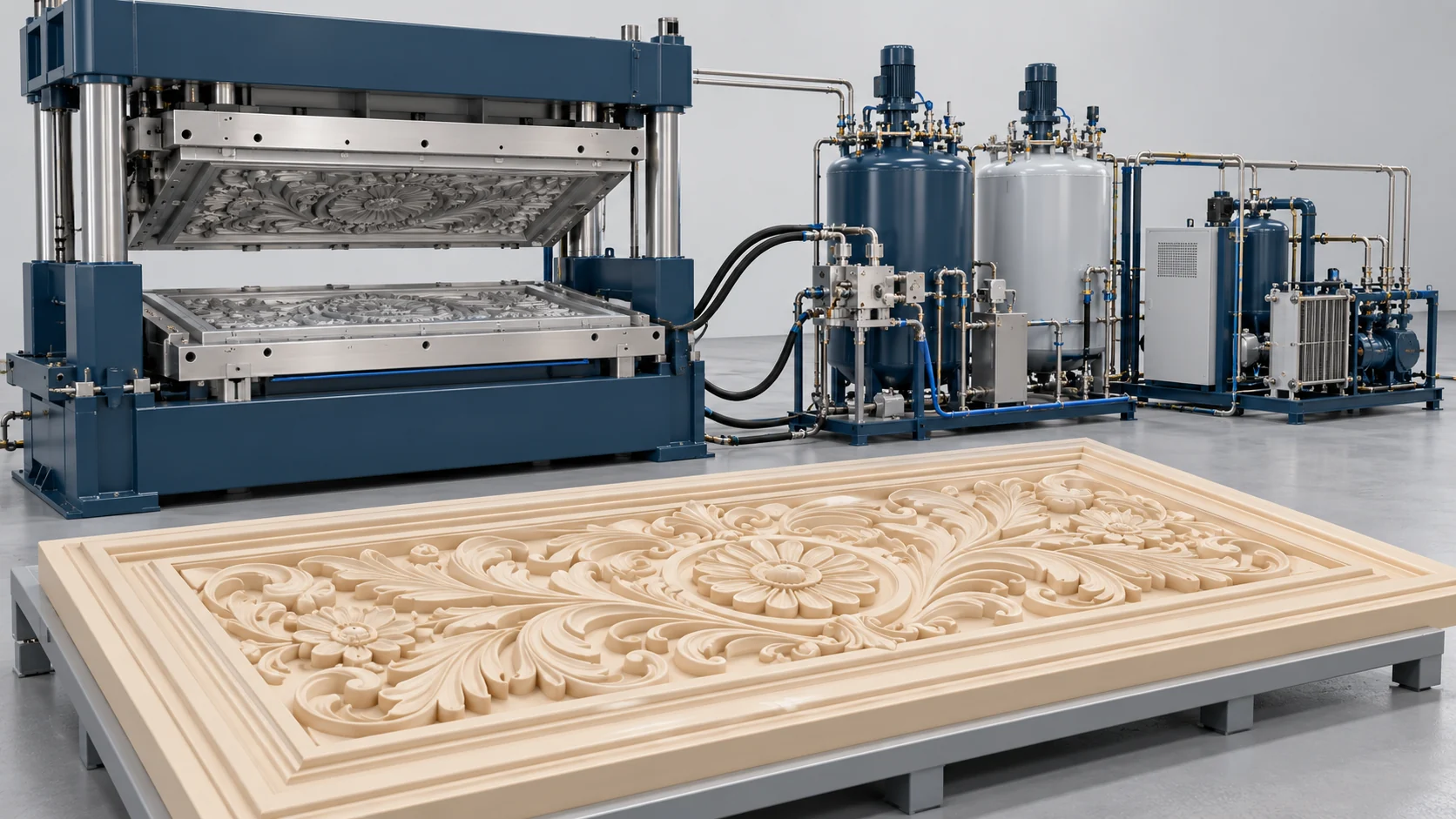
The supplied China project brief describes 1200x2400mm rigid PU decorative panels and 5-minute injection-to-demold cycles. Finished-panel formaldehyde emissions require formulation-specific testing; no specimen, method or source report is currently supplied.

Panel emissions remain unclassified: the current record has no specimen, method or source report for a formaldehyde result.

Process illustration; not a verified installation photograph.

Haifeng delivered a semi-rigid PU structural padding line in Brazil, achieving an 85 kg/m³ heavy-duty core and 0-debonding durability with rapid 90s cycles.

Core-density and bond-durability references: confirm the molded component, density sampling and dynamic load test records.

Process illustration; not a verified installation photograph.

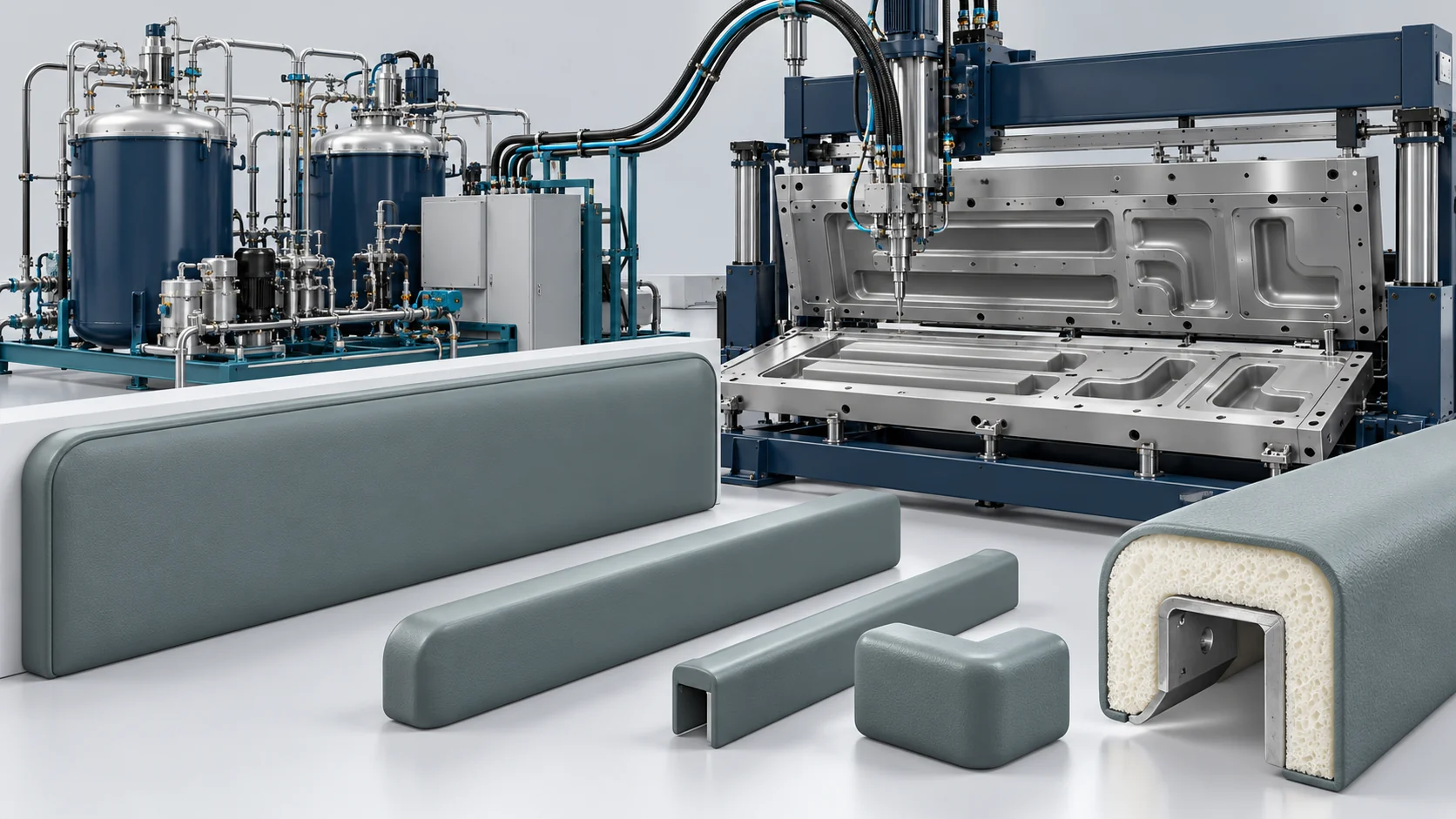
Haifeng delivered a protective furniture component line in Argentina, achieving 88% impact absorption and EN 71 child-safety compliance with 80s cycles.

Impact-absorption and child-safety claims require the actual component, test setup and applicable report; machine delivery does not establish toy conformity.

Process illustration; not a verified installation photograph.

Flexible foam block application records

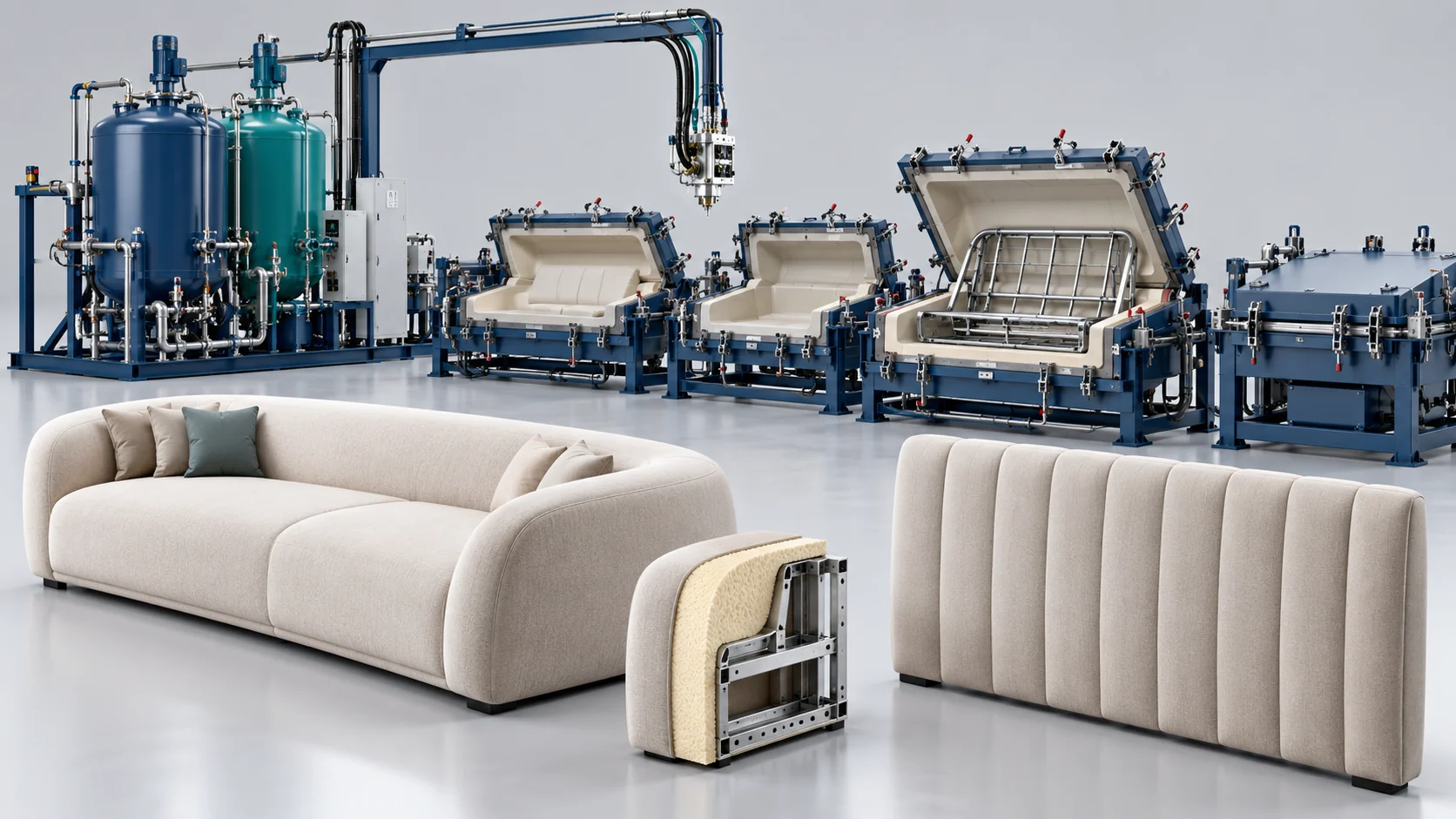
Brazil sofa foam project using Continuous Slabstock Foaming. Review the metering, flat-top forming, cutting configuration and reported project results.

Trim loss, rebound and line speed are project-brief references; confirm block dimensions, weighing, specimen conditioning and production logs.

Process illustration; not a verified installation photograph.

Haifeng delivered a continuous flexible PU line for furniture padding in Argentina, achieving ±1.2 kg/m³ density control and 92% open-cell breathability.

Density and open-cell figures concern the stated foam and sampled blocks; confirm the airflow test, specimen conditioning and production baseline.

Process illustration; not a verified installation photograph.

Foam Production and Conversion Routes Selection FAQ

When should I choose box foaming or continuous slabstock?

Compare batch size, grade changes, required block dimensions, output and available factory space before choosing the production mode.

Are rebonding and cutting part of foam manufacture?

They are separate conversion routes using existing foam or scrap. Their equipment and capacity should be sized independently of the foaming line.

How do molded foam routes differ?

Review the material, shot size, mold handling and mixing requirements. High-pressure and low-pressure systems are selected for the defined application.

Plan Your Production Line

Tell us your material system, part dimensions and production target. Our team will reply within one business day. Once requirements are clear, we provide a preliminary proposal within two business days.

Haifeng Polyurethane Machinery on TikTok
Haifeng Polyurethane Machinery on Instagram
Haifeng Polyurethane Machinery on Facebook
Haifeng Polyurethane Machinery on X
Haifeng Polyurethane Machinery on LinkedIn
Contact Haifeng Polyurethane Machinery on WhatsApp
Haifeng Polyurethane Machinery on YouTube