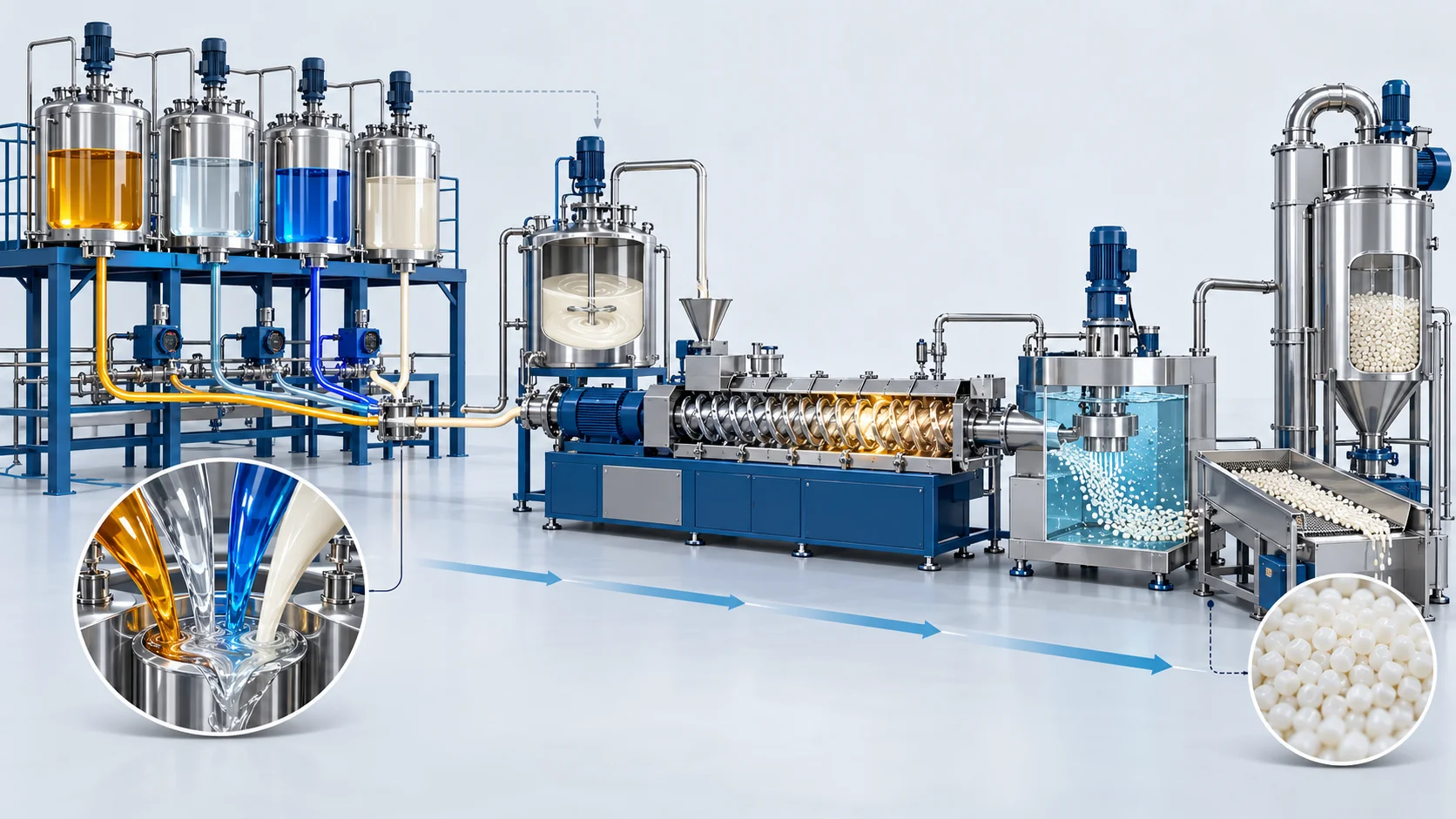
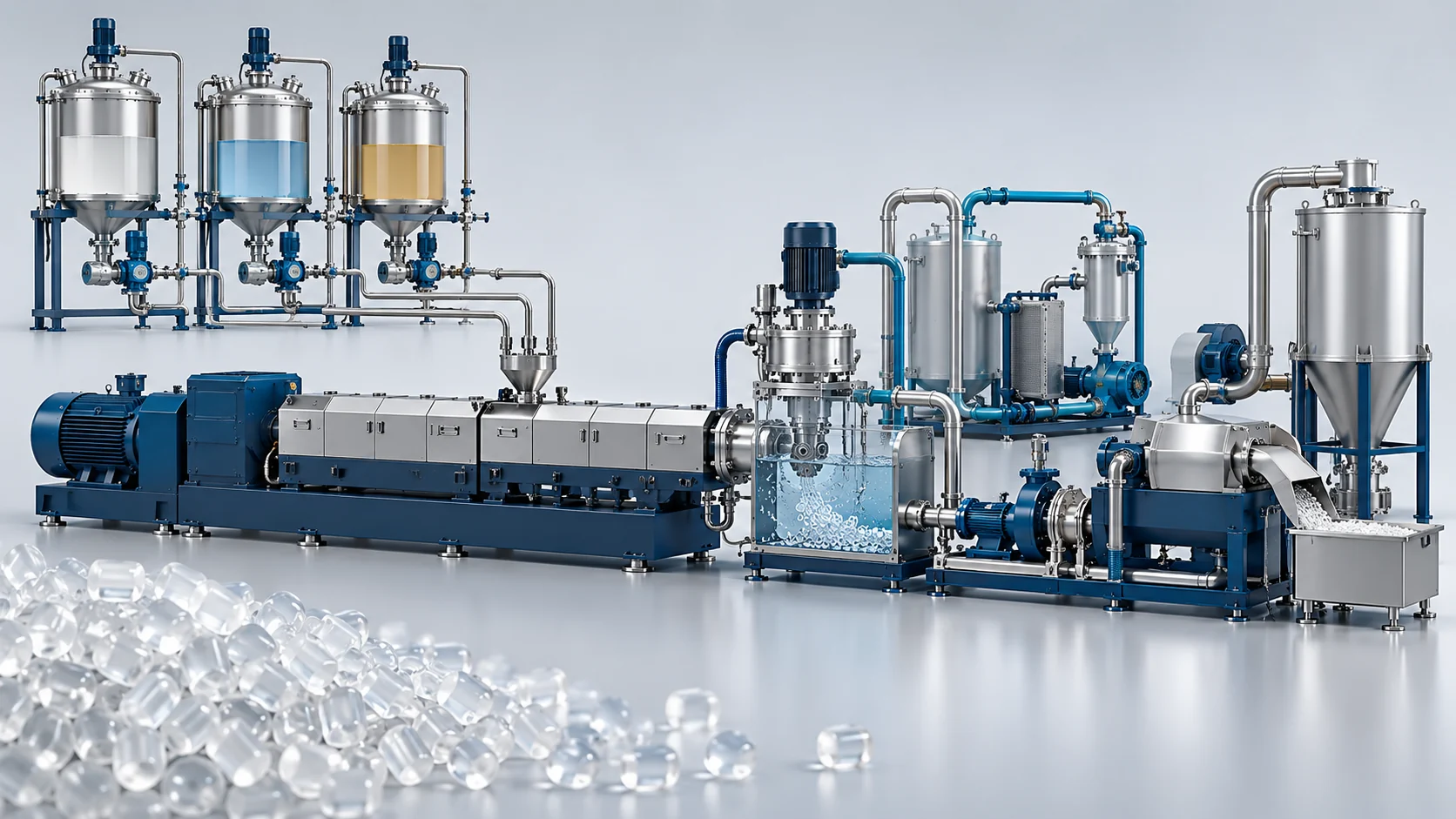
One-Step TPU Reaction and Pelletizing Solution
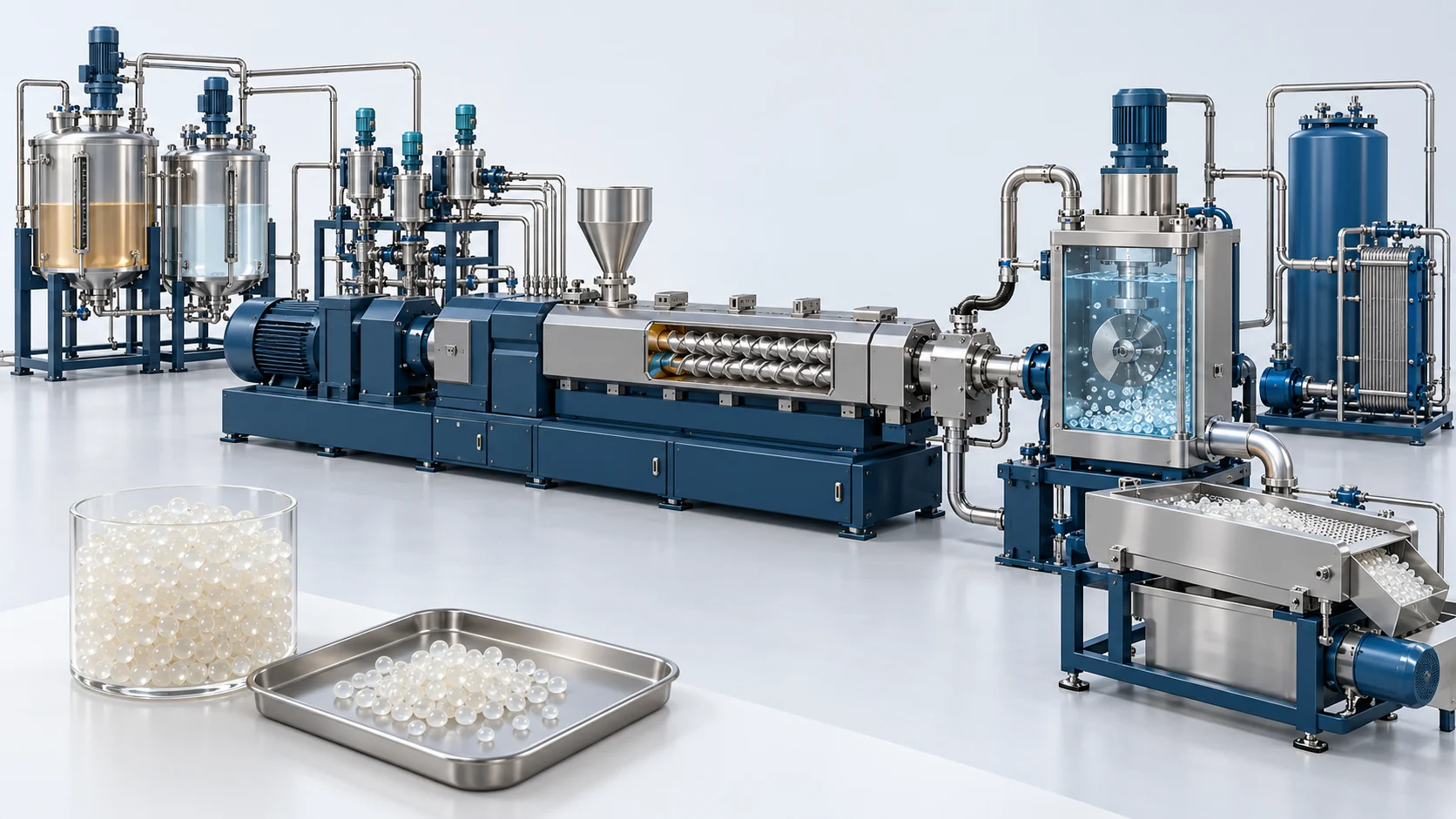
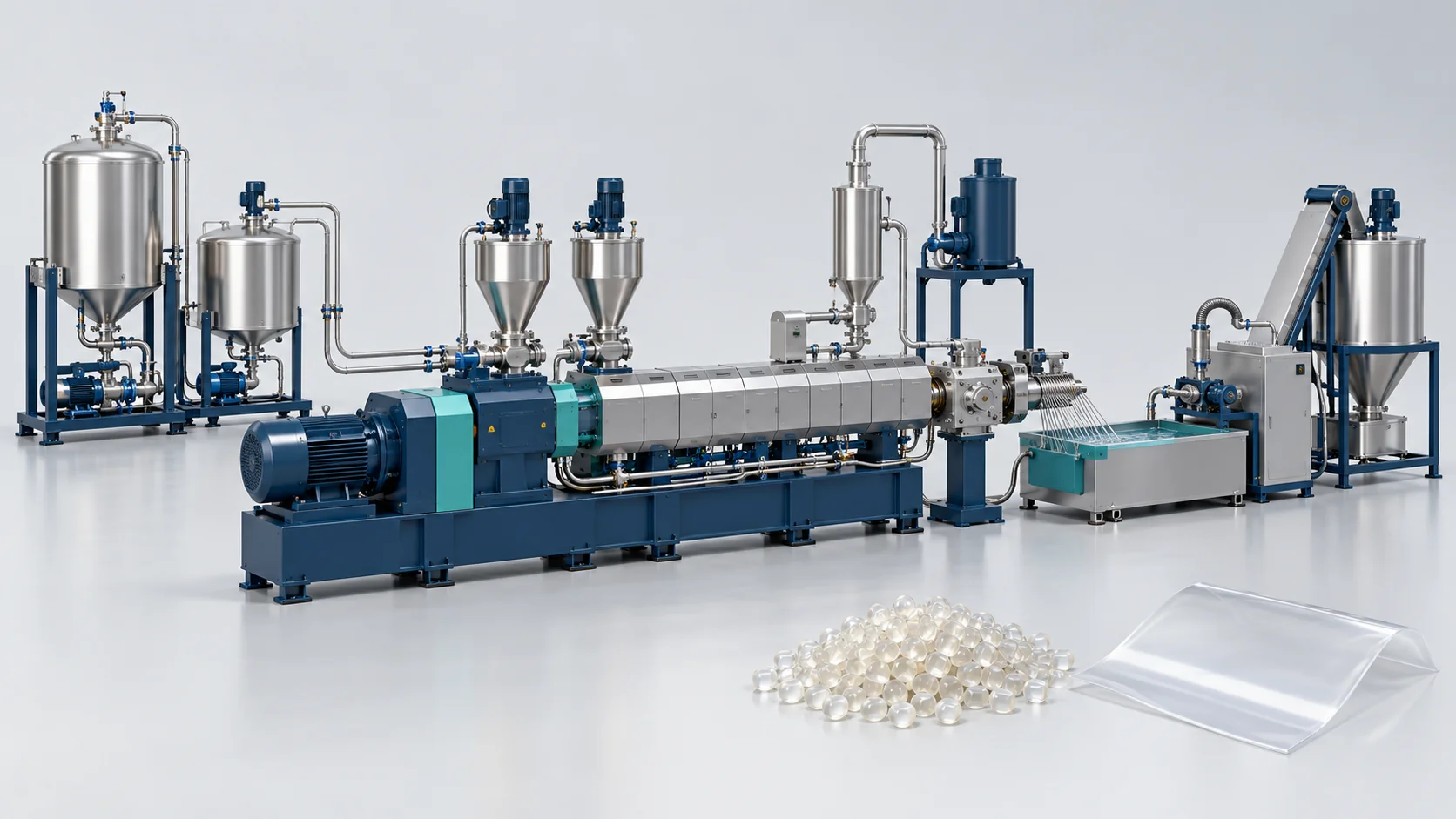
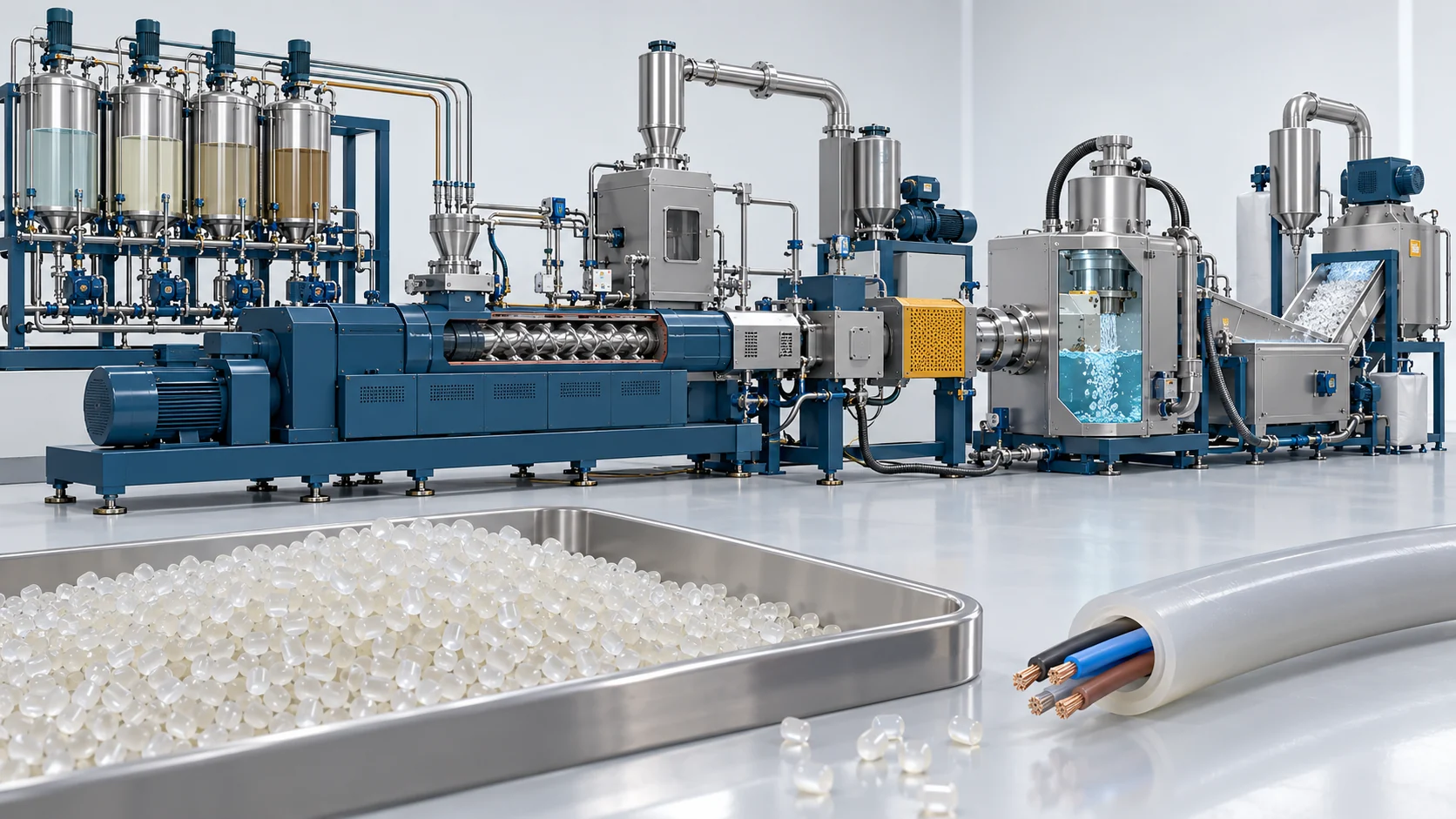
A one-step TPU reaction route coordinating polyol, isocyanate and chain-extender feeding with metering, mixing and specified extrusion and pelletizing interfaces.
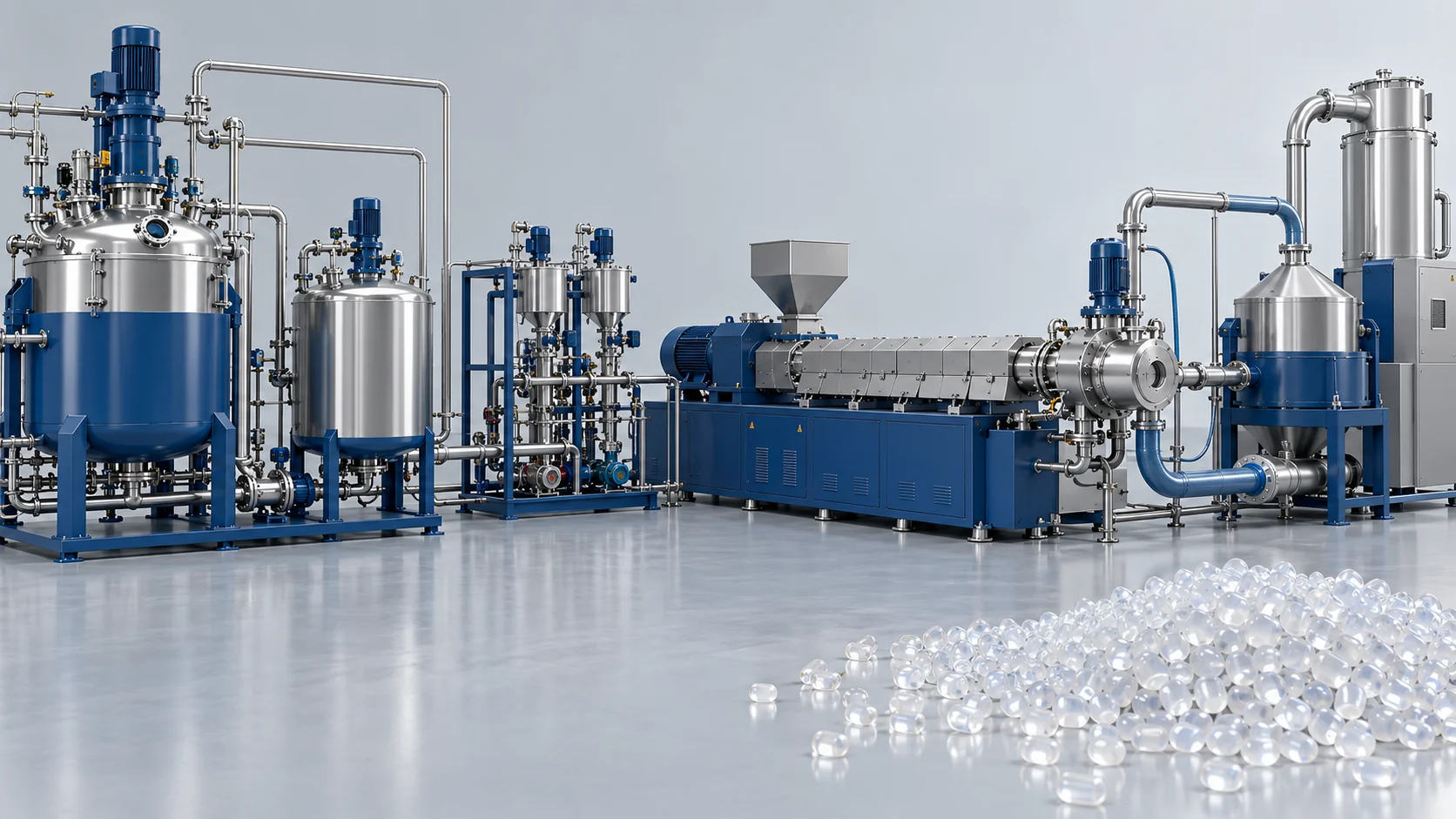
Explore TPU polymerization, reactive extrusion and compounding routes. Define the feed materials, target grade, reaction architecture and downstream finishing scope before selecting equipment.
Separate reactive monomer feeding from compounding existing TPU pellets. Compare one-step, prepolymer, film-grade and ETPU-precursor routes by feedstock, output and finishing requirements.
A one-step TPU reaction route coordinating polyol, isocyanate and chain-extender feeding with metering, mixing and specified extrusion and pelletizing interfaces.
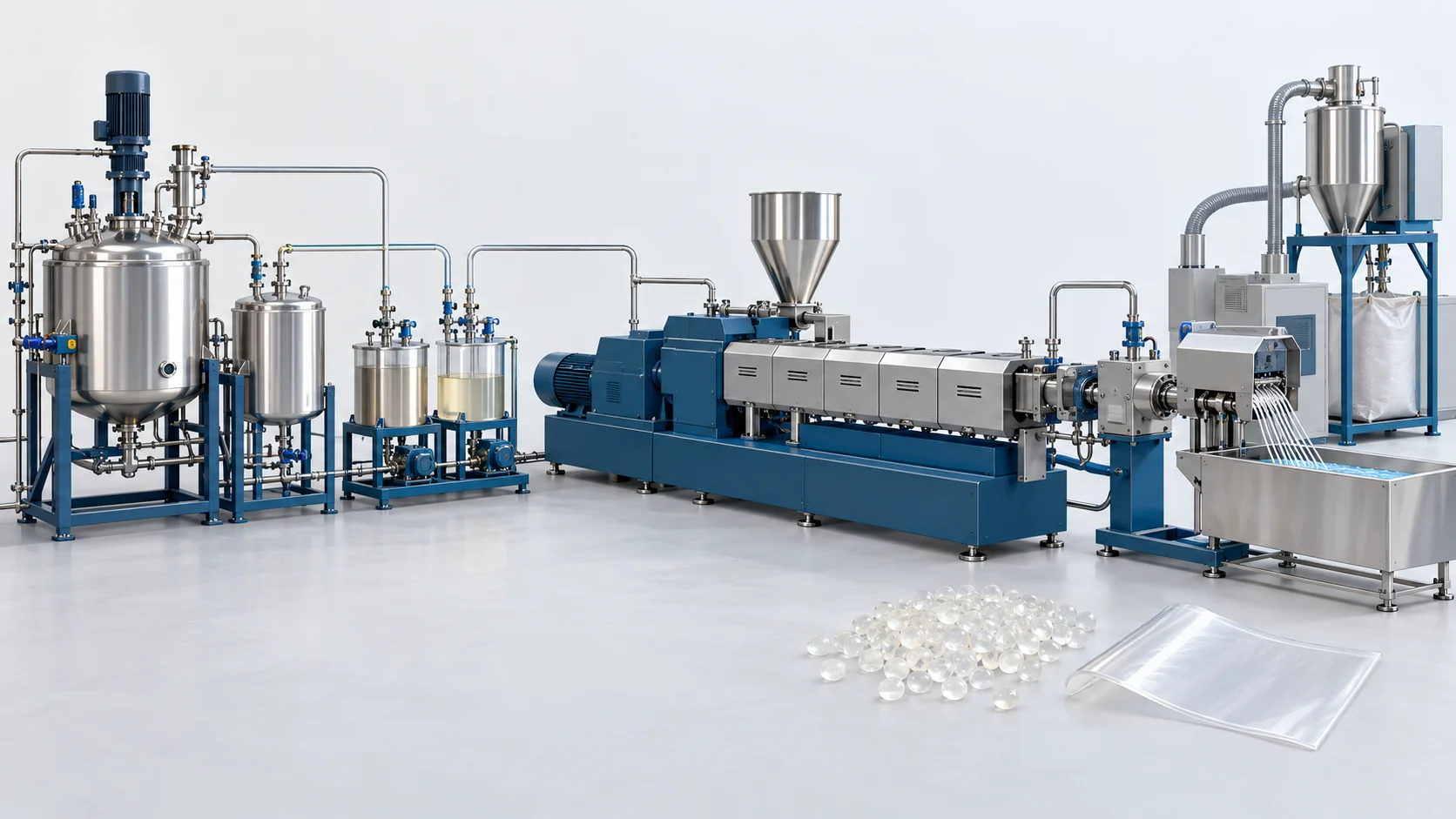
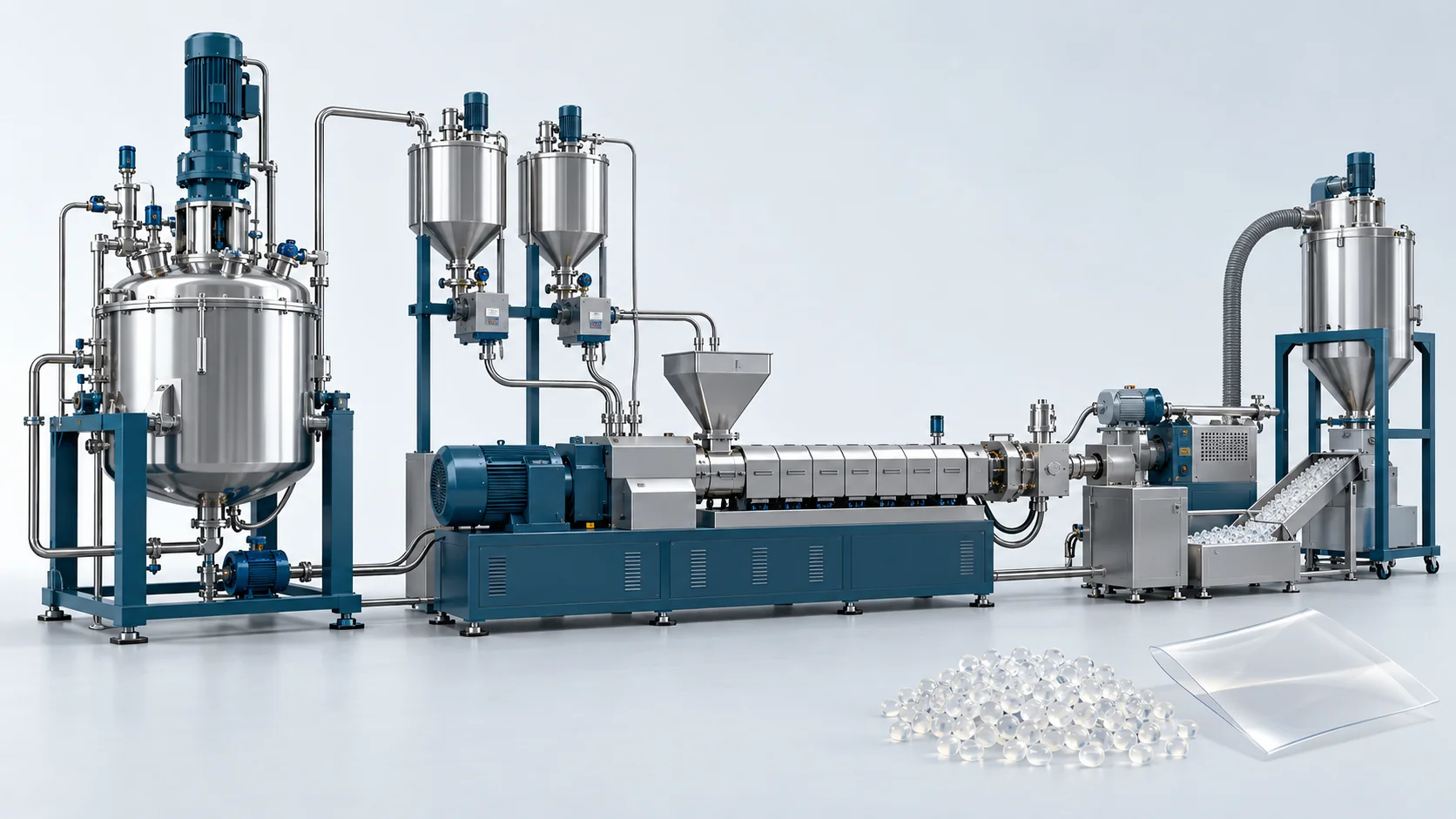
A two-step TPU production route coordinating prepolymer preparation, multi-component metering, chain extension and the selected downstream finishing equipment.
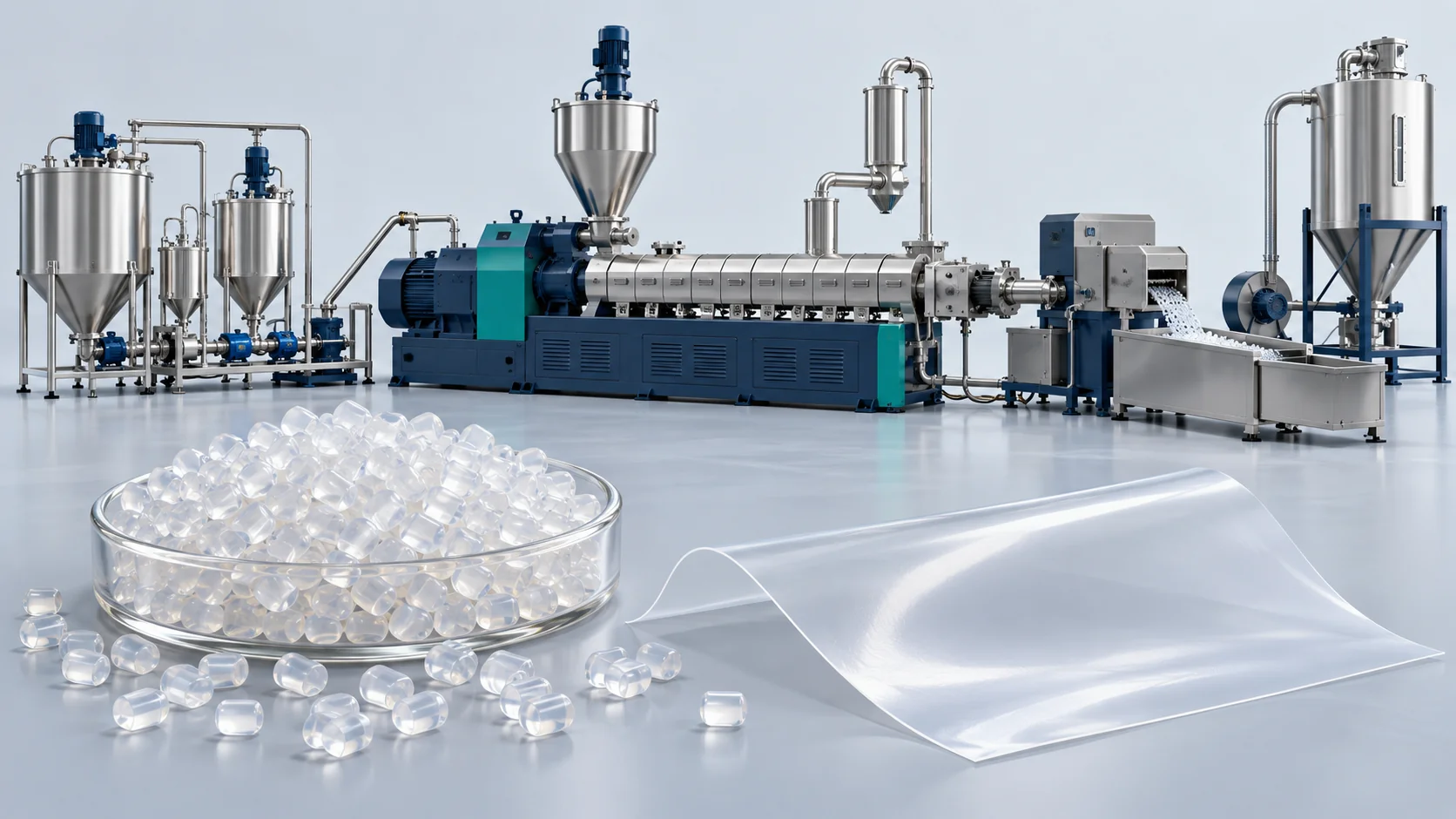
A two-stage aliphatic TPU process with prepolymer preparation, reactive extrusion, melt conditioning and pelletizing for film-grade development.
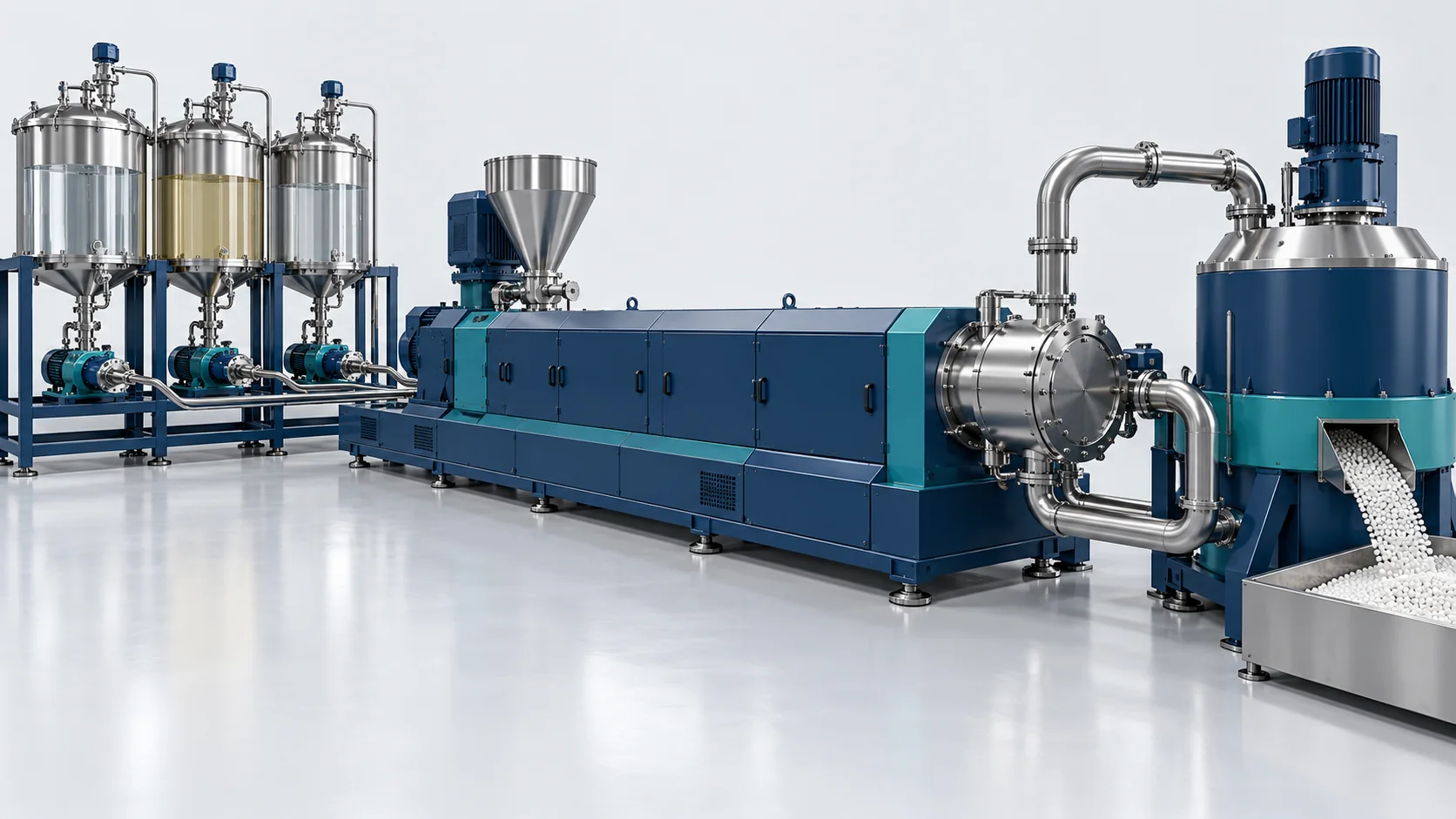
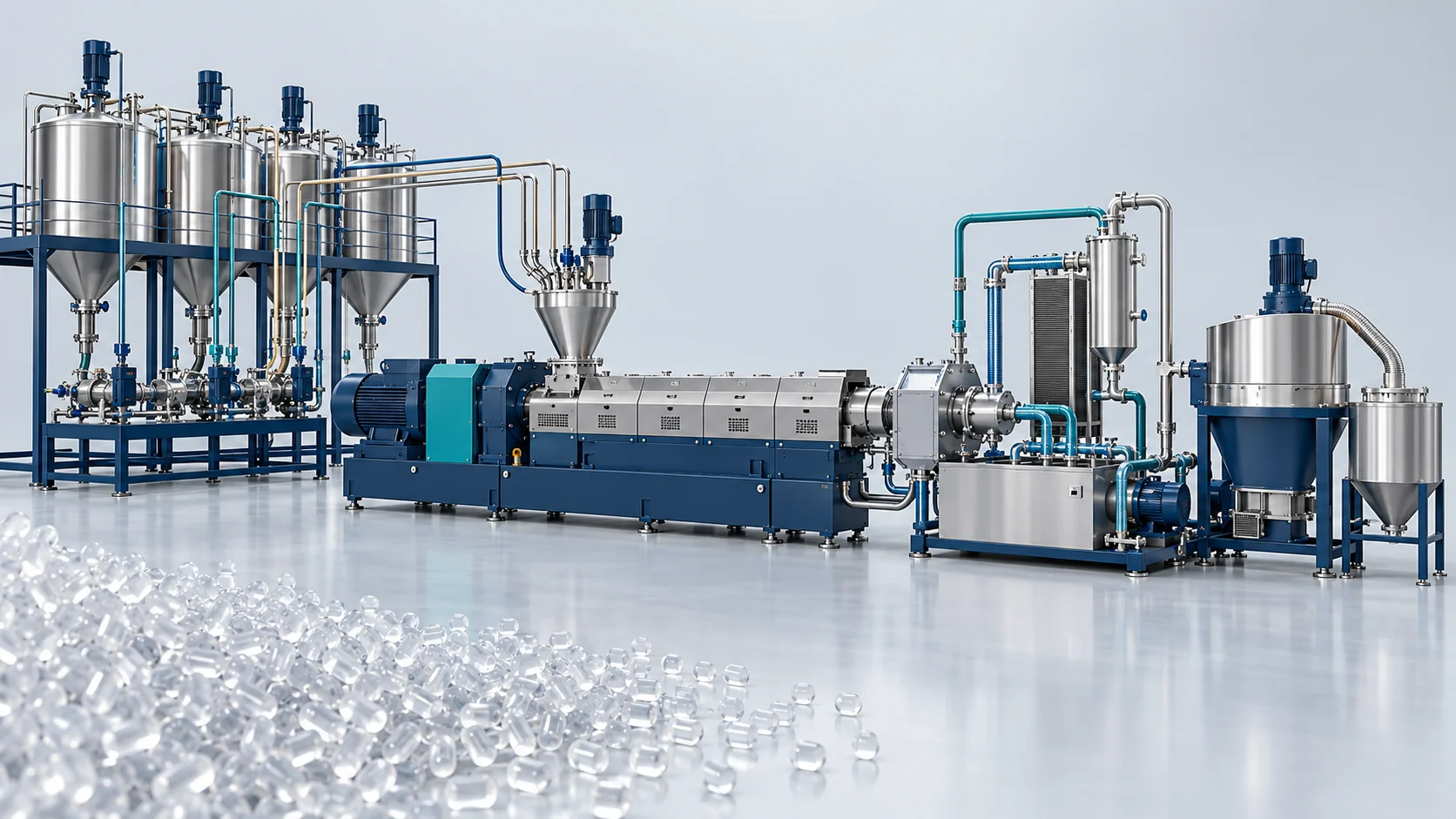
A turnkey engineering solution for continuous one-shot TPU manufacturing, combining four-stream liquid mass-flow dosing, extended L/D twin-screw reaction, and closed-loop underwater pelletizing.
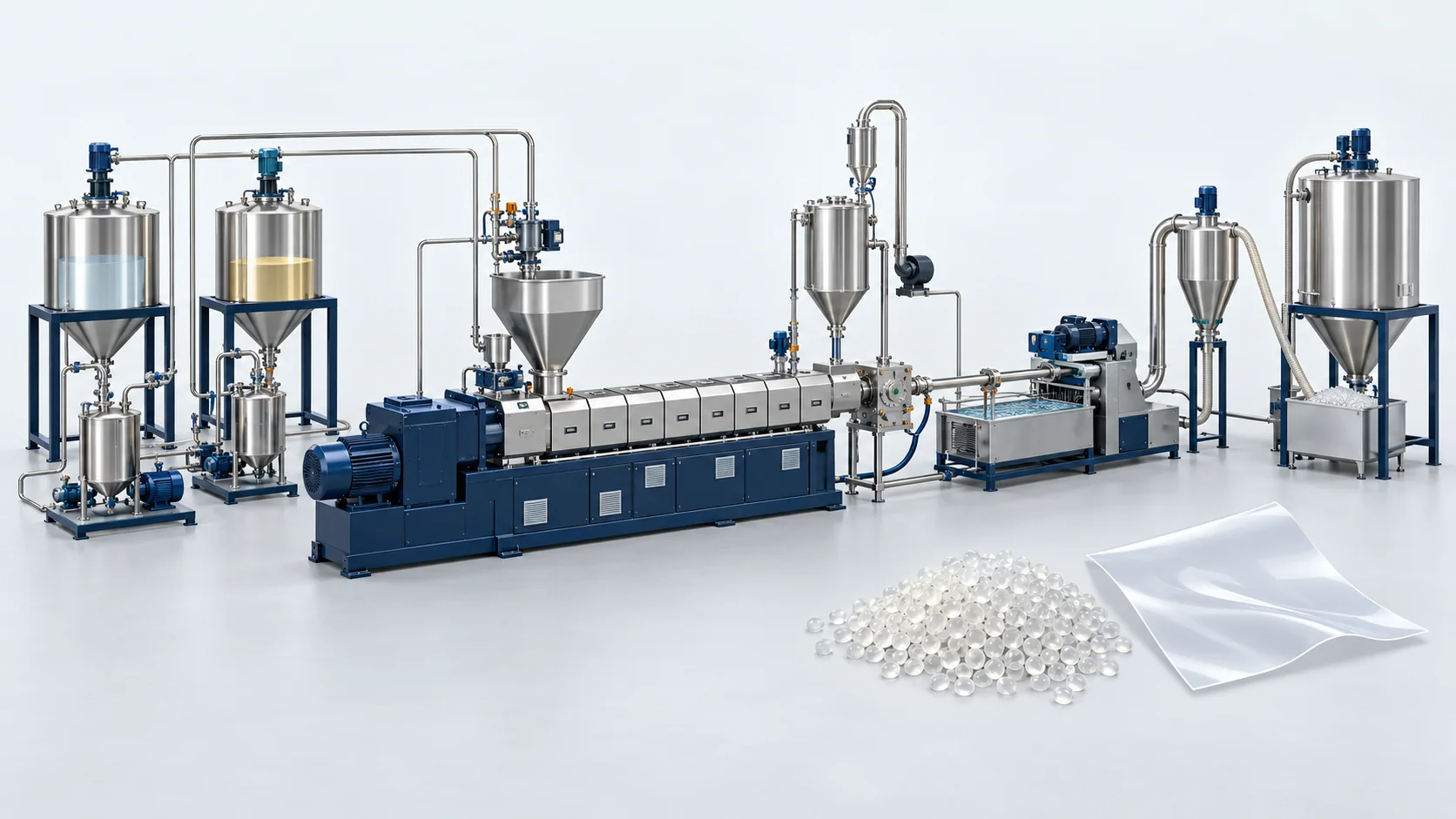
TPU feed preparation, reactive extrusion and melt stabilization for downstream thin-film processing and grade development.
Precursor pellet manufacture is separate from bead expansion, conditioning and finished-part molding.
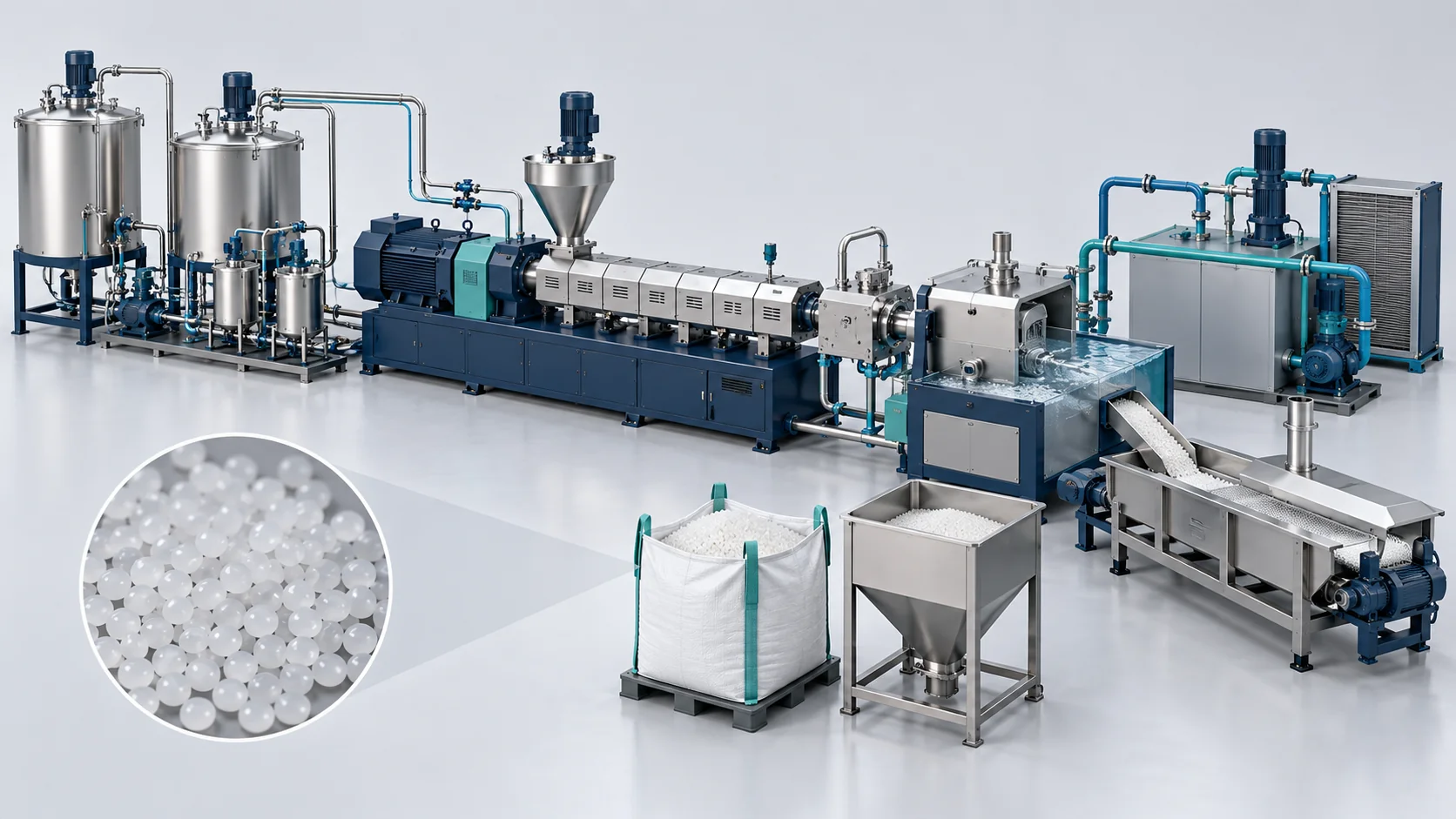
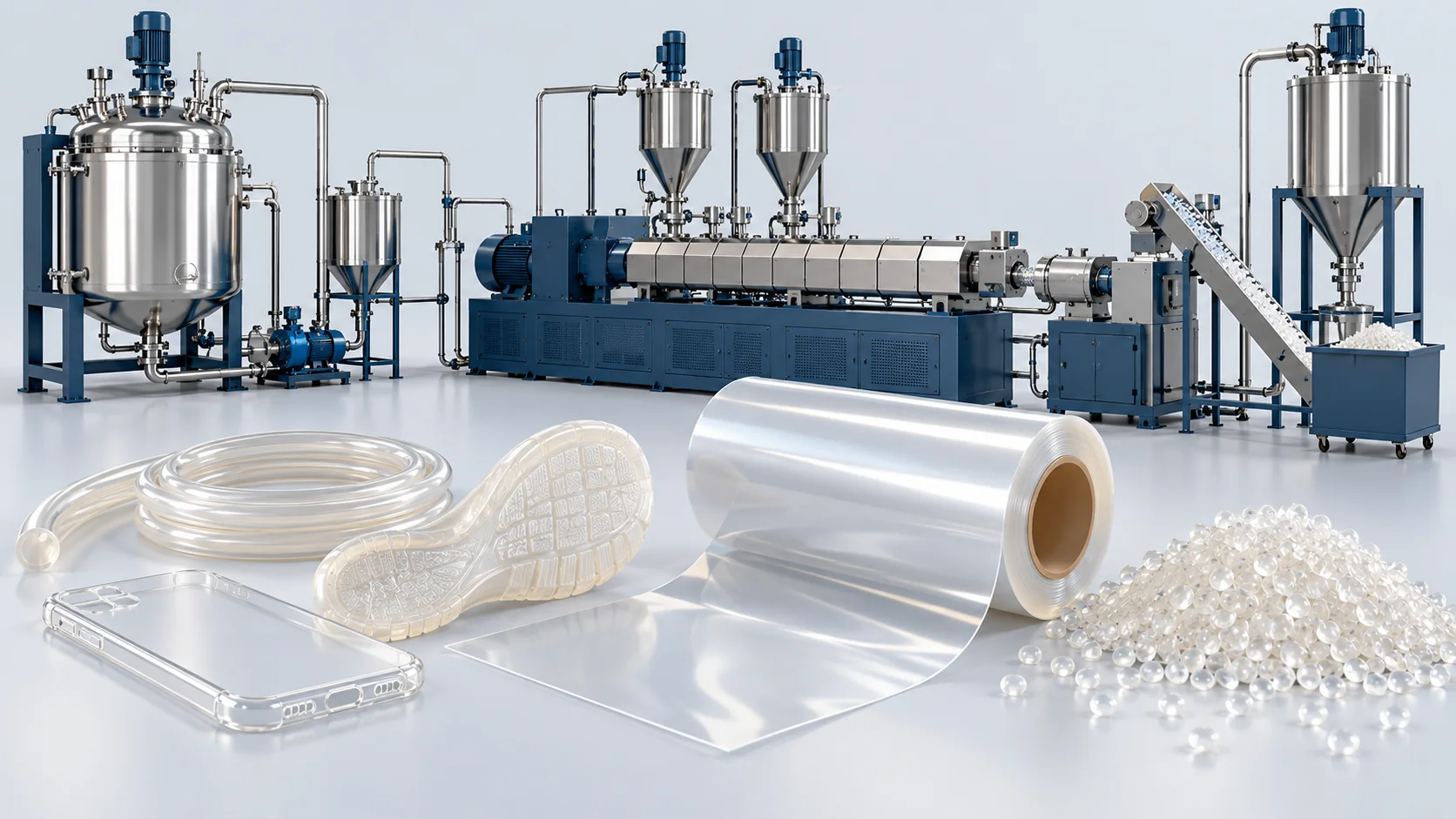
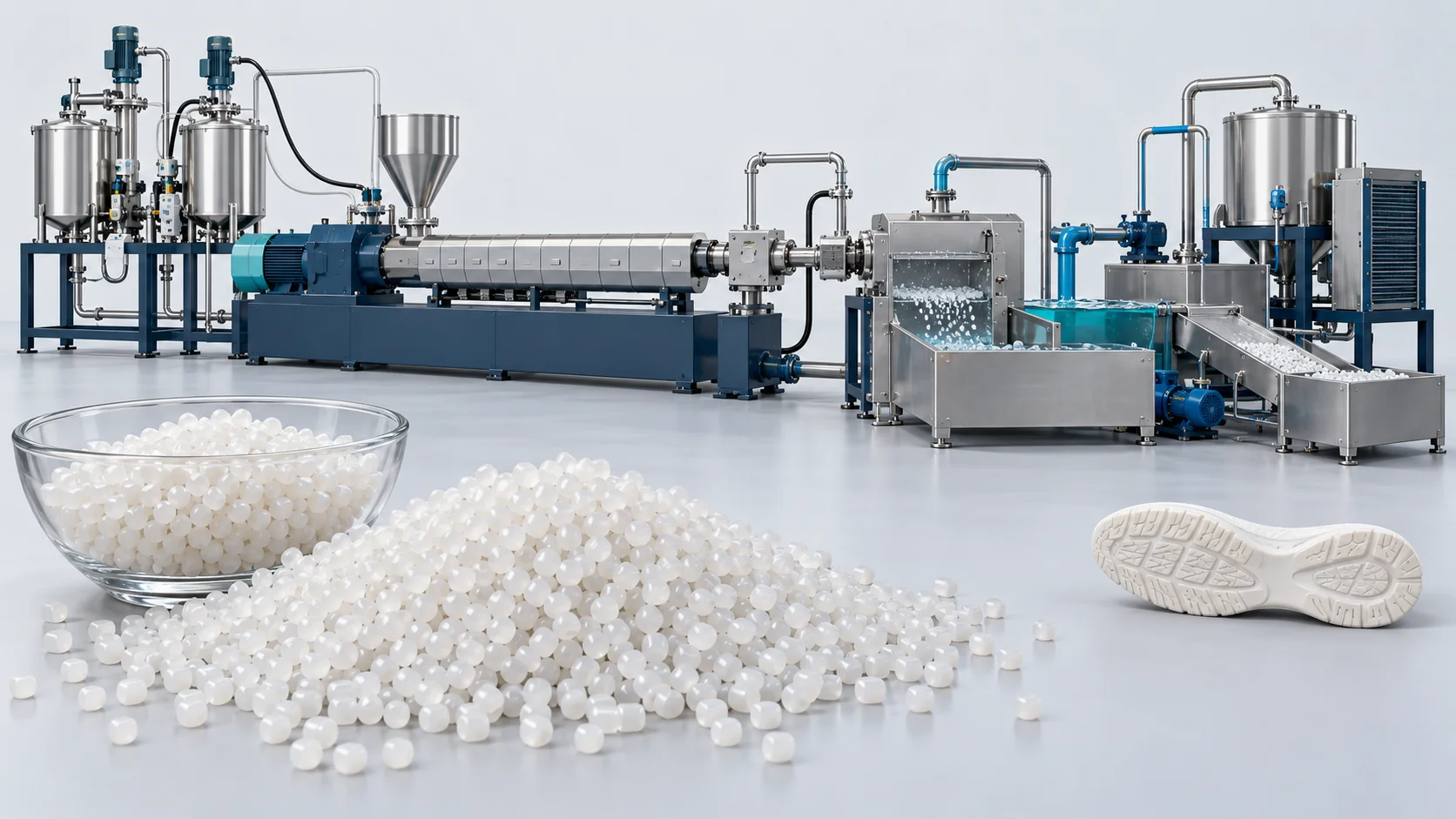
Reactive extrusion and uniform micro-pellet production for downstream expanded-TPU bead and footwear development.
Unexpanded precursor pellets only. Supercritical bead expansion and steam-chest molding are separate downstream packages.
HFFR additive compounding starts from existing TPU and is separate from reactive TPU synthesis.
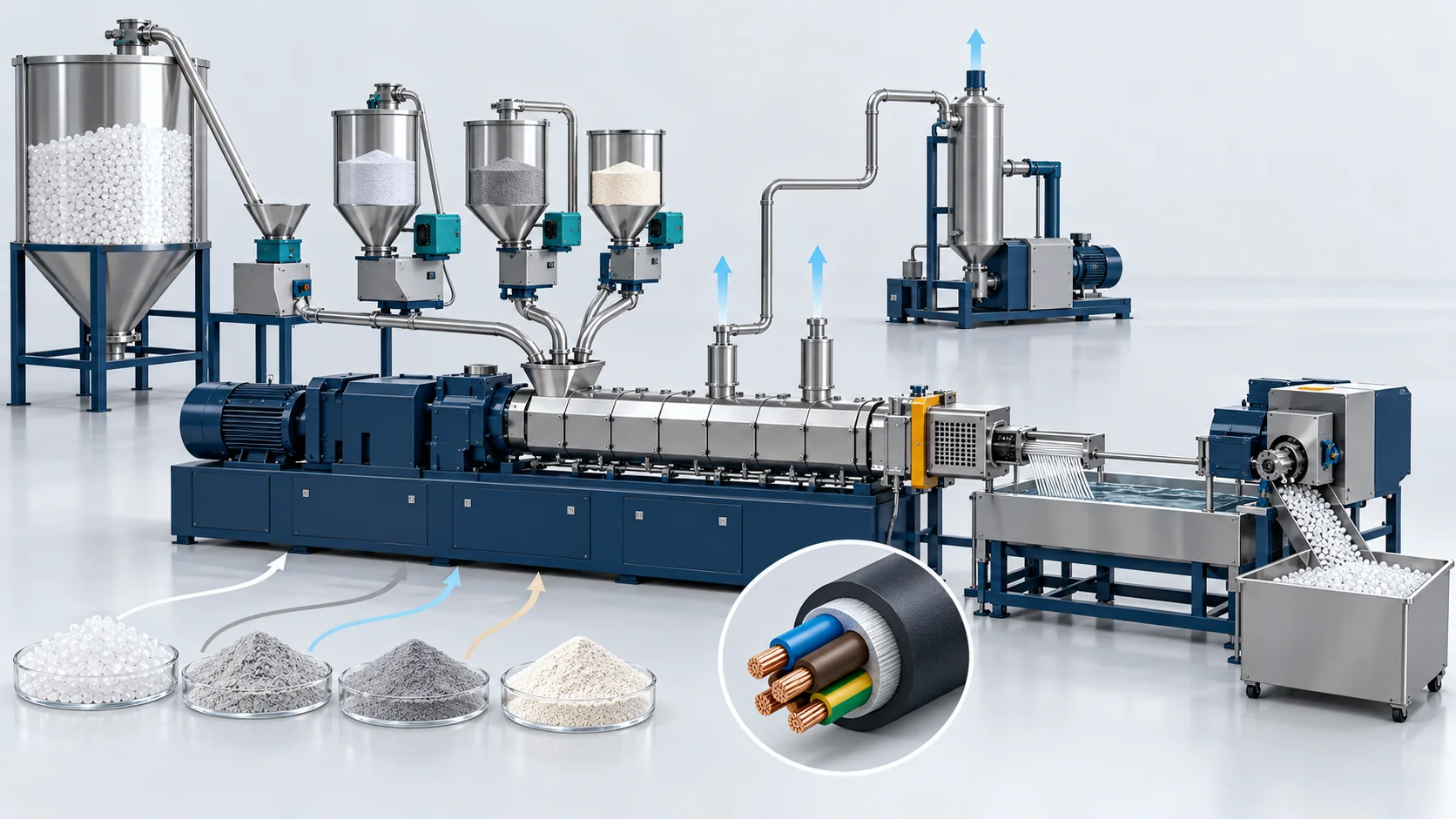
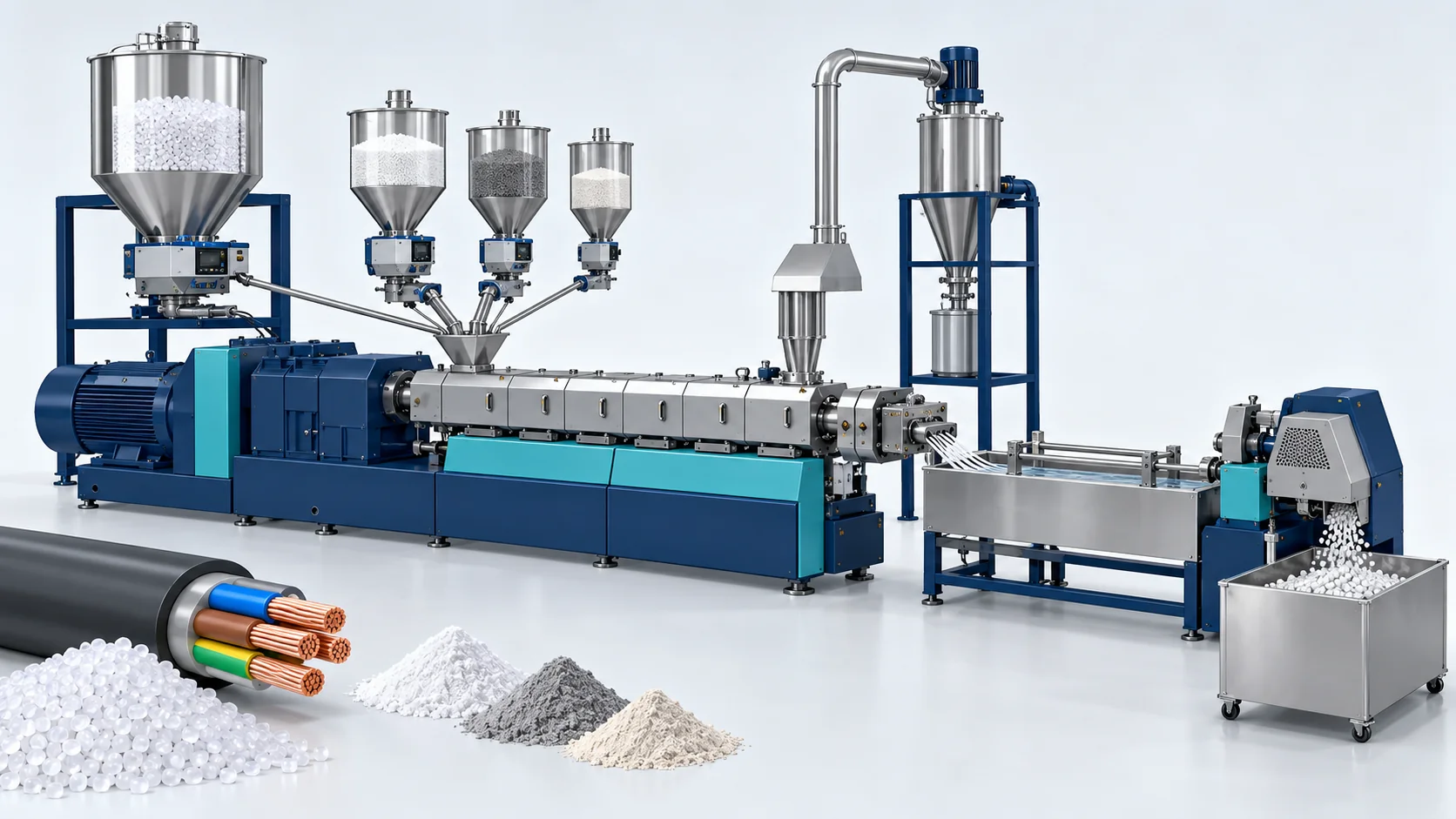
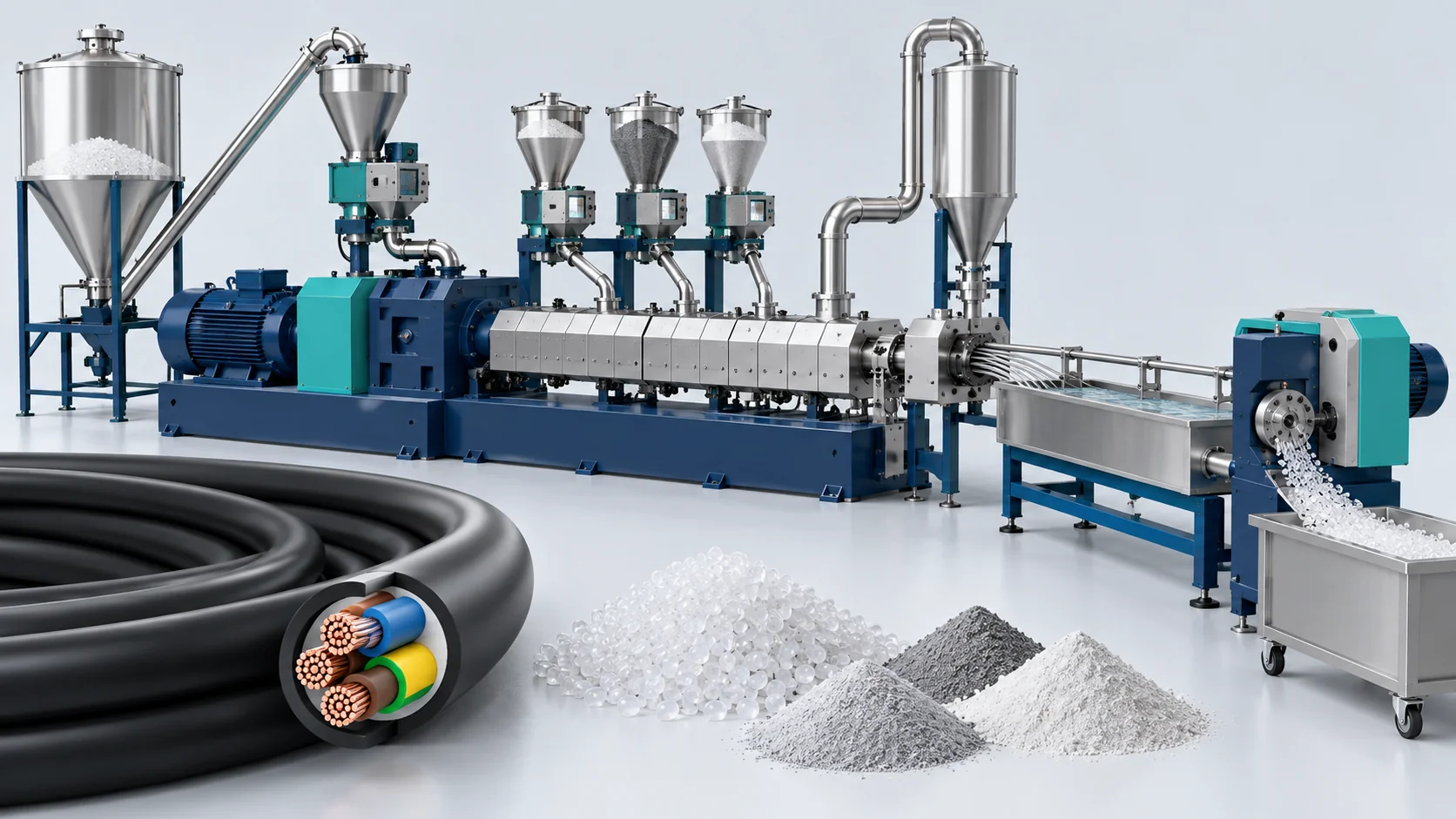
Gravimetric TPU and mineral-additive feeding with configured compounding, venting and pelletizing for cable-grade development.
Published TPU routes include one-step reaction, two-step prepolymer/chain extension, reactive extrusion and specialized compounding or pelletizing. Select the polymer chemistry and grade before configuring feeding, reaction and finishing.
Confirm the target chemistry and film, cable, pellet or ETPU-precursor application and the required material properties.
Condition the selected polyol, isocyanate, chain extender and applicable additives with the specified moisture and feeding controls.
Use the chosen one-step route or prepare prepolymer before chain extension in the separate two-step route.
Coordinate the reaction/extrusion arrangement; additive compounding for the selected grade is a separately defined operation.
Select cooling, pelletizing and the required drying or material conditioning for the target pellet format.
Check the agreed grade properties and processing behavior, retain batch records and validate suitability for the intended downstream product.
Compare reactive extrusion equipment for blown-film or aliphatic grades, ETPU precursor pelletizing and HFFR compounding with the current TPU material-delivery reference. Reactive synthesis and downstream compounding are different operations.
TPU feed preparation, reactive extrusion and melt stabilization for downstream thin-film processing and grade development.
A two-stage aliphatic TPU process with prepolymer preparation, reactive extrusion, melt conditioning and pelletizing for film-grade development.
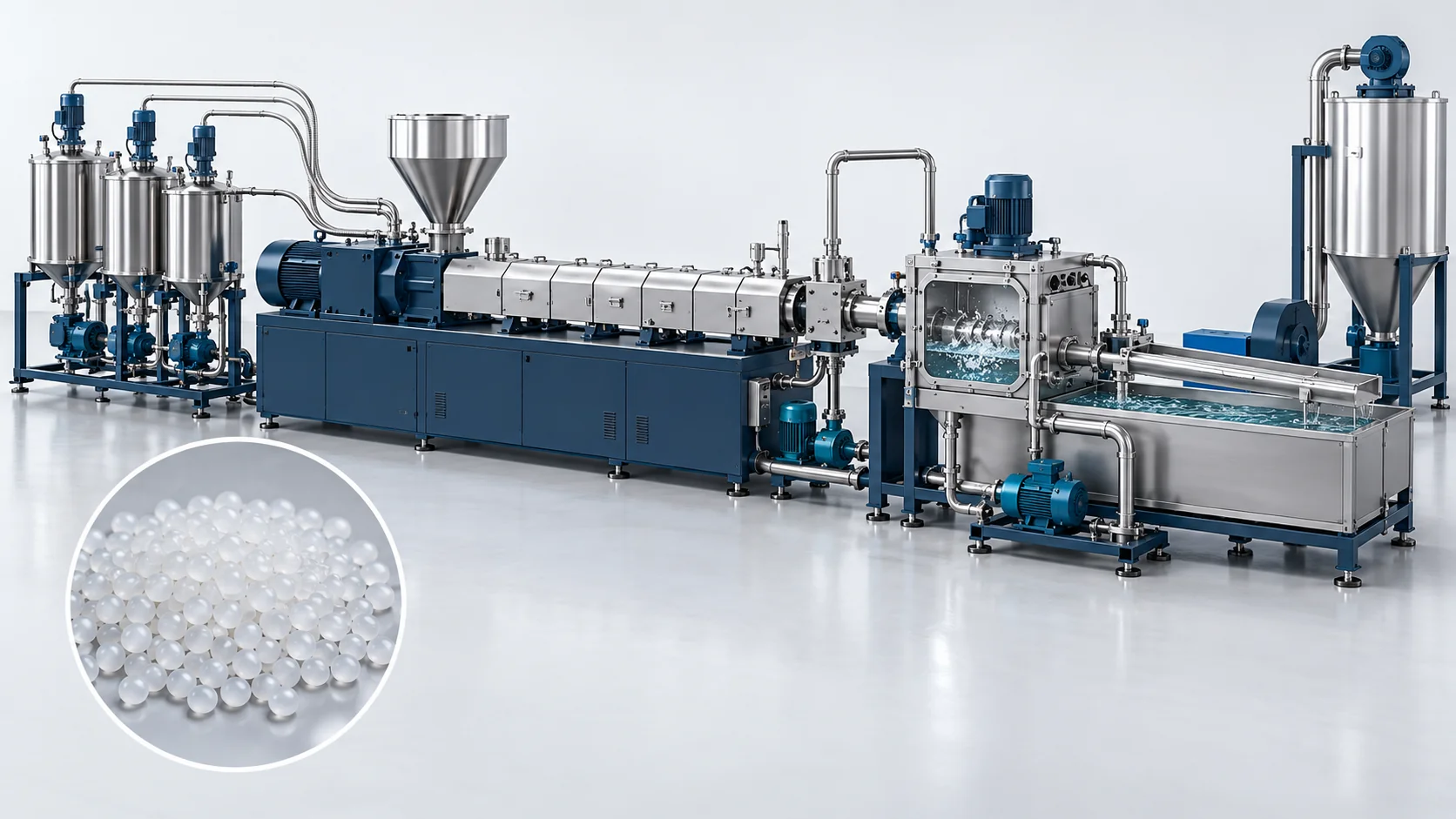
The HF-TPU75-REX is a continuous twin-screw reactive extrusion and underwater pelletizing line engineered for one-shot TPU synthesis, tight molecular weight distribution, and uniform spherical pellet production.
Reactive extrusion and uniform micro-pellet production for downstream expanded-TPU bead and footwear development.
Gravimetric TPU and mineral-additive feeding with configured compounding, venting and pelletizing for cable-grade development.
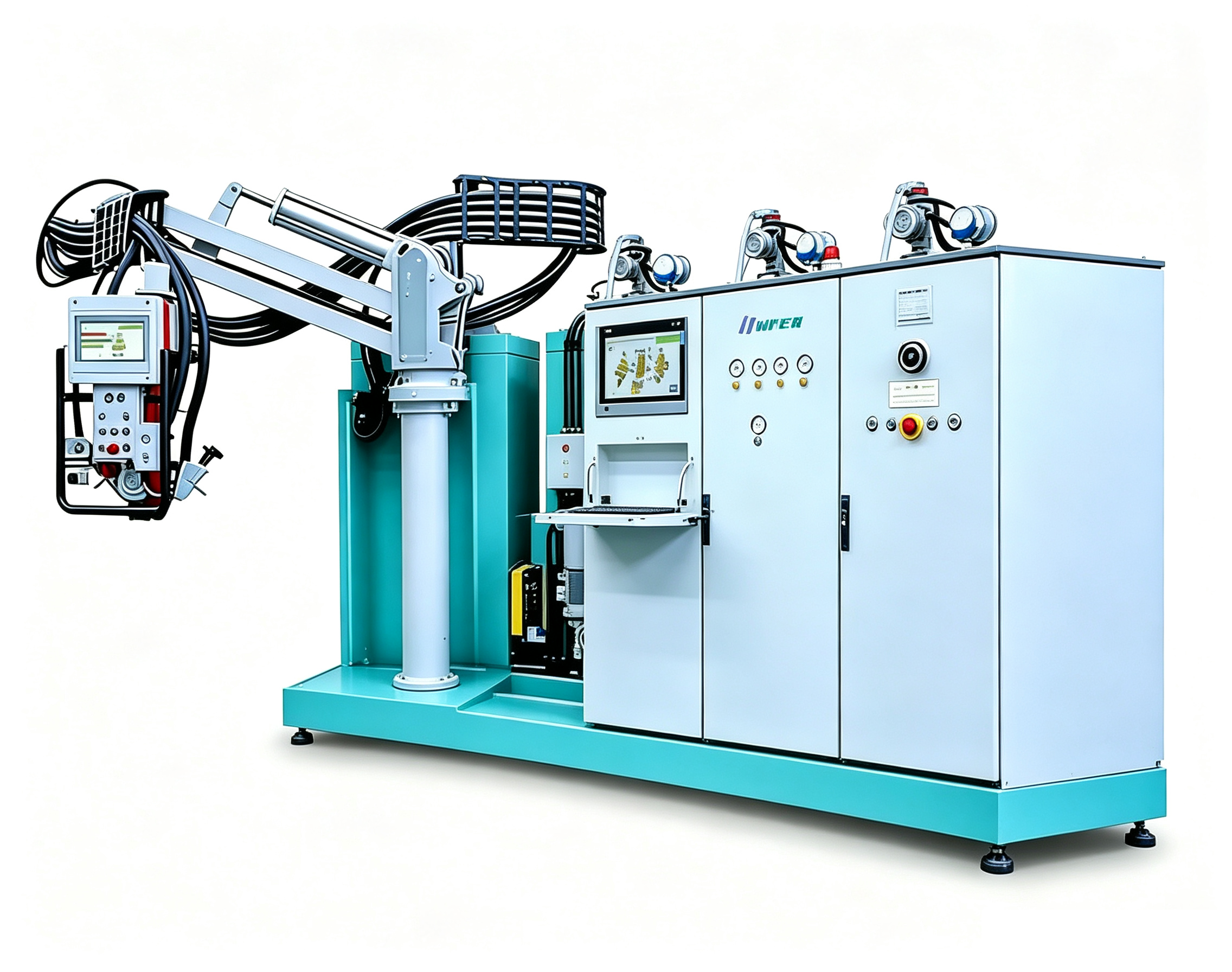
This low-pressure PU catalog reference is a liquid-preparation/metering interface, not a complete reactive extrusion or pelletizing line.
Liquid-feed conditioning, metering and mixing for a specified TPU reaction route, with casting and downstream interfaces agreed for the process.
Liquid preparation and metering reference only; this is not a complete TPU reactive-extrusion or pelletizing line.
Explore the published tpu manufacturing application and project records selected from this category's solution pages. Each record describes its own material, process and equipment scope; project figures and industry references are not universal machine ratings or independently verified results for a new installation.
Review Medical Blown-Film TPU Line in China, including process configuration, related equipment and application requirements. Project figures require stated conditions.
Uninterrupted film duration remains unverified in the record. Film thickness and vapor transmission require the actual specimen; they do not establish finished medical-product qualification.
Process illustration; not a verified installation photograph.
Review PPF Optical Aliphatic TPU Line in China, including process configuration, related equipment and application requirements. Project figures require stated conditions.
Film gel count and UV yellowing concern the tested film construction. Reactor architecture, sampling and optical inspection require the actual process and source records.
Process illustration; not a verified installation photograph.
Review TPU Reactive Extrusion Plant in China, including process configuration, related equipment and application requirements. Project figures require stated conditions.
Molecular-weight distribution, pellet output and melt-flow variation need the grade, GPC method, operating hours and sampling period; they are not universal extrusion-line guarantees.
Process illustration; not a verified installation photograph.
Check the supplied scope separately from expansion and bead molding.
The supplied China project brief describes a TPU reactive-extrusion and micro-pelletizing line for unexpanded ETPU precursor pellets. Bead expansion and molded-sample rebound are downstream references, not proven functions of the pelletizer.
The supplied line makes unexpanded TPU precursor pellets. Expanded-bead density and molded-sample rebound are downstream references, not pelletizer functions; the rebound method remains unverified.
Process illustration; not a verified installation photograph.
Review EV Cable HFFR TPU Compounding Line in China, including process configuration, related equipment and application requirements. Project figures require stated conditions.
This is existing-TPU/additive compounding, not reactive polymer synthesis. Material flammability and tensile results require the tested specimen and do not establish finished-cable qualification.
Process illustration; not a verified installation photograph.
This public equipment/process reference is not a Haifeng delivery record.
A public equipment reference on TPU reactive twin-screw extrusion and downstream pelletizing, with route and interface planning considerations; not a Haifeng delivery record.
Public reactive-extrusion process/equipment reference, not a Haifeng delivery. No universal residence time or production rate is established by the architecture alone.
Process illustration; not a verified installation photograph.
Polymerization starts with reactive feeds to form TPU. Compounding processes existing TPU with selected additives; the feed and reaction requirements differ.
A prepolymer route includes a separately defined first reaction stage. A one-step route combines the principal reactive feeds without that separate stage.
Those are separate downstream processes. Define expansion, bead handling and part-molding equipment independently from precursor pellet production.
Tell us your material system, part dimensions and production target. Our team will reply within one business day. Once requirements are clear, we provide a preliminary proposal within two business days.