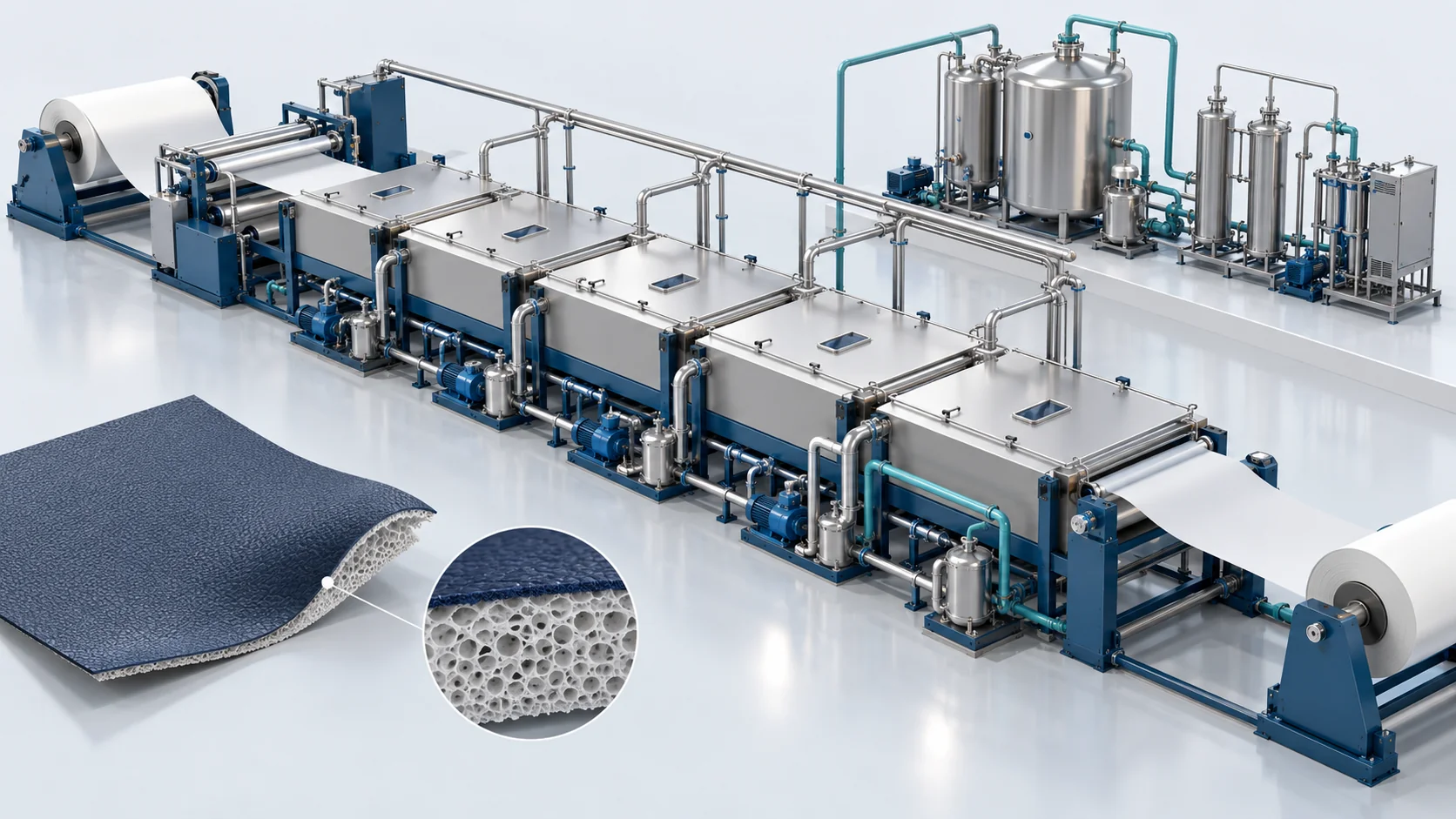
DMF Coagulation / Washing
Wet-Process DMF Coagulation Solution
A multistage DMF/water coagulation and countercurrent washing package with monitored circulation and recovery interfaces.

Explore PU synthetic leather routes, including wet processing, transfer coating, water-borne foaming and solvent-free reaction coating. Configure equipment for the substrate and selected chemistry.
Compare resin chemistry, substrate, layer construction and finishing requirements. Wet coagulation, water-borne physical foaming and reactive coating use different process and utility interfaces.
A multistage DMF/water coagulation and countercurrent washing package with monitored circulation and recovery interfaces.
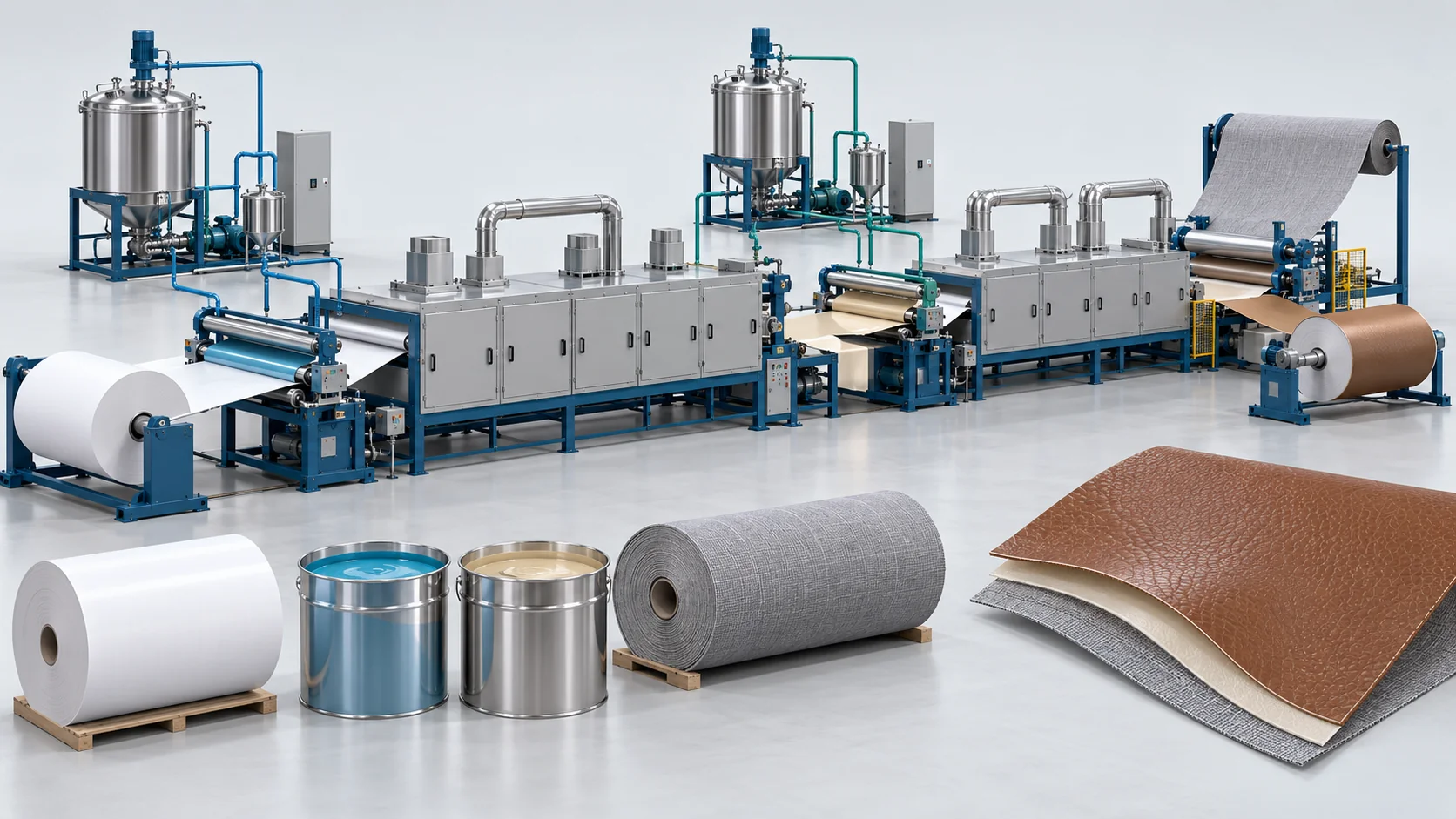
Release-paper topcoat and adhesive delivery, coordinated drying and lamination for dry-process PU synthetic leather.
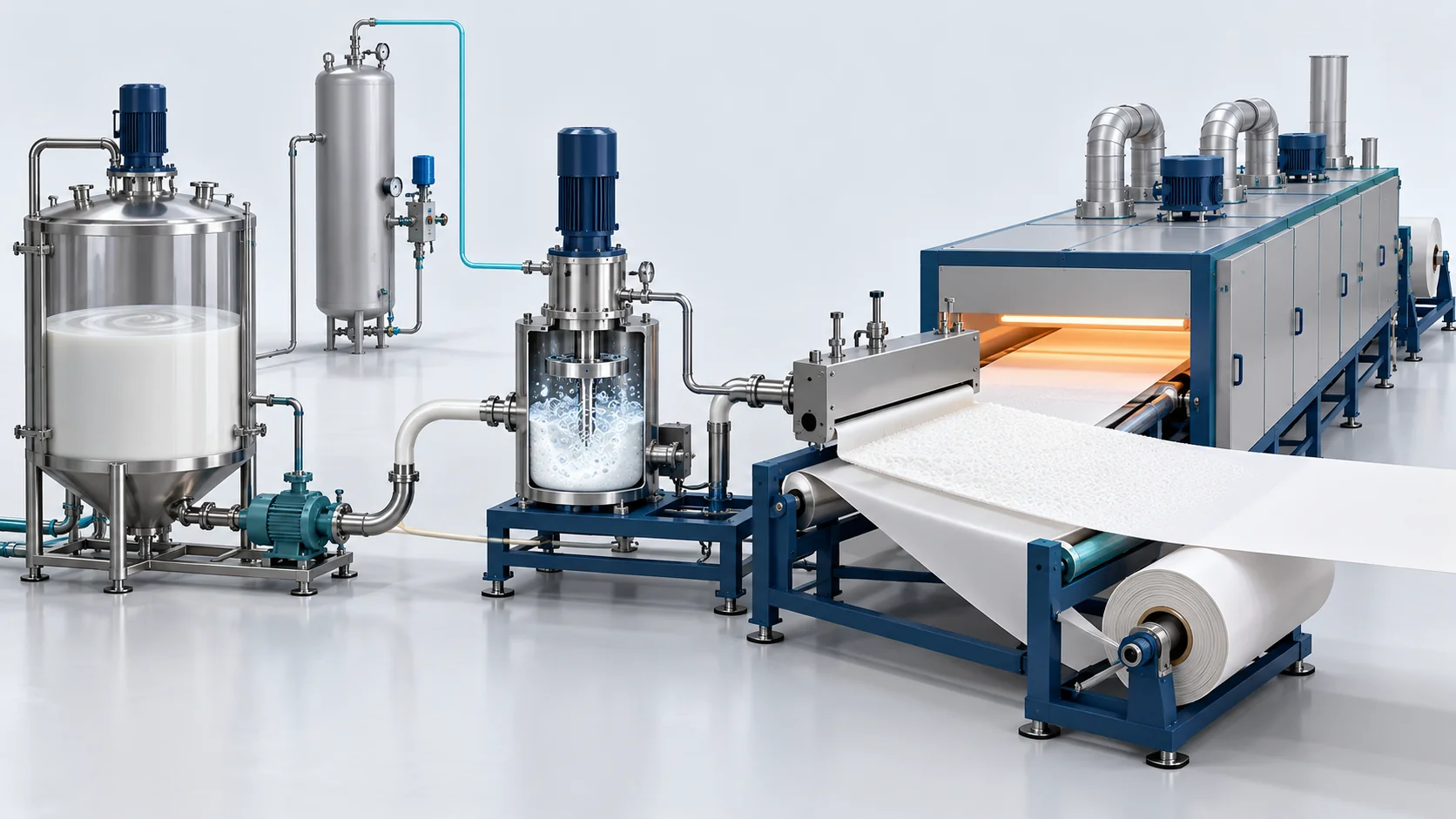
Mechanical gas dispersion into water-borne PU, followed by configured coating and drying for synthetic-leather layers.
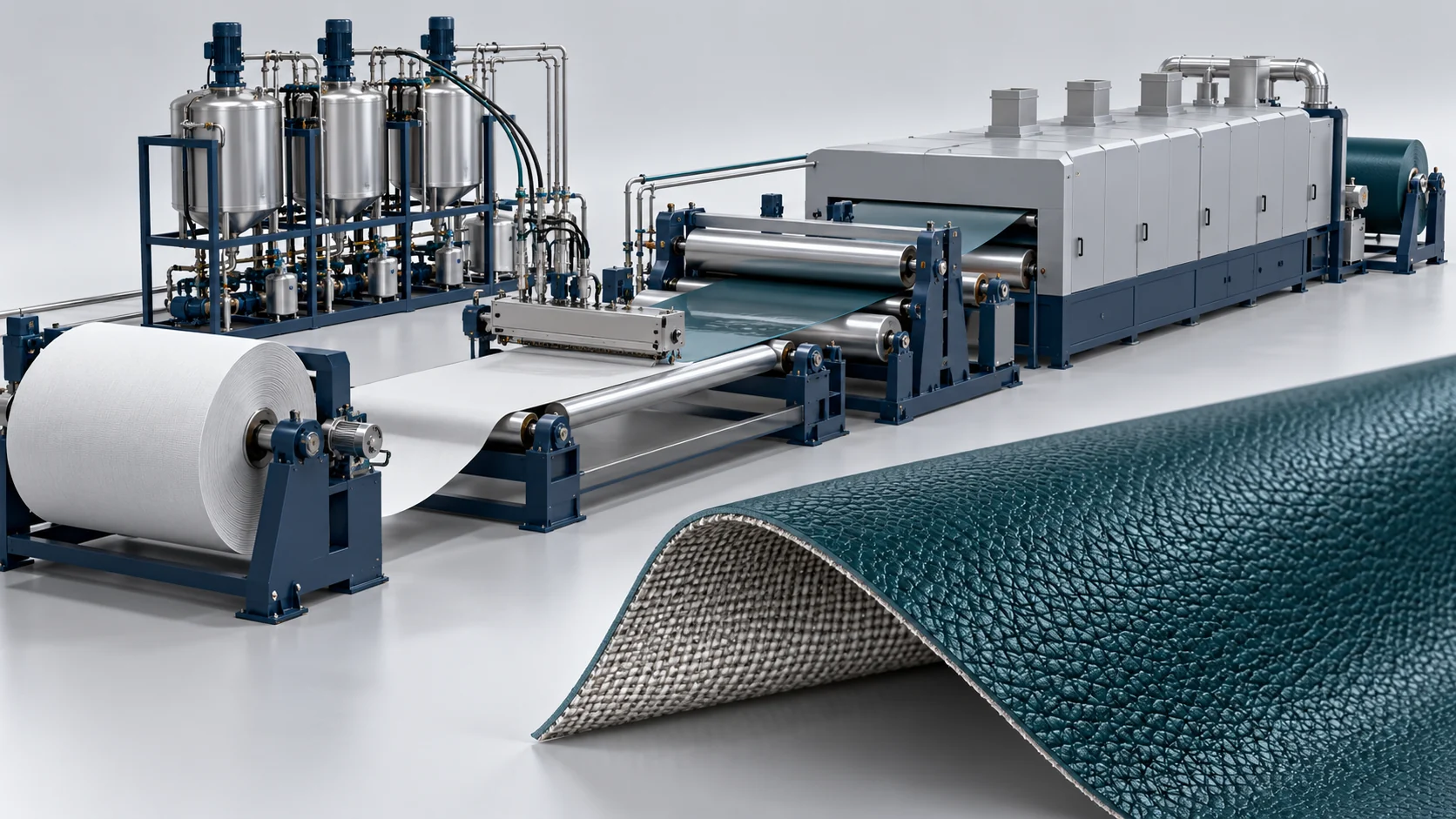
Solvent-free reactive PU leather coating with conditioned feeds, metering and mixing, configured reverse-roll application, lamination and curing.
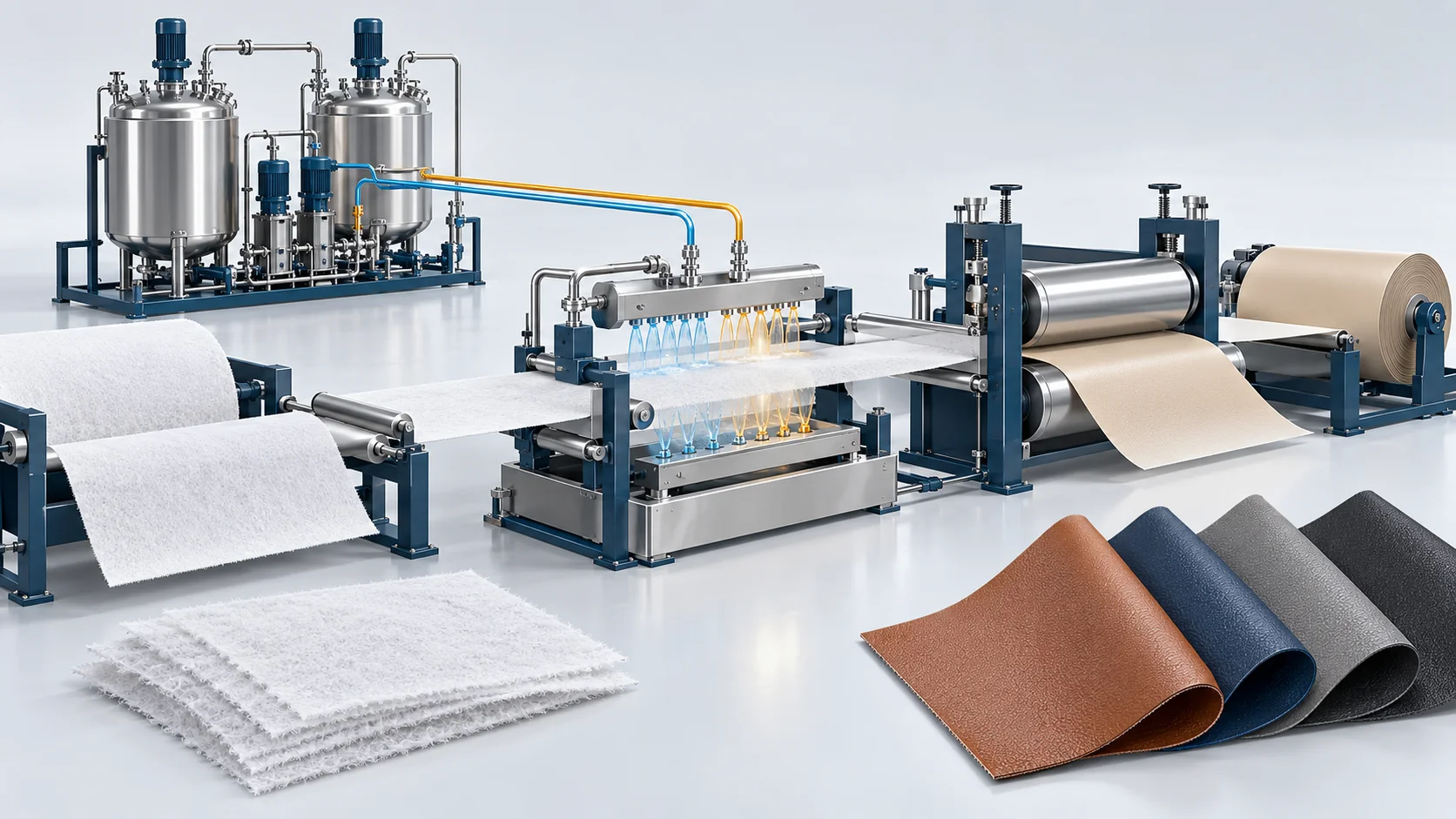
Two-component reactive impregnation and coordinated calendering for microfiber synthetic-leather substrates.
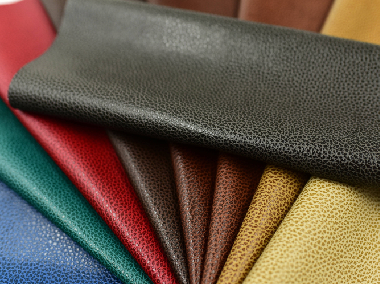
The complete wet-cast leather production line offers a comprehensive advantage in terms of quality, environmental friendliness, flexibility, and technical service, enabling customers to consistently produce high-quality leather.
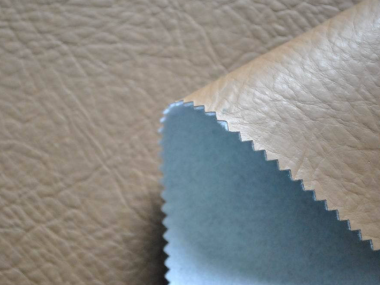
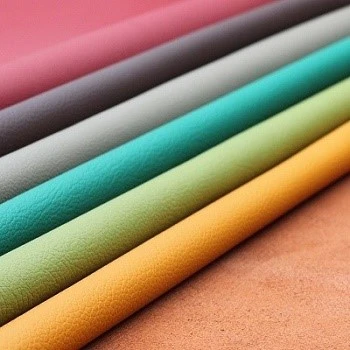
Water-based synthetic leather is used in footwear materials, automotive interiors, 3C electronic packaging, and other fields.
Engineering excellence and manufacturing reliability that global manufacturers depend on for their polyurethane production operations.
Dry-process transfer coating, wet DMF coagulation, water-borne mechanical foaming and solvent-free reactive coating or impregnation are separate synthetic-leather routes. Configure substrate handling and downstream treatment for the chosen system.
Confirm the substrate, layer construction and whether production uses dry transfer, wet coagulation, water-borne foam or a solvent-free system.
Prepare the route-specific PU material and substrate or release paper, including feeding and web-tension arrangements.
Coordinate coating, mechanical foam application or impregnation with the defined material delivery and layer thickness.
Use drying and lamination for the selected dry route, coagulation and washing for the wet route, or the specified reactive cure for solvent-free production.
Arrange separation, drying, finishing and winding appropriate to the selected leather construction.
Check thickness, surface quality, bonding and agreed mechanical properties, and document route-specific material and process conditions.
Compare dry transfer-coating equipment, wet coagulation and washing lines, water-borne mechanical foam systems and solvent-free coating or microfiber impregnation equipment. Material and environmental handling requirements are route-specific.
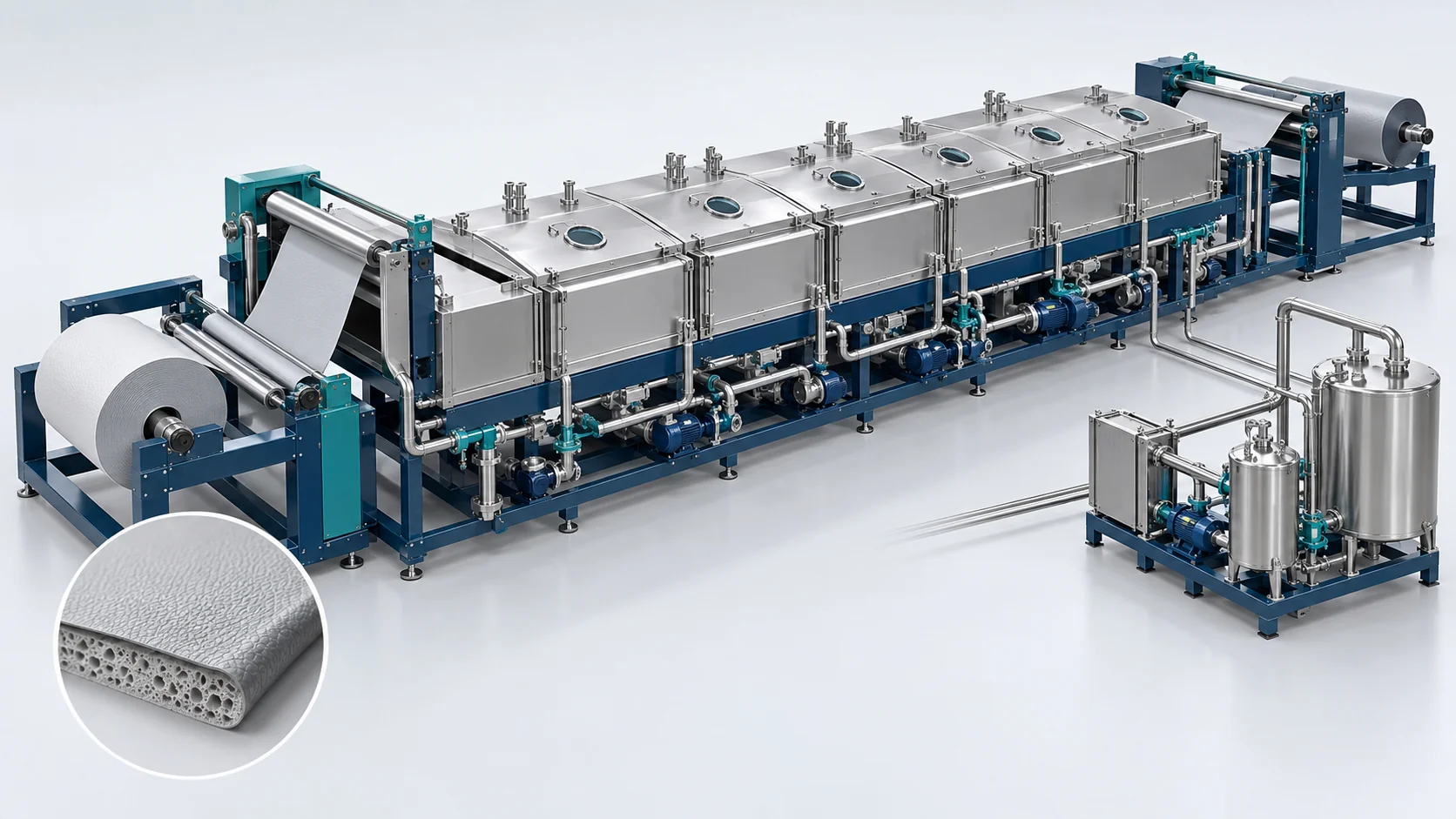
DMF Coagulation and Washing Line for Wet-Process Leather. Review configuration, material requirements and process interfaces with Haifeng.
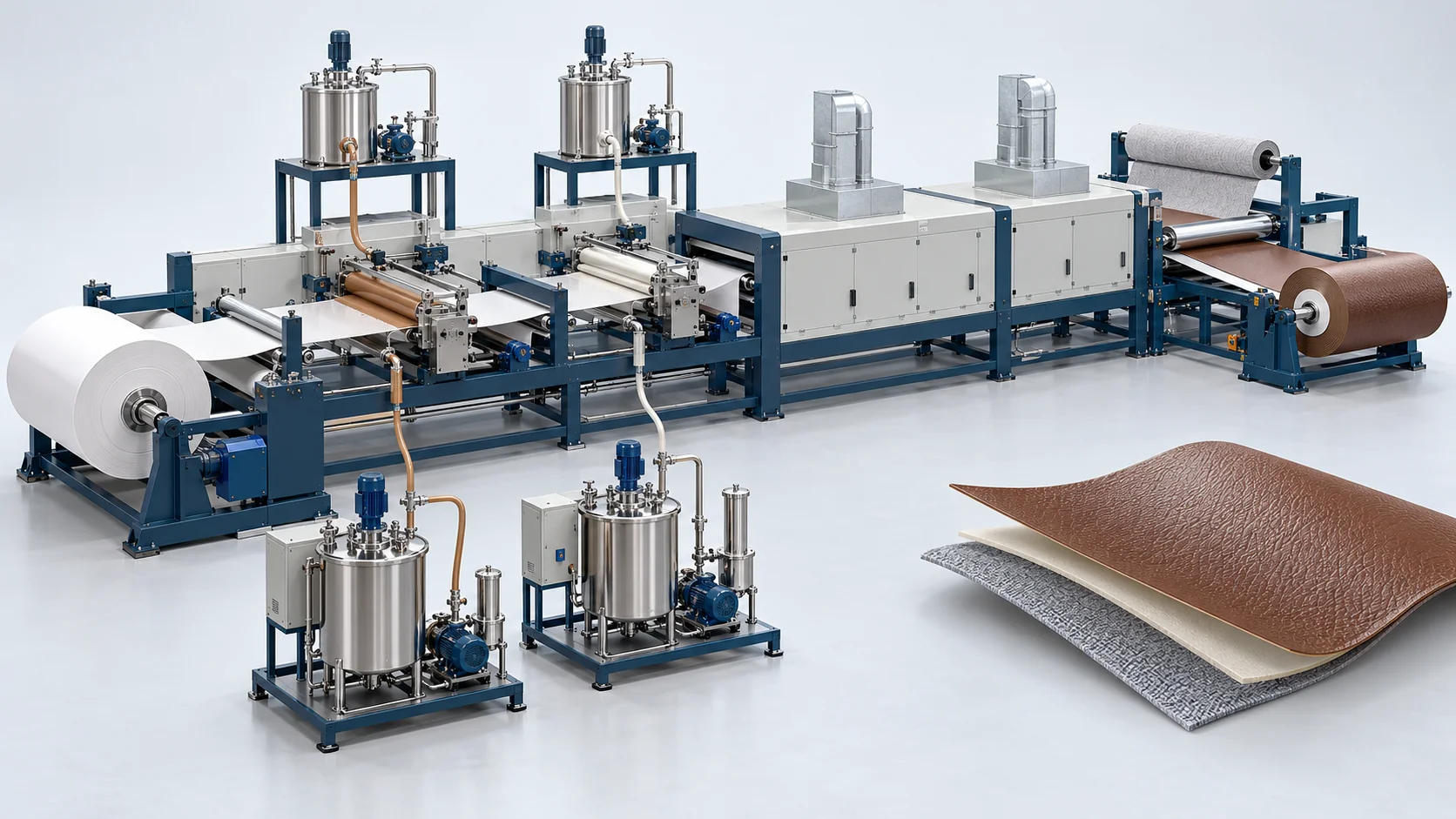
Release-paper topcoat and adhesive delivery, coordinated drying and lamination for dry-process PU synthetic leather.
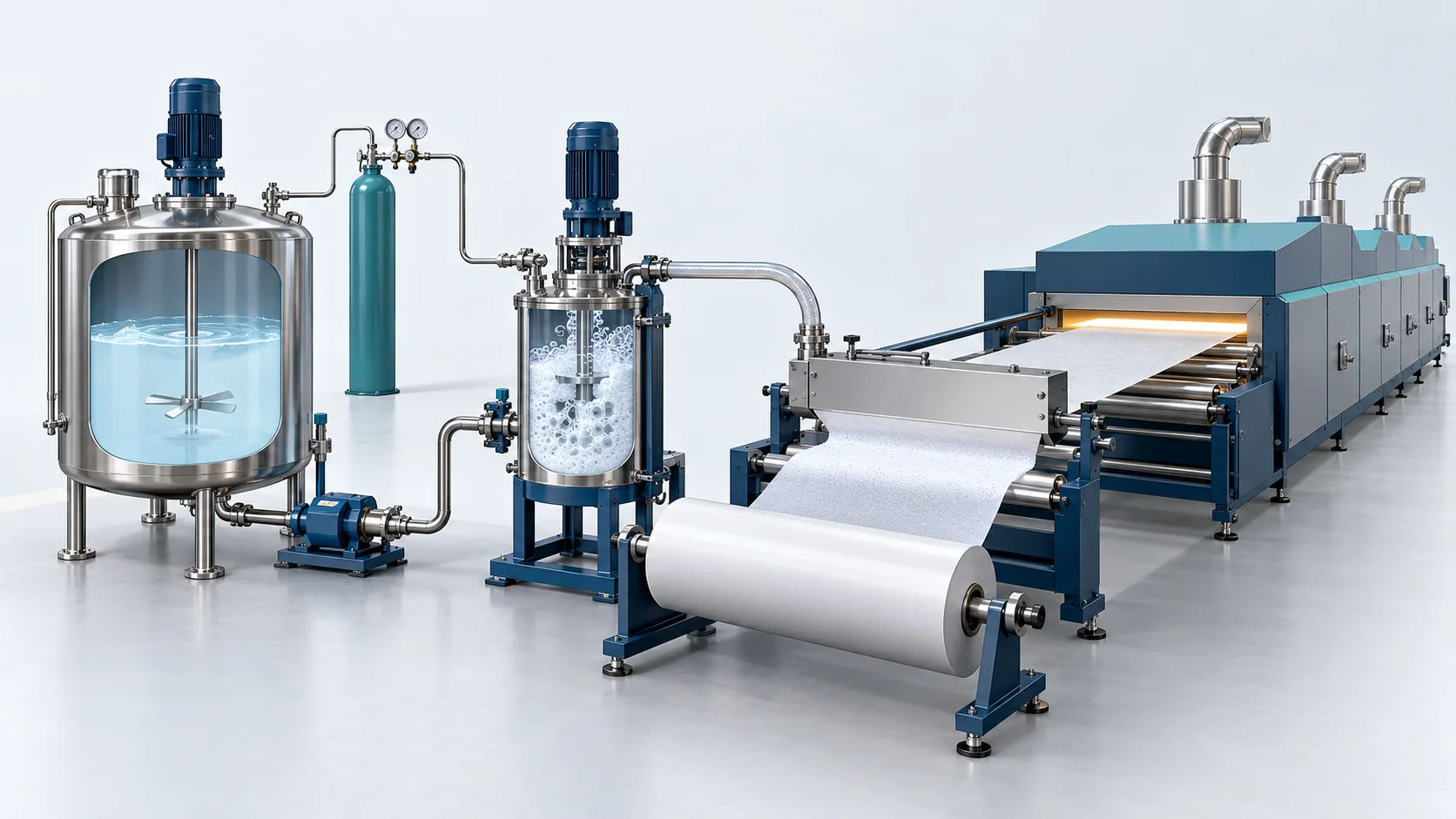
Mechanical gas dispersion into water-borne PU, followed by configured coating and drying for synthetic-leather layers.
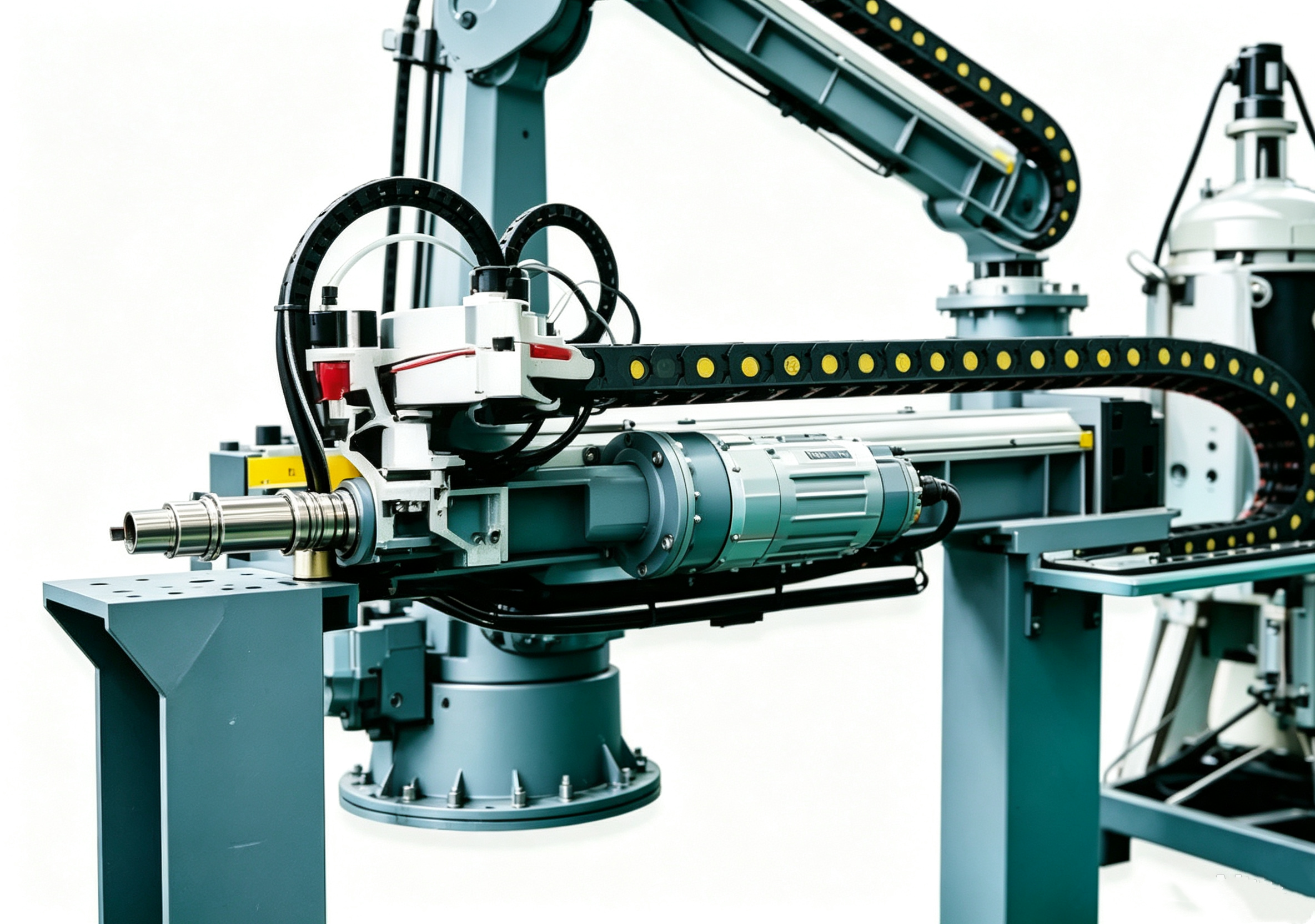
Reactive PU metering and delivery for solvent-free leather coating. Foaming functions follow the specified material system and configuration.
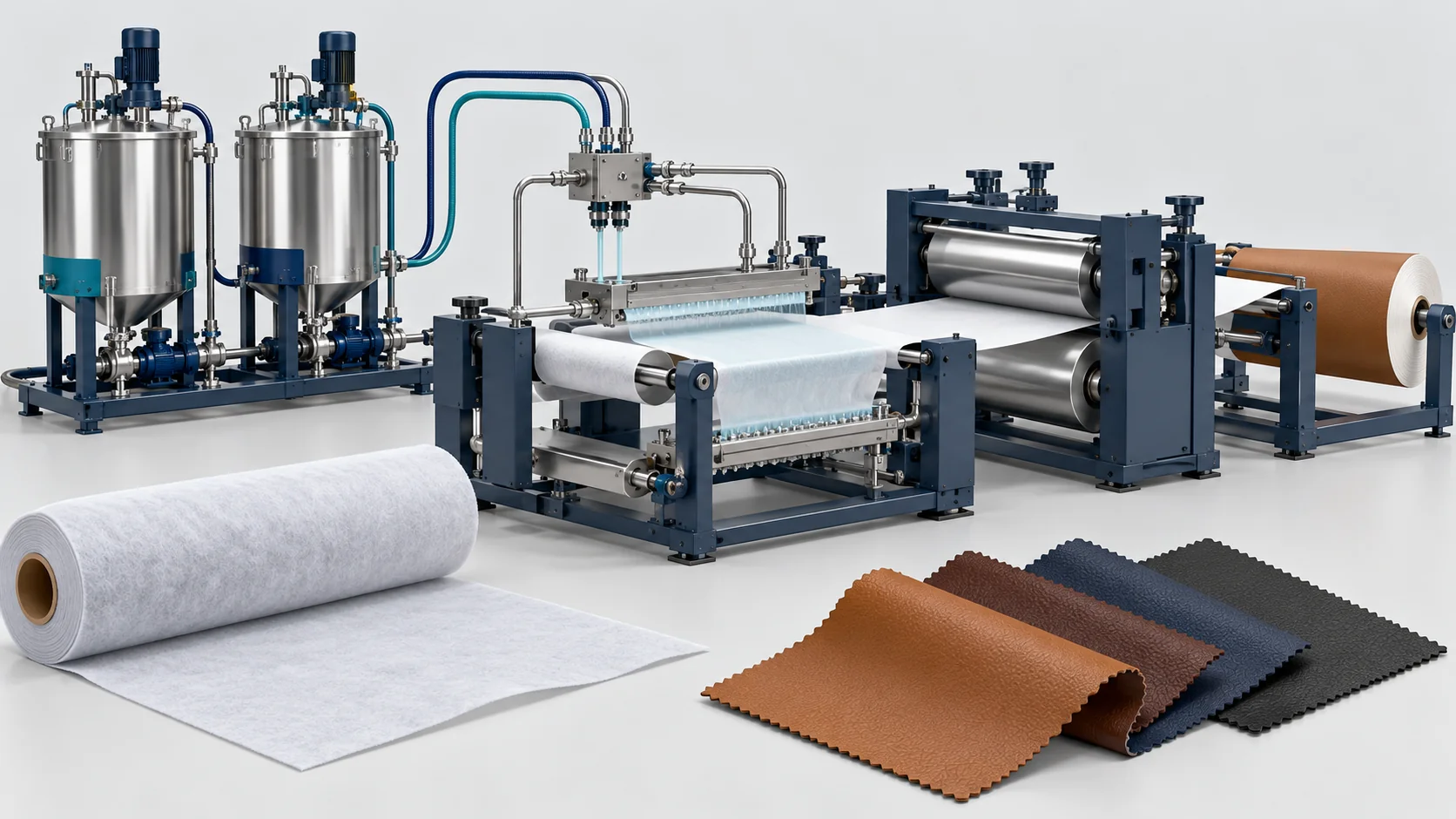
Solvent-Free PU Impregnation Line for Microfiber Leather. Review configuration, material requirements and process interfaces with Haifeng.
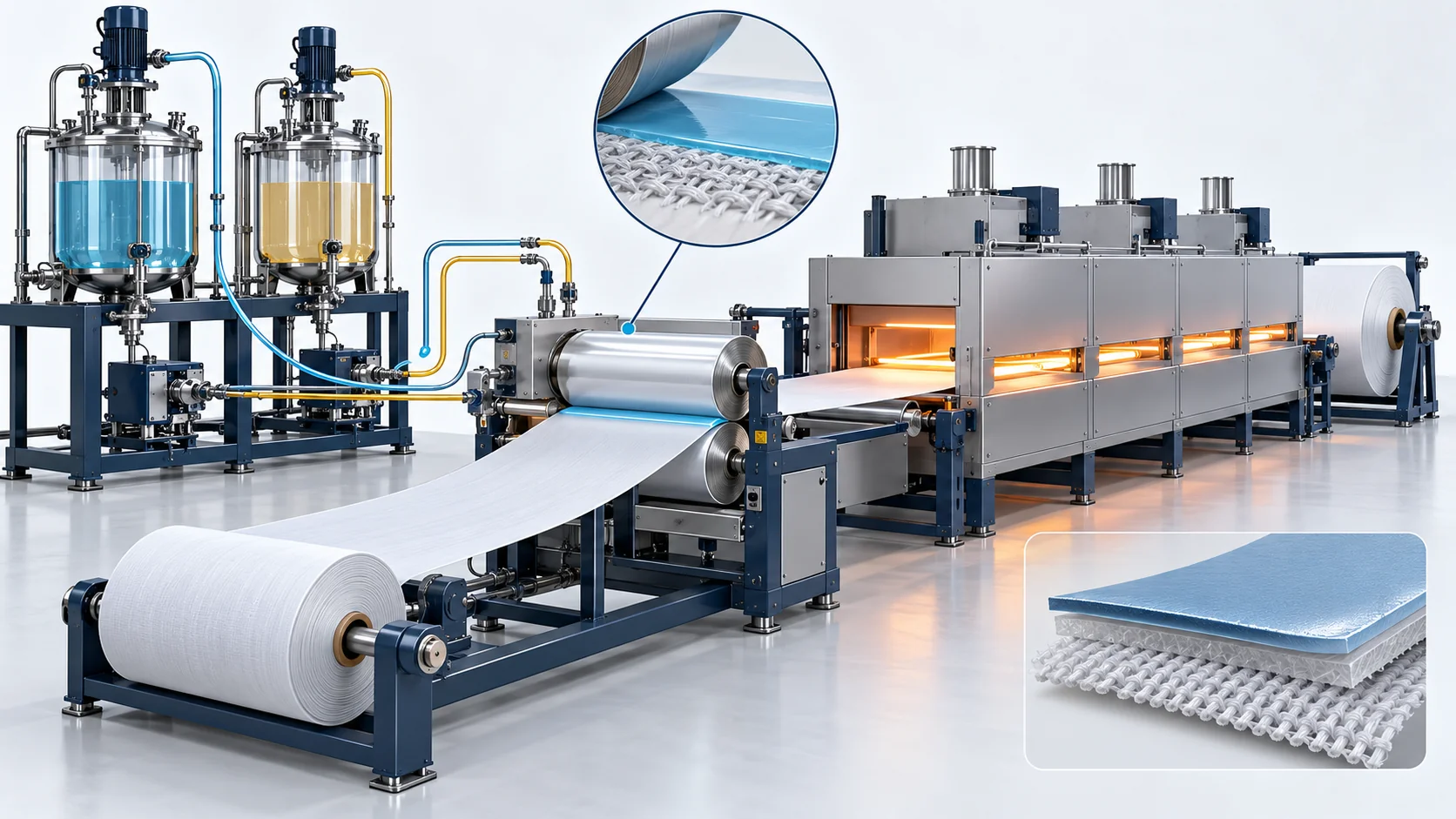
The HF-SFL180-2K is a two-component solvent-free polyurethane coating and lamination machine for automotive and furniture synthetic leather. VOC outcomes depend on the formulation and application and require testing.
Explore the published pu synthetic leather application and project records selected from this category's solution pages. Each record describes its own material, process and equipment scope; project figures and industry references are not universal machine ratings or independently verified results for a new installation.
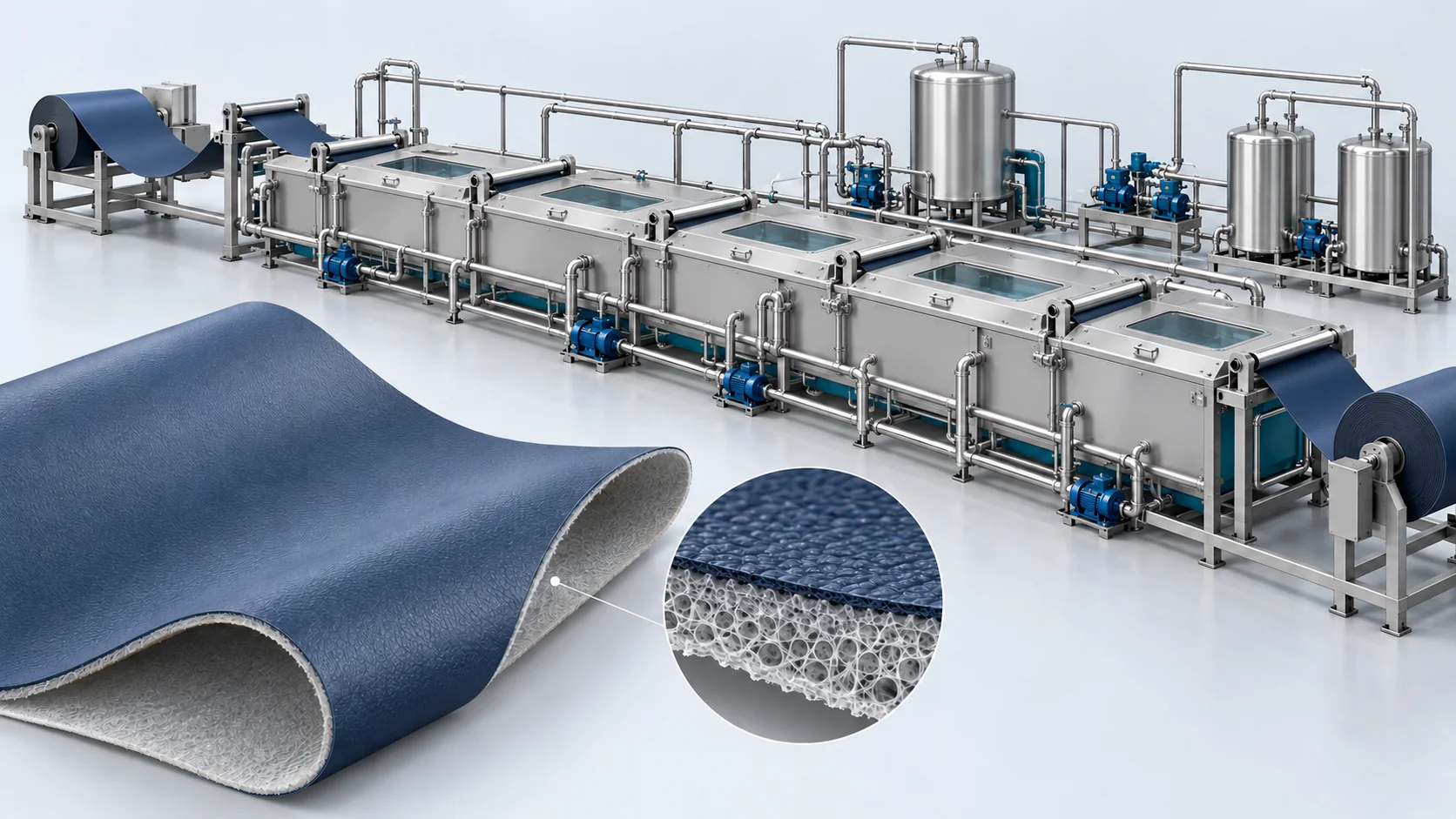
Review Microfiber Wet Coagulation Energy Retrofit in China, including process configuration, related equipment and application requirements. Project figures require stated conditions.
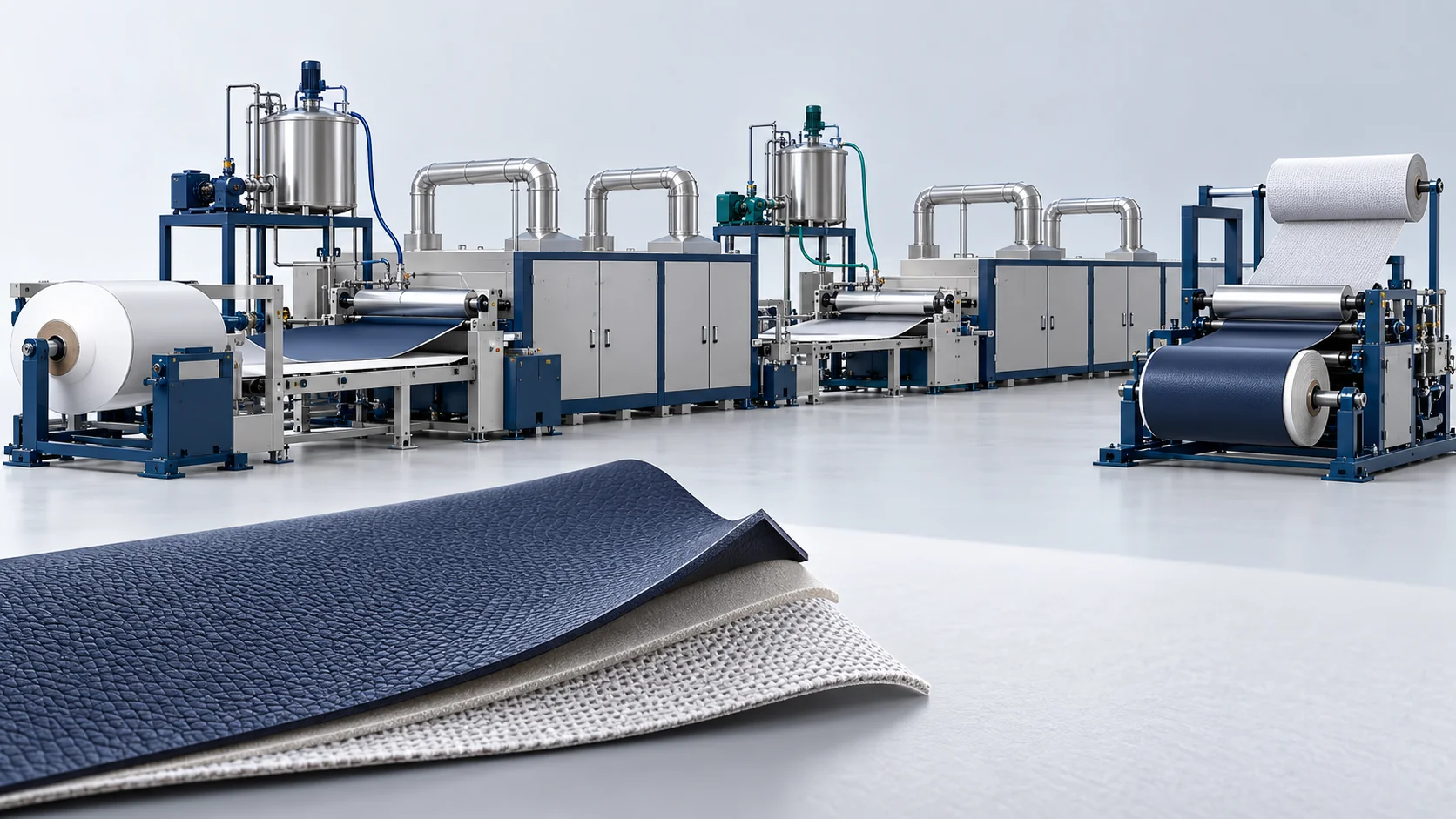
Review Sports Footwear Leather Line in China, including process configuration, related equipment and application requirements. Project figures require stated conditions.
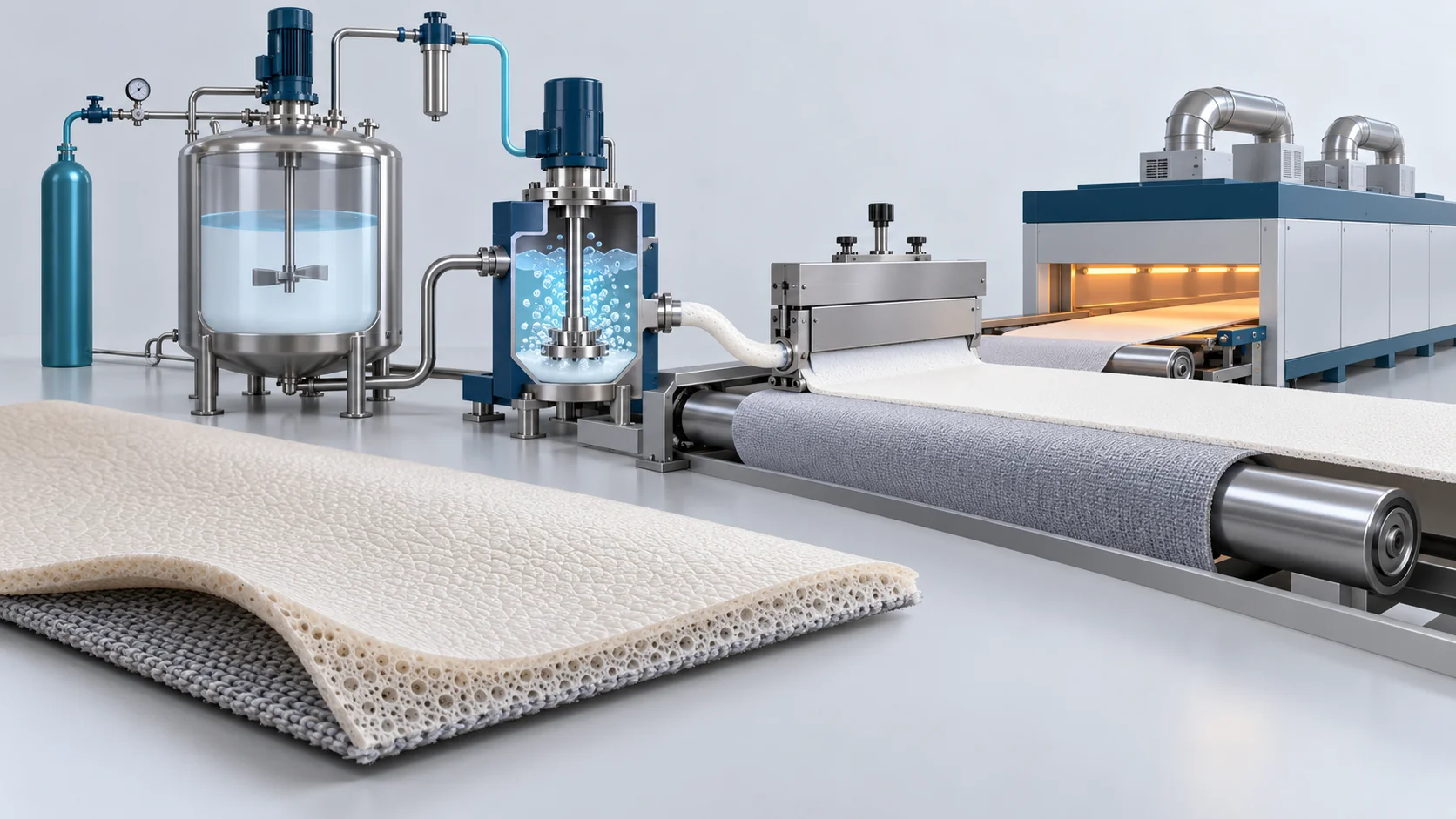
Review Water-Borne Microfiber Leather Base Line in China, including process configuration, related equipment and application requirements. Project figures require stated conditions.
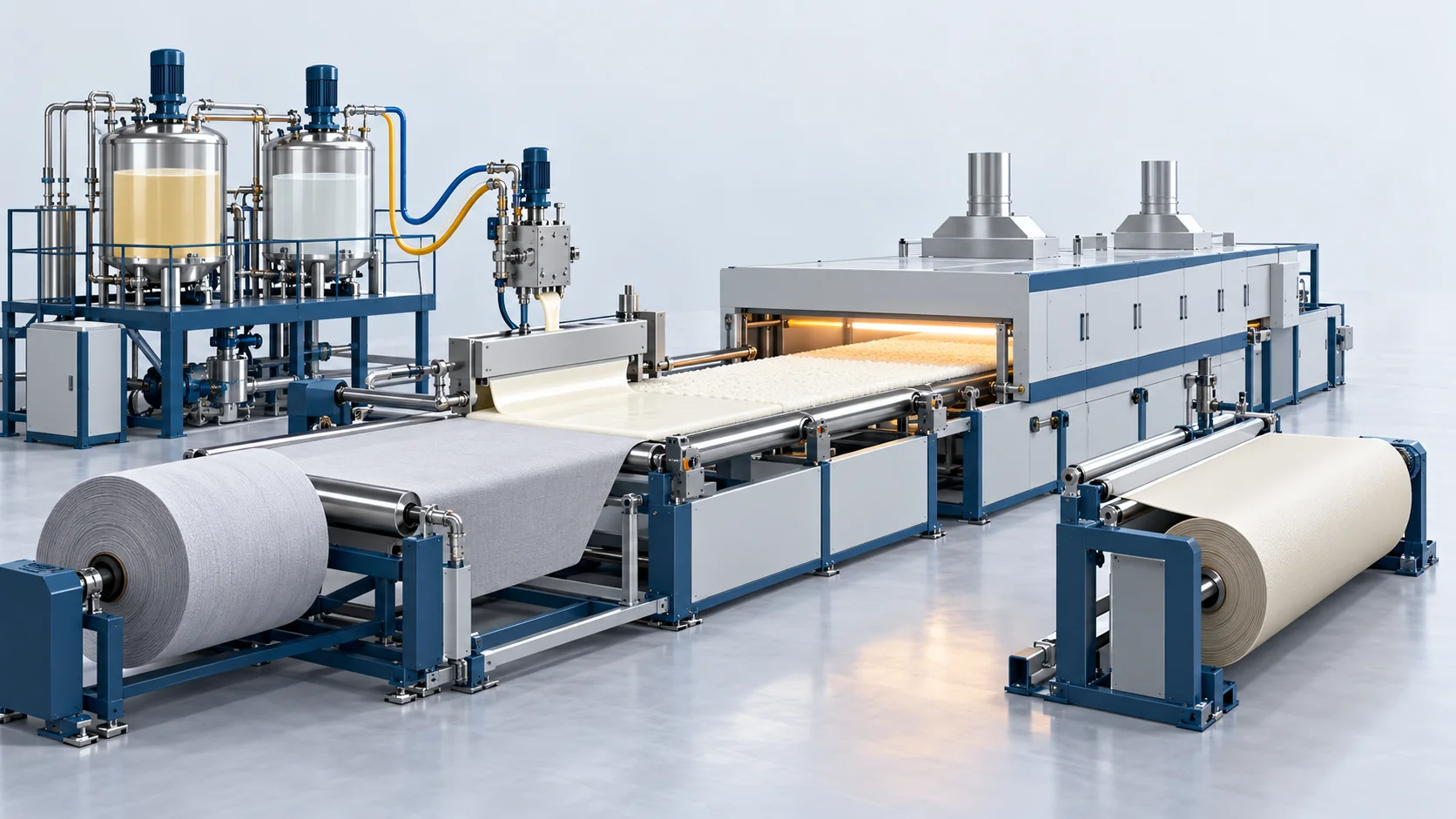
Intelligent Solvent-Free PU Foaming Coating Production Line Upgrade presents an intelligent solvent-free polyurethane foaming and coating solution designed to improve production efficiency, process control, product consistency, and sustainable manufacturing.
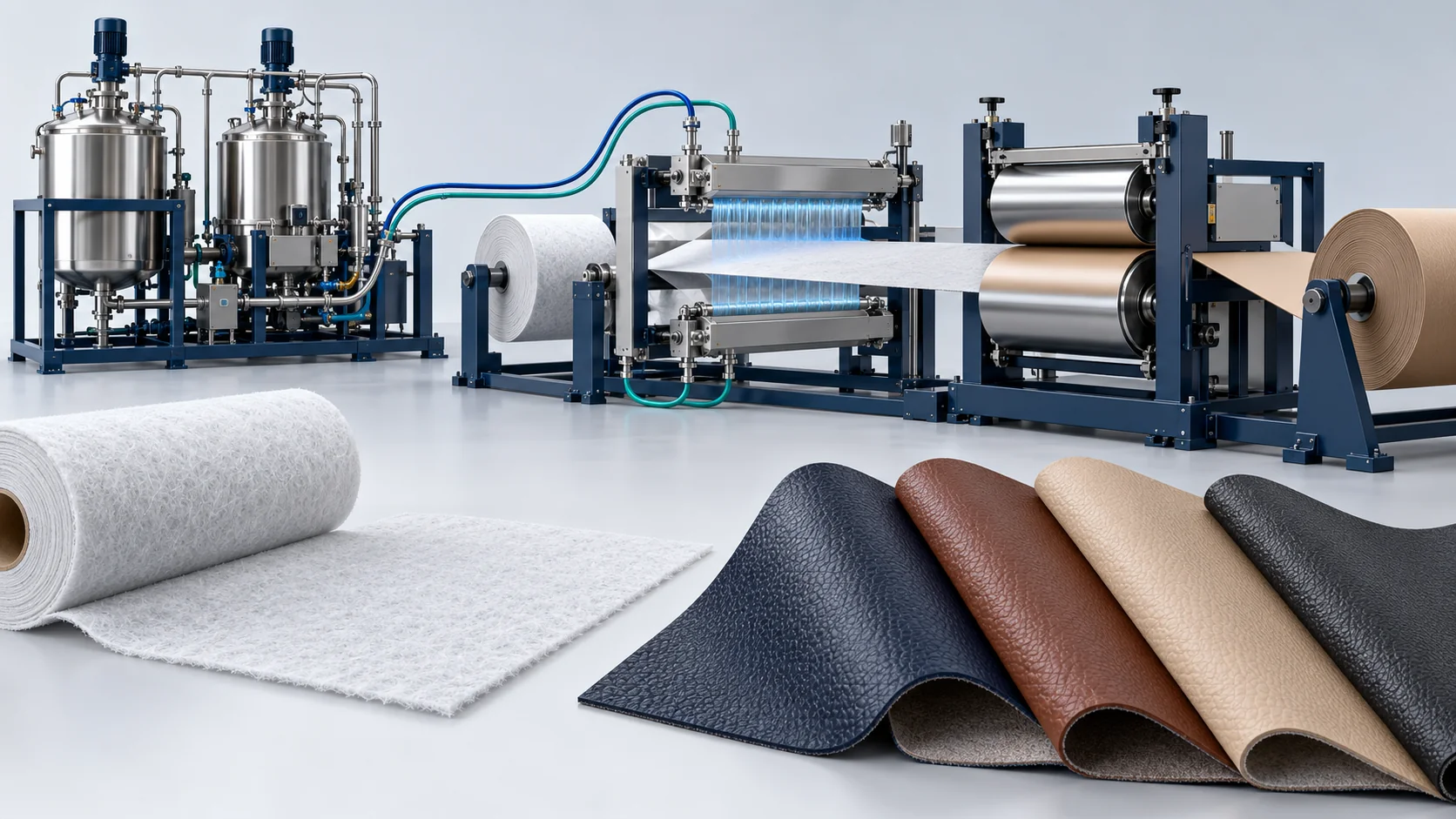
Review Automotive Microfiber Suede Line in China, including process configuration, related equipment and application requirements. Project figures require stated conditions.
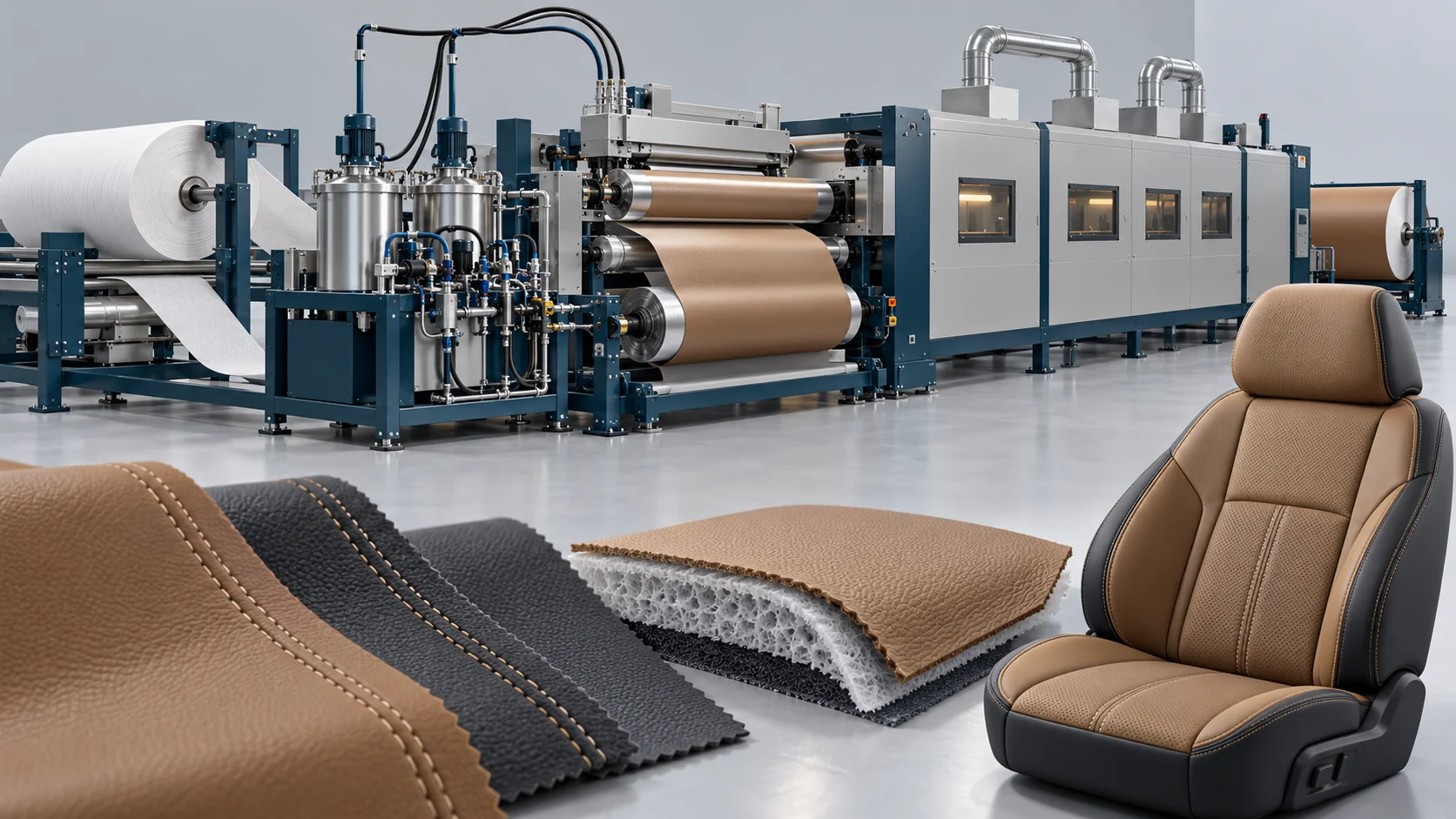
Review Automotive Leather Solvent-Free Retrofit in China, including process configuration, related equipment and application requirements. Project figures require stated conditions.
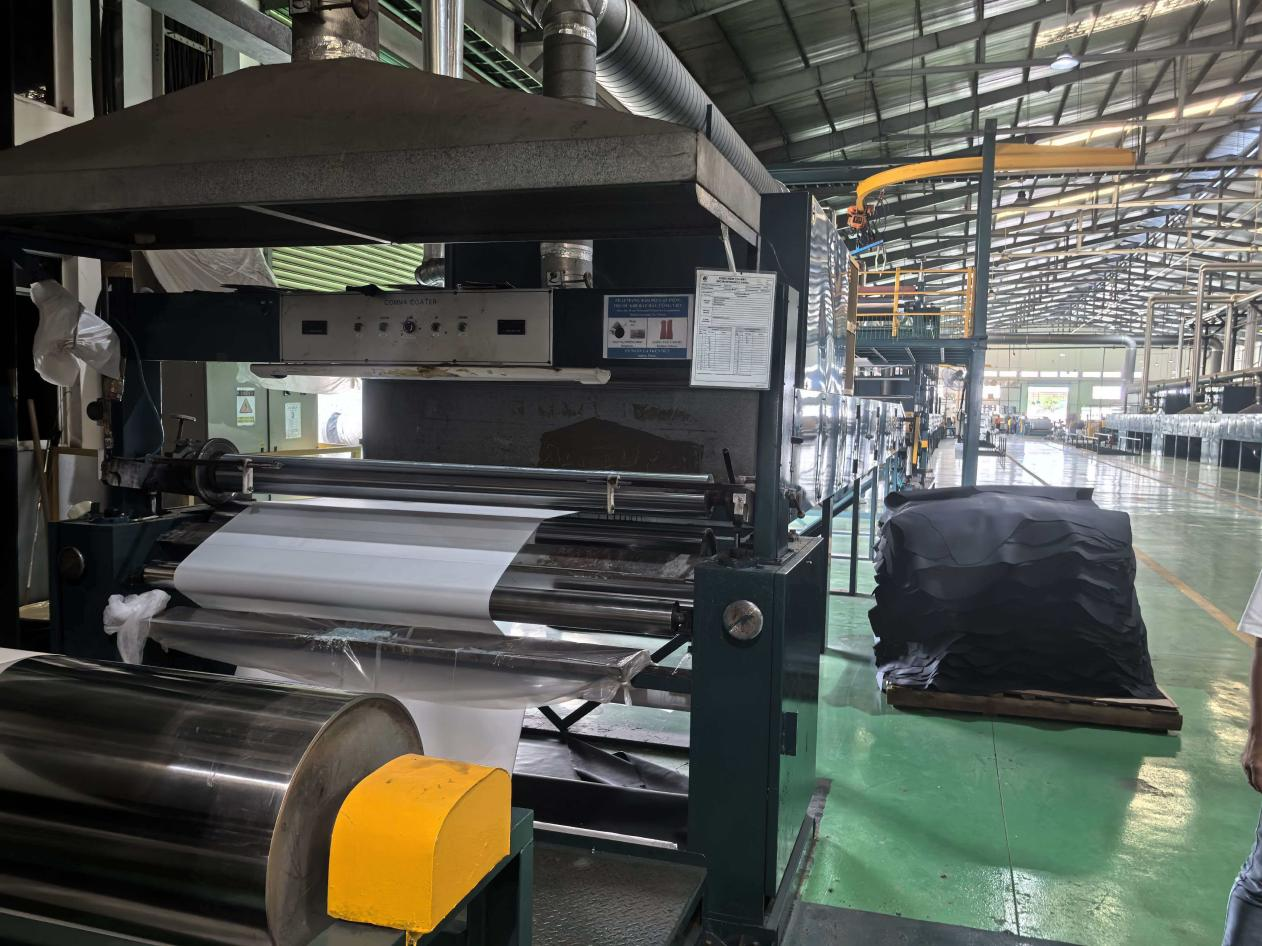
Eco-Leather Line Upgrade Boosts Capacity 151% showcases a high-capacity polyurethane synthetic leather production solution designed to improve manufacturing efficiency, production capacity, process stability, and overall line performance.
No. A dry route describes the selected coating and drying construction; solvent content depends on the actual resin and adhesive system.
Mechanical foaming disperses gas into a selected water-borne system. Reactive coating uses separately metered reactive components and its own curing requirements.
Coagulation, washing, recovery and wastewater responsibilities must be explicitly stated in the proposal. A coating or dosing machine listing does not establish the full package.
Tell us your material system, part dimensions and production target. Our team will reply within one business day. Once requirements are clear, we provide a preliminary proposal within two business days.


