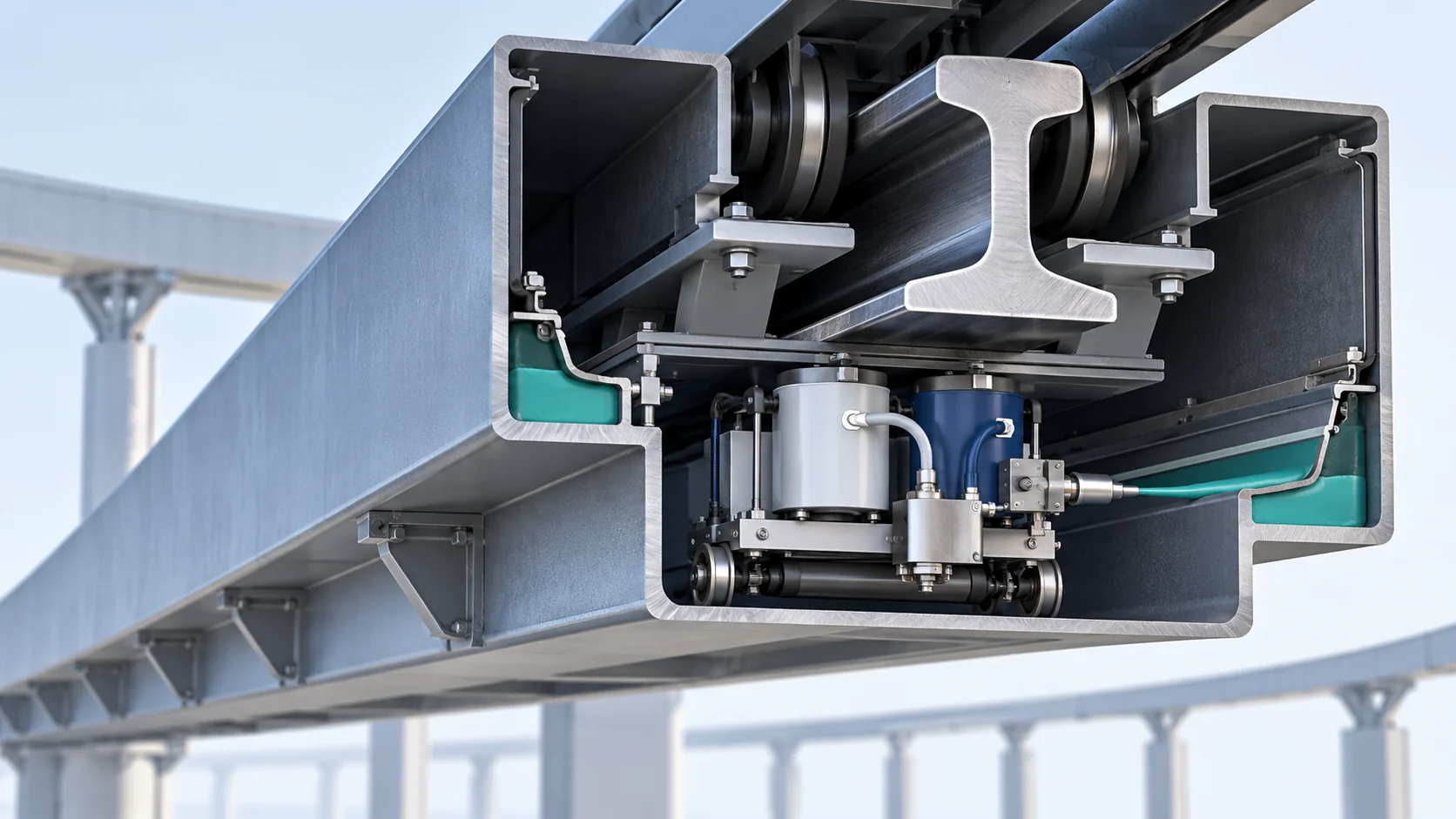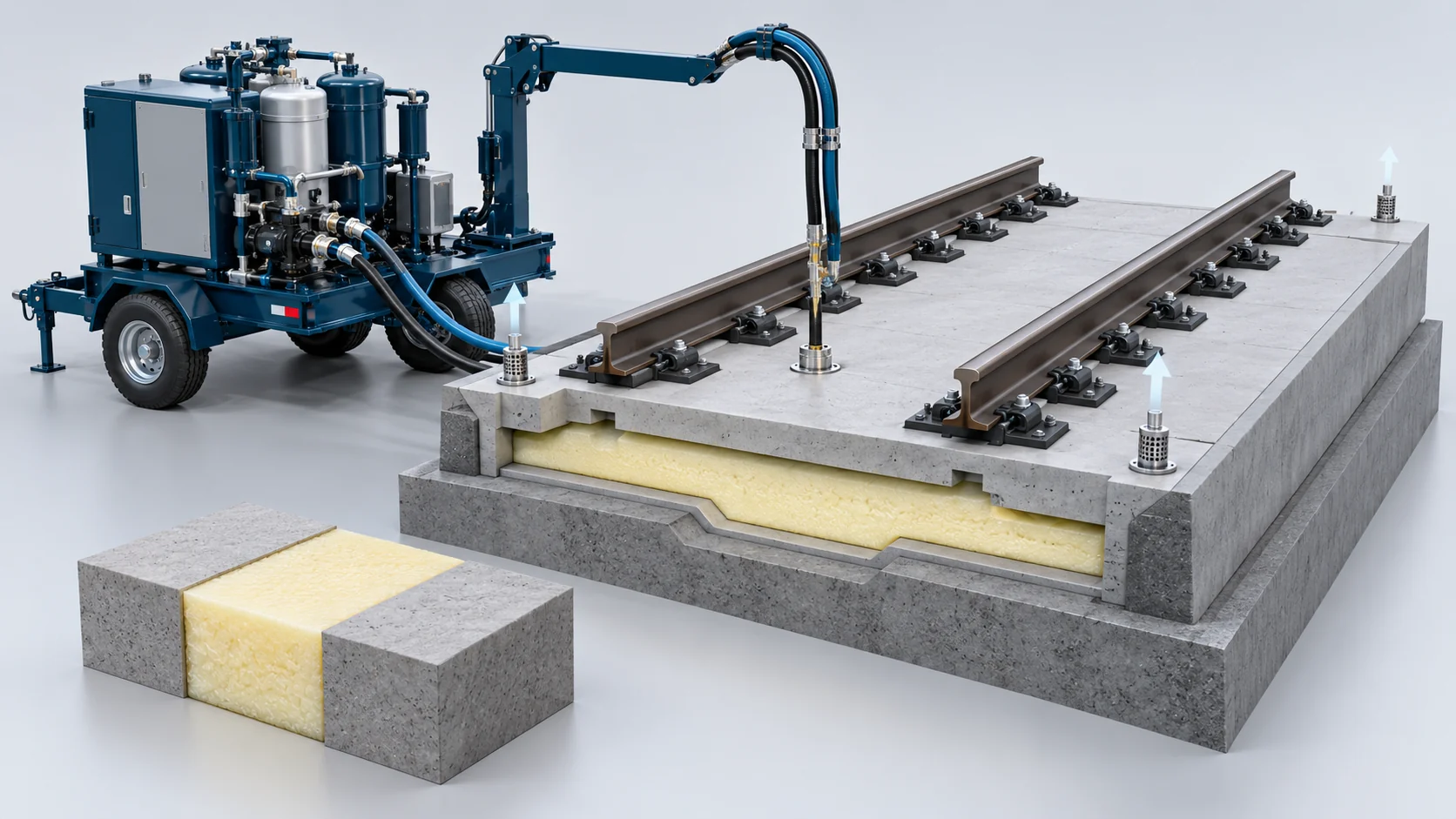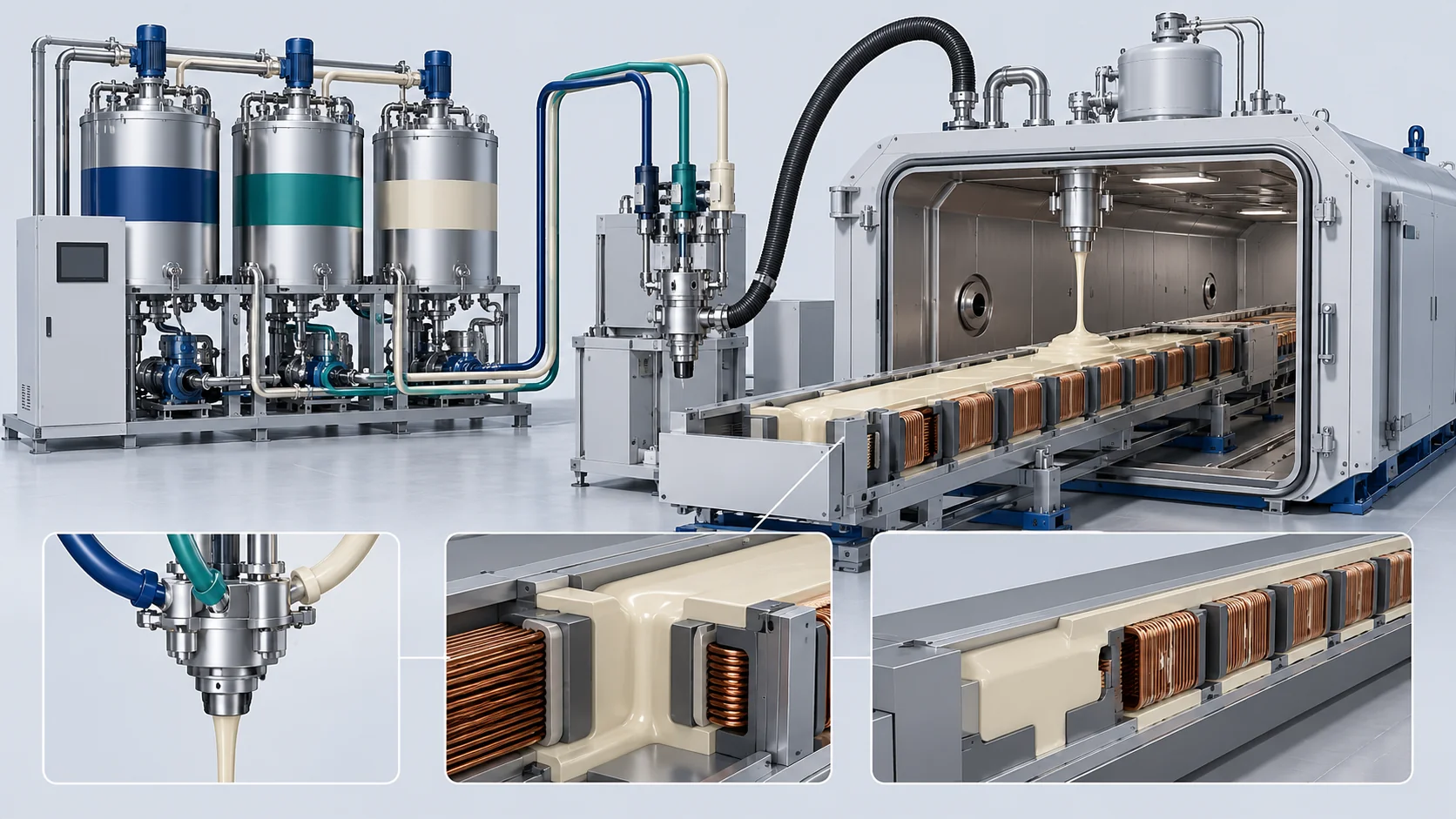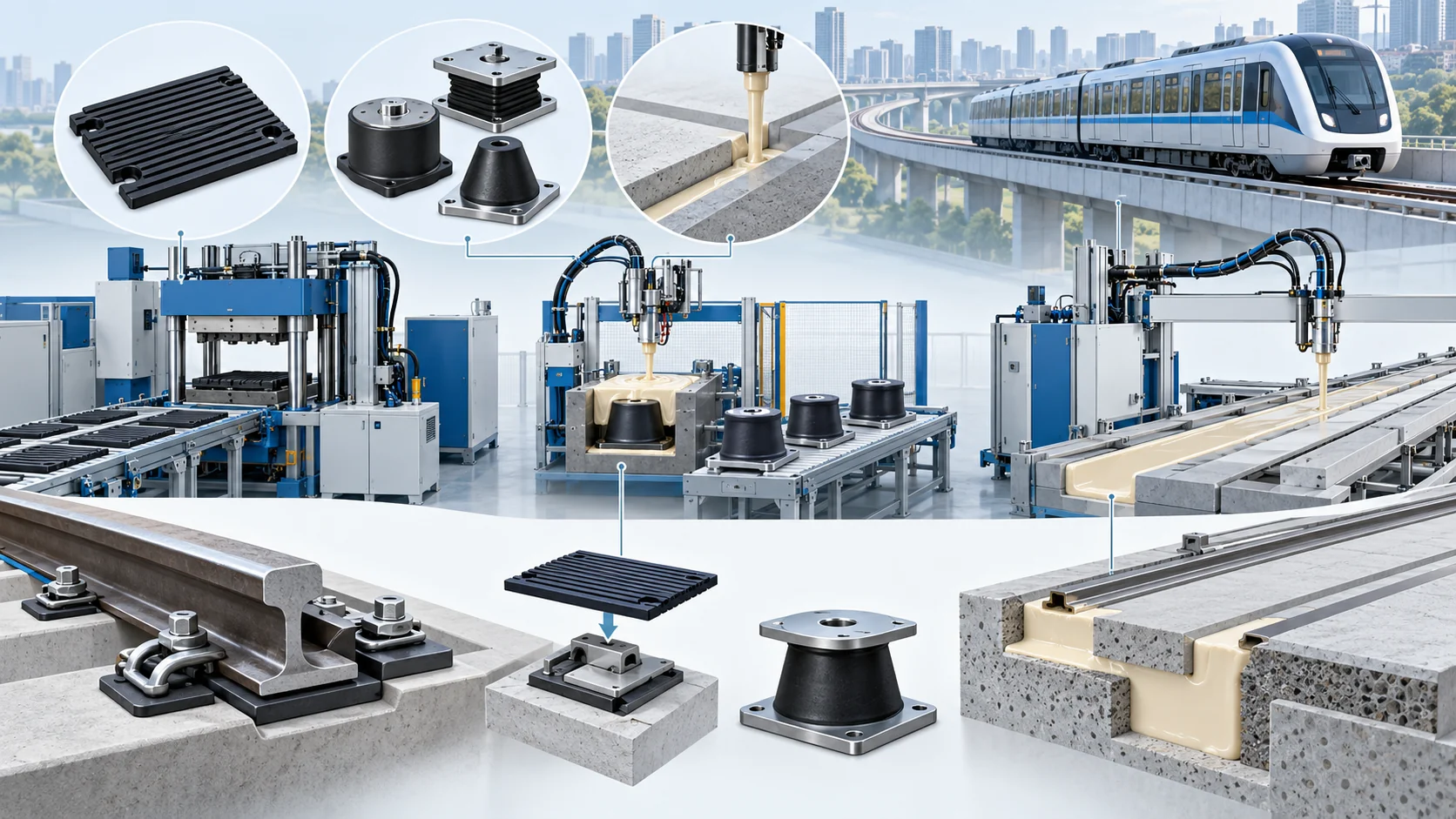
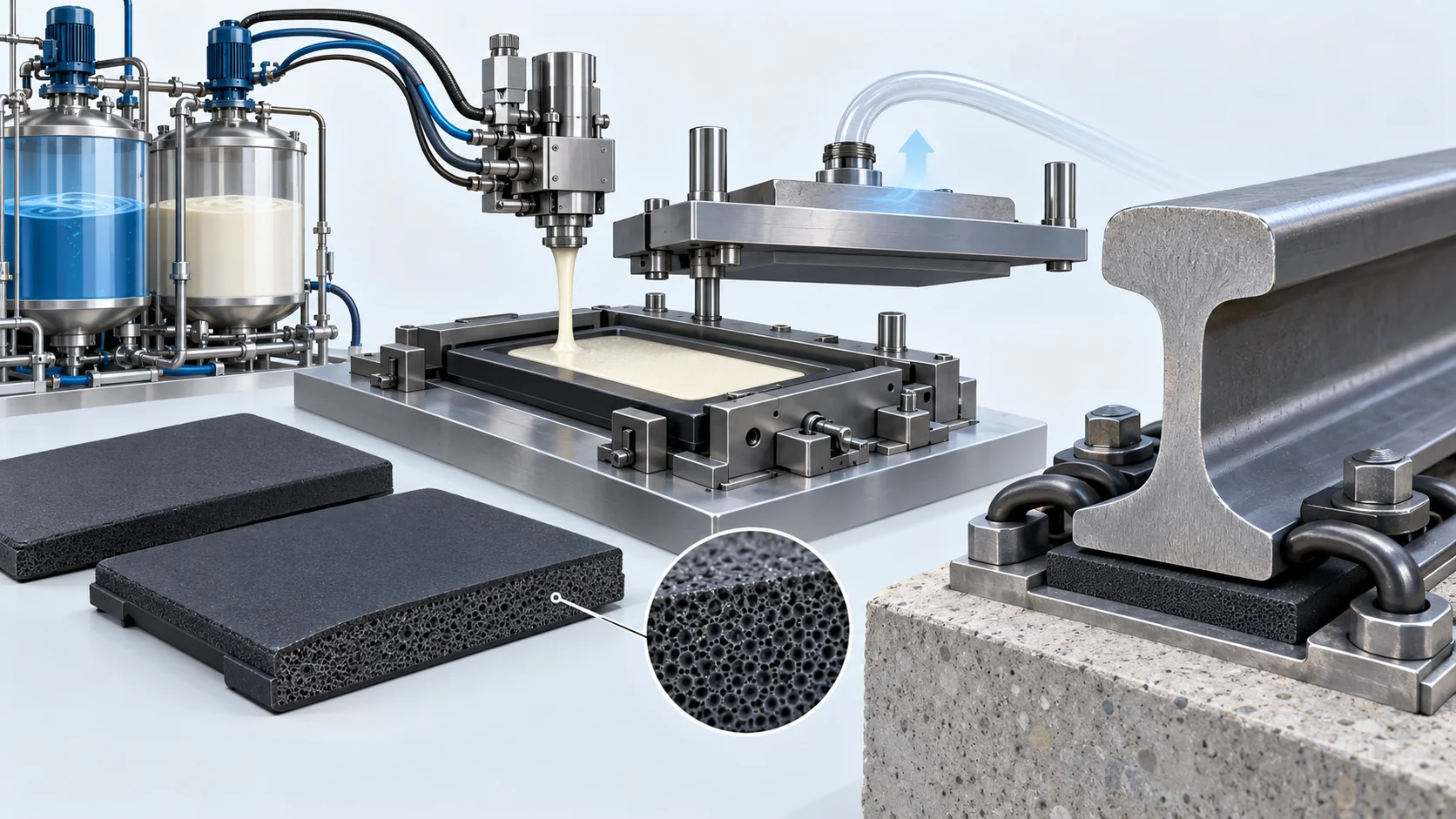
Concept illustration for Railway & Rail Transit Manufacturing Solutions.
Manufacturing Solutions

Railway & Rail Transit Manufacturing Solutions

Explore PU processing routes for rail components and track applications. Separate factory molding, field dispensing and electrical encapsulation when defining materials and equipment.

8 Published Solution Pages
6 Selected Equipment Pages
8 Related Application Records

Find Your Production Route

Manufacturing solutions

Explore Rail Component and Track Application Routes

Compare component casting, track-channel filling, ballast stabilization and electrical potting by material, geometry, application method and acceptance requirements.

Factory-molded rail components

Microcellular Foam Molding

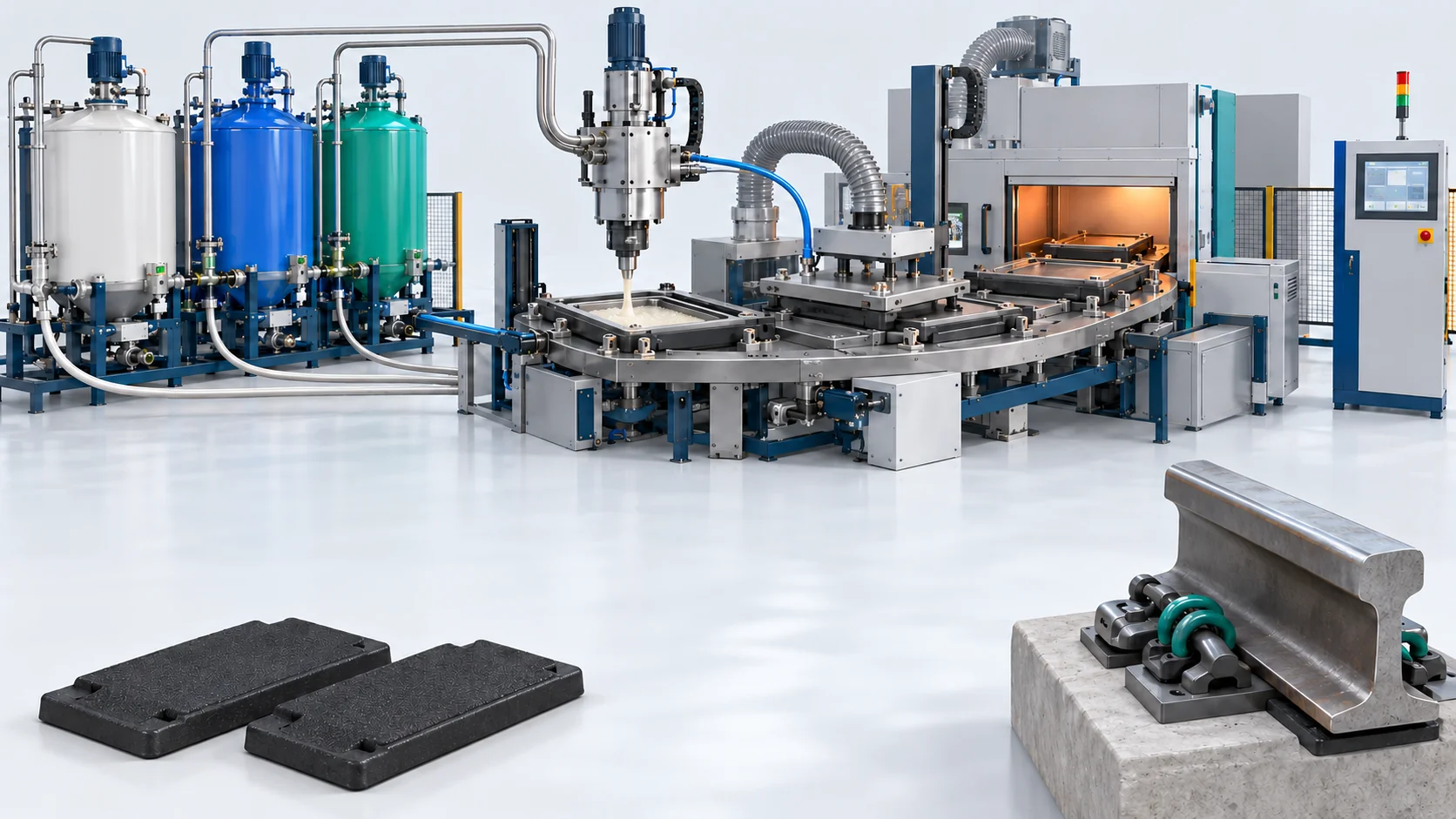
Rail Transit MCU Elastic Pad Solution

Configure water-blown microcellular polyurethane rail-pad production with high-pressure mixing, vacuum-assisted tooling, mold-temperature control and indexed curing.

High-pressure MCU molding requires its own metering/mixing, clamping, vacuum and thermal-control package. No listed low-pressure pad machine is substituted for that core.
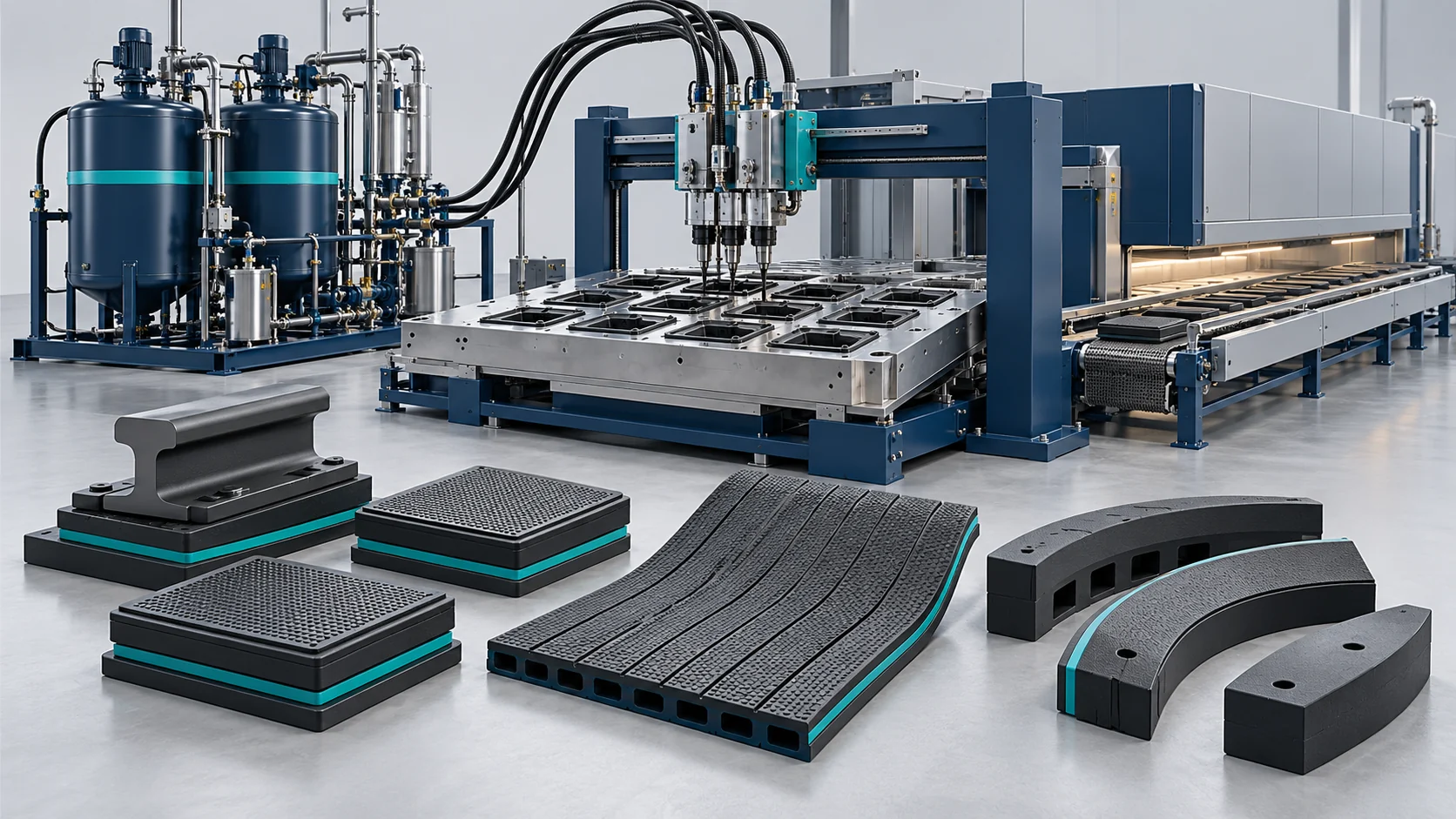
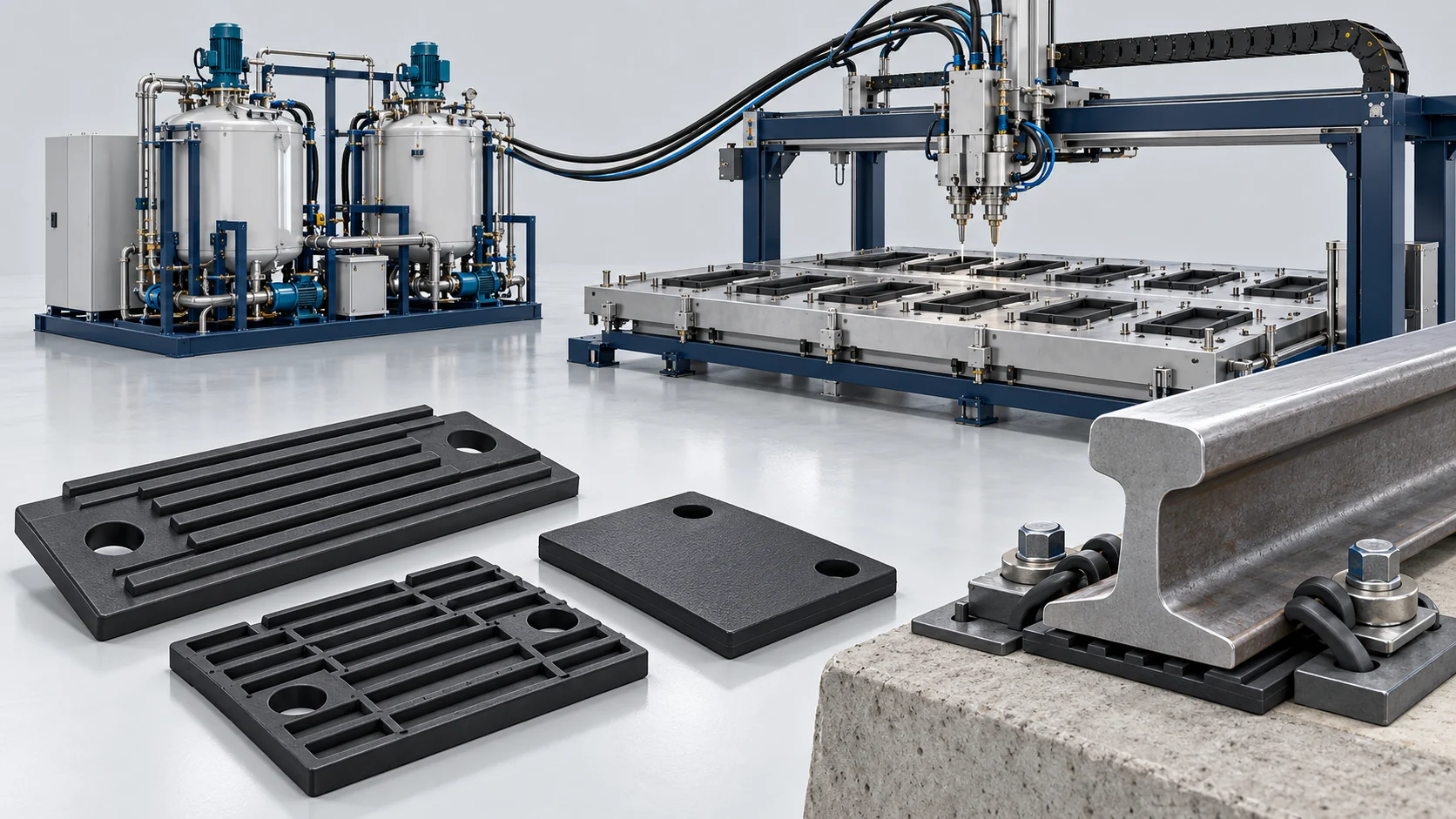
Track-site filling and stabilization

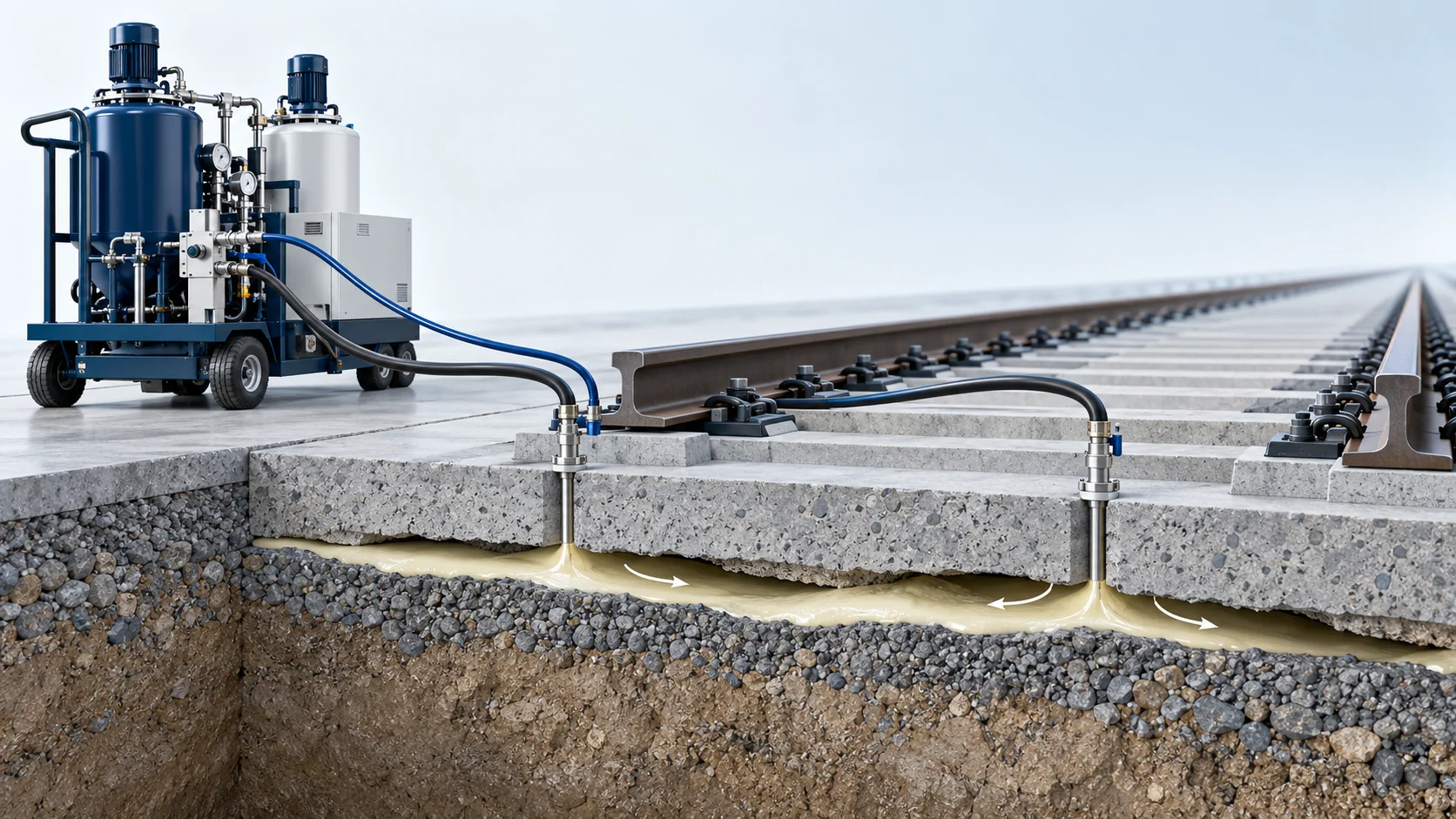
Track-slab PU grouting with material preparation, dynamic mixing, controlled delivery and venting for the surveyed cavity. Define filling inspection, curing and track-handback requirements separately from injection time.

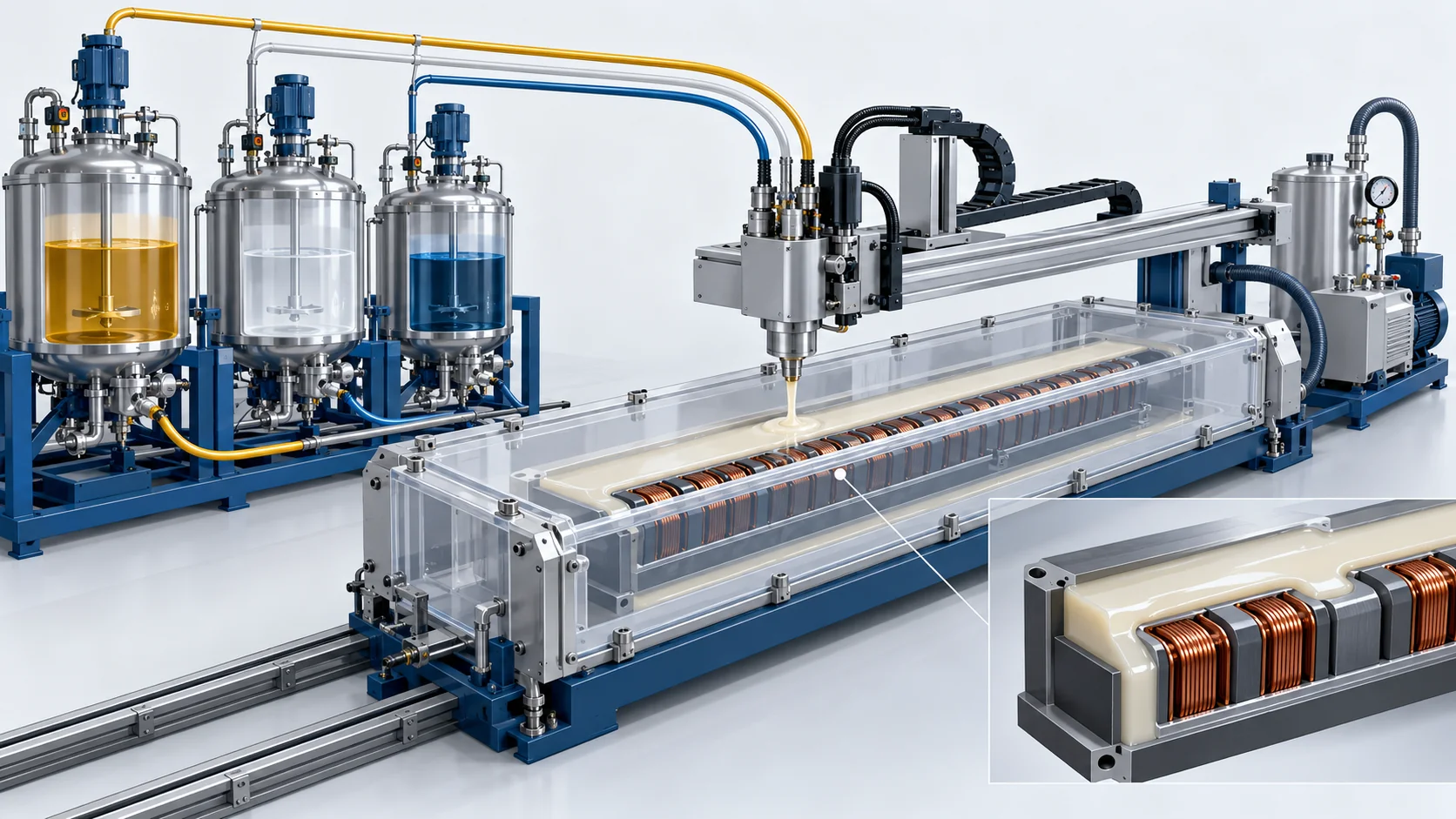
Stator electrical encapsulation

Process routes & production planning

Planning the Railway & Rail Transit Production Process

Rail applications include cast pads, microcellular damping parts, embedded rail-channel filling, track-slab grouting, ballast consolidation and encapsulation. Factory molding and site grouting are distinct configurations.

01

Define the Rail Application

Specify the pad, damping component, channel, track slab or encapsulated part and the relevant installation and acceptance requirements.

02

Prepare the Material

Condition the selected PU or elastomer system and any required filler using the configured supply and premixing arrangement.

03

Prepare Mold or Site

Set tooling for factory-made parts or prepare the rail channel, grouting path and sealing for the site operation.

04

Meter and Place

Coordinate mixing with casting, foaming, filling or grouting according to the material and application.

05

Cure and Handle

Control the approved cure residence and demolding or site handover conditions for the selected system.

06

Verify Performance

Inspect filling and dimensions and conduct the agreed elastic, fatigue, bond or installation tests for the rail component or assembly.

Machinery & process equipment

Equipment for Railway & Rail Transit

Review rail-pad foaming and elastomer casting equipment, the track-slab grouting machine and referenced feeding or filler-premixing stations. Material delivery and field interfaces are defined for the selected rail application.

Listed low-pressure pad configurations

These low-pressure references do not establish the high-pressure MCU molding cell. Confirm the main metering/mixing, clamping, vacuum and mold-temperature package separately.

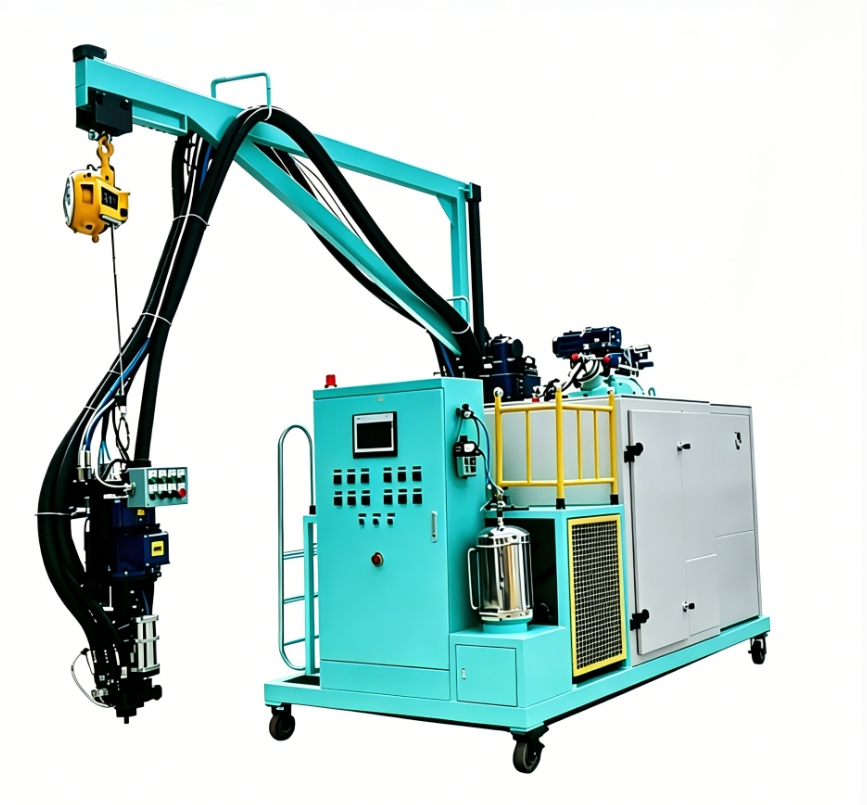
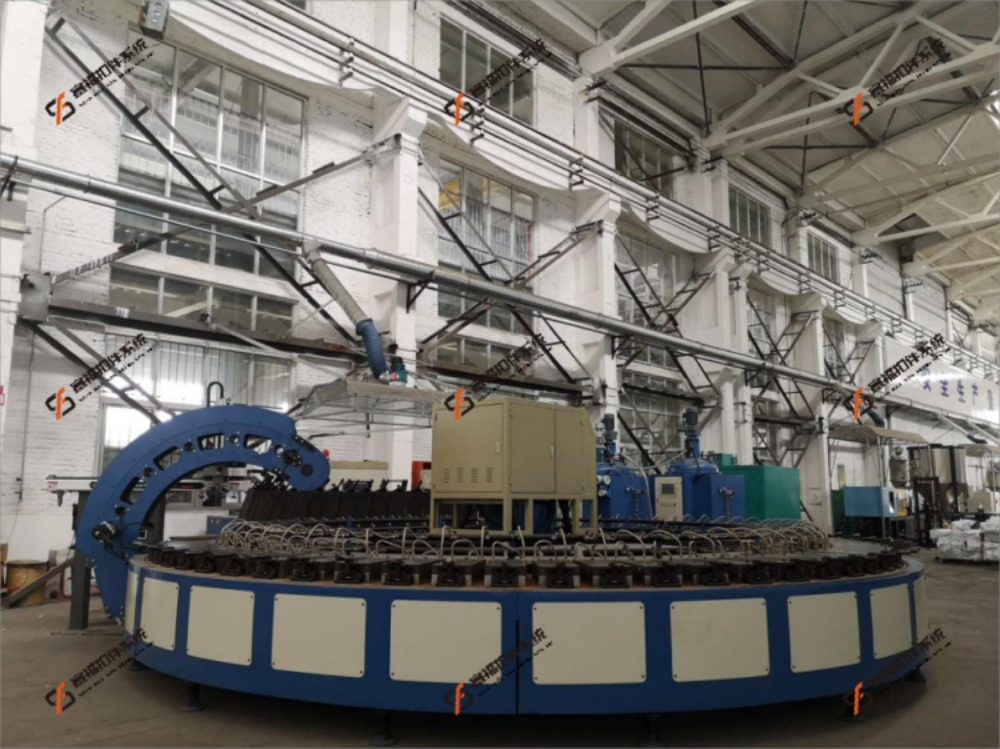
Low-Pressure PU Foaming Machine for Railway Damping Pads. Review configuration, material requirements and process interfaces with Haifeng.

Listed low-pressure damping-pad reference; not evidence of the high-pressure MCU main machine.

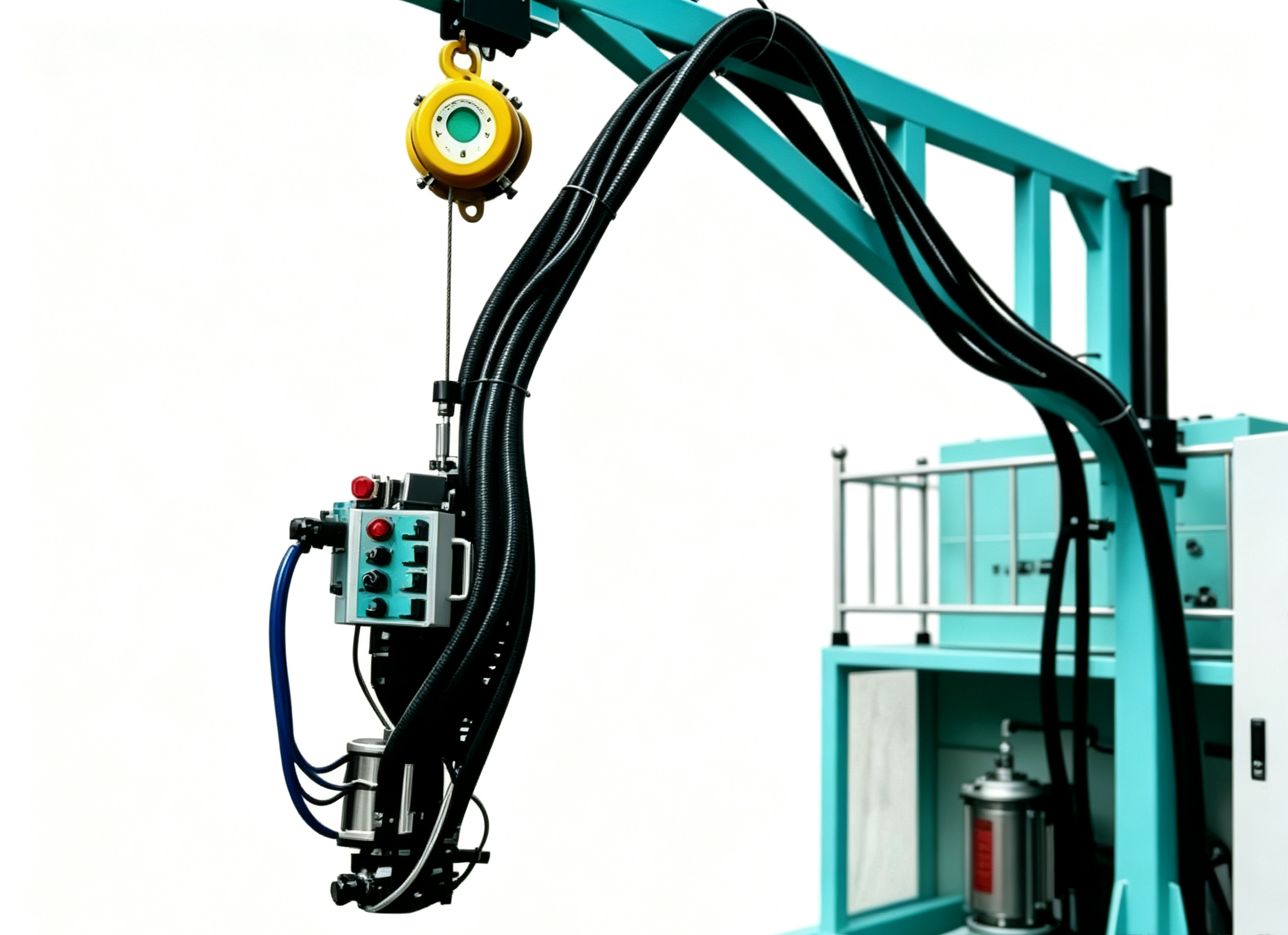
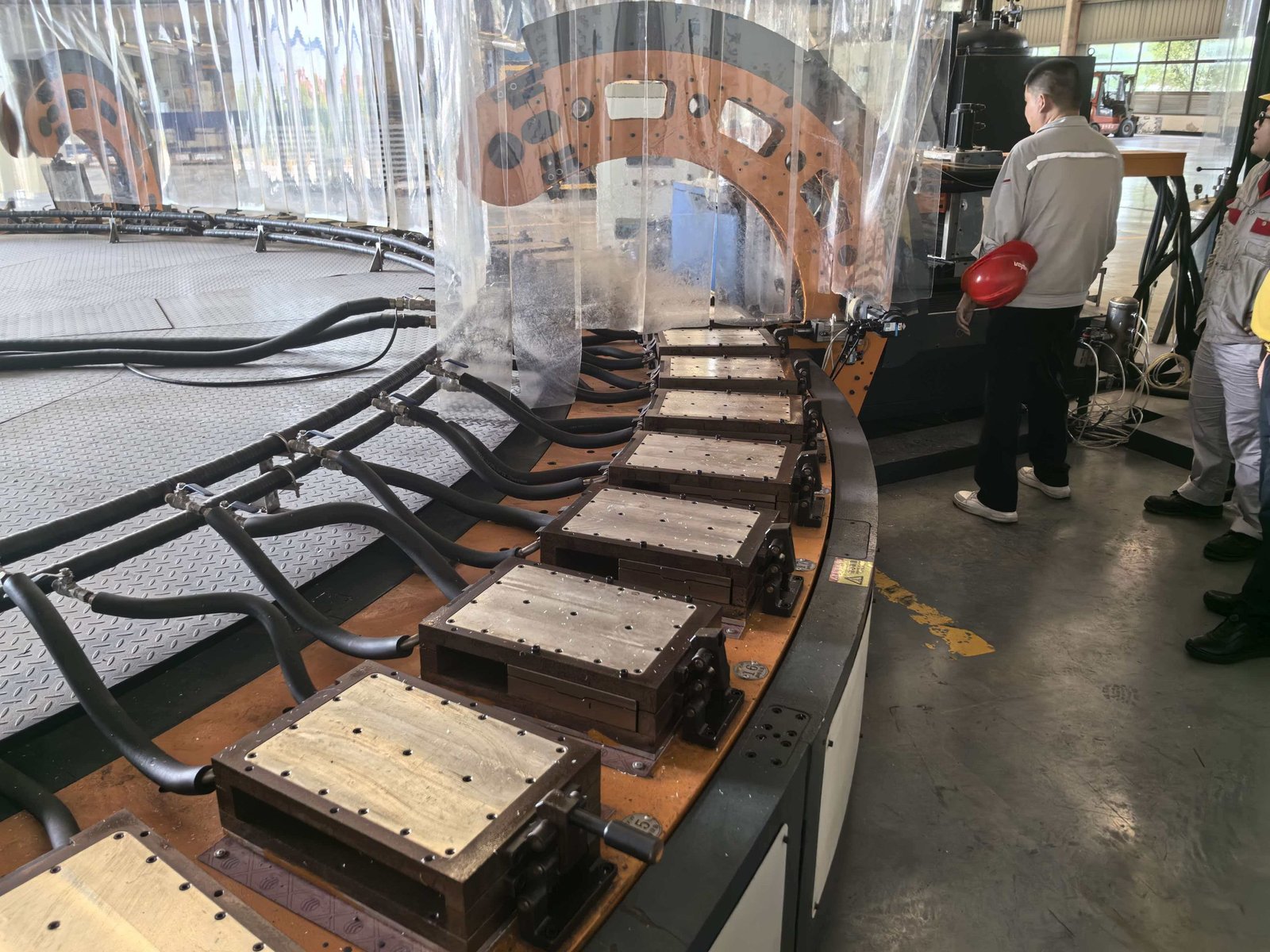
Low-Pressure PU Foaming Machine for Rail Vibration Pads. Review configuration, material requirements and process interfaces with Haifeng.

Listed low-pressure vibration-pad reference; not evidence of the high-pressure MCU main machine.

Elastomer casting reference

PU preparation, metering and dispensing for specified rail components or site applications. Acceptance follows the agreed tests and scope.

Track-slab grouting equipment

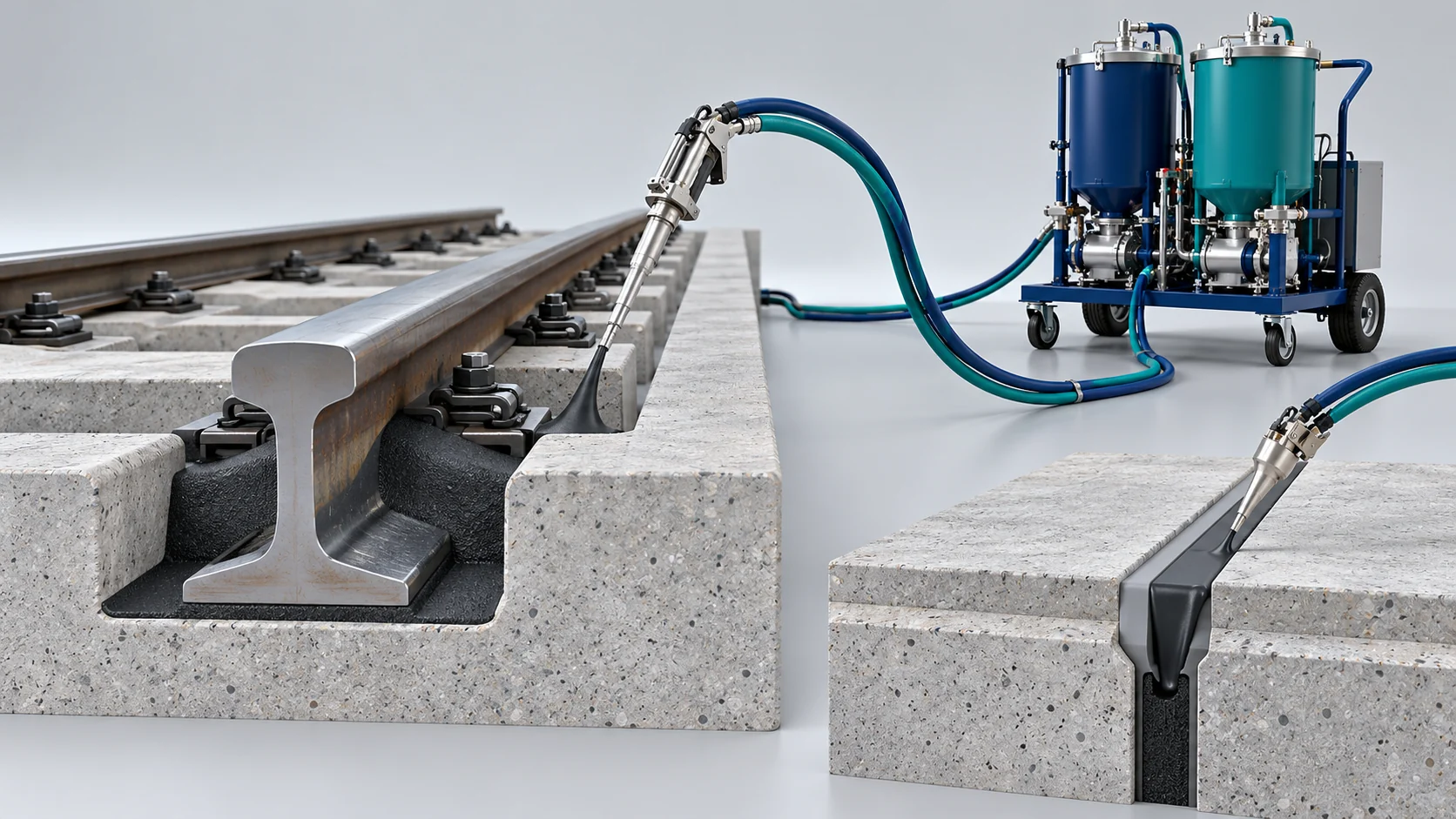
The HF-RT600-LP is a specialized high-output low-pressure polyurethane grouting machine engineered for precision dynamic mixing and rapid void-free filling of ballastless track slab cushion layers and rail damping grooves.

Feeding and filler-premixing interfaces

Auxiliary feeding or premixing equipment is not evidence of a complete MCU or electrical-potting line.

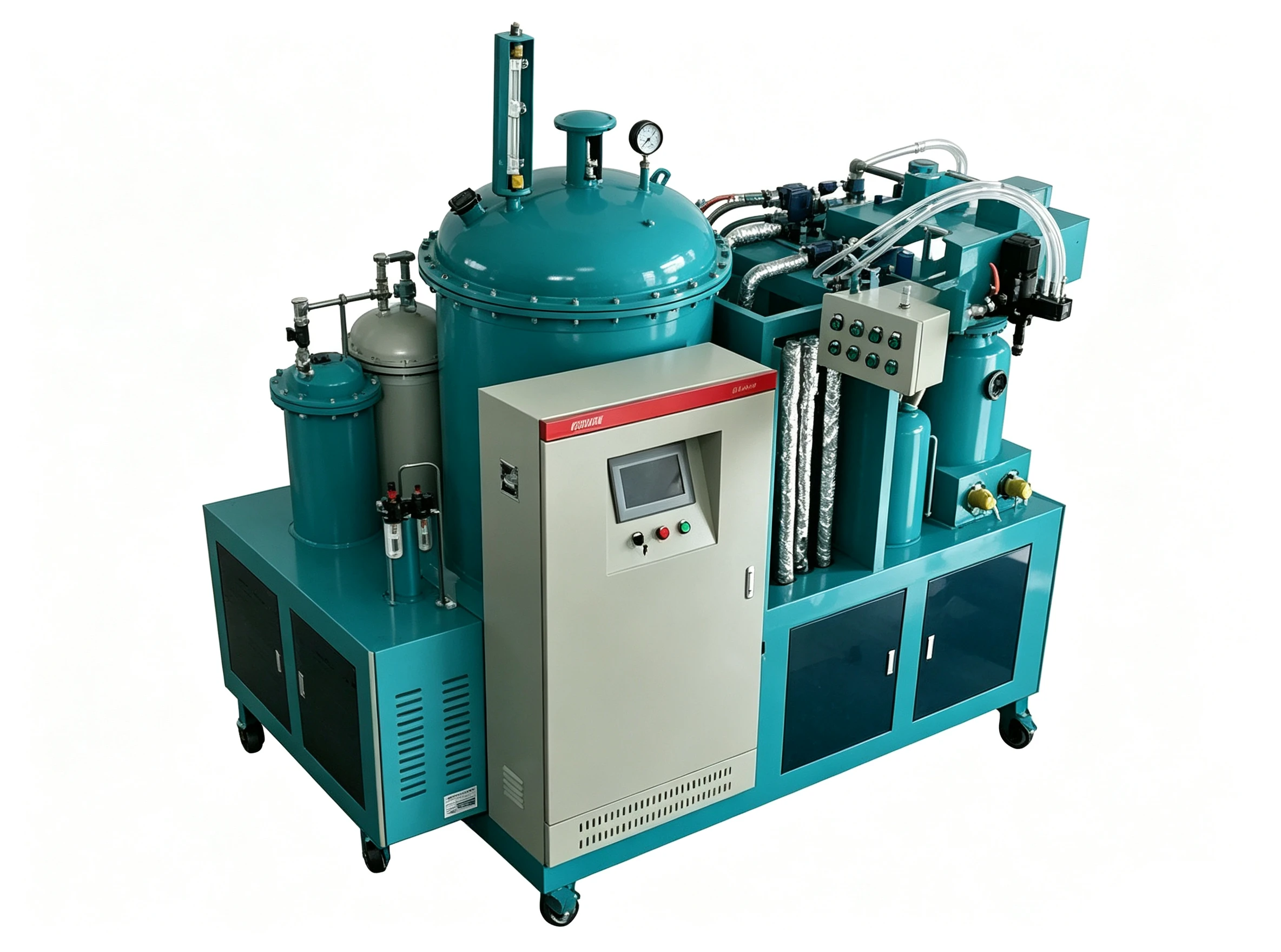
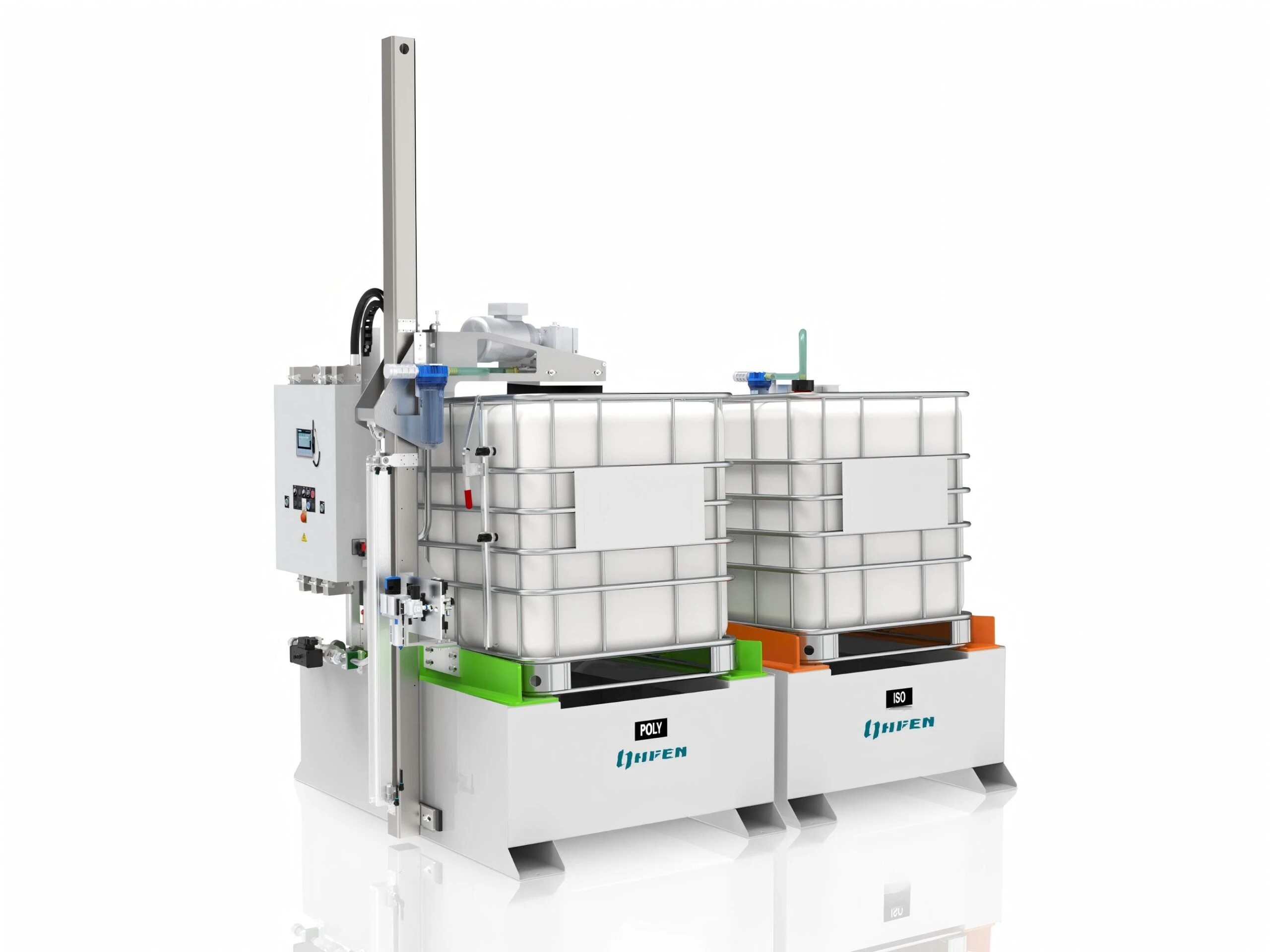
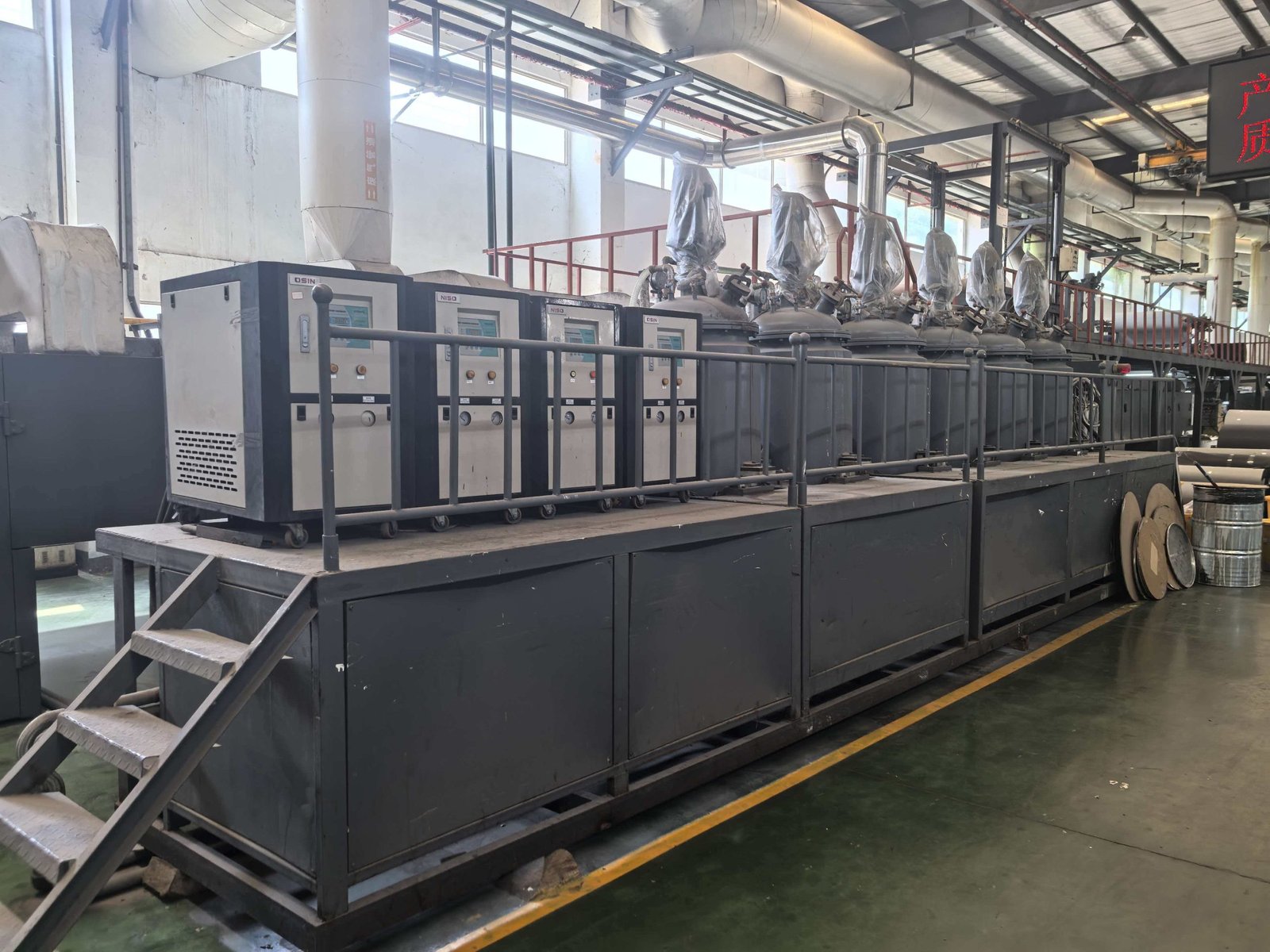
Automatic PU Feeding and Premixing Station for IBC Supply. Review configuration, material requirements and process interfaces with Haifeng.

IBC feed supply is an auxiliary interface, not a complete MCU or stator-potting line.

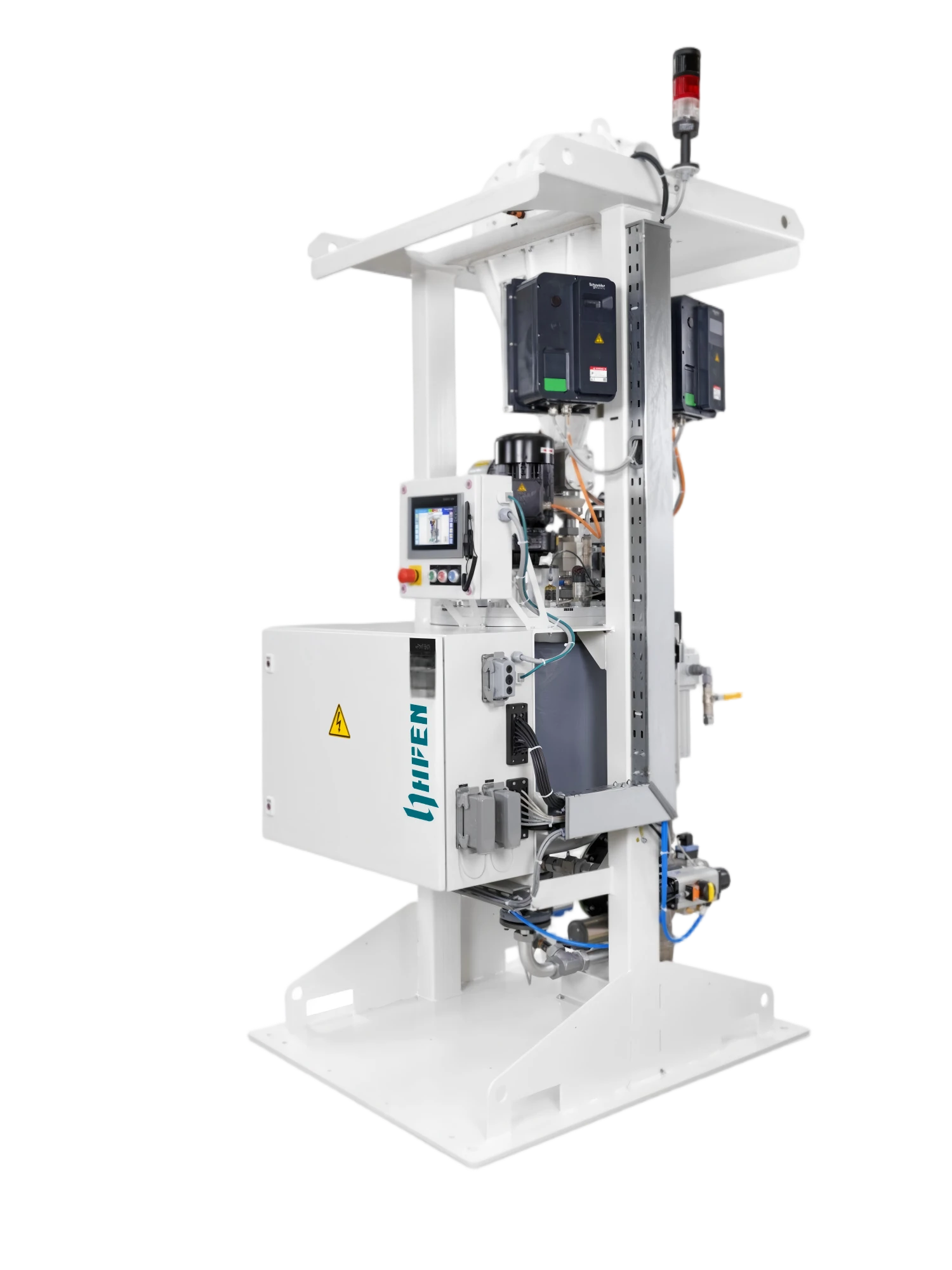
Automatic low-shear premixing of graphite, calcium carbonate and glass-fiber fillers into polyurethane polyol.

Filler premixing is auxiliary scope; confirm the selected filled-material metering and receiving process.

Related applications

Railway & Rail Transit Application & Project Records

Explore the published railway & rail transit application and project records selected from this category's solution pages. Each record describes its own material, process and equipment scope; project figures and industry references are not universal machine ratings or independently verified results for a new installation.

Factory pad-molding records

Project review brief for high-pressure mcu rail pad molding. Equipment configuration, implementation scope and reported outcomes.

Stiffness ratio alone is not acoustic attenuation. Reconcile good-pad output, cavity count and mold residence; the selected low-pressure equipment references do not establish this high-pressure MCU cell.

Process illustration; not a verified installation photograph.

Rail Pad Fully Automatic Casting Line Zero-to-One Breakthrough presents a fully automated polyurethane rail pad casting solution designed for efficient production, stable processing, consistent quality, and scalable railway component manufacturing.

The stated zero-to-one description concerns entry into PU manufacturing. Data-recording frequency and continuous-production capability require the actual traceability and operating records.

Rail Pad Semi-Auto Upgrade +150% Daily Output demonstrates a semi-automatic polyurethane rail pad production solution that increases manufacturing capacity while improving process efficiency, production stability, and product consistency.

Daily output and payback depend on staffing, working hours, product mix and the former-line baseline; confirm production, inspection and cost records.

Rail Pad Polyurethane Line Upgrade +40% National Railway Order Share showcases a high-performance polyurethane rail pad production solution focused on improving capacity, production efficiency, process control, and railway component manufacturing.

Order share is a commercial result, separate from rail-pad fatigue and dimensional inspection. Confirm original test reports and the stated operating/market comparison period.

Track-site application records

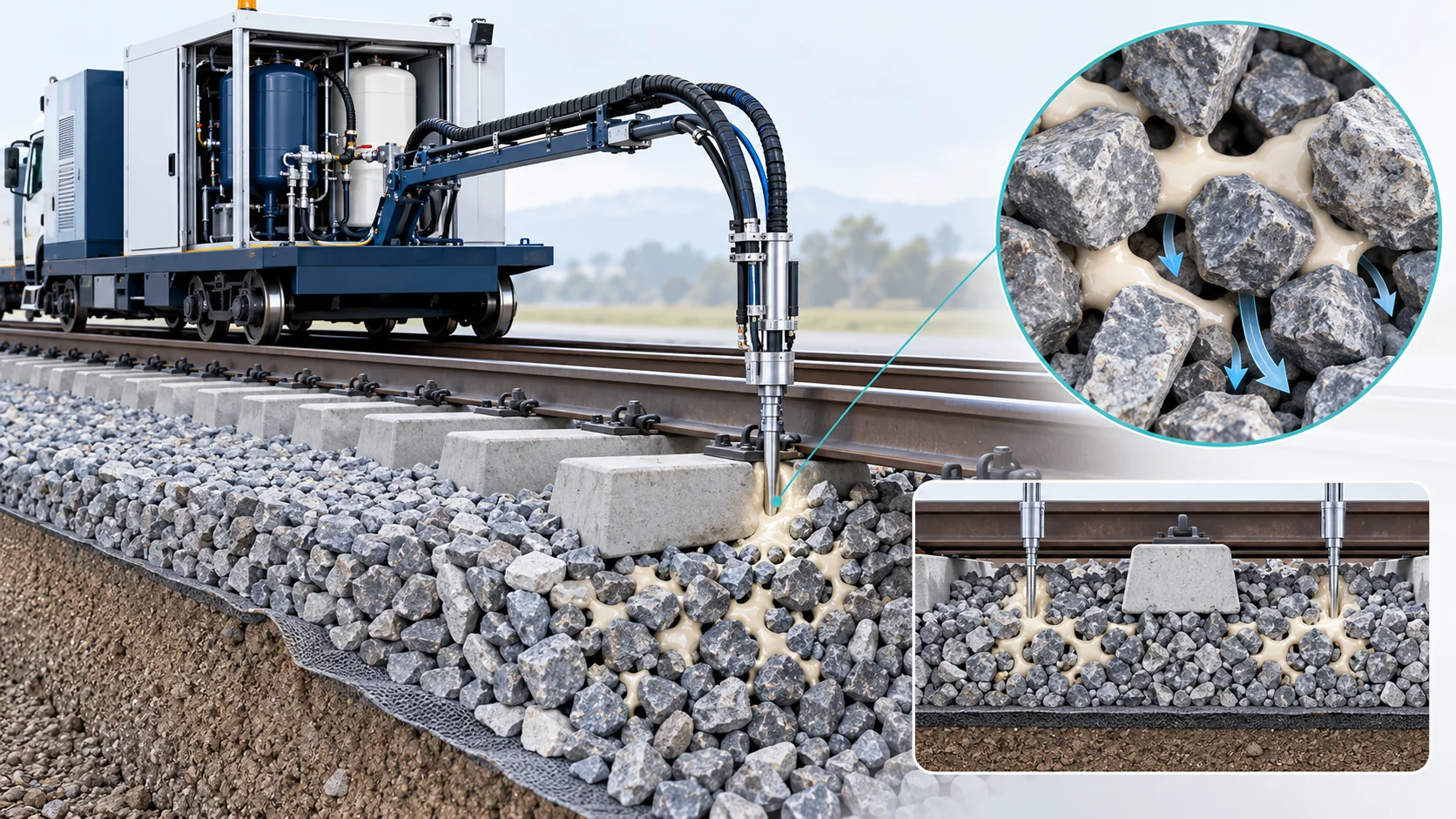
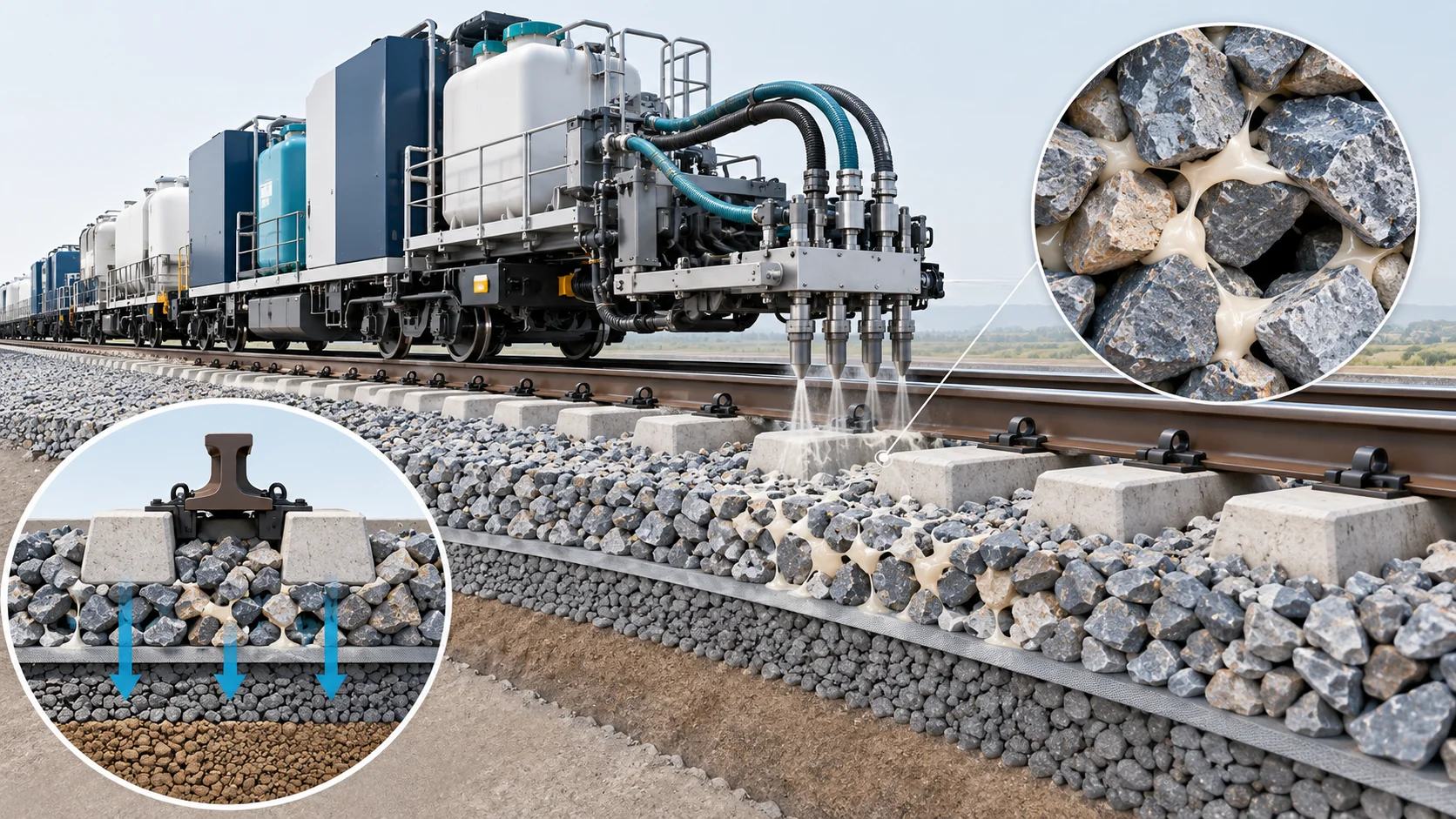
Project review brief for railway ballast stabilization injection. Equipment configuration, implementation scope and reported outcomes.

Maintenance follow-up dates remain unresolved in the record. Consolidation depth does not establish drainage retention; return to traffic needs the actual cure criteria and authorization.

Process illustration; not a verified installation photograph.

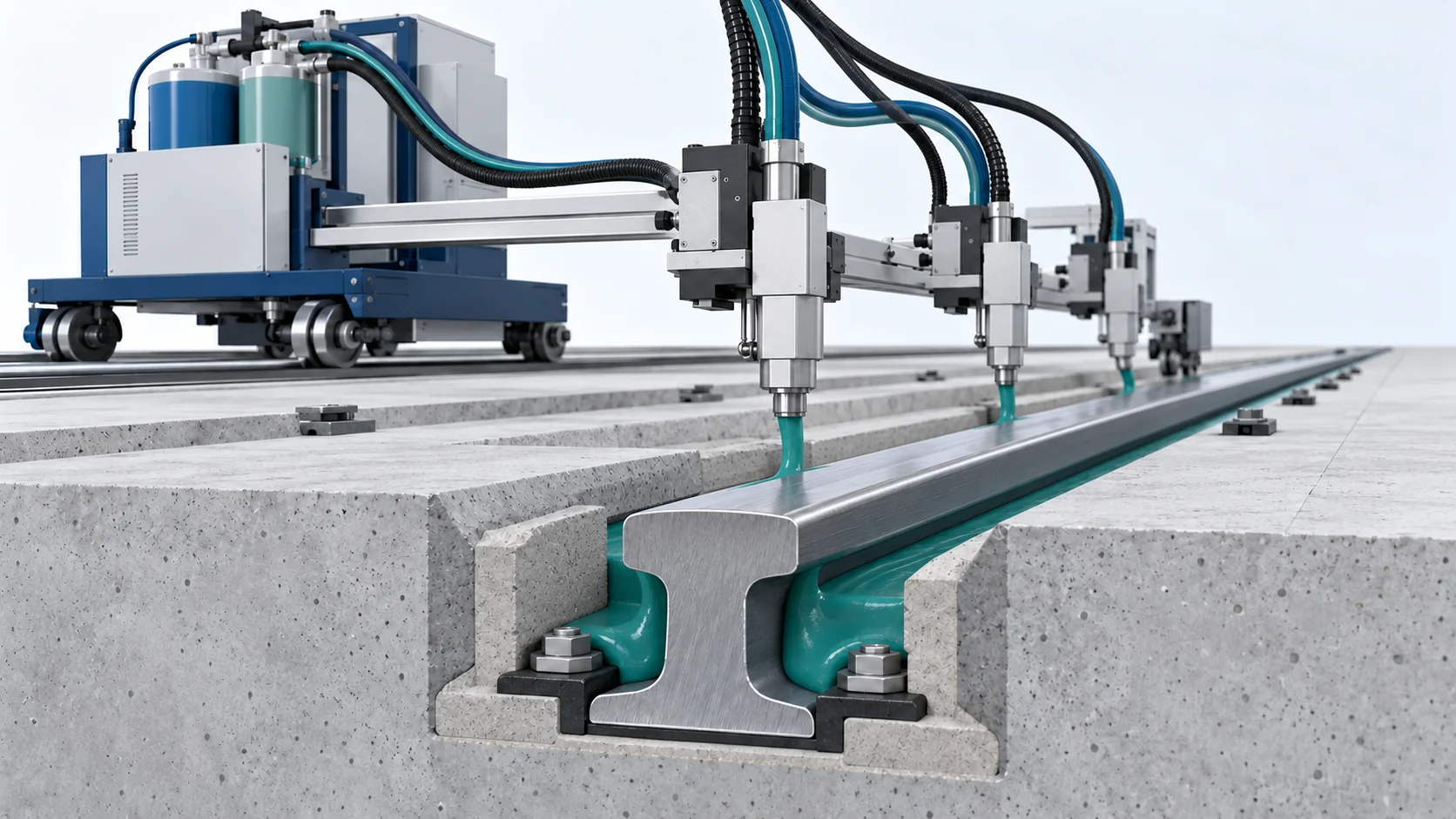
Project review brief for continuous embedded rail channel dispensing. Equipment configuration, implementation scope and reported outcomes.

Vibration reduction requires the stated reference quantity, weighting and monitoring setup. Adhesion and dual-track daily output need separate substrate and shift records.

Process illustration; not a verified installation photograph.

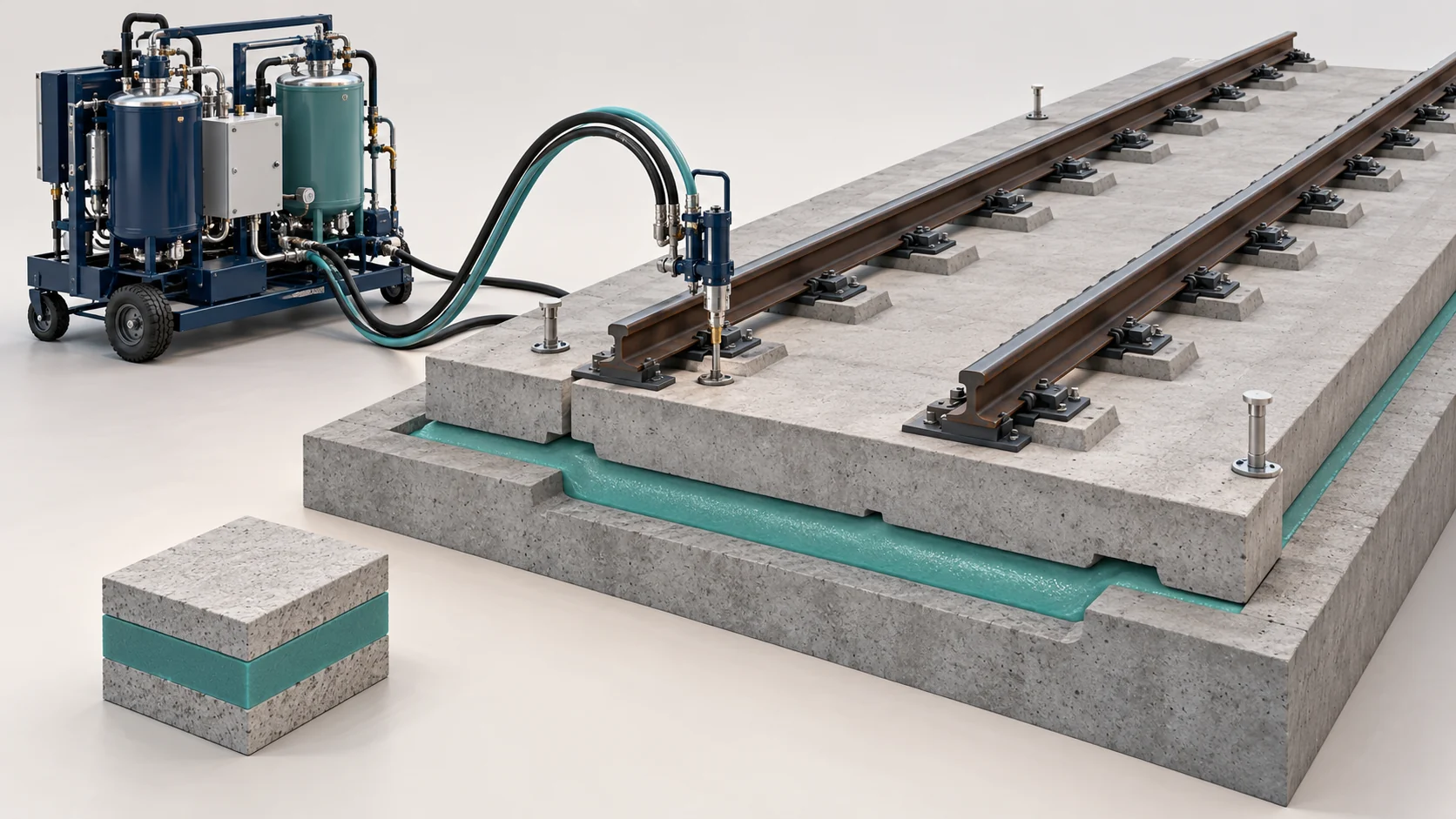
Review Track Slab Polyurethane Grouting in China, including process configuration, related equipment and application requirements. Project figures require stated conditions.

Ultrasonic acceptance depends on survey coverage and detection criteria. Injection time is one part of filling, cure, inspection and handback; purge behavior does not establish universal zero emissions.

Process illustration; not a verified installation photograph.

Electrical encapsulation record

Project review brief for vacuum potting for maglev stator components. Equipment configuration, implementation scope and reported outcomes.

Material dielectric strength and conductivity do not establish whole-stator qualification. Evacuation/potting duration is separate from cure, demolding and full throughput.

Process illustration; not a verified installation photograph.

Rail Component and Track Application Routes Selection FAQ

Is factory pad production the same as track-site dispensing?

No. Factory casting uses controlled tooling and curing, while site dispensing requires access, substrate, weather and application controls.

Can a filled PU formulation use standard metering equipment?

Review filler size, loading, settling, abrasiveness and viscosity before selecting preparation, circulation and metering equipment.

Does the equipment establish railway acceptance?

Equipment acceptance and railway component or installation acceptance are separate. Define the material, tests and project requirements with the responsible project team.

Plan Your Production Line

Tell us your material system, part dimensions and production target. Our team will reply within one business day. Once requirements are clear, we provide a preliminary proposal within two business days.

Haifeng Polyurethane Machinery on TikTok
Haifeng Polyurethane Machinery on Instagram
Haifeng Polyurethane Machinery on Facebook
Haifeng Polyurethane Machinery on X
Haifeng Polyurethane Machinery on LinkedIn
Contact Haifeng Polyurethane Machinery on WhatsApp
Haifeng Polyurethane Machinery on YouTube