
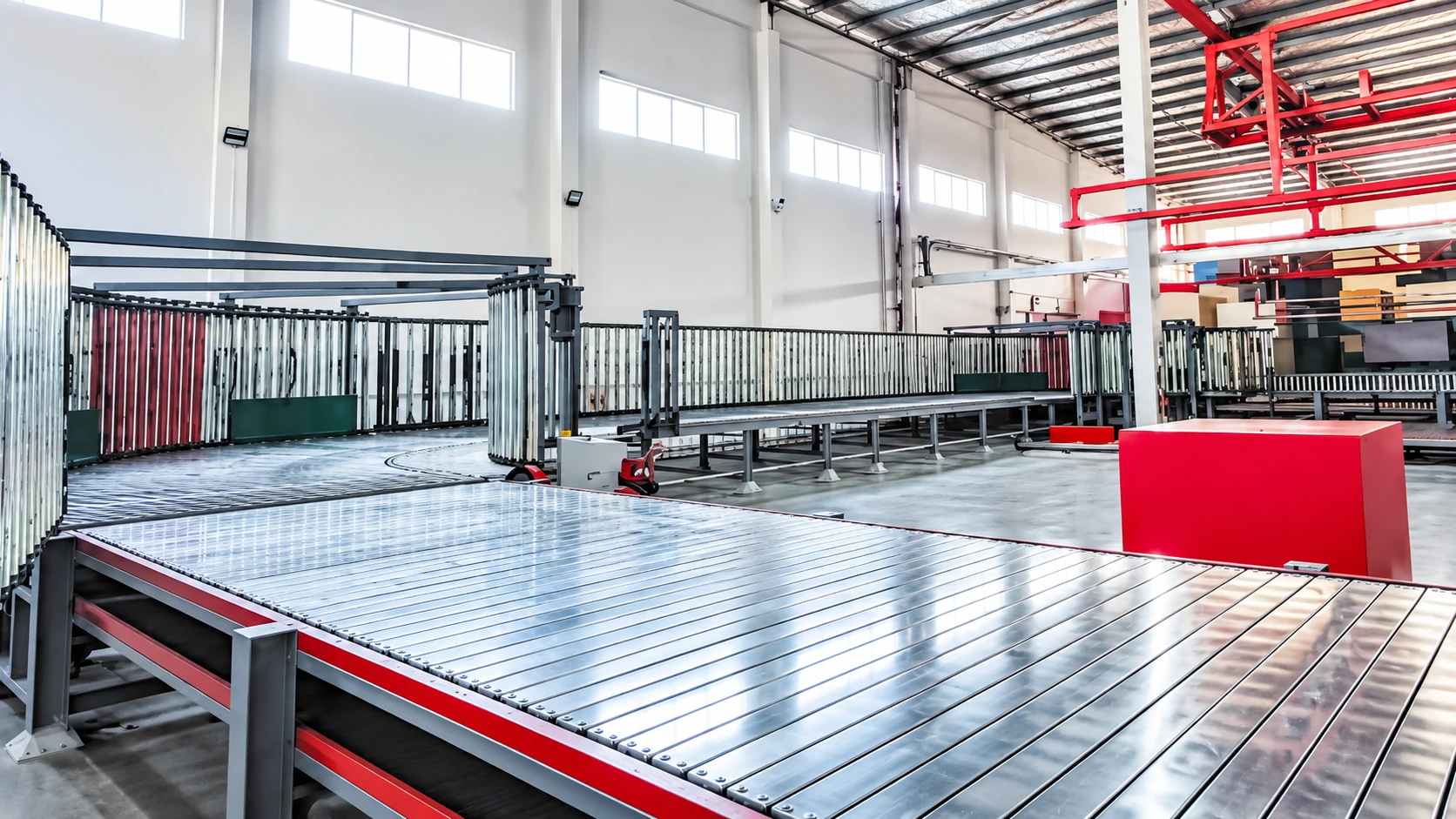
Foam Block Turning Conveyor Solution
Route foam blocks between production, storage and cutting through a project-configured turning and transfer arrangement.
Connect Foam Production, Storage and Cutting
Haifeng configures turning conveyor interfaces to move foam blocks through changes of direction within a production layout. Block size and mass, available space, conveyor levels and downstream handling define the selected transfer arrangement. Coordinated drives, guides and controls are specified to the agreed project scope.
Define incoming/outgoing direction, elevation and continuous block support before selecting a turning transfer. Turning is a flow-path task, storage is an inventory task and cutting is conversion; their access and control handovers need separate definition.
Turning and Transfer Workflow
Coordinate the incoming block, direction change and downstream handoff.
Receive
Align the block and incoming conveyor with the specified transfer interface.
Turn and Guide
Move the block through the selected route with suitable support and guide clearances.
Coordinate Transfer
Match motion and start/stop signals to the connected handling modules.
Layout Inputs and Reference Gallery
Confirm block envelope, route, load and interfaces before selecting the turning conveyor.
Foam Block Turning and Transfer Layout
A turning conveyor routes foam blocks through a change of direction between processing or storage areas. Select the transfer arrangement from the block envelope, mass, required path and surrounding equipment. Confirm support and guide clearance so the transfer route suits the foam product.
| Selection Item | Required Engineering Input |
|---|---|
| Foam block envelope | Provide maximum length, width, height, mass and surface-support requirements. |
| Transfer route | Define incoming/outgoing directions, required turning angle, available footprint and access aisles. |
| Conveyor interfaces | Coordinate receiving/discharge elevation, usable width, guide clearance and support continuity. |
| Motion and load | Specify load rating, transfer speed, cycle demand and permissible block deformation in the technical schedule. |
| Drives and utilities | Select drive arrangement, installed power, electrical supply and cable routing for the layout. |
| Controls | Agree start/stop coordination, sensing, position feedback and interlocks with upstream/downstream equipment. |
| Space and access | Review service clearances and transfer-zone access protection in the factory plan. |
| Integration | Connect the confirmed conveyor interface to foam block storage, conditioning or downstream cutting as required. |
Storage and Cutting Interfaces
Coordinate block discharge with the Foam Block Storage & Handling Solution and separately selected cutting equipment. Incoming blocks can originate from Continuous Slabstock Foaming or Box Foaming; the transfer rhythm and control scope follow the chosen line.
Turning Conveyor Reference Gallery
Layout illustrations show transfer surfaces, guide assemblies and support frames. Final turning angle, dimensions, capacity and controls are selected for the project.
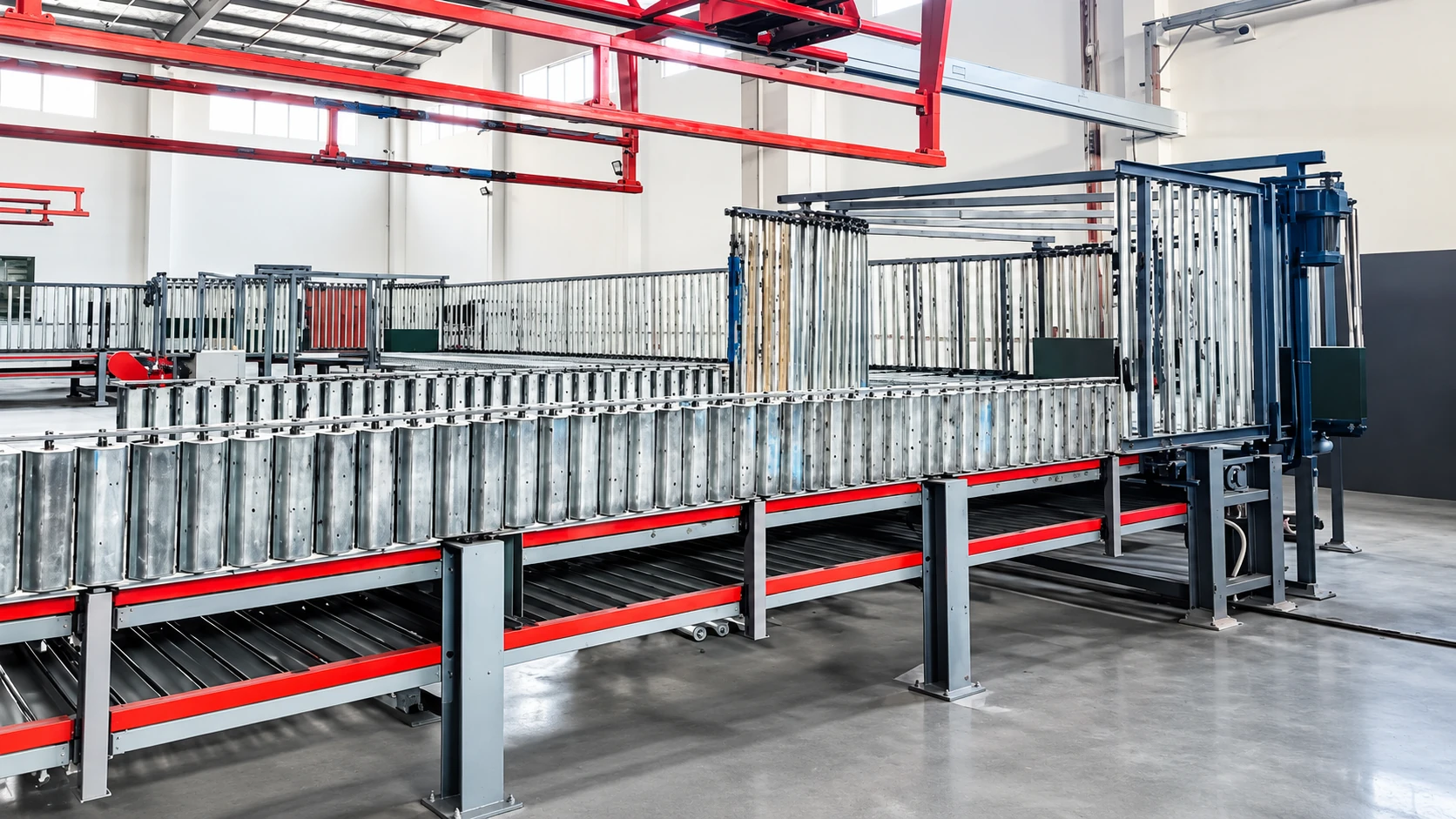
Related supply and downstream interfaces
The linked cutter family identifies the receiving process. The turning conveyor itself needs its own load, motion and layout specification.
Turning Conveyor Selection Questions
What does a foam block turning conveyor do?
Is a turning conveyor the same as foam block storage?
What turning angles and block sizes are supported?
Can it connect to an existing cutting line?
How are damage and transfer interruptions addressed?
What is needed to prepare a layout and quotation?
What should be agreed at an existing cutting-line handover?
Plan a Foam Block Transfer Route
Share the following for this application: Maximum block envelope/mass, surfaces, incoming/outgoing plan and levels, required turn, speed and permitted deformation. Our team will reply within one business day. Once requirements are clear, we provide a preliminary proposal within two business days.


