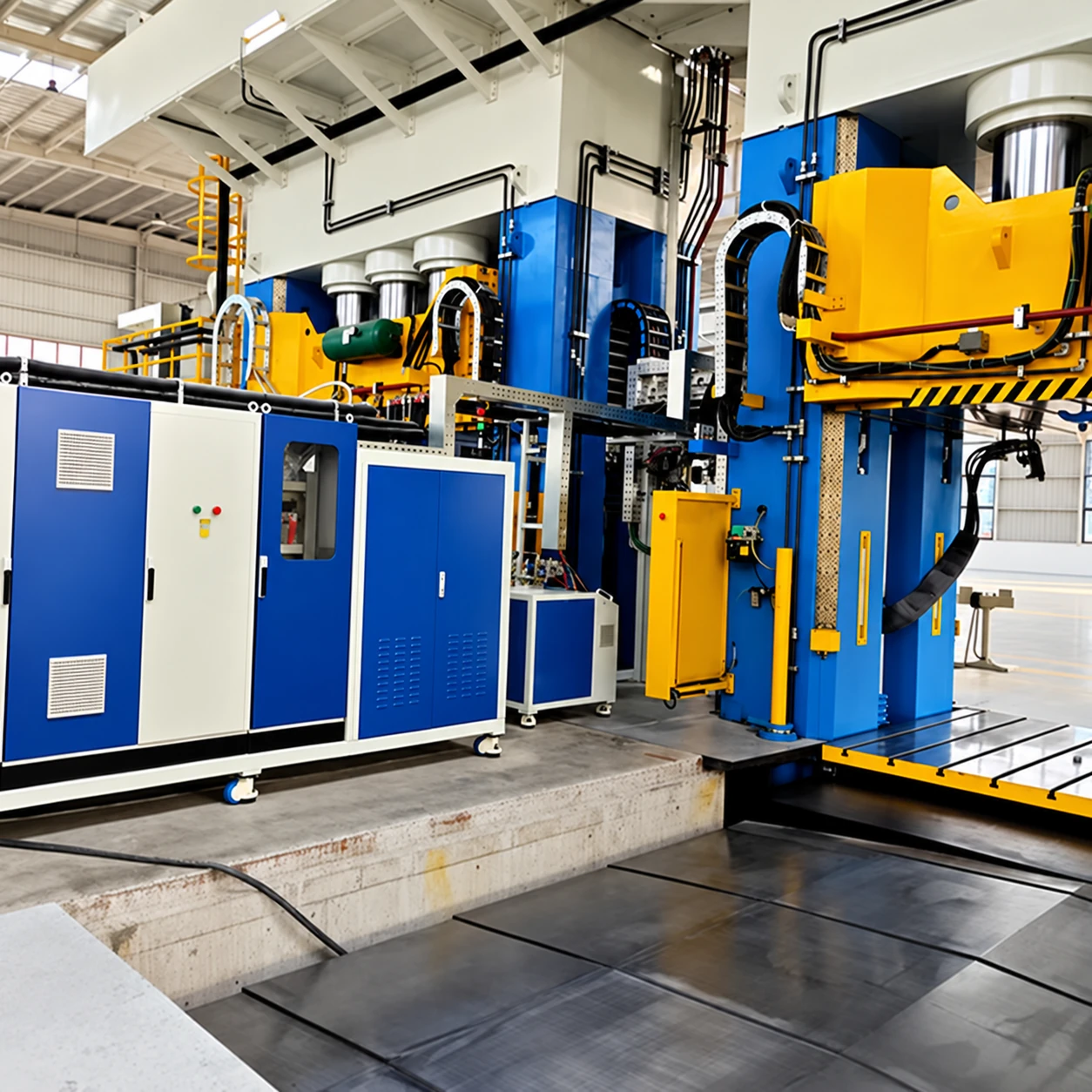
HP-RTM resin metering and high-pressure impingement mixing for closed-tool composite molding, coordinated with preform handling, material-specific cure control and inspection.

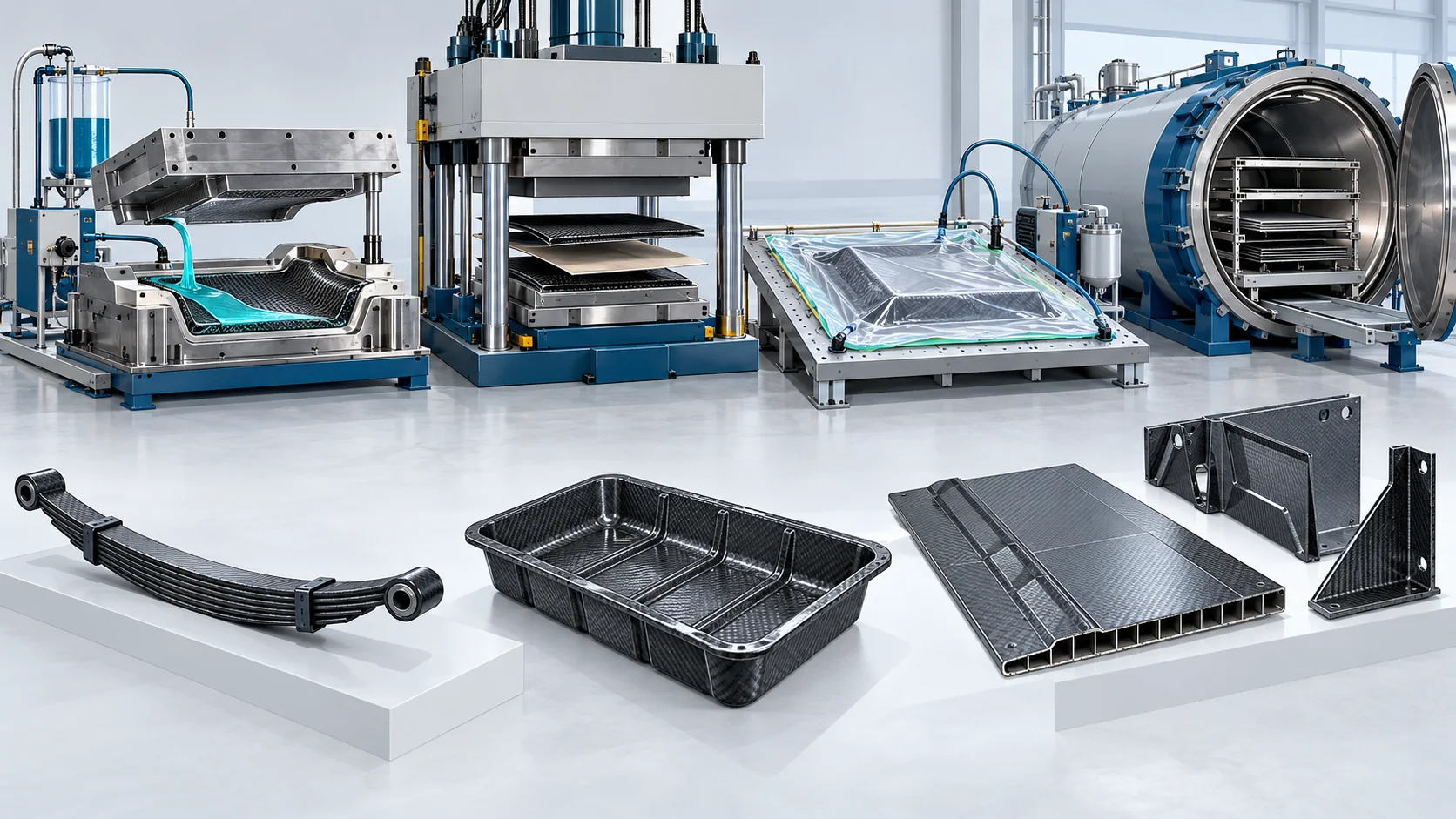
Explore composite production routes, from RTM and compression molding to LFI, vacuum processing and autoclave curing. Equipment and process conditions are configured for your material and part.
Concept illustration; not a photograph of a delivered installation.
Compare routes by reinforcement format, resin system, part geometry and production targets. Select a solution to review its process scope, equipment interfaces and application requirements.
RTM, compression-assisted RTM and RIM/LFI use different reinforcement and tooling arrangements; compare the individual routes.
HP-RTM resin metering and high-pressure impingement mixing for closed-tool composite molding, coordinated with preform handling, material-specific cure control and inspection.
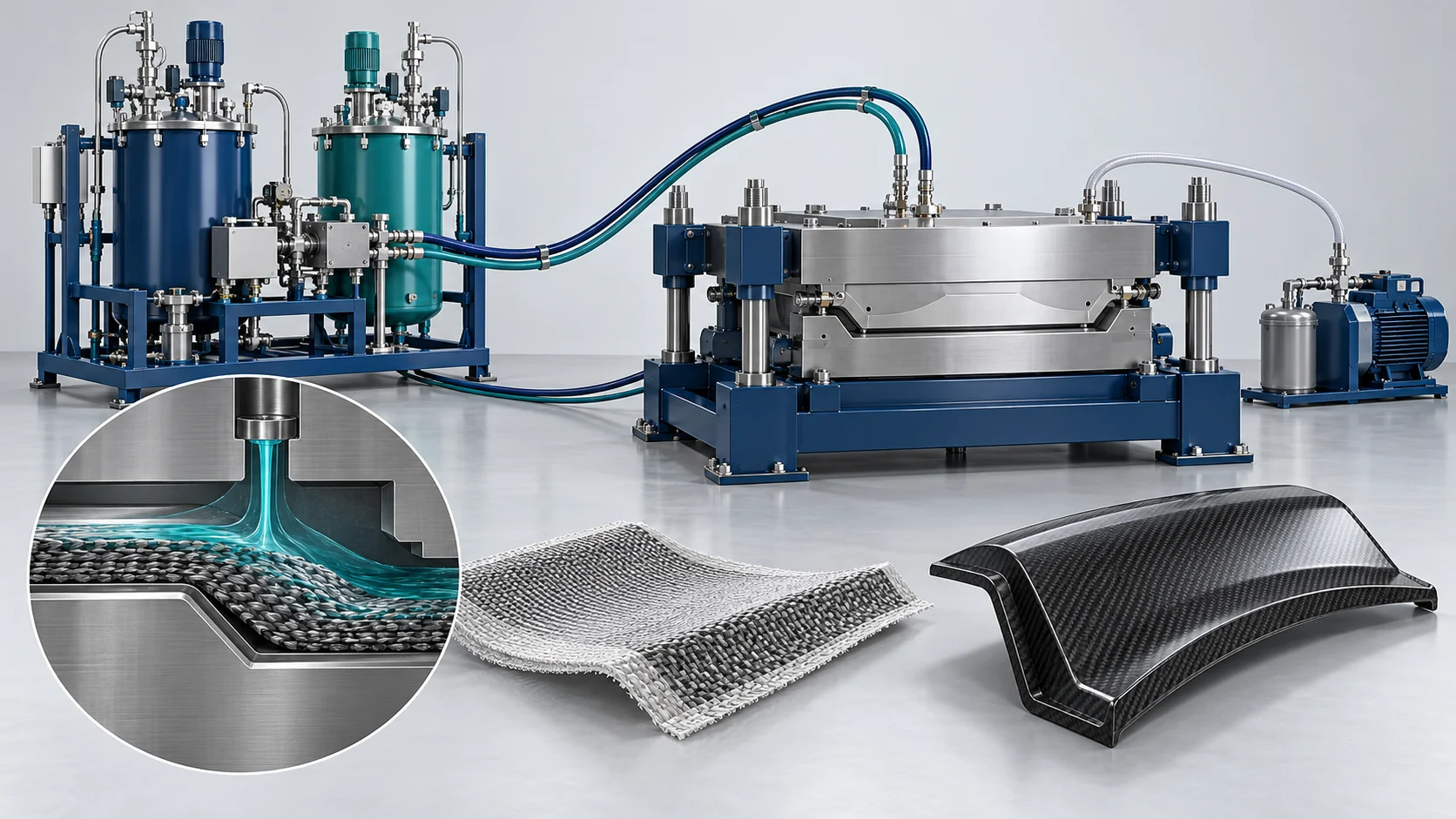
Resin transfer molding with metered liquid-resin injection into dry reinforcement in a closed tool, coordinated with preforming, clamping, curing and inspection.
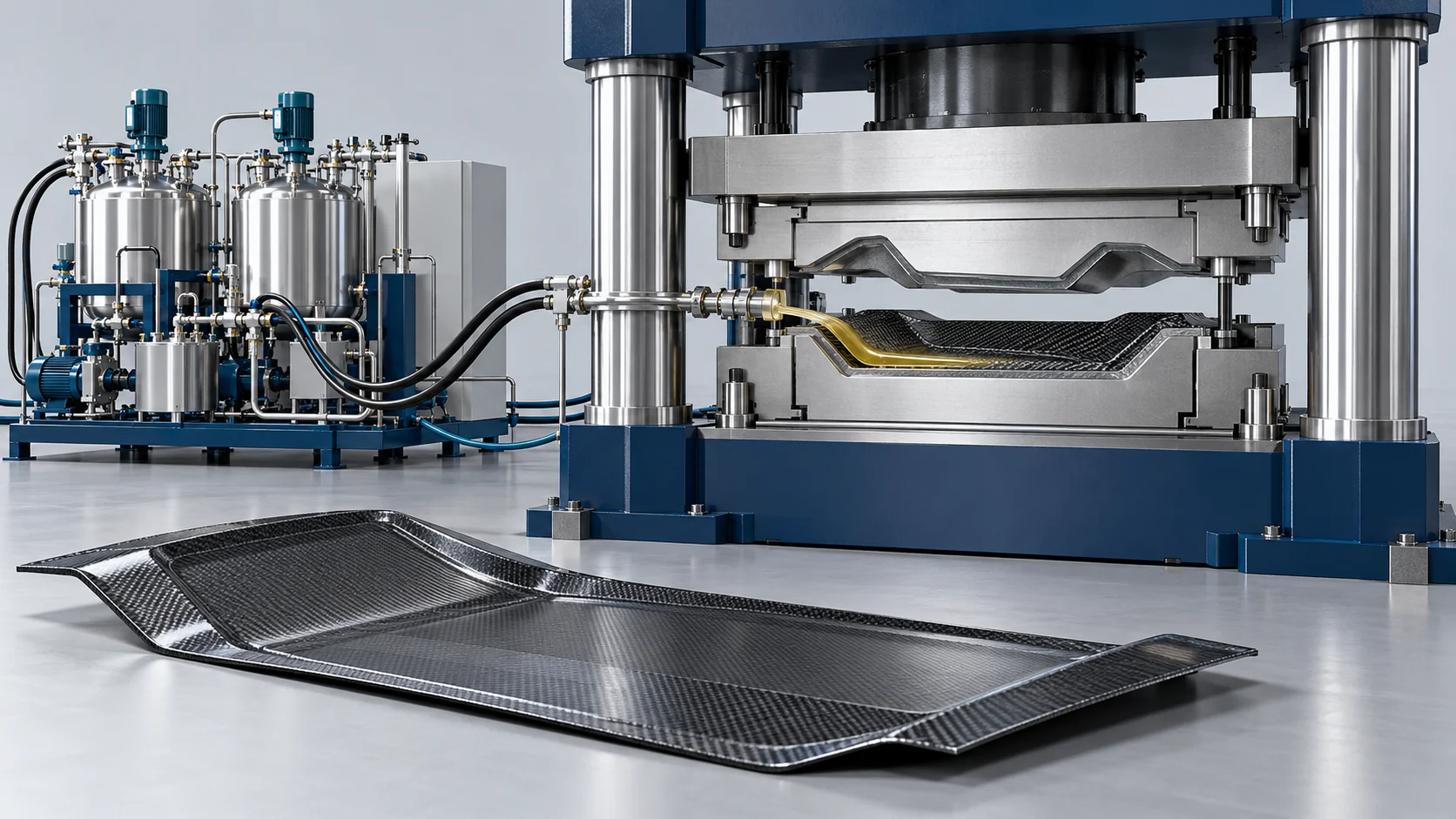
HP-CRTM process planning and equipment integration, with a configuration reference for large-area carbon-fiber battery trays and floor pans.
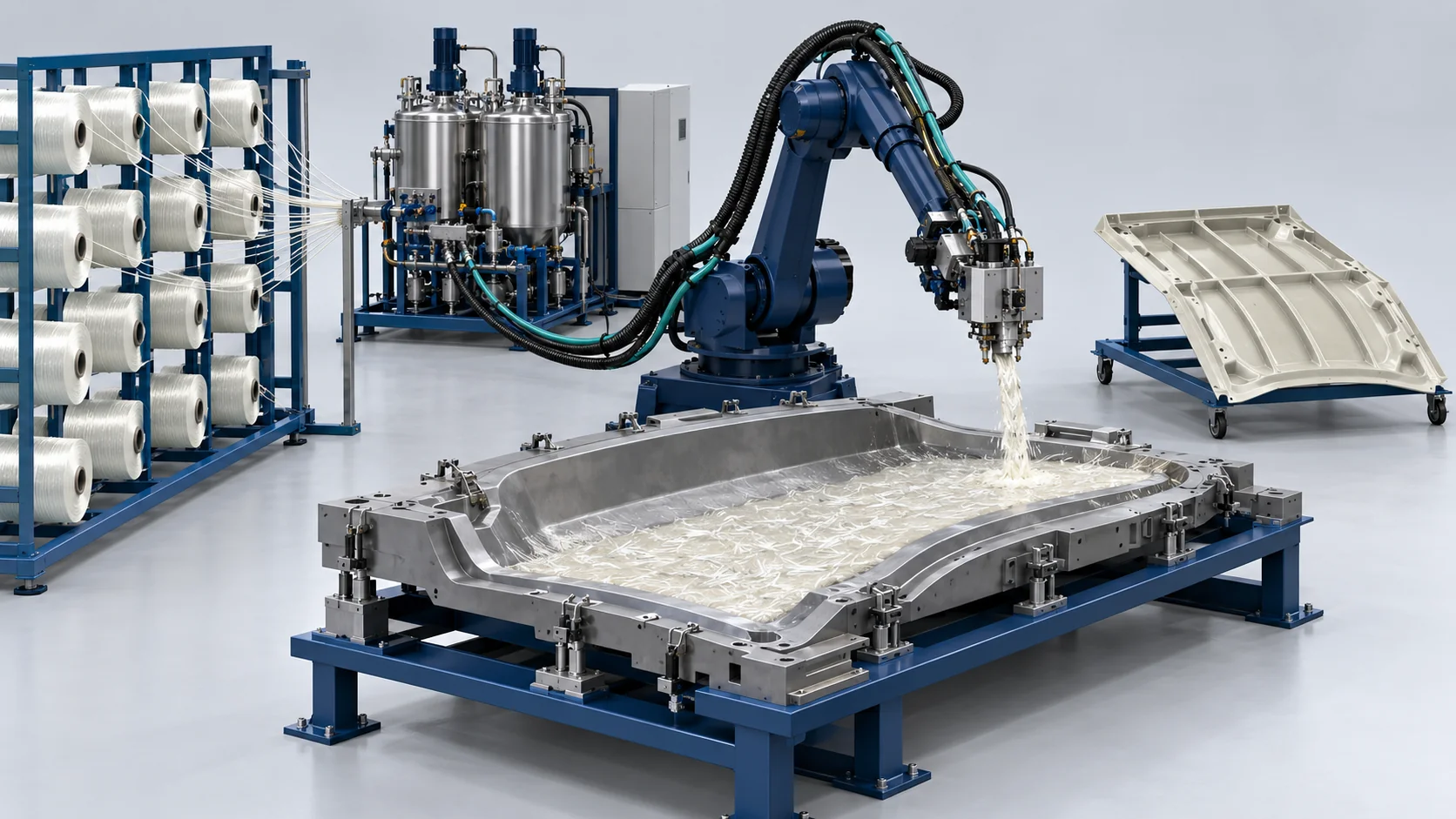
Robotic chopped-fiber deposition and PU delivery for configured LFI applications, with separately defined closed-mold RIM interfaces.
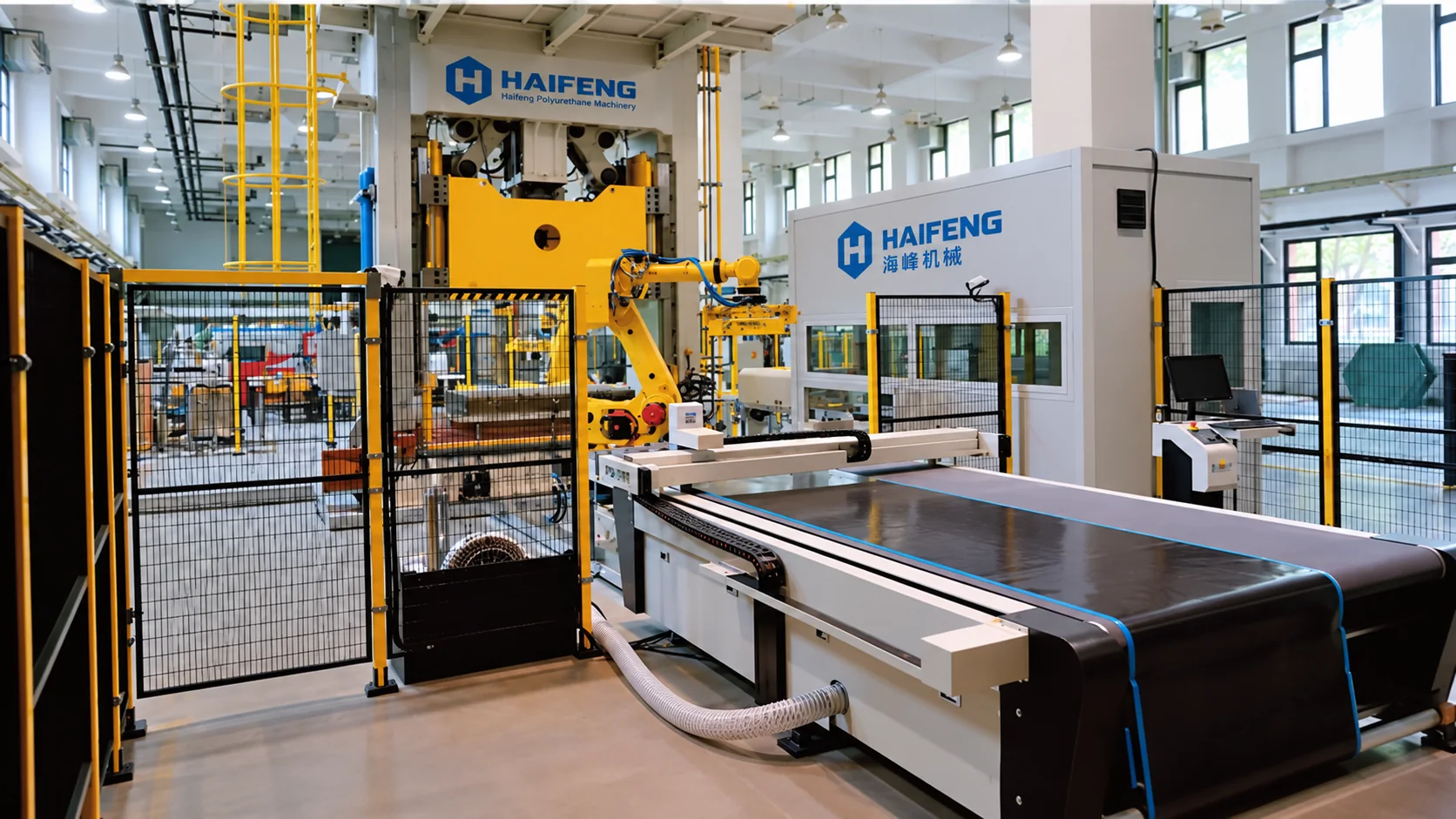
Automated PCM prepreg compression molding integrating cutting, release-film removal, handling and layup, heated pressing and cooling.
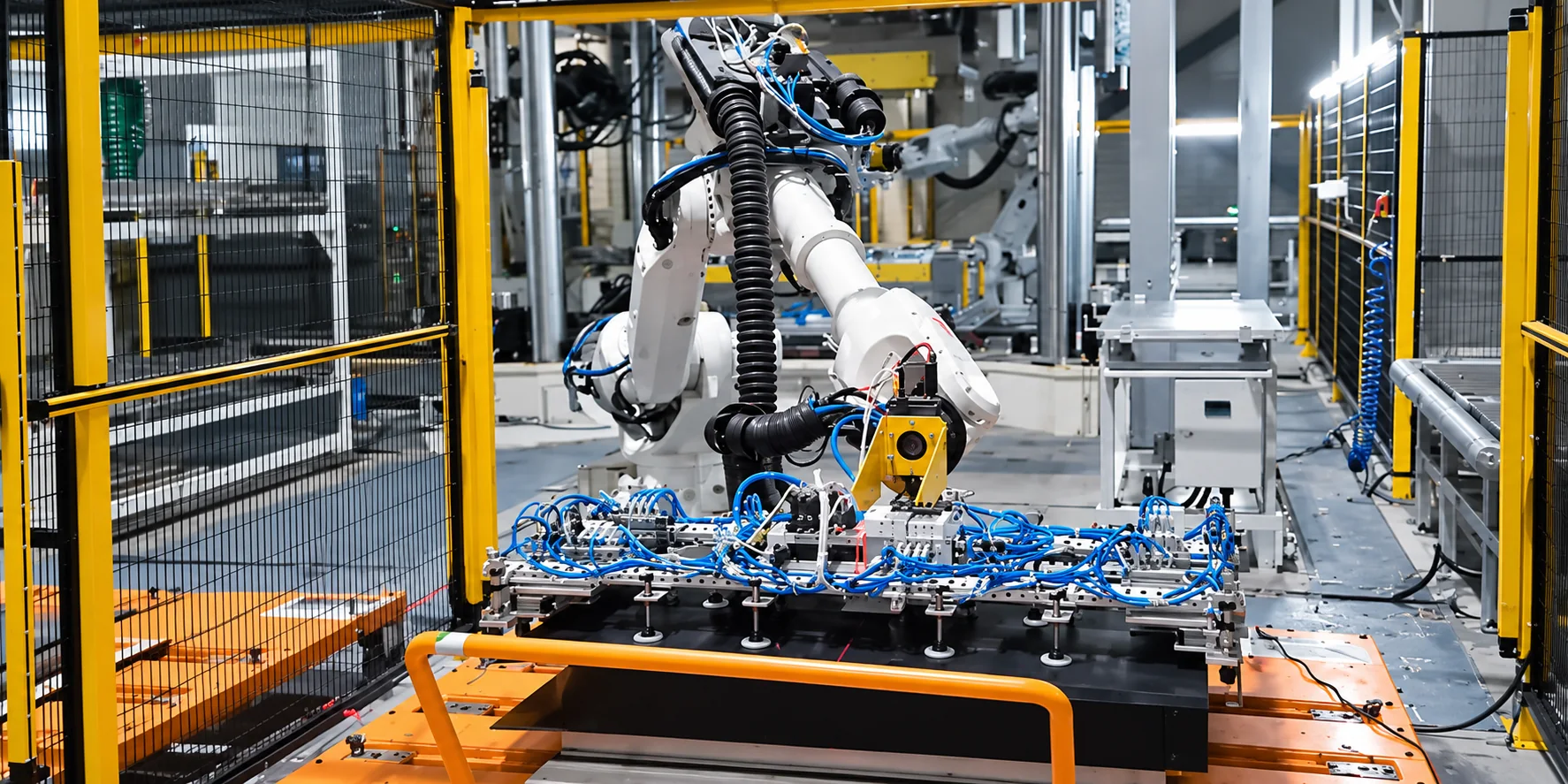
A flexible turnkey line for WCM wet compression molding and thermoplastic composite sheet molding.
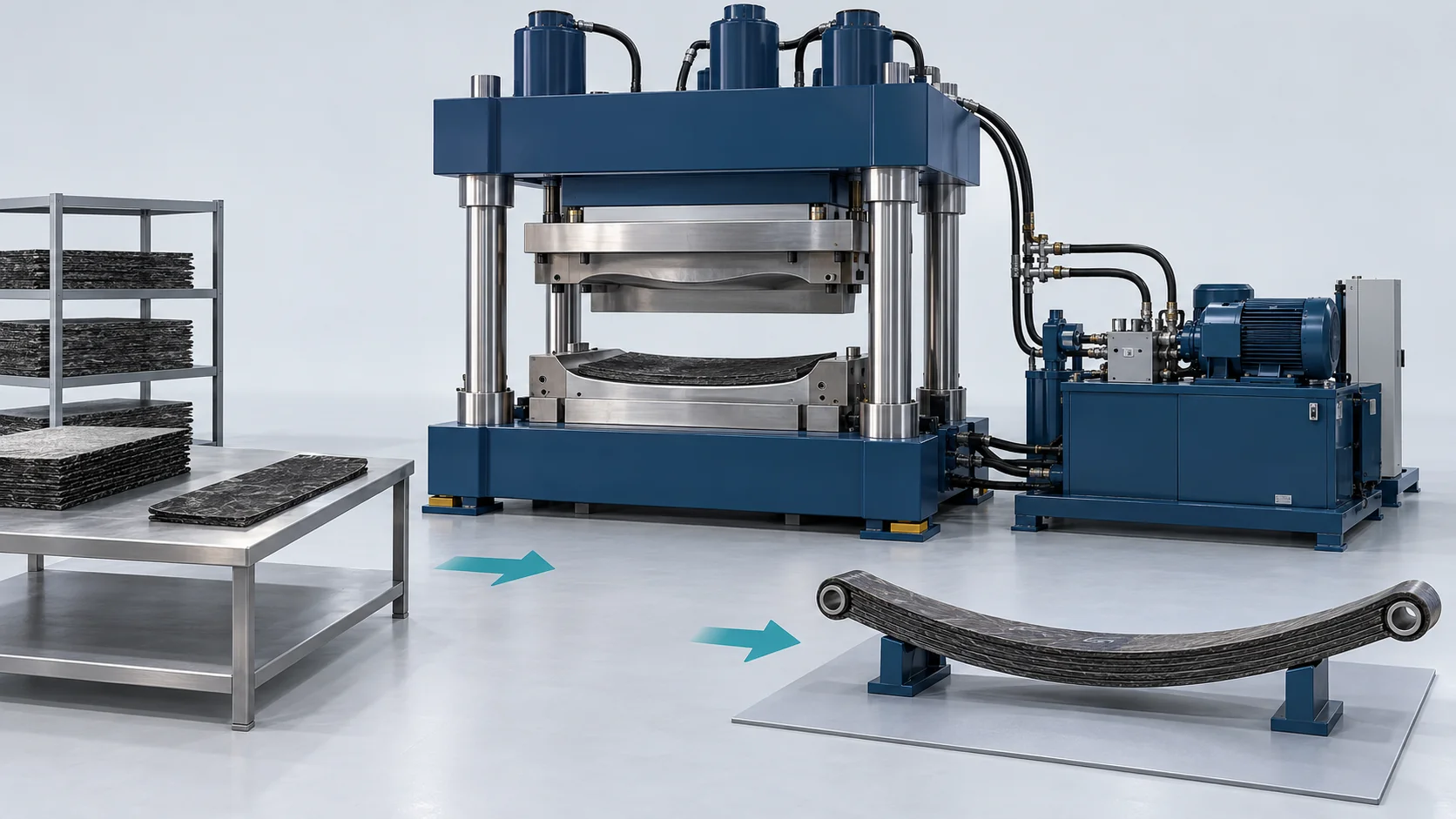
A multi-cylinder hydraulic compression press with active platen leveling for specified composite tooling and solid preforms.
Liquid-resin infusion, VBO prepreg and autoclave curing are distinct material and cure routes.
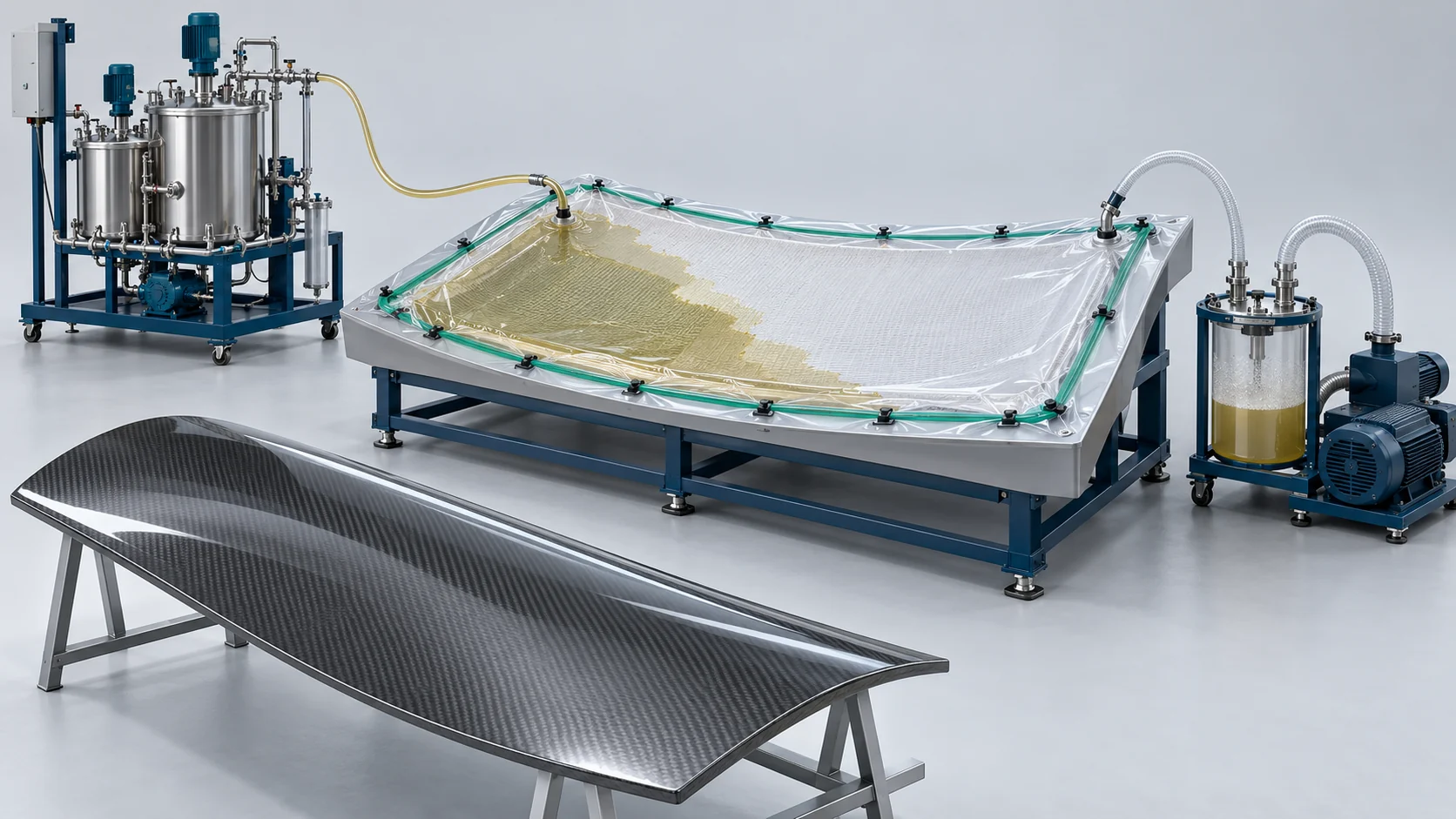
Vacuum infusion composite molding with dry reinforcement, sealed bagging and controlled resin delivery, coordinated with vacuum, tooling and curing equipment.
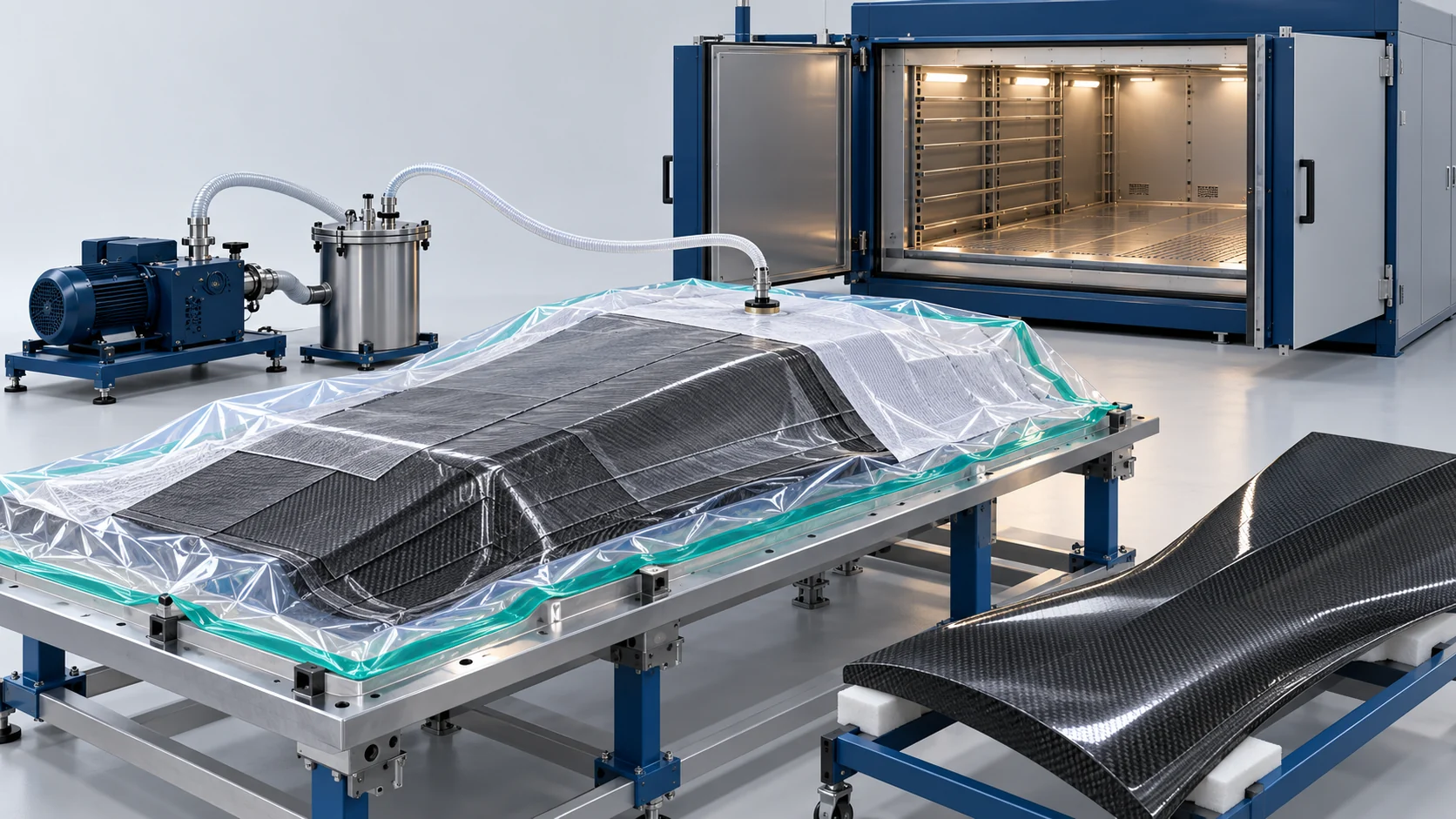
Vacuum-bag-only composite manufacturing using qualified out-of-autoclave prepreg, controlled bagging and oven curing with agreed handling and inspection interfaces.
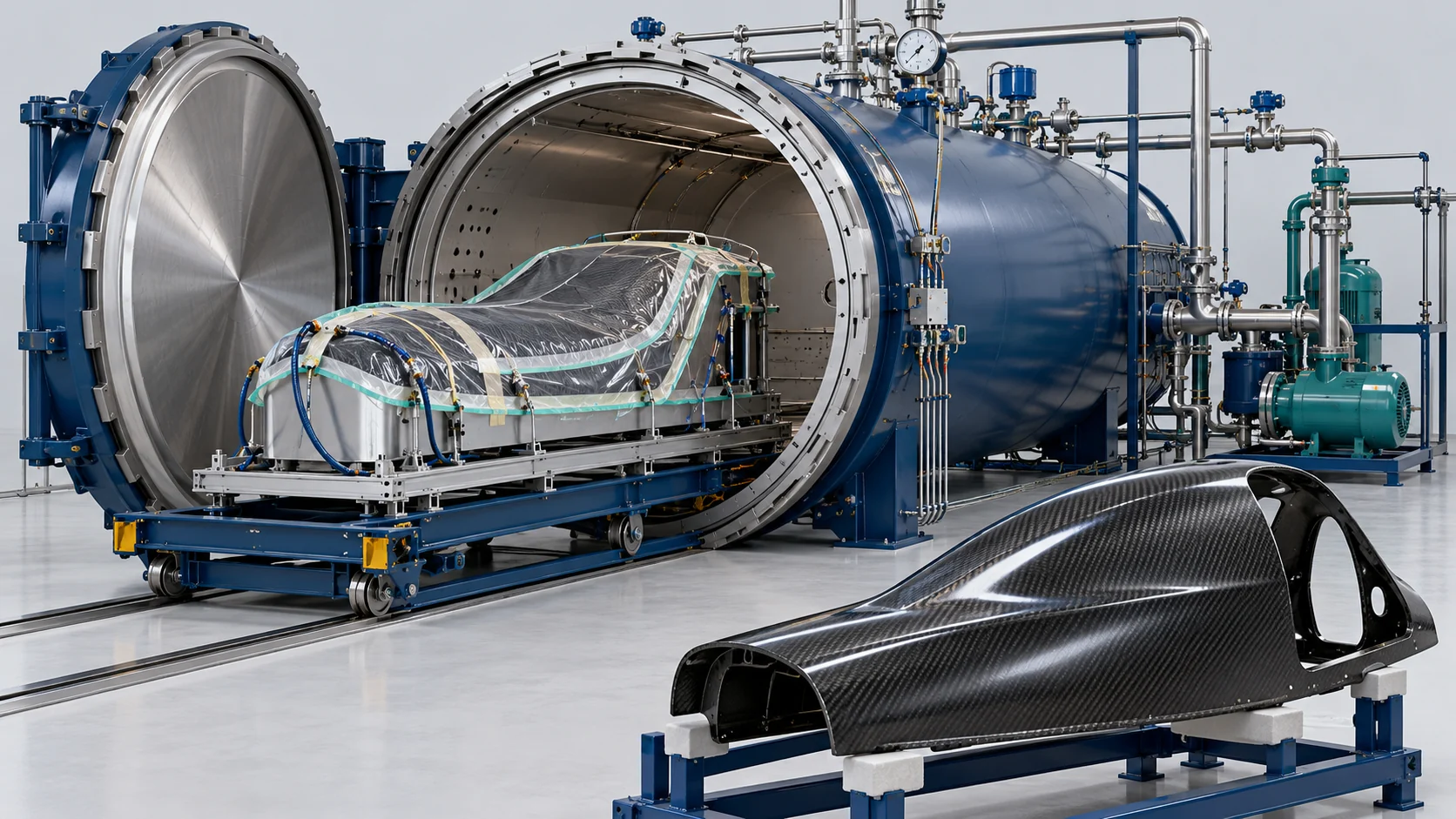
Autoclave composite manufacturing with prepreg layup, vacuum bagging, qualified cure cycles and a large-tool aerospace configuration reference.
Preforming prepares reinforcement; it does not by itself include resin injection, molding or curing.
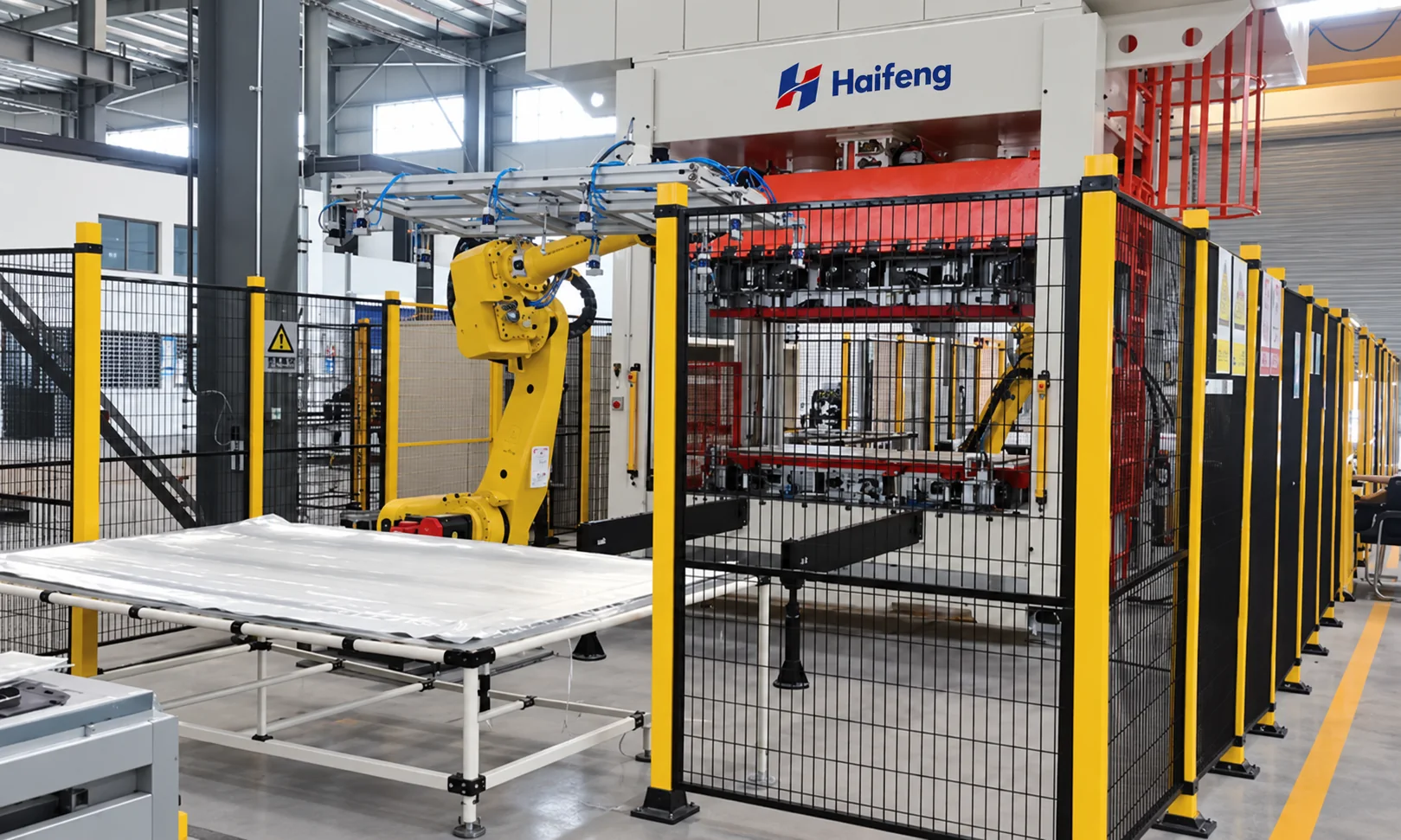
HF-HPM automated fabric preforming for carbon- and glass-fiber reinforcements, with synchronized feeding, cutting, heating, robotic shaping and defined downstream HP-RTM interfaces.
Process routes are selected separately for dry-fiber RTM/HP-CRTM, prepreg compression, autoclave curing, vacuum processing and LFI. The stages below summarize the shared planning points, not one line that performs every route.
Match the reinforcement, resin, part geometry and qualification requirements to RTM, compression molding, LFI, autoclave or vacuum processing.
Cut and arrange dry fabric, prepreg or the specified chopped-fiber feed. Automated preforming is an upstream operation where required.
Define mold temperature, sealing, vacuum and press or vessel interfaces for the selected route.
Coordinate resin injection, fiber deposition or compression as applicable; establish flow and compaction conditions on the selected material and tool.
Use the material-specific in-mold, oven or autoclave schedule. Thermoplastic molding uses cooling and solidification rather than thermoset curing.
Check dimensions, laminate quality and the required structural tests. Record process conditions and distinguish equipment acceptance from finished-part qualification.
Compare resin injection systems, compression presses, robotic LFI equipment and autoclaves for their respective composite routes. Preforming, tooling, vacuum and handling interfaces are defined separately; these machines are not interchangeable across all processes.

HP-RTM metering and mixing for carbon-fiber composites, with closed-mold injection and separately configured HP-CRTM press and tooling interfaces.
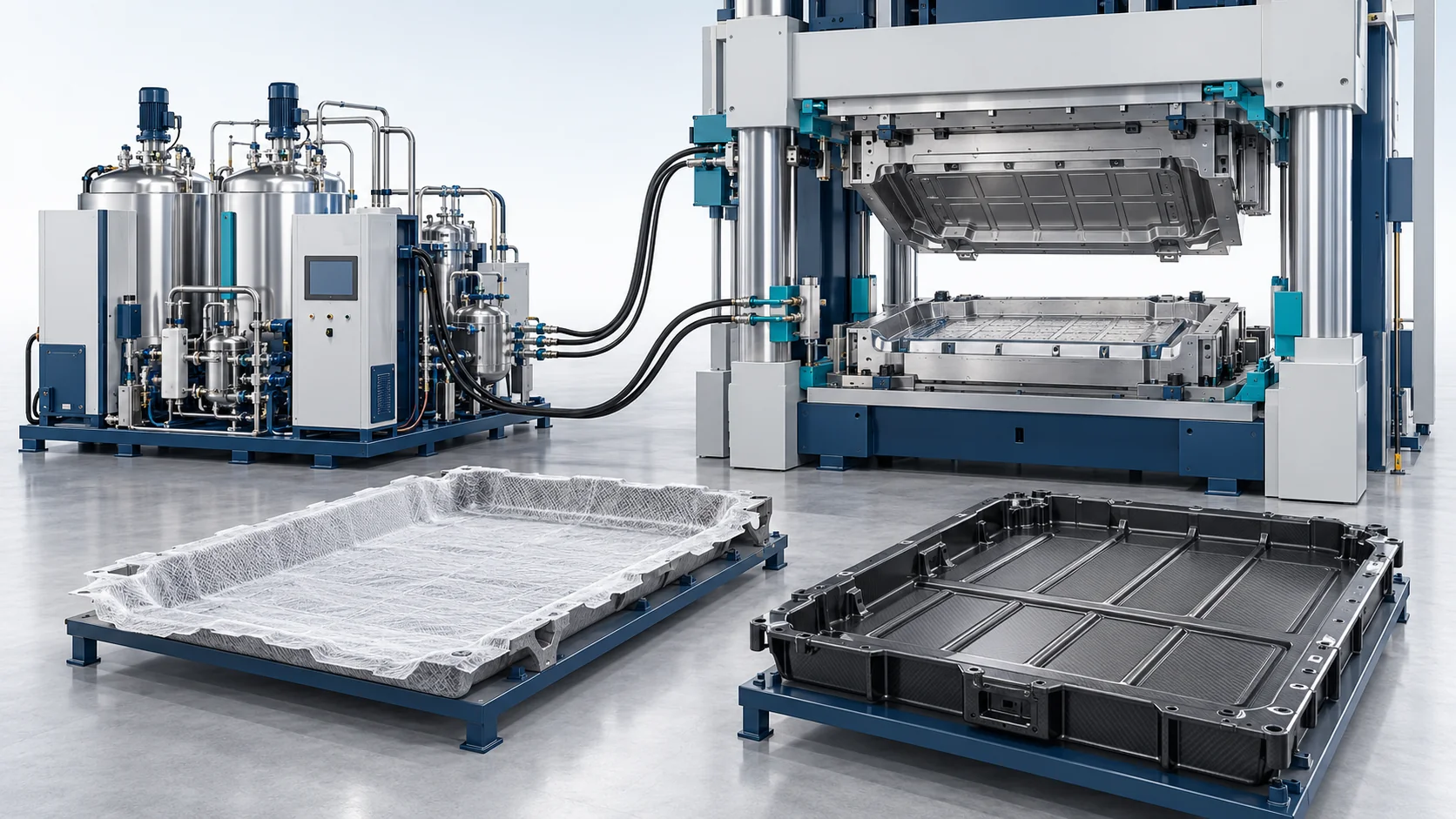
HP-RTM resin injection equipment for composite EV battery lower trays and enclosures, combining higher-output metering, coordinated gate control, vacuum tooling and large-mold thermal management.
HP-RTM tray molding reference; separate from cell potting or module assembly.
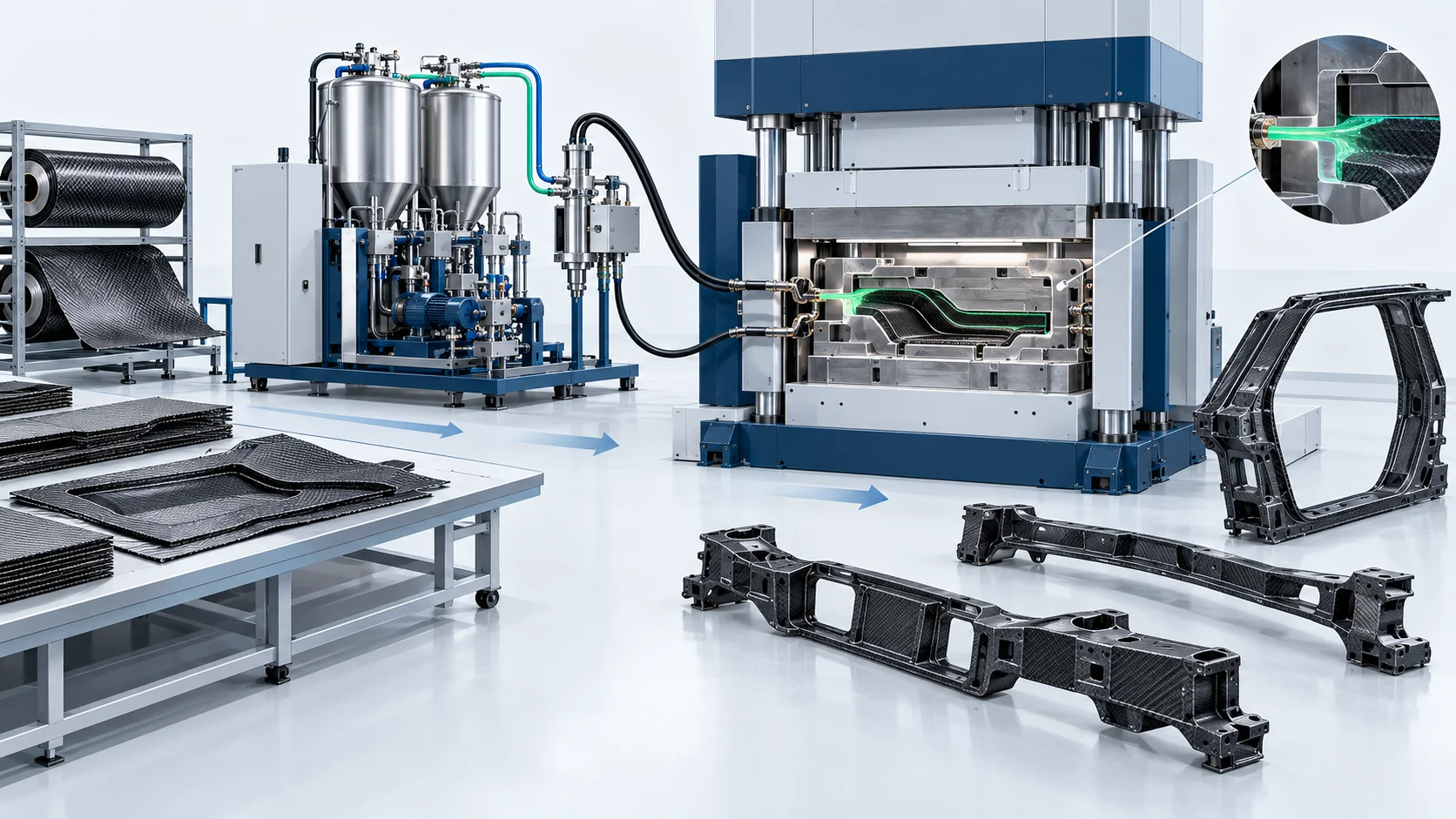
HP-RTM metering and injection equipment for carbon-fiber B-pillars, roof crossmembers and floor beams, integrating ratio control, vacuum-assisted closed tooling and resin-specific cure management.
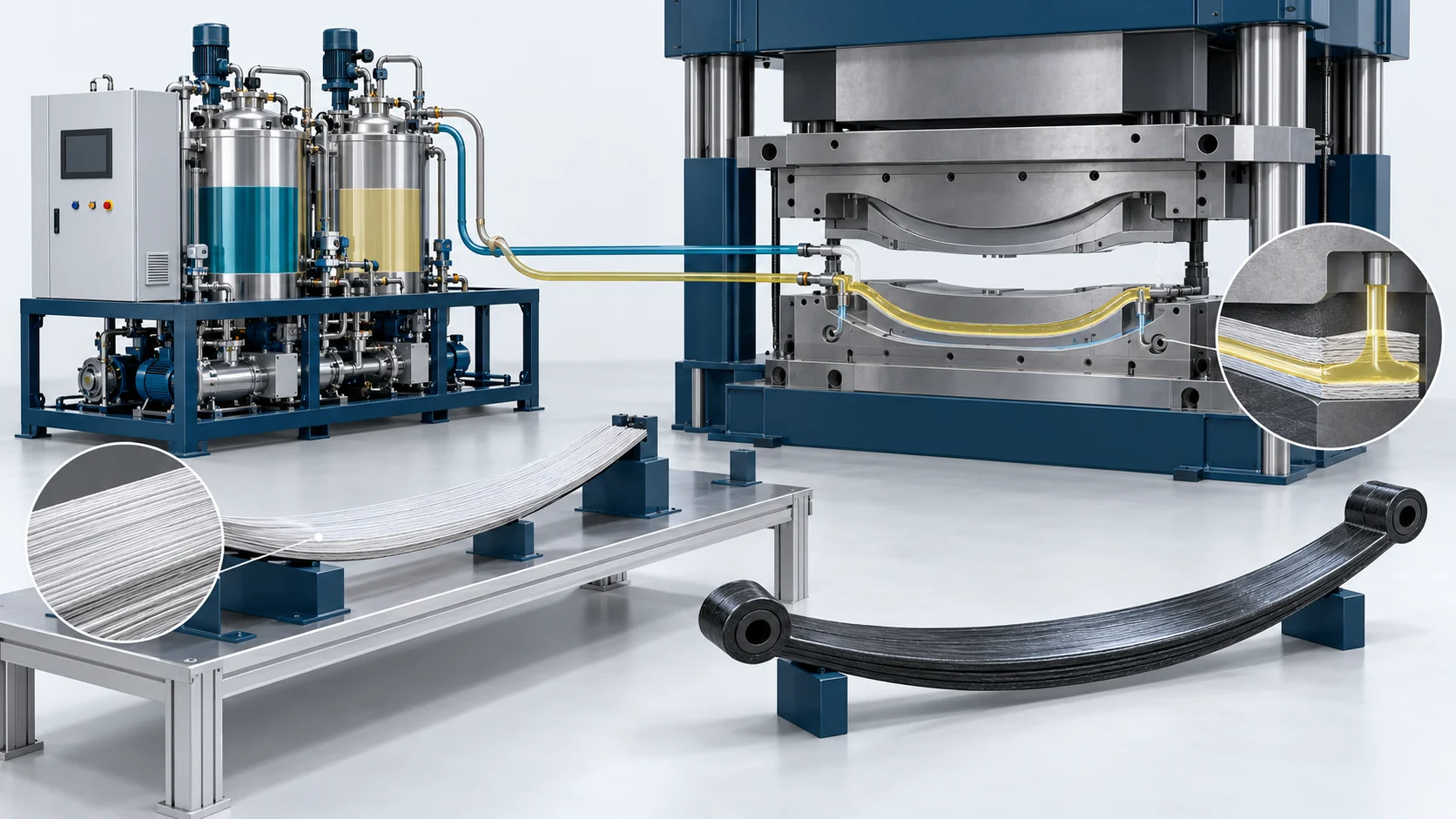
HP-RTM resin metering and injection equipment for composite suspension leaf springs, configured for thick unidirectional glass-fiber preforms, mold vacuum and multi-zone thermal control.
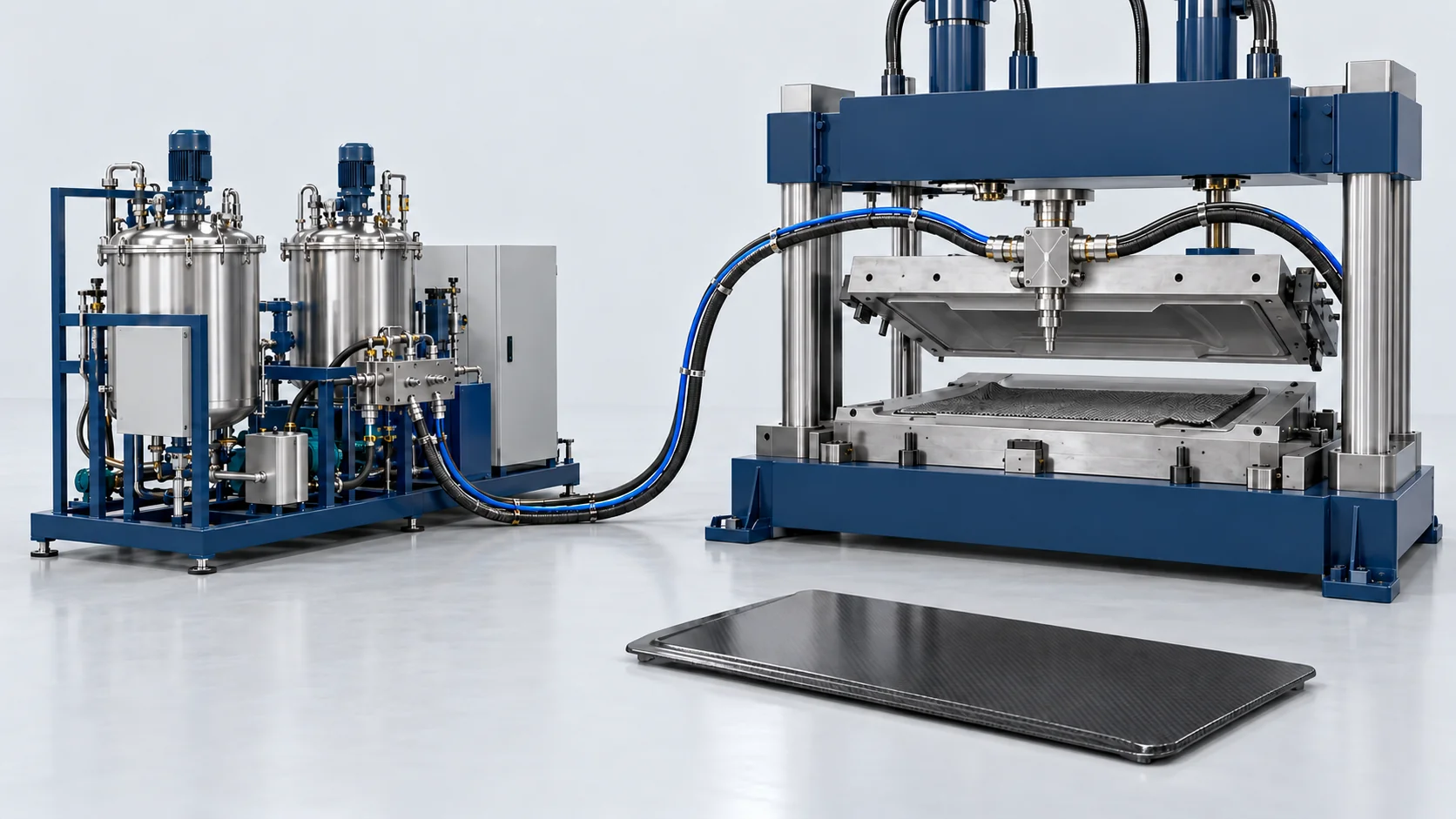
High-pressure resin metering and surface injection coordinated with compression-RTM tooling and press movement.
Resin injection for compression-assisted RTM; confirm press/tool motion and reinforcement interfaces.
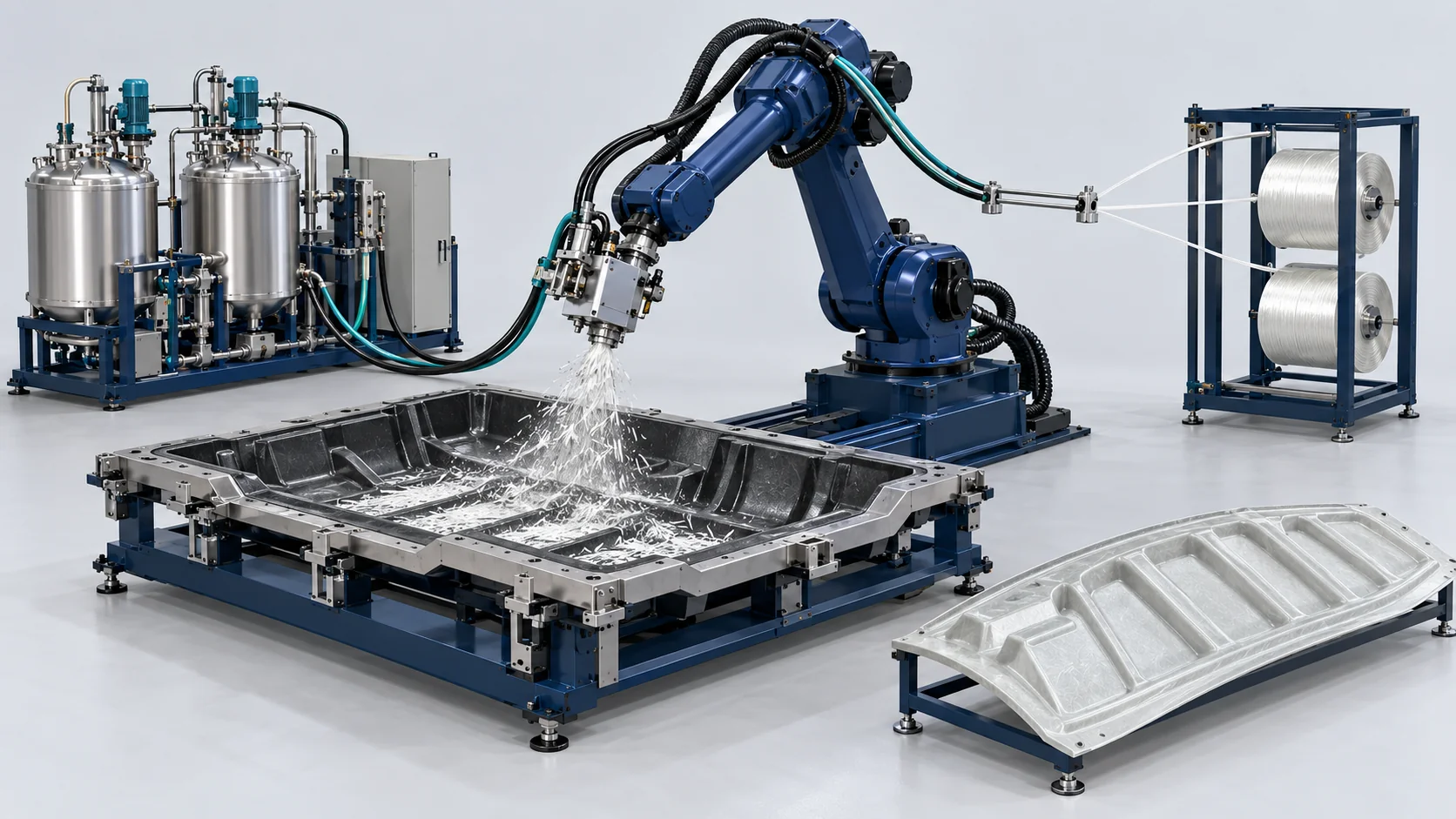
Robotic chopped-fiber deposition and PU delivery for configured LFI applications, with separately defined closed-mold RIM interfaces.
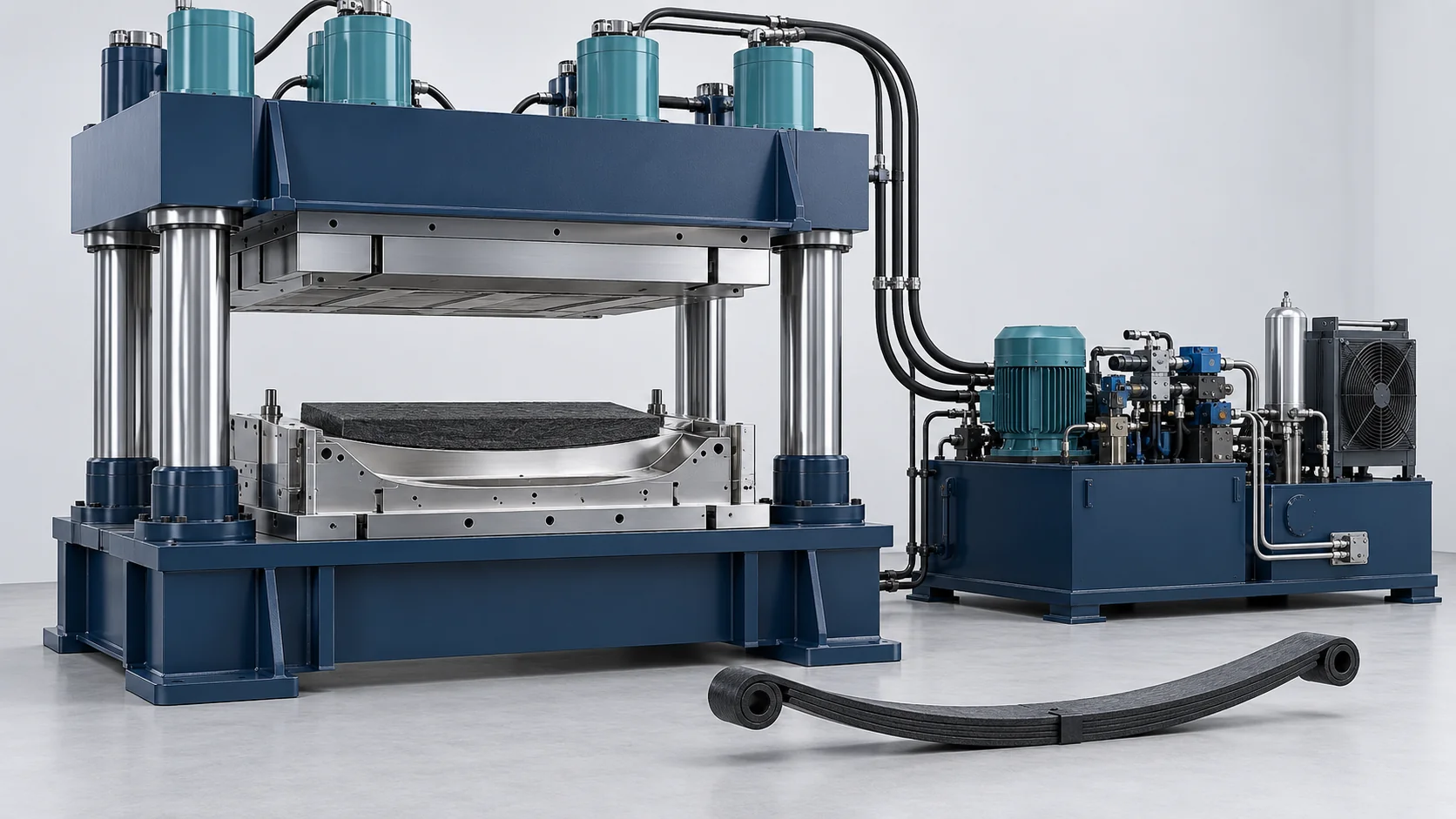
A multi-cylinder hydraulic compression press with active platen leveling for specified composite tooling and solid preforms.
Compression press reference; prepreg, SMC and thermoplastic material/heating routes need separate review.
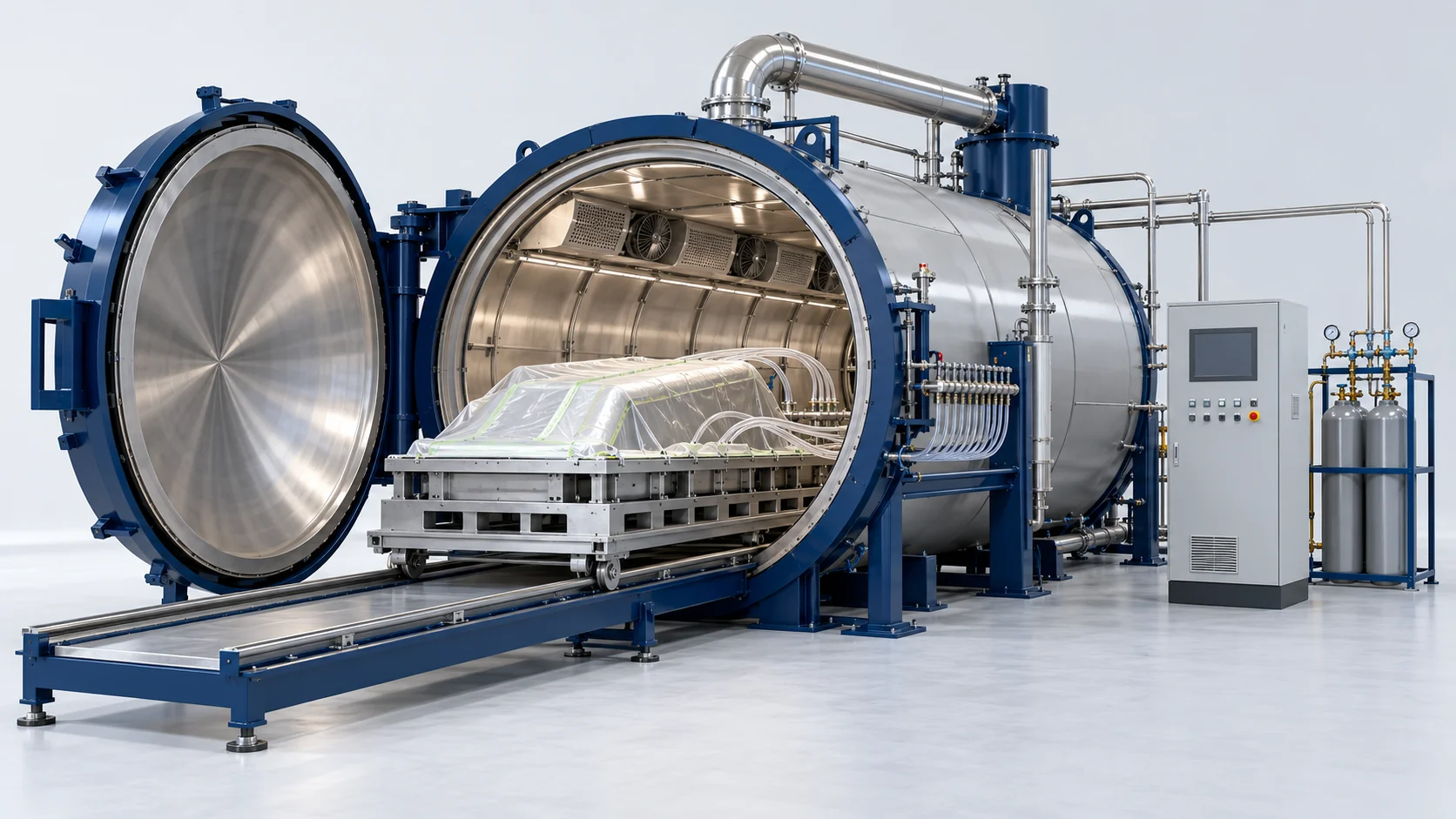
A monitored pressure-vessel curing package with zoned heating, gas pressurization and independent tooling vacuum circuits.
Prepreg autoclave curing reference; vacuum bagging and loaded thermal acceptance are separate scope items.
Explore the published advanced composite manufacturing application and project records selected from this category's solution pages. Each record describes its own material, process and equipment scope; project figures and industry references are not universal machine ratings or independently verified results for a new installation.
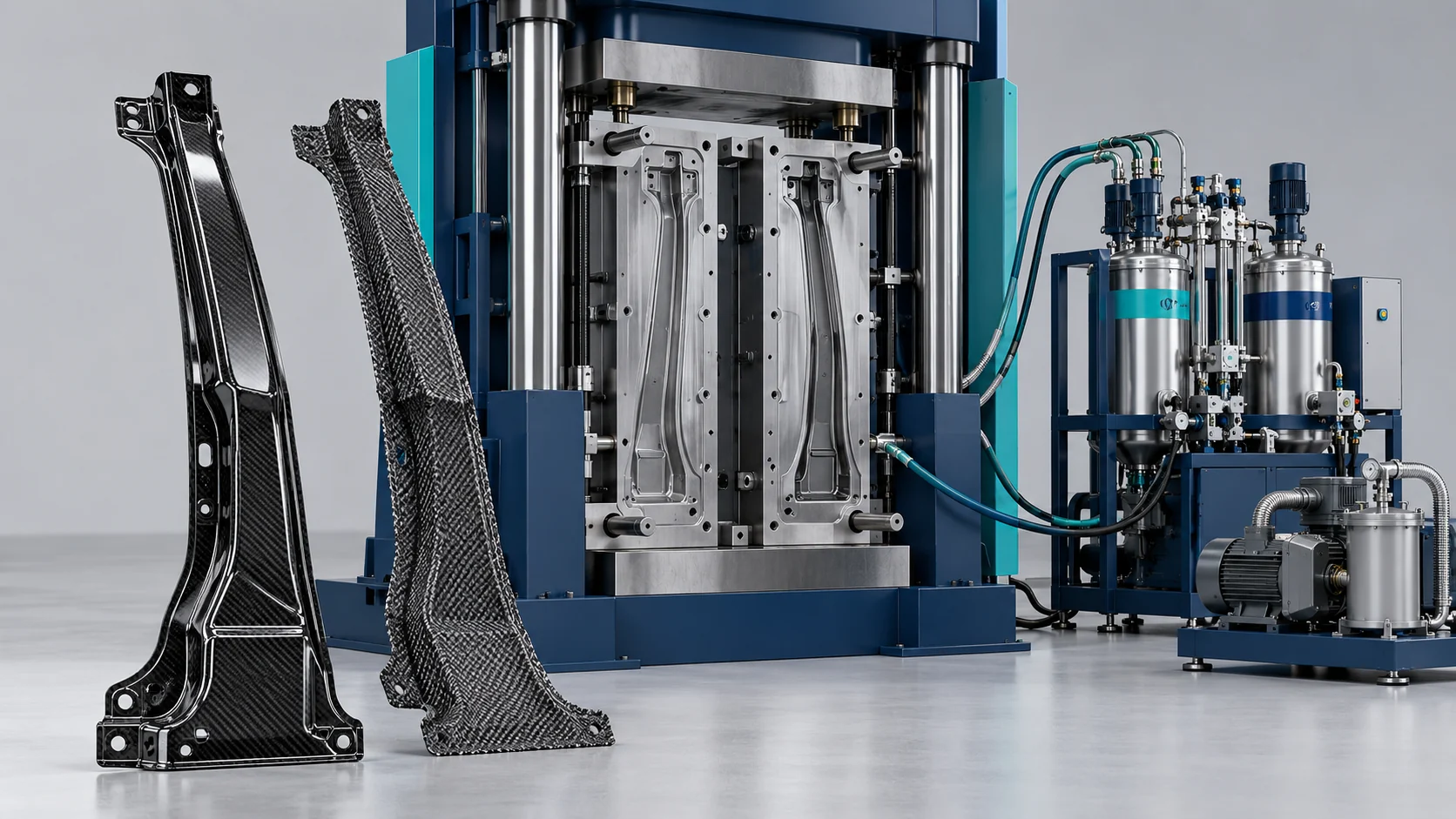
Haifeng delivered an automated HP-RTM line for carbon fiber B-pillars, reducing B-pillar component weight by 60% with a reported 3-minute complete molding/demolding cycle.
Weight reduction compares the stated B-pillar designs. Inspected dry-spot results do not establish all future parts or vehicle crash qualification.
Process illustration; not a verified installation photograph.
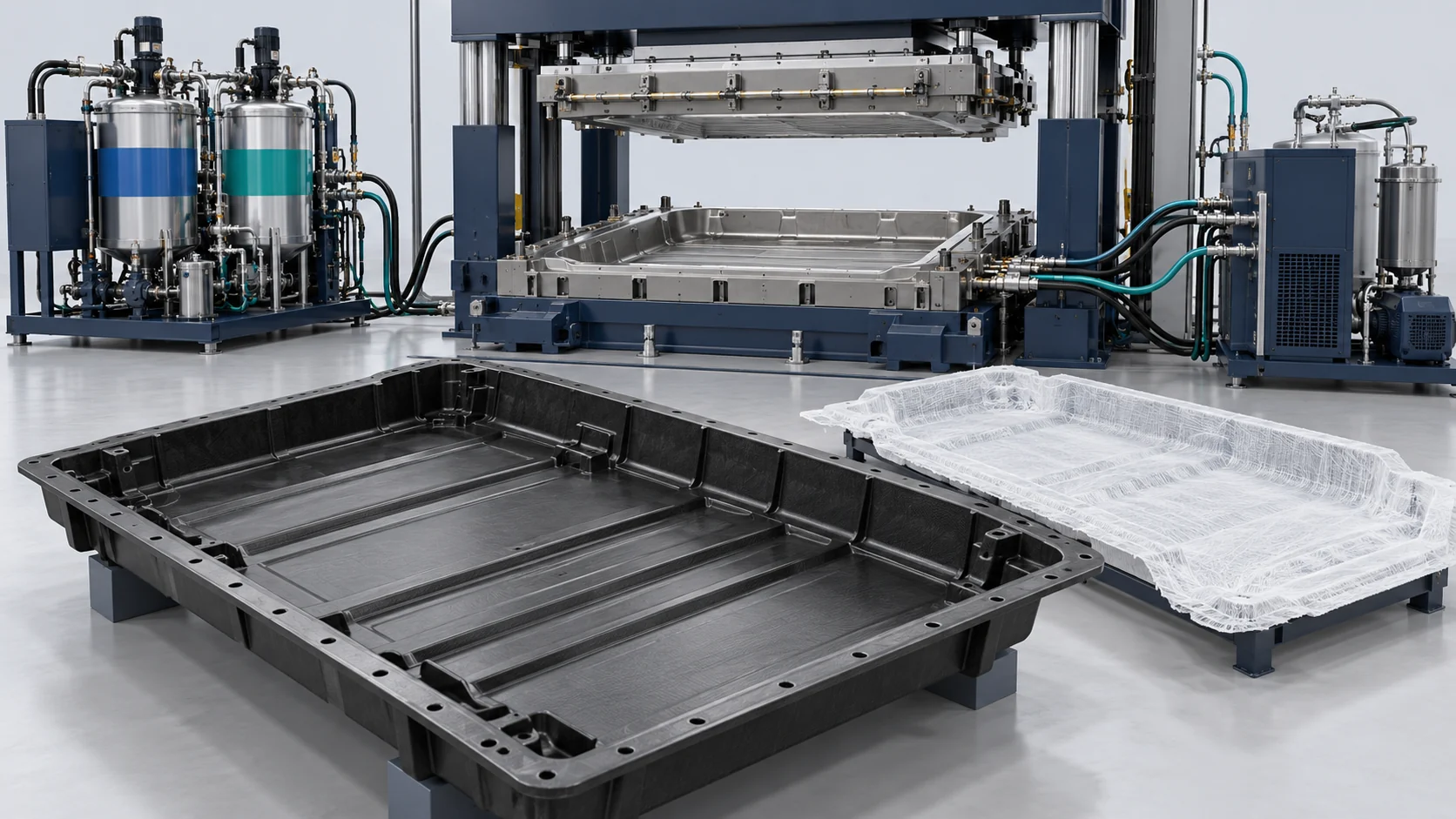
The supplied China battery-tray project brief reports 40% weight reduction against the compared aluminum design and a 4-minute preform-loading-to-demold cycle. Material flammability, enclosure performance and battery-system qualification require separate validation.
Weight reduction compares the stated tray with its aluminum baseline. UL94 V-0 concerns material specimens; enclosure and battery-system validation remain separate.
Process illustration; not a verified installation photograph.
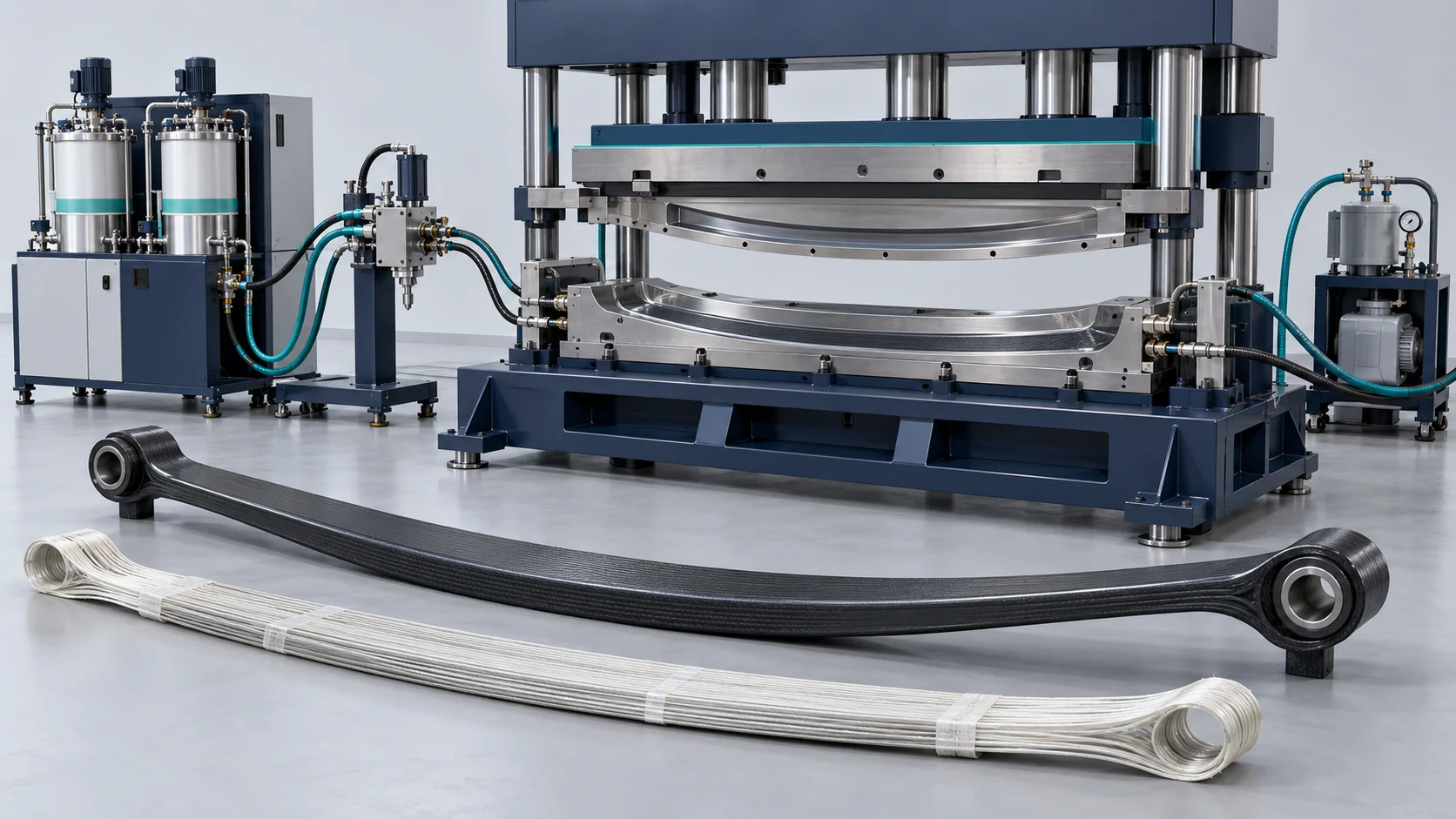
Haifeng commissioned an automated HP-RTM line for composite leaf springs, reducing suspension weight by 65% and passing 1 million dynamic fatigue cycles.
Weight reduction concerns the leaf-spring configuration and steel baseline. The fatigue count belongs to the recorded bench test.
Process illustration; not a verified installation photograph.
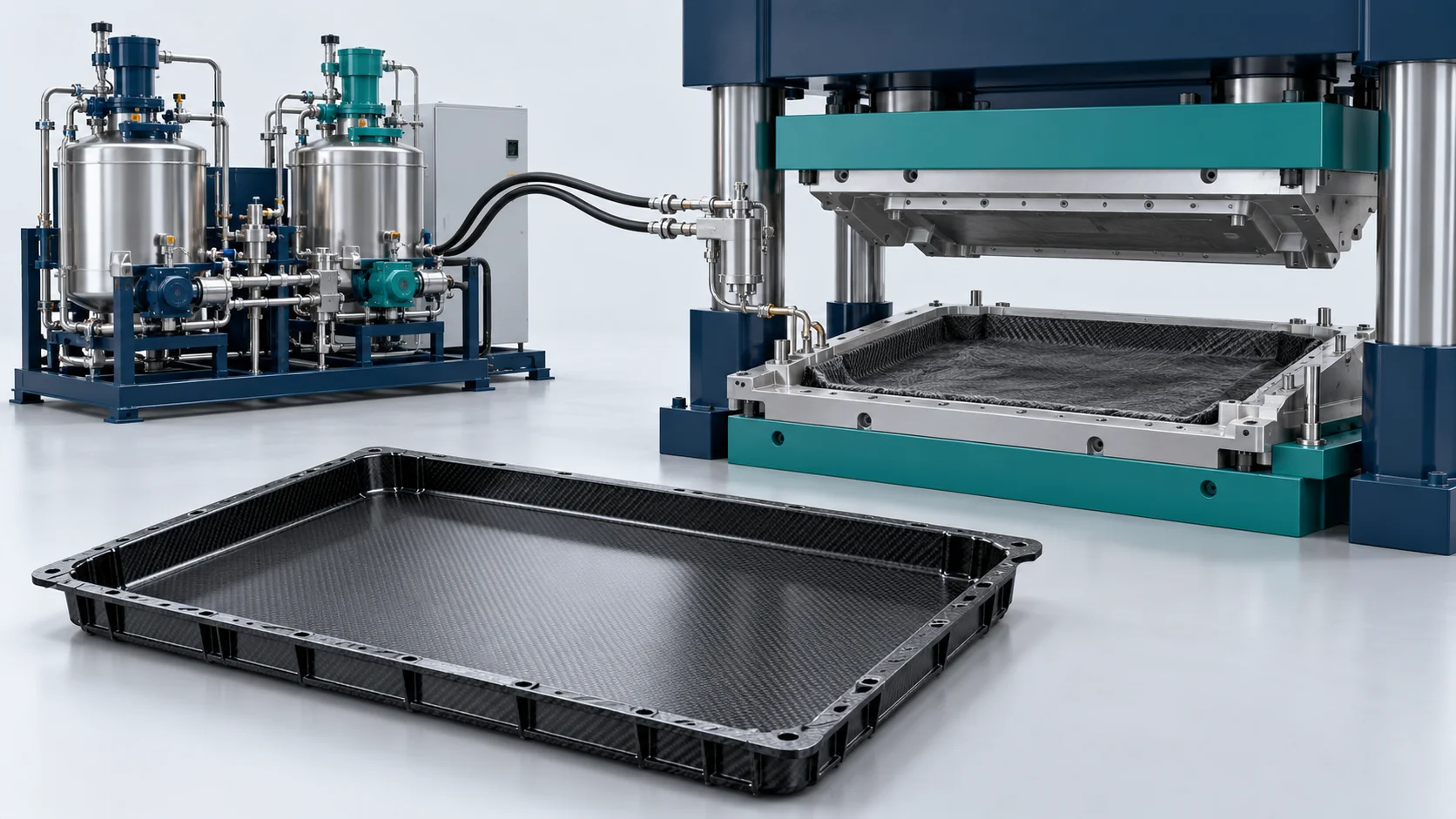
Carbon Battery Tray HP-CRTM Line: equipment configuration and application-specific outcomes reported in the supplied project brief.
Tray weight uses the stated aluminum baseline. The reported part-to-part cycle includes preform infeed and demolding; tray area alone does not establish internal quality.
Process illustration; not a verified installation photograph.
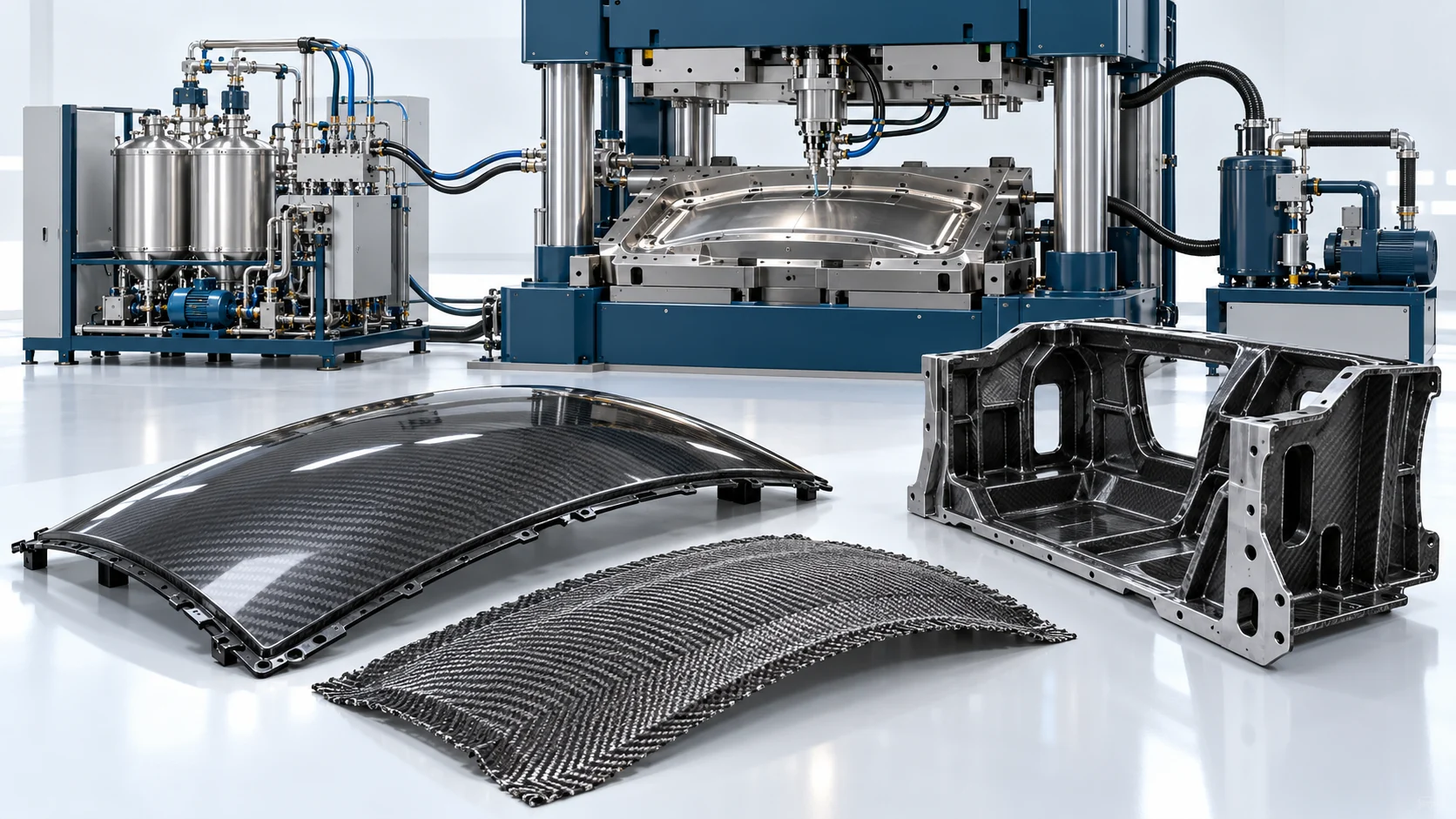
Supercar Carbon Fiber HP-RTM Project: equipment configuration and application-specific outcomes reported in the supplied project brief.
Fiber volume fraction, torsional stiffness and porosity use different material/part test bases. Confirm specimen geometry and quantitative void measurement separately from NDT coverage.
Process illustration; not a verified installation photograph.
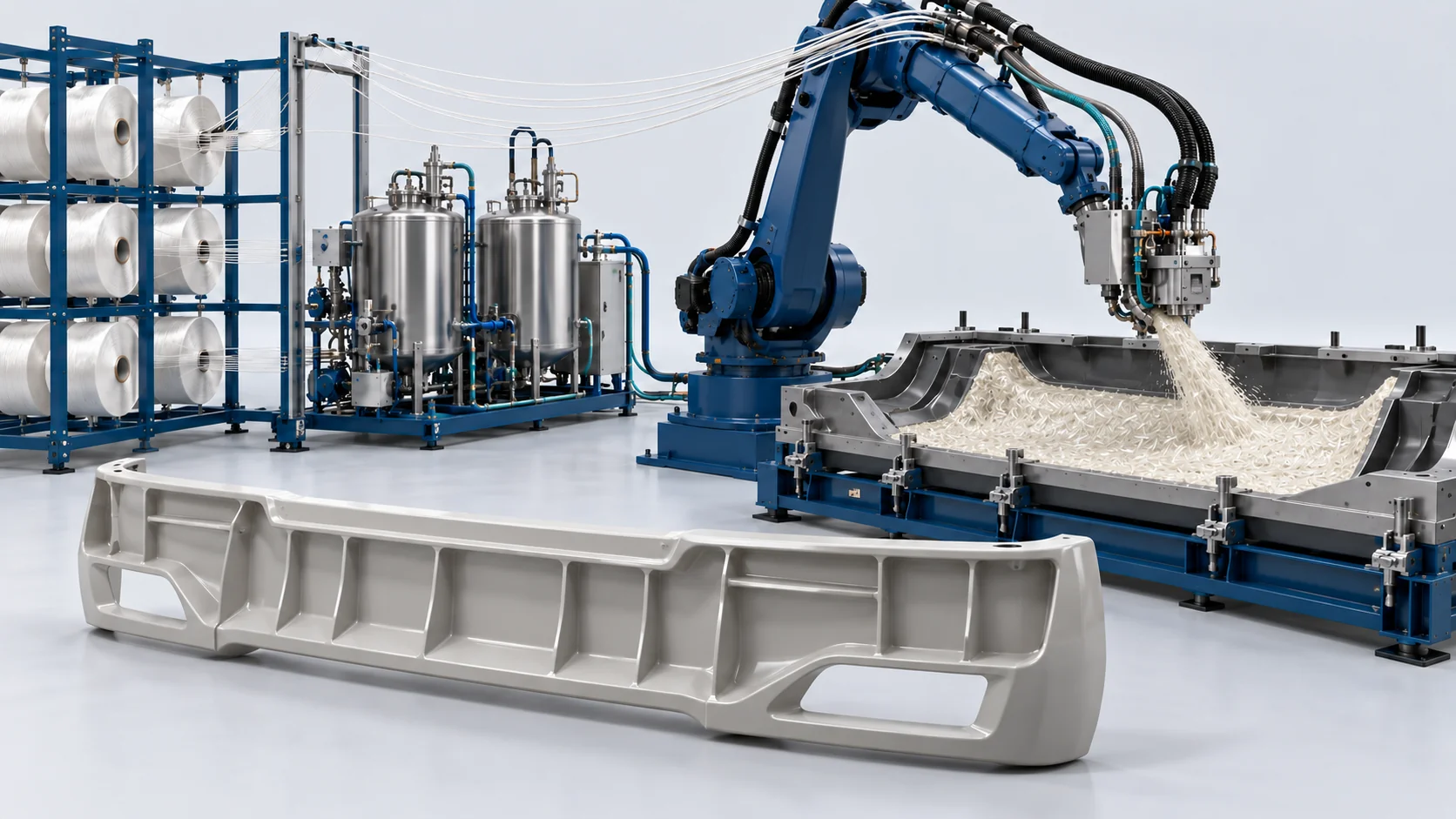
Review Heavy Truck Bumper LFI Molding in China, including process configuration, related equipment and application requirements. Project figures require stated conditions.
LFI and closed-mold RIM use different reinforcement delivery. Impact, tooling-cost and weight comparisons concern the supplied bumper, specimen method and SMC baseline.
Process illustration; not a verified installation photograph.
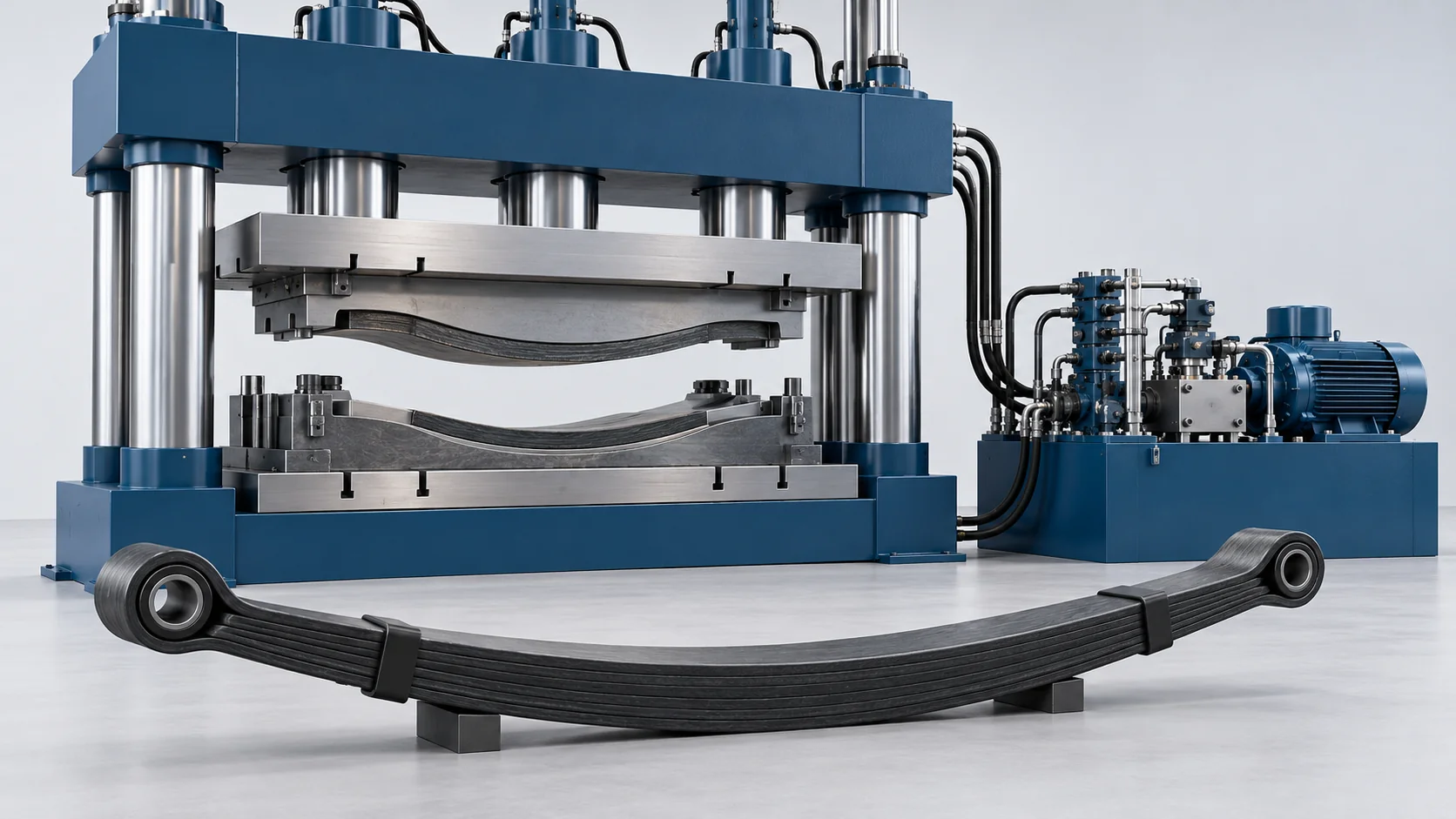
Heavy Truck Composite Leaf Spring Line: equipment configuration and application-specific outcomes reported in the supplied project brief.
Weight reduction concerns the stated spring/axle comparison. Bench fatigue and loaded-platen parallelism require their own test records and do not establish every vehicle installation.
Process illustration; not a verified installation photograph.
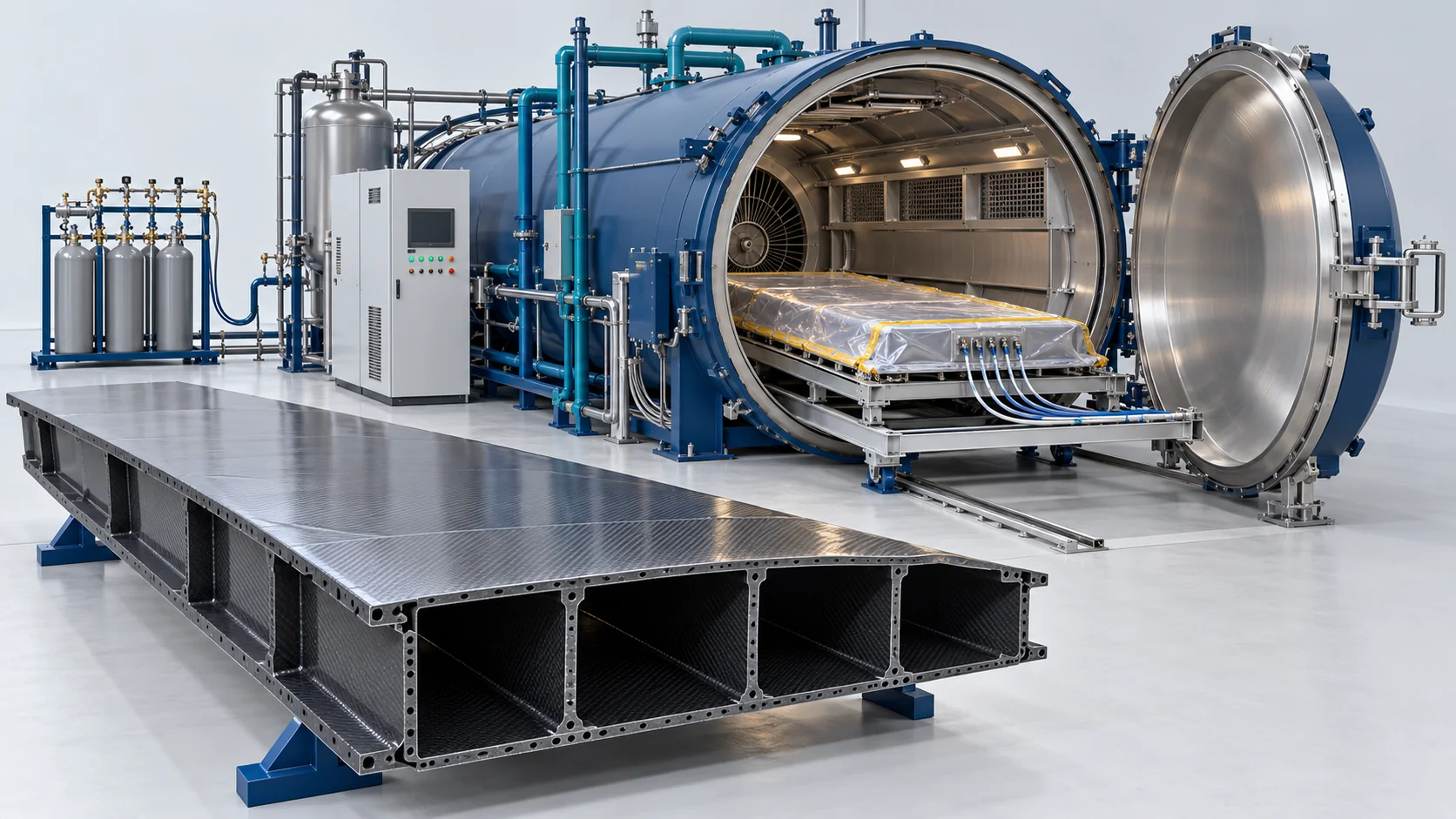
Commercial Aircraft Wingbox Autoclave: equipment configuration and application-specific outcomes reported in the supplied project brief.
Porosity measurement, ultrasonic inspection coverage and inspected-part acceptance are separate quantities. Temperature uniformity requires the loaded cure survey; these results do not establish universal aerospace qualification.
Process illustration; not a verified installation photograph.
RTM injects liquid resin into reinforcement in a matched tool. Prepreg or thermoplastic compression routes use separately prepared material and their own heating, pressing and cooling requirements.
No. Infusion introduces liquid resin into dry reinforcement; VBO uses a qualified prepreg with a defined bagging and oven-cure schedule.
Preforming prepares reinforcement. Resin metering, molding, curing and inspection are separately itemized in the supply scope.
Provide reinforcement format, resin or sheet data, part dimensions, output targets and qualification requirements. Select the detailed route to review its equipment interfaces.
Tell us your material system, part dimensions and production target. Our team will reply within one business day. Once requirements are clear, we provide a preliminary proposal within two business days.


