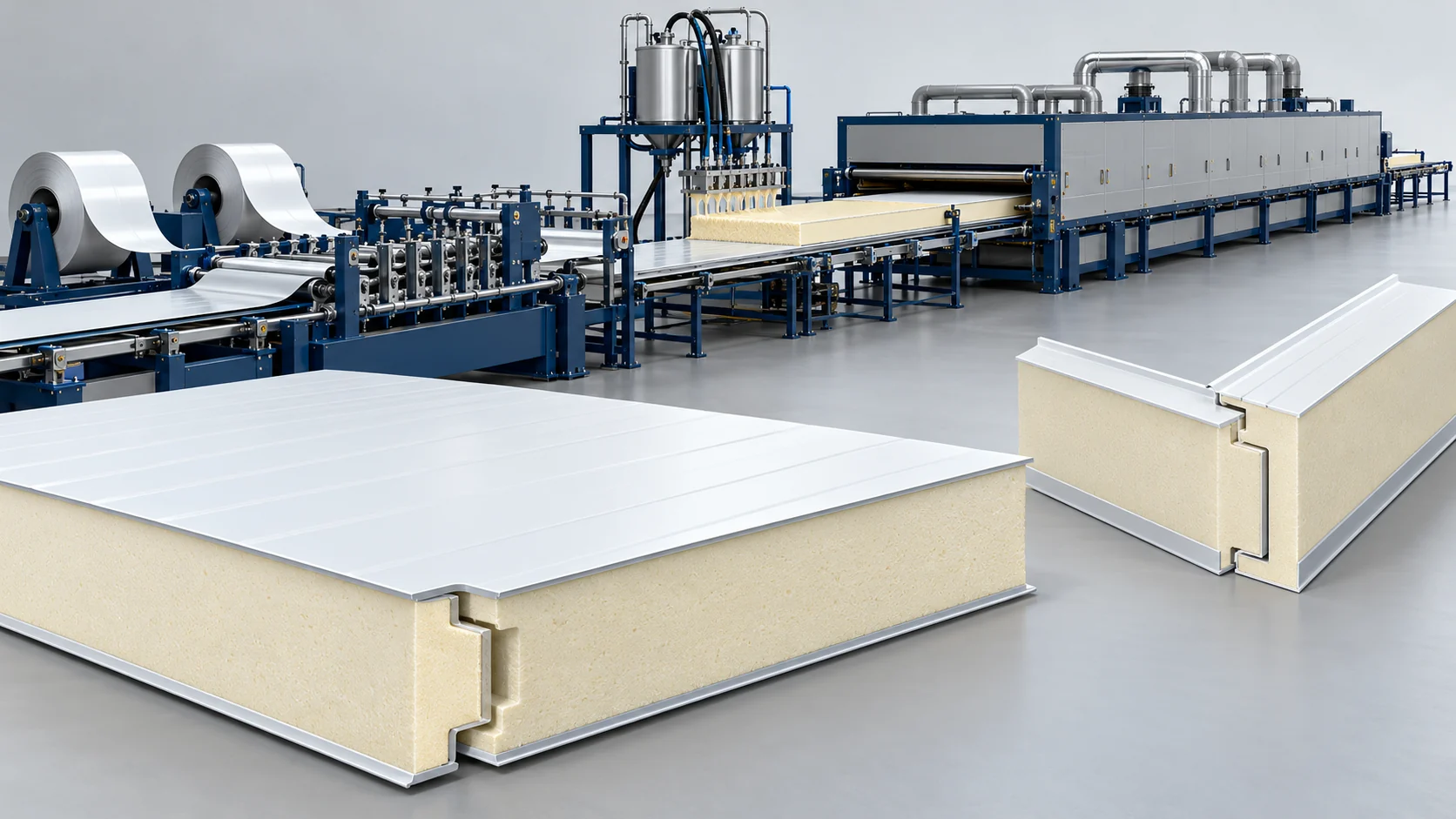
Continuous / Batch Panel Production
Cold Storage PU and PIR Sandwich Panel Production Solution
Plan PU/PIR cold-room panel production with continuous or batch routes, joint tooling, metering and cure conditions matched to your panel requirements.

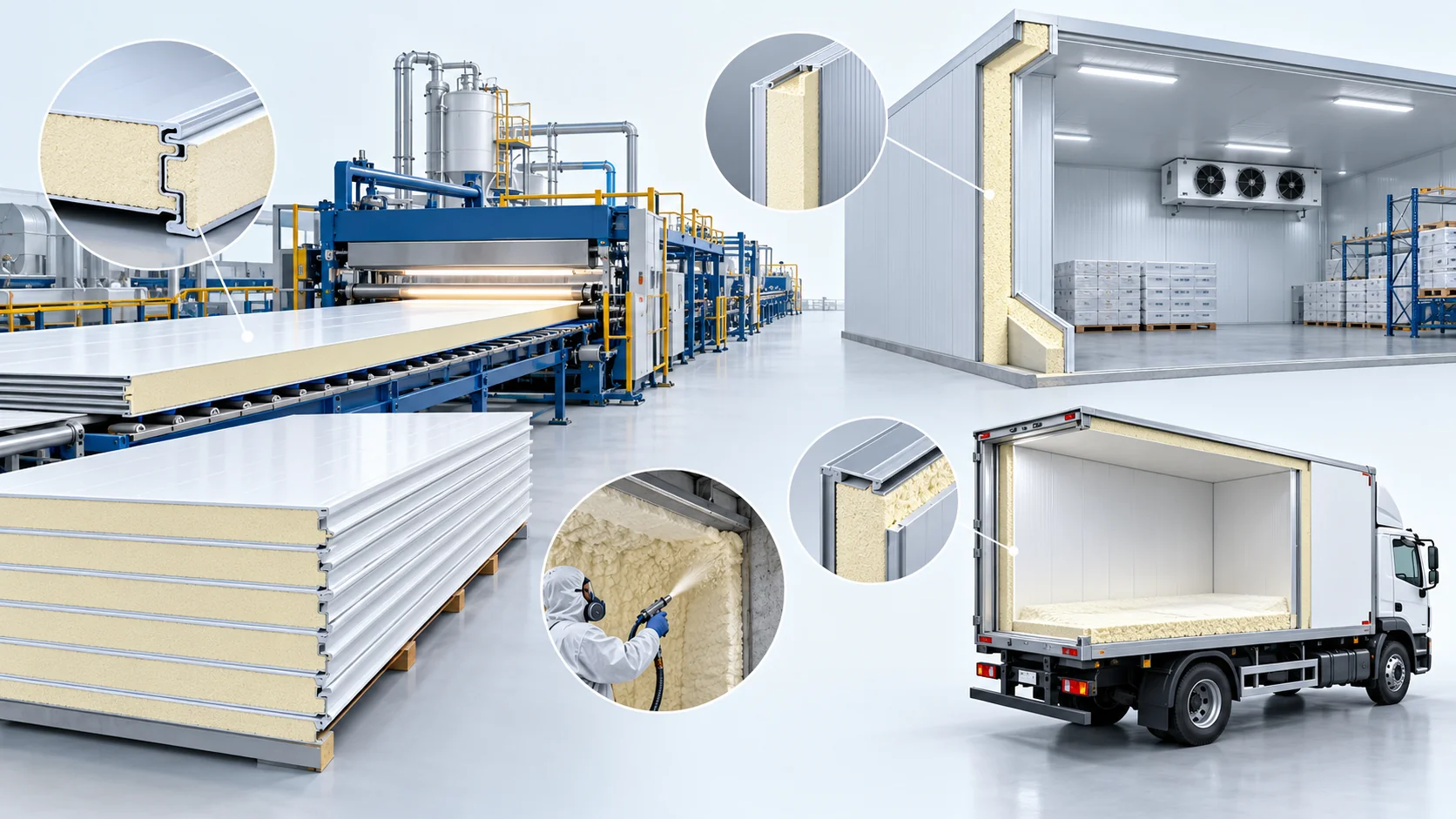
Explore PU and PIR insulation routes for cold rooms and cold-chain equipment. Review panels, doors, containers and site-applied insulation separately from cryogenic applications.
Select by enclosure type, insulation geometry, foam system, output and installation method. Cryogenic applications require a separate material and qualification review.
Plan PU/PIR cold-room panel production with continuous or batch routes, joint tooling, metering and cure conditions matched to your panel requirements.
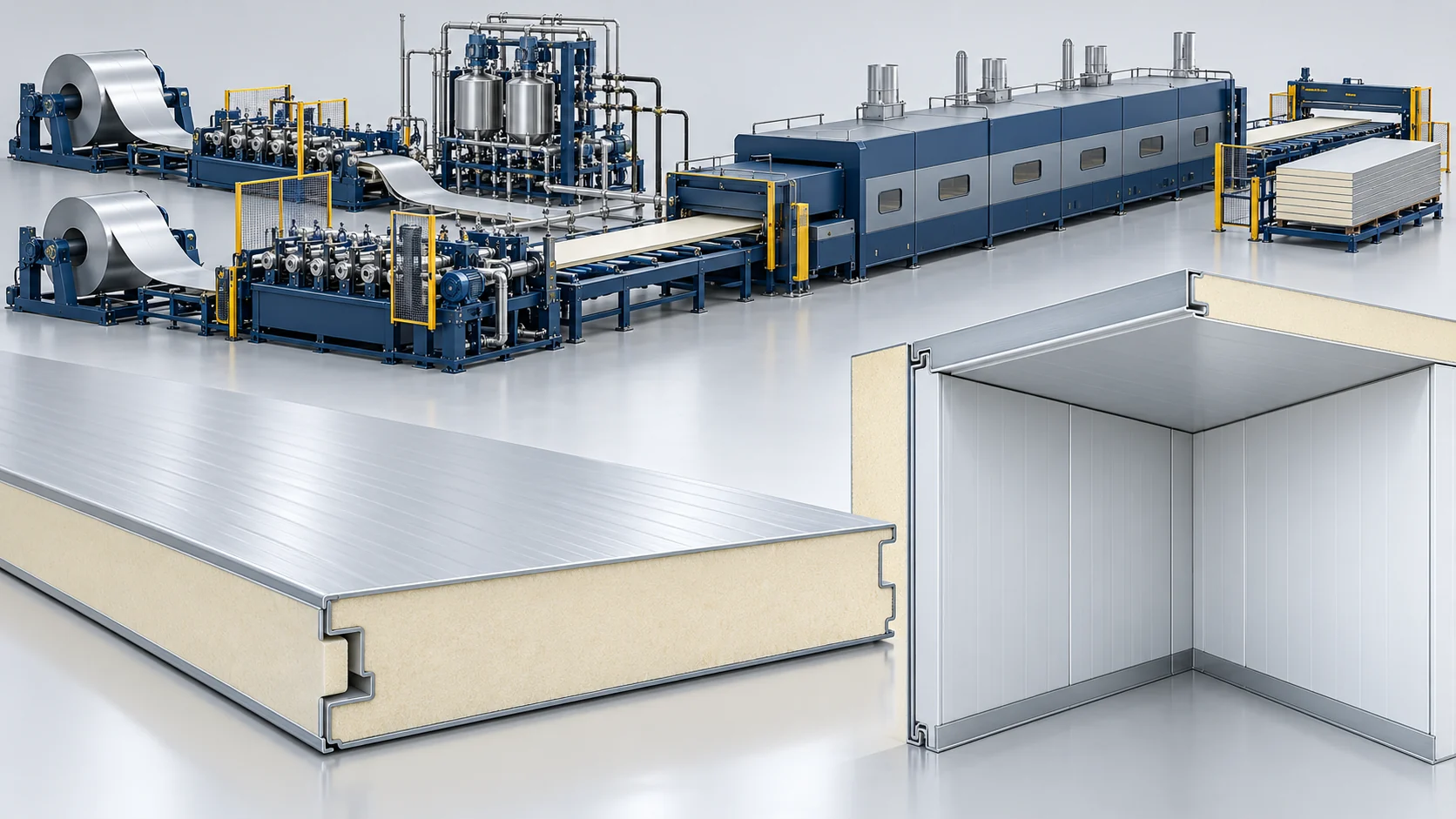
Continuous PIR panel equipment with six configured component streams, a traversing laydown system and a 42 m double-belt section for the specified recipe and panel range.
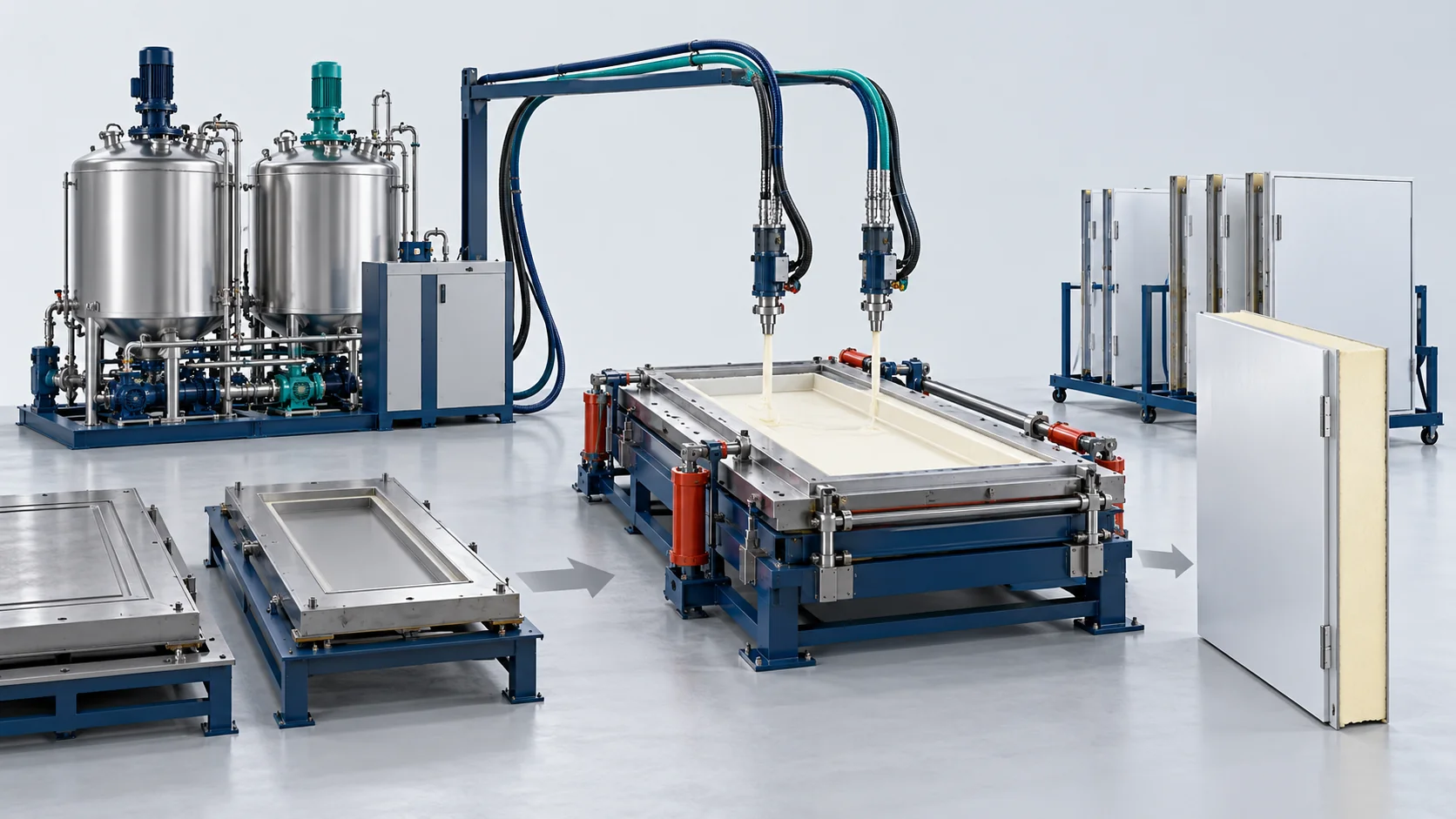
Metering and synchronized multi-head injection for thick cold-room doors, coordinated with heated hydraulic fixtures and mold filling.
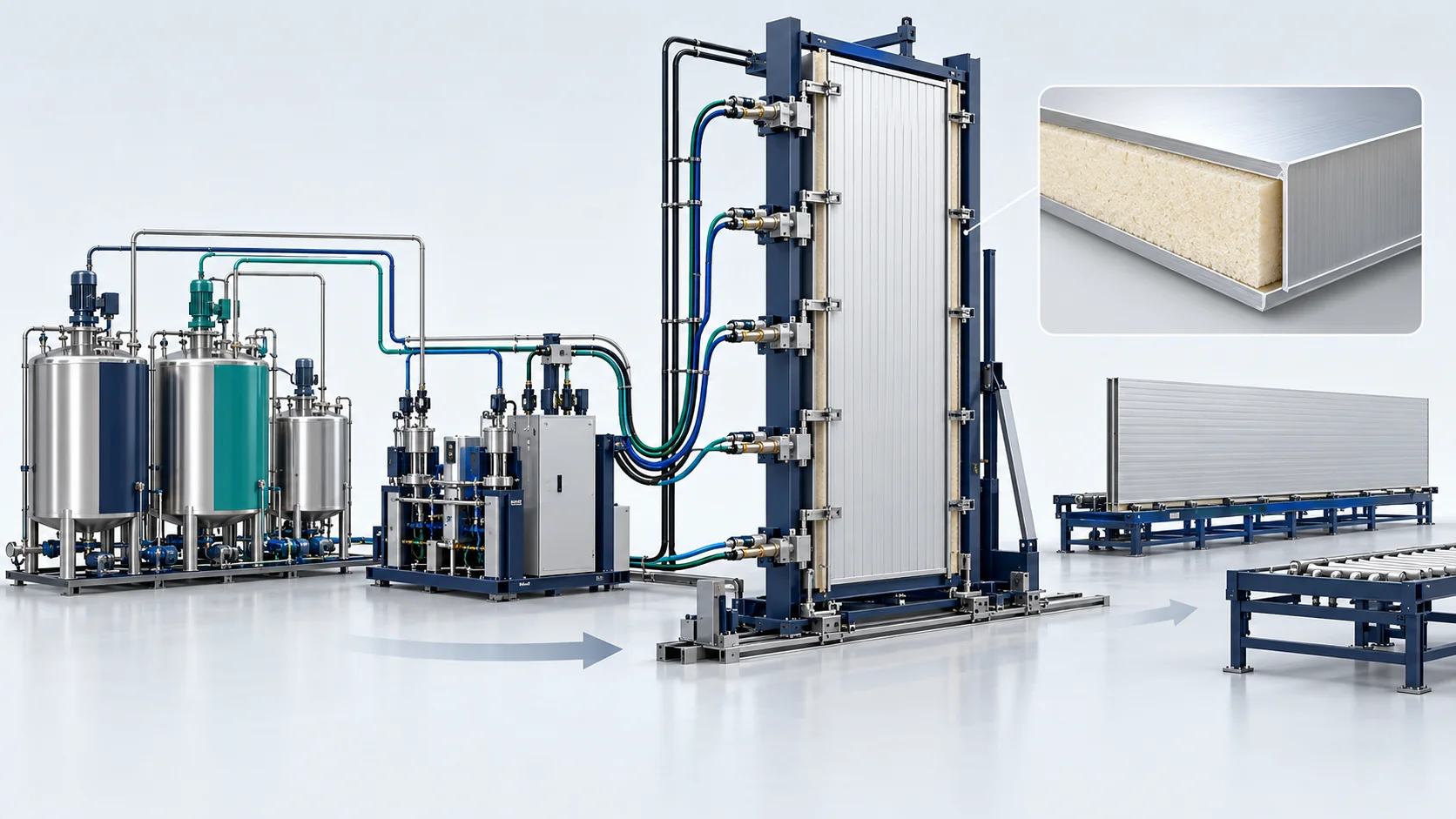
Six-head PU delivery and vertical fixture control for long reefer-container sidewalls, with part-specific fill and curing sequences.
Ordinary cold-room spraying is separate from LNG cryogenic formulation and containment qualification.
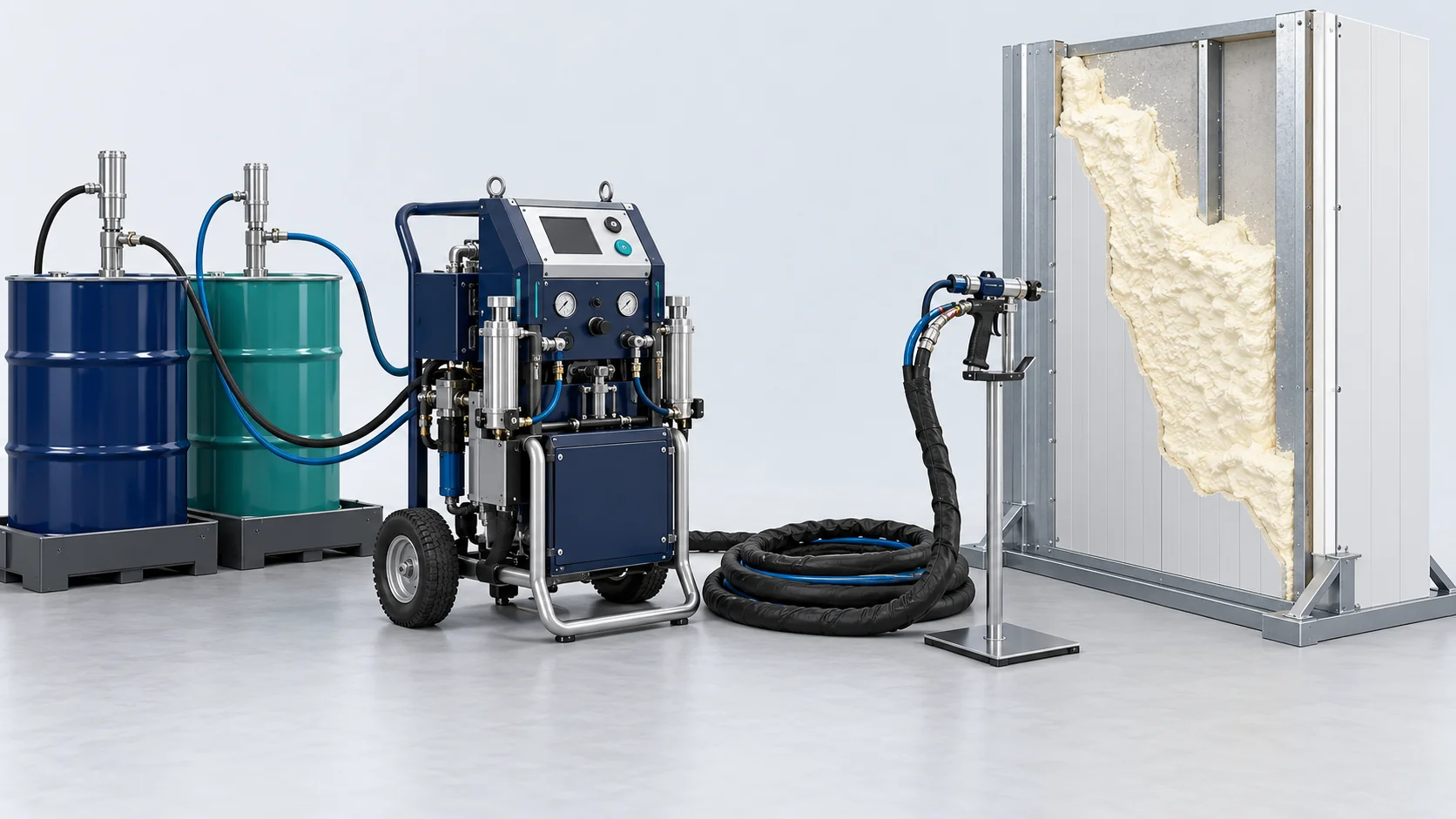
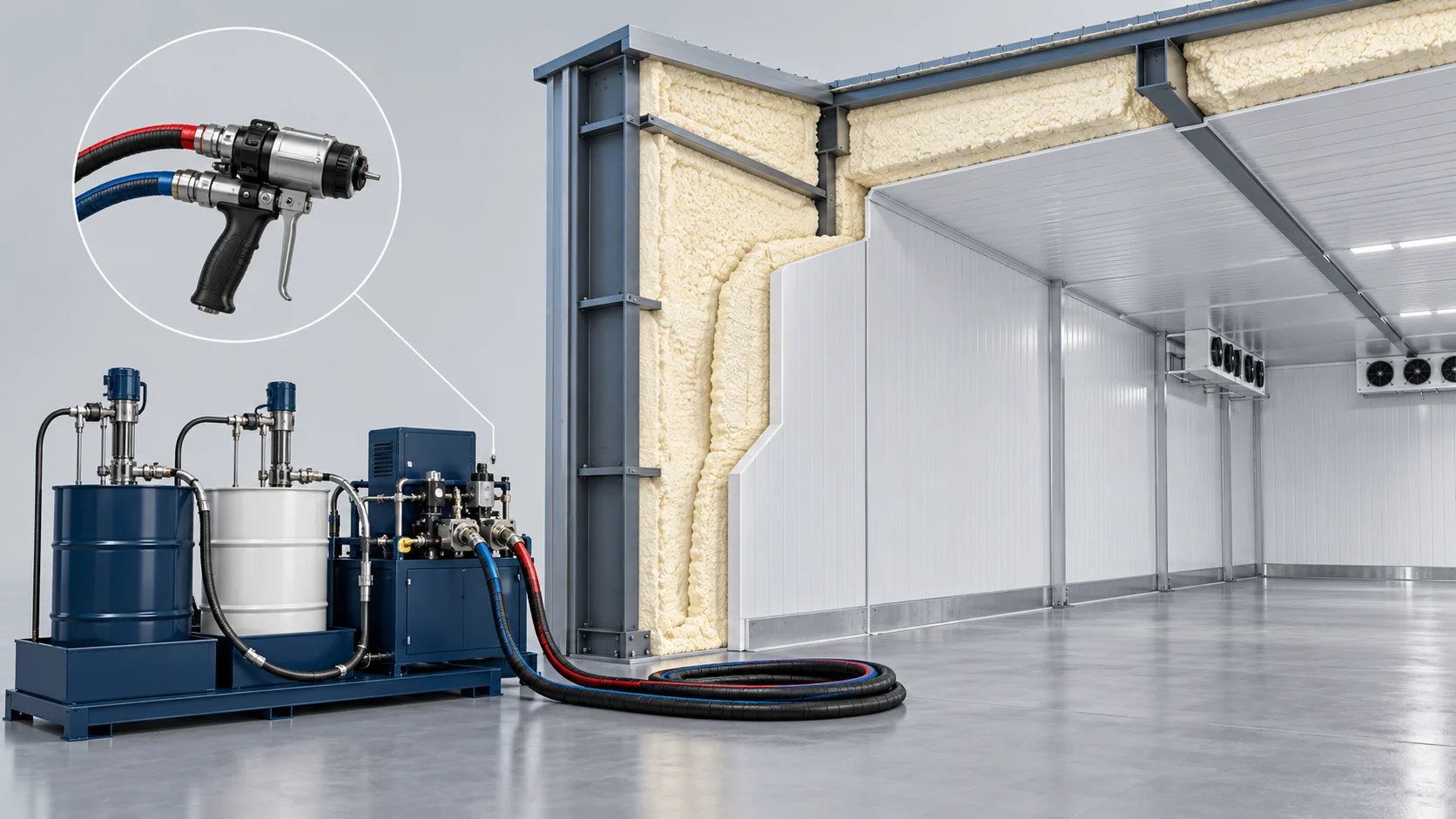
A mobile hydraulic PU spray package with heated hose delivery for site-applied cold-storage insulation and access-specific layouts.
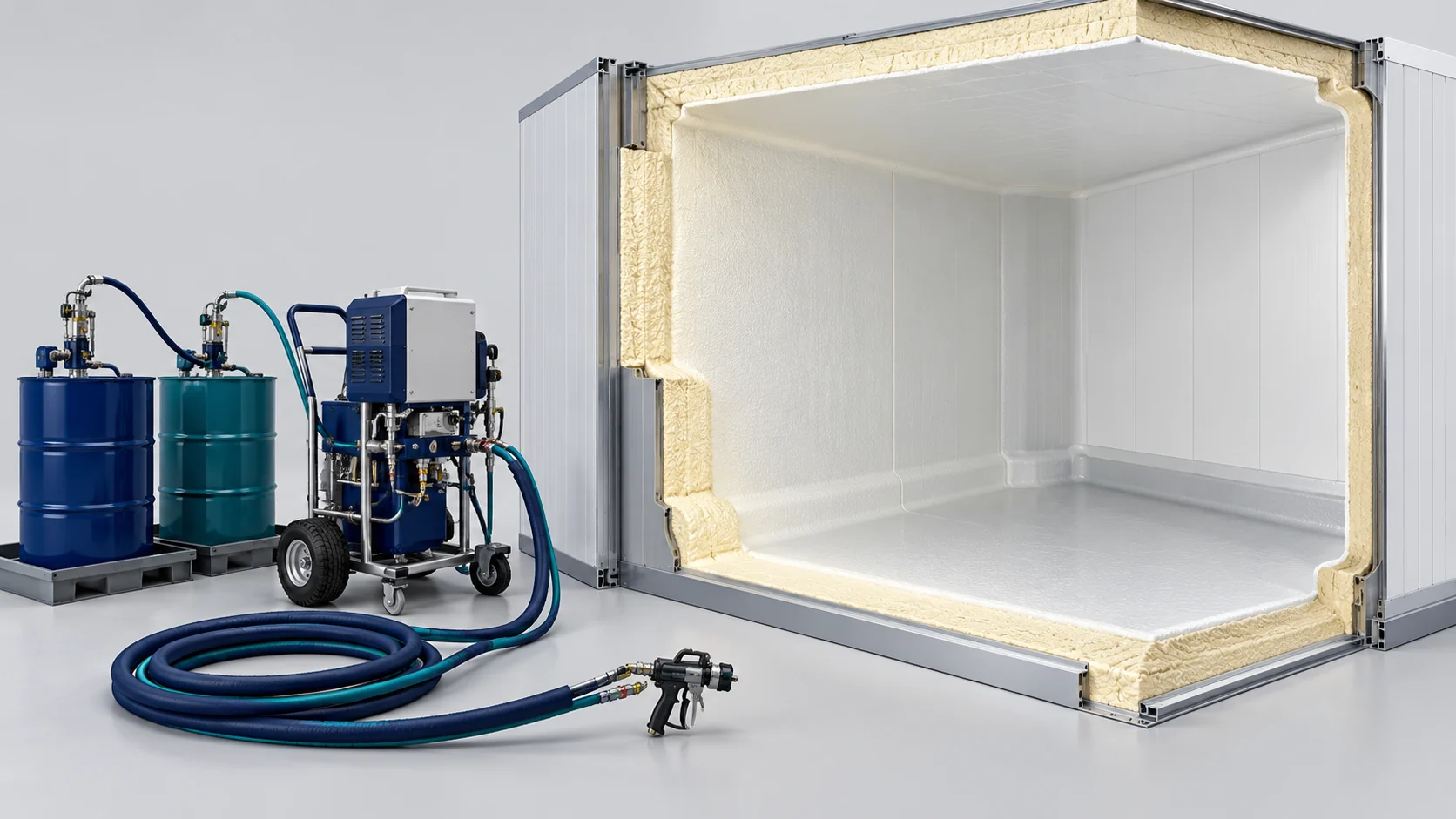
Plan in-situ PU insulation for cold rooms and freezers around substrate condition, application route, insulation thickness and the complete enclosure design.
Cold-chain applications include cold-room panels and doors, reefer sidewalls and envelope spraying. Each route requires its own material system, filling or spray arrangement and acceptance plan. LNG cryogenic insulation is classified separately under Building & Industrial Insulation.
Identify the cold-room envelope, door or reefer wall and establish geometry, temperature duty and material requirements.
Arrange panel facings, door skins, container walls or the prepared substrate and confirm joints, inserts and sealing.
Configure raw-material supply, temperature and the agreed premixing and safety provisions for the insulation system.
Coordinate metering, mixing and the selected mold-filling, panel-production or spray application sequence.
Provide the required cure residence and controlled demolding, panel cutting or site finishing for the selected application.
Inspect fill, thickness, joints and adhesion, and carry out the agreed insulation and assembly tests for the intended service.
Review cold-room and reefer foaming equipment, continuous PIR panel lines and insulation spray rigs. Safety and premixing interfaces depend on the selected blowing agent and formulation.
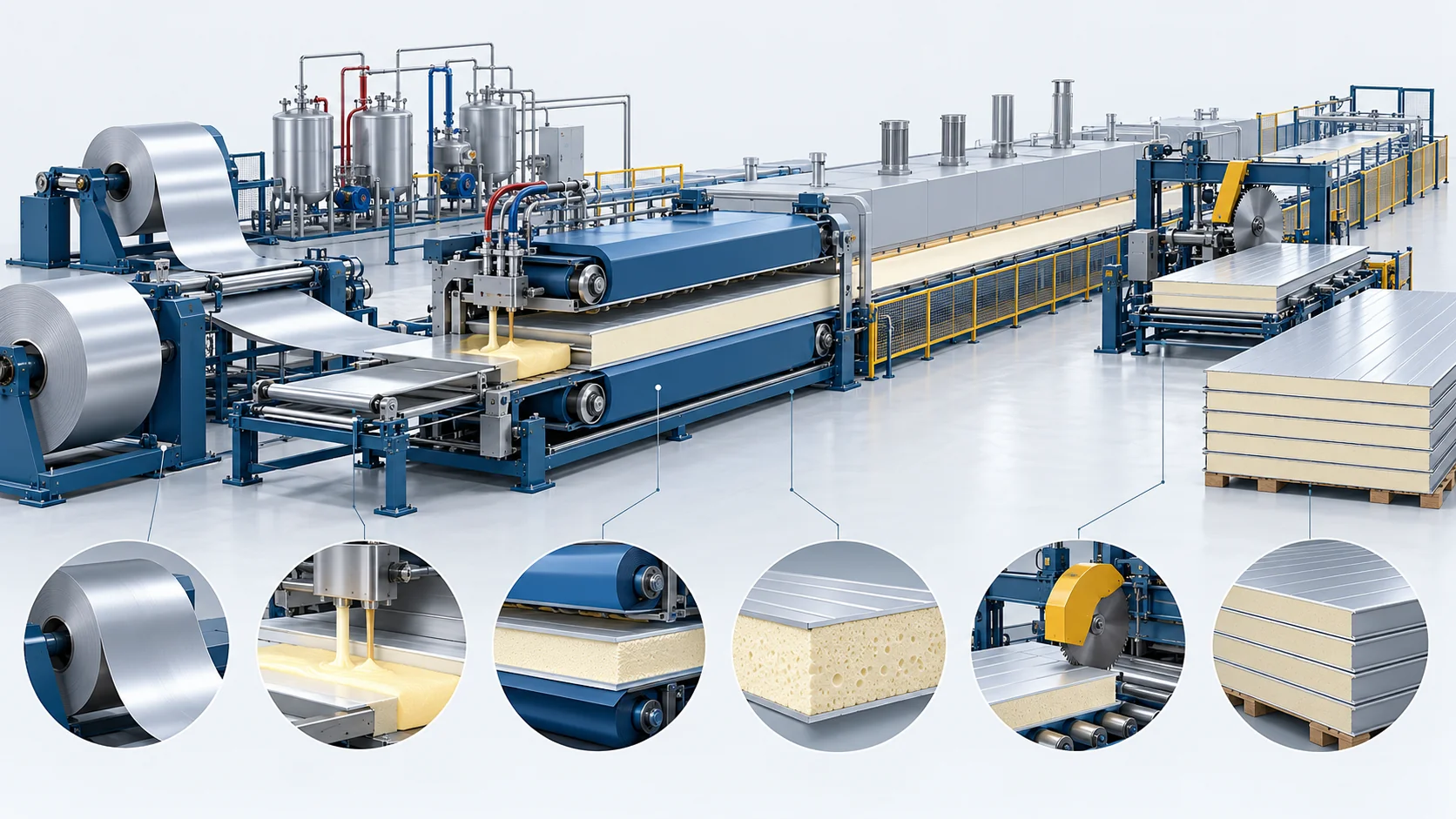
Continuous PIR Sandwich Panel Line for Insulation Panels. Review configuration, material requirements and process interfaces with Haifeng.
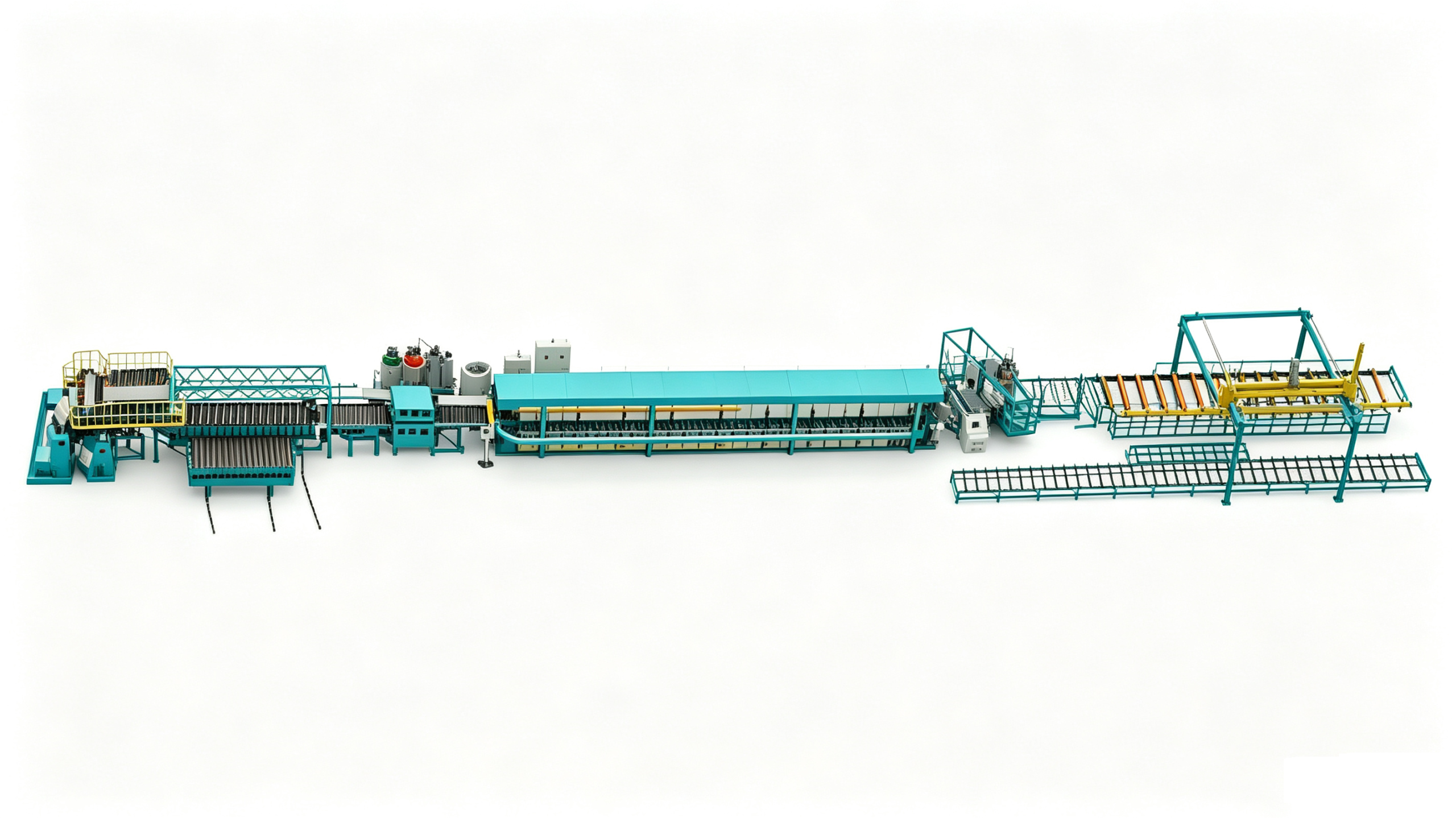
Continuous PU Sandwich Panel Line for Insulation Panels. Review configuration, material requirements and process interfaces with Haifeng.
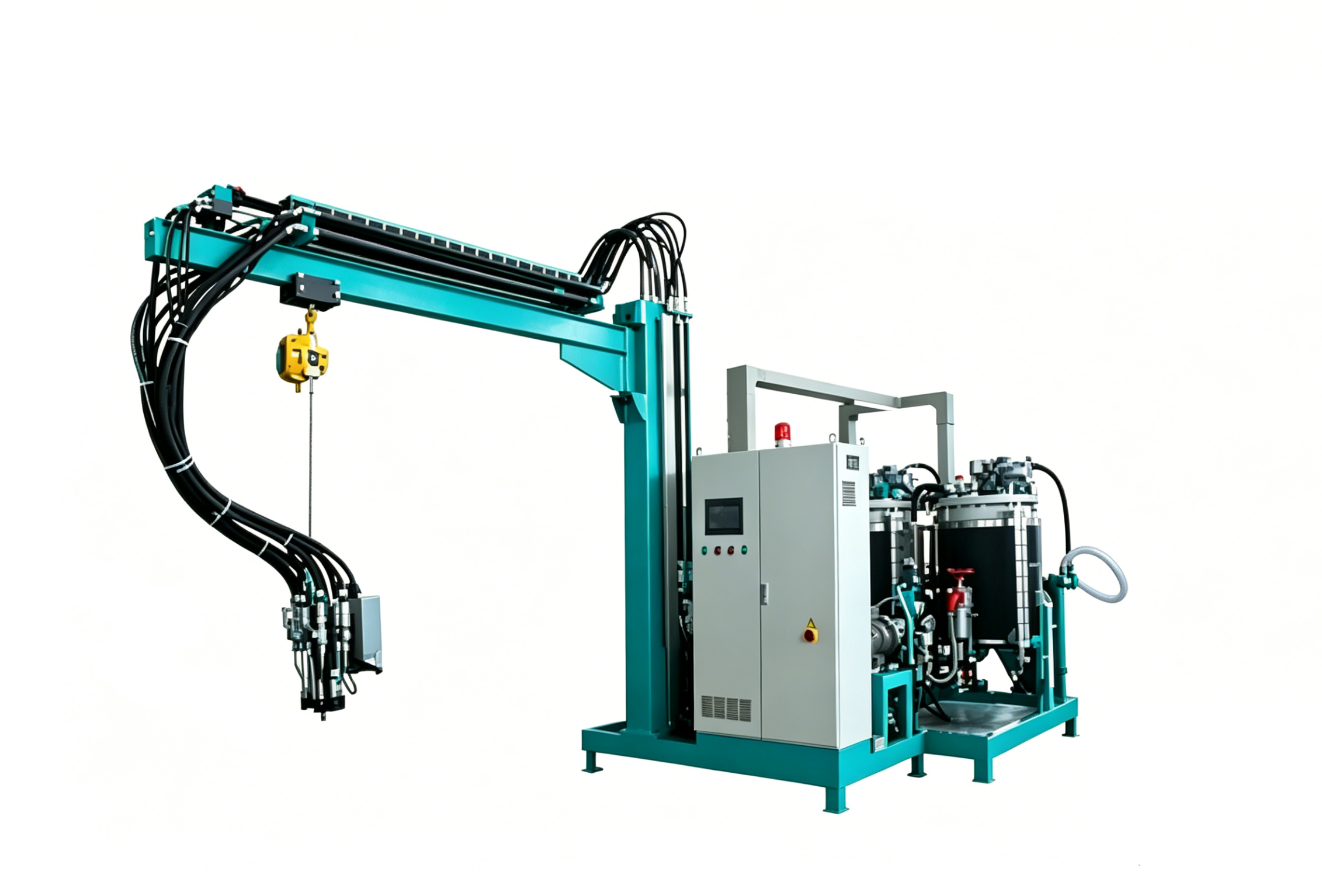
High-pressure continuous foaming system for building insulation sandwich panels with large-flow precise mixing
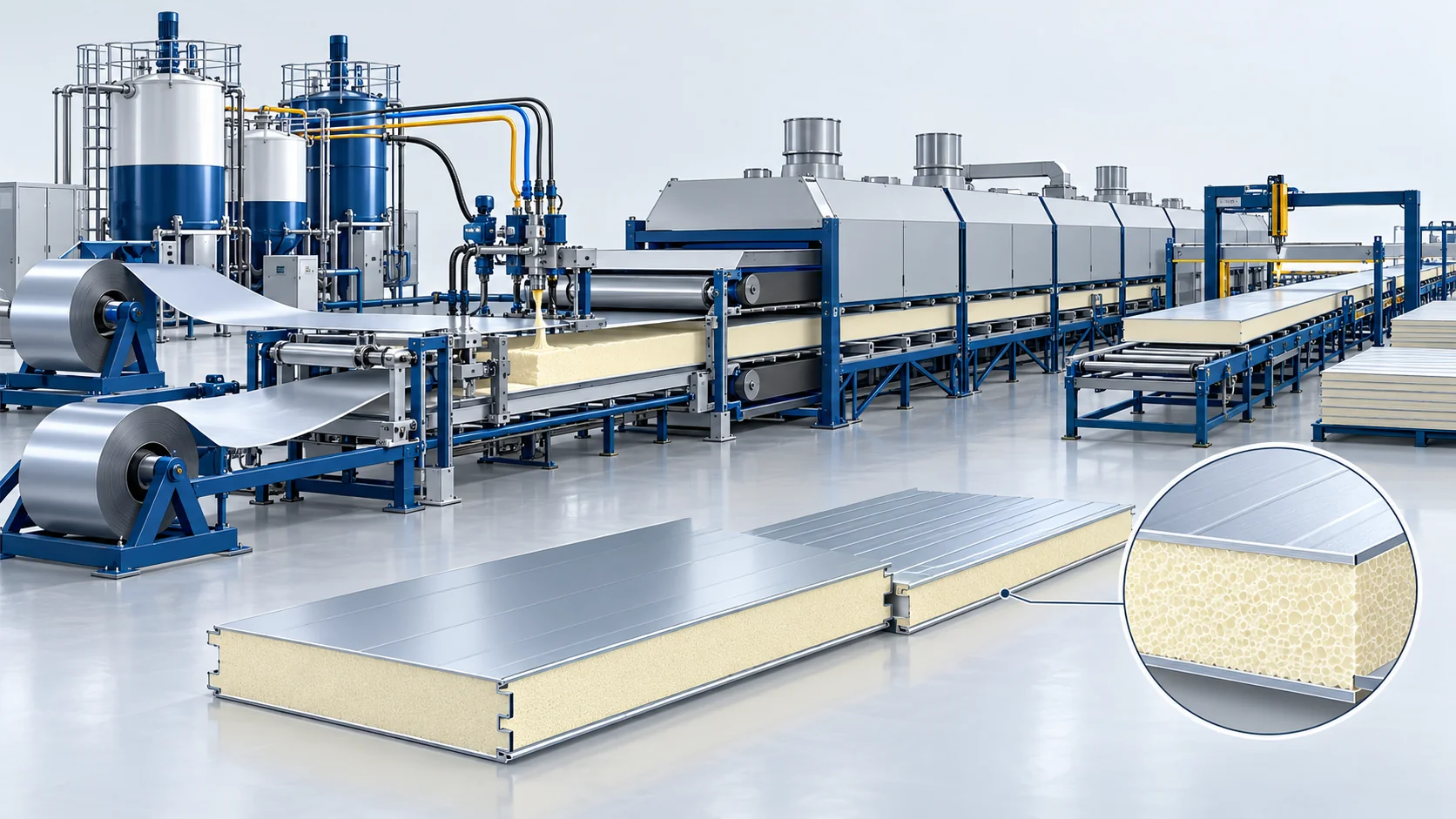
Built for industrial cold storage panels, the HF-PIR42-CB delivers continuous 6-component high-pressure dosing, high-frequency oscillating spray, and a 42-meter double-belt laminator for fire-retardant PIR insulation up to 200 mm thickness.
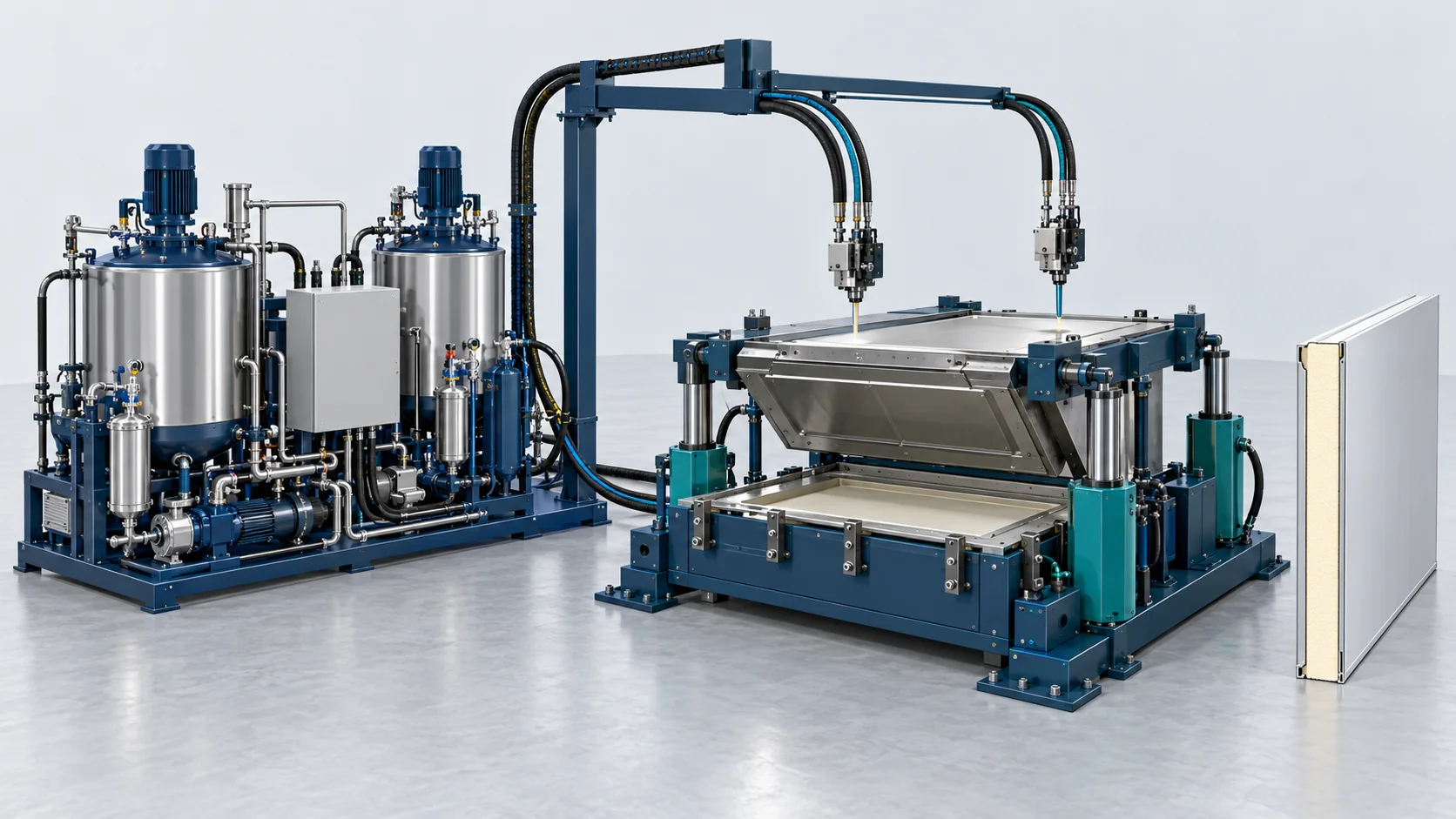
Metering and synchronized multi-head injection for thick cold-room doors, coordinated with heated hydraulic fixtures and mold filling.
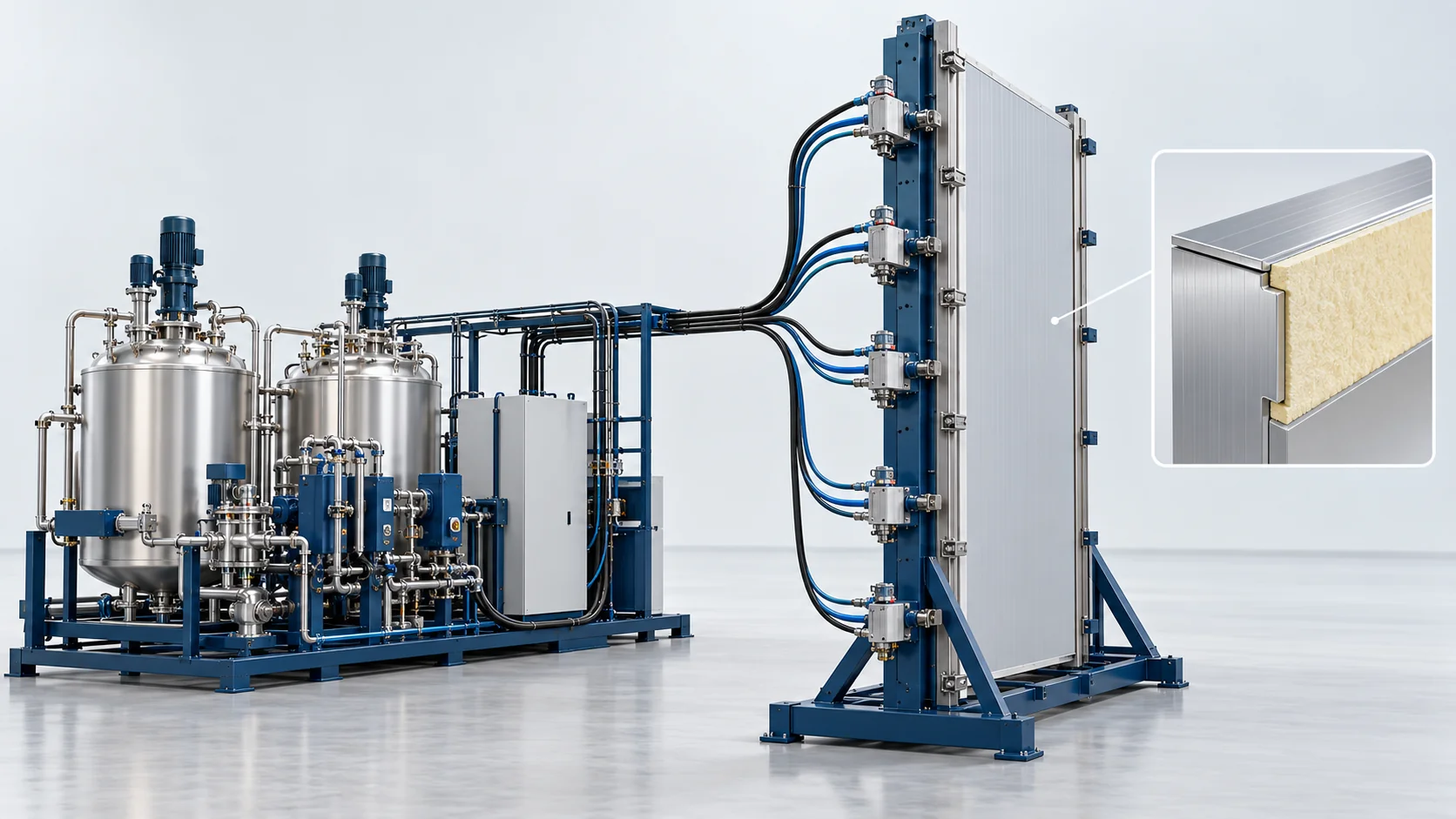
Six-head PU metering and vertical tooling for reefer sidewalls, with 80–240 kg/min combined output and material-specific shot and curing conditions.
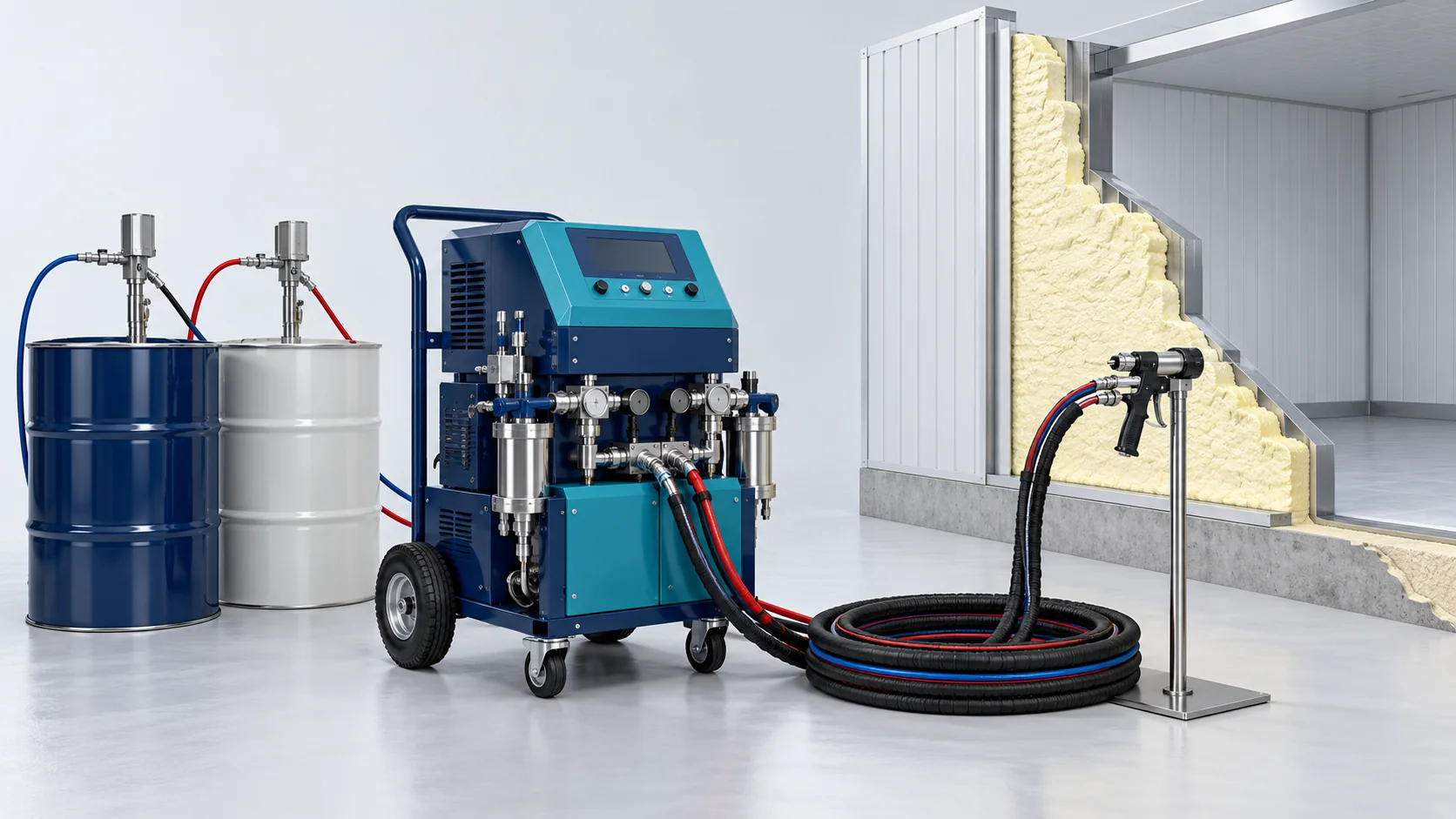
A mobile hydraulic PU spray package with heated hose delivery for site-applied cold-storage insulation and access-specific layouts.
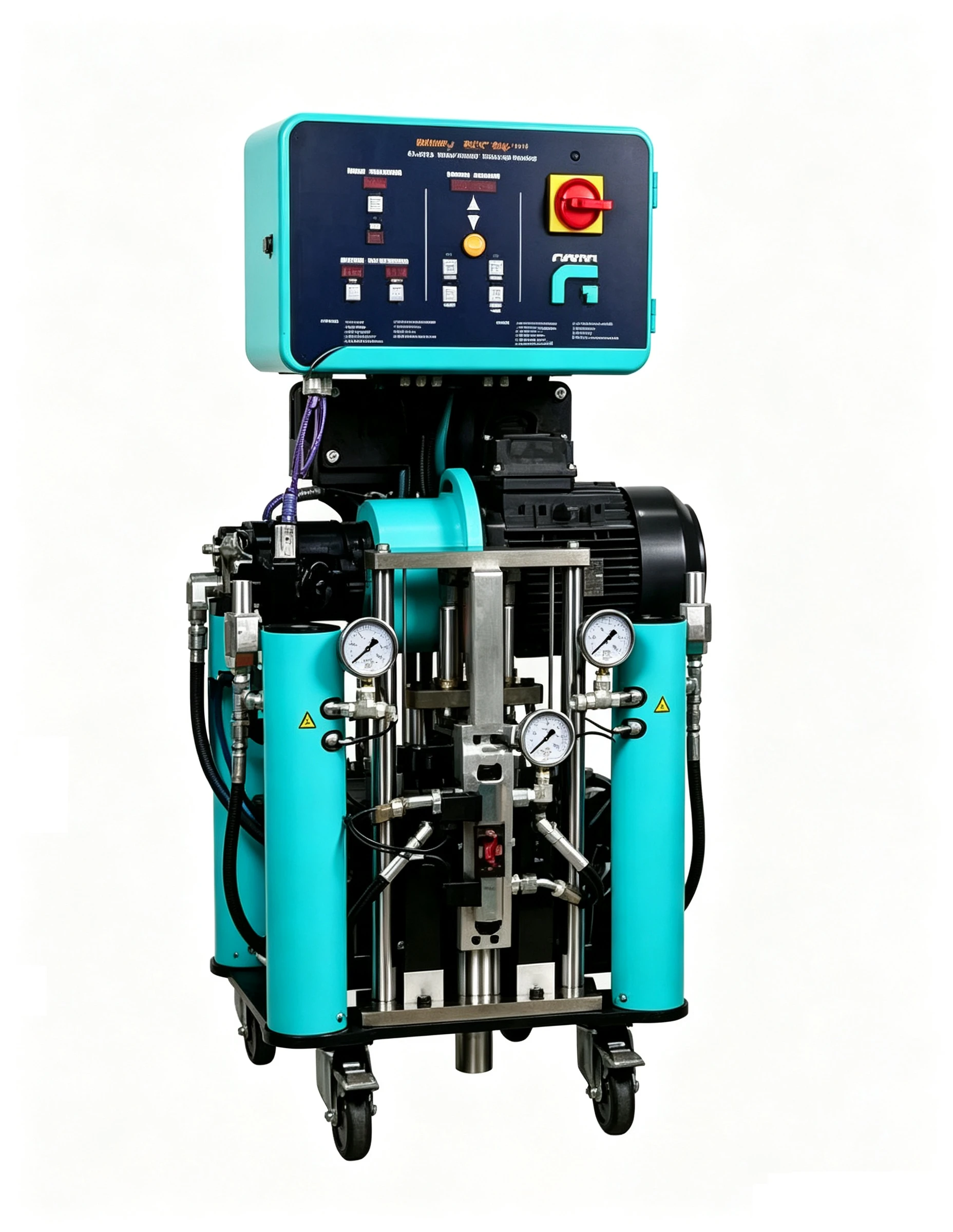
PU conditioning and spraying for cold-storage insulation, with formulation, substrate, hose delivery and site conditions reviewed.
Confirm the fixture and enclosure duty. Blowing-agent safety and premixing are auxiliary scope, not a complete cold-chain production line.
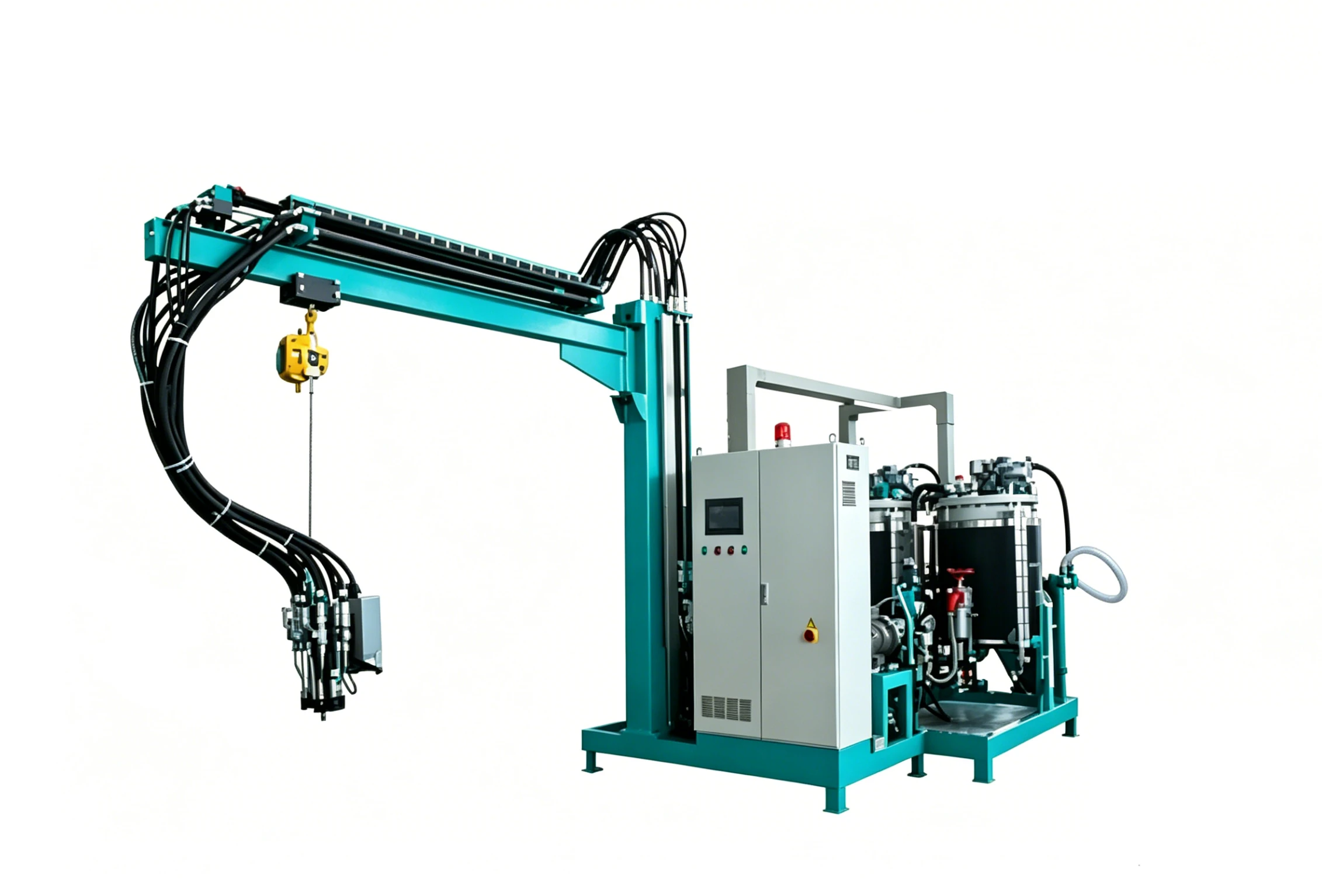
High-Pressure PU Foaming Machine for Cold Rooms. Review equipment functions, material requirements and configuration options for your production process.
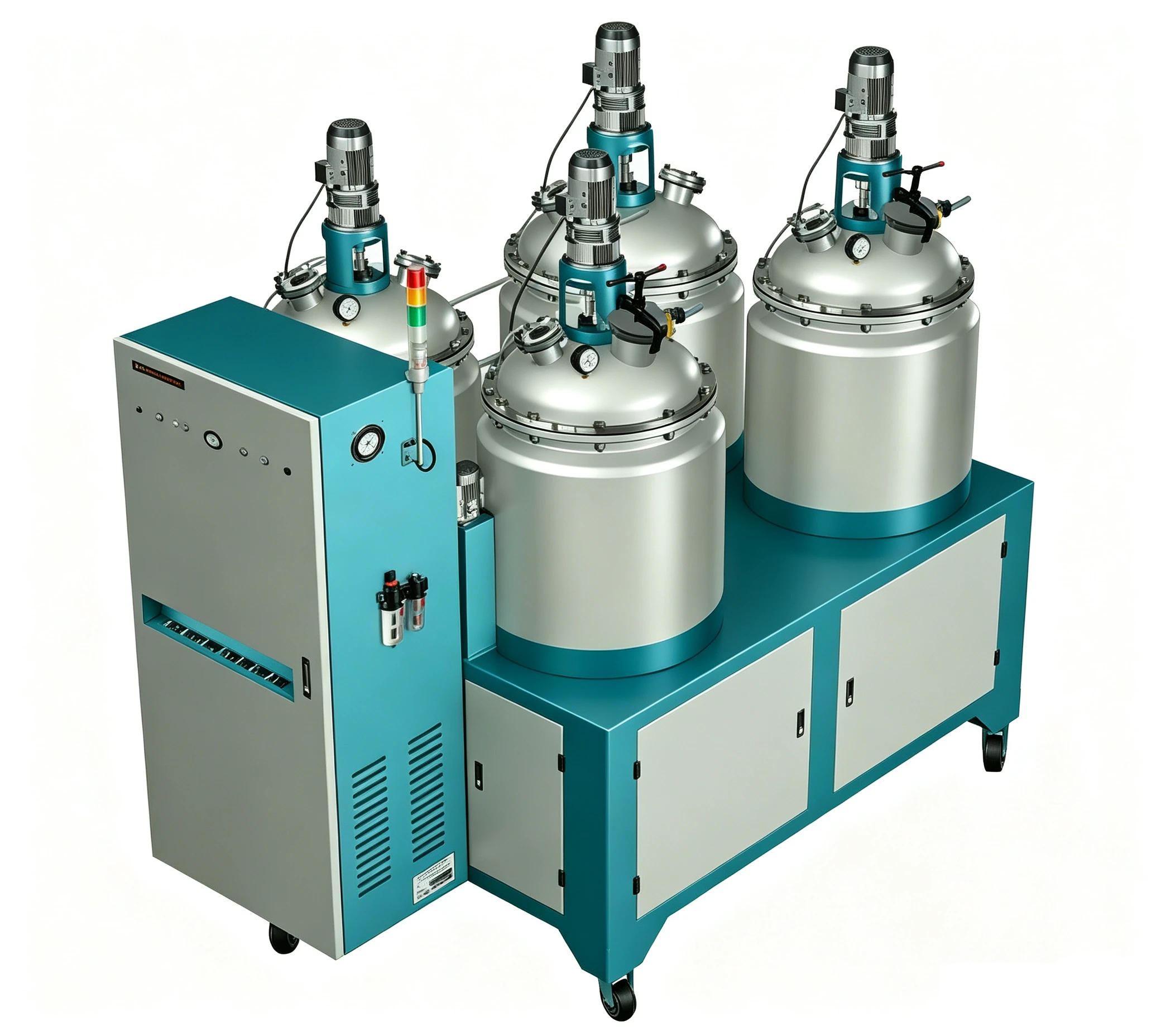
Low-pressure PU delivery for cold-storage components, with metering and mixing configured for the formulation and tooling.
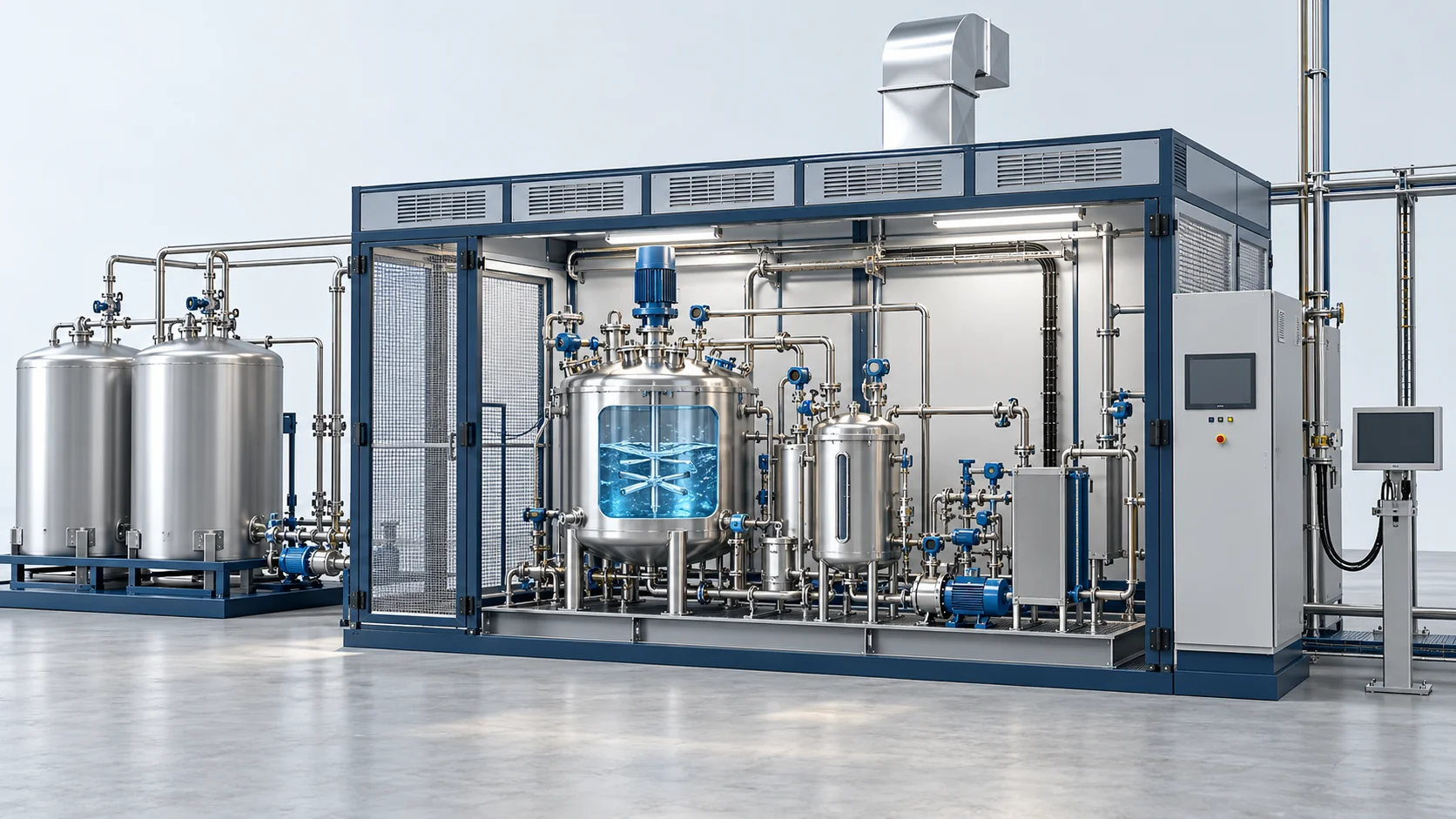
Cyclopentane Safety and Premixing System for PU Foaming. Review configuration, material requirements and process interfaces with Haifeng.
Explore the published cold storage & cold chain application and project records selected from this category's solution pages. Each record describes its own material, process and equipment scope; project figures and industry references are not universal machine ratings or independently verified results for a new installation.
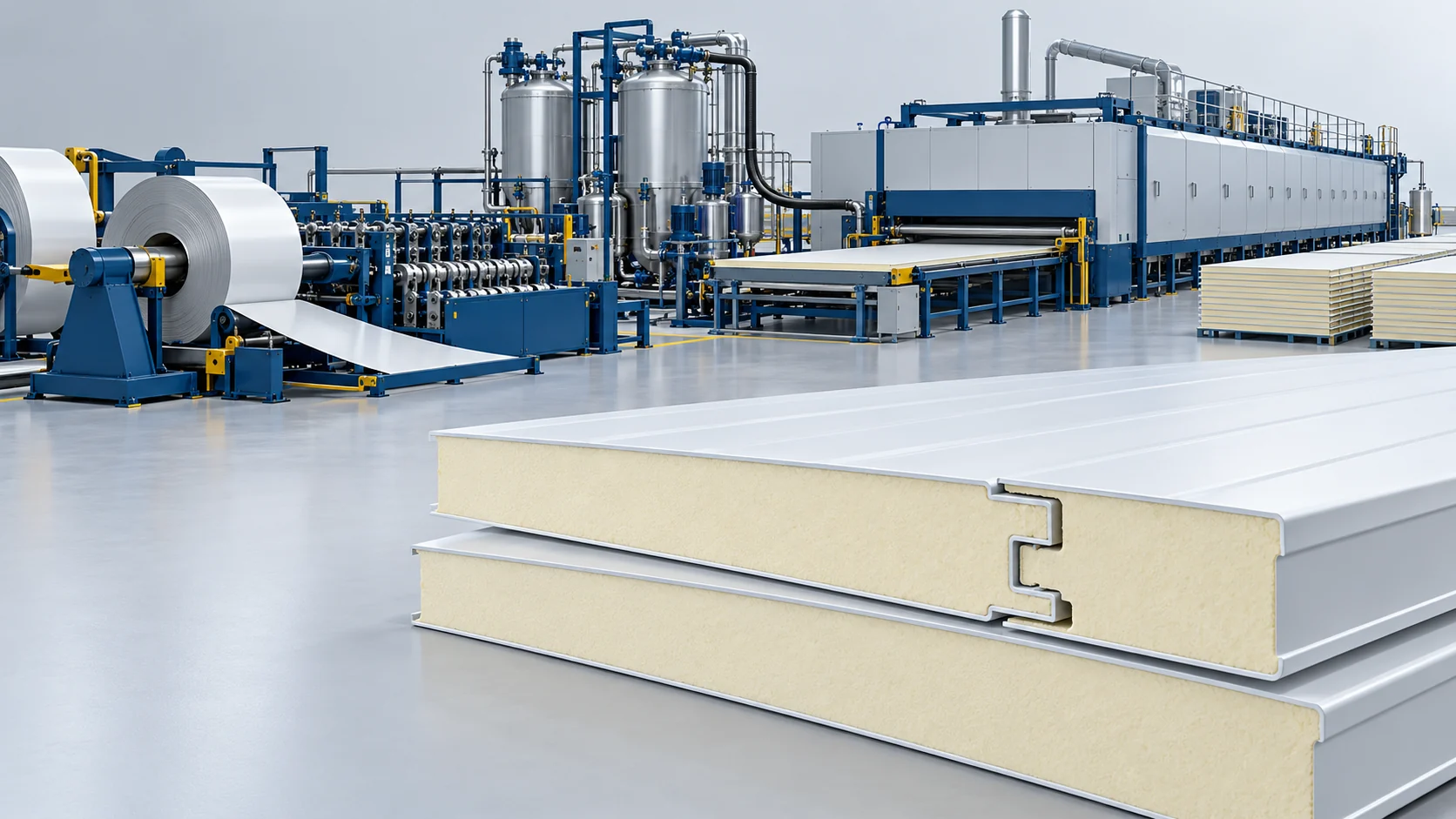
Supplied project reference for Cold Storage PIR Sandwich Panel Line in KSA. Review the configuration and reported values against your own material, panel and acceptance conditions.
Conductivity lacks the original report, mean temperature and conditioning; energy savings require the actual cold-store operating baseline.
Process illustration; not a verified installation photograph.
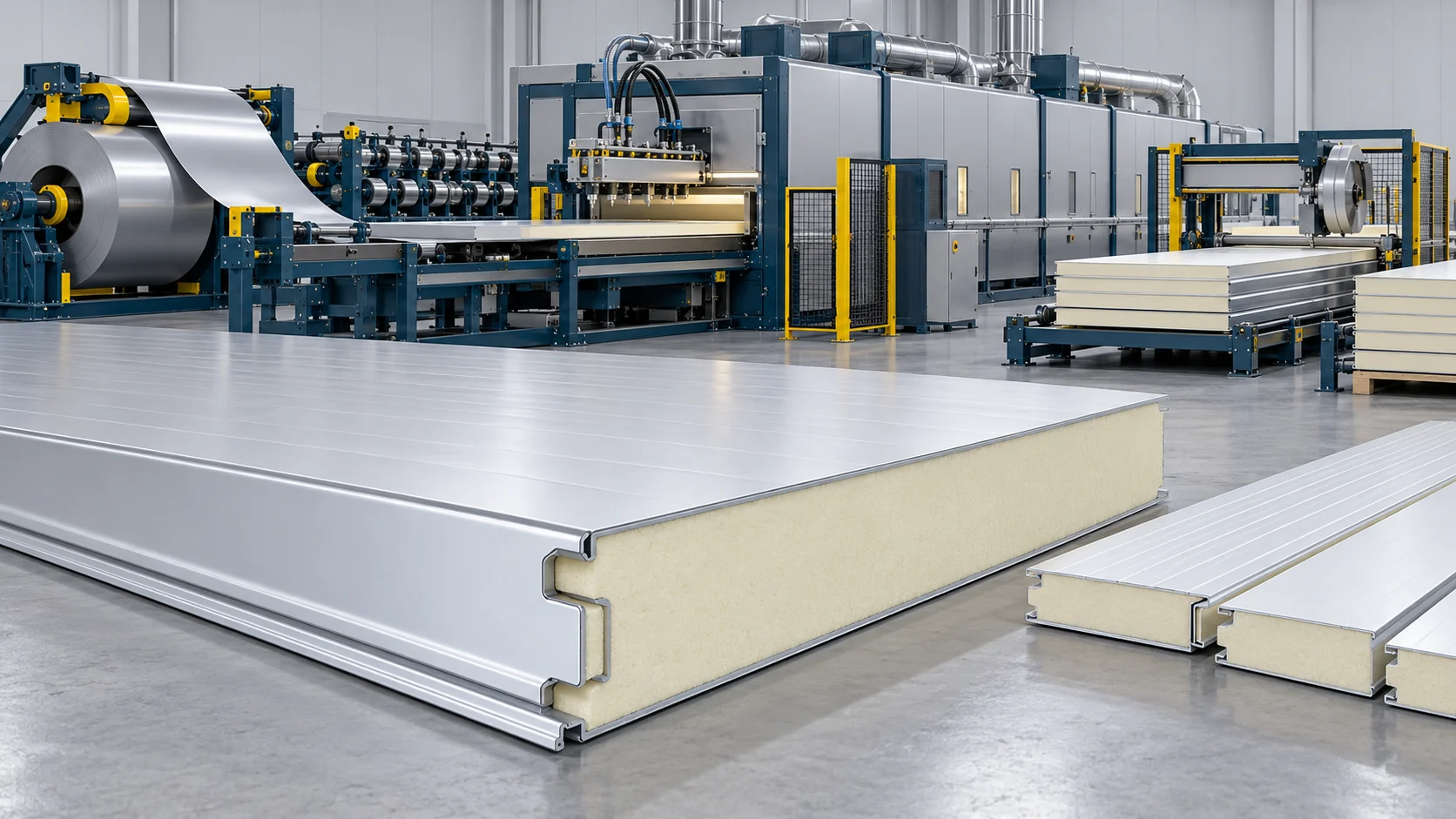
Supplied project reference for PIR Cold Storage Panel Continuous Line. Review the configuration and reported values against your own material, panel and acceptance conditions.
Core strength, fire classification and line speed concern the stated panel construction and thickness. Confirm original classification reports and continuous-production records.
Process illustration; not a verified installation photograph.
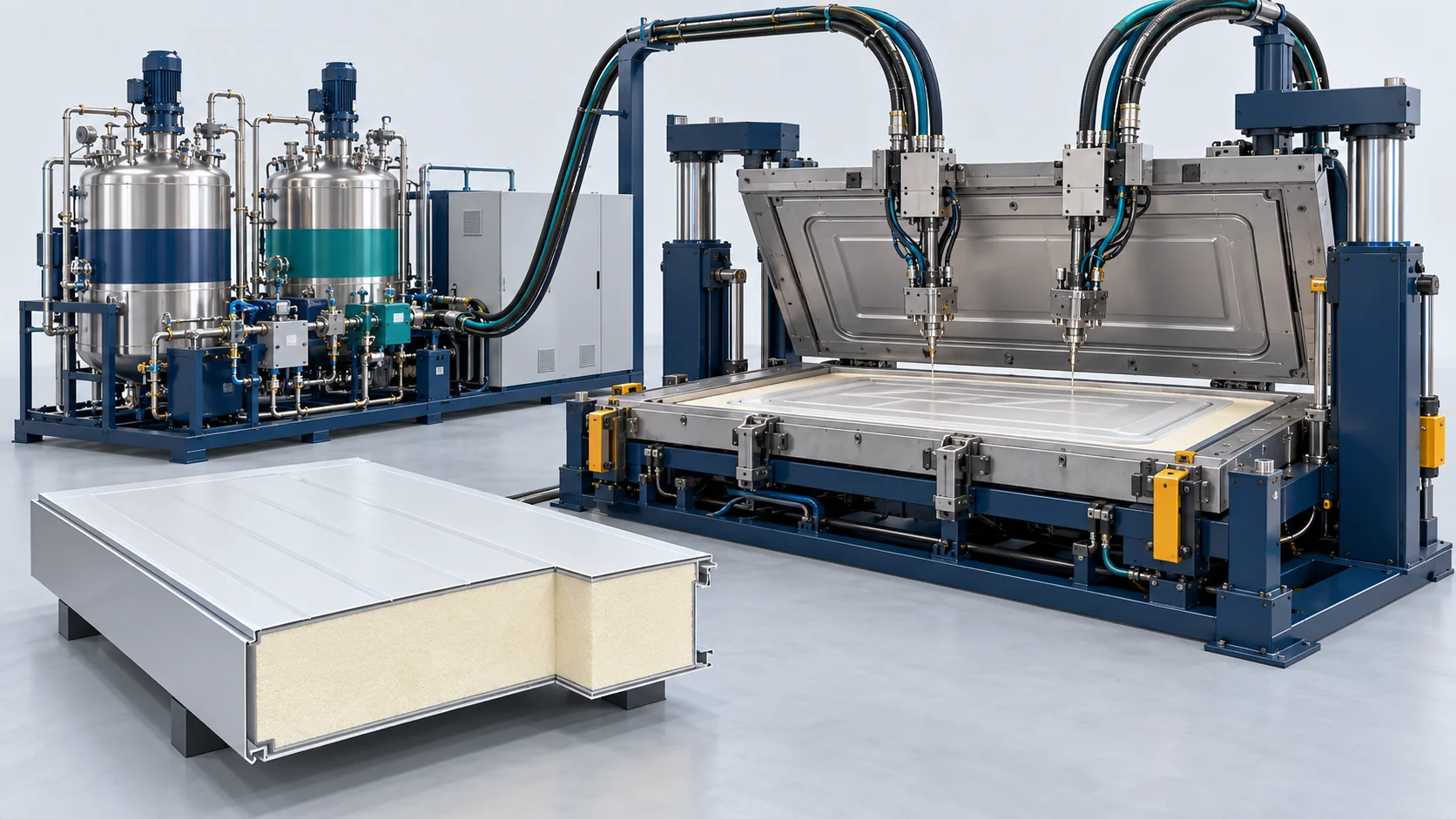
Review CA Cold Room Door Foaming in China, including process configuration, related equipment and application requirements. Project figures require stated conditions.
Closed-cell content and cold shrinkage require the tested door formulation and specimens. The model suffix does not establish mixing pressure or a complete door-production cycle.
Process illustration; not a verified installation photograph.
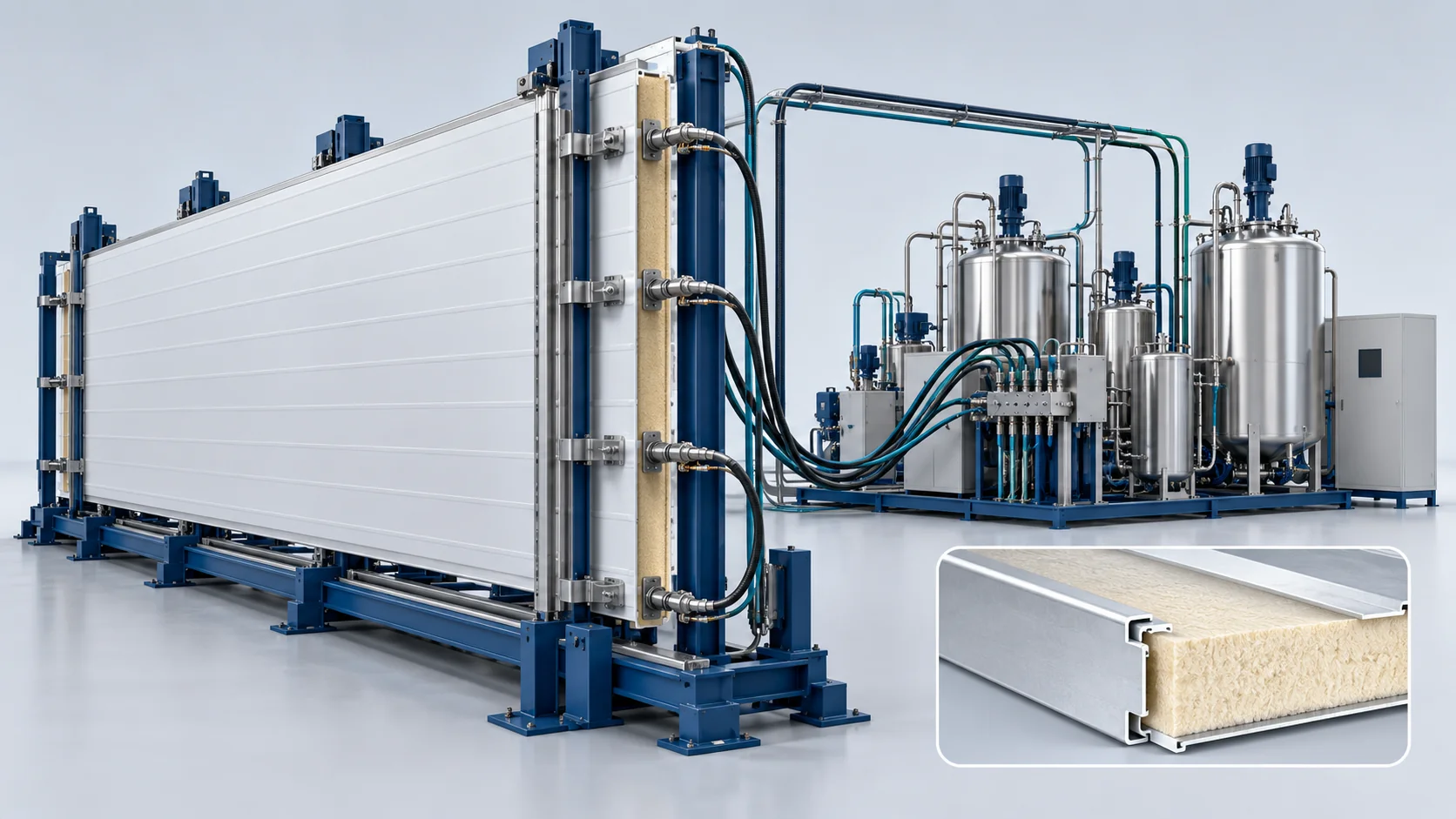
Six-head PU delivery and vertical tooling for 40ft reefer sidewall panels, with a 110 kg reference shot and configuration-specific injection timing.
Reefer thermal leakage is an assembled-box result. The listed injection duration is calculated from the reference shot and assumed constant flow, not a measured cycle; confirm qualified shot records.
Process illustration; not a verified installation photograph.
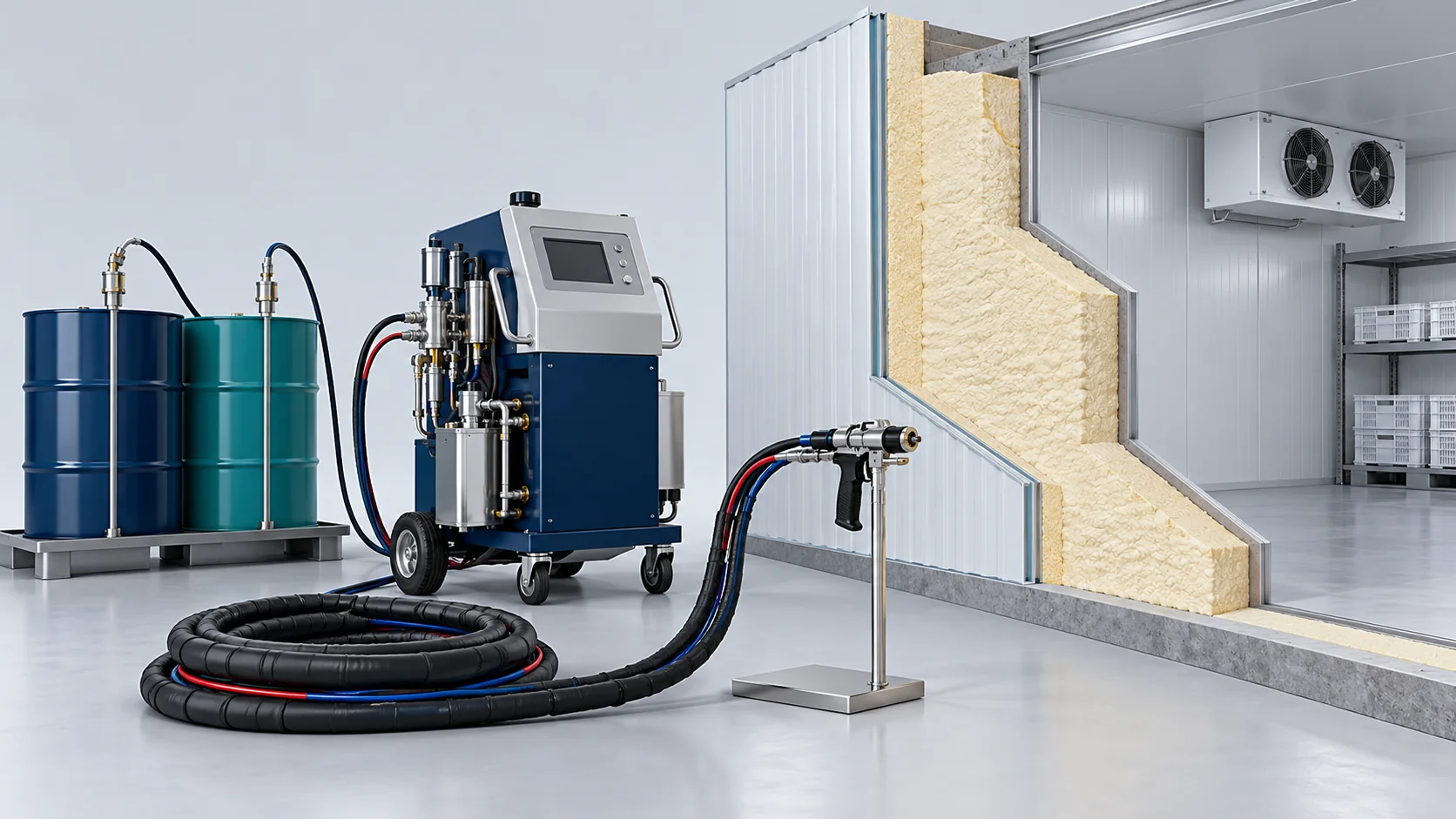
Review Cold Chain Logistics Hub Spray in China, including process configuration, related equipment and application requirements. Project figures require stated conditions.
Coverage depends on vertical lift, hose length, thickness, working hours and access. Compressive strength is a sampled foam result and does not alone establish enclosure wind resistance.
Process illustration; not a verified installation photograph.
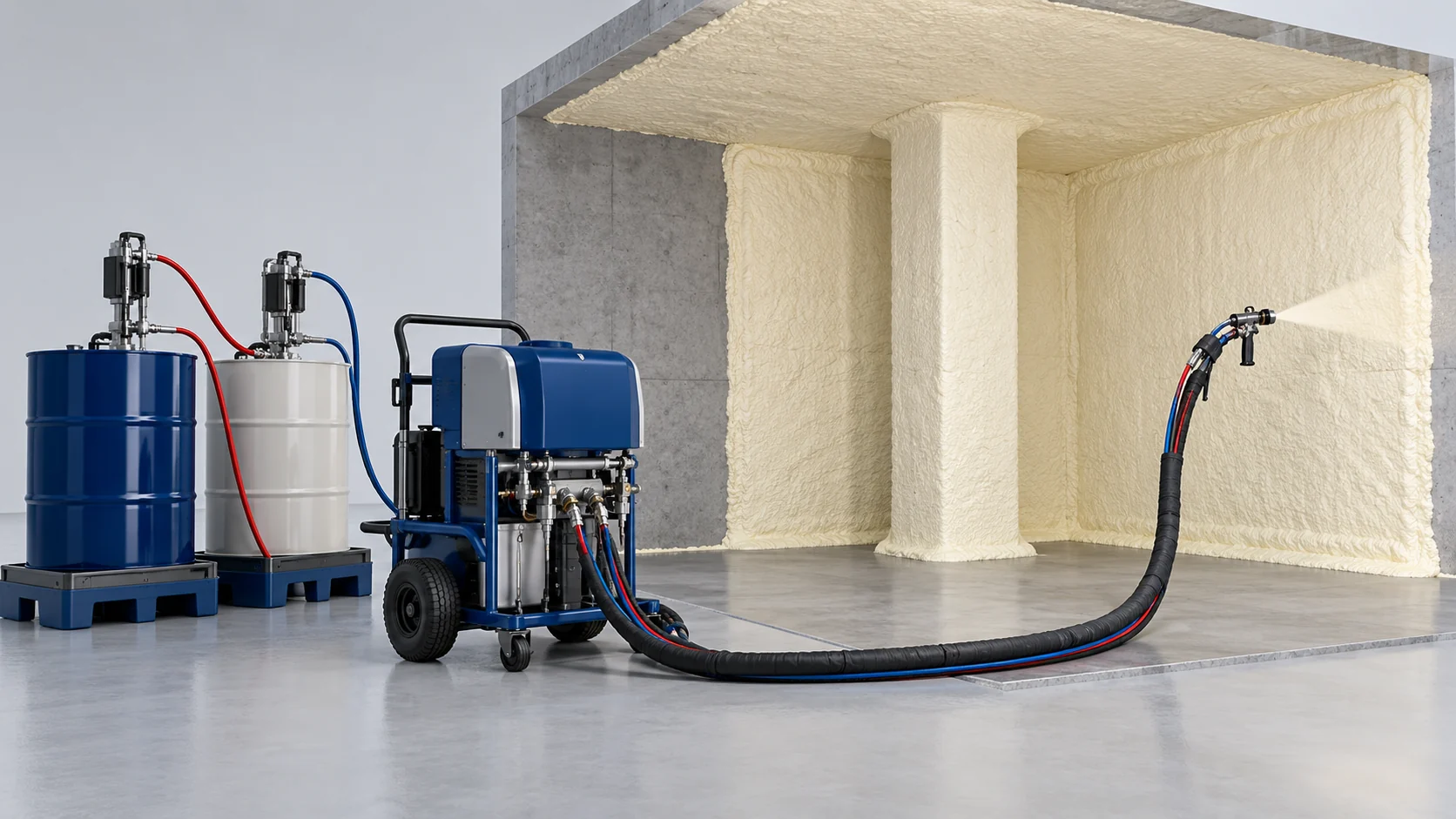
The supplied Morocco cold-room brief reports 35% refrigeration-power savings and 0 joint-frost incidents during its monitored period across 18,000 m² of seafood freezers. Confirm the enclosure baseline, operating temperature and utility-audit records.
Power savings and frost observations concern the monitored cold room and prior enclosure baseline; confirm operating temperature and the utility-audit period.
Process illustration; not a verified installation photograph.
The supplied Kazakhstan brief lists λ ≤ 0.019 W/(m·K) and zero joint-icing incidents for the monitored 24m-high, -35°C freezer. Confirm the material aging, test temperature, specimen and observation records before comparing another enclosure.
Conductivity requires formulation, aging and test temperature. The reported joint observation is limited to the monitored period and does not establish future icing-free service.
Process illustration; not a verified installation photograph.
Choose by the enclosure design and installation method. Panel production uses factory tooling and handling; site-applied insulation requires substrate and application-condition review.
Do not assume equivalence. Cryogenic use requires a separate review of the material, insulation design, interfaces and qualification plan.
Provide enclosure or panel dimensions, insulation thickness, foam data, required output and the selected manufacturing or site-application route.
Tell us your material system, part dimensions and production target. Our team will reply within one business day. Once requirements are clear, we provide a preliminary proposal within two business days.


