PCM Automated Prepreg Compression Molding Solution
A turnkey automation line for continuous-fiber prepreg compression molding, from material preparation and lay-up through pressing and cooling.
Automate Continuous-Fiber Prepreg Molding
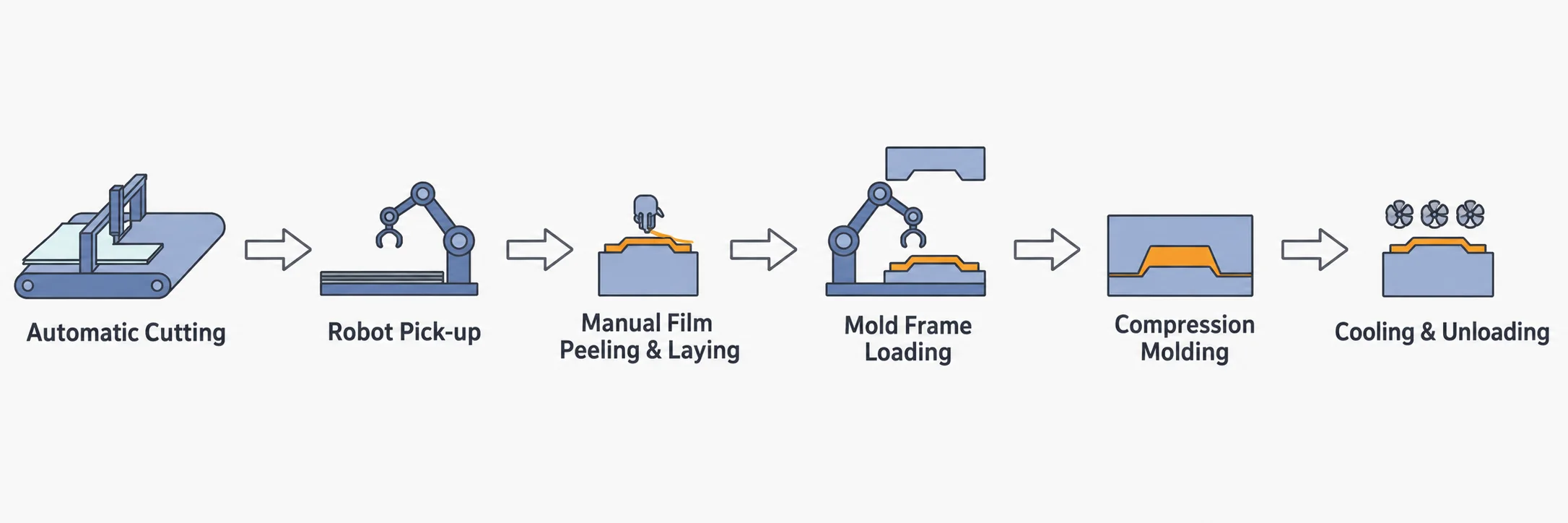
PCM compression molding places cut, release-film-stripped continuous-fiber prepreg in a mold, then applies heat and pressure to cure the part. The automated line covers prepreg cutting, handling and lay-up, compression molding and cooling. The turnkey project can include design, manufacture, transport, unloading, installation, commissioning and training.
Product and material first
Start with the finished-product drawing, material system and acceptance requirements. The process route and equipment configuration are assessed together.
Capacity across the whole process
Define output with preparation, forming/reaction, curing, handling and inspection included. The slowest stage and product changes determine practical line capacity.
The line can be configured for carbon-fiber or glass-fiber prepreg with mold-core circulation and robot-applied release agent. Project scope can include design, manufacture, transport, unloading, installation, commissioning and training.
From Prepreg Preparation to Cooled Part
A configurable automated sequence for PCM prepreg compression molding.
Cut prepreg
Cut the continuous-fiber prepreg to the required charge pattern and prepare it for lay-up.
Transfer and lay up
Handle the cut prepreg and place the required layers in the mold.
Prepare the mold
Circulate mold cores automatically and apply release agent with a robot.
PCM Prepreg Line — Reference Parameters
Reference material, press and automation information for PCM compression molding.
| Parameter | Reference specification |
|---|---|
| Industry applications | New-energy vehicle decorative and structural components |
| Applicable material | Carbon-fiber and glass-fiber prepreg |
| Process type | PCM prepreg compression molding |
| Press configuration | Servo-mechanical and hydraulic presses; 100–500 tonnes; platen customized for the product |
| Mold cleaning | Automatic mold-core circulation; robot-applied release agent |
| Control system and communication | SIEMENS / AB; PROFINET / EtherNet/IP industrial Ethernet real-time communication |
These are the supplied reference specifications. Final press force, platen dimensions and automation interfaces are defined for the selected product.
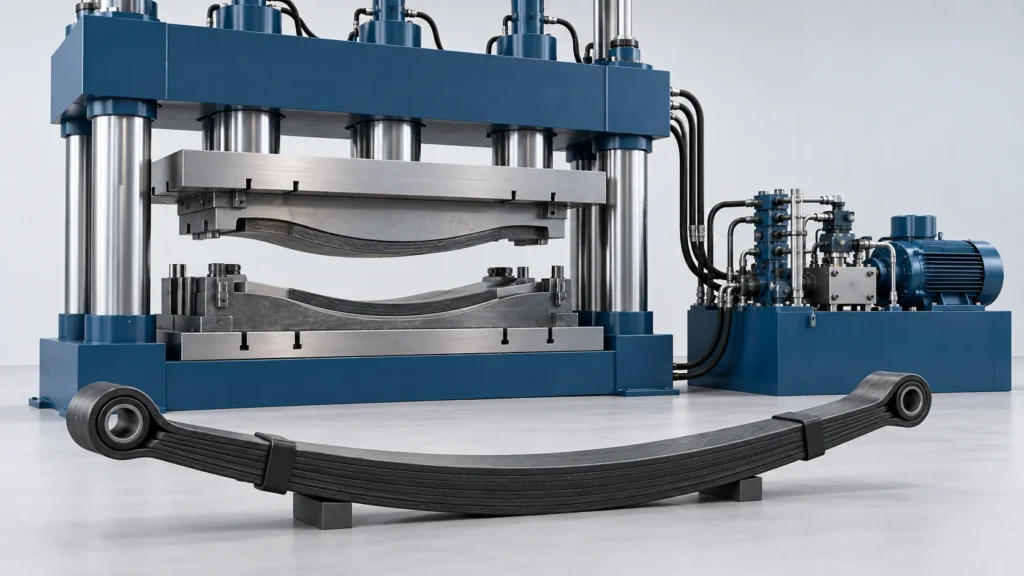
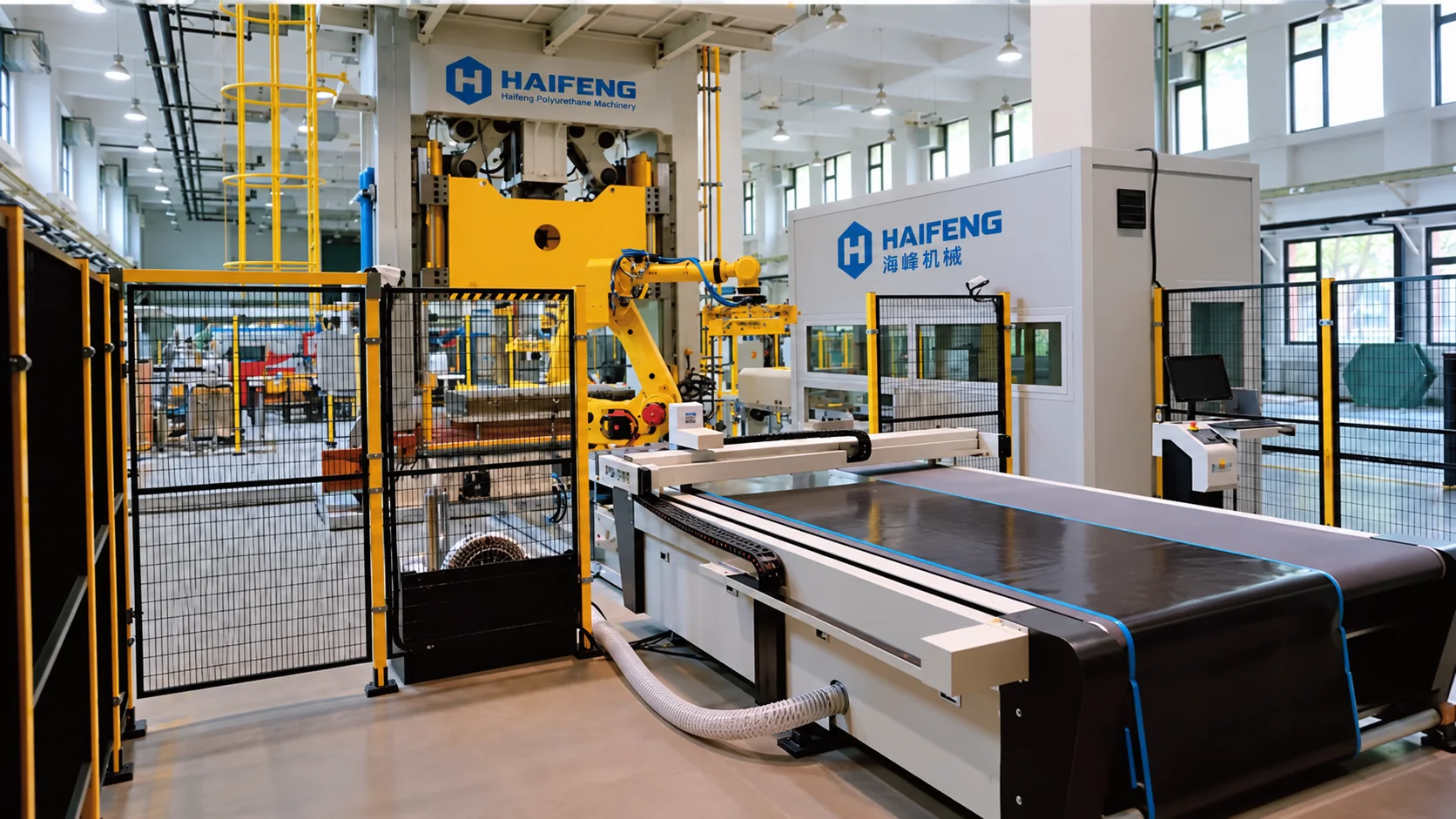
PCM Prepreg Molding Line — Concept Illustrations
Concept illustrations only; these are not photographs of delivered equipment or customer installations. The process-flow graphic contains illustrative labels, including manual film peeling and lay-up; final automation details follow the project configuration.
Coordinate the Equipment With the Process
Evaluate repeatability, handling and acceptance across the full workflow.
Material-specific configuration
Component circuits, thermal control, mixing and receiving equipment are matched to the approved chemistry and processing window.
Defined interfaces
Haifeng can coordinate the agreed prepreg-handling, heated-press, tooling and finishing package. A metering machine is not listed as a mandatory PCM component.
Documented acceptance
The proposal defines trials, process records, inspection responsibilities and product-specific acceptance conditions.
Frequently Asked Questions
Clarify the production route before selecting a machine.
Does PCM need a liquid resin injection machine?
What information is needed to size the production line?
What is included in the equipment package?
Are cycle time and finished-product performance fixed?
Submit Your Production Goals
Share the finished product, material, target capacity, automation requirements and factory conditions to discuss a project-specific line configuration.
Core Equipment and Integrated Interfaces
Related equipment for the process described on this page. Metering, handling, tooling and downstream scope are confirmed for the selected material and product; each equipment record defines its own configuration.
Related Application References
Review the material, product geometry, equipment scope and reference conditions within each record when assessing a comparable application.