
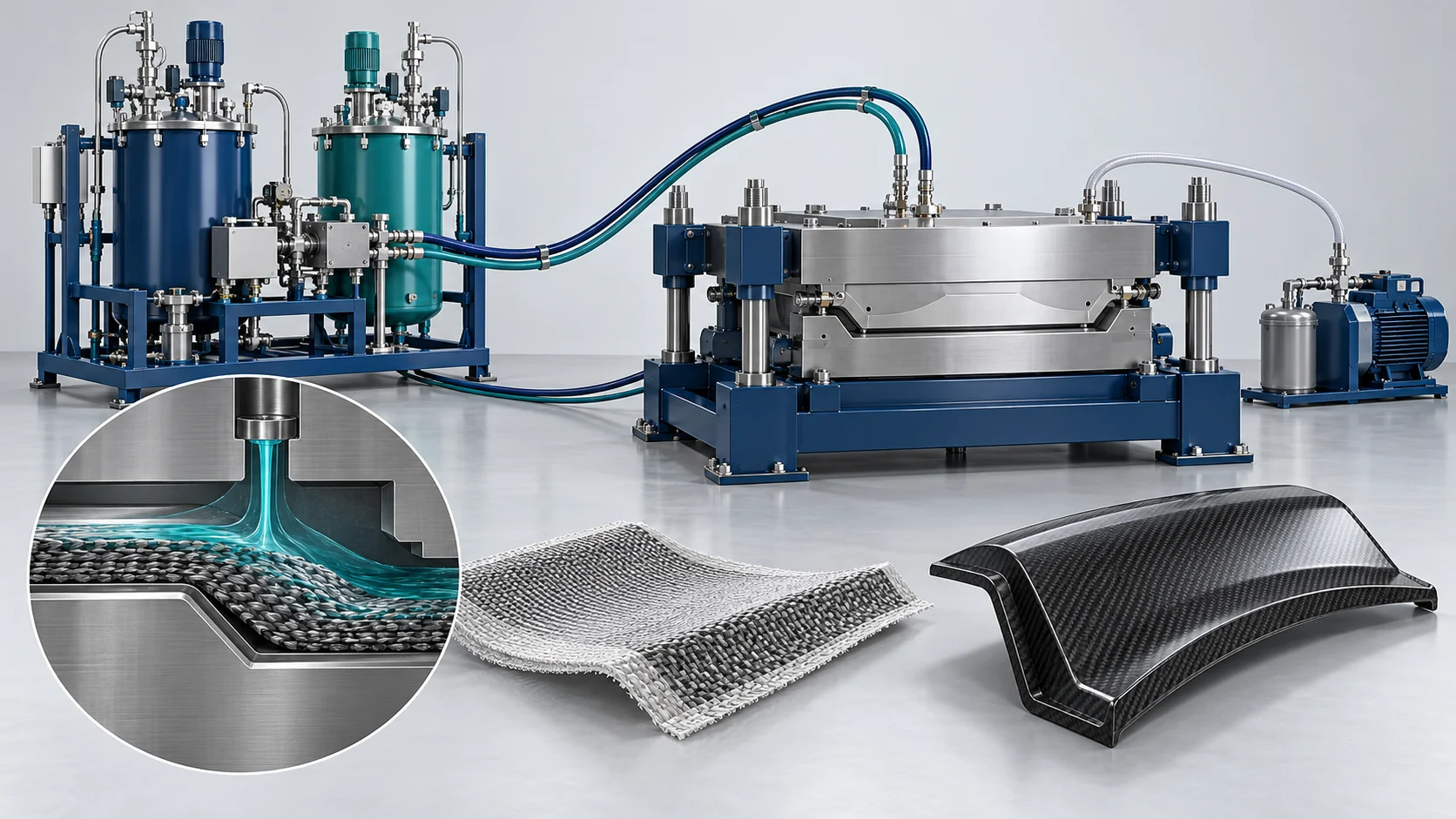
Resin Transfer Molding Production Solution
Build an RTM workflow for injecting a qualified liquid resin into dry reinforcement within a closed matched tool.
Configure Closed-Tool Resin Transfer Molding
Select resin preparation, dry-reinforcement handling and closed-tool injection for your laminate, geometry and production target.
Product and material first
Start with the finished-product drawing, material system and acceptance requirements. The process route and equipment configuration are assessed together.
Compare related routes: Dry-Fiber Preforming · HP-RTM · Vacuum Infusion.
Capacity across the whole process
Define output with preparation, forming/reaction, curing, handling and inspection included. The slowest stage and product changes determine practical line capacity.
Review preform permeability, resin working time and closed-tool flow before choosing RTM injection. Gates, vents, vacuum and clamp/thermal interfaces must allow the intended filling sequence; use trial and inspection evidence rather than borrowing HP-RTM ratings.
RTM Preforming, Injection and Cure Workflow
A planning sequence for the specified route. Final settings and acceptance conditions are established through material and part review.
Design the preform and flow
Review fiber architecture, resin viscosity, permeability and gate/vent positions.
Prepare the closed tool
Load the preform and inserts; confirm sealing, temperature and clamping.
Prepare and meter resin
Condition resin components and use the qualified mixing and degassing arrangement.
Information Needed to Configure the Line
Provide these inputs so the equipment range, interfaces and validation plan can be defined.
| Design input | Information required |
|---|---|
| Laminate design | Fiber form, volume fraction, thickness and inserts |
| Resin | Component ratio, viscosity, gel/cure window and material data |
| Tooling | Gate/vent layout, clamp and thermal capability |
| Production | Cycle, automation and quality targets |
Coordinate the Equipment With the Process
Evaluate repeatability, handling and acceptance across the full workflow.
Flow planning
Review preform permeability, gates and vents against the resin window.
Tool coordination
Define sealing, clamp, vacuum and thermal duties for the selected mold.
Laminate verification
Record filling and cure, then inspect agreed regions and defects.
Frequently Asked Questions
Compare RTM routes, reinforcement preparation and equipment scope.
What distinguishes RTM from HP-RTM and vacuum infusion?
Does RTM require a separate preforming cell?
How are resin injection and cure conditions selected?
What equipment is included in the RTM package?
What inputs are needed for this configuration?
What should an RTM filling trial record?
Submit Your Production Goals
Share the following for this application: Laminate/preform, resin viscosity and cure window, tool gates/vents, clamp/thermal data, cycle and inspection targets. Our team will reply within one business day. Once requirements are clear, we provide a preliminary proposal within two business days.


