
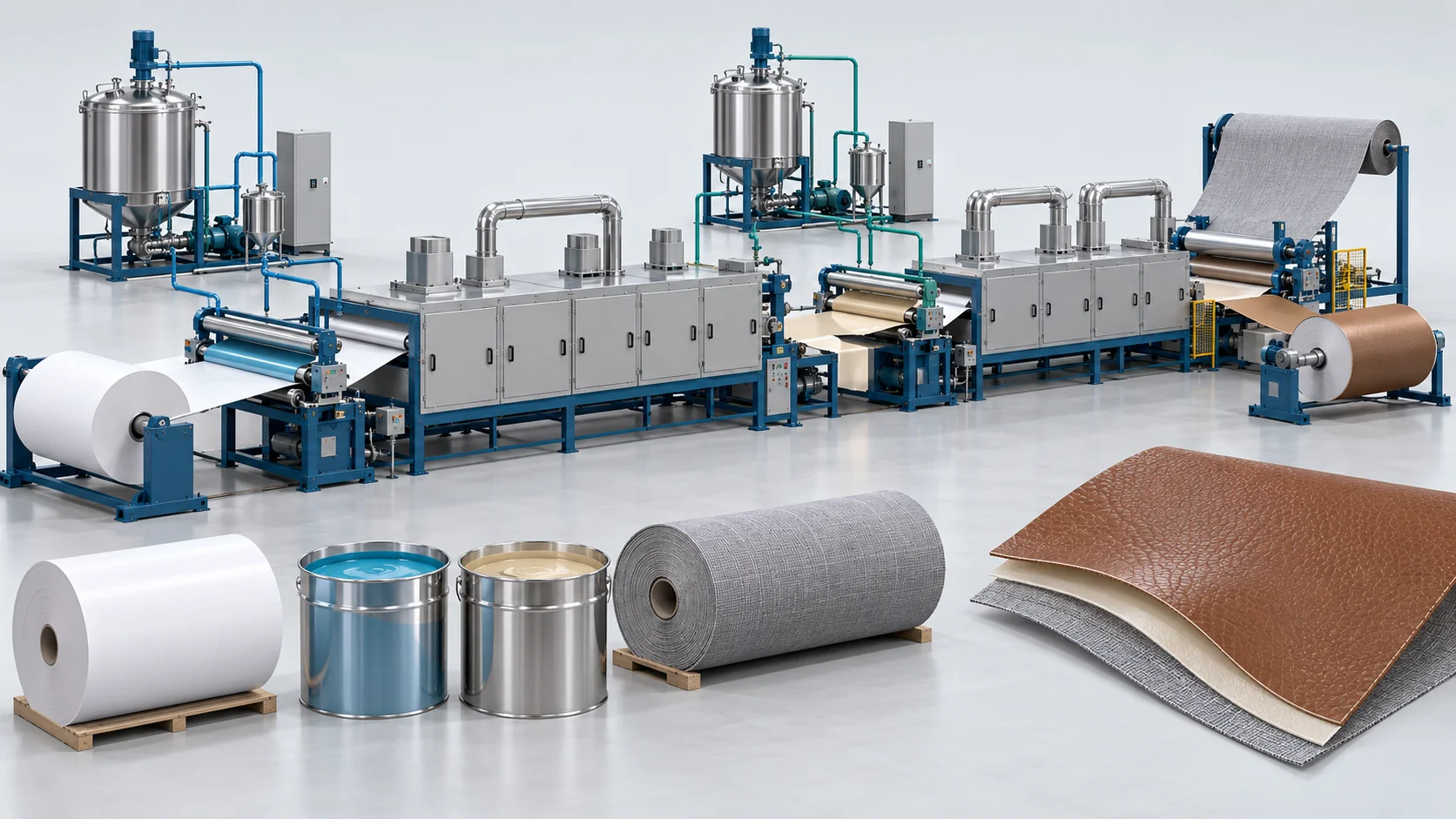
Dry-Process Transfer Coating Solution
Coordinate dry-process transfer coating, release-paper tension, drying and lamination for the selected leather construction.
High-Peel, Cold-Flex Mechanical Superiority for Athletic Footwear
Transfer coating forms the specified layers on release paper before drying, lamination and peeling. Tension control and coating geometry support stable application; they do not guarantee wrinkle-free or streak-free product. Cold flexing and peel strength are properties of the actual finished leather, not stand-alone coater ratings.
Defined supply scope
Define coating station types, paper/web handling, ovens and lamination interfaces. Dry-process does not establish solvent-free chemistry; material and cleaning arrangements must be selected explicitly.
Inputs for process selection
Layer build, release-paper and substrate data, coating weight/thickness, width, tension, ovens and lamination conditions.
Equipment scope, retained factory interfaces and acceptance are agreed for the selected material and part. Define coating station types, paper/web handling, ovens and lamination interfaces. Dry-process does not establish solvent-free chemistry; material and cleaning arrangements must be selected explicitly.
Dry-Process Transfer Coating Workflow
Prepare release paper and mixture → Control tension and coat → Dry and laminate → Peel and test. Define preparation, filling, cure and output timing separately for the selected configuration.
Prepare release paper and mixture
Confirm web, resin layers and substrate.
Control tension and coat
Validate tension and wet application across the usable width.
Dry and laminate
Coordinate residence, temperature and bonding conditions.
Reference Solution Engineering Envelope
Existing configuration and test references. Equipment settings, material results and finished-assembly results are separate; apply each value only to its documented configuration and conditions.
| Parameter | Value / Unit | Applicable Configuration / Conditions |
|---|---|---|
| Working Web Coating Width | Up to 1,600 mm | Precision enclosed slot die and reverse roll stations |
| Release Paper Tension Precision | Within ±2.0 N | Closed-loop servo floating dancer arm feedback |
| Liquid Coating Thickness Profile | 0.05 to 0.25 mm | Tolerance held strictly within ±1.5 µm across web |
| Cold-Flex Fatigue Resistance | Greater than 200,000 Cycles | Bally flexometer tested at -20°C under ISO 5423 |
| Interfacial Peel Bond Strength | Greater than or equal to 60 N/3cm | ISO 2411 testing on high-density microfiber substrates |
| Synchronized Production Line Speed | 10.0 to 30.0 m/min | Multi-zone hot air convection drying tunnels |
Core Equipment for This Solution
Equipment references are selected by their documented process. Main metering, auxiliary supply and alternative routes are not a single standard package.
Process controls and application checks
Evaluate these functions with the selected material, tooling and production brief. Finished-part results require their own acceptance evidence.
Measured tension control
Set accepted variation, measuring location and response under the actual web conditions.
Defined thickness inspection
Separate wet application from dry thickness and agree cross-web sampling.
Finished-construction evidence
Use the actual layers and test method for flex and peel results.
Related Projects
These are related application references. Compare the actual material, process and delivered modules; reported project figures are not acceptance results for another line.
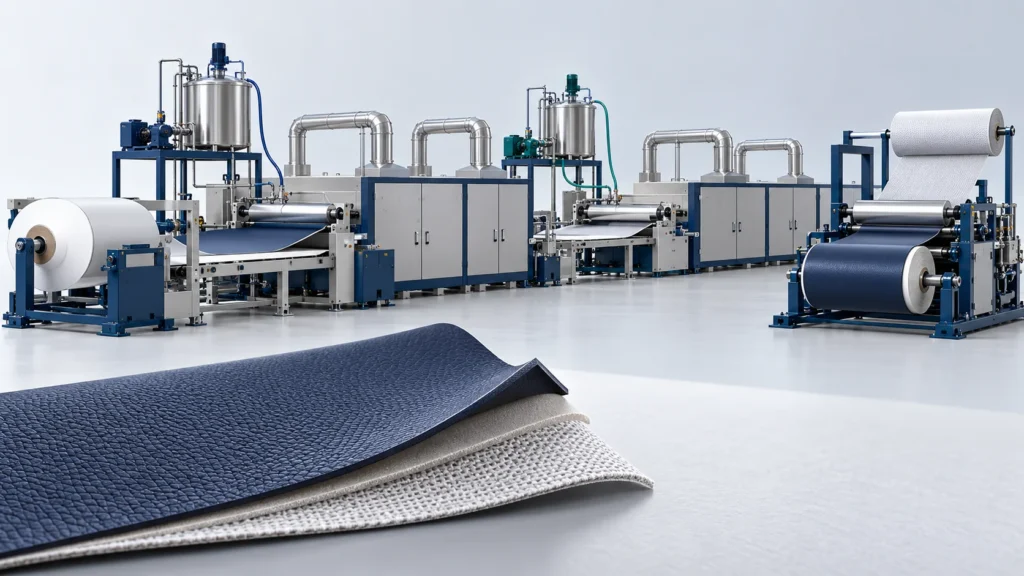
Production Planning FAQ
Selection, supply scope and validation for this production route.
Does a slot die eliminate streaks?
How is a thickness tolerance accepted?
What information is needed for a preliminary configuration?
Discuss Your Production Goals
Share the following with your production brief: Layer build, release-paper and substrate data, coating weight/thickness, width, tension, ovens and lamination conditions. Our team will reply within one business day. Once requirements are clear, we provide a preliminary proposal within two business days.


