
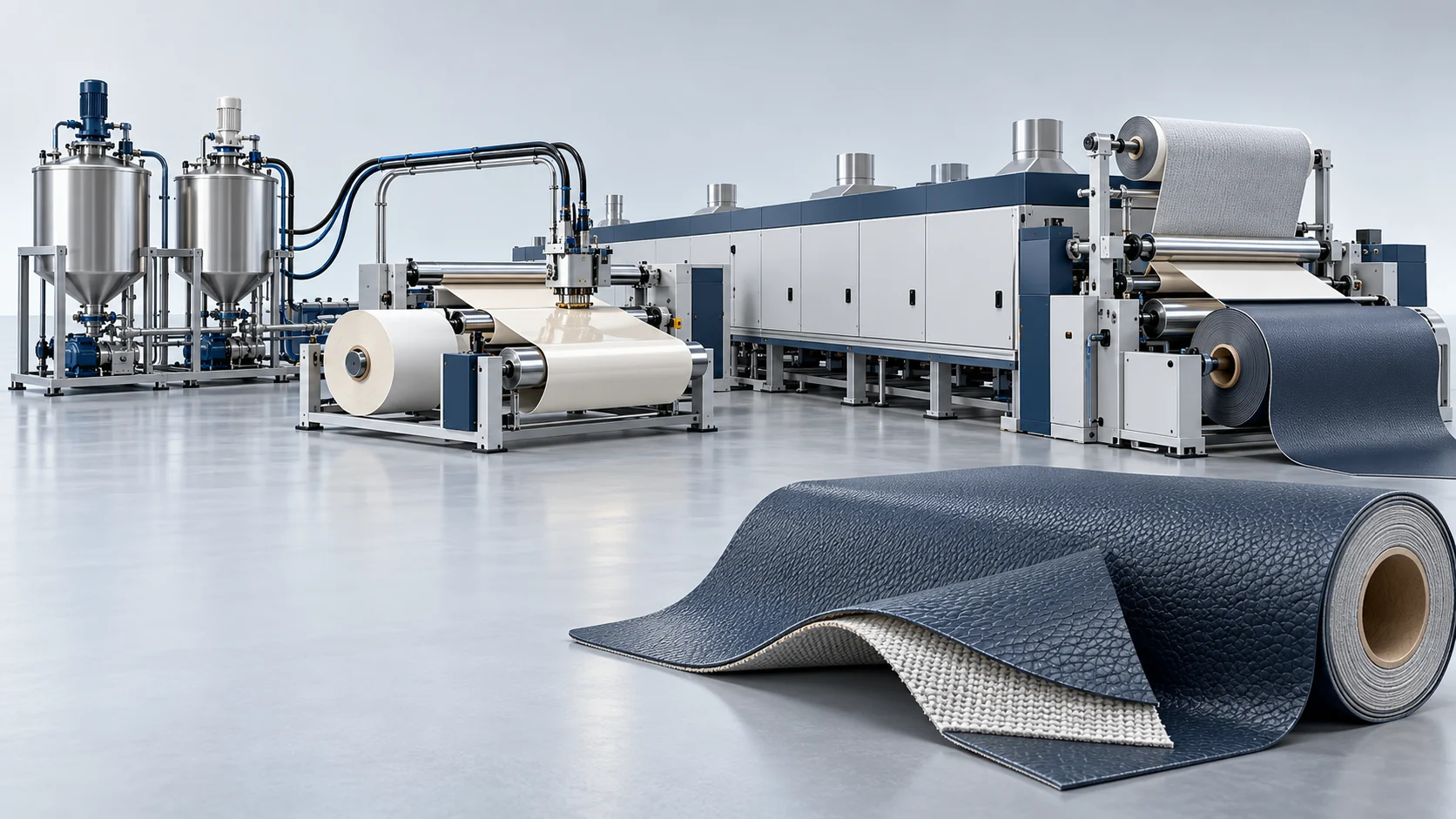
Dry-Process PU Synthetic Leather Production Solution
Coordinate release-paper coating, adhesive preparation, drying and lamination for dry-process PU synthetic leather.
A solvent-free, integrated solution for the production of dry-processed synthetic leather.
Dry-process transfer coating builds the selected leather layers on release paper before lamination and peeling. Resin preparation and delivery must match the topcoat, adhesive, substrate and drying arrangement. Dry-process describes the manufacturing route; it does not establish that every formulation is solvent-free.
Defined supply scope
Specify material preparation, coating stations, ovens, web handling and lamination separately. Solvent-free reactive coating and water-borne mechanical foaming are different material routes and require their own assessment.
Inputs for process selection
Layer construction, resin and adhesive data, release-paper width, coating weight, existing oven and lamination conditions, and changeover requirements.
Equipment scope, retained factory interfaces and acceptance are agreed for the selected material and part. Specify material preparation, coating stations, ovens, web handling and lamination separately. Solvent-free reactive coating and water-borne mechanical foaming are different material routes and require their own assessment.
Dry-Process PU Synthetic Leather Production Workflow
Prepare the web and mixtures → Apply the coating layers → Dry and laminate → Peel and inspect. Define preparation, filling, cure and output timing separately for the selected configuration.
Prepare the web and mixtures
Confirm release paper, substrate, layer construction and the selected resin and adhesive systems.
Apply the coating layers
Coordinate delivery, coating weight and web tension with the selected coating stations.
Dry and laminate
Match drying residence and lamination conditions to the materials and web speed.
Main technical specifications
Existing configuration and test references. Equipment settings, material results and finished-assembly results are separate; apply each value only to its documented configuration and conditions.
| Parameter options | Parameter values |
|---|---|
| Device Model | HF-LPM-1A1B-L (small-scale prototype) / HF-LPM-2A2B-L (large-scale production) |
| Accuracy of measurement | ≤±0.3% |
| Combined engine speed | Leather-specific mixing head, 8600 rpm |
| Adjustable production line width | 1500‑2200 mm |
| Hourly output: HF-LPM-2A2B-L | 120‑150 ㎡/h |
| Time to switch to the complete formula. | ≤1.5 h |
| Time taken for a simple paint job. | 3-5 minutes |
| Target for coating uniformity | ≥98% |
| Target defect rate | ≤2% |
| Associated unit | Raw material pretreatment, online intelligent quality control, and a closed-loop exhaust gas collection system. |
Related Products
Equipment references are selected by their documented process. Main metering, auxiliary supply and alternative routes are not a single standard package.
Process controls and application checks
Evaluate these functions with the selected material, tooling and production brief. Finished-part results require their own acceptance evidence.
Route-specific preparation
Prepare each coating and adhesive for its actual viscosity, working window and application method.
Coordinated web handling
Plan tension, drying and lamination as linked operations rather than independent maximum ratings.
Defined changeover
Review shared wetted paths, cleaning and release-paper changes for the intended order mix.
Related Projects
These are related application references. Compare the actual material, process and delivered modules; reported project figures are not acceptance results for another line.
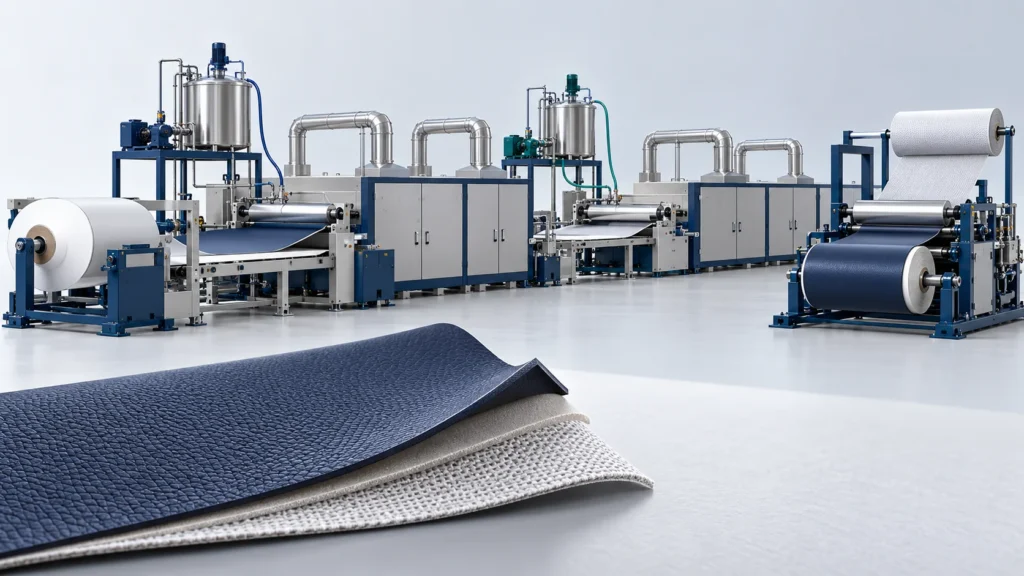
Production Planning FAQ
Selection, supply scope and validation for this production route.
Does dry-process mean solvent-free?
Is this a polyurethane foam manufacturing workflow?
What information is needed for a preliminary configuration?
Submit Your Production Goals
Share the following with your production brief: Layer construction, resin and adhesive data, release-paper width, coating weight, existing oven and lamination conditions, and changeover requirements. Our team will reply within one business day. Once requirements are clear, we provide a preliminary proposal within two business days.


