
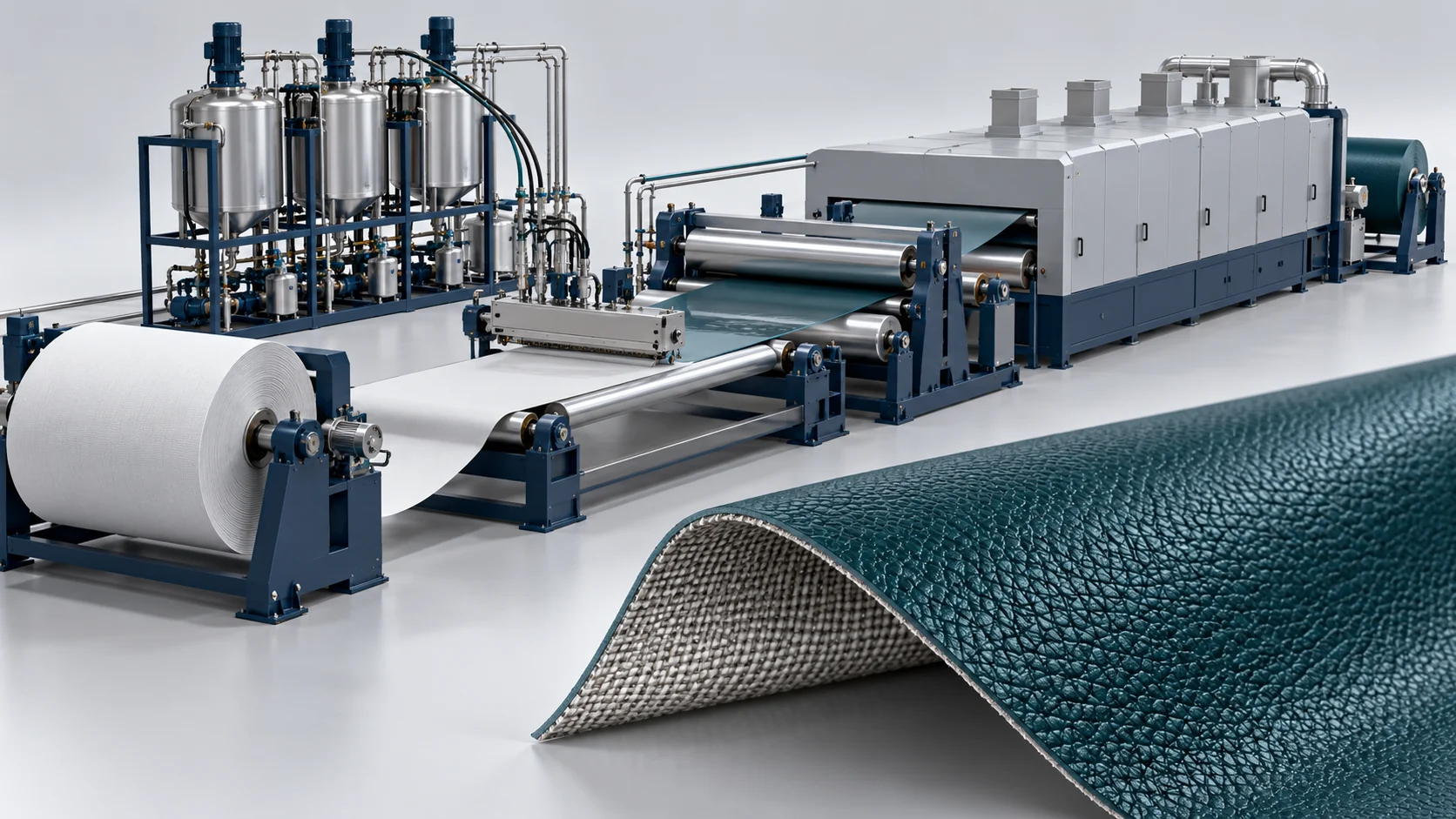
Solvent-Free PU Synthetic Leather Coating Solution
Configure two-component solvent-free PU reaction coating from material preparation and metering to reverse-roll application, lamination and curing. Select the package for the resin, substrate, layer construction and output target.
Configure Solvent-Free PU Reaction Coating
This route covers solvent-free reactive PU preparation, metering and mixing coordinated with the selected coating and lamination arrangement. A three-roll reverse-coating station can be configured for the working web. Water-borne mechanical foaming uses a different formulation and drying process and is reviewed as a separate module.
Reactive Material Preparation
Review component chemistry, ratios, viscosity, moisture sensitivity, degassing, temperature and usable reaction time before specifying the preparation and mixing arrangement.
Coating and Web Interfaces
Coordinate reverse-roll gap, web speed, coating weight, substrate and lamination with formulation trials. Unwinding, conveying and curing responsibilities are defined in the agreed supply scope.
Define preparation/degassing, reactive metering, roll application, lamination and cure as separate interfaces. A retrofit should identify which web handling and ovens remain; water-borne mechanical foaming uses a different material and drying route.
Solvent-Free Reaction Coating Workflow
Coordinate reactive feeds, coating, lamination and curing for the selected substrate and formulation. Water-borne foaming is a separately selected route.
Define the Leather Construction
Confirm substrate, layer stack, texture, working width, output and the required adhesion and finished-leather tests.
Prepare and Degas Components
Condition the selected components and additives within their temperature and viscosity window. Specify material degassing where required.
Meter and Mix Reactive Feeds
Select component ratio control and dynamic mixing for the flow demand, pot life and cleaning requirements.
Design Inputs and Optional Reverse-Roll Configuration
Select the configuration from the material and web requirements. The reverse-roll references below come from the existing configuration brief and require confirmation for the ordered package.
| Design input | Information required |
|---|---|
| Leather construction | Substrate, layer stack, coating weight and working width |
| Reactive system | Component count, ratios, viscosity and reaction time |
| Web output | Speed, roll changeovers and cure residence |
| Quality targets | Adhesion, appearance, physical properties and test methods |
Optional Reverse-Roll Configuration References
| Item | Brief reference | Selection conditions |
|---|---|---|
| Working web width | 1,400–1,600 mm | Selected roll station and substrate; not a rating for every listed coater |
| Line speed | 5–25 m/min | Formulation, coating weight, lamination and curing residence |
| Wet coating thickness | 0.05–0.30 mm | Roll setup, rheology, web tension and agreed inspection |
| Material degassing | Below 0.1 kPa absolute pressure | Configured vessel and selected material operating conditions |
| Dynamic mixing | 1,500–4,000 r/min | Selected mixing head, viscosity, flow and temperature |
| Curing temperature | 100–120°C | Material-specific trial reference; cure time and oven are selected separately |
For a separate material and process route, review the water-borne mechanical foaming solution.
Core Equipment and Integrated Interfaces
The solvent-free metering and coating references have different roles. Specify the actual reverse-roll, lamination and curing modules rather than combining every listed unit.
Solvent-Free PU Foaming Machine | Synthetic Leather
Reactive PU metering and delivery for solvent-free leather coating. Foaming functions follow the specified material system and configuration.
Solvent-Free PU Coating Machine | Synthetic Leather
The HF-SFL180-2K is a two-component solvent-free polyurethane coating and lamination machine for automotive and furniture synthetic leather. VOC outcomes depend on the formulation and application and require testing.
Coordinate the Equipment With the Process
Evaluate repeatability, handling and acceptance across the full workflow.
Material-Specific Reactive Feeds
Component circuits, thermal control, degassing and mixing are configured for the selected formulation.
Reverse-Roll Application Option
Coordinate the roll station and web handling with coating weight, thickness and the usable reaction window.
Defined Supply and Retrofit Scope
Review existing equipment, space, controls and utilities before confirming which coating, lamination and curing modules are supplied.
Finished-Leather Validation
Adhesion, tensile performance, VOC and odor are material and product test outcomes, separately agreed from machine ratings.
Related Projects
The linked upgrades support their documented conversion and material conditions; they do not make all dry or wet lines interchangeable.
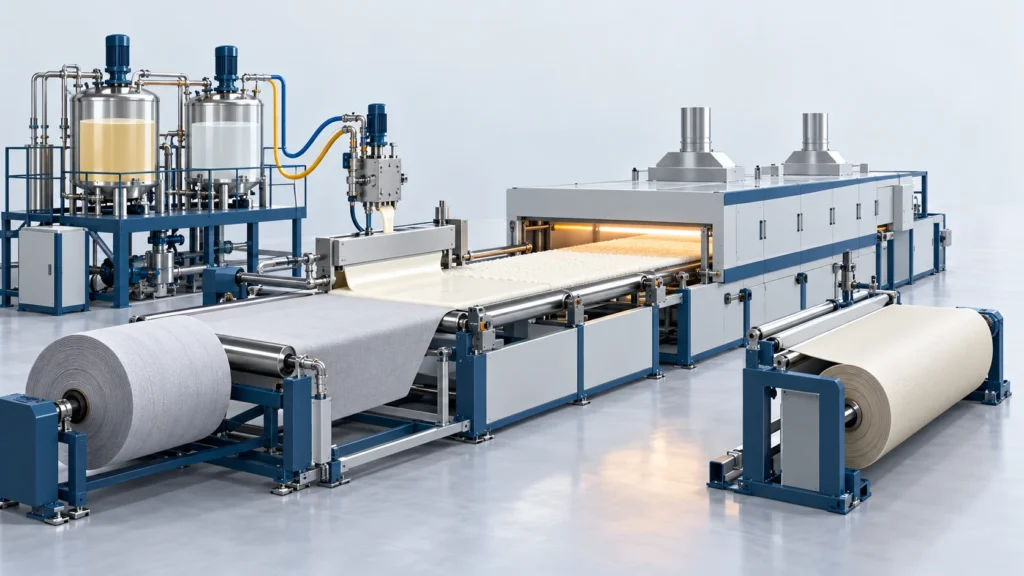
Solvent-Free PU Foaming and Coating Line Upgrade Project in China
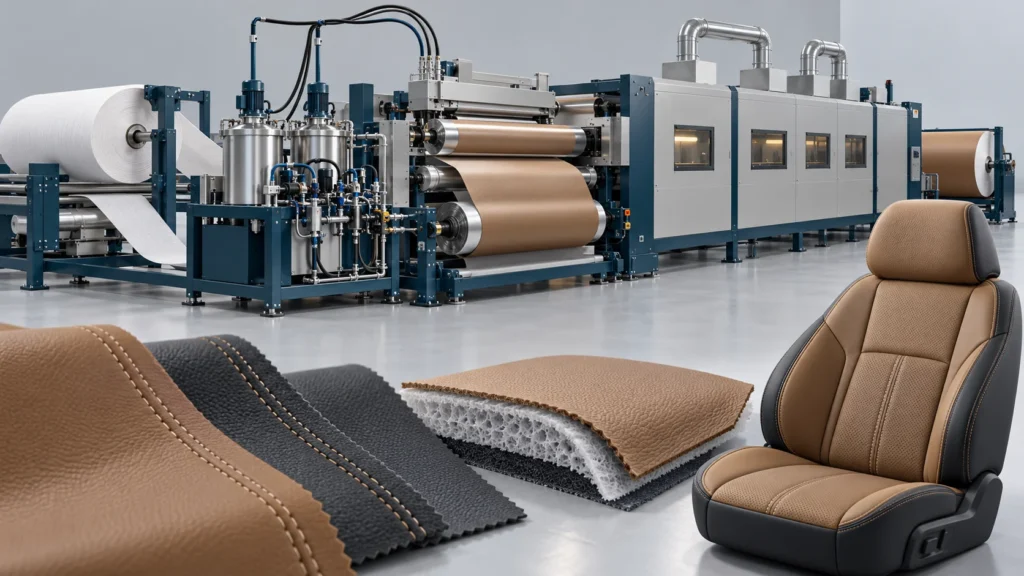
Automotive Leather Solvent-Free Retrofit Project in China
View RecordFrequently Asked Questions
Review reactive chemistry, coating interfaces, retrofit scope and finished-leather tests.
Is water-borne mechanical foaming part of the same reactive process?
Can an existing wet-process line be converted?
How is premature curing on the rolls controlled?
Does solvent-free chemistry eliminate ventilation or guarantee peel strength?
What information is needed for a preliminary proposal?
What should be checked before reusing a coating station?
Submit Your Production Goals
Share the following for this application: Reactive material data, layer build, substrate/web width, coat mass, working window, roll station and retained line. Our team will reply within one business day. Once requirements are clear, we provide a preliminary proposal within two business days.


