
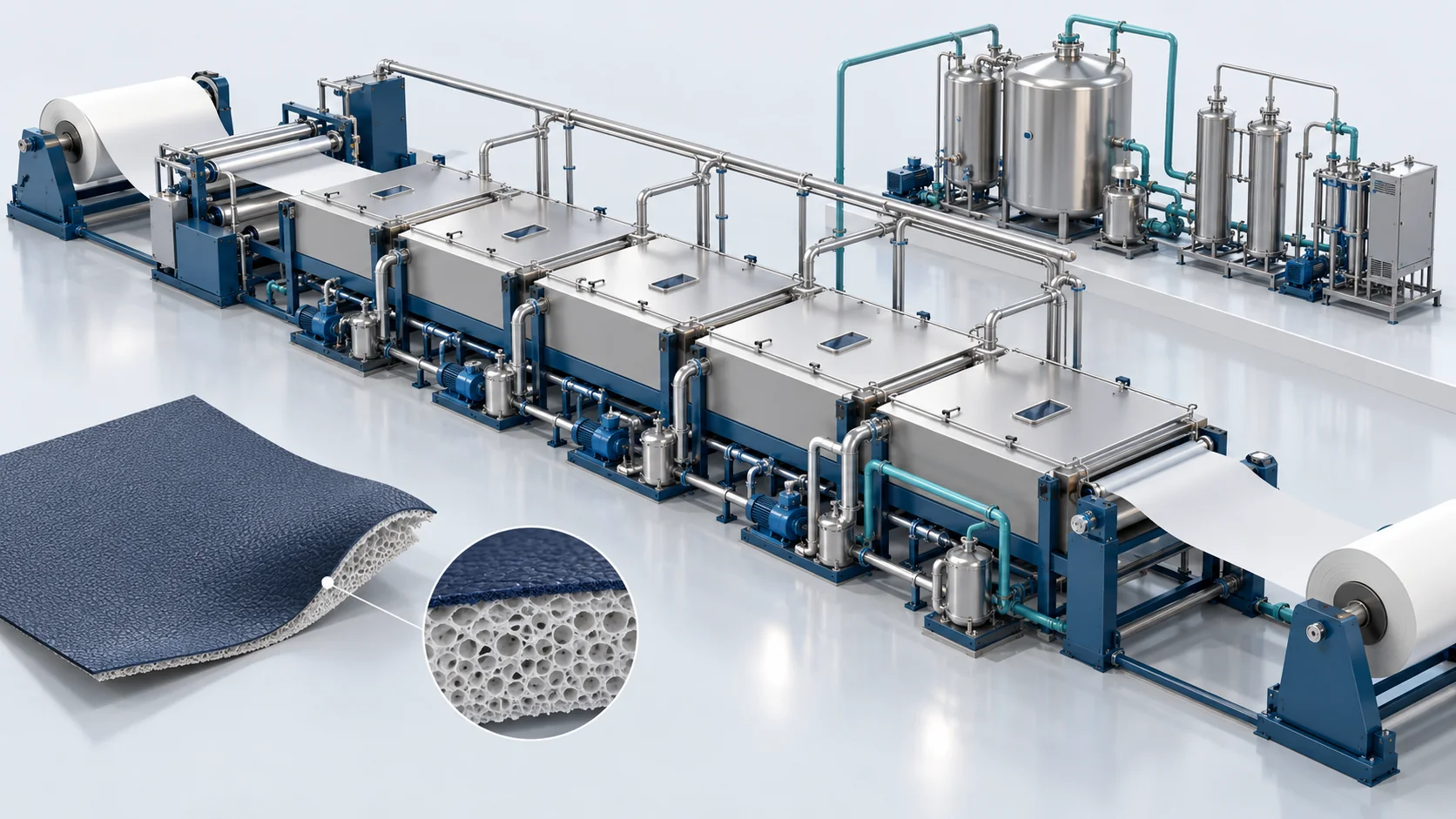
Wet-Process DMF Coagulation Solution
Plan a wet-process countercurrent washing retrofit with defined DMF concentration, recovery and monitoring interfaces.
Dramatic Steam and Solvent Cost Reduction for Wet Synthetic Leather
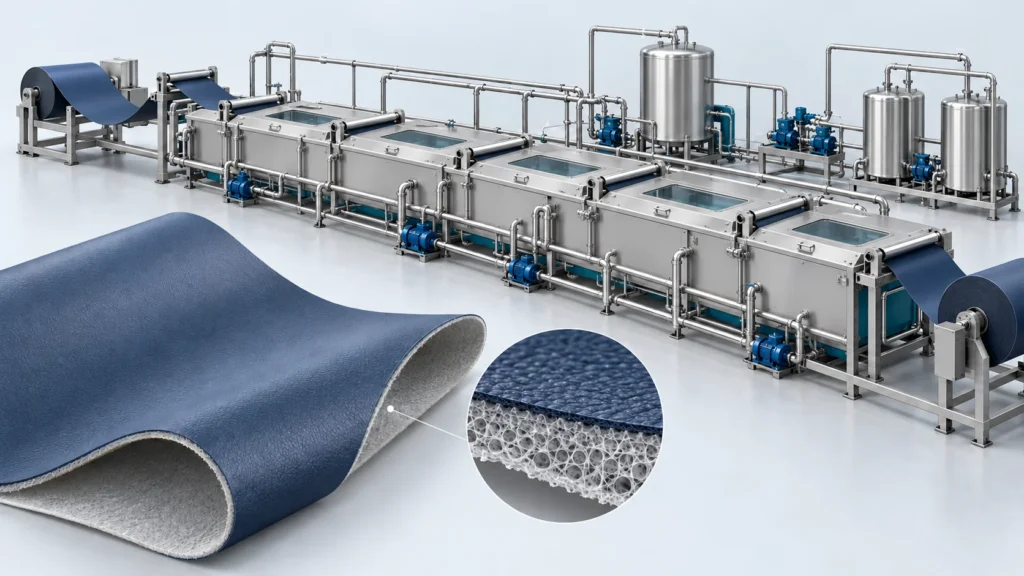
Countercurrent washing coordinates liquor flows, squeeze stages, concentration monitoring and transfer to the recovery plant. A concentration window must be assessed with the actual fabric, wash load and recovery system. Water, steam and payback figures require the original baseline and operating period rather than being universal retrofit outcomes.
Defined supply scope
Define retained tanks, added modules, instruments, extraction, recovery and shutdown work. Negative-pressure covers are control measures, not proof of complete vapor containment or worker exposure outcomes.
Inputs for process selection
Tank layout, fabric throughput, liquor/DMF measurements, recovery capacity, utilities, extraction and permitted shutdown.
Equipment scope, retained factory interfaces and acceptance are agreed for the selected material and part. Define retained tanks, added modules, instruments, extraction, recovery and shutdown work. Negative-pressure covers are control measures, not proof of complete vapor containment or worker exposure outcomes.
Wet-Process DMF Coagulation Workflow
Survey the existing washing line → Configure flow and monitoring → Integrate recovery and extraction → Commission and compare. Define preparation, filling, cure and output timing separately for the selected configuration.
Survey the existing washing line
Record tanks, fabric load, liquor flows and recovery connections.
Configure flow and monitoring
Review cascade routing, squeeze and concentration measurement.
Integrate recovery and extraction
Check liquid transfer, vapor capture and the existing recovery capacity.
Reference Solution Engineering Envelope
Existing configuration and test references. Equipment settings, material results and finished-assembly results are separate; apply each value only to its documented configuration and conditions.
| Parameter | Value / Unit | Applicable Configuration / Conditions |
|---|---|---|
| Effluent Discharged DMF Concentration | 18.0% to 22.0% Steady Window | Closed-loop optical refractometer proportional valve control |
| Distillation Plant Steam Energy Cut | Greater than or equal to 32% | Verified on steam mass flow meters per ton of recovered DMF |
| Fresh Water Consumption Reduction | Greater than or equal to 50% | Multi-stage countercurrent cascade recycling array |
| Fugitive DMF Vapor Suppression | Less than 0.05% leakage | Fully enclosed negative-pressure stainless canopies |
| Base Fabric Residual DMF Content | Less than 200 ppm | Gas chromatography extraction after final stage squeeze roll |
| Retrofit Installation Shutdown Dwell | 10 to 14 Operating Days | Modular drop-in tank skid design matching scheduled maintenance |
Core Equipment for This Solution
Equipment references are selected by their documented process. Main metering, auxiliary supply and alternative routes are not a single standard package.
Process controls and application checks
Evaluate these functions with the selected material, tooling and production brief. Finished-part results require their own acceptance evidence.
Defined mass-balance boundary
Relate wash liquor and DMF recovery with recorded flow and concentration.
Measured utility comparison
Use comparable production and metered steam/water for savings evaluation.
Specified containment checks
Define monitoring points, units and acceptance instead of assuming complete capture.
Related Projects
These are related application references. Compare the actual material, process and delivered modules; reported project figures are not acceptance results for another line.
Frequently Asked Questions
Is one DMF concentration window ideal for every plant?
How should savings and ROI be evaluated?
What information is needed for a preliminary configuration?
Discuss Your Production Goals
Share the following with your production brief: Tank layout, fabric throughput, liquor/DMF measurements, recovery capacity, utilities, extraction and permitted shutdown. Our team will reply within one business day. Once requirements are clear, we provide a preliminary proposal within two business days.


