
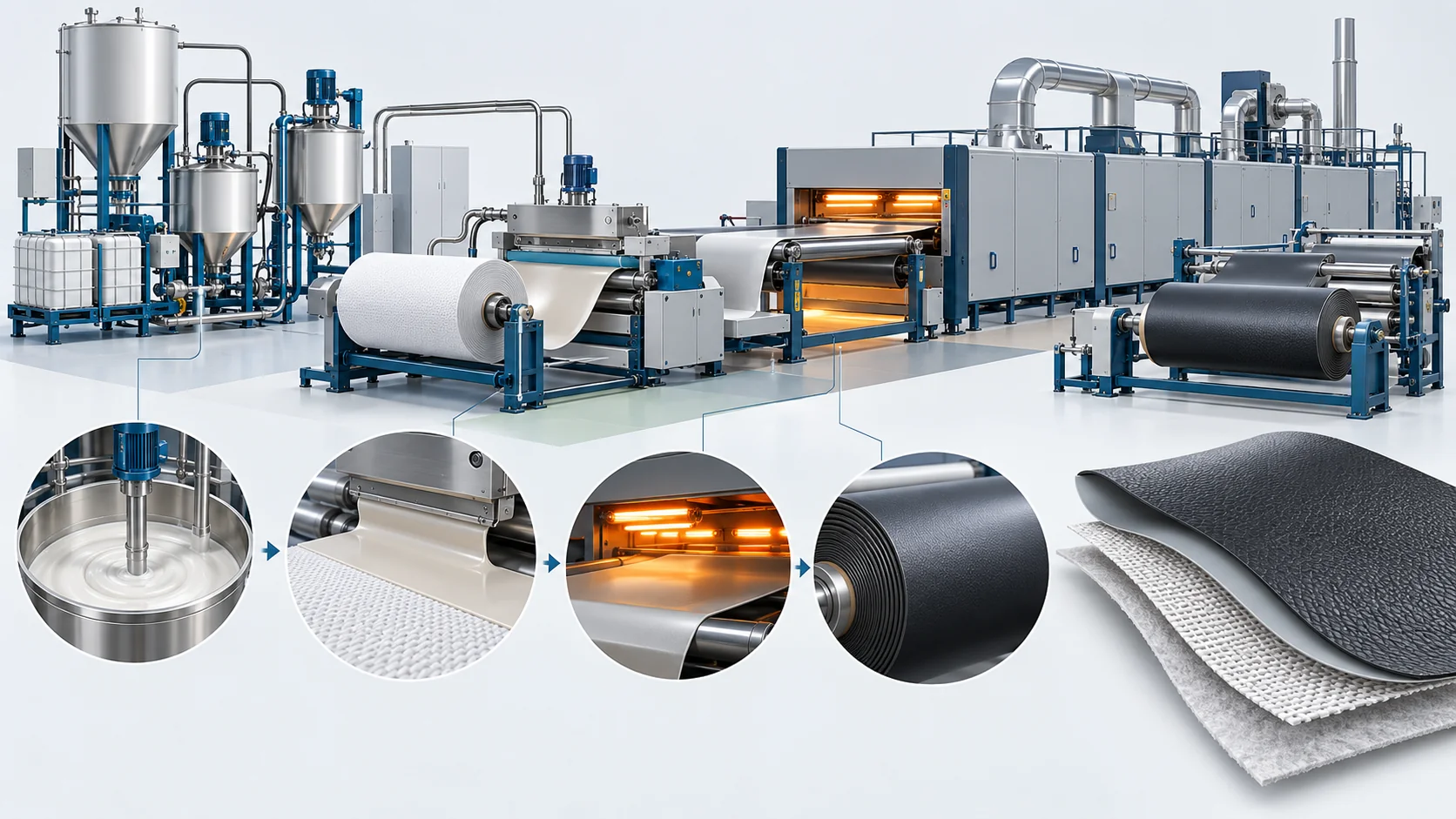
 Concept illustration; not a photograph of a delivered machine or customer project.
Synthetic Leather Manufacturing Turnkey Plant
Compare synthetic-leather process and material choices, including dry transfer coating, wet coagulation, water-borne processing and solvent-free reactive coating. Define the substrate, layer structure and downstream interfaces for the selected route.
Process and Material Choices
Dry/wet processing describes the manufacturing route; water-borne/solvent-free describes material and processing choices. Review the full layer construction rather than treating these as four mutually exclusive categories.
Dry Transfer Coating
Coordinate release paper, coating, drying and lamination around the synthetic-leather layer structure.
Wet Coagulation and Washing
Define substrate impregnation, coagulation, washing and recovery interfaces for the selected wet route.
Water-Borne Processing
Specify the water-borne material, mechanical-foaming needs, coating and drying stages.
Solvent-Free Reactive Coating
Configure two-component metering, mixing, coating or impregnation and downstream reaction conditions.
Manufacturing Solutions
The overview cards introduce process choices; the package cards define equipment and interfaces. Water-borne mechanical foaming and solvent-free two-component coating are separate modules.
Dry-Process Synthetic Leather
Review the dry-process production configuration and coordinate material preparation, coating and downstream operations around the required product.
Process and Configuration
Substrate and coating requirementsProcess and equipment integrationDownstream and factory interfaces
Wet-Process Synthetic Leather
Plan the wet-process configuration around the substrate, material system, processing stages and required line interfaces.
Process and Configuration
Material and substrate planningWet-process configurationSupporting systems and interfaces
Water-Based Synthetic Leather
Coordinate water-based material handling, coating and downstream processing around the product structure and output requirements.
Process and Configuration
Water-based material requirementsCoating and processing configurationLine and quality-control planning
Solvent-Free PU Reaction Coating
Configure reactive metering and mixing, optional reverse-roll application, lamination and curing. Water-borne foaming is a separate process module.
Process and Configuration
Reactive material preparation and meteringConfigured reverse-roll coating and laminationMaterial-specific curing and web interfaces
Water-Borne Mechanical Foaming Package
Mechanical gas dispersion into water-borne PU, followed by configured coating and drying for synthetic-leather layers.
Process and Configuration
Defined equipment and interfacesMaterial and tooling reviewConfiguration-specific validation
Solvent-Free Microfiber Impregnation Package
Two-component reactive impregnation and coordinated calendering for microfiber synthetic-leather substrates.
Process and Configuration
Defined equipment and interfacesMaterial and tooling reviewConfiguration-specific validation
More routes and configurations (2)
Release Paper Transfer Coating Package
Release-paper topcoat and adhesive delivery, coordinated drying and lamination for dry-process PU synthetic leather.
Process and Configuration
Defined equipment and interfacesMaterial and tooling reviewConfiguration-specific validation
Wet-Process Coagulation and Washing Package
A multistage DMF/water coagulation and countercurrent washing package with monitored circulation and recovery interfaces.
Process and Configuration
Defined equipment and interfacesMaterial and tooling reviewConfiguration-specific validation
Share Your Product, Material, Output and Factory Requirements
Equipment for Your Production Process
Review reactive coating, mechanical foaming, transfer coating, wet coagulation/washing and microfiber impregnation equipment. Select the relevant package from the material, substrate and required layer construction. Related equipment cards describe route-specific references, not a single standard line.
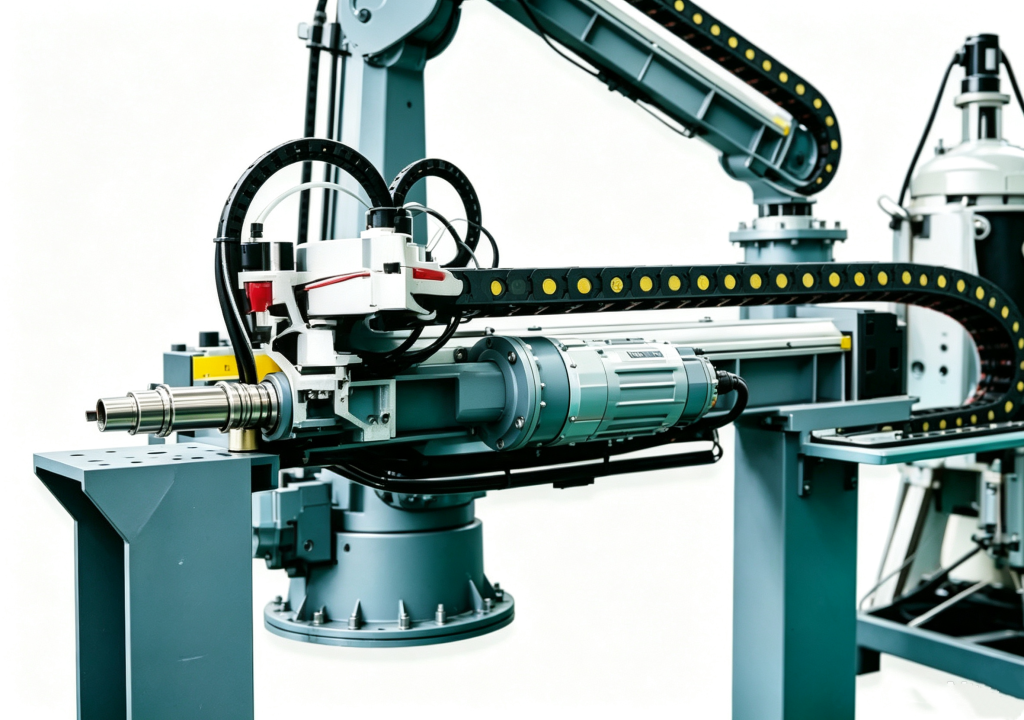
Solvent-Free PU Foaming Machine | Synthetic Leather
Reactive PU metering and delivery for solvent-free leather coating. Foaming functions follow the specified material system and configuration.
View Equipment
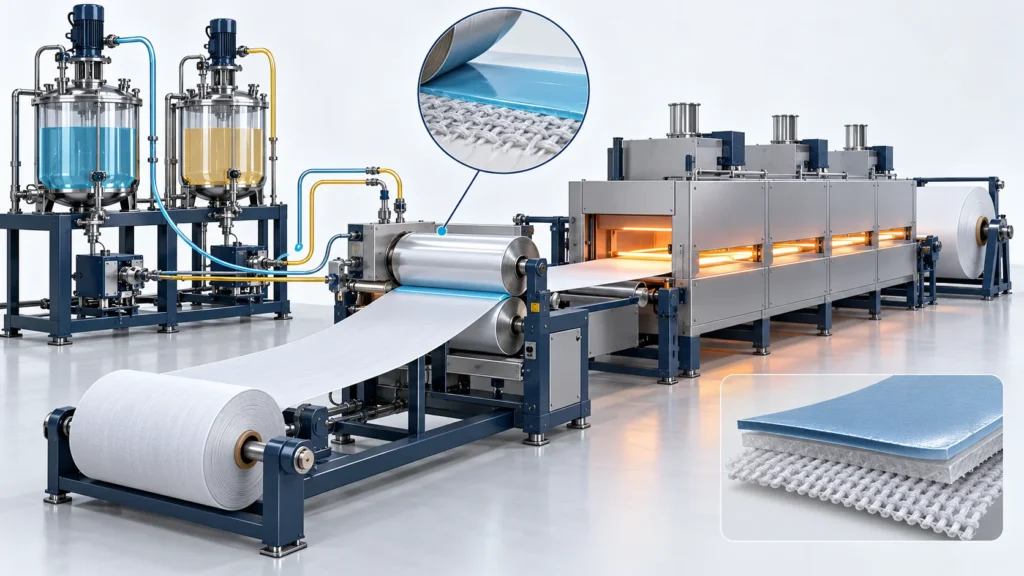 Concept illustration; not a photograph of a delivered machine or customer project.
Solvent-Free PU Coating Machine | Synthetic Leather
The HF-SFL180-2K is a two-component solvent-free polyurethane coating and lamination machine for automotive and furniture synthetic leather. VOC outcomes depend on the formulation and application and require testing.
View Equipment
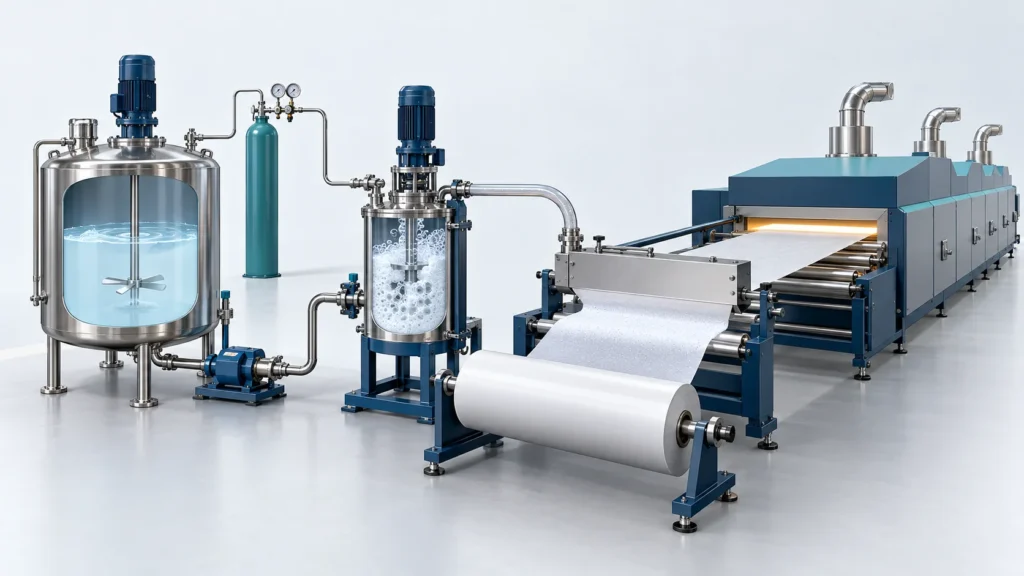 Concept illustration; not a photograph of a delivered machine or customer project.
Mechanical PU Foaming Machine | Water-Borne Leather
Mechanical gas dispersion into water-borne PU, followed by configured coating and drying for synthetic-leather layers.
View Equipment
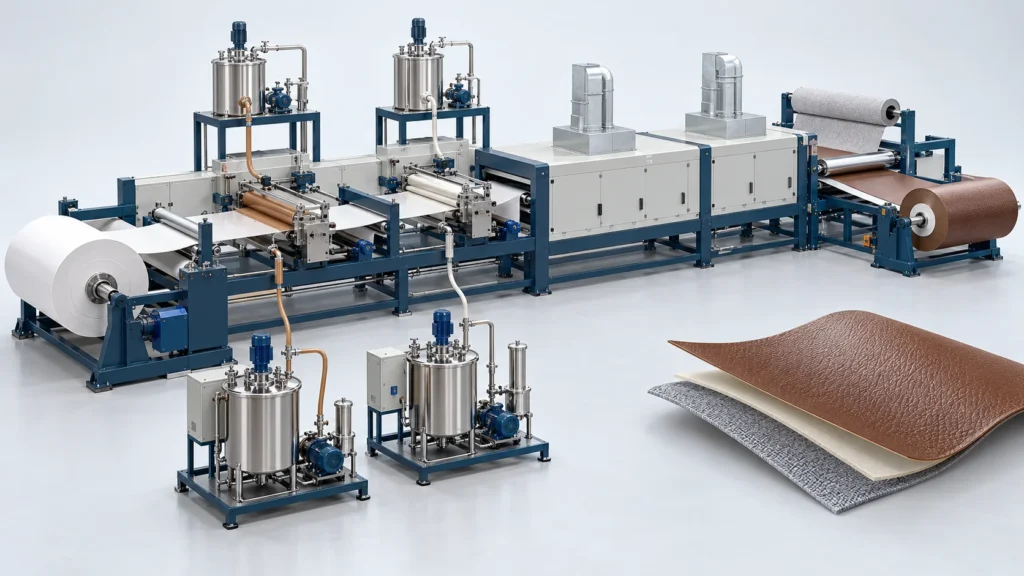 Concept illustration; not a photograph of a delivered machine or customer project.
PU Transfer Coating Line | Dry-Process Leather
Release-paper topcoat and adhesive delivery, coordinated drying and lamination for dry-process PU synthetic leather.
View Equipment
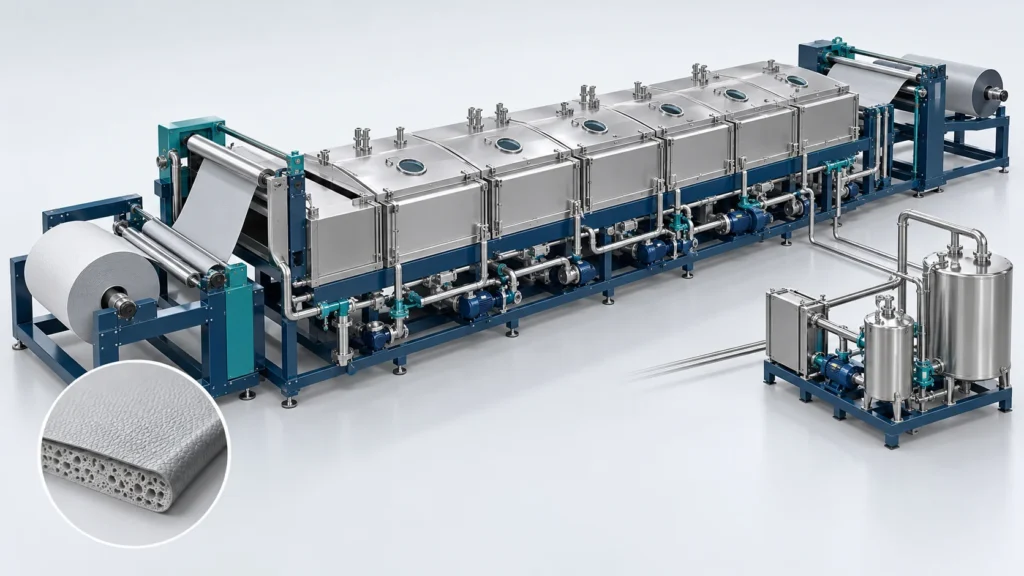 Concept illustration; not a photograph of a delivered machine or customer project.
DMF Coagulation and Washing Line | Wet-Process Leather
DMF Coagulation and Washing Line for Wet-Process Leather. Review configuration, material requirements and process interfaces with Haifeng.
View Equipment
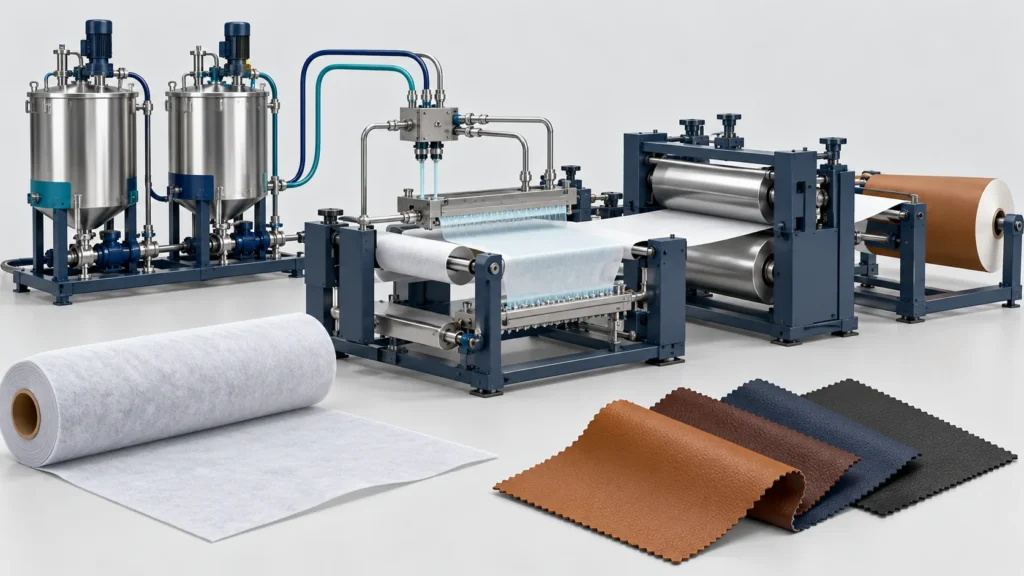 Concept illustration; not a photograph of a delivered machine or customer project.
Solvent-Free PU Impregnation Line | Microfiber Leather
Solvent-Free PU Impregnation Line for Microfiber Leather. Review configuration, material requirements and process interfaces with Haifeng.
View Equipment
Delivery Scope and Integration
Select the process from the material system and layer structure, then define preparation, coating or impregnation and downstream interfaces. Supply and customer responsibilities follow the agreed route.
Route and Material Preparation
Select material preparation, coating, impregnation or physical foaming from the intended layer structure and material data. Process route and material-system choices are separate decisions.
Coating and Downstream Interfaces
Define transfer coating or impregnation, drying, coagulation and washing as applicable. Recovery and environmental interfaces are separately scoped.
Haifeng and Customer Scope
Identify supplied modules, material and substrate inputs, factory utilities, customer-provided equipment and their control or transfer connections.
Trials and Finished-Layer Acceptance
Agree setup, commissioning and training for the supplied package. Product-quality and emissions acceptance follow the selected route and agreed tests; solvent-free does not make every factory stage emission-free.
Synthetic Leather Batching Guide
Review material, tooling and equipment-interface considerations for this production route.
Factory Planning FAQ
Review the route, equipment interfaces and project inputs before planning your production system.
How do dry and wet routes differ from water-borne and solvent-free choices?
Dry and wet describe processing routes, while water-borne and solvent-free describe material-system choices. Coating, impregnation, coagulation or drying stages are specified for the chosen combination.
Is physical foaming the same as two-component reaction processing?
No. Physical foaming and reactive two-component processing have different preparation and control requirements. Select the system from the intended layer structure and material data.
Which drying, washing and recovery equipment is included?
These stages depend on the route and applicable site requirements. Included modules, recovery interfaces and product-quality or emissions acceptance are agreed for the project; solvent-free material does not imply every factory stage is emission-free.
What is needed for a preliminary factory proposal?
Send your material data, product dimensions, production target, planned site utilities and required process stages. Our team will reply within one business day. Once requirements are clear, we provide a preliminary proposal within two business days. Equipment scope, commissioning milestones and acceptance criteria are agreed for each project.
Discuss Your Production Goals
Send substrate and layer structure, material processing data, coating width and add-on, target line speed, drying or curing requirements, daily working hours and existing line interfaces. Identify release-paper, washing and recovery needs for the chosen route. Our team will reply within one business day. Once requirements are clear, we provide a preliminary proposal within two business days.


