
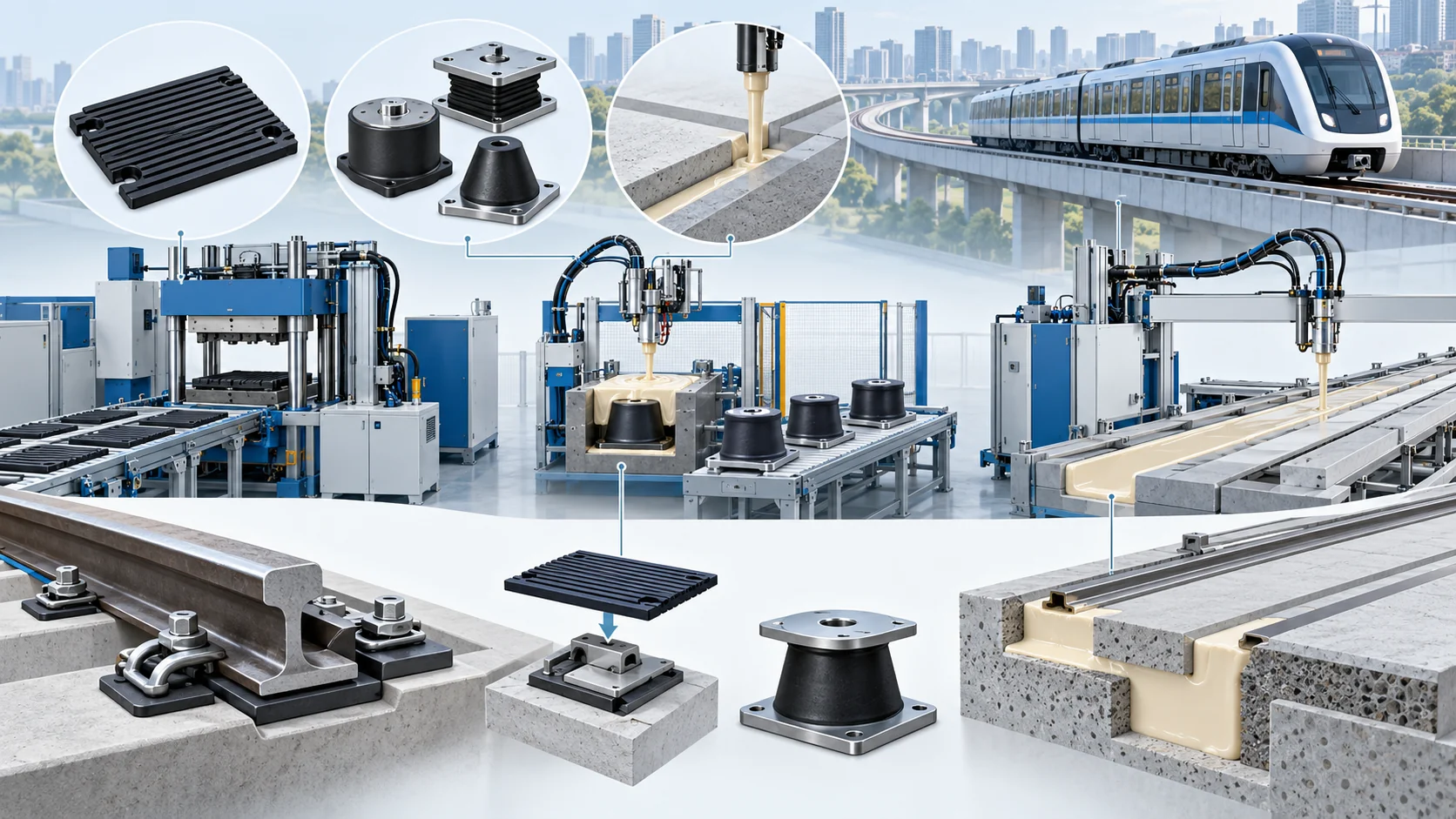
 Concept illustration; not a photograph of a delivered machine or customer project.
Rail Transportation PU Component Turnkey Plant
Plan PU manufacturing systems for rail pads, vibration-control components, filling and sealing applications across railway and urban rail projects.
Applications
Explore the production objectives and product requirements that guide the process and equipment configuration.
Rail Pads and Vibration-Control Parts
Configure molding or casting around component geometry, material and the required acceptance criteria.
Track Slab and Rail Channel Filling
Coordinate grouting or continuous dispensing with the track layout, material preparation and curing sequence.
Ballast Stabilization
Define a site-specific injection arrangement around aggregate conditions and railway maintenance requirements.
Stator Component Encapsulation
Coordinate filled-material preparation, vacuum dispensing and curing for the specified electrical component.
Manufacturing Solutions
Select the specific component or site application first. Rail pads, track-slab grouting, embedded-rail dispensing, ballast treatment and electrical potting have different material, equipment and acceptance interfaces.
Rail Pad Casting
Coordinate material preparation, metering, mold handling, casting and curing around rail-pad geometry and the required output.
Process and Configuration
Pad geometry and mold planningCasting and automation configurationInspection and acceptance requirements
Vibration-Control Component Production
Configure foaming or casting and the related tooling around the specified vibration-control component and material system.
Process and Configuration
Material and component selectionTooling and process configurationQuality-control planning
Track Slab Grouting Package
A turnkey railway engineering solution providing high-capacity dynamic grouting systems and process controls for high-speed rail track slab cushions and metro vibration-damping track beds.
Process and Configuration
Defined material and process configurationCore equipment packageProject-specific engineering discussion
Continuous Embedded Rail Channel Dispensing
Plan continuous two-component polyurethane rail-channel filling with travel-synchronized metering, multiple dispensing heads, surface preparation and controlled curing.
Process and Configuration
Product and material reviewDefined process and equipment interfacesCapacity and acceptance planning
Railway Ballast Stabilization Injection
Develop a site-specific polyurethane ballast-stabilization process around injection control, aggregate condition, drainage, cure development and railway maintenance requirements.
Process and Configuration
Product and material reviewDefined process and equipment interfacesCapacity and acceptance planning
Vacuum Potting for Maglev Stator Components
Configure filled-polyurethane preparation, three-stream metering, vacuum dispensing and material-specific curing for long-stator electrical components.
Process and Configuration
Product and material reviewDefined process and equipment interfacesCapacity and acceptance planning
More routes and configurations (2)
Railway Filling and Sealing
Match metering and material-handling systems to the railway filling or sealing application and its processing conditions.
Process and Configuration
Application-specific material handlingMetering and mixing configurationProcessing and acceptance requirements
High-Pressure MCU Rail Pad Molding
Configure water-blown microcellular polyurethane rail-pad production with high-pressure mixing, vacuum-assisted tooling, mold-temperature control and indexed curing.
Process and Configuration
Product and material reviewDefined process and equipment interfacesCapacity and acceptance planning
Share Your Product, Material, Output and Factory Requirements
Equipment for Your Production Process
Review casting, rail-pad metering and track-slab grouting equipment alongside shared IBC feeding and filled-polyol premixing modules. The preparation modules are supporting product families, not dedicated rail-pad or maglev production lines. Related equipment cards describe route-specific references, not a single standard line.
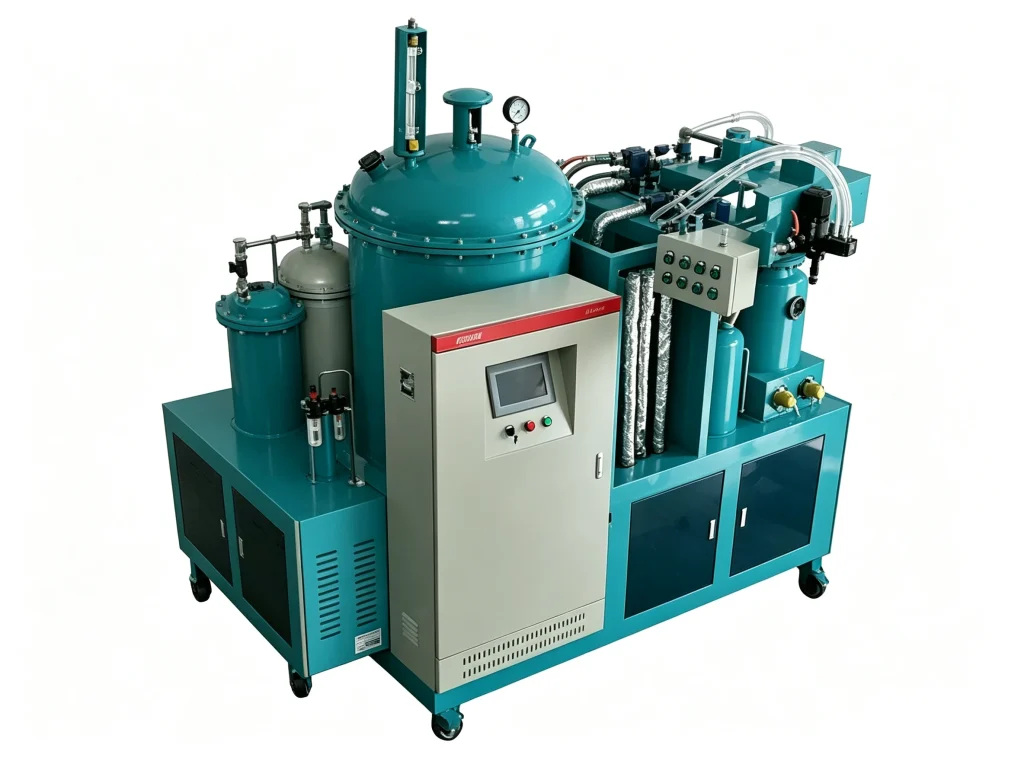
PU Elastomer Casting Machine | Railway Engineering
PU preparation, metering and dispensing for specified rail components or site applications. Acceptance follows the agreed tests and scope.
View Equipment
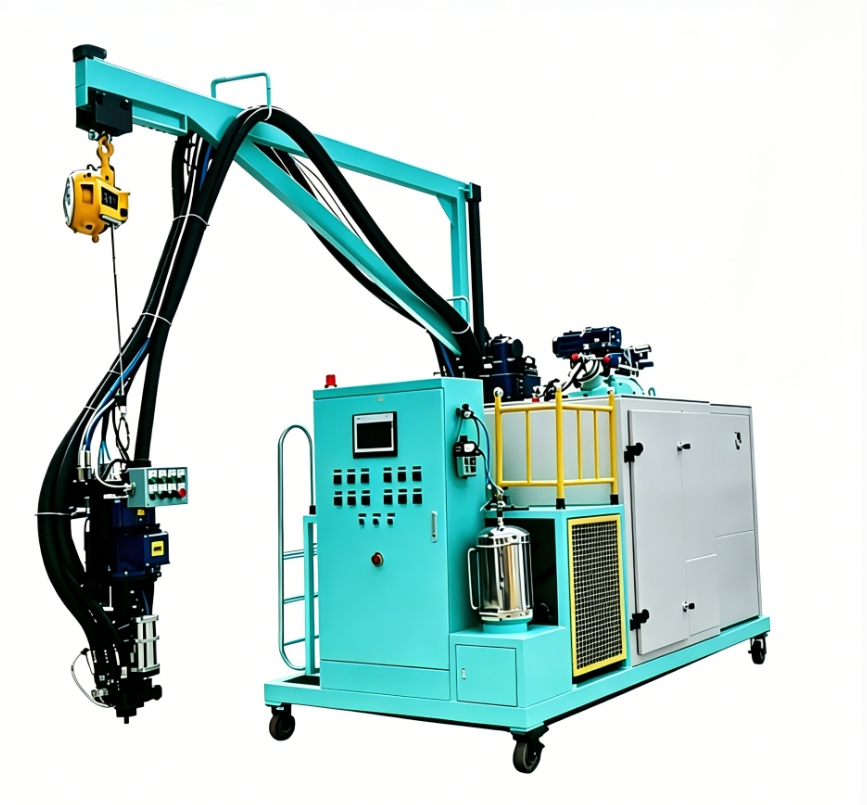
Low-Pressure PU Foaming Machine | Railway Damping Pads
Low-Pressure PU Foaming Machine for Railway Damping Pads. Review configuration, material requirements and process interfaces with Haifeng.
View Equipment
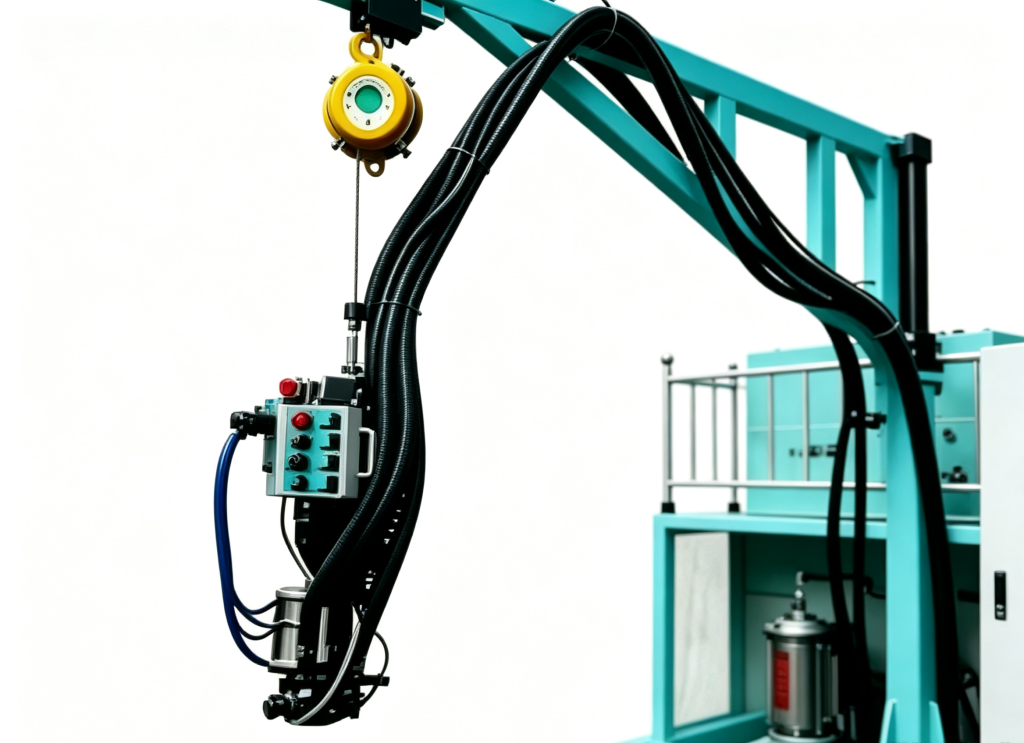
Low-Pressure PU Foaming Machine | Rail Vibration Pads
Low-Pressure PU Foaming Machine for Rail Vibration Pads. Review configuration, material requirements and process interfaces with Haifeng.
View Equipment
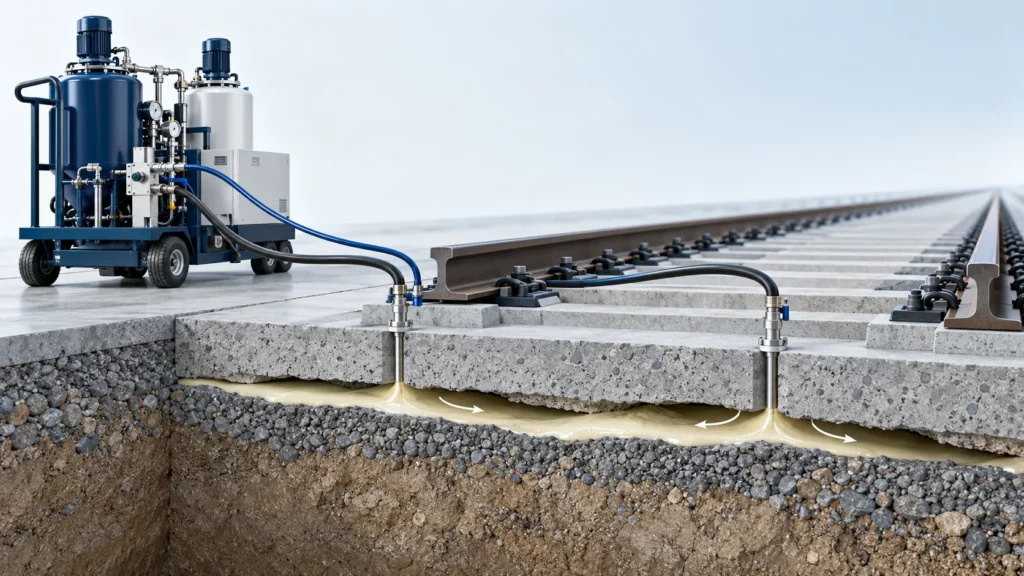 Concept illustration; not a photograph of a delivered machine or customer project.
PU Grouting Machine | Railway Track Slabs
The HF-RT600-LP is a specialized high-output low-pressure polyurethane grouting machine engineered for precision dynamic mixing and rapid void-free filling of ballastless track slab cushion layers and rail damping grooves.
View Equipment
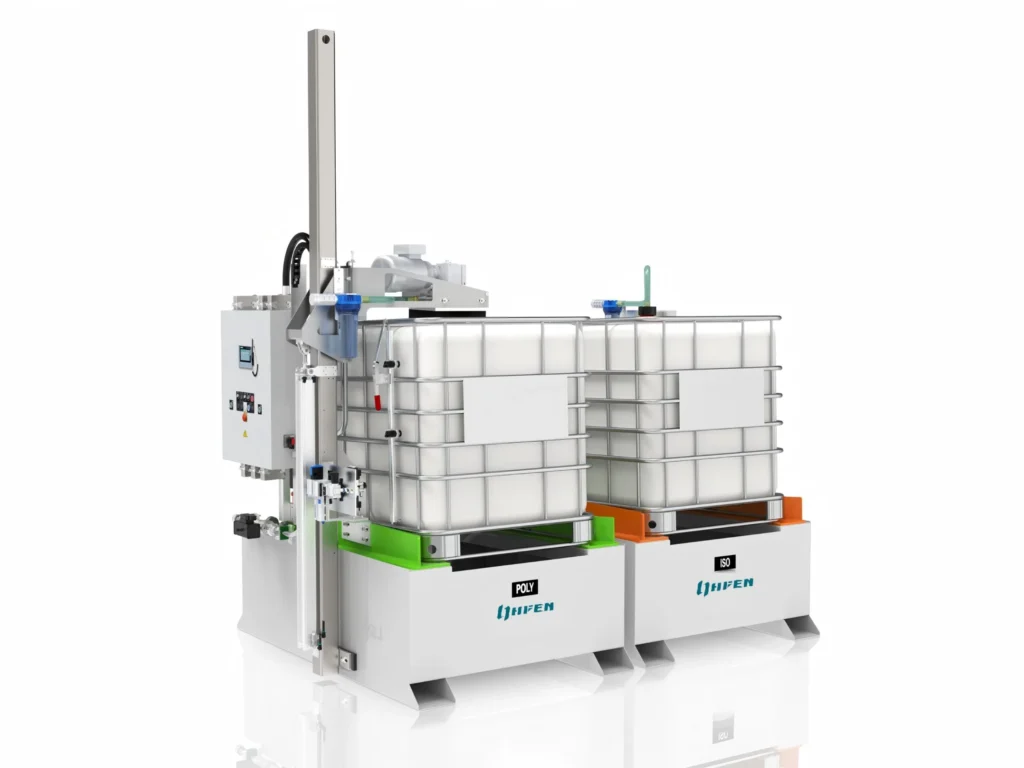
Automatic PU Feeding and Premixing Station | IBC Supply
Automatic PU Feeding and Premixing Station for IBC Supply. Review configuration, material requirements and process interfaces with Haifeng.
View Equipment
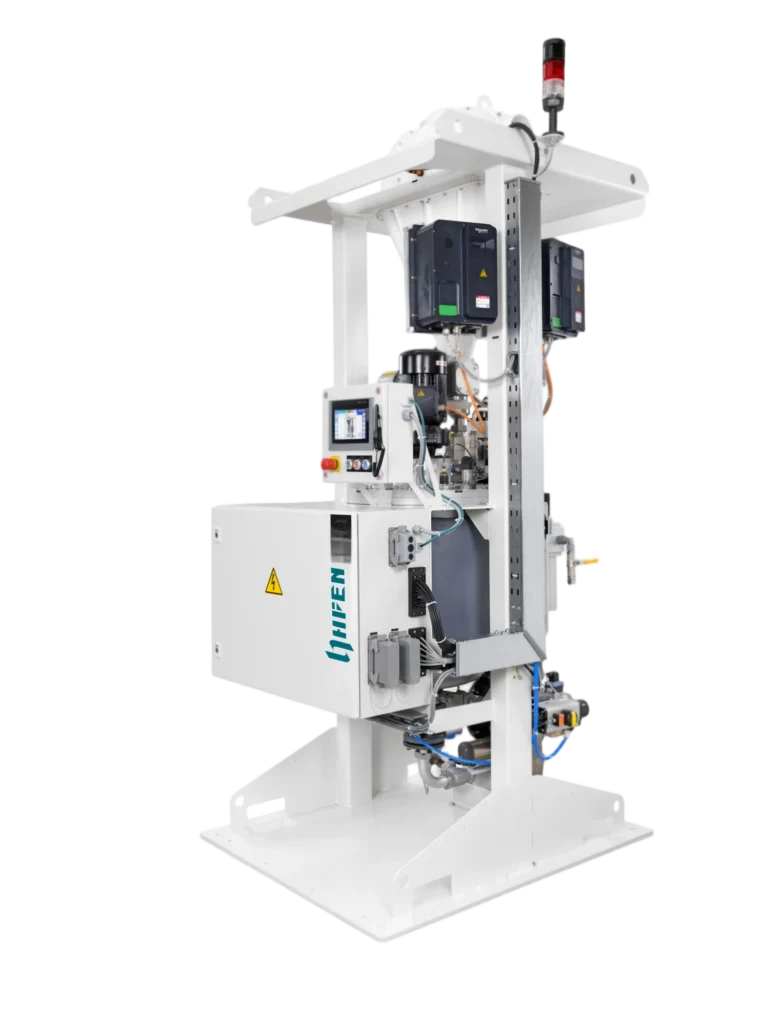
Solid Filler PU Premixing Station | Filled Polyols
Automatic low-shear premixing of graphite, calcium carbonate and glass-fiber fillers into polyurethane polyol.
View Equipment
Delivery Scope and Integration
Define factory component production, site dispensing and electrical potting as separate rail applications. Equipment, site responsibilities and acceptance follow the selected route and agreed scope.
Factory Casting and Molding
Define material preparation, metering, molds, handling and curing for rail pads and other vibration-control components.
Site Grouting and Filling
Treat slab grouting, rail-channel dispensing and ballast injection as separate site applications. Confirm equipment connections, access and work responsibilities.
Electrical Potting Interfaces
Specify filled-material preparation, vacuum dispensing and curing separately for stator encapsulation; do not infer these from pad-casting equipment.
Supply and Acceptance Boundaries
Agree supplied modules, customer utilities, commissioning and training. Component tests, infrastructure acceptance and return-to-service decisions have separately assigned responsibilities.
Long-Stator Encapsulation Guide
Review material, tooling and equipment-interface considerations for this production route.
Factory Planning FAQ
Review the route, equipment interfaces and project inputs before planning your production system.
Which rail routes are factory manufacturing and which are site applications?
Pads and other molded components use factory casting and curing. Grouting and ballast stabilization are site applications, while electrical potting has separate material and acceptance requirements.
Are rail pads and other vibration-control parts the same product?
They remain separate applications. Part geometry, inserts, stiffness targets, tooling and fatigue or other acceptance tests must be defined for the particular vibration-control component.
What determines acceptance and return to service?
Component acceptance and site-infrastructure acceptance have different scopes. Material cure conditions, required tests, inspection and any return-to-service decision are defined with the responsible project parties.
What is needed for a preliminary factory proposal?
Send your material data, product dimensions, production target, planned site utilities and required process stages. Our team will reply within one business day. Once requirements are clear, we provide a preliminary proposal within two business days. Equipment scope, commissioning milestones and acceptance criteria are agreed for each project.
Discuss Your Production Goals
Send the component drawings or site layout, formulation, shot or dispensing demand, station arrangement, cycle or travel rate, daily working hours and acceptance criteria. Separate equipment capacity from rail-component or infrastructure qualification. Our team will reply within one business day. Once requirements are clear, we provide a preliminary proposal within two business days.


