
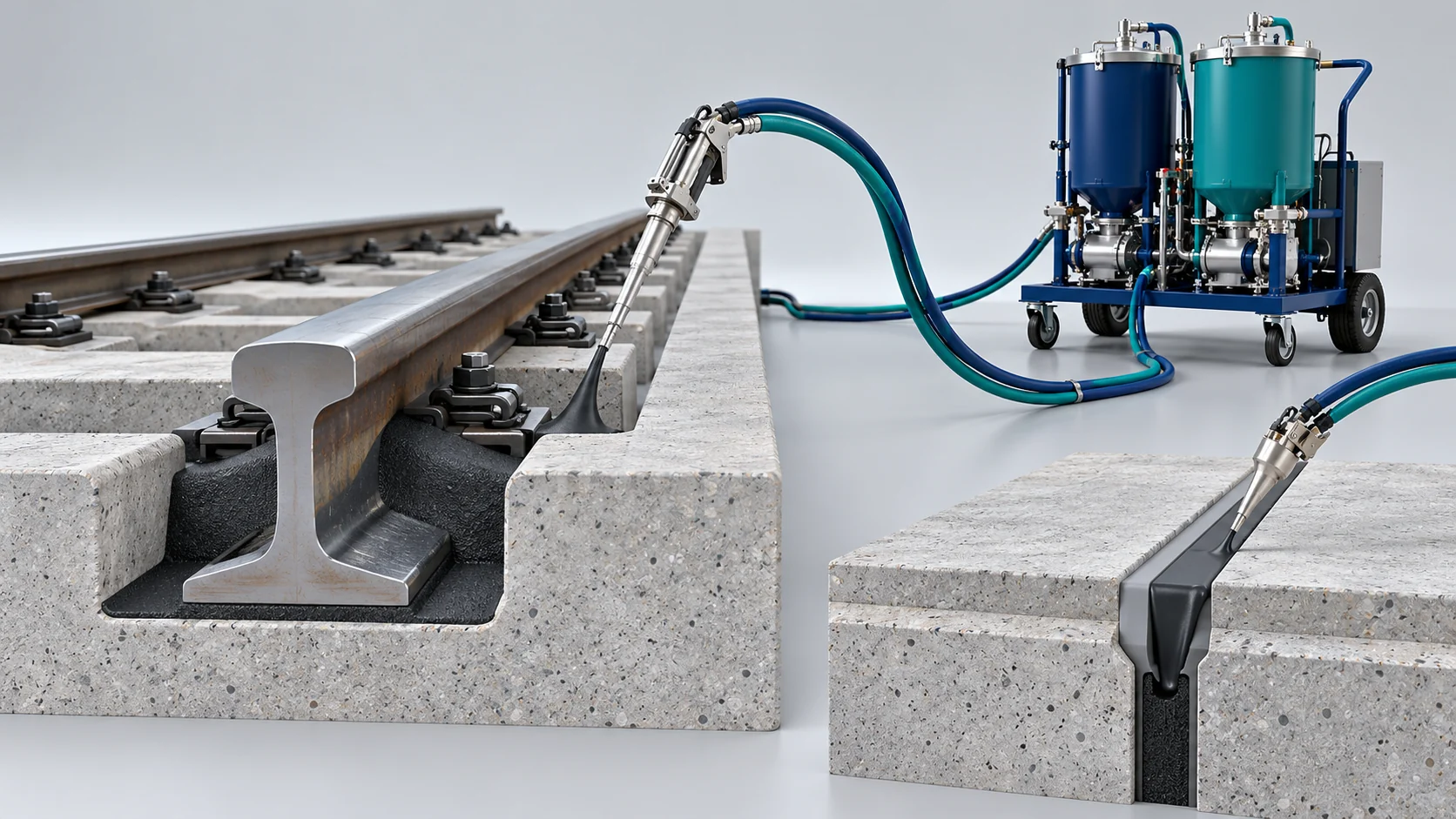
Railway PU Filling and Sealing Production Solution
Plan controlled polyurethane dispensing for a specified railway filling or sealing interface.
Build the Process Around Your Product
Plan controlled polyurethane dispensing for a specified railway filling or sealing interface.
Product and material first
Start with the finished-product drawing, material system and acceptance requirements. The process route and equipment configuration are assessed together.
Capacity across the whole process
Define output with preparation, forming/reaction, curing, handling and inspection included. The slowest stage and product changes determine practical line capacity.
Identify a particular railway joint, cavity or sealing interface and whether work is in a factory or on site. Track-support grouting and ordinary joint sealing have different receiving conditions, movement and inspection; they are not one universal railway dispensing duty.
From Preparation to Qualified Product
A planning sequence for the specified route. Final settings and acceptance conditions are established through material and part review.
Define the interface
Identify the gap, substrate, movement and whether dispensing takes place in a factory or at the installation site.
Confirm material duty
Check adhesion, flexibility, environmental exposure and cure requirements.
Prepare the joint
Agree cleaning, primer, masking and gap control.
Information Needed to Configure the Line
Provide these inputs so the equipment range, interfaces and validation plan can be defined.
| Design input | Information required |
|---|---|
| Joint drawing | Substrates, gap size, length and access |
| Material data | Ratio, viscosity, pot life, adhesion and cure conditions |
| Duty requirements | Movement, exposure and functional tests |
| Work arrangement | Factory/site, shot range, mobility and utilities |
Core Equipment and Integrated Interfaces
The casting platform requires a verified dispensing and site arrangement for the chosen joint; it is not automatically a mobile sealing system.
Coordinate the Equipment With the Process
Evaluate repeatability, handling and acceptance across the full workflow.
Receiving interface
Define substrates, gap, vents and filling access.
Work arrangement
Match material delivery and utilities to factory or field use.
Joint acceptance
Verify cure, bond and movement for the specified exposure.
Related Projects
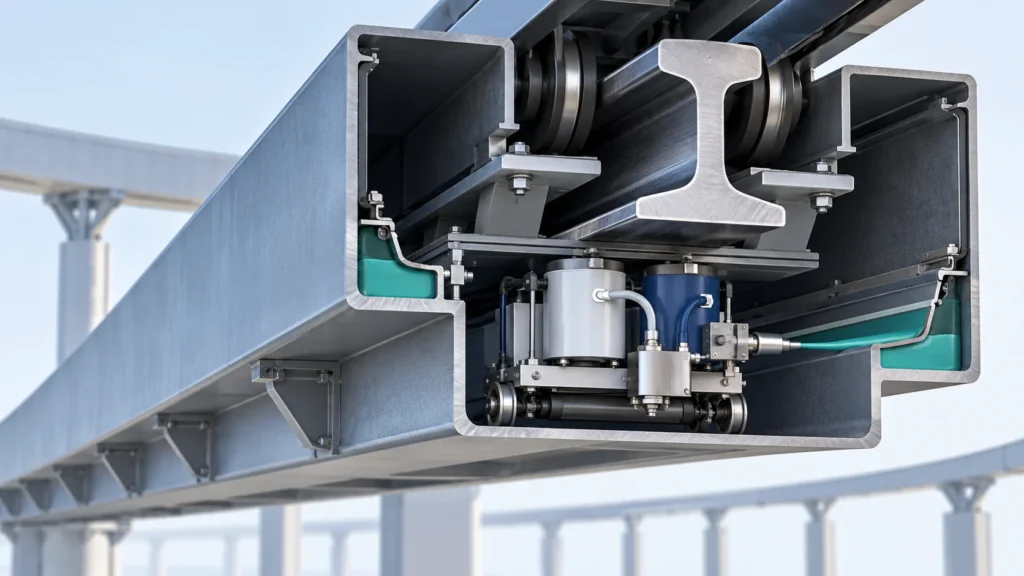
The suspended-track damping/grouting record supports that specific interface, not all rail joints or sealing materials.
Frequently Asked Questions
Clarify the production route before selecting a machine.
Is the railway casting machine automatically suitable for field sealing?
What information is needed to size the production line?
What is included in the equipment package?
Are cycle time and finished-product performance fixed?
Can a railway casting machine be assigned directly to a site sealing job?
Submit Your Production Goals
Share the following for this application: Joint/cavity drawing, substrates, gap/length, access, movement, material data, exposure and factory/site conditions. Our team will reply within one business day. Once requirements are clear, we provide a preliminary proposal within two business days.


