
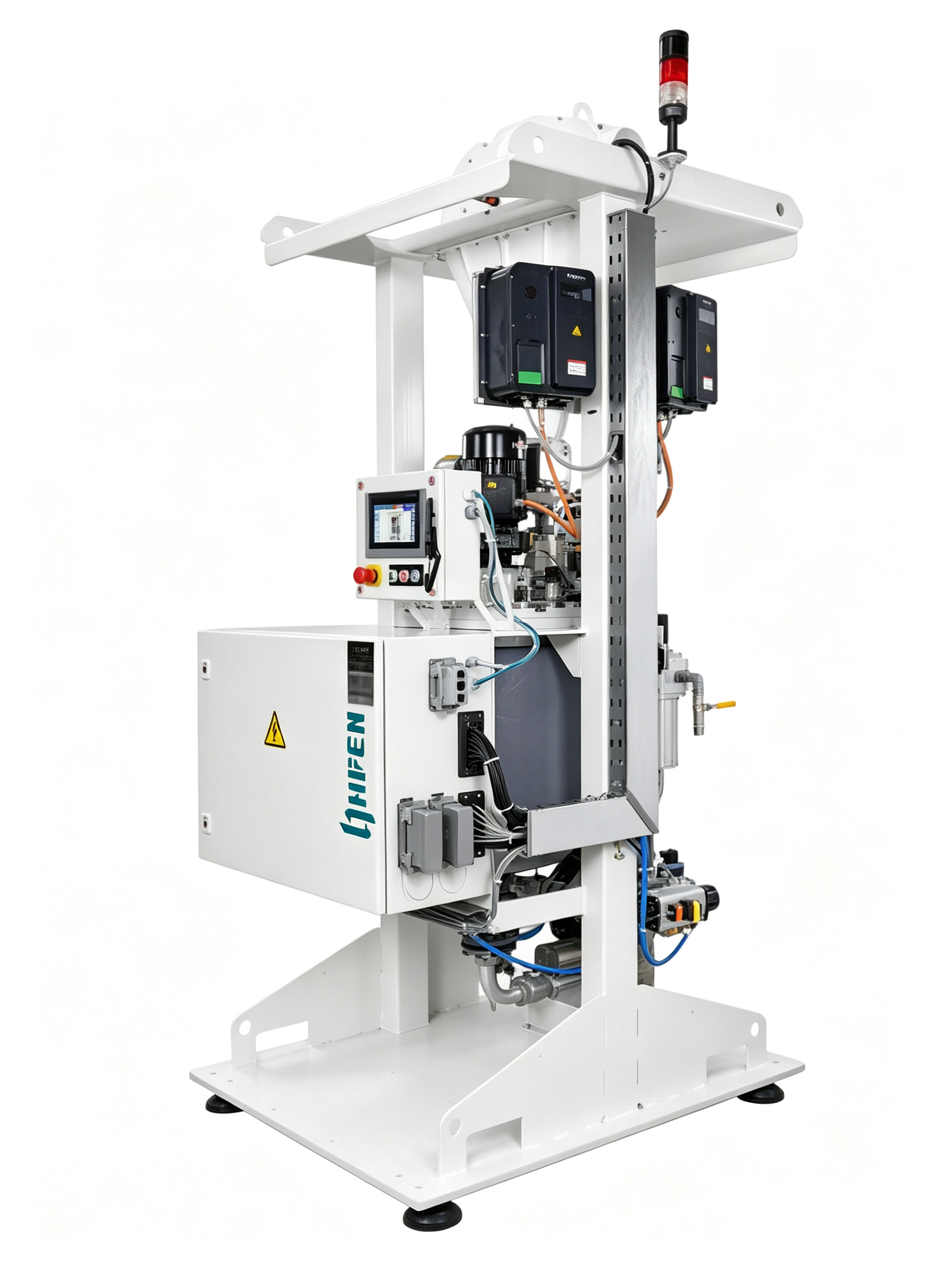
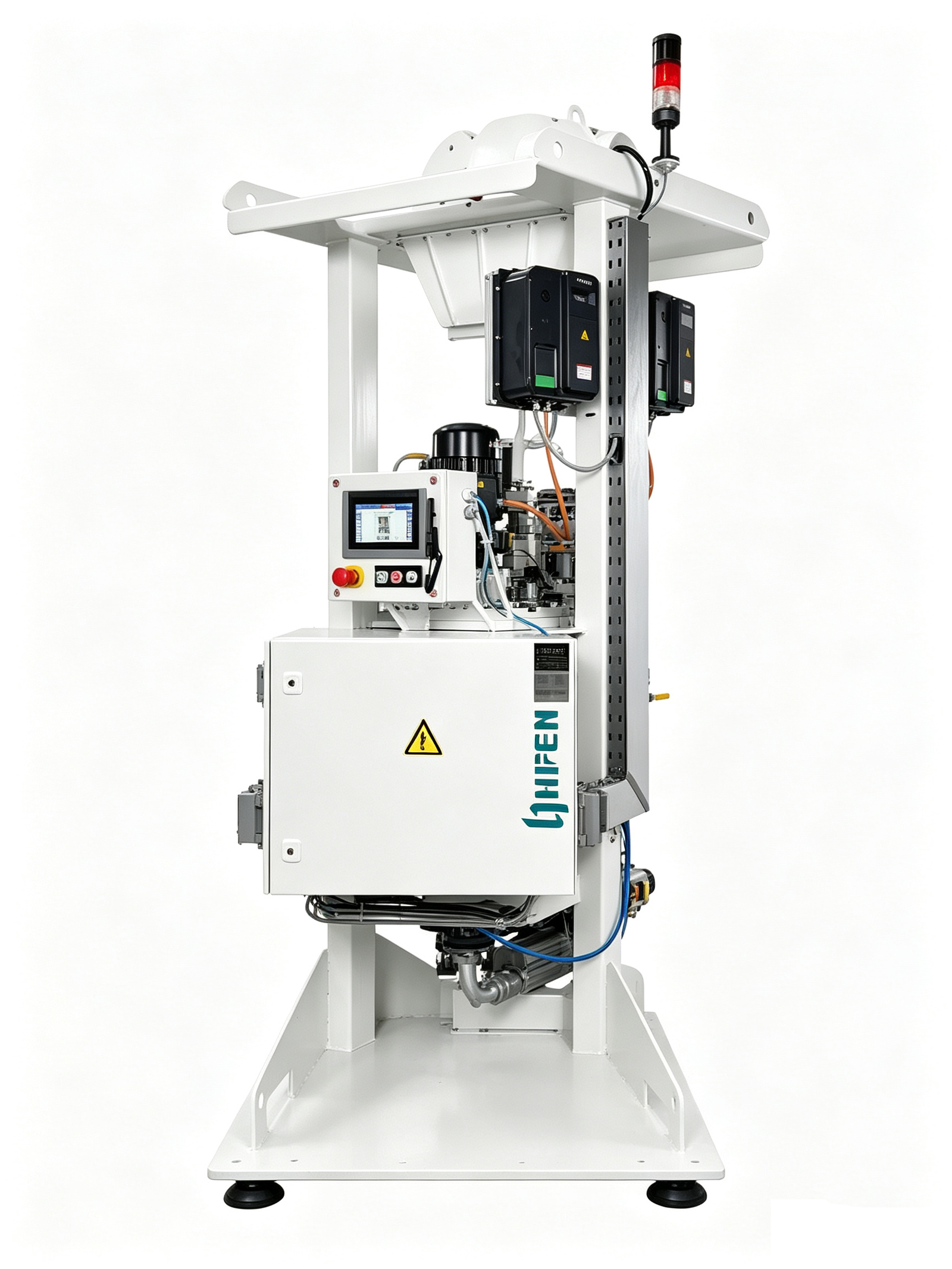
Solid Filler PU Premixing Station | Filled Polyols
Fully automatic batch premixing of expandable graphite, calcium carbonate, glass fiber, barite and other solid fillers into polyurethane polyol. Conventional high-shear mixers can damage flaky fillers. Design is matched to filler type and loading, shear sensitivity, dust protection, temperature requirements and the raw material TDS.
Separate Solid and Liquid Dosing
Liquid is measured by a volumetric flowmeter; solid filler is dosed through a rotary airlock discharge valve. This applies only to the filler, polyol, temperature and capacity agreed in the technical specification; formulation compatibility follows the technical confirmation.
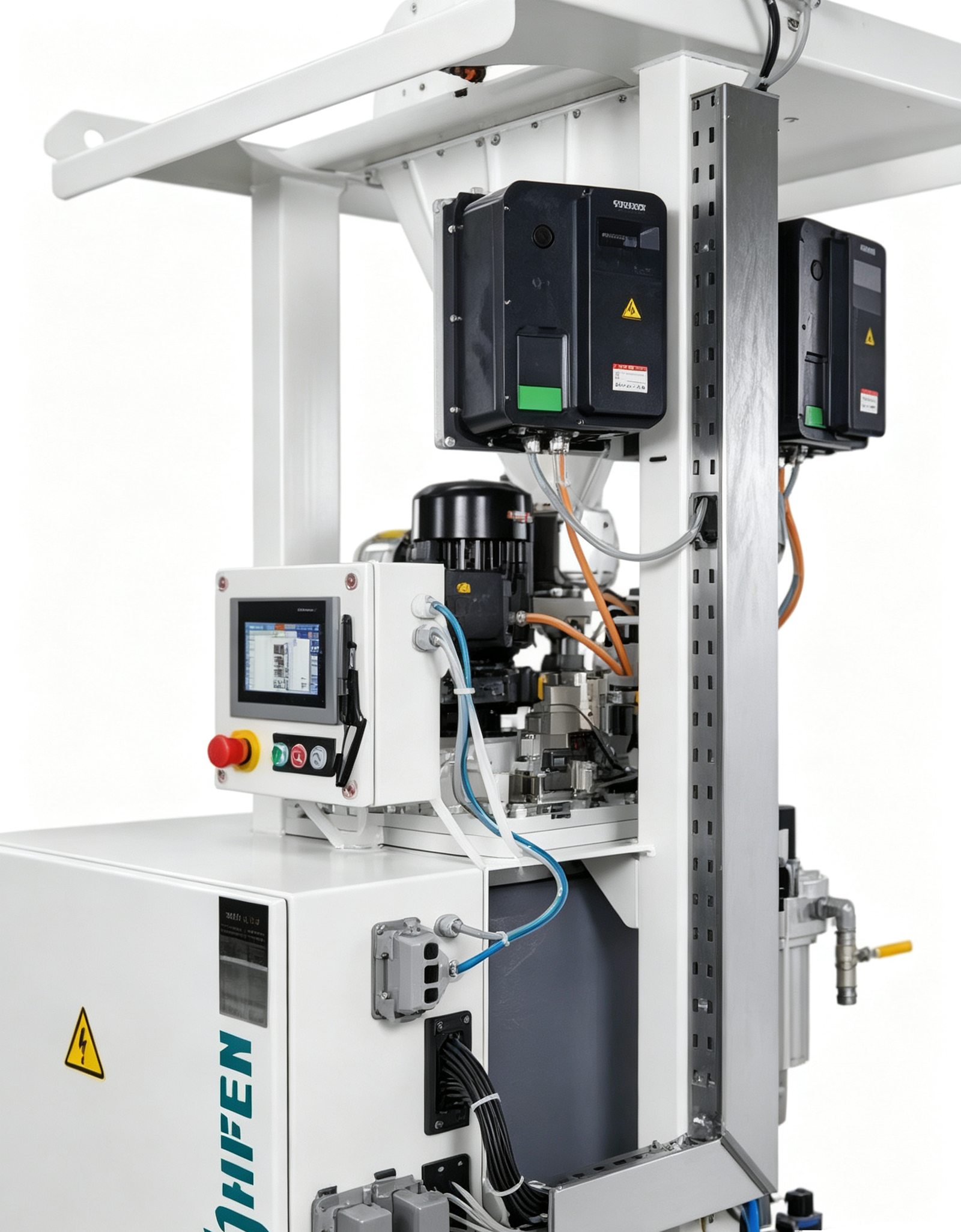
PLC + HMI Recipe Automation
Store multiple recipes and automatically execute feeding, mixing, discharge and in-tank cleaning. Temperature accuracy is ±2°C; settings follow the raw material TDS and technical agreement.
Gentle Low-Shear Mixing
Variable-speed agitation separates charging/dispersion speed from homogenizing speed, protecting fragile fillers such as expandable graphite and preserving their flame-retardant and acoustic functions.
Sealed Dust-Controlled Feeding
Interfaces accommodate vacuum loaders and bulk-bag feeding through a sealed circuit to prevent powder escape. Configuration is customized to the filler.
Solid Filler PU Polyol Premixing Station
Automatic low-shear premixing of graphite, calcium carbonate and glass-fiber fillers into polyurethane polyol.
This automatic batch premixing system incorporates expandable graphite, calcium carbonate, glass fiber, barite and other solid fillers into polyurethane polyol. Conventional high-shear tanks can break fragile flake structures and reduce the associated flame-retardant and acoustic properties. Engineering follows the material TDS, filler loading, shear sensitivity, dust protection and temperature-control requirements.
The specifications are product-family selection references. They do not mean one tank maintains the same mixing quality under every operating condition. Calculate dosing from the formulation and validate it at the actual viscosity, filler bulk density and production rate. Finished-product fire, acoustic and mechanical properties are the combined result of material, process and equipment; small trials are required before production.
Commissioning and Production Start-Up
Confirm Filler and Formulation Boundaries
Confirm drawings, hourly capacity, filler grade and loading, target product properties and the TDS. Distinguish graphite, calcium carbonate and glass-fiber operating conditions when selecting equipment.
Prepare Materials and Equipment
Set liquid temperature from the TDS. Inspect feeding, rotary airlock, agitator, filtration, dust collection and safety components.
Calibrate Solid and Liquid Feeding
Weigh-check polyol and filler dosing separately at the actual material, temperature and target throughput; confirm operation within the stable metering range.
Premix, Discharge and Validate
Run a validated recipe and monitor temperature, mixing speed, charge quantities and alarms. Discharge, sample the mixture for dispersion checks and retain complete batch records.
Technical Specifications
The values describe optional product-family configuration ranges. Final equipment configuration, capacity, accuracy, power, material compatibility and acceptance methods are defined in the technical agreement.
| Technical Parameter | HF‑PPS‑2X10‑Gr / HF‑PPS‑2X5‑CC / HF‑PPS‑2X5‑Gf |
|---|---|
| Components | Polyol with expandable graphite, calcium carbonate, glass fiber, barite and other solid fillers. Special operating conditions beyond the stated shear-sensitive filler applications require advance confirmation. |
| Output Range (g/s) | 0.1‑5 t/h; customized for filler type and line cycle |
| Mixing Ratio Range | Dosing and operating settings follow the material formulation and technical agreement. |
| Ratio Accuracy | Liquid volumetric flowmeter; solid filler rotary airlock dosing. Actual dosing accuracy is determined by on-site calibration. |
| Tank Capacity (L) | 500L /1000L; single or twin tanks selected from daily consumption and changeover interval |
| Series Models | HF‑PPS‑2X10‑Gr / HF‑PPS‑2X5‑CC / HF‑PPS‑2X5‑Gf |
| Processing Capacity | 0.1‑5 t/h; customized for filler type and line cycle |
| Solid Feeding Output | 30‑40 kg/min; depends on filler bulk density and machine configuration |
| Tank Volume | 500L /1000L; single or twin tanks selected from daily consumption and changeover interval |
| Temperature Accuracy | ±2°C; set within the polyol processing window |
| Metering Method | Liquid volumetric flowmeter; solid filler rotary airlock dosing. Actual dosing accuracy is determined by on-site calibration. |
| Mixing System | Variable-speed low-shear agitation; higher-speed dispersion during feeding and lower-speed homogenization to protect fragile fillers |
| Feeding Interfaces | Vacuum loader and bulk-bag feeding station connections for sealed dust-controlled feeding |
| Operating Mode | Automatic batch production; reverse agitation supports in-tank self-cleaning |
| Flow Measurement | Wear-resistant flowmeter suitable for abrasive filled materials |
| Installed Power | 15‑25 kVA; determined by the actual agitator, heating and feeding auxiliary electrical list |
| Control System | PLC + HMI touchscreen; multiple recipes, process recording and exportable alarm logs |
| Compatible Materials | Polyol with expandable graphite, calcium carbonate, glass fiber, barite and other solid fillers. Special operating conditions beyond the stated shear-sensitive filler applications require advance confirmation. |
| Warranty | Standard 12 months; commencement date, coverage, wear parts and service boundaries are defined in the contract. |
| Compliance and Documentation | CE and accompanying documents are supplied according to the sales region, final configuration and contract. ISO9001 is a company management-system certificate, not certification of an individual machine. |
Core Equipment Capabilities
Engineering for production efficiency, material consistency and operating conditions.
Protective Low-Shear Agitation
Variable-speed feeding dispersion and homogenization avoid breaking fragile graphite flakes and preserve flame-retardant and acoustic functions.
Longer Premix Storage Life
Uniform gentle agitation slows aging of the polyol-filler mixture, extends usable premix life and reduces changeover waste.
Automatic Batch Production
The automated sequence supplies day tanks, shortens production cycles and improves overall line OEE.
Sealed Dust-Controlled Workplace
Closed feeding circuits connect vacuum loaders or bulk-bag stations, prevent powder escape and support a clean workshop.
Repeatable Recipe Control
HMI recipes store feeding quantity, temperature and speed for consistent batches.
Flexible Feeding and Optional Abrasion-Resistant Measurement
Multiple feeding interfaces and optional wear-resistant flowmeters suit abrasive filled-polyol materials.
Explore More Polyurethane Equipment
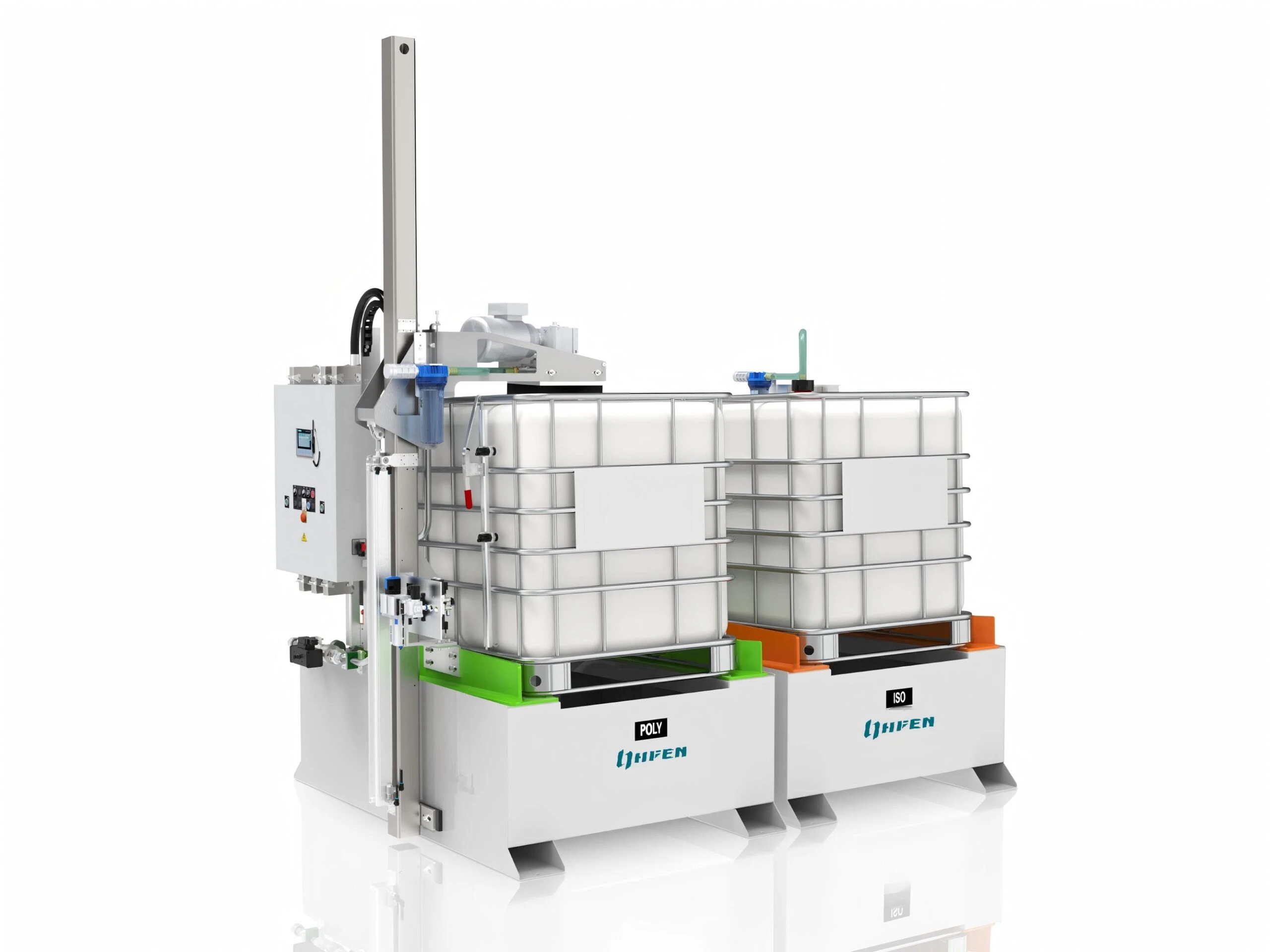
Epoxy Pouring Machine | Printing Rollers
Low Pressure Polyurethane Machine
Low-Pressure PU Foaming Machine | Refrigerator Rigid Foam
Low Pressure Polyurethane Machine


