Polyurethane elastomers sit between rubber and rigid plastic in a way that gives production teams an unusually wide design window. They are formed when a diisocyanate reacts with a long-chain polyol and a short-chain chain extender, producing a segmented polymer that can be tuned from soft, resilient parts to hard, load-bearing components without changing the basic process platform [1]. That is why the same material family shows up in printing rollers, mine screen plates, rail pads, industrial wheels, seals, and automotive buffer blocks.
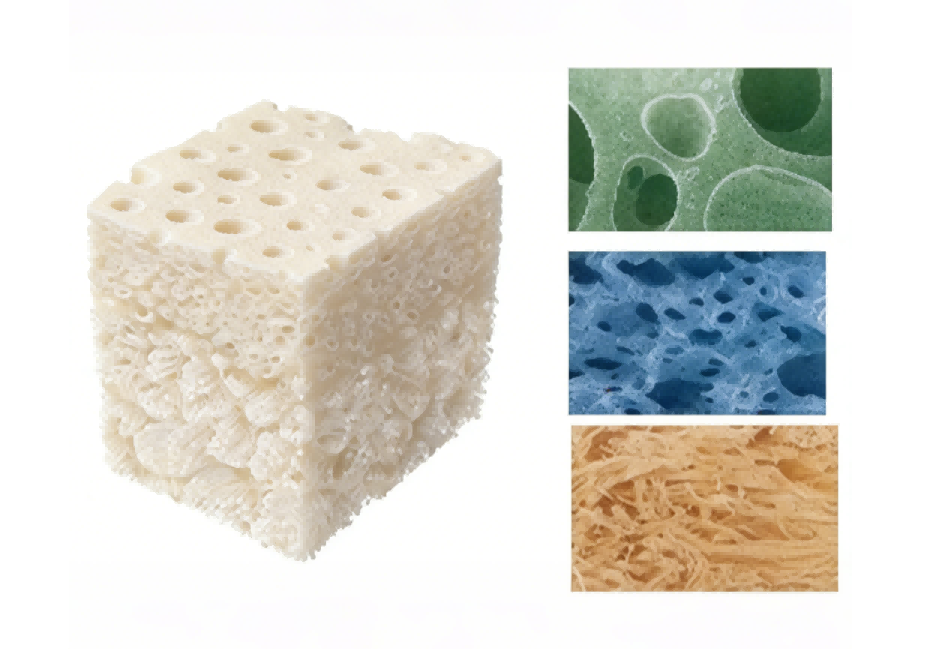
The Chemistry That Makes a Polyurethane Elastomer
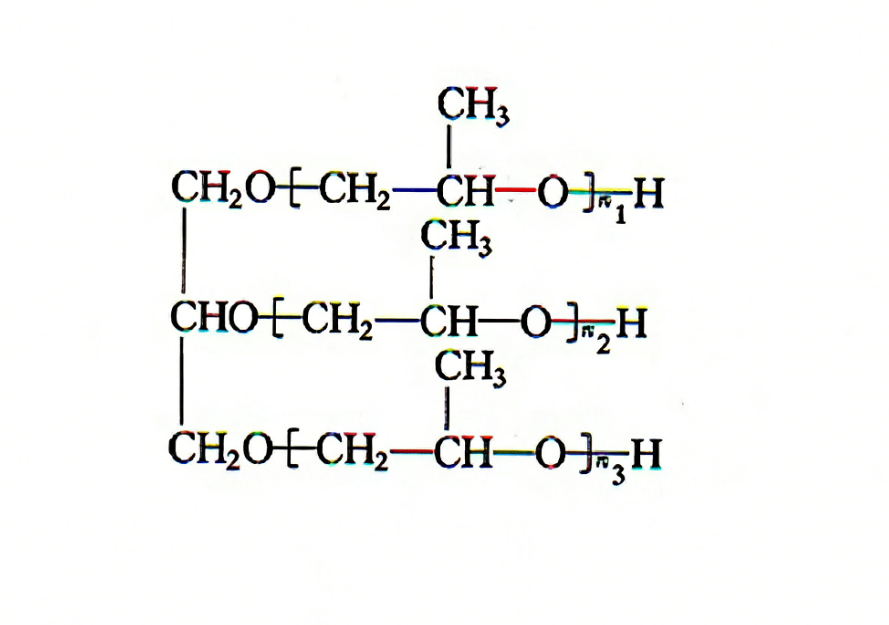
At the molecular level, a polyurethane elastomer is a block copolymer with alternating hard and soft segments [2]. The soft segment comes from the polyol and gives the material its flexibility, rebound, and low-temperature behavior. The hard segment forms from the diisocyanate and chain extender; it acts as a physical crosslink and reinforcing filler, giving the elastomer hardness, modulus, and load-bearing capacity.
When the isocyanate group reacts with the hydroxyl group, it forms a urethane linkage. That reaction is the foundation, but the final properties come less from the linkage itself and more from how the hard and soft segments organize. Increasing the chain extender content raises hard segment concentration, which generally increases hardness, modulus, and heat resistance while reducing elasticity [1]. This is why two elastomers with the same polyol backbone can behave very differently under load: one may be a soft seal, the other a rigid coupling element.
The practical consequence for equipment is equally important. Polyurethane elastomers are usually processed as two-component reactive systems, so the component temperatures, mix ratio, degassing, and mold fill become part of the specification. A formulation can be correct on paper and still fail in production if the metering unit drifts outside the ratio window.

Key Properties That Drive Material Selection
Hardness Is a Specification Target, Not a Single Number
Elastomer hardness is normally reported on the Shore A or Shore D scale, with Shore A used for softer grades and Shore D for harder structural grades [3][7]. Typical cast polyurethane parts span roughly Shore A 20 to Shore D 80, depending on formulation and chain extender selection. That range covers gaskets and soft rollers at one end and load wheels, pump components, and screen plates at the other.
Hardness correlates with load support and machinability, but it does not replace the other mechanical properties. A hard elastomer can still have poor tear resistance if the network is too tight, while a softer elastomer can survive abrasive service if the formulation is designed for wear.
Once hardness becomes a specification target rather than a rough preference, durometer selection is only the first step. <Shore A Vs Shore D Hardness In Polyurethane> covers how the two scales translate to real part handling, load support, and measurement repeatability.
Mechanical Properties That Matter in Service
The most commonly specified values for engineering elastomers are tensile strength, elongation at break, tear strength, abrasion loss, and compression set [4][6][5][8]. Tensile strength measures the maximum stress a test specimen can carry before rupture; for cast polyurethane grades this is typically much higher than for unreinforced flexible foam, but the useful number is always the combination of tensile strength and elongation rather than strength alone [4]. Tear strength is critical for parts with edges, undercuts, or cut-prone contact surfaces, while compression set indicates how well a component recovers after long-term compressive loading [6][8].
| Property | What it tells production | Common test reference |
|---|---|---|
| Hardness | Load support, machinability, feel | ISO 868, ASTM D2240 |
| Tensile strength | Maximum stress before rupture | ISO 37, DIN 53504 |
| Elongation at break | Flexibility and deformation capacity | ISO 37 |
| Tear strength | Resistance to cut growth and edge failure | ISO 34-1 |
| Abrasion loss | Wear life in sliding or rolling contact | ISO 4649 |
| Compression set | Recovery after sustained compression | ISO 815-1 |
Abrasion resistance is one of the reasons polyurethane elastomers replace metals and conventional rubbers in mining, conveying, and roller applications [5]. In sliding or rolling contact, the material can absorb repeated stress without the chipping or cracking seen in some harder materials. The actual wear rate depends strongly on formulation, surface finish, and service temperature.

Polyurethane Elastomer Types at a Glance
Cast polyurethane, also called CPU, is processed as a liquid prepolymer system and poured into open molds. It is the most common route for large or thick parts, rollers, wheels, and customized industrial components because the low-pressure casting process handles high-viscosity materials and complicated mold shapes.
Thermoplastic polyurethane, or TPU, is a melt-processable elastomer that can be injection molded, extruded, or calendered. It suits high-volume parts where fast cycling is more important than unbounded customization. Millable polyurethane, sometimes called MPU, is processed like rubber on mills and cured with peroxides or sulfur. Each type has a different equipment and processing logic, and a part that is easy to cast may be difficult to injection mold, or the reverse.
In heavy industrial applications, cast polyurethane remains the workhorse because it allows high hardness combined with thick cross-sections and strong adhesion to metal cores. Rollers, rail pads, mining screens, and suspension buffers are all practical CPU parts when the mold fill and cure are controlled consistently.
How Elastomers Are Made: Casting, Metering, and Curing
A typical cast polyurethane process starts with a prepolymer and a chain extender such as MOCA or BDO. The two components must be held at different temperatures, metered in a precise ratio, mixed under controlled shear, and then degassed or poured into a prepared mold. Small deviations in any of these steps become visible as bubbles, soft spots, hardness drift, or incomplete cure in the finished part.
On Haifeng cast polyurethane units, the dynamic metering accuracy is specified at no more than ±0.3% across the full pouring range, with vacuum defoaming typically at or below −0.095 MPa. That level of control matters when the difference between a good roller and a rejected one is not the chemistry but the amount of air trapped in the mix or the consistency of the shot entering the mold.
The same chemistry that makes an elastomer wear-resistant also makes casting discipline the limiting factor in roller performance. <How Polyurethane Rollers Are Made From Casting To Cure> covers the casting and cure steps that separate a stable roller from one that fails early.
Shot weight is the next variable that determines whether the process is practical. The machine must deliver the correct mass into the mold before the material gels, and that mass must account for runner waste, mold temperature, and part density.
Before selecting a machine, the more useful calculation is often the shot that must enter the mold inside the gel window. <How To Calculate Shot Weight In Polyurethane> covers the calculation method and the factors that change the number on real parts.
Processing Choices That Affect Final Properties
Stoichiometry is one of the most underrated variables in elastomer production. Running rich in isocyanate or chain extender changes the hard segment network, and the result can be measurable in hardness, modulus, and heat resistance before it ever shows up as a visible defect. For this reason, production records should track ratio setpoints, actual metered values, and any alarm events rather than only recording that a batch was poured.
Material temperature is equally important. If the prepolymer or chain extender is too cold, viscosity rises and mixing quality drops; if component temperatures are uneven, the reaction may start before the mold is filled. Mold temperature then determines how quickly the part reaches gel state and whether thick sections cure without excessive exotherm buildup.
Degassing cannot be treated as optional when the part must be pore-free. In sealing, roller, and structural applications, entrapped air creates stress concentrations and leakage paths. The vacuum level, residence time, and material surface area in the degassing tank all affect the result, which is why production equipment with an effective vacuum stage is not simply an accessory but part of the moldability of the system.
Quick Check When Comparing Casting Lines
If you are comparing cast elastomer machines for a new part, the useful inputs are the target Shore hardness, part geometry, expected shot weight, gel time, and whether the part must be bubble-free. Send those values to Info@chinahaifeng.com or WhatsApp +86 13566296633 for a process-level review. The usual outcome is not a machine recommendation first; it is a clearer picture of whether the real constraint is metering accuracy, mold temperature control, or degassing capacity.
Get a Process-Level Review Before You Commit to Equipment
A polyurethane elastomer specification is only as good as the equipment that repeats it. If you are moving from a laboratory sample to daily production, or replacing an older casting line, the failure to match meter, mix, and mold conditions to the formulation will show up in scrap long before it shows up in the purchase price.
For a practical review of your part drawing, material system, and output target, contact Haifeng Polyurethane Machinery at Info@chinahaifeng.com or WhatsApp +86 13566296633. The discussion is a technical one: ratio window, metering stability, degassing, mold fill, and cure repeatability.
Frequently Asked Questions
What is the difference between a polyurethane elastomer and polyurethane foam?
A polyurethane elastomer is a solid, high-density material designed for load-bearing, wear, and sealing applications. Polyurethane foam is a cellular material with much lower density and a structure that is deliberately expanded by blowing agents. Elastomers are cast or injected as dense reactive systems, while foam processing must control nucleation, rise, and cell structure.
What is the difference between CPU, TPU, and MPU?
CPU, or cast polyurethane, is processed as a liquid and poured into molds; it is best for larger, thicker, or more customized parts. TPU is melt-processable and suits high-volume injection molding or extrusion. MPU is millable polyurethane processed on rubber equipment. Each requires different machinery, temperature control, and processing discipline.
What Shore hardness should I specify for a polyurethane roller?
The correct durometer depends on the load, surface contact pressure, and whether the roller must retain resilience. Soft rollers for printing and conveying often sit in the Shore A 20–60 range, while high-load industrial wheels may fall in the Shore A 90 to Shore D 70 range. Hardness should be specified together with rebound, tear strength, and operating temperature because durometer alone does not define roller life.
How does stoichiometry affect elastomer properties?
Stoichiometry controls the ratio of isocyanate to hydroxyl groups. When the ratio shifts, the hard segment network changes, and that affects hardness, modulus, heat resistance, and compression set. A small shift may not change appearance immediately, but it can move the part outside its service specification, which is why metering accuracy is treated as a quality variable rather than a machine setting.
What metering accuracy do I need for cast polyurethane parts?
For most precision cast elastomer parts, the target is a metering error of no more than ±0.3% across the operating range. The exact requirement depends on the formulation, the shot size, and how sensitive the part properties are to ratio drift. Lower accuracy may still work for large, tolerant parts, but it increases the risk of hardness variation and uncured or overcured sections.
References
[1] G. Oertel, Ed., Polyurethane Handbook, 2nd ed. Munich, Germany: Hanser Publishers, 1994.
[2] M. Szycher, Ed., Szycher’s Handbook of Polyurethanes, 2nd ed. Boca Raton, FL, USA: CRC Press, 2013.
[3] Plastics and Ebonite—Determination of Indentation Hardness by Means of a Durometer (Shore Hardness), ISO 868:2003, International Organization for Standardization, Geneva, Switzerland, 2003.
[4] Rubber, Vulcanized or Thermoplastic—Determination of Tensile Stress-Strain Properties, ISO 37:2017, International Organization for Standardization, Geneva, Switzerland, 2017.
[5] Rubber, Vulcanized or Thermoplastic—Determination of Abrasion Resistance Using a Rotating Cylindrical Drum Device, ISO 4649:2017, International Organization for Standardization, Geneva, Switzerland, 2017.
[6] Rubber, Vulcanized or Thermoplastic—Determination of Compression Set—Part 1: At Ambient or Elevated Temperatures, ISO 815-1:2019, International Organization for Standardization, Geneva, Switzerland, 2019.
[7] Standard Test Method for Rubber Property—Durometer Hardness, ASTM D2240-15, ASTM International, West Conshohocken, PA, USA, 2015.
[8] Rubber, Vulcanized or Thermoplastic—Determination of Tear Strength—Part 1: Trouser, Angle and Crescent Test Pieces, ISO 34-1:2015, International Organization for Standardization, Geneva, Switzerland, 2015.
If you’re interested, check out these related articles:
What Is Semi Rigid Polyurethane Foam
How Polyurethane Rollers Are Made From Casting To Cure
How To Calculate Shot Weight In Polyurethane