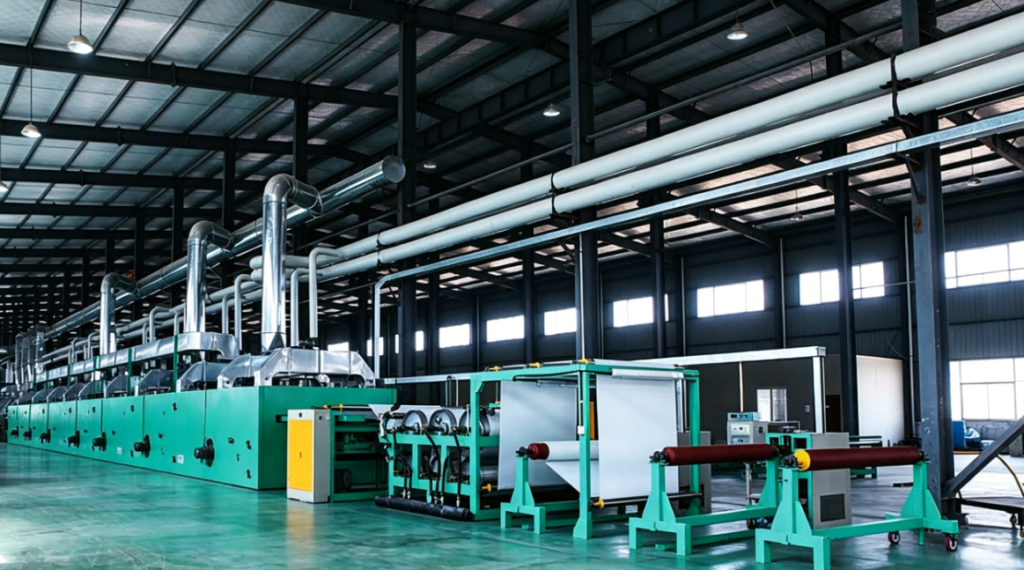
Los elastómeros de poliuretano se sitúan entre el caucho y el plástico rígido de tal forma que ofrecen a los equipos de producción una ventana de diseño excepcionalmente amplia. Se forman cuando un diisocianato reacciona con un poliol de cadena larga y un extendedor de cadena de cadena corta, lo que produce un polímero segmentado que puede ajustarse desde piezas blandas y resilientes hasta componentes duros y portantes sin cambiar la plataforma de proceso básica [1]. Por eso la misma familia de materiales aparece en rodillos de impresión, placas de criba para minería, placas de asiento ferroviarias, ruedas industriales, sellos y bloques de tope para automoción.
La química que hace posible un elastómero de poliuretano
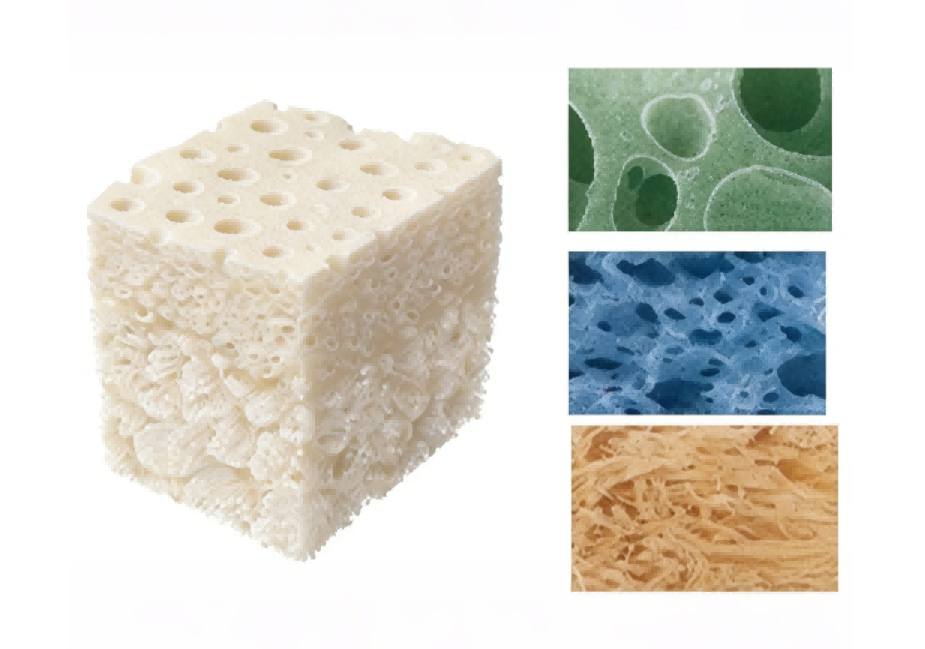
A nivel molecular, un elastómero de poliuretano es un copolímero de bloques con segmentos duros y blandos alternados [2]. El segmento blando procede del poliol y confiere al material su flexibilidad, su rebote y su comportamiento a baja temperatura. El segmento duro se forma a partir del diisocianato y el extendedor de cadena; actúa como reticulación física y carga de refuerzo, y aporta al elastómero dureza, módulo y capacidad portante.
Cuando el grupo isocianato reacciona con el grupo hidroxilo, forma un enlace uretano. Esa reacción es la base, pero las propiedades finales dependen menos del propio enlace y más de cómo se organizan los segmentos duros y blandos. Aumentar el contenido de extendedor de cadena eleva la concentración de segmentos duros, lo que en general incrementa la dureza, el módulo y la resistencia térmica, a la vez que reduce la elasticidad [1]. Por eso dos elastómeros con la misma cadena principal de poliol pueden comportarse de forma muy distinta bajo carga: uno puede ser un sello blando y el otro un elemento de acoplamiento rígido.
La consecuencia práctica para los equipos es igualmente importante. Los elastómeros de poliuretano suelen procesarse como sistemas reactivos de dos componentes, por lo que las temperaturas de los componentes, la relación de mezcla, el desgasificado y el llenado del molde pasan a formar parte de la especificación. Una formulación puede ser correcta sobre el papel y aun así fallar en producción si la unidad de dosificación se desvía fuera de la ventana de relación.

Propiedades clave que guían la selección de materiales
La dureza es un objetivo de especificación, no un único valor
La dureza de un elastómero se expresa normalmente en la escala Shore A o Shore D, con Shore A para grados más blandos y Shore D para grados estructurales más duros [3][7]. Las piezas típicas de poliuretano colado abarcan aproximadamente desde Shore A 20 hasta Shore D 80, según la formulación y la selección del extendedor de cadena. Ese intervalo cubre juntas y rodillos blandos en un extremo, y ruedas portantes, componentes de bombas y placas de criba en el otro.
La dureza se correlaciona con la capacidad portante y la mecanizabilidad, pero no sustituye a las demás propiedades mecánicas. Un elastómero duro puede seguir teniendo una mala resistencia al desgarro si la red es demasiado cerrada, mientras que un elastómero más blando puede soportar un servicio abrasivo si la formulación está diseñada para el desgaste.
Una vez que la dureza se convierte en un objetivo de especificación y no en una preferencia aproximada, la selección del durómetro es solo el primer paso. Dureza Shore A frente a Shore D en poliuretano abarca cómo se traducen las dos escalas en el manejo real de las piezas, la capacidad portante y la repetibilidad de la medición.
Propiedades mecánicas relevantes en servicio
Los valores que se especifican con más frecuencia para los elastómeros de ingeniería son la resistencia a la tracción, el alargamiento a la rotura, la resistencia al desgarro, la pérdida por abrasión y la deformación permanente por compresión [4][6][5][8]. La resistencia a la tracción mide la tensión máxima que una probeta puede soportar antes de romperse; en los grados de poliuretano colado suele ser muy superior a la de una espuma flexible sin refuerzo, pero el dato útil es siempre la combinación de resistencia a la tracción y alargamiento, y no la resistencia por sí sola [4]. La resistencia al desgarro es fundamental en piezas con bordes, contracortes o superficies de contacto propensas a cortes, mientras que la deformación permanente por compresión indica la capacidad de recuperación de un componente tras una carga de compresión prolongada [6][8].
| Propiedad | Qué indica a producción | Referencia de ensayo habitual |
|---|---|---|
| Dureza | Capacidad portante, mecanizabilidad, tacto | ISO 868, ASTM D2240 |
| Resistencia a la tracción | Tensión máxima antes de la rotura | ISO 37, DIN 53504 |
| Alargamiento a la rotura | Flexibilidad y capacidad de deformación | ISO 37 |
| Resistencia al desgarro | Resistencia al crecimiento de cortes y al fallo de bordes | ISO 34-1 |
| Pérdida por abrasión | Vida útil frente al desgaste en contacto deslizante o de rodadura | ISO 4649 |
| Deformación permanente por compresión | Recuperación tras compresión sostenida | ISO 815-1 |
Abrasion resistance is one of the reasons polyurethane elastomers replace metals and conventional rubbers in mining, conveying, and roller applications [5]. In sliding or rolling contact, the material can absorb repeated stress without the chipping or cracking seen in some harder materials. The actual wear rate depends strongly on formulation, surface finish, and service temperature.

Tipos de elastómeros de poliuretano de un vistazo
Cast polyurethane, also called CPU, is processed as a liquid prepolymer system and poured into open molds. It is the most common route for large or thick parts, rollers, wheels, and customized industrial components because the low-pressure casting process handles high-viscosity materials and complicated mold shapes.
Thermoplastic polyurethane, or TPU, is a melt-processable elastomer that can be injection molded, extruded, or calendered. It suits high-volume parts where fast cycling is more important than unbounded customization. Millable polyurethane, sometimes called MPU, is processed like rubber on mills and cured with peroxides or sulfur. Each type has a different equipment and processing logic, and a part that is easy to cast may be difficult to injection mold, or the reverse.
In heavy industrial applications, cast polyurethane remains the workhorse because it allows high hardness combined with thick cross-sections and strong adhesion to metal cores. Rollers, rail pads, mining screens, and suspension buffers are all practical CPU parts when the mold fill and cure are controlled consistently.
Cómo se fabrican los elastómeros: colada, dosificación y curado
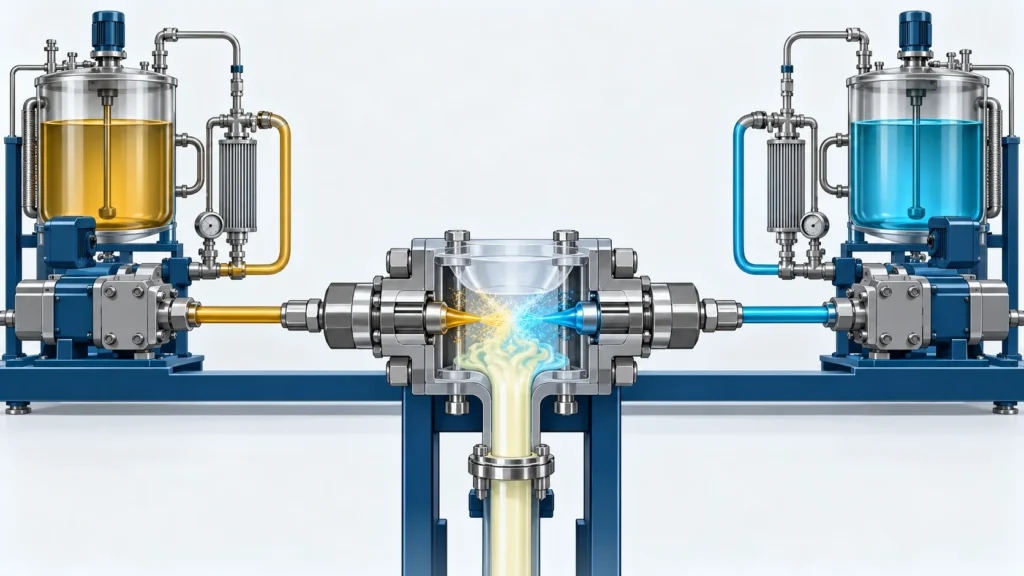
A typical cast polyurethane process starts with a prepolymer and a chain extender such as MOCA or BDO. The two components must be held at different temperatures, metered in a precise ratio, mixed under controlled shear, and then degassed or poured into a prepared mold. Small deviations in any of these steps become visible as bubbles, soft spots, hardness drift, or incomplete cure in the finished part.
On Haifeng cast polyurethane units, the dynamic metering accuracy is specified at no more than ±0.3% across the full pouring range, with vacuum defoaming typically at or below −0.095 MPa. That level of control matters when the difference between a good roller and a rejected one is not the chemistry but the amount of air trapped in the mix or the consistency of the shot entering the mold.
The same chemistry that makes an elastomer wear-resistant also makes casting discipline the limiting factor in roller performance. Cómo se fabrican los rodillos de poliuretano, desde la colada hasta el curado covers the casting and cure steps that separate a stable roller from one that fails early.
Shot weight is the next variable that determines whether the process is practical. The machine must deliver the correct mass into the mold before the material gels, and that mass must account for runner waste, mold temperature, and part density.
Before selecting a machine, the more useful calculation is often the shot that must enter the mold inside the gel window. Cómo calcular el peso de dosificación en poliuretano covers the calculation method and the factors that change the number on real parts.
Decisiones de procesamiento que afectan las propiedades finales
Stoichiometry is one of the most underrated variables in elastomer production. Running rich in isocyanate or chain extender changes the hard segment network, and the result can be measurable in hardness, modulus, and heat resistance before it ever shows up as a visible defect. For this reason, production records should track ratio setpoints, actual metered values, and any alarm events rather than only recording that a batch was poured.
Material temperature is equally important. If the prepolymer or chain extender is too cold, viscosity rises and mixing quality drops; if component temperatures are uneven, the reaction may start before the mold is filled. Mold temperature then determines how quickly the part reaches gel state and whether thick sections cure without excessive exotherm buildup.
Degassing cannot be treated as optional when the part must be pore-free. In sealing, roller, and structural applications, entrapped air creates stress concentrations and leakage paths. The vacuum level, residence time, and material surface area in the degassing tank all affect the result, which is why production equipment with an effective vacuum stage is not simply an accessory but part of the moldability of the system.
Comprobación rápida al comparar líneas de colada
If you are comparing cast elastomer machines for a new part, the useful inputs are the target Shore hardness, part geometry, expected shot weight, gel time, and whether the part must be bubble-free. Send those values to info@chinahaifeng.com or WhatsApp +86 13566296633 for a process-level review. The usual outcome is not a machine recommendation first; it is a clearer picture of whether the real constraint is metering accuracy, mold temperature control, or degassing capacity.
Obtenga una revisión a nivel de proceso antes de comprometerse con el equipo
A polyurethane elastomer specification is only as good as the equipment that repeats it. If you are moving from a laboratory sample to daily production, or replacing an older casting line, the failure to match meter, mix, and mold conditions to the formulation will show up in scrap long before it shows up in the purchase price.
For a practical review of your part drawing, material system, and output target, contact Haifeng Polyurethane Machinery at info@chinahaifeng.com or WhatsApp +86 13566296633. The discussion is a technical one: ratio window, metering stability, degassing, mold fill, and cure repeatability.
Preguntas frecuentes
¿Cuál es la diferencia entre un elastómero de poliuretano y la espuma de poliuretano?
A polyurethane elastomer is a solid, high-density material designed for load-bearing, wear, and sealing applications. Polyurethane foam is a cellular material with much lower density and a structure that is deliberately expanded by blowing agents. Elastomers are cast or injected as dense reactive systems, while foam processing must control nucleation, rise, and cell structure.
¿Cuál es la diferencia entre CPU, TPU y MPU?
CPU, or cast polyurethane, is processed as a liquid and poured into molds; it is best for larger, thicker, or more customized parts. TPU is melt-processable and suits high-volume injection molding or extrusion. MPU is millable polyurethane processed on rubber equipment. Each requires different machinery, temperature control, and processing discipline.
¿Qué dureza Shore debo especificar para un rodillo de poliuretano?
The correct durometer depends on the load, surface contact pressure, and whether the roller must retain resilience. Soft rollers for printing and conveying often sit in the Shore A 20–60 range, while high-load industrial wheels may fall in the Shore A 90 to Shore D 70 range. Hardness should be specified together with rebound, tear strength, and operating temperature because durometer alone does not define roller life.
¿Cómo afecta la estequiometría a las propiedades del elastómero?
Stoichiometry controls the ratio of isocyanate to hydroxyl groups. When the ratio shifts, the hard segment network changes, and that affects hardness, modulus, heat resistance, and compression set. A small shift may not change appearance immediately, but it can move the part outside its service specification, which is why metering accuracy is treated as a quality variable rather than a machine setting.
¿Qué precisión de dosificación necesito para piezas de poliuretano fundido?
For most precision cast elastomer parts, the target is a metering error of no more than ±0.3% across the operating range. The exact requirement depends on the formulation, the shot size, and how sensitive the part properties are to ratio drift. Lower accuracy may still work for large, tolerant parts, but it increases the risk of hardness variation and uncured or overcured sections.
Referencias
[1] G. Oertel, Ed., Polyurethane Handbook, 2.ª ed. Múnich, Alemania: Hanser Publishers, 1994.
[2] M. Szycher, Ed., Szycher’s Handbook of Polyurethanes, 2.ª ed. Boca Raton, FL, EE. UU.: CRC Press, 2013.
[3] Plastics and Ebonite—Determination of Indentation Hardness by Means of a Durometer (Shore Hardness), ISO 868:2003, Organización Internacional de Normalización, Ginebra, Suiza, 2003.
[4] Rubber, Vulcanized or Thermoplastic—Determination of Tensile Stress-Strain Properties, ISO 37:2017, International Organization for Standardization, Geneva, Switzerland, 2017.
[5] Rubber, Vulcanized or Thermoplastic—Determination of Abrasion Resistance Using a Rotating Cylindrical Drum Device, ISO 4649:2017, International Organization for Standardization, Geneva, Switzerland, 2017.
[6] Rubber, Vulcanized or Thermoplastic—Determination of Compression Set—Part 1: At Ambient or Elevated Temperatures, ISO 815-1:2019, International Organization for Standardization, Geneva, Switzerland, 2019.
[7] Standard Test Method for Rubber Property—Durometer Hardness, ASTM D2240-15, ASTM International, West Conshohocken, PA, USA, 2015.
[8] Rubber, Vulcanized or Thermoplastic—Determination of Tear Strength—Part 1: Trouser, Angle and Crescent Test Pieces, ISO 34-1:2015, International Organization for Standardization, Geneva, Switzerland, 2015.
Si te interesa, echa un vistazo a estos artículos relacionados:
Qué es la espuma de poliuretano semirrígida
Cómo se fabrican los rodillos de poliuretano, desde la colada hasta el curado
Cómo calcular el peso de dosificación en poliuretano
Specify a polyurethane elastomer system for the whole component
For a cast polyurethane elastomer system, define the approved prepolymer and curative or supplied component system, as well as the target part behavior. Two systems with a similar hardness may differ in hydrolysis resistance, abrasion or compression set. Ask the formulation supplier for a property comparison at the intended test temperature and load, and run the process on the actual tool size. See the prepolymer and hot-cast processing guide y the industrial elastomer casting plant scope for the machine and material interface.