Cyclopentane foaming looks like a blowing-agent substitution until the project reaches the premix decision. Cyclopentane boils at about 49 °C at atmospheric pressure, which is close to the temperature a foam exotherm reaches and well below the temperatures used in panel and appliance molds, so the gas that expands the cells is also the gas that fills the room when a seal, vent or fitting lets it out. That single property turns a machine purchase into a scope that includes a storage area, a classified zone, an exhaust design and a detector layout. Two decisions drive most of the remaining budget: how the pentane is blended into the polyol, and where the classified boundary is drawn.
Why the blowing agent decides the project scope
Cyclopentane does two jobs at once. It is a physical blowing agent: dissolved in the polyol, it boils as the heat from the isocyanate reaction raises the mixture temperature, the vapor expands the cells, and it condenses on the cell wall as the part cools, leaving a low-conductivity gas behind. That is why a pentane-blown rigid foam insulates better than a water-blown foam of the same density, and why its aged thermal conductivity holds closer to the initial value: the pentane molecule is larger than the CO2 generated by the water reaction, so it leaves the cell more slowly.
The second job is the one that reshapes the plant. The same volatility that makes cyclopentane an efficient blowing agent means the material releases vapor at ambient conditions wherever it meets air. The hydrofluorocarbons it replaces are non-flammable at workshop temperature, so a plant built around them has no classified area around the polyol tank, no low-level extraction at the pour station and no detector loop. None of that carries over.
Once the blowing agent is dissolved into the polyol, the component moving through your B-side circuit is a flammable liquid, and its flash point sits close to that of the blowing agent rather than that of the polyol. The tank, the pump, the filter housing, the return line, the sampling point and the drum vent all join the flammable inventory. A machine specification written for an HFC-blown system does not describe this circuit, which is why quotes that differ by a wide margin often differ in what they left out of the safety scope rather than in the mechanical frame.
Because the pentane fraction contributes to expansion independently of the water reaction, it also changes the rise profile. Two recipes with the same water level but different pentane loading reach full rise at different times, and the gel point has to move with them.
Two recipes with the same water level but different pentane loading reach full rise at different times. <The Role Of Rise Time In Polyurethane Foaming> covers what rise time measures in polyurethane foaming.
Premixed polyol or on-site pentane dosing
There are two ways to get cyclopentane into the polyol, and they carry different risk surfaces. A pre-blended system arrives from the chemical supplier with the pentane already dissolved, so your plant stores and pumps a finished flammable component. On-site dosing keeps neat pentane at the plant and meters it into the polyol stream ahead of the mixing head, which is more flexible and more demanding at the same time.
| Decision input | Pre-blended polyol from the system house | On-site dosing at the line |
|---|---|---|
| Who blends the pentane | Supplier blends under its own permit and ships closed, vented containers | Your plant blends, so blending sits inside your permit and your risk assessment |
| Formulation freedom | Pentane loading and co-blowing level are fixed by the delivered system | Loading can be changed per product or per density target |
| Plant footprint | Ventilated, bunded store for drums or IBCs; no blending equipment | Premix tank, dosing pump, nitrogen supply and a wider classified area |
| Capital and running cost | Lower equipment cost, higher freight per kilogram, longer order lead time | Higher equipment and instrumentation cost, lower freight, more operator competence required |
| Quality control | Density and reactivity confirmed per delivery; blend consistency is the supplier’s responsibility | You own the blend record, the pentane assay and the metering verification |
The choice usually comes down to three conditions rather than to price. Pre-blended systems suit a plant with steady output, few formulations and no hydrocarbon experience, because they remove blending from the operator’s day. On-site dosing suits a plant running several densities or products on one line, or one where freight on pentane-laden polyol is a large share of material cost, or one that already holds a flammable-liquids permit. In both cases the classified area remains; only its size and location change.
A pentane fraction that drifts between lots shifts the mass you must pour for the same cavity. <How To Calculate Shot Weight In Polyurethane> covers how shot weight is calculated for a polyurethane part.
What the two routes do not share is the wording of the specification. A vague line in an inquiry produces a quote that cannot be compared.
Reject this line in an RFQ: “Pentane-blown foaming machine, explosion-proof version.”
Replace it with: the blowing-agent route and the loading tolerance you will accept; who owns the area classification drawing; the zone, equipment group and temperature class each component must meet; the number and location of gas detectors and the action each alarm triggers; the documentation set, including certificates of conformity, calibration records and vent or relief calculations.

What the premix stage has to control
A premix stage is not a tank with a stirrer. Its job is to deliver a liquid of known composition at a known temperature to the metering pump, with no path for air to enter and no pocket where vapor can sit. Most of the failures that reach production trace back to one of six control points.
| Control point | What goes wrong when it is overlooked | What to record |
|---|---|---|
| Blend temperature | Vapor pressure and solubility both shift, so the pump can pull vapor instead of liquid and the ratio drifts | Blend temperature at each transfer and the alarm band |
| Agitation | A slow or intermittent stirrer lets the blend separate, and the first drums of a batch run lean | Agitator run time and speed per batch |
| Vessel headspace | Air entering the tank creates a flammable mixture inside it and degrades the polyol | Nitrogen pressure or blanket verification at each fill |
| Moisture ingress | Water reacts with isocyanate and adds CO2 blowing you did not plan, so density falls and cells coarsen | Coupling condition, desiccant state and moisture results on incoming material |
| Transfer line design | Dead legs hold vapor, and a centrifugal pump cavitates as pentane flashes in the suction | Line layout review and pump type selected against the blend vapor pressure |
| Metering verification | A worn pump shows up as density scatter across a shift, not as one bad part | Calibration interval and the mass flow reading compared against a gravimetric check |
Temperature control is the one that gets discussed least and matters most. The polyol carries the pentane in solution, and the amount that stays in solution depends on temperature at every point from the drum to the mixing head. A line that runs correctly in the afternoon can run lean on a cold morning if nothing holds the blend temperature, and the operator sees only a density shift with no obvious cause.
Cell wall strength at demold decides whether a pentane-blown part keeps its dimensions or collapses after the fixture opens. <Causes Of Shrinkage In Polyurethane Foam How To Control It> covers the causes of shrinkage in polyurethane foam and how to control them.
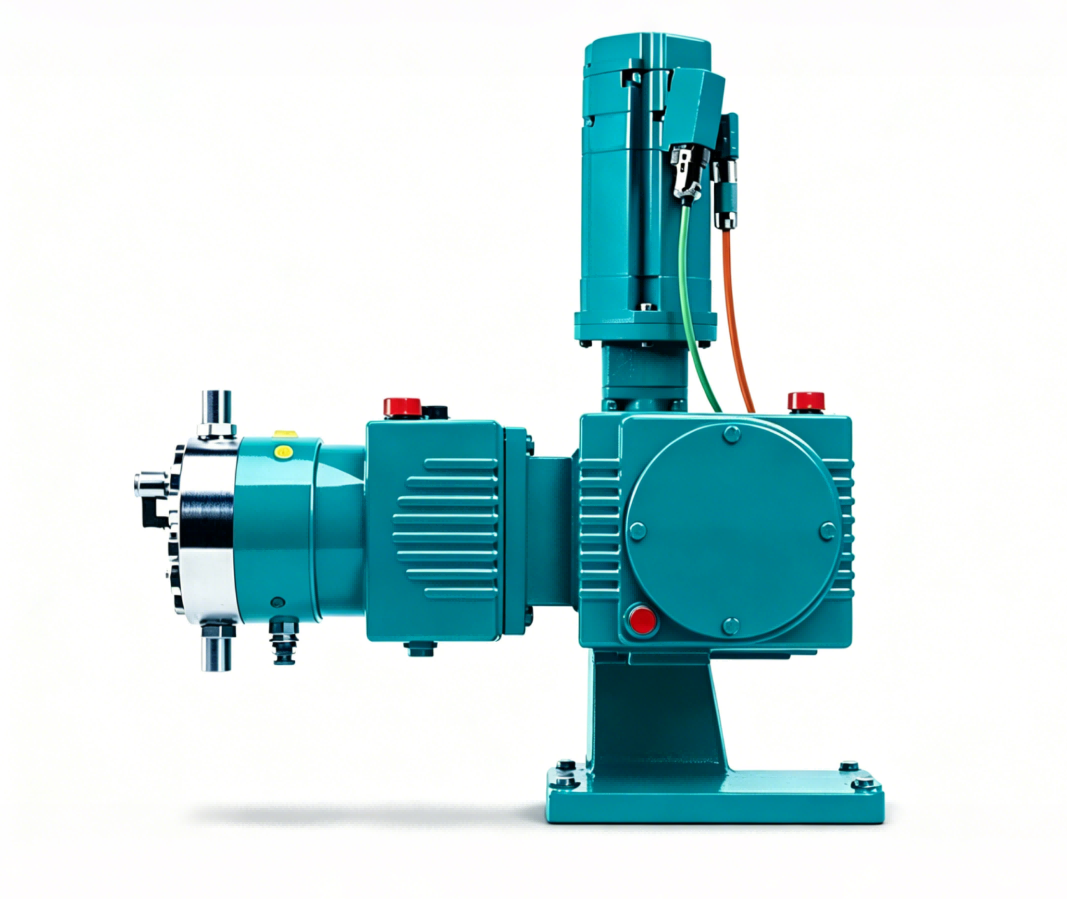
The mechanical side of metering is the easier half to specify. On a high-pressure cold-room machine such as the HF-HPM-2A2B-ColdRoom, published metering accuracy is within ±0.3% of full range and mixing pressure runs between 10 and 18 MPa, which tells you the frame can hold a ratio across a shift. It says nothing about who blends the pentane, how the tank is blanketed or where the vapor goes, and those are the items that decide whether the line passes an inspection.

Where the classified area actually extends
Both European directives apply to a hydrocarbon foaming line: one governs the equipment placed in a potentially explosive atmosphere [1], the other governs the protection of workers exposed to it [2]. The method for deciding which parts of the building are classified, and how far the zone reaches, comes from the area classification standard [3], while the general principles of preventing an explosion rather than containing one come from the prevention standard [4].
Start with a release-point map
Before any drawing is issued, mark every place where pentane vapor can leave a closed system: drum and IBC vents, tank vents, fill and sampling points, the pour station, the mold opening and demold position, filter changes, spill trays and floor drains. Then add the points that are usually missed, which are the cooling area where freshly demolded parts continue to release vapor and the saw or trim station where cut foam exposes fresh cells. A classification drawing that stops at the machine guard leaves those areas unclassified while the vapor is still present.
Match equipment to the zone, not to the word explosion-proof
“Explosion-proof” is a marketing word. What an inspector checks is whether each item carries a marking that matches the zone on the drawing, with the correct gas group and temperature class, and whether the installation preserved that protection. Cable glands, opening a junction box for a repair, a replaced fan motor or a non-certified sensor all cancel the marking without changing the label on the outside.
The interior of a nitrogen-blanketed vessel is usually excluded from classification on the basis that oxygen is kept out. That exclusion rests on the blanket working, so the nitrogen supply, its pressure alarm and the purge procedure before opening become part of the safety case rather than maintenance details.
Static control is a maintenance task
Cyclopentane has an autoignition temperature several hundred degrees Celsius above any normal mold or platen temperature, so warm tooling is not the dominant ignition risk. Static discharge and electrical equipment are. Bonding and earthing therefore need a schedule: continuity verified at commissioning, re-verified after any drum, IBC or pump is moved, and recorded against the site limit. An operator in synthetic clothing who opens a venting drum indoors supplies the spark that the bonding was meant to remove.
The paperwork that arrives with a project is worth reading for what it does not say.
| Document | What it establishes | What it does not establish |
|---|---|---|
| ATEX or IECEx certificate for a motor | The item is built and marked for a stated group, category and temperature class | That the zone on your drawing matches that marking, or that the field wiring preserved the protection |
| Area classification drawing | Where the assessment placed each zone and on which release and ventilation assumptions | That the ventilation those assumptions depend on is running tonight |
| Gas detector calibration certificate | The detector responded correctly to the test gas on that date | That its response factor suits pentane, or that the sample point is where vapor collects |
| Supplier data sheet for the pre-blended polyol | The declared flash point, pentane content and storage conditions of that delivery | That a blend from another supplier or another loading carries the same hazards |
These records belong to different owners: the machine builder, the chemical supplier, the installer and the plant. A file that contains all four is not an approval, and a missing one is a question for the party that should have produced it.
Ventilation and detection that match a heavy vapor
Cyclopentane vapor is roughly 2.4 times as dense as air, so it gathers at floor level, in pits, inside bunded areas and under platforms. Extract at high level and the reading at the roof will look acceptable while the dangerous layer sits at ankle height. Low-level extraction near each release point, with make-up air entering high and away from the source, follows the physics rather than the habit.
Size the system on a release basis, not on an air-change number. An air-change figure says nothing about where the vapor is generated or whether the air actually reaches it, and a room can meet its nominal rate while a corner stays stagnant. The defensible basis is the largest credible release, such as a hose or fitting failure at the transfer point or a drum venting without extraction, with the resulting concentration kept below the lower explosive limit by a margin the risk assessment sets. Cyclopentane’s flammable range in air begins at roughly 1.1% by volume, so the margin is measured against a low number.
Two further points decide whether the design holds up in service. First, recirculation: air extracted from a classified area must not be returned to an occupied space or to another zone. Second, make-up air has to come from somewhere, and a door left open on a windy day can reverse the intended flow.
Detection is the last barrier, not the first. Detectors belong where vapor collects and where people work, which often means two different heights in the same room, plus the exhaust duct and any pit or basement. A two-stage arrangement is common practice: a pre-alarm that raises ventilation and warns, and a higher level that stops metering, closes the feed valves and keeps extraction running. Each stage needs a written action, and the detector needs a response factor checked against pentane rather than against the test gas used at commissioning. Calibration intervals and bump tests belong in the maintenance plan, because a detector that is never challenged reports zero whether the air is clean or the sensor is dead.
Site readiness before the machine arrives
Layout and utilities decide the schedule more often than the machine does. Five items are worth closing before the purchase order:
- Storage and handling: which container arrives, where it sits, how it is vented, how it is bonded, and who is authorised to open it.
- Utilities: nitrogen supply and its pressure alarm, dry compressed air, chilled water, power for explosion-protected fans, and an earthing grid with test points.
- Interfaces: how the foaming machine interlock talks to the ventilation and detection system, and what happens on power failure. The fail-safe direction is extraction continuing and feed valves closing.
- People: who resets an alarm, who signs a hot-work permit, who accepts a delivery, and what training each of them has completed.
- Documentation: classification drawing, ventilation design basis, detector layout, emergency procedure and training records, held together rather than in five folders.
What to send with the inquiry
Send the target foam density and part geometry, the blowing-agent route you are considering, the polyol and isocyanate system, the required output per shift, the floor area and ceiling height you can give the line, whether the space is already classified, and the utilities available. That set lets an engineer size the premix stage, the metering range and the ventilation basis in one pass, instead of quoting a machine that later needs a different building.
Write to Haifeng Polyurethane Machinery at Info@chinahaifeng.com or WhatsApp +86 135 6629 6633 with those figures. A model number is not a safety case, and it is cheaper to settle the premix and classification scope before the layout is frozen than after the first drums arrive.
FAQ
Can an existing HFC-blown foaming machine be converted to cyclopentane premix?
Sometimes the mechanical frame can be reused, but the B-side circuit usually cannot. Check pump type against the blend vapor pressure, because a centrifugal pump that worked with a non-volatile polyol may cavitate once pentane flashes in the suction. Check seal and hose compatibility against the supplier’s data for the premix. Then review the electrical equipment inside the new classified area, the tank venting route, and whether the control system can accept an interlock from the gas detection loop. A conversion quote that covers only the mixing head is a partial scope.
Do we need a separate pentane storage room?
It depends on the quantity, the container type, the ventilation and the classification study. Pre-blended drums in a ventilated, bunded, bonded store may satisfy the assessment. Neat pentane in an IBC or a bulk tank usually calls for a dedicated space with fire separation, spill containment, forced ventilation and a documented unloading procedure. The authority having jurisdiction and your insurer set the final requirement, so bring them into the design before the layout is fixed rather than after.
How long can pre-blended cyclopentane polyol be stored?
Shelf life is set by the system supplier for that formulation, so there is no general figure. Three things change in storage: pentane can be lost through vents, the polyol can pick up moisture once a container is opened, and temperature swings alter how much blowing agent stays in solution. Keep containers closed and vented as instructed, keep the store at a stable temperature, rotate stock, and re-check density and cream time on aged material before it goes into a production run.
What changes at demolding and downstream?
Freshly demolded parts keep releasing pentane for a period, so the cooling area needs the same ventilation thinking as the pour station. Cutting, sawing or trimming exposes fresh cells and produces dust together with vapor, which means the extraction unit has to be suitable for a flammable atmosphere and the duct has to be bonded and earthed. Demolding too early is a separate problem: the part can post-expand after the fixture opens, which shows up as dimensional drift rather than as a visible defect.
References
[1] Directive 2014/34/EU, “Harmonisation of the laws of the Member States relating to equipment and protective systems intended for use in potentially explosive atmospheres,” European Parliament and Council, 2014.
[2] Directive 1999/92/EC, “Minimum requirements for improving the safety and health protection of workers potentially at risk from explosive atmospheres,” European Parliament and Council, 1999.
[3] IEC 60079-10-1, “Explosive atmospheres. Part 10-1: Classification of areas. Explosive gas atmospheres,” International Electrotechnical Commission, 2020.
[4] EN 1127-1, “Explosive atmospheres. Explosion prevention and protection. Part 1: Basic concepts and methodology,” European Committee for Standardization, 2019.
If you’re interested, check out these related articles:
What Is Semi Rigid Polyurethane Foam
Measuring Polyurethane Foam Resilience A Practical Test Guide
What Is Spray Polyurethane Foam Composition And Application
The Role Of Rise Time In Polyurethane Foaming