Nothing exposes a raw-material decision faster than a topcoat that shifts from clear to amber after one season outdoors. That failure is usually not a coating formulation error; it is an isocyanate selection error. When visible color stability and weathering are part of the acceptance criteria, HDI-based polyurethane systems become the practical choice.
HDI, or hexamethylene diisocyanate, is an aliphatic isocyanate. The aliphatic backbone lacks the aromatic ring structure present in TDI and MDI, which is the main reason HDI-derived polyurethanes resist UV-induced yellowing far better. They are not automatically weatherproof on their own — stabilizers, co-reactants, and formulation quality still matter — but the starting chemistry moves the failure mode away from rapid discoloration toward gloss loss or surface erosion under extended exposure.
When a customer says “non-yellowing,” an engineer should ask for the test. Color difference is normally evaluated under ASTM D2244 after a defined accelerated weathering cycle such as ASTM G154 fluorescent UV or ISO 16474-2 xenon-arc exposure [1][2][3]. Without that test definition, the term is too loose to design against.
Why HDI Changes the Selection Decision
For a processor, the shift from aromatic to aliphatic is not a drop-in substitution. HDI systems are typically less reactive than TDI or MDI systems, so the formula usually needs more deliberately selected catalysts. Raw-material cost per kilogram is also higher. The return is not a universal improvement; it is a targeted one. HDI pays back in applications where a color shift, haze, or chalking defect triggers a warranty claim, a rework order, or a customer rejection.
Most industrial HDI is supplied as a biuret or isocyanurate trimer, or converted into a polyisocyanate or prepolymer. These forms reduce residual monomer content and improve crosslink density, but they also change viscosity, functionality, and cure response. Equipment parameters cannot simply be copied from an aromatic process.
Hardness is not a single material property, and the gap between a soft aliphatic coating and a structural HDI elastomer is wide. Shore A vs Shore D Hardness in Polyurethane covers how to read both scales and what they mean for abrasion resistance and load-bearing design.
The Core Applications Where HDI-Based Polyurethane Earns Its Cost
In practice, the best applications for HDI-based polyurethane cluster around light-stable coatings, clear films, and transparent adhesives. The common thread is that the part is visible, exposed to UV or heat, and expected to keep its appearance over time.
| Application | What HDI Provides | What the Process Must Control |
|---|---|---|
| Automotive OEM and refinish clearcoats | Long-term gloss retention and resistance to sunlight, acid rain, and car-wash chemicals | Acrylic polyol coreactant ratio, bake/cure window, humidity control |
| Aerospace exterior topcoats | UV resistance plus fluid and chemical resistance for exterior surfaces | Tight NCO/OH index, pigment dispersion, adhesion to primer |
| Architectural metal, roof, and coil coatings | Color and gloss retention for external building components | Weathering tests and film build consistency |
| Anti-graffiti and high-traffic clear coatings | Stain release, solvent resistance, and gloss retention | Crosslink density and recoat window |
| Waterborne PU dispersions for textile, synthetic leather, and soft-touch finishes | Low-VOC processing and hydrolysis resistance in light colors | Phase inversion stability and dispersion control |
| Clear films and transparent adhesives | Clarity and resistance to yellowing after thermal or UV aging | Moisture exclusion and degassing |
| Aliphatic cast elastomer parts such as outdoor rollers and seals | Outdoor color stability without sacrificing wear resistance | Vacuum degassing, curative selection, post-cure |
If the application is an aliphatic cast part rather than a film, cure control and mold schedule become the dominant variables. How Polyurethane Rollers Are Made From Casting To Cure covers how casting temperature, degassing, and cure staging influence final hardness and residual stress.
Where HDI Is Usually the Wrong Fit
HDI-based systems cost more per kilogram and often cure more slowly. For products where light stability is not a specification and high volume dominates, an aromatic system is usually the better business decision. Molded seating foam, slabstock foam, rigid insulation, structural foams, and many footwear sole systems fall into this group. If the part is dark, not exposed to UV, or replaced before weathering becomes visible, HDI can add cost without adding value.
Another mismatch is high-speed foam dispensing. The aliphatic NCO reaction often requires more catalyst or heat to approach aromatic line rates, and that extra heat changes flow, gel time, and mold fill. A line that runs well on TDI or MDI may not run at the same output on HDI unless the formula has been rebalanced around the slower reaction.
Process Requirements That Make HDI-Based Systems Work
HDI-based polyurethane is sensitive to ratio error, not because the chemistry is fragile, but because the performance target is often a thin film or a clear elastomer where small defects are visible. A one-percentage-point drift in component ratio can leave unreacted NCO, shift hardness, reduce chemical resistance, or create soft spots in a clear part.
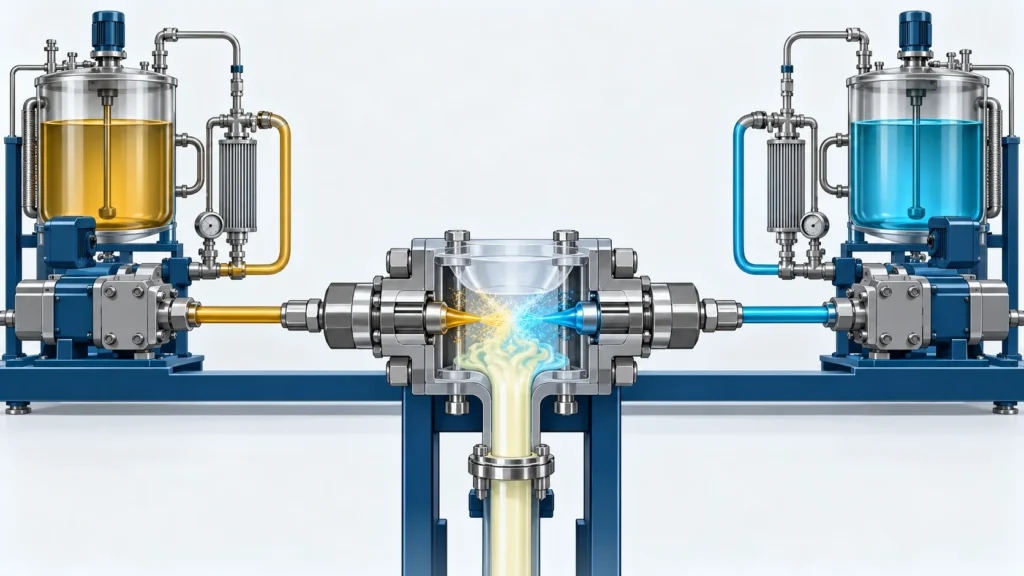
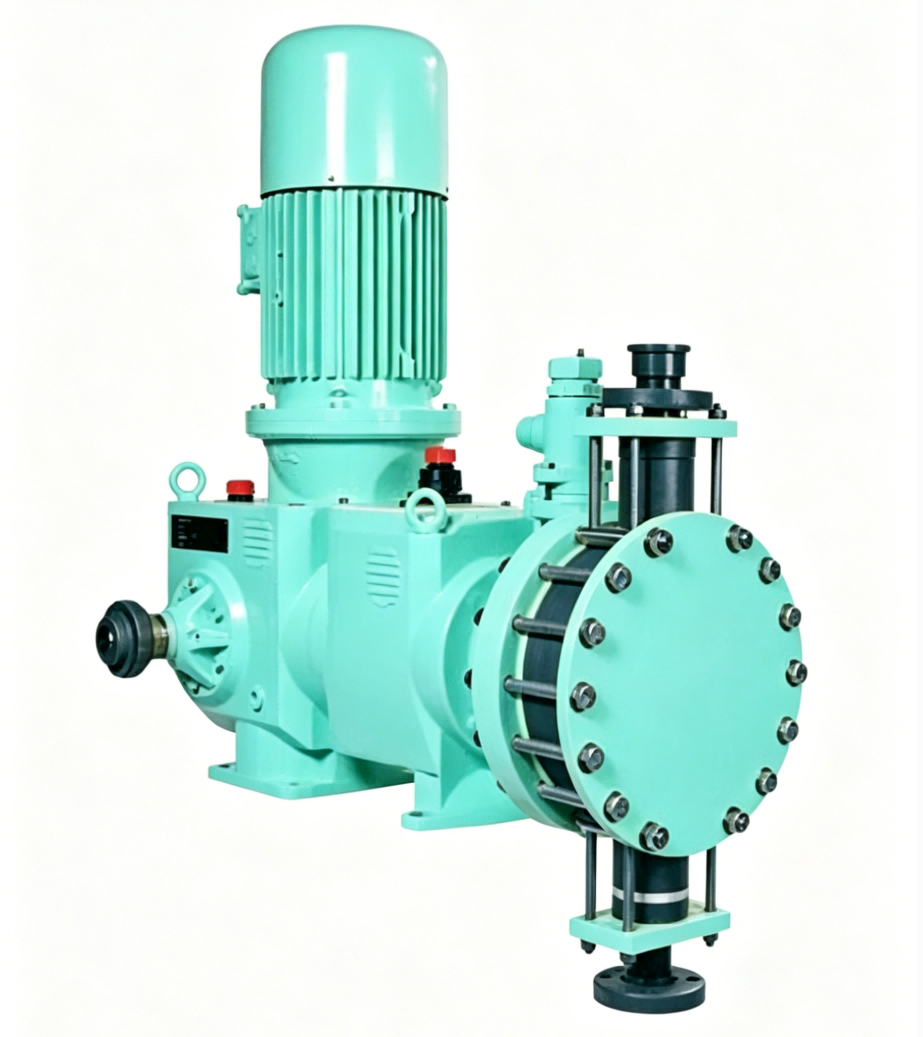
The equipment priorities are metering accuracy, temperature control, and degassing.
- Use closed-loop servo or high-precision gear-pump metering to keep the ratio within specification.
- Hold prepolymer and curative at their design temperatures separately, and verify with material-temperature sensors.
- Degas both components before metering for clear cast parts to avoid micro-bubbles.
- Recirculate the HDI component slowly to prevent moisture ingress and localized temperature differences.
- Select a mix head with high shear and a reliable solvent/air purge cycle because aliphatic systems are often less forgiving of incomplete cleaning.
HDI monomer is a respiratory sensitizer, so closed transfer, local exhaust, and personal monitoring are not optional engineering choices [4].
If the part is cast rather than sprayed, shot weight is the first number to lock down. How To Calculate Shot Weight In Polyurethane covers how to translate part mass and density into a repeatable dispensing target so the mold fills without short shots or excess flash.
For production managers already running HDI systems and seeing ratio drift or bubble defects, the fastest way to narrow the problem is to send the formulation viscosity range, target shot weight, and current metering accuracy to info@chinahaifeng.com. A process review usually identifies whether the issue is material temperature, pump sizing, or mix-head maintenance before any equipment change is made.
Talk to a Polyurethane Process Engineer
The move to HDI is not just a raw-material substitution; it is a process decision. The higher material cost only makes sense when metering, temperature control, and degassing keep the part clear, stable, and within specification batch after batch.
If you are evaluating an HDI-based coating, elastomer, or adhesive line, prepare these inputs first: formulation viscosity and NCO content, target shot weight or throughput, mold or substrate details, and the weathering or clarity specification you must meet. Those four inputs make a better starting point than a brochure comparison.
Contact: info@chinahaifeng.com | WhatsApp: 86 13566296633
FAQ
Is HDI-based polyurethane always non-yellowing?
No. It is far more resistant to UV-induced yellowing than aromatic systems, but all clear polyurethanes can still show gloss loss, surface erosion, or discoloration if under-stabilized or exposed beyond the designed service life. Stabilizer selection and exposure conditions still matter.
Can I switch a TDI or MDI line to HDI by changing raw materials?
Not without a process review. Reactivity, viscosity, pot life, ratio settings, cleaning, and temperature control all change. The switch usually requires reformulation and recalibration of metering and mix-head design, not just a tank change.
Where should I avoid HDI because of cost?
Commodity foam, rigid insulation, and dark non-exposed parts are typical areas where aromatic TDI or MDI systems are more cost-effective. HDI makes sense when color stability, clarity, or weathering are acceptance criteria.
References
[1] ASTM D2244-23, Standard Practice for Calculation of Color Tolerances and Color Differences from Instrumentally Measured Color Coordinates, ASTM International, 2023.
[2] ASTM G154-23, Standard Practice for Operating Fluorescent Ultraviolet (UV) Lamp Apparatus for Exposure of Materials, ASTM International, 2023.
[3] ISO 16474-2:2013, Paints and varnishes — Methods of exposure to laboratory light sources — Part 2: Xenon-arc lamps, ISO, 2013.
[4] Occupational Safety and Health Administration, Isocyanates, U.S. Department of Labor.
If you’re interested, check out these related articles:
How To Calculate Shot Weight In Polyurethane
RRIM Vs RIM Which Process Suits Your Structural Part
SRIM Explained Structural Reaction Injection Molding Basics
What Is Spray Polyurethane Foam Composition And Application
What Is Semi Rigid Polyurethane Foam