Best Products for Low-Pressure Polyurethane Foaming Machines
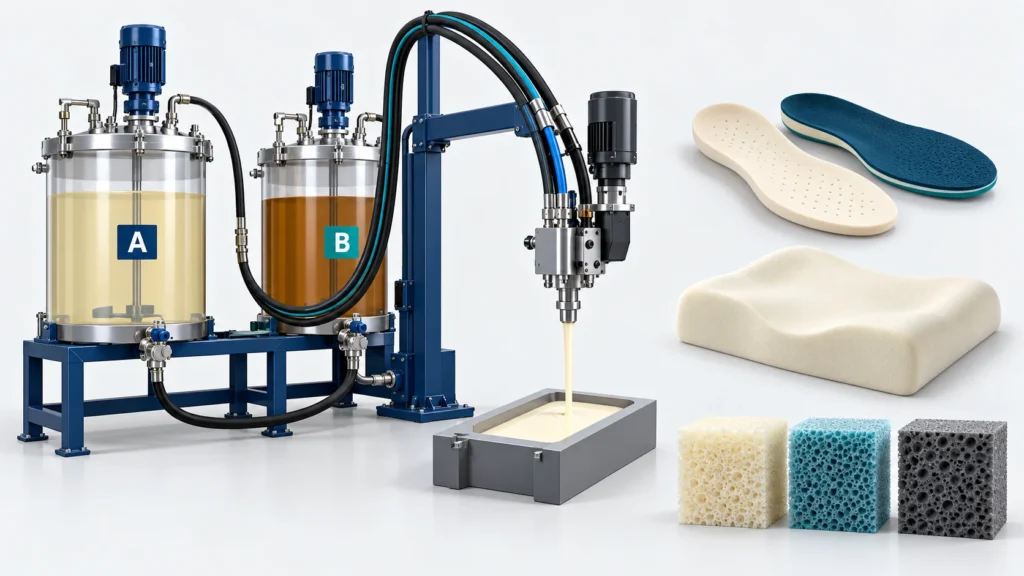
Explore product applications suited to low-pressure polyurethane foaming, and match shot weight, material behavior, mold layout and output needs to the equipment.


Explore product applications suited to low-pressure polyurethane foaming, and match shot weight, material behavior, mold layout and output needs to the equipment.

Understand rigid foam K-value, the effects of cell structure and aging, and the testing and process controls used to assess thermal conductivity.

Explore how isocyanate index influences polyurethane hardness, recovery, density, shrinkage and demolding, and why actual metering accuracy matters.

Review the role of isocyanates in polyurethane reactions, compare MDI, TDI and prepolymer forms, and relate NCO-index control to finished-part behavior.

Explore IPDI-based polyurethane characteristics, light-stability considerations and the metering, mixing and material-conditioning requirements of these systems.

Understand integral skin polyurethane foam, how its skin forms, and the temperature, metering, mixing and mold conditions that affect part quality.

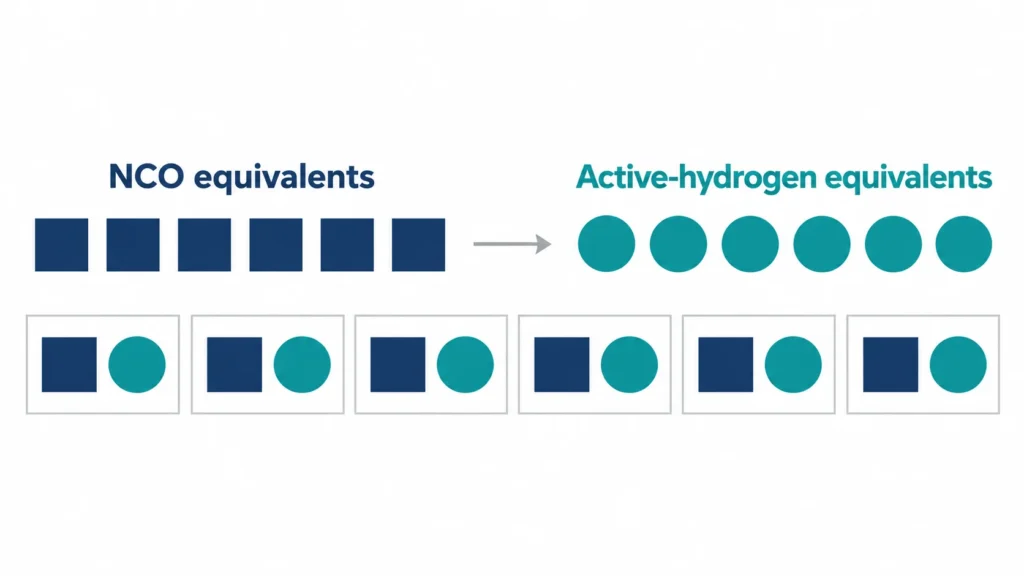
Understand isocyanate index and how it differs from a simple mixing ratio, with practical guidance on recognizing index drift and checking production controls.

Compare IFD and ILD terminology, indentation-test conditions and foam firmness, and understand how density, support factor and processing affect the readings.

Understand hydroxyl value, its role in polyurethane ratio calculations, and its effects on reaction behavior, polyol selection and equipment requirements.

Review polyurethane hydrolysis resistance through polyether and polyester selection, hard-segment chemistry, additives and processing controls for wet service.