K-value is not a marketing number. In rigid polyurethane insulation, it is the measured rate at which heat moves through a unit thickness of foam under steady-state conditions. If the K-value rises by 0.002 W/(m·K), the energy penalty compounds across thousands of square meters of panels over the life of a cold store, roof, or pipe system.
What K-Value Actually Measures
The K-value, or lambda value (λ), is thermal conductivity expressed in watts per meter-kelvin (W/(m·K). For insulation, lower is better. It describes how much heat flows through one meter thickness of material for each degree of temperature difference across that thickness.
In practice, the number works in the opposite direction from the more familiar R-value. R-value is thickness divided by K-value; if the K-value drops, the same panel thickness delivers a higher R-value. That is why small differences in the third decimal place matter when a specification calls out a minimum R-value or U-value.
Laboratory values are generally measured with heat-flow-meter apparatus following ASTM C518 [1] or ISO 8301 [2]. Those methods record steady-state heat flow through a conditioned sample at a controlled mean temperature. The tested value is only as useful as the thickness, density, and surface flatness of the sample that produced it.
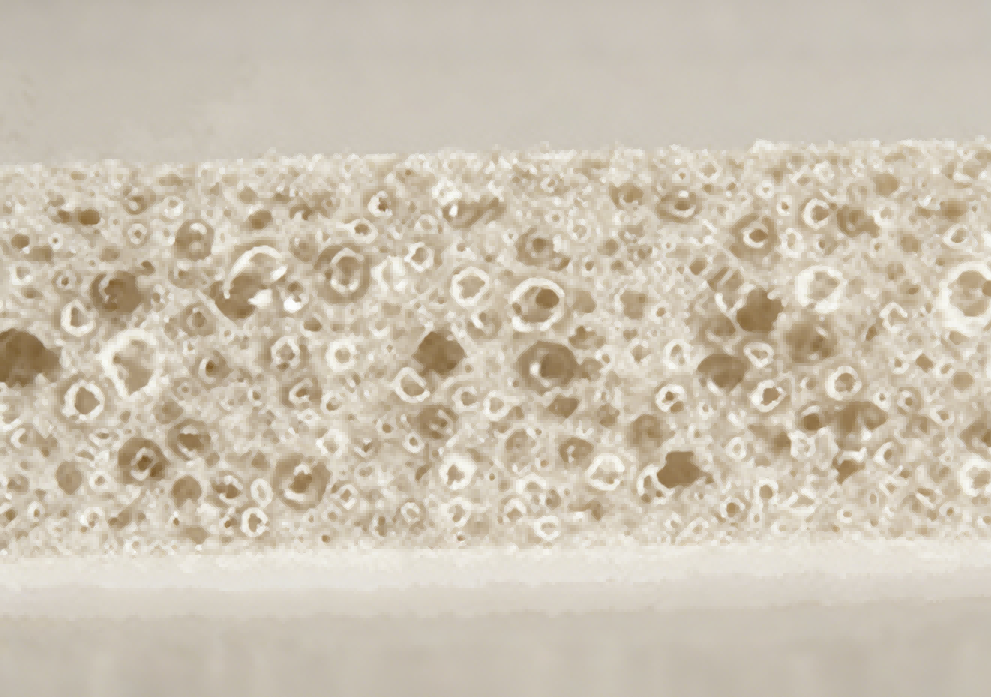
One practical takeaway: if panels pass density checks but fail thermal acceptance, the problem is usually not the foam formulation alone — it is cell structure and gas retention. If you are troubleshooting that gap, send your current panel density, facing type, and target lambda to Info@chinahaifeng.com for an engineer-led review.
What Determines the Number
Rigid polyurethane foam gets its low thermal conductivity from three mechanisms: the polymer matrix conducts only a small share of heat, the blowing-agent gas trapped in closed cells conducts less than air, and cell diameters are small enough to limit internal convection. The gas phase is the largest variable. Fresh unfaced rigid PU foam commonly lands between about 0.022 and 0.028 W/(m·K) when measured at a mean temperature near 10–23°C, depending on blowing agent, density, cell size, and facing [3].
Higher closed-cell content matters because open pathways let air and moisture move into the foam. Closed cells preserve the low-conductivity gas and slow moisture uptake. Blowing-agent type changes the starting point: some gases have much lower thermal conductivity than air, but their long-term retention depends on cell wall integrity and the facing barrier.
When K-value drifts, cell structure is usually the first variable to check. <Causes Of Shrinkage In Polyurethane Foam How To Control It> covers the process levers that keep cells stable.
Field-applied spray foam can show larger scatter because substrate temperature, lift thickness, and ambient humidity interact with the reaction.
In field-applied insulation, application conditions can override formulation theory. <What Is Spray Polyurethane Foam Composition And Application> covers composition and application variables that shape final foam structure.
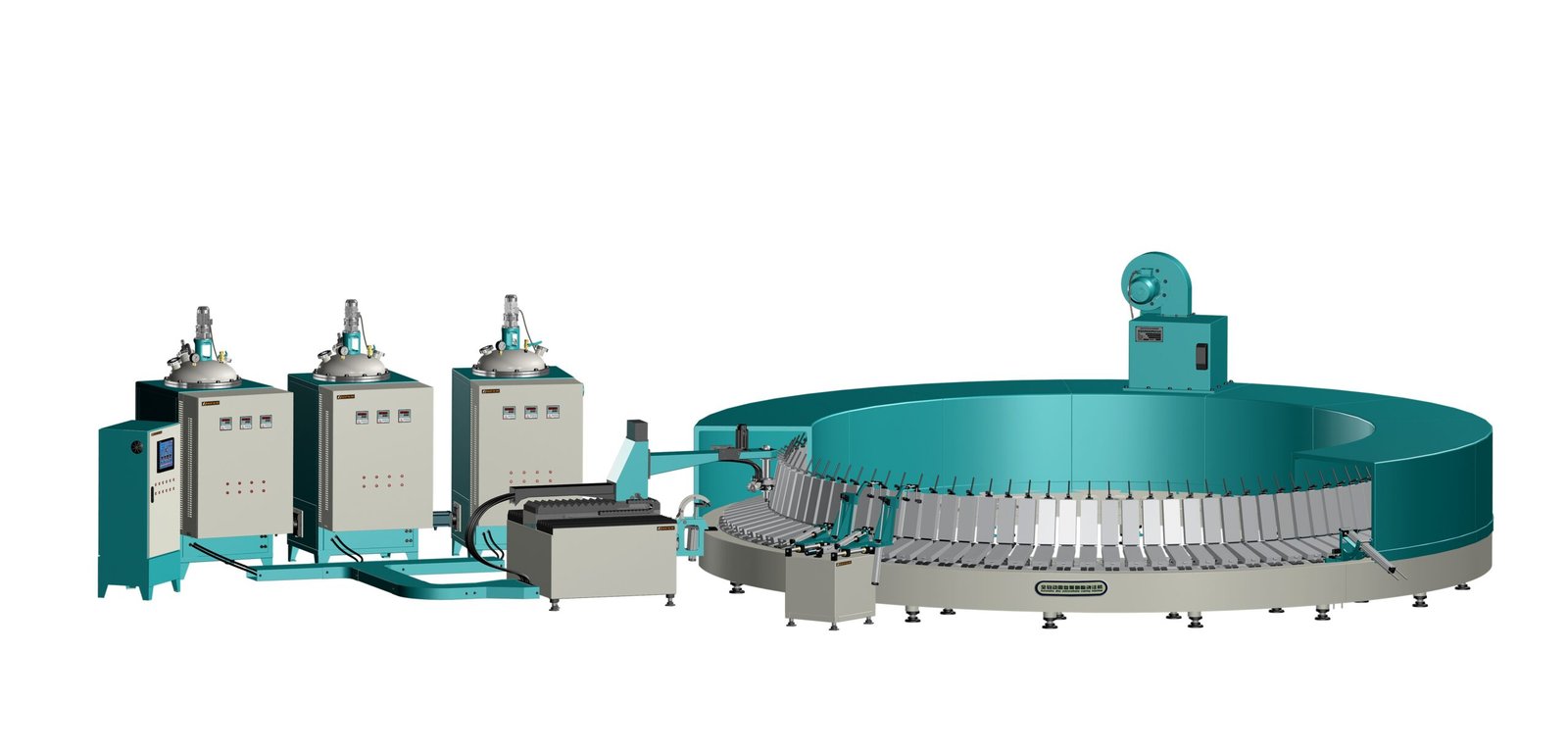
A denser foam is not automatically a better insulator. Some density increases close cells and reduce radiation, but beyond a point the added solid polymer conducts more heat while adding cost and weight. The curve is shallow on both sides, which is why suppliers report K-value at a stated density rather than a single best density.
Closed-Cell Content, Aging, and Long-Term Drift
A new rigid PU panel may start with a low initial K-value, but the design number must account for time. Over months and years, air slowly diffuses into cells while the original blowing agent diffuses out. As the cell gas mixture moves toward ordinary air, thermal conductivity rises. The rate depends on temperature, cell size distribution, closed-cell content, facing permeability, and panel thickness.
Design calculations therefore use aged values. ISO 10456 lists conservative design thermal conductivities for building materials; rigid polyurethane products are commonly assigned design values above their fresh laboratory values to account for this drift [4]. A panel tested at 0.023 W/(m·K) as new may reasonably be designed at 0.025 or 0.026 W/(m·K) after aging allowance.
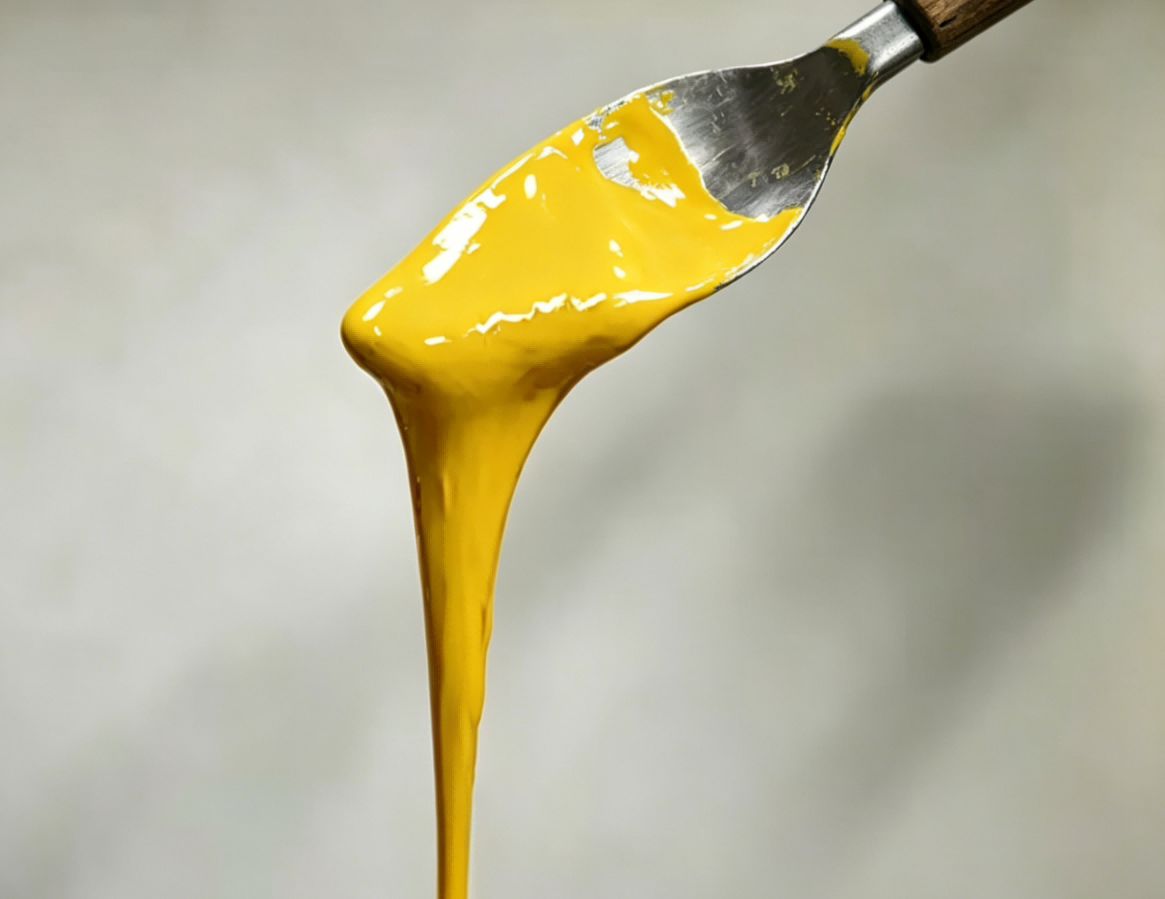
Moisture makes the problem worse. Water vapor entering the foam increases effective conductivity because liquid water conducts more heat than the gases it replaces. This is also why long-term K-value claims need a clearly stated aging protocol and facing system.
How K-Value Is Tested and Reported
The standard test path starts with a representative sample conditioned to equilibrium at the specified mean temperature. The heat-flow-meter or guarded-hot-plate apparatus measures heat flux through the sample at steady state. The reported K-value is calculated from thickness, area, and temperature difference.
The product standard EN 13165 sets out how factory-made rigid polyurethane products declare thermal performance and links the declared value to the relevant test methods [5]. Declared lambda is not the same as a single laboratory result: it includes a statistical allowance, so the value on a data sheet is usually slightly more conservative than one fresh sample.
Temperature and thickness change the measured number. A sample measured at a higher mean temperature generally gives a higher K-value, which is why a specification must state test temperature, specimen thickness, and conditioning before the result can be compared to another product [6].
When you compare data sheets, compare the declared value, not the best measured value. Ask for mean test temperature, panel thickness, aging condition, and whether the number applies to the foam core or the complete faced panel.
Equipment Levers That Keep K-Value Low
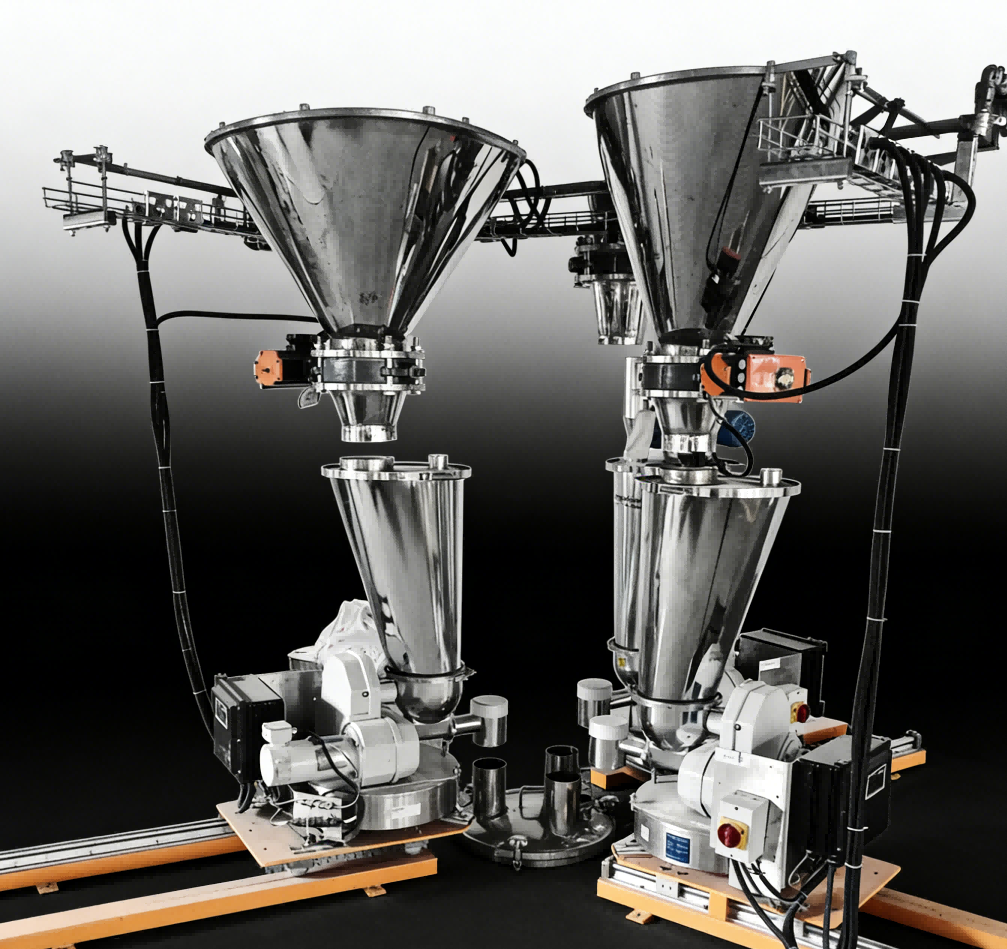
Equipment does not change the laws of heat transfer, but it controls whether the cell structure that delivers a low K-value is repeatable. Metering ratio determines whether the polyol, isocyanate, and blowing-agent blend are in the proportions the formulation was designed for. A ratio shift changes density, cell openness, and gas retention.
Mixing pressure and mixing head design influence cell nucleation. High-shear mixing at the correct pressure produces fine, uniform cells; poor mixing leaves large uneven cells, voids, or unreacted regions that raise the effective conductivity. Temperature control of tanks, hoses, and mix head keeps viscosity in range so the metering pumps deliver the right mass instead of the right volume.
Blowing-agent metering deserves particular attention. A small dosing error in a physical blowing agent changes the target gas concentration and the final lambda, even when the A:B ratio looks correct. For continuous panel lines, line speed, cream time, and rise profile must be matched so the foam reaches final cell structure before the facings lock it in.
Before you modify a formulation, isolate equipment variables: shot weight, ratio drift, material temperature, and nozzle pressure. If you want a process-level review against your target K-value, contact Info@chinahaifeng.com or WhatsApp 86 13566296633 and include line speed, panel thickness, and blowing-agent type.
Specifying a new line or qualifying an existing one? If aged K-value acceptance keeps failing by a small margin, send process parameters to Info@chinahaifeng.com / WhatsApp 86 13566296633. A metering-and-mixing review usually finds the issue faster than reformulation.
Frequently Asked Questions
What is the difference between K-value, R-value, and U-value?
K-value is the thermal conductivity of the material itself. R-value is thermal resistance: thickness divided by K-value. U-value is thermal transmittance: the inverse of total R-value for a complete assembly. For insulation, a lower K-value and U-value are better; a higher R-value is better.
What K-value should I expect from a rigid polyurethane panel?
Fresh, closed-cell rigid PU foam typically falls between about 0.022 and 0.028 W/(m·K), with aged design values usually higher. The realistic number depends on density, cell size, blowing agent, thickness, facing, and the aging protocol used in the declaration [3][4].
Why does K-value increase over time?
The original low-conductivity blowing agent gradually diffuses out of the cells and air diffuses in. As the cell gas moves toward an air-like mixture, thermal conductivity rises. Moisture uptake can add another increase, so long-term performance depends on closed-cell content and facings.
Does higher foam density always mean lower K-value?
No. Moderate density can improve closed-cell content and reduce radiation, but very high density adds more conductive solid polymer. The relationship is not linear, and the optimum depends on the formulation, blowing agent, and mechanical requirements.
How does equipment affect K-value?
Equipment affects ratio accuracy, mixing quality, cell nucleation, blowing-agent dosing, and temperature control. Errors in any of these can increase K-value even when the formulation is correct. High-shear mixing and precise metering help reproduce the fine, closed-cell structure the insulation value depends on.
References
[1] ASTM C518-21, Standard Test Method for Steady-State Thermal Transmission Properties by Means of the Heat Flow Meter Apparatus, ASTM International, 2021.
[2] ISO 8301:1991, Thermal insulation — Determination of steady-state thermal resistance and related properties — Heat flow meter apparatus, International Organization for Standardization, 1991.
[3] PU Europe, Thermal insulation properties of polyurethane (PUR/PIR) rigid foam, technical fact sheet.
[4] ISO 10456:2007, Building materials and products — Hygrothermal properties — Tabulated design values and procedures for determining declared and design thermal values, International Organization for Standardization, 2007.
[5] EN 13165:2012+A2:2016, Thermal insulation products for buildings — Factory made rigid polyurethane foam (PU) products — Specification, European Committee for Standardization, 2016.
[6] ASHRAE, 2021 ASHRAE Handbook—Fundamentals, Chapter 26: Heat, Air, and Moisture Control in Building Assemblies—Fundamentals, American Society of Heating, Refrigerating and Air-Conditioning Engineers, 2021.
If you’re interested, check out these related articles:
SRIM Explained Structural Reaction Injection Molding Basics
How Polyurethane Rollers Are Made From Casting To Cure
What Is Semi Rigid Polyurethane Foam