On a flexible foam data sheet, two abbreviations create the same moment of hesitation: IFD and ILD. One buyer asks for an ILD of 33; a supplier quotes a 25% IFD of 33 lbf. Both describe an indentation test, but the terms come from different standards and commercial habits. Getting this clear matters because a cushion that misses its target by only a few percent can feel wrong in a showroom or fail a seating comfort audit.
What IFD and ILD Measure
IFD stands for indentation force deflection. Under ASTM D3574, Test B1, it is the force required to press a circular indentor into a conditioned foam specimen to a stated percentage of its thickness, usually 25%. ILD stands for indentation load deflection. It is the older commercial name for the same family of measurement and remains common in North American furniture, bedding, automotive, and packaging specifications [1][3].
When a supplier reports “ILD 30” without additional detail, most engineers read it as the 25% indentation value. But the test standard, specimen size, and units still need to be confirmed before comparing numbers from two suppliers. ISO 2439 covers the corresponding indentation-hardness method and reports results in newtons or kilopascals at defined indentations such as 25%, 40%, and 65% [2].
Why Two Terms Still Exist
The physical test has not fundamentally changed. What changed is the naming preference of different standard-writing bodies and markets. ASTM moved toward IFD in the United States, while much of the manufacturing world continued using ILD because the term had already become embedded in purchasing language.
As a result, IFD and ILD are often interchangeable in everyday specification work, but they are not always identical once conditioning, specimen dimensions, preflexing, or test speed differ. The practical rule is simple: compare values only when the full test description is the same.
| Item | ASTM D3574 context | ISO 2439 context | Commercial ILD usage |
|---|---|---|---|
| Preferred term | IFD | Indentation hardness | ILD |
| Typical indentor | Circular, 50 in² area | Similar circular indentation plate | Same fixture |
| Common reporting points | 25%, 65% | 25%, 40%, 65% | Often 25% only |
| Common units | lbf or N | N or kPa | lbf or N |
| Specimen handling | Conditioned and preflexed | Conditioned per standard | May omit full description |
How the Test Is Performed
The test looks simple, but the details control the result. A typical sequence follows the pattern set out in ASTM D3574 or ISO 2439 [1][2].
The foam specimen is conditioned at a defined temperature and humidity, usually around 23°C and 50% relative humidity. It is then preflexed to reduce first-cycle variation, positioned under a flat circular indentor, and compressed at a controlled speed. The force is recorded at 25% indentation, often followed by 65% indentation if support factor is required.
Thickness, preflex cycles, dwell time, and indentor speed all matter. A foam tested without preflexing can give a misleadingly high first-cycle reading. A thin specimen can bottom out against the support plate and produce a number that does not represent the foam.
IFD, Firmness, Density, and Support Factor
IFD is a firmness measurement, but it is not the same as “hardness” in the durometer sense. A Shore scale uses a much smaller indenter and a different test philosophy. A soft, thick flexible foam can have a low IFD while still having a measurable Shore A reading on a solid polyurethane surface.
A durometer reading is not the same as an indentation force deflection value, but the two scales frequently appear side by side in polyurethane specifications. <Shore A Vs Shore D Hardness In Polyurethane> covers when each hardness scale applies to polyurethane parts.
Density is also independent from IFD. Density is mass per unit volume; IFD is force at a defined indentation. A high-density foam can be soft, and a low-density foam with a stiff cell structure can produce a high IFD. That is why a serious foam specification pairs IFD or ILD with density, support factor, recovery, and durability requirements rather than relying on one number.
Support factor is calculated as the 65% IFD divided by the 25% IFD. For example, a foam with a 25% IFD of 30 lbf and a 65% IFD of 75 lbf has a support factor of 2.5. A higher support factor generally describes a foam that firms up as it is compressed instead of bottoming out, but it must still be evaluated alongside recovery and fatigue behavior.
Recovery speed also changes how a foam reads on repeated IFD checks, so resilience belongs in the same specification discussion. <Measuring Polyurethane Foam Resilience A Practical Test Guide> covers the practical measurements used to evaluate how quickly flexible foam returns after compression.
How Processing Affects the Number
A laboratory value assumes a stable polymer network and uniform cell structure, but production foaming machines must hold both. Ratio drift alters the isocyanate index and the final network modulus. Poor mixing creates coarse or irregular cells, which changes how the foam resists collapse and recovery. Shot weight, pour pattern, and rise profile affect density distribution, and density gradients show up as IFD variation across a part.
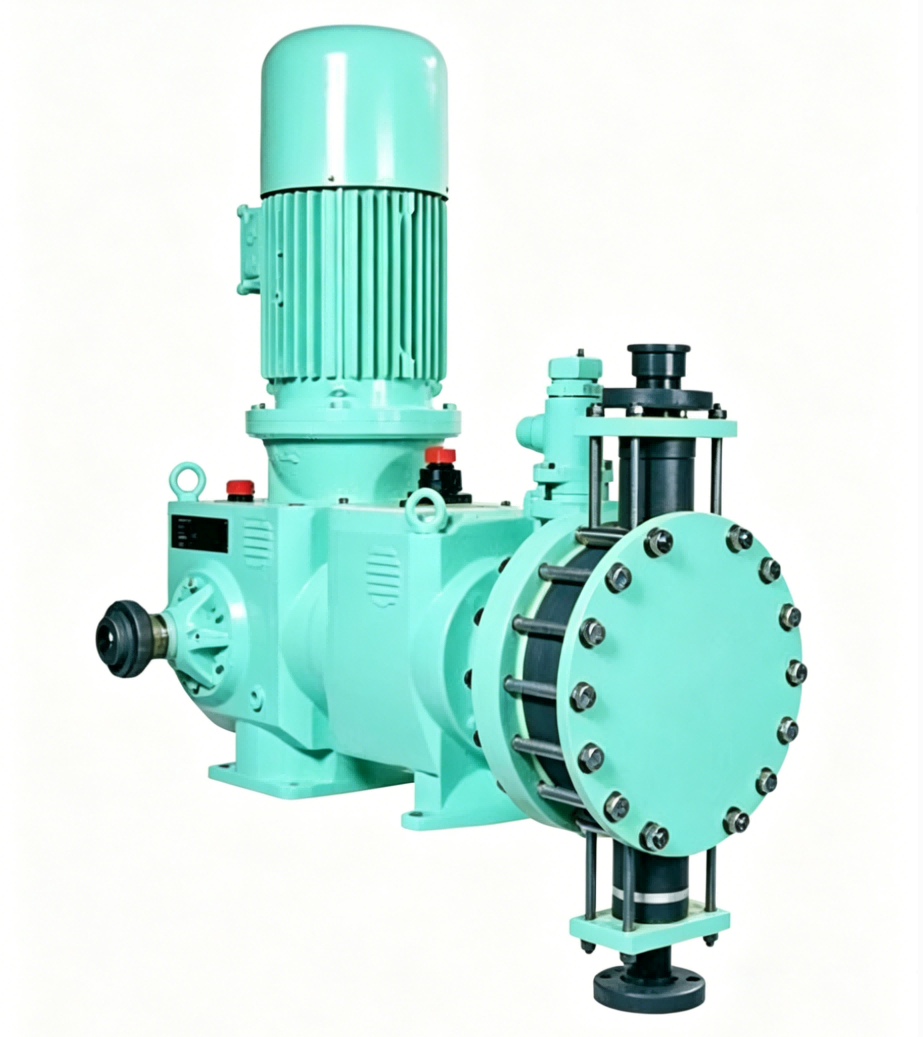
This is why machine selection is part of the IFD conversation, not a separate topic. Closed-loop servo metering reduces ratio scatter from shot to shot. A well-designed mixing head gives consistent nucleation and cell development. Temperature control on both component streams keeps viscosity and reaction speed predictable. Without those controls, two foam blocks made from the same formulation can still land outside the same IFD window.
One useful first step is not buying harder or softer foam; it is confirming that the metering system can repeat the same shot and ratio at production speed. The machine should disappear as a source of variation so the formulation can do the intended work.
If you are defining IFD/ILD targets for a new flexible foam line and need help translating a formulation target into repeatable metering and mixing parameters, contact Haifeng Polyurethane Machinery at Info@chinahaifeng.com or WhatsApp 86 13566296633.
A Practical Specification Checklist and Where to Get Help

Before finalizing a flexible foam purchase specification, confirm these points:
- Name the test standard: ASTM D3574 Test B1 or ISO 2439.
- State the indentation percentage; do not assume 25%.
- Specify units, specimen thickness, conditioning, preflexing, and test speed.
- Pair IFD or ILD with density and support factor.
- For seating foam, define 25% IFD, 65% IFD, resilience, and compression set.
- For automotive and appliance foam, include temperature and humidity exposure requirements.
- For production repeatability, confirm metering accuracy, ratio control, mixing quality, and raw material temperature control.
Haifeng Polyurethane Machinery works with flexible foam producers on the equipment side of that final point. Rather than promising an IFD value in isolation, the more useful discussion starts with your target, your existing formulation, and the tolerance your downstream customer actually requires.
FAQ
Is IFD the same as ILD?
In most commercial use, yes. The physical measurement is the same family of indentation test, but the terms come from different standard-writing cultures. Always confirm the standard and test setup before comparing values.
Does higher density mean higher IFD?
No. Density describes mass per unit volume, while IFD describes force at a defined indentation. A low-density foam with a stiff cell structure can have a high IFD, and a high-density soft foam can have a low IFD.
What is a typical 25% IFD for seating foam?
Commercial seating foams often fall in a broad range of roughly 15–45 lbf at 25% indentation, but the target depends on the application, layer design, and support factor. Automotive, mattress, aircraft, and furniture seats differ enough that cross-category comparisons are unreliable [3].
Why do two foams with the same IFD feel different?
Feel is influenced by density, recovery speed, support factor, hysteresis, thickness, and cell structure. IFD captures only one indentation point unless multiple deflections are specified.
Does IFD change with temperature or humidity?
Yes. Flexible foam stiffness shifts with temperature and moisture. Conditioning before testing reduces this source of variation, which is why ASTM D3574 and ISO 2439 specify conditioning protocols [1][2].
Is IFD a durability rating?
No. IFD does not predict service life. Use compression set, dynamic fatigue testing, and resilience measurements for durability-related judgments.
References
[1] ASTM International. ASTM D3574-17, Standard Test Methods for Flexible Cellular Materials—Slab, Bonded, and Molded Urethane Foams. West Conshohocken, PA: ASTM International, 2017.
[2] ISO. ISO 2439:2008, Flexible cellular polymeric materials — Determination of hardness (indentation technique). Geneva: ISO, 2008.
[3] Polyurethane Foam Association. “ILD and IFD.” Technical information, www.pfa.org.
If you’re interested, check out these related articles:
Causes Of Shrinkage In Polyurethane Foam How To Control It
Measuring Polyurethane Foam Resilience A Practical Test Guide