

A plant manager looking at low-pressure polyurethane foaming machines is rarely choosing a technology first. The real selection starts with the part: its shot weight, foam density, mold layout, hardness target, and how often the formula changes. When those conditions point toward open molds, moderate output, or gentler mixing, low-pressure equipment becomes the practical choice.
The difference is mechanical. A low-pressure machine meters the polyol and isocyanate streams through gear pumps or screw pumps, then blends them in a stirred mixing chamber before the mixture flows into an open mold, a rotating carrier, or a continuous pour. This is not the same as high-pressure impingement mixing, where the two streams collide at high velocity and exit from a self-cleaning mixhead [1].
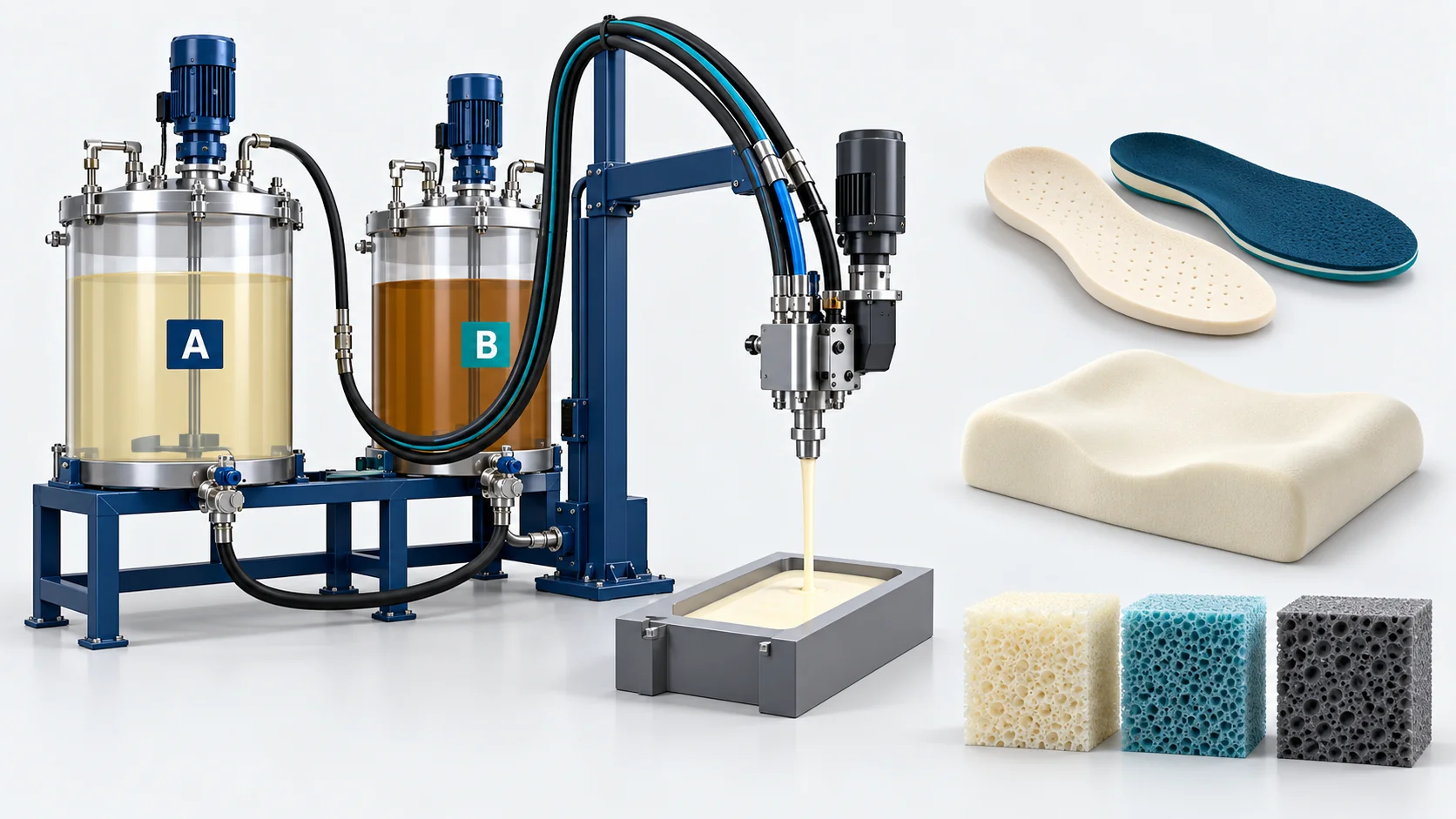
That distinction explains the product list that follows. Low-pressure foaming is not a lower-quality route; it is a different process window. It serves products where mechanical mixing, frequent formula changes, and smaller or medium shot weights matter more than ultra-fast demold or very high internal mold pressure.
Where Low-Pressure Foaming Makes Technical Sense
The main variables are component ratio, mix speed, temperature, and pour pattern. Because the mixer runs mechanically, shot-to-shot consistency depends on pump metering and recirculation, not on impingement pressure. A deviation in A/B ratio changes final foam density and hardness, which is why low-pressure machines are usually specified around metering accuracy rather than nominal throughput.
The process is also more forgiving for open molds, pre-heated molds, multi-cavity tooling, and smaller runs. It allows practical switching between polyether and polyester systems if the wetted parts and flushing loops are designed for the changeover. But the same mechanical mixer has a practical limit: highly viscous, fast-gelling, or heavily filled systems may create the kind of shear and clean-out issues that make high-pressure mixing more appropriate.
For product screening, apparent density is usually measured by the method in ISO 845 [2]. Flexible foam performance is checked against the test methods in ASTM D3574 [3]. When the part is a semi-rigid molded skin or foam, Shore durometer values follow ISO 868 [4].
Hardness selection changes how a low-pressure part performs in service. Shore A Vs Shore D Hardness In Polyurethane covers which scale fits flexible foam and which fits rigid skins.
Products That Fit the Low-Pressure Window
The following product groups are not a complete list, but they share the characteristics that line up with low-pressure processing.
Footwear Soles, Midsoles, and Insoles
Single-density and dual-density soles, midsoles, and functional insoles are among the most common low-pressure applications. The molds are open, cycle times are moderate, and the formula library usually changes between hardness grades, colors, and densities. A low-pressure line can pour a six-cavity sole mold or a dual-density insole tool without the mold pressure of a closed RIM tool.
Shot weight control matters as much in sole and insole pouring as the machine output rating. How To Calculate Shot Weight In Polyurethane covers the calculation steps for repeatable cavity fill.
In one East African sole plant, a single low-pressure line moved compliance from 88% to 95%, cut operators from 9 to 4, and raised daily output from 2,500 to 3,600 pairs after the old line was replaced. The important part was not top speed; it was repeatable shot weight and faster style changeover.
Synthetic Leather Substrates and Textile Coatings
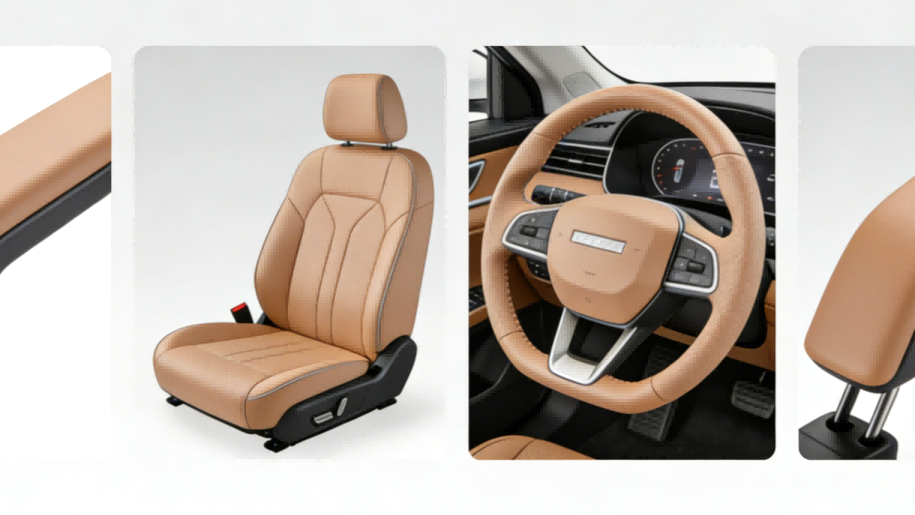
Solvent-free low-pressure coating lines are used for polyurethane synthetic leather base layers because the foam layer must be thin, even, and cell-stable while the fabric web moves continuously. The machine meters a small shot onto a moving release paper or fabric, so short-term flow stability matters more than maximum output.
Semi-Rigid Automotive and Industrial Foam Parts
Parts like cushion inserts, gaskets, small dash fillers, and shoe counters often sit between flexible and rigid. They require enough cell structure to absorb energy but enough dimensional stability to hold a molded shape. The semi-rigid range is a natural low-pressure product because open-cavity mold pressure stays modest and the machine can be flushed between formula grades.
Many low-pressure parts sit close to the flexible-to-rigid boundary. What Is Semi Rigid Polyurethane Foam covers how formulation and density place foam in that middle range.
Medical Wheels, Small Tires, and Caster Elements
Low-pressure lines also serve medical-grade wheels, small polyurethane tires, and similar solid or microcellular parts where surface finish, static control, and low rolling noise are part of the specification. These parts are usually small to medium shot weight and benefit from controlled metering and a rotary mold carrier rather than extreme mixing pressure.

Protective Packaging, Seals, and Specialty Foam Parts
Protective corner foams, equipment damping pads, and some seal-style gaskets fit the same pattern: open molds, moderate density, and the ability to switch between small batches. Low-pressure equipment keeps these jobs economical because a filler or a color change does not require a full high-pressure mixhead rebuild.
When Low-Pressure Is Not the Best Fit
If the part is a structural composite with long-fiber reinforcement, a high-pressure RIM or RRIM process becomes the stronger path. In those systems, high-velocity impingement is needed to wet and disperse fiber while the tool is filled quickly under higher pressure. Large rigid foam panels, continuous sandwich panels, and high-output cold storage panels also tend to move toward high-pressure machines. The foam flow rates, mixhead self-cleaning cycles, and closed-mold fill demands exceed what a typical stirred low-pressure mixer can hold for long runs.
The decision rule is practical. If the job needs low-shear blending, open molds, formula changes, and shot weights from a few hundred grams to several kilograms, low-pressure fits. If it needs fiber wet-out, very fast fill, or very high continuous throughput, high-pressure is usually the better path.
How to Specify a Low-Pressure Line Without Overbuying
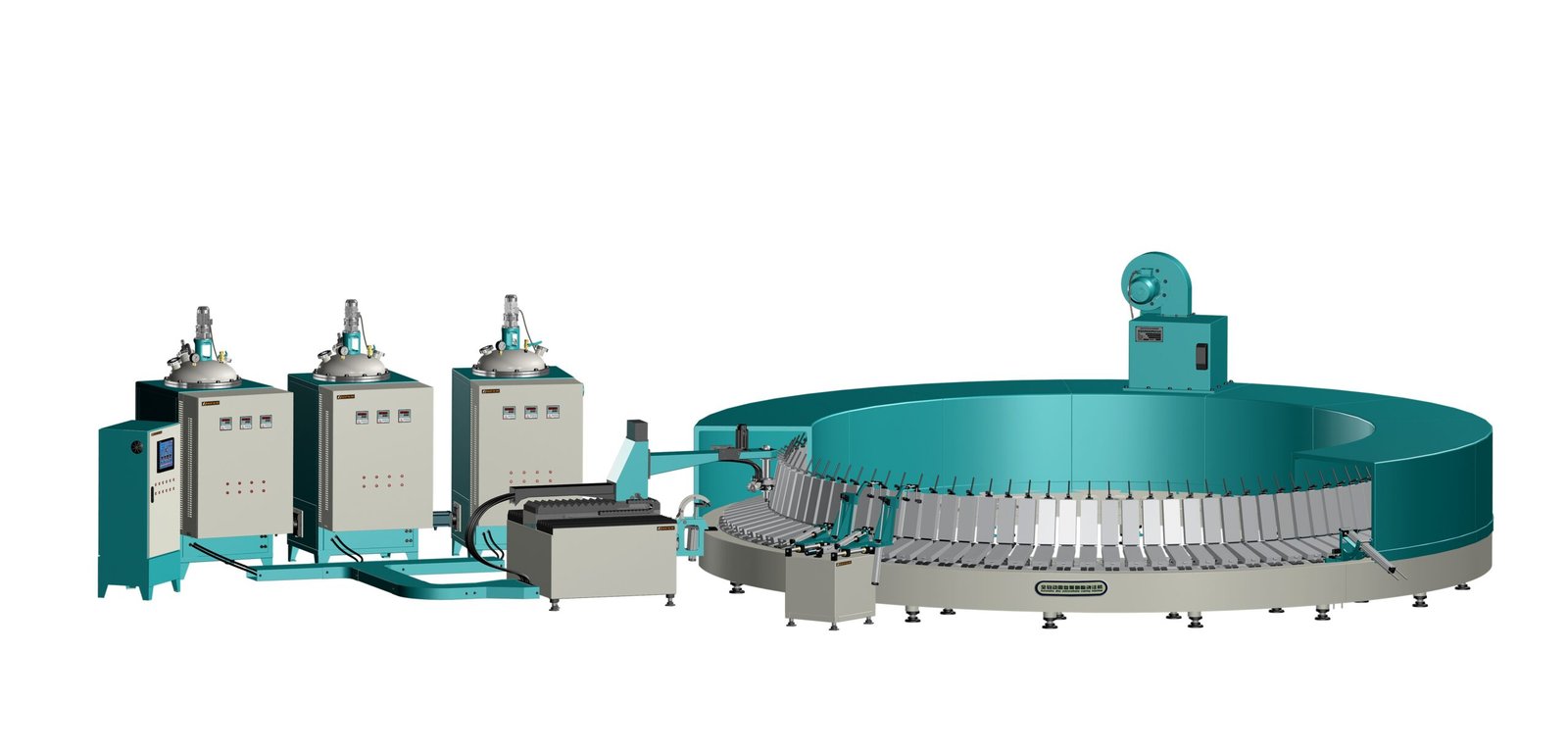
Start with free-rise density and shot weight. These determine pump size, tank capacity, and pour rate. Confirm material viscosities and filler content; this decides mixer speed, heating capacity, and wetted-part design. Match the mold carrier to your cycle: linear, rotary disc, or shuttle. Output follows mold cooling and demold time more than machine output rating. Ask for changeover time, flush solvent path, and multi-formula storage. Verify metering accuracy by actual component ratio tests, not by catalog number.
If you are already reviewing low-pressure machines and are not sure whether your part belongs in this window, send the part drawing, target shot weight, material system, and foam density to Info@chinahaifeng.com or WhatsApp 86 13566296633. That usually settles the selection question faster than comparing catalog output numbers.
Get a Machine-and-Process Answer, Not a Brochure Quote
Haifeng Polyurethane Machinery has spent 40 years on polyurethane pouring and foaming lines, and is the sole drafter of China’s PU pouring machine industry standard. We do not start a low-pressure project with a single model number. We start with your part’s free-rise density, component ratio, mold carrier, and changeover sequence, then build or configure the line around those constraints. Send your part drawing and current bottleneck to Info@chinahaifeng.com or WhatsApp 86 13566296633.
Frequently Asked Questions
What products should I avoid on a low-pressure polyurethane foaming machine?
Avoid products that need long-fiber reinforcement, very fast closed-mold filling, or continuous high-output rigid foam board production. Structural composites, large sandwich panels, and high-volume continuous rigid foam lines usually perform better with high-pressure impingement mixing.
How do I choose between a low-pressure and high-pressure machine?
Let the part decide before you compare machine models. Look at shot weight, material viscosity, filler content, mold pressure, cycle time, and formula-change frequency. If the job needs open molds, gentle mixing, and frequent small-batch changes, low-pressure is generally the better fit.
What shot weight range is practical for low-pressure foaming?
Low-pressure foaming usually works well for small to medium shot weights, roughly from a few hundred grams to several kilograms per shot. The practical limit depends on material viscosity, mold layout, and cycle time rather than on the pump rating alone.
Can one low-pressure machine run both flexible and semi-rigid foams?
Yes, if the wetted parts, temperature control, and flushing loops are specified for both formulations. The main requirement is a clean changeover path and stored formulas for each system. Without that, cross-contamination can shift density and hardness from batch to batch.
References
[1] G. Oertel, Polyurethane Handbook, 2nd ed., Hanser Publishers, Munich, 1994.
[2] ISO 845, Cellular plastics and rubbers — Determination of apparent density, International Organization for Standardization, 2006.
[3] ASTM D3574-17, Standard Test Methods for Flexible Cellular Materials—Slab, Bonded, and Molded Urethane Foams, ASTM International, 2017.
[4] ISO 868, Plastics and ebonite — Determination of indentation hardness by means of a durometer (Shore hardness), International Organization for Standardization, 2003.
If you’re interested, check out these related articles:
How To Calculate Shot Weight In Polyurethane
How Polyurethane Rollers Are Made From Casting To Cure
RRIM Vs RIM Which Process Suits Your Structural Part
Causes Of Shrinkage In Polyurethane Foam How To Control It
Shore A Vs Shore D Hardness In Polyurethane





