
Two production lines can run what appears to be the same polyol, isocyanate, and A/B ratio and still produce parts with different hardness, density, and demold behavior. The hidden variable is usually the isocyanate index. It is not the same as the mix ratio, and a small error in the calculation travels through the entire reaction.

What the Isocyanate Index Actually Is
The isocyanate index compares the isocyanate groups actually supplied with the isocyanate groups theoretically required to react with all reactive hydrogens in the system [1]. The standard form is:
Isocyanate index = (actual NCO equivalents / theoretical NCO equivalents) × 100
An index of 100 is the stoichiometric baseline. Above 100 leaves excess NCO; below 100 leaves reactive hydrogen unreacted [1]. The theoretical NCO demand comes from measured hydroxyl value and measured water content, not from tank level or assumed blend ratios [2]. For raw material control, NCO content is measured separately by titration or an equivalent method [3].
Why the Index Changes the Reaction, Not Just the Ratio
With excess NCO, the primary urethane and urea reactions are followed by secondary reactions such as allophanate and biuret formation, which raise crosslink density [4]. This generally increases hardness and modulus and can improve thermal resistance — up to a point.
With deficient NCO, chain extension is incomplete. Parts tend to be softer, slower to reach green strength, and more sensitive to moisture. Water matters especially in water-blown systems: every water molecule consumes two NCO groups, so ignoring water content in the index calculation makes the true index lower than intended [1].
Index Effects by Direction
| Index condition | What it drives | What usually shows up on the line |
|---|---|---|
| Below 100 | Lower crosslink density, incomplete chain extension | Soft or sticky demold, low early green strength, moisture sensitivity |
| At 100 | Stoichiometric baseline | Predictable cure; not automatically the best property set |
| Above 100, moderate excess | More allophanate/biuret crosslinks, higher modulus | Higher hardness and thermal resistance; possible brittleness if overdone |
| Well above the practical range | High exotherm, stronger blow reaction, scorch risk | Internal scorch in thick sections, brittle skins, dimensional stress |
These effects remain qualitative because the optimum index depends on the specific system [4]. A number that works for a rigid insulation foam is not automatically suitable for a Shore A 60 cast elastomer.

Hardness is one of the most immediate indicators of an index shift in solid and microcellular parts. It is also one of the easiest to misread.
Hardness is one of the most immediate indicators of an index shift in solid and microcellular parts. <Shore A Vs Shore D Hardness In Polyurethane> covers how durometer testing separates surface hardness from bulk stiffness.
What Index Errors Look Like on the Floor
Index errors rarely announce themselves as a chemistry alarm. They show up as patterns in production: hardness scatter across a mold run, density drift over an afternoon, changing cell structure, residual tack at demold, longer cure time, or dimensional instability.
Shrinkage is a common late signal. A part may leave the mold within spec, then continue changing after cooling or post-cure.
If a formulation change moves the index and only later shows up as dimensional loss, do not assume a mold problem first. <Causes Of Shrinkage In Polyurethane Foam How To Control It> covers what drives foam shrinkage and how process adjustments interact with formulation.
Why the Machine Is Part of the Index
A correct formulation still has to survive the metering system. The machine delivers the index as a mass or volume ratio, and that ratio is affected by temperature, viscosity, pump calibration, recirculation behavior, and shot-size changes.
On Haifeng two-component pouring and casting systems, dynamic metering accuracy is specified at ≤ ±0.3% across the full pouring range, with closed-loop servo control for ratio stability. That matters because the index is only as repeatable as the actual NCO delivery, not the number typed into the panel.
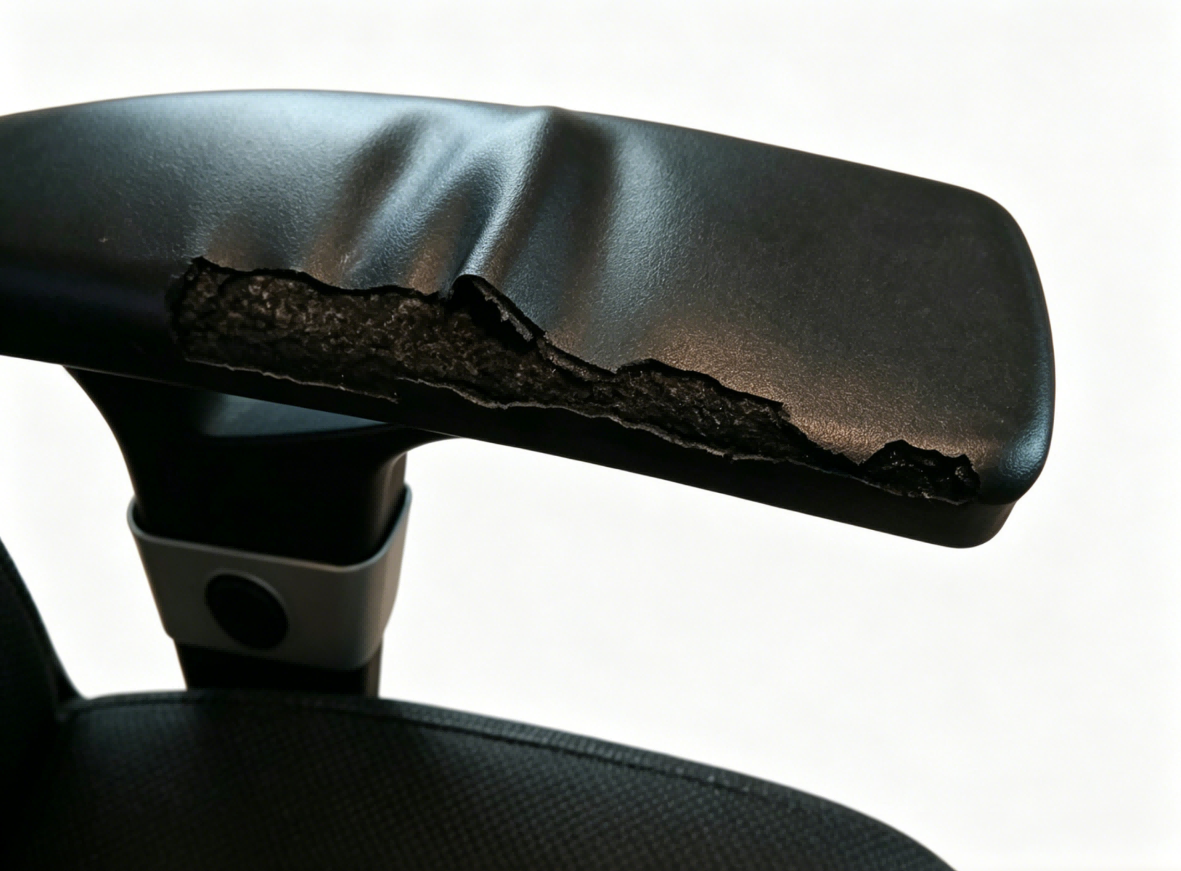
In one automotive damping-parts application, ratio drift first surfaced as hardness scatter and dimensional variation. After the line moved to closed-loop high-pressure metering, part tolerance tightened from ±1.2 mm to ±0.3 mm and defect rate fell from 5.2% to 2.0%. The change was not a new polyol — it was control of what the polyol and isocyanate actually received.
Shot weight also interacts with index control. If the mold is underfilled or overfilled, the index may be correct on paper and wrong in rubber.
If the shot weight is off, the index can be perfect on paper and wrong in the mold because fill density changes. <How To Calculate Shot Weight In Polyurethane> covers how to translate part geometry and density into the correct pour weight.
Need a process-level index check before committing to a reformulation? Send the target index, current A/B setting, shot weight, and the hardness or density result you are getting to Info@chinahaifeng.com. A ratio audit generally shows whether the issue is chemistry or metering within one review.
A Working Sequence for Setting the Index
- Confirm hydroxyl number and water content for each lot before calculating NCO demand [2].
- Confirm NCO content of the isocyanate side [3].
- Calculate the theoretical NCO requirement including water [1].
- Choose a starting index based on part type and property target, using supplier starting points and reference data as a range rather than an exact law [4].
- Run a small trial and record density, hardness, gel or tack-free time, and post-cure shrinkage.
- Adjust in small, traceable increments. Keep the ratio change logged against the part result.
- Lock the A/B ratio and verify metering stability at the actual shot weight.
Get a Metering-Level Index Check
An index problem is often a process control problem wearing a chemistry label. Haifeng Polyurethane Machinery engineers two-component pouring, casting, and foaming systems for closed-loop ratio control and full-range dynamic metering accuracy of ≤ ±0.3%. If you are fighting hardness scatter, density drift, or sticky demold, send us the material data, target index, shot weight, and production photos. We will start with the calculation, not the catalog.
Email: Info@chinahaifeng.com
WhatsApp: 86 13566296633
Frequently Asked Questions
What is the difference between isocyanate index and A/B mix ratio?
The mix ratio is a machine setting expressed in mass or volume. The index is a chemical ratio based on NCO equivalents and reactive-hydrogen equivalents. Different polyol hydroxyl values or isocyanate NCO contents can produce the same mix ratio with different indexes.
Does a higher index always make a part harder?
Not always. A moderate excess of NCO can raise crosslink density and hardness, but too much excess can create brittle, over-crosslinked, or over-gassed parts [4]. The practical effect depends on the system and the part thickness.
How is the index calculated in a water-blown foam?
Water must be counted as part of the theoretical NCO demand. Each mole of water consumes two NCO groups. If water is ignored, the mixed system behaves as if the index is higher than the value written on the formulation sheet [1].
What is the best starting index for cast elastomers?
There is no universal number. The starting point should come from the prepolymer NCO content, the chain extender, the target hardness, and the supplier’s formulation card. It should then be verified on the line through hardness, cure, and shrinkage checks.
Why does the index drift if the A/B ratio does not change?
Raw material lot changes are the usual cause. Shifting hydroxyl value, water content, or NCO content changes the actual equivalents even when the machine ratio stays fixed [2], [3]. Temperature, viscosity, and metering pump wear can also change delivered mass.
References
[1] G. Oertel, Ed., Polyurethane Handbook, 2nd ed. Munich, Germany: Hanser Publishers, 1994.
[2] ISO 14900:2017, Plastics — Polyols for Use in the Production of Polyurethane Plastics — Determination of Hydroxyl Number. Geneva, Switzerland: ISO, 2017.
[3] ISO 14896:2009, Plastics — Polyurethane Raw Materials — Determination of Isocyanate Content. Geneva, Switzerland: ISO, 2009.
[4] K. Ashida, Polyurethane and Related Foams: Chemistry and Technology, 2nd ed. Boca Raton, FL, USA: CRC Press, 2006.
If you’re interested, check out these related articles:
Measuring Polyurethane Foam Resilience A Practical Test Guide
RRIM Vs RIM Which Process Suits Your Structural Part