If you make rollers, wheels, seals, mining screens, or rail pads, you have probably seen parts described as cast polyurethane, CPU, or cast elastomer — sometimes as if all three meant the same thing. They are close, but the distinction matters when you are choosing a production process.
Cast polyurethane is a liquid-cast, thermoset elastomer system. A prepolymer containing isocyanate groups is mixed with a short-chain curative, poured into an open or closed mold, and cured by a chemical reaction that builds a crosslinked network. Once cured, the part cannot be remelted or extruded like a thermoplastic.
This article explains what CPU is at the formulation level, how the casting process actually works, and where the quality risk sits.
What Cast Polyurethane (CPU) Actually Means
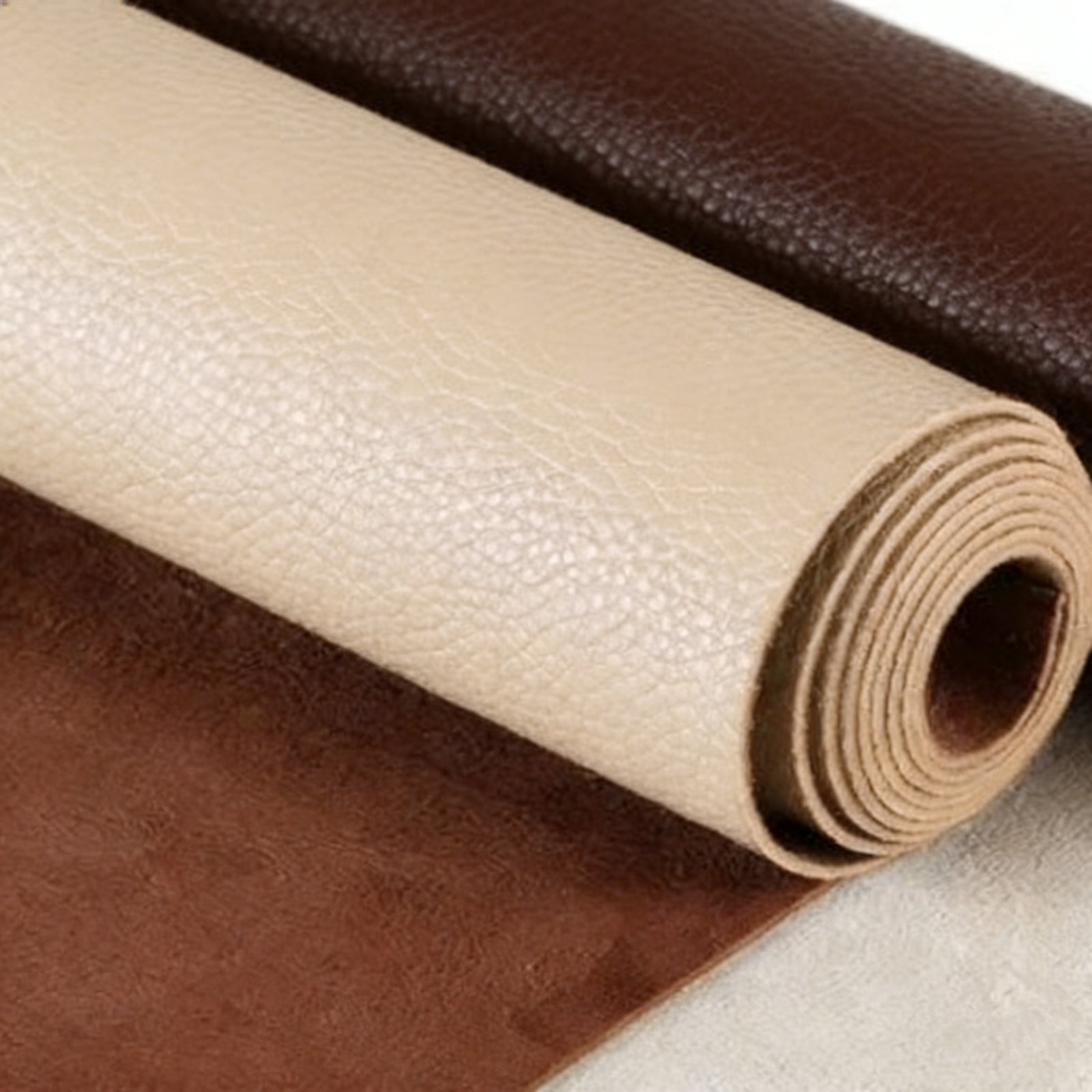
CPU belongs to the polyurethane elastomer family, but it is defined less by chemistry and more by the way it is processed. The raw system starts as a liquid, is cast into a mold, and solidifies through reaction.
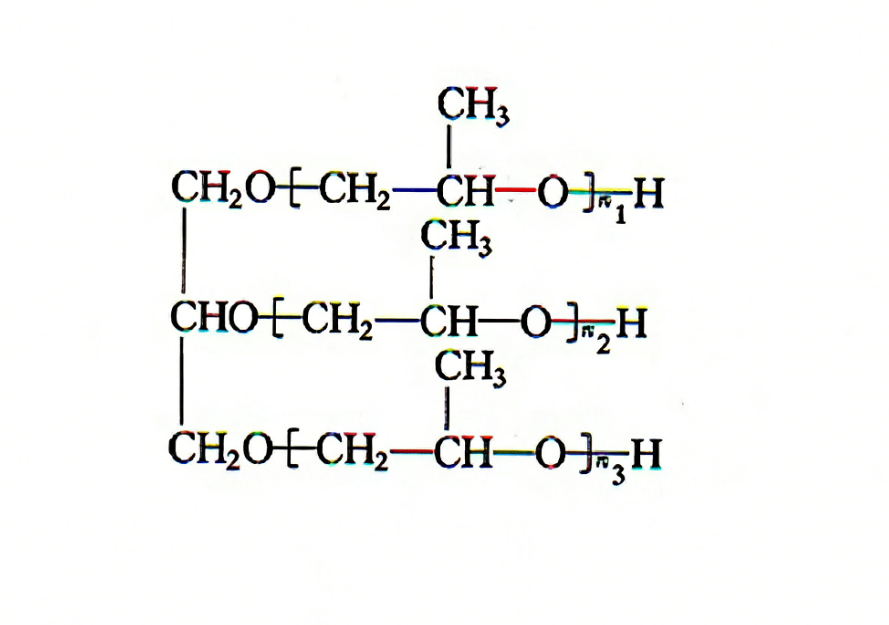
In the most common hot-cast route, the process begins with an isocyanate-terminated prepolymer. A polyol — often PTMEG, PPG, or a polyester polyol — is reacted with an excess of TDI, MDI, or NDI. The result is a pourable intermediate with a controlled NCO content.
That prepolymer is then chain-extended with a short diol or diamine. The two most common choices are:
- BDO (1,4-butanediol) — typically used for resilient, hydrolysis-resistant grades with lower hardness transition.
- MOCA (4,4′-methylene-bis(2-chloroaniline) — used where high hardness, strength, and abrasion resistance are needed, but requiring higher processing temperatures because MOCA is solid at room temperature.
The final properties are created by the ratio of hard segments to soft segments, the crosslink density, and how completely mixing occurs before the material fills the mold.
Because the components are liquid at the point of mixing, CPU can be cast into thick sections, around metal cores, and into tools that would be impractical for injection molding. That processing freedom is the main reason manufacturers accept the longer cycle times of casting.
How CPU Differs From TPU, Millable Urethane, and RIM
CPU is often confused with TPU, but the difference is fundamental.
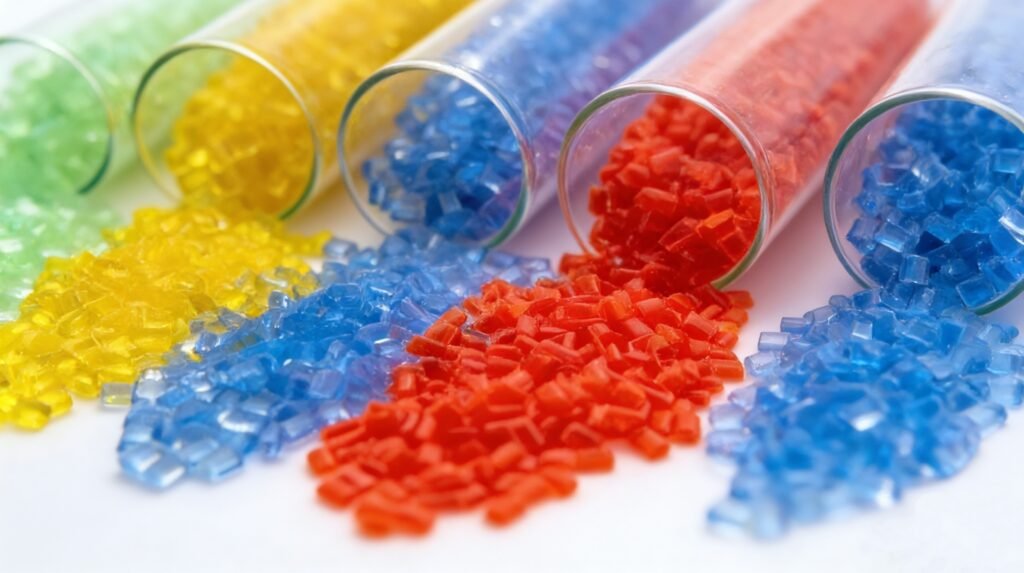
TPU is a thermoplastic polyurethane. It is supplied as pellets, melted, and processed by injection molding or extrusion. It can be reprocessed, but certain very soft or very hard wear-resistant grades are difficult to make with pellet-based equipment.
CPU is a thermoset. It starts as two liquid components, reacts in the mold, and cannot be remelted. This allows formulation ranges and thick-wall parts that are difficult to achieve with TPU.
Millable polyurethane (MPU) is a rubber-like gum processed on conventional rubber equipment. It is useful, but it does not offer the same pourable, low-pressure mold-filling behavior as CPU.
RIM, meanwhile, is a high-pressure impingement-mixing process. RIM injects reactive liquid into a closed mold at high pressure and is often selected for fast cycle times on moderate-modulus parts. Cast polyurethane typically operates at lower mixing pressure, uses open or lightly closed molds, and tolerates longer gel times. That makes CPU better suited to very thick parts, high-hardness abrasion grades, and large rollers or pads.
The Casting Process Step by Step
Most CPU quality failures are not caused by bad chemistry. They are caused by temperature, metering, or degassing errors that occur before the material reaches the mold.
1. Prepolymer preparation and degassing
The prepolymer is heated to a workable viscosity, usually in the range of 30–80°C depending on the system. If the polyol or prepolymer contains dissolved moisture or entrained air, the result is bubbles, pinholing, or inconsistent hardness.
Vacuum degassing is the standard correction. On casting machines used for rollers, seals, and industrial components, degassing capacity commonly reaches -0.095 MPa or lower. Without this step, dissolved gas expands during the exotherm and creates internal pores that cannot be removed after cure.

2. Curative melting and temperature control
MOCA-based systems typically require the curative side to run at 90–115°C. BDO-based systems run much lower, often around 25–50°C. If the curative is too cold, crystallization or viscosity increases and the ratio shifts. If it is too hot, pot life shortens and the mix may react before the mold is full.
This is why separate temperature-controlled tanks matter. A system that controls prepolymer temperature but not curative temperature can still produce batch-to-batch hardness drift.
3. Metering and mixing
CPU production uses either 1A1B systems or 2A2B systems. The extra components in 2A2B equipment allow separate feed of two prepolymers or inclusion of color paste and additive tanks.
The critical parameter is dynamic metering accuracy. A deviation of even one percentage point in the prepolymer-to-curative ratio changes stoichiometry, hardness, and residual curative concentration. Modern precision casting equipment targets ±0.3% or better across the rated pouring range.
Mixing head speed is also important. High-shear mixing in the 6,000–12,000 rpm range is typical, but the right speed depends on viscosity and pot life. Too little shear leaves unmixed curative. Too much shear adds heat and shortens the casting window.
4. Casting and mold filling
The mixed material is poured into a mold, often with a controlled pouring rate from tens to more than a thousand grams per second depending on part size. For rollers, centrifugal casting may be used to force the material against a rotating shell and build a void-free layer.
Shot weight must match the mold volume precisely. Underfill leaves a short part. Overfill creates flash, seal failures, or mold pressure that moves a core.
Shot weight is the number that connects metering accuracy to mold quality. <How To Calculate Shot Weight In Polyurethane> covers the calculation method and the practical corrections for fill volume, gel time, and part weight.
5. Gel, cure, and post-cure
After pouring, the material gels, then develops strength. Demolding happens when the part has enough green strength to hold its shape.
Post-curing is often required to complete crosslinking and stabilize properties. Without it, hardness, compression set, and heat resistance may look acceptable at demold but drift later in service.
Property Levers: Hardness, Abrasion, and Load Bearing
Cast polyurethane covers a broad durometer range depending on formulation and curative ratio [6]. The same base chemistry can produce a soft cushioning pad or a hard roller, which is why a single vague spec such as “hard polyurethane” is not a purchasing specification.
The table below shows the core properties processors usually test.
| Property | Common test reference | Why it matters in CPU selection |
|---|---|---|
| Hardness | ISO 868 / ASTM D2240 | Part fit, load distribution, wear behavior [1] |
| Tensile strength and elongation | ISO 37 | Resistance to tearing or cracking under tension [2] |
| Tear strength | ISO 34-1 | Edge splitting in seals, screens, and thin sections [3] |
| Abrasion loss | ISO 4649 / DIN 53516 | Roller life, mining screens, wheels, and linings [4] |
| Compression set | ISO 815-1 | Sealing force retention and sustained-load behavior [5] |
Hardness is the most misused number in CPU specifications. Shore A and Shore D are different scales using different indenters. A 70 Shore A part is far softer than a 70 Shore D part.
If the durometer scale is assumed rather than specified, the entire application question changes. <Shore A Vs Shore D Hardness In Polyurethane> covers scale choice, test method, and how hardness relates to abrasion and load-bearing behavior.
Hardness alone also does not guarantee service life. Two compounds can share the same durometer while differing in tear strength, abrasion loss, or compression set. Applications such as mining screens and railway pads require tear and abrasion data, not only a hardness reading.
Equipment Decisions That Determine CPU Quality
At line level, CPU quality is less about the nominal output of the machine and more about how tightly the machine controls four things:
- Temperature on both prepolymer and curative sides
- Vacuum degassing before metering
- Dynamic metering accuracy during pour
- Cleaning behavior between shots and color changes
For example, a 2A2B elastomer casting machine may include MOCA/BDO switching, independent temperature control, vacuum degassing to -0.095 MPa, and automatic circulation plus air-purge cleaning. In roller production, the same machine may run a wear-resistant additive tank and pour rates from under 100 g/s to more than 1,000 g/s depending on mold size.
The cleaning system is easy to overlook when buying equipment, but it strongly affects uptime. A mixing head that cannot be purged reliably will build reacted material on internal surfaces, changing backpressure, ratio, and eventually part quality.
Equipment selection should be driven by the actual shot size, cycle time, viscosity, and fill geometry. Large-flow output is useful only if the metering system remains accurate within the operating window.
Equipment selection note: If you are comparing 1A1B and 2A2B casting systems, send the part weight, target hardness, mold volume, and required cycle time to info@chinahaifeng.com or WhatsApp 86 13566296633. The evaluation should focus on ratio tolerance, degassing capacity, and temperature control, not on maximum output printed in a brochure.
Applications Where Cast Polyurethane Wins
CPU is selected where abrasion, tear strength, load bearing, and thick-section molding matter more than fast cycle time.
Typical applications include:
- Industrial rollers for printing, steel processing, and material conveying
- Wheels and casters for high-load floor and warehouse equipment
- Mining screen plates and hydrocyclone linings exposed to wet abrasive slurry
- Hydraulic seals and oil seals requiring elasticity and fluid resistance
- Automotive suspension stops and ball-socket boots
- Railway pads and track components needing outdoor dimensional stability
- Pipe linings for corrosive and high-wear service

Roller casting is the clearest demonstration of how liquid casting, degassing, and controlled gel time combine. The material must wet a bond layer on the core, release air at the surface, gel uniformly, and then cure without shrinkage separation.
Roller production shows the same metering and degassing rules under rotation and core adhesion. <How Polyurethane Rollers Are Made From Casting To Cure> covers the casting-to-cure sequence and where porosity and adhesion failures come from.
A Practical Selection Checklist Before You Specify CPU
Start with the application, not the material.
- Load and deflection: What hardness and modulus does the part actually need?
- Wear mechanism: Sliding, impact, wet abrasive, or cutting wear?
- Temperature: What is the peak operating temperature, including heat from hysteresis?
- Chemical exposure: Oils, water, solvents, or hydrolysis-prone environments?
- Thick sections and metal cores: Does the part require low-pressure mold filling?
- Quality records: Do you need batch traceability, ratio logging, and repeatable demold data?
If the answers point toward thick parts, high abrasion, or tight hardness control, CPU is often the right comparison against TPU, rubber, or RIM.
Move From Material Spec to a Casting Line That Hits It
The weak point in most CPU projects is not the theoretical formula. It is the gap between the datasheet and the casting process.
Before you buy equipment, define the shot weight, the gel time, the degassing requirement, and the temperature tolerance for both components. Then compare machines on those numbers, not on peak output.
Haifeng Polyurethane Machinery supplies metering and casting systems for CPU elastomers, rollers, seals, screen plates, and railway parts. For process scoping, send your part drawing, target hardness, shot weight, and cycle time to:
Email: Info@chinahaifeng.com
WhatsApp: 86 13566296633
FAQ
Is cast polyurethane the same as thermoplastic polyurethane?
No. Cast polyurethane is a liquid-cast thermoset that cures by chemical crosslinking. Thermoplastic polyurethane is pellet-based, melted, and processed by injection or extrusion. CPU cannot be remelted after cure; TPU can be reprocessed.
What does “hot cast” mean in cast polyurethane?
Hot-cast usually refers to prepolymer systems processed at elevated temperature, often with a MOCA or diol curative held above room temperature. The term separates these systems from room-temperature-curing “cold-cast” formulations.
What hardness range is available in cast polyurethane?
The range depends on prepolymer type, NCO content, and curative ratio. Cast polyurethane can be formulated from very soft pads to hard engineering grades, so hardness must be specified with the Shore A or Shore D scale, not as a single number.
Why does vacuum degassing matter in CPU casting?
Dissolved gas, moisture, and entrained air expand during the curing exotherm. Vacuum degassing before metering reduces bubbles, pinholes, and internal porosity that cannot be corrected after the part gels.
How should I choose between CPU casting and RIM?
Use CPU casting when the part is thick, needs very high abrasion resistance, includes metal cores, or requires open-mold pouring and longer gel time. Consider RIM when cycle speed and closed-mold high-pressure injection are more important than extreme hardness or thick-section freedom.
References
[1] ISO 868:2003, Plastics and ebonite — Determination of indentation hardness by means of a durometer (Shore hardness).
[2] ISO 37:2017, Rubber, vulcanized or thermoplastic — Determination of tensile stress-strain properties.
[3] ISO 34-1:2015, Rubber, vulcanized or thermoplastic — Determination of tear strength — Part 1: Trouser, angle and crescent test pieces.
[4] ISO 4649:2017, Rubber, vulcanized or thermoplastic — Determination of abrasion resistance using a rotating cylindrical drum device.
[5] ISO 815-1:2019, Rubber, vulcanized or thermoplastic — Determination of compression set — Part 1: At ambient or elevated temperatures.
[6] Oertel, G., ed., Polyurethane Handbook, 2nd ed., Hanser Publishers, 1994.
If you’re interested, check out these related articles:
Shore A Vs Shore D Hardness In Polyurethane
What Is Semi Rigid Polyurethane Foam