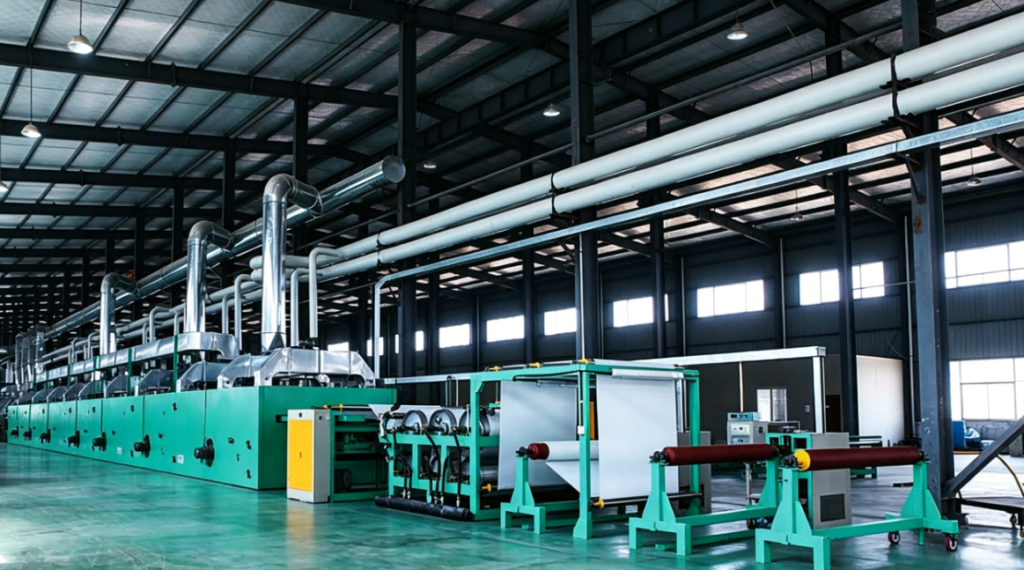
Если вы производите ролики, колеса, уплотнения, сита для горной промышленности или подрельсовые прокладки, вы, вероятно, встречали детали, которые называют литым полиуретаном, CPU или литым эластомером — иногда так, будто все три термина означают одно и то же. Они близки, но это различие важно при выборе производственного процесса.
Литой полиуретан — это жидко-литейная термореактивная эластомерная система. Форполимер, содержащий изоцианатные группы, смешивают с короткоцепочечным отвердителем, заливают в открытую или закрытую форму и отверждают химической реакцией, которая образует сшитую сетку. После отверждения деталь нельзя повторно расплавить или экструдировать, как термопласт.
В этой статье объясняется, что такое CPU на уровне рецептуры, как на самом деле работает процесс литья и где кроется риск для качества.
Что на самом деле означает литьевой полиуретан (CPU)
CPU относится к семейству полиуретановых эластомеров, но определяется не столько химией, сколько способом переработки. Исходная система начинает существование в виде жидкости, заливается в форму и затвердевает в результате реакции.
В наиболее распространенном методе горячего литья процесс начинается с форполимера с концевыми изоцианатными группами. Полиол — часто PTMEG, PPG или сложный полиэфирный полиол — вступает в реакцию с избытком TDI, MDI или NDI. В результате получается заливаемый промежуточный продукт с контролируемым содержанием NCO.
Затем этот форполимер удлиняют цепь коротким диолом или диамином. Два наиболее распространенных варианта:
- BDO (1,4-бутандиол) — обычно используется для эластичных, гидролитически стойких марок с более низким переходом твердости.
- MOCA (4,4′-метилен-бис(2-хлоранилин) — используется там, где требуется высокая твердость, прочность и стойкость к истиранию, но требует более высоких температур переработки, поскольку MOCA при комнатной температуре является твердым веществом.
Конечные свойства определяются соотношением жестких и мягких сегментов, плотностью сшивки и тем, насколько полно происходит смешивание до заполнения материалом формы.
Поскольку компоненты на момент смешивания жидкие, CPU можно заливать в толстые сечения, вокруг металлических сердечников и в оснастку, которая была бы непрактичной для литья под давлением. Эта свобода обработки — главная причина, по которой производители принимают более длительные циклы литья.
Чем CPU отличается от TPU, вальцуемого уретана и RIM
CPU часто путают с TPU, но различие принципиальное.
TPU — это термопластичный полиуретан. Он поставляется в виде гранул, расплавляется и перерабатывается литьем под давлением или экструзией. Его можно перерабатывать повторно, но некоторые очень мягкие или очень твердые износостойкие марки трудно изготавливать на гранулирующем оборудовании.
CPU — это термореактивный материал. Он начинает существование в виде двух жидких компонентов, реагирует в форме и не может быть повторно расплавлен. Это позволяет получать рецептурные диапазоны и толстостенные детали, которых трудно достичь с TPU.
Вальцуемый полиуретан (MPU) is a rubber-like gum processed on conventional rubber equipment. It is useful, but it does not offer the same pourable, low-pressure mold-filling behavior as CPU.
RIM, meanwhile, is a high-pressure impingement-mixing process. RIM injects reactive liquid into a closed mold at high pressure and is often selected for fast cycle times on moderate-modulus parts. Cast polyurethane typically operates at lower mixing pressure, uses open or lightly closed molds, and tolerates longer gel times. That makes CPU better suited to very thick parts, high-hardness abrasion grades, and large rollers or pads.
Процесс литья шаг за шагом
Most CPU quality failures are not caused by bad chemistry. They are caused by temperature, metering, or degassing errors that occur before the material reaches the mold.
1. Подготовка прекурсора и дегазация
The prepolymer is heated to a workable viscosity, usually in the range of 30–80°C depending on the system. If the polyol or prepolymer contains dissolved moisture or entrained air, the result is bubbles, pinholing, or inconsistent hardness.
Vacuum degassing is the standard correction. On casting machines used for rollers, seals, and industrial components, degassing capacity commonly reaches -0.095 MPa or lower. Without this step, dissolved gas expands during the exotherm and creates internal pores that cannot be removed after cure.
2. Плавление отвердителя и контроль температуры
Задавайте температуры плавления, выдержки и обогрева линий для MOCA исходя из фактических TDS/SDS для данной марки и утверждённой рецептуры форполимера. Подтвердите, что материал остаётся полностью жидким на всём пути его следования. Номинальный диапазон настройки машины 90–115 °C не означает, что каждая марка MOCA расплавлена во всём этом диапазоне. Настраивайте BDO и другие отвердители в соответствии с их собственными требованиями к материалу и в пределах допустимой нагрузки оборудования.
This is why separate temperature-controlled tanks matter. A system that controls prepolymer temperature but not curative temperature can still produce batch-to-batch hardness drift.
3. Дозирование и смешивание
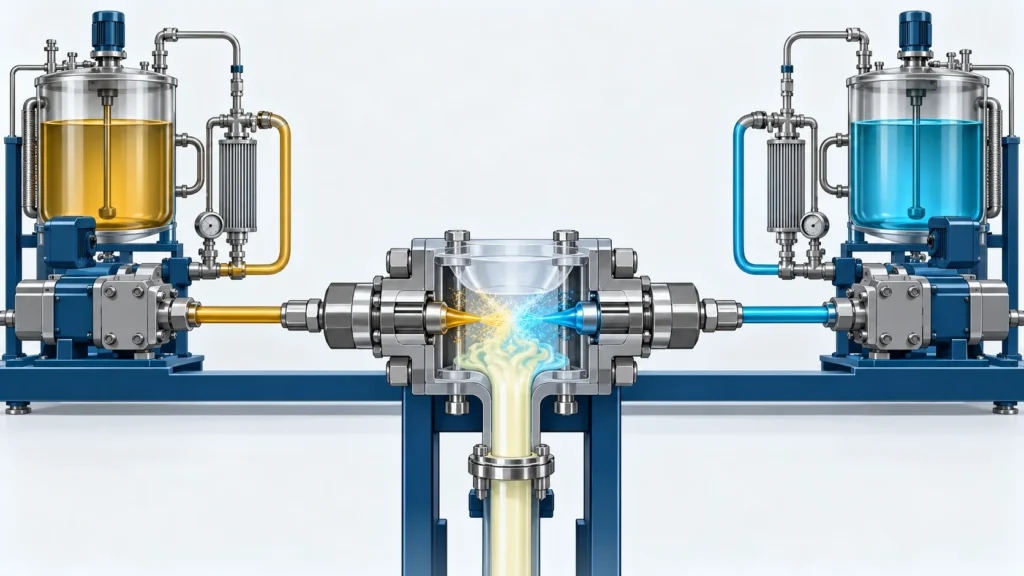
CPU production uses either 1A1B systems or 2A2B systems. The extra components in 2A2B equipment allow separate feed of two prepolymers or inclusion of color paste and additive tanks.
The critical parameter is dynamic metering accuracy. A deviation of even one percentage point in the prepolymer-to-curative ratio changes stoichiometry, hardness, and residual curative concentration. Modern precision casting equipment targets ±0.3% or better across the rated pouring range.
Mixing head speed is also important. High-shear mixing in the 6,000–12,000 rpm range is typical, but the right speed depends on viscosity and pot life. Too little shear leaves unmixed curative. Too much shear adds heat and shortens the casting window.
4. Литьё и заливка в форму
The mixed material is poured into a mold, often with a controlled pouring rate from tens to more than a thousand grams per second depending on part size. For rollers, centrifugal casting may be used to force the material against a rotating shell and build a void-free layer.
Shot weight must match the mold volume precisely. Underfill leaves a short part. Overfill creates flash, seal failures, or mold pressure that moves a core.
Shot weight is the number that connects metering accuracy to mold quality. Как рассчитать массу впрыска в полиуретане covers the calculation method and the practical corrections for fill volume, gel time, and part weight.
5. Гелирование, отверждение и постотверждение
After pouring, the material gels, then develops strength. Demolding happens when the part has enough green strength to hold its shape.
Post-curing is often required to complete crosslinking and stabilize properties. Without it, hardness, compression set, and heat resistance may look acceptable at demold but drift later in service.
Рычаги свойств: твёрдость, истирание и несущая способность
Cast polyurethane covers a broad durometer range depending on formulation and curative ratio [6]. The same base chemistry can produce a soft cushioning pad or a hard roller, which is why a single vague spec such as “hard polyurethane” is not a purchasing specification.
The table below shows the core properties processors usually test.
| Свойство | Общепринятый стандарт испытаний | Why it matters in CPU selection |
|---|---|---|
| Твёрдость | ISO 868 / ASTM D2240 | Part fit, load distribution, wear behavior [1] |
| Tensile strength and elongation | ISO 37 | Resistance to tearing or cracking under tension [2] |
| Сопротивление раздиру | ISO 34-1 | Edge splitting in seals, screens, and thin sections [3] |
| Потеря при истирании | ISO 4649 / DIN 53516 | Roller life, mining screens, wheels, and linings [4] |
| Остаточная деформация сжатия | ISO 815-1 | Sealing force retention and sustained-load behavior [5] |
Hardness is the most misused number in CPU specifications. Shore A and Shore D are different scales using different indenters. A 70 Shore A part is far softer than a 70 Shore D part.
If the durometer scale is assumed rather than specified, the entire application question changes. Твердость по Шору A и по Шору D в полиуретане covers scale choice, test method, and how hardness relates to abrasion and load-bearing behavior.
Hardness alone also does not guarantee service life. Two compounds can share the same durometer while differing in tear strength, abrasion loss, or compression set. Applications such as mining screens and railway pads require tear and abrasion data, not only a hardness reading.
Решения по оборудованию, определяющие качество CPU
At line level, CPU quality is less about the nominal output of the machine and more about how tightly the machine controls four things:
- Temperature on both prepolymer and curative sides
- Vacuum degassing before metering
- Dynamic metering accuracy during pour
- Cleaning behavior between shots and color changes
For example, a 2A2B elastomer casting machine may include MOCA/BDO switching, independent temperature control, vacuum degassing to -0.095 MPa, and automatic circulation plus air-purge cleaning. In roller production, the same machine may run a wear-resistant additive tank and pour rates from under 100 g/s to more than 1,000 g/s depending on mold size.
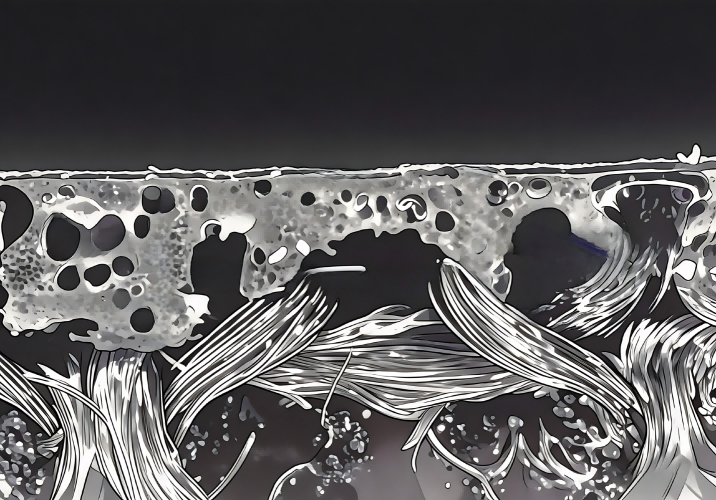
The cleaning system is easy to overlook when buying equipment, but it strongly affects uptime. A mixing head that cannot be purged reliably will build reacted material on internal surfaces, changing backpressure, ratio, and eventually part quality.
Equipment selection should be driven by the actual shot size, cycle time, viscosity, and fill geometry. Large-flow output is useful only if the metering system remains accurate within the operating window.
Equipment selection note: If you are comparing 1A1B and 2A2B casting systems, send the part weight, target hardness, mold volume, and required cycle time to info@chinahaifeng.com or WhatsApp 86 13566296633. The evaluation should focus on ratio tolerance, degassing capacity, and temperature control, not on maximum output printed in a brochure.
Области применения, где литьевой полиуретан выигрывает
CPU is selected where abrasion, tear strength, load bearing, and thick-section molding matter more than fast cycle time.
Typical applications include:
- Industrial rollers for printing, steel processing, and material conveying
- Колёса и ролики for high-load floor and warehouse equipment
- Mining screen plates and hydrocyclone linings exposed to wet abrasive slurry
- Hydraulic seals and oil seals requiring elasticity and fluid resistance
- Automotive suspension stops and ball-socket boots
- Railway pads and track components needing outdoor dimensional stability
- Pipe linings for corrosive and high-wear service
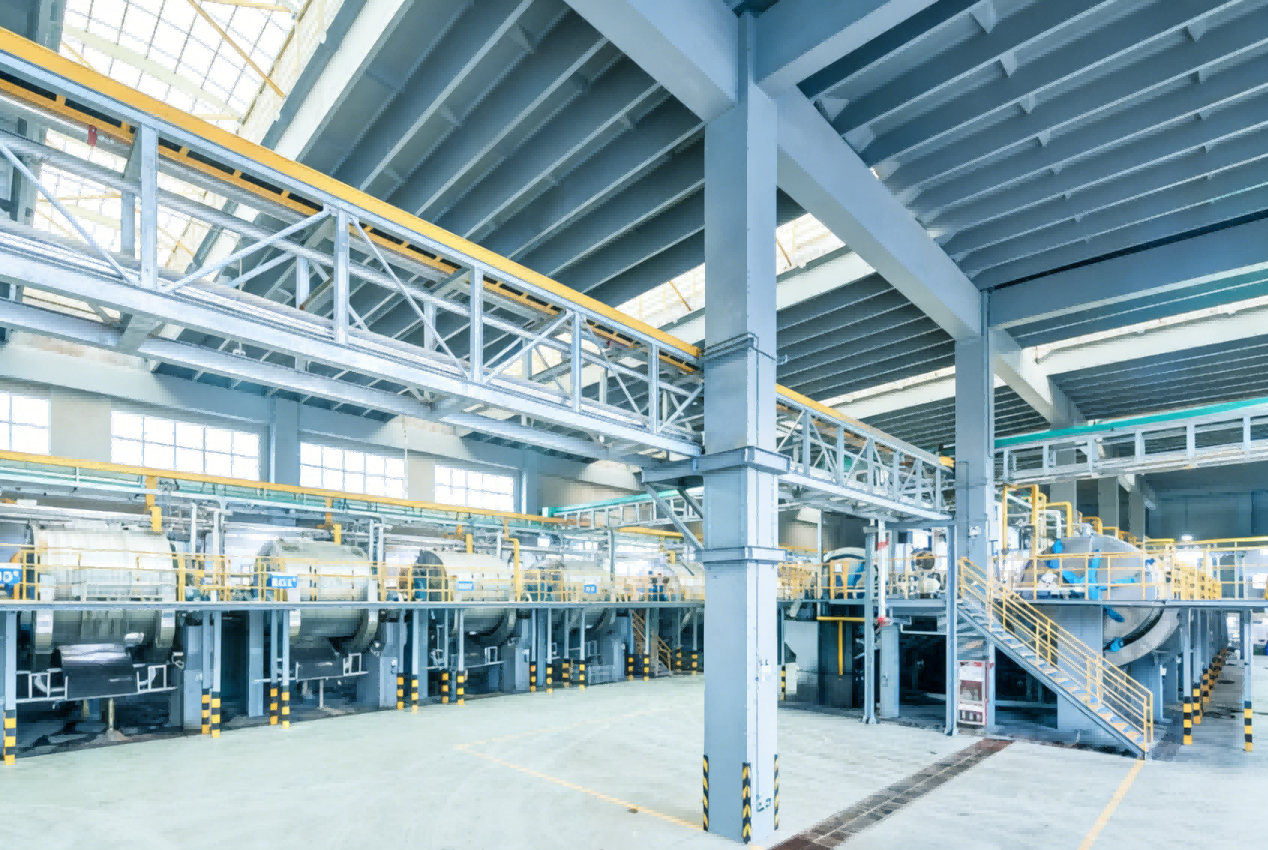
Roller casting is the clearest demonstration of how liquid casting, degassing, and controlled gel time combine. The material must wet a bond layer on the core, release air at the surface, gel uniformly, and then cure without shrinkage separation.
Roller production shows the same metering and degassing rules under rotation and core adhesion. Как изготавливают полиуретановые валки: от литья до отверждения covers the casting-to-cure sequence and where porosity and adhesion failures come from.
Практический контрольный список для выбора перед заказом CPU
Start with the application, not the material.
- Load and deflection: What hardness and modulus does the part actually need?
- Wear mechanism: Sliding, impact, wet abrasive, or cutting wear?
- Temperature: What is the peak operating temperature, including heat from hysteresis?
- Chemical exposure: Oils, water, solvents, or hydrolysis-prone environments?
- Thick sections and metal cores: Does the part require low-pressure mold filling?
- Quality records: Do you need batch traceability, ratio logging, and repeatable demold data?
If the answers point toward thick parts, high abrasion, or tight hardness control, CPU is often the right comparison against TPU, rubber, or RIM.
От спецификации материала — к литьевой линии, которая её обеспечивает
The weak point in most CPU projects is not the theoretical formula. It is the gap between the datasheet and the casting process.
Before you buy equipment, define the shot weight, the gel time, the degassing requirement, and the temperature tolerance for both components. Then compare machines on those numbers, not on peak output.
Haifeng Polyurethane Machinery supplies metering and casting systems for CPU elastomers, rollers, seals, screen plates, and railway parts. For process scoping, send your part drawing, target hardness, shot weight, and cycle time to:
Эл. почта: info@chinahaifeng.com
WhatsApp: 86 13566296633
Часто задаваемые вопросы
Литьевой полиуретан — это то же самое, что термопластичный полиуретан?
No. Cast polyurethane is a liquid-cast thermoset that cures by chemical crosslinking. Thermoplastic polyurethane is pellet-based, melted, and processed by injection or extrusion. CPU cannot be remelted after cure; TPU can be reprocessed.
Что означает «горячее литьё» (hot cast) в литьевом полиуретане?
Hot-cast usually refers to prepolymer systems processed at elevated temperature, often with a MOCA or diol curative held above room temperature. The term separates these systems from room-temperature-curing “cold-cast” formulations.
Какой диапазон твёрдости доступен для литьевого полиуретана?
The range depends on prepolymer type, NCO content, and curative ratio. Cast polyurethane can be formulated from very soft pads to hard engineering grades, so hardness must be specified with the Shore A or Shore D scale, not as a single number.
Почему вакуумная дегазация важна при литье CPU?
Dissolved gas, moisture, and entrained air expand during the curing exotherm. Vacuum degassing before metering reduces bubbles, pinholes, and internal porosity that cannot be corrected after the part gels.
Как выбрать между литьем CPU и RIM?
Use CPU casting when the part is thick, needs very high abrasion resistance, includes metal cores, or requires open-mold pouring and longer gel time. Consider RIM when cycle speed and closed-mold high-pressure injection are more important than extreme hardness or thick-section freedom.
Источники
[1] ISO 868:2003, Пластмассы и эбонит. Определение твёрдости при вдавливании с помощью дюрометра (твёрдость по Шору).
[2] ISO 37:2017, Rubber, vulcanized or thermoplastic — Determination of tensile stress-strain properties.
[3] ISO 34-1:2015, Резина вулканизованная или термопластичная — Определение сопротивления раздиру — Часть 1: Брючные, угловые и серповидные образцы.
[4] ISO 4649:2017, Резина вулканизованная или термопластичная — Определение сопротивления истиранию с использованием вращающегося цилиндрического барабана.
[5] ISO 815-1:2019, Резина вулканизованная или термопластичная — Определение остаточной деформации сжатия — Часть 1: При температуре окружающей среды или повышенной температуре.
[6] Oertel, G., ed., Polyurethane Handbook, 2nd ed., Hanser Publishers, 1994.
Если вам интересно, ознакомьтесь с этими статьями по теме:
Твердость по Шору A и по Шору D в полиуретане
Что такое полужесткий пенополиуретан
Specify PU casting equipment around the part and its working time
PU casting uses a metered reactive mixture to produce a cast polyurethane part. A polyurethane casting machine may deliver a hot-cast or another supplier-approved system through an open pour or into tooling designed for that product. In a quote for a urethane molding machine, specify whether the equipment scope includes degassing, component conditioning, tool heating, mold handling and a post-cure stage. Cast PU rollers and thick seals, for example, may have different fill paths and handling requirements even if they use the same metering principle.
For a PU casting machine trial, use the production grade, smallest and largest pours, and the most demanding tooling. Record ratio and mass, complete fill, cure and surface voids, then test the finished part against its service requirements. Compare roller casting from pouring to cure и three-component PU casting equipment before agreeing the supply boundary.