
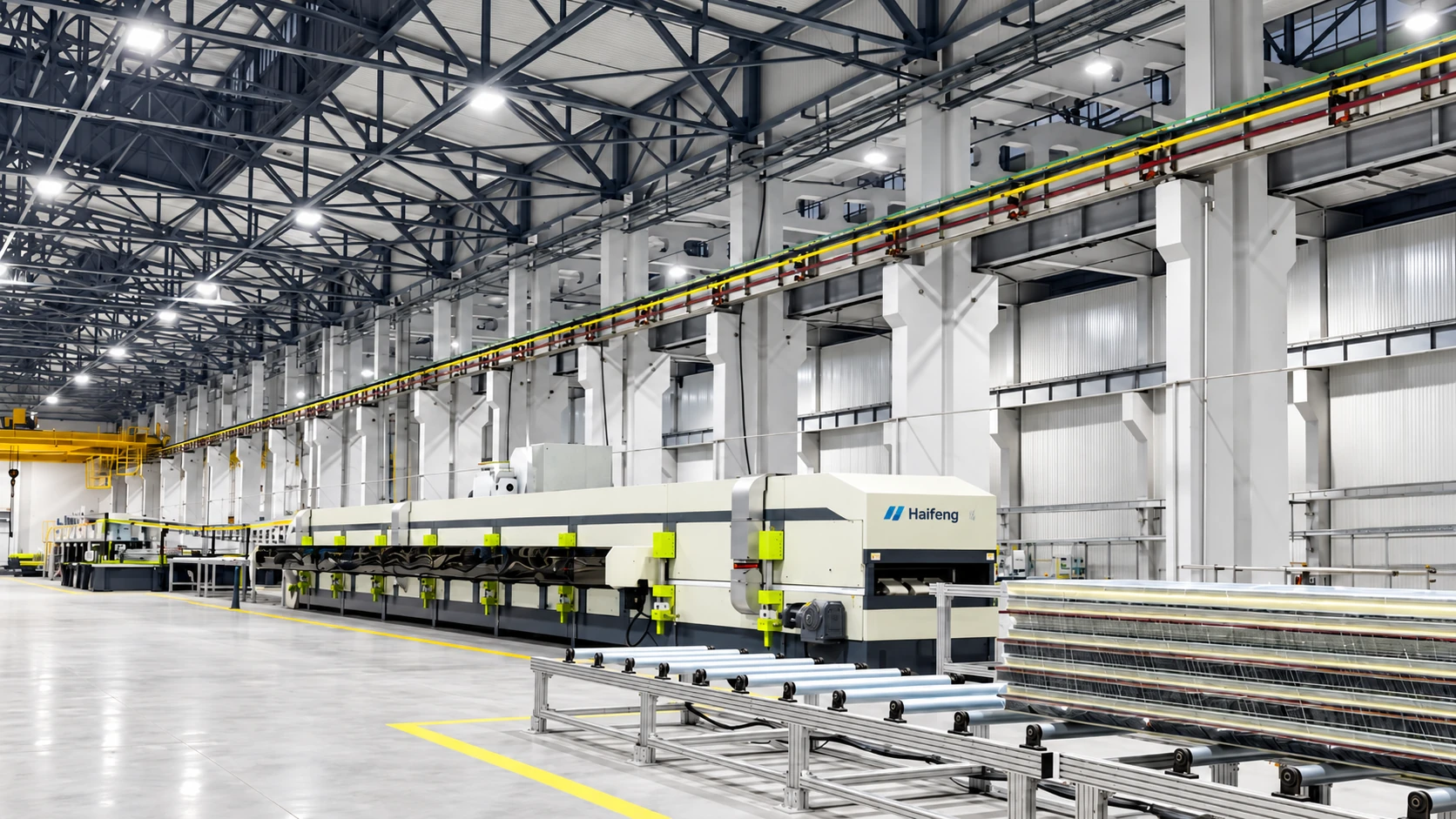
Industrial Building Sandwich Panel Production Solution
Continuous PU/PIR metal-faced roof and wall panel production, with coil profiling, five-component metering, double-belt curing and coordinated finishing.
Continuous PU/PIR Roof and Wall Panel Production
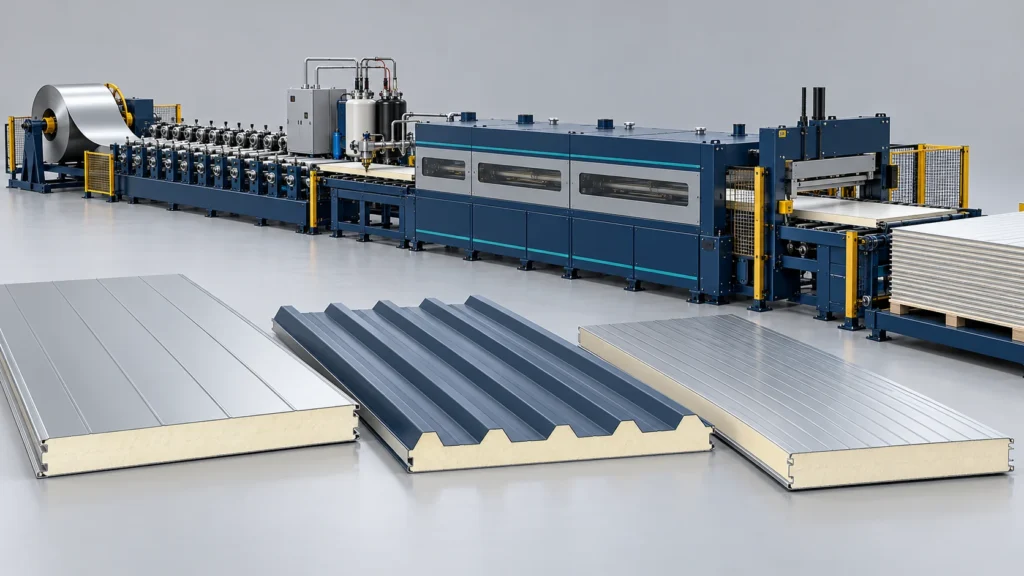
This solution coordinates metal-facing preparation, material conditioning, multi-component polyurethane metering and continuous double-belt curing for roof, wall and hidden-fix panels. The supplied 24 m reference line lists 3–9 m/min production speed, with final capacity determined by panel geometry, formulation and curing time.
Facing and Profile Preparation
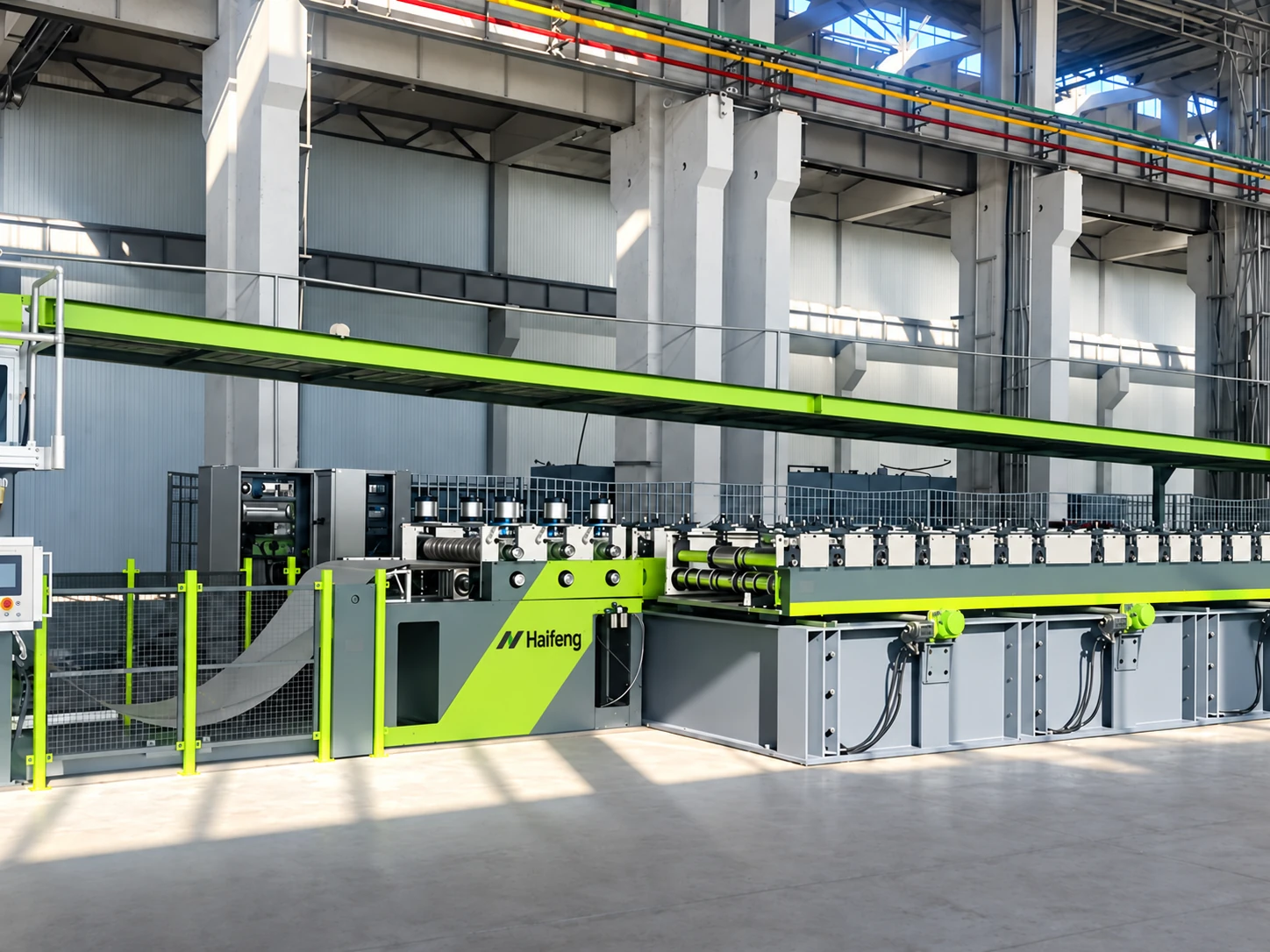
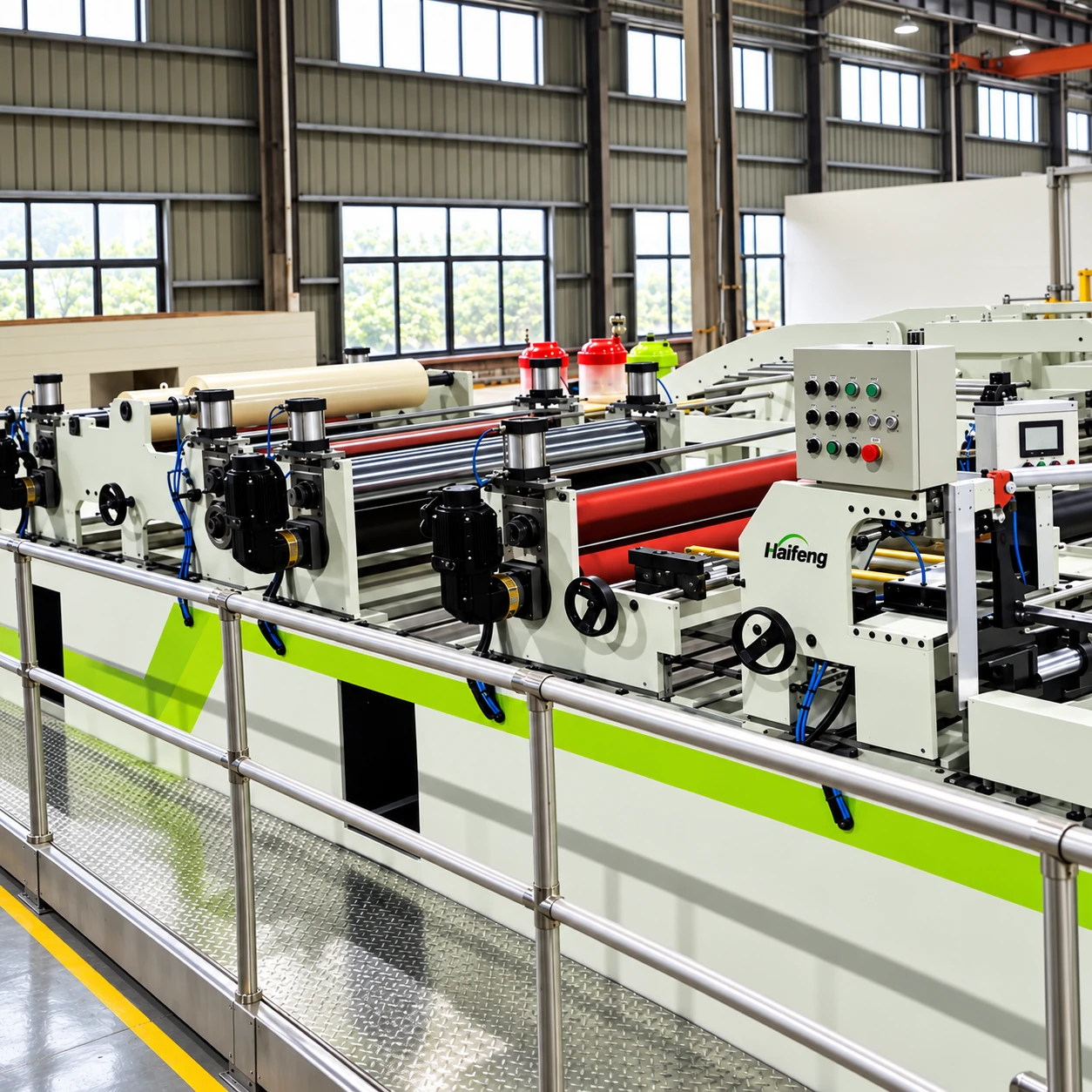
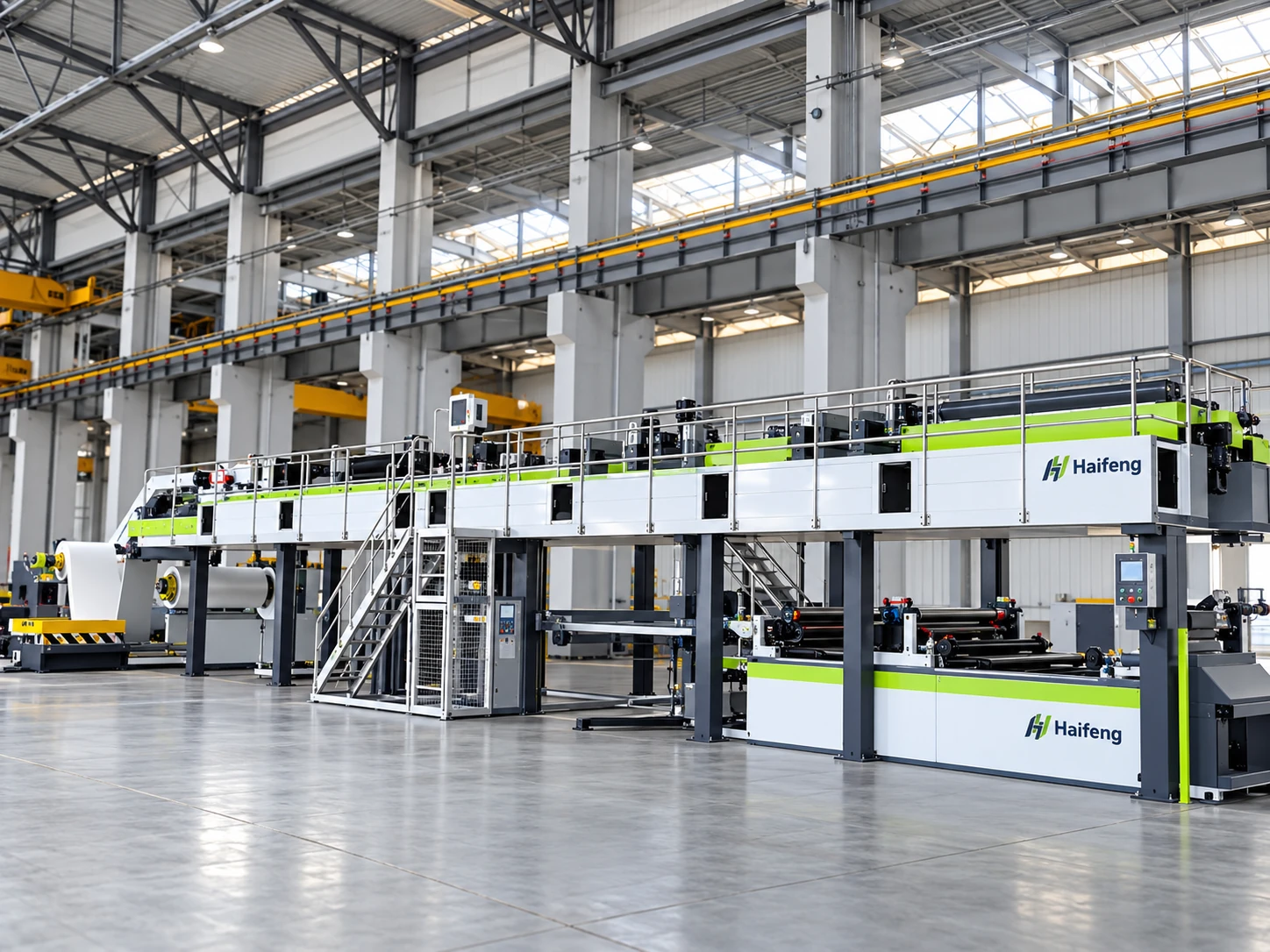
Upper and lower coils pass through controlled feeding, film application where required, surface preparation and selected roll-forming stations.
Metering Matched to Panel Duty
Main components and additives are configured for the selected PU/PIR recipe. Required mass flow is calculated from foam density, core thickness, panel width and line speed.
Haifeng can coordinate the metering package, laminator, tracking cut and finishing equipment as one production scope. Exact profiles, included molds, tank schedules, utilities and acceptance conditions are confirmed in the project configuration.
Step-by-Step Continuous Sandwich Panel Workflow
A coordinated reference workflow from facing coils and prepared components to cured, cut and packed panels.
Coil Feeding and Profiling
Load coils, feed and splice sheets, apply protective film where required, and roll-form roof or wall profiles. Surface roughening and corona treatment are selected for the facing material.
Sheet Preheating
Preheat the facings and condition the component materials for the selected foam recipe. Heating duty and setpoints are agreed with the formulation.
Five-Component Dosing
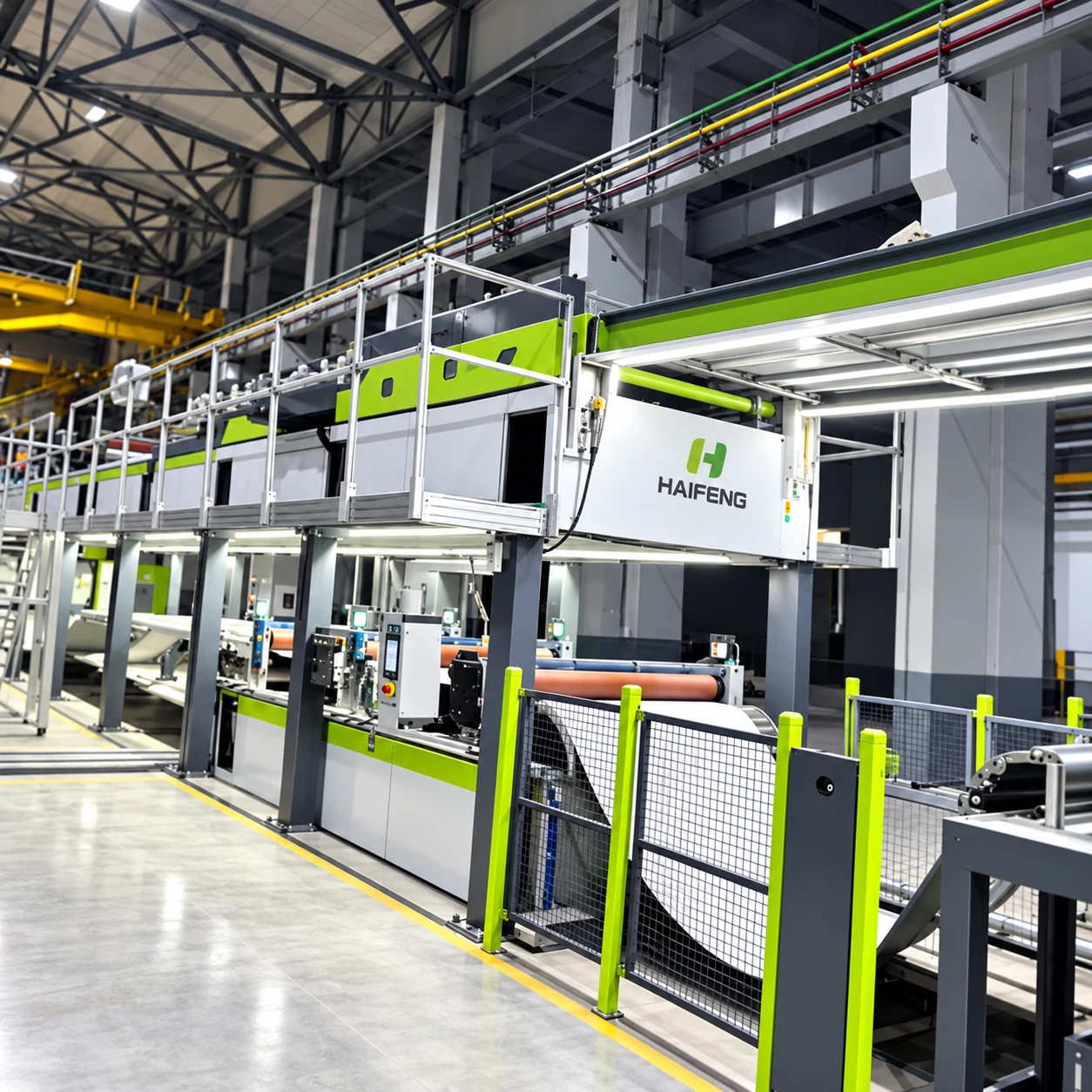
Meter polyol, MDI, catalysts and blowing agent through independently configured circuits. A stationary or traversing head distributes material onto the lower facing.
Technical Specifications
The following values describe the supplied 24 m PU/PIR reference configuration. Mechanical limits, operating speed, tooling coverage and metering capacity are distinguished before equipment selection.
| Parameter | Reference configuration | Selection notes |
|---|---|---|
| Panel types | Roof, wall and hidden-fix wall profiles | Final geometry from the approved profile drawing |
| Core material and density | PU/PIR; 35–45 kg/m³ reference core density | Density depends on formulation and process conditions |
| Steel/stainless facings | 0.3–0.8 mm | Surface flatness and coil specification agreed before forming design |
| Aluminum facings | 0.5–1.0 mm | Selected with the required profile and surface treatment |
| Proposed panel range | 50–200 mm thickness; up to 15,000 mm length | The listed roof/wall side molds cover 50–150 mm; other tooling requires review |
| Production line speed | 3–9 m/min reference operating range | Maximum mechanical belt speed is a separate value, not the cured-panel production rating |
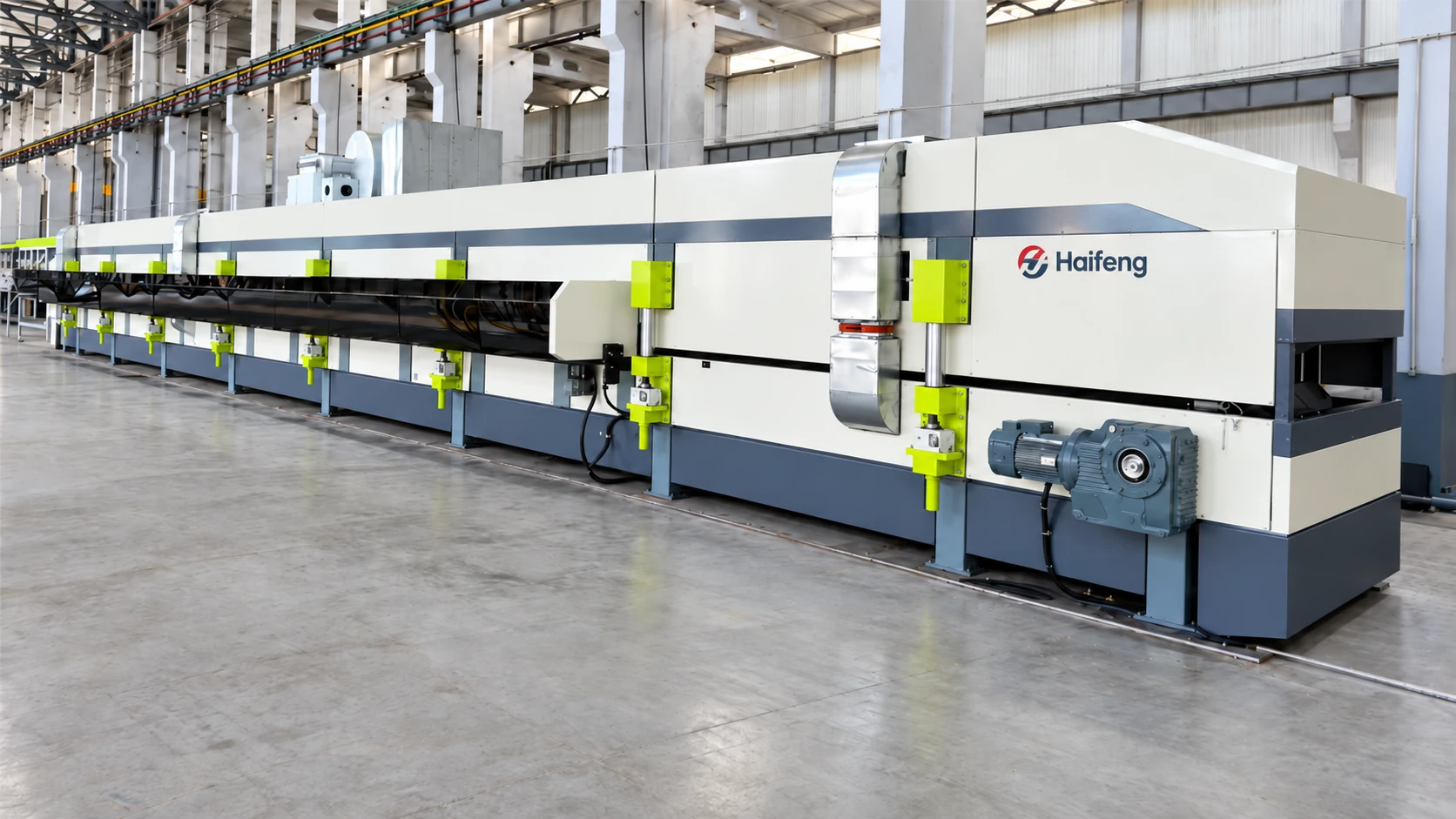
| Double-belt laminator | 24 m effective track; 1,200 mm effective chain-plate width | Final panel width from drawings |
| Laminator heating | 150 kW; stated maximum chain-plate temperature 80°C | Recipe operating temperature is separately agreed |
| Coil loading | Up to 10 t; 508/610 mm coil inner diameters | Maximum loading width 1,300 mm |
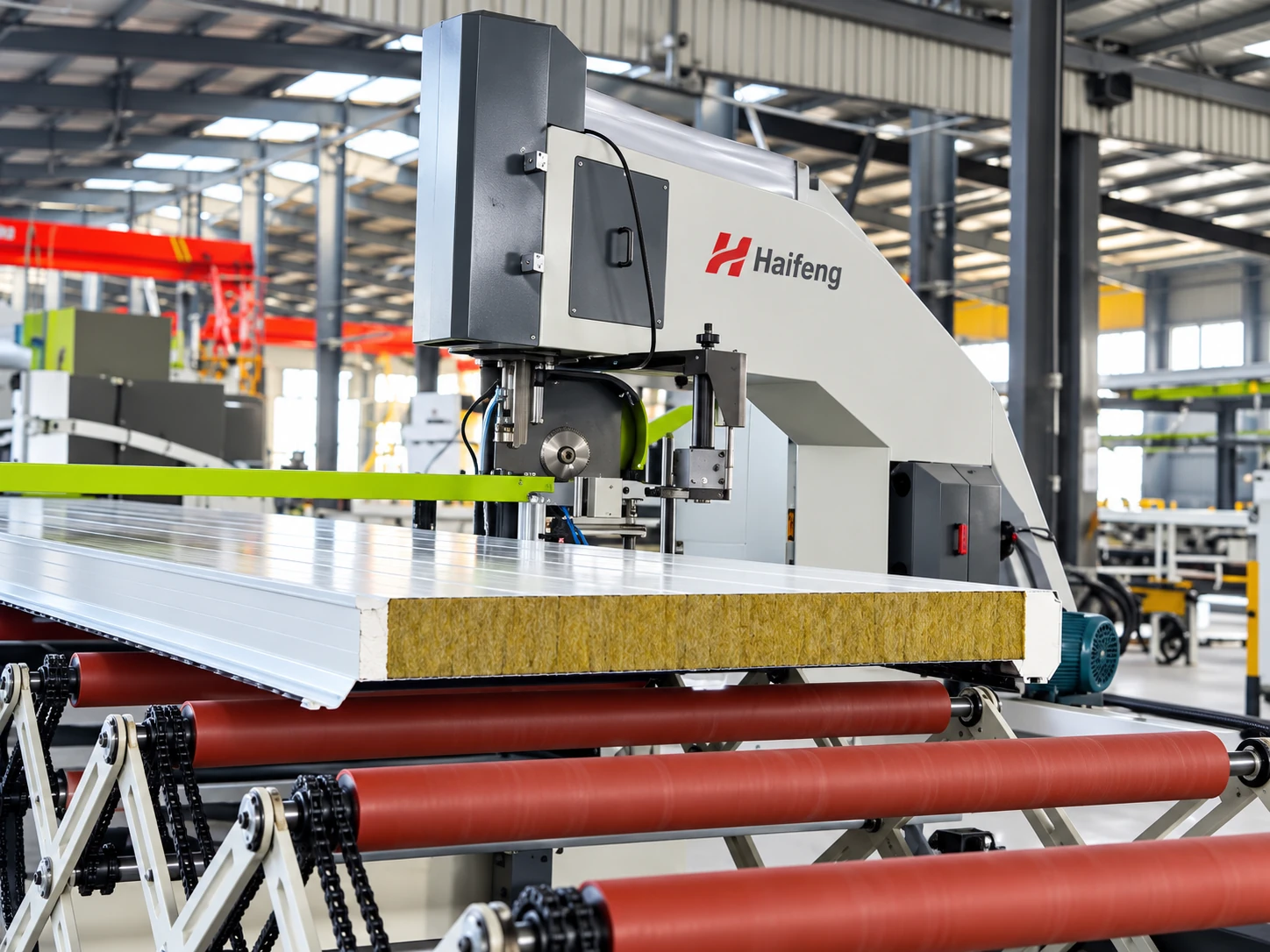
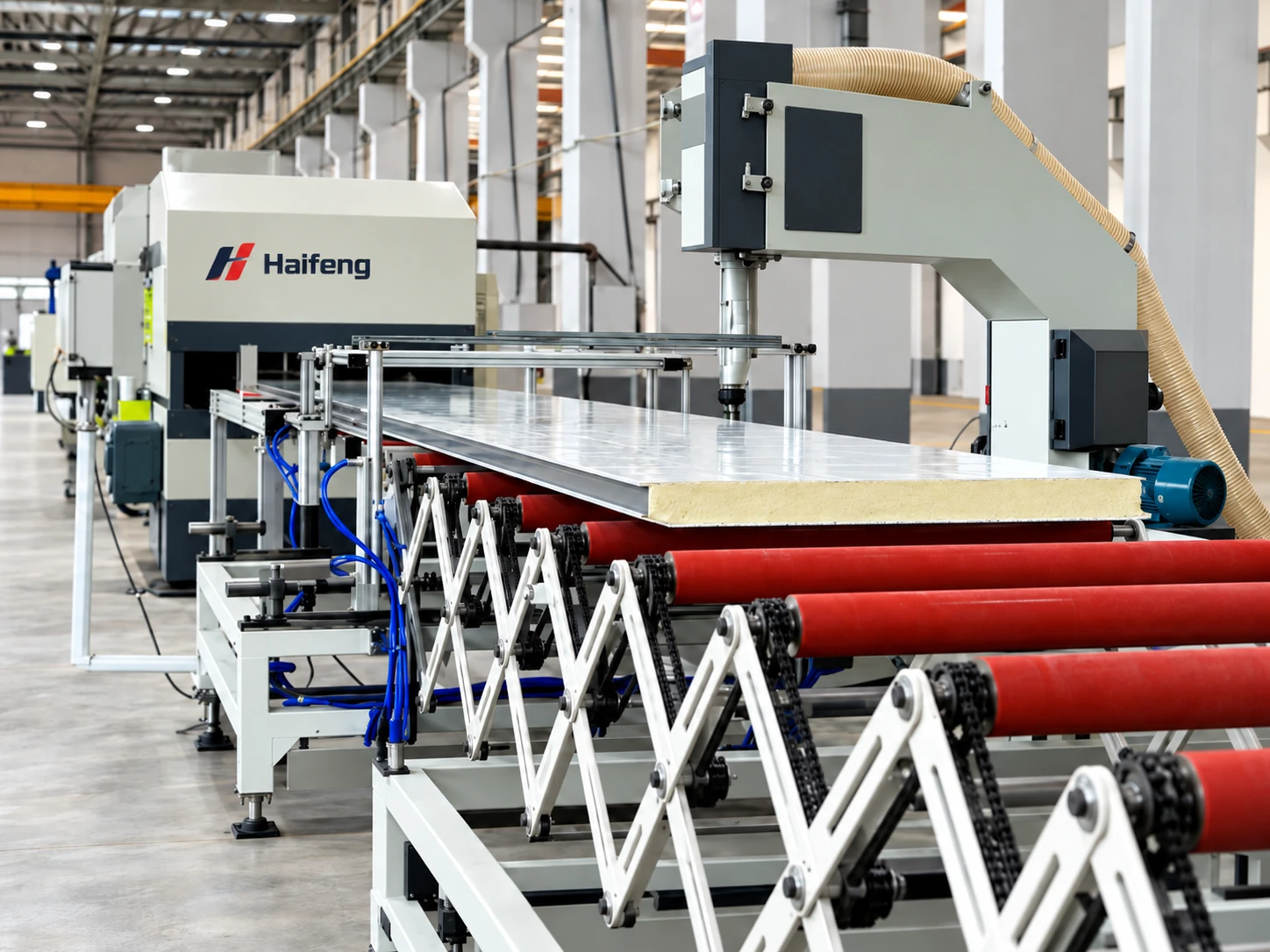
| Tracking cut | Flying band saw with overlap trim, cleaning and dust extraction | 1.8 m minimum cut at 7 m/min is a stated reference condition |
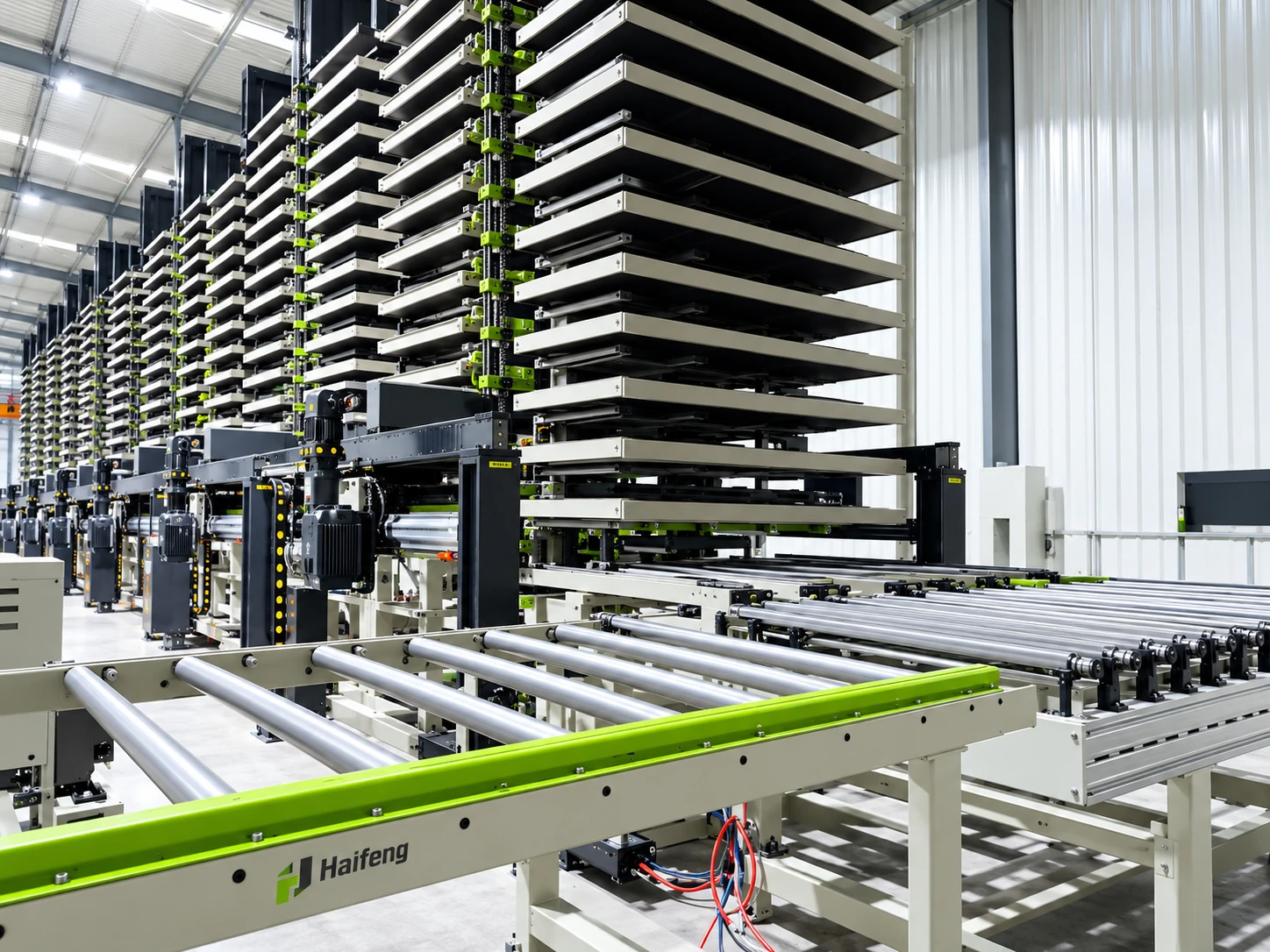
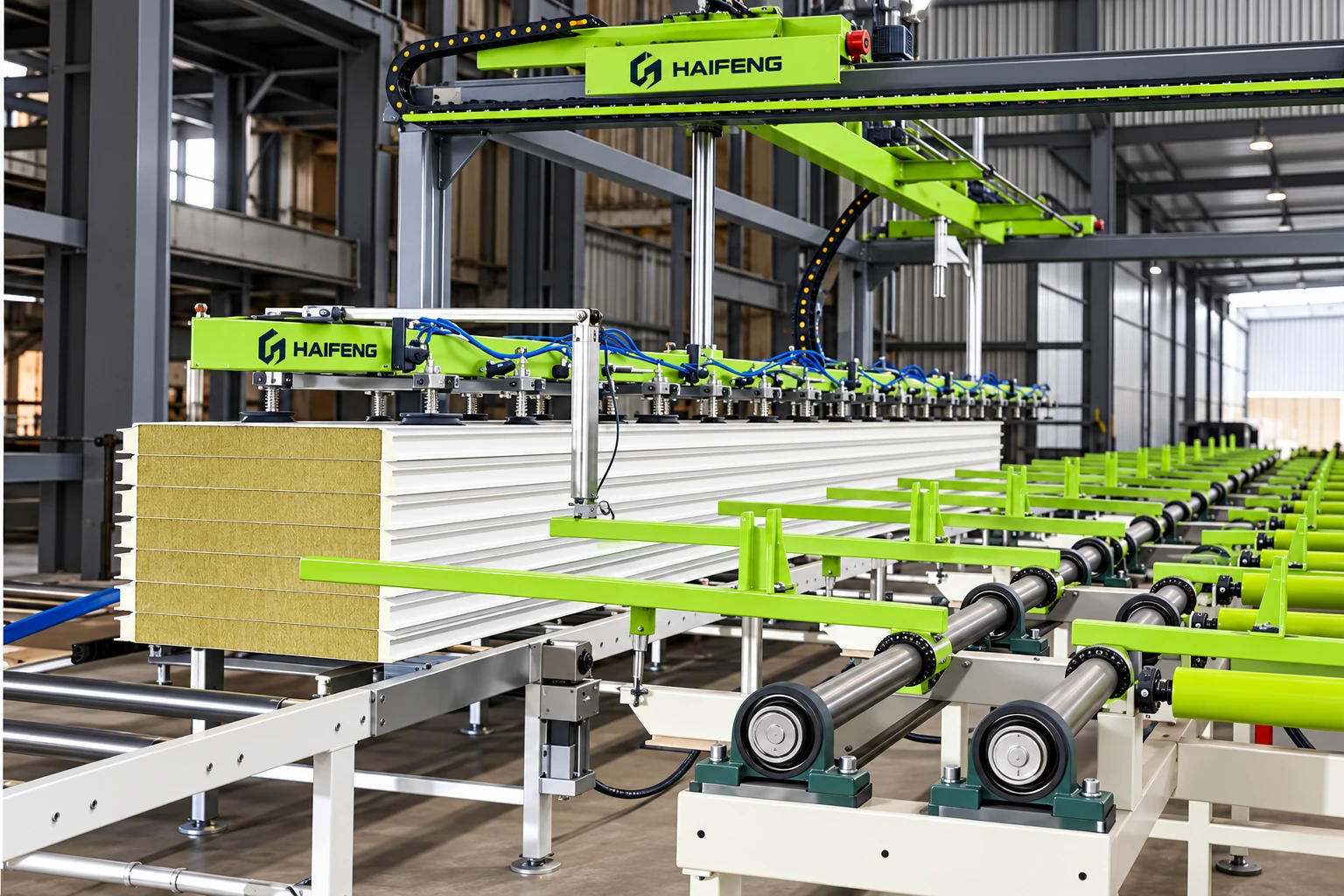
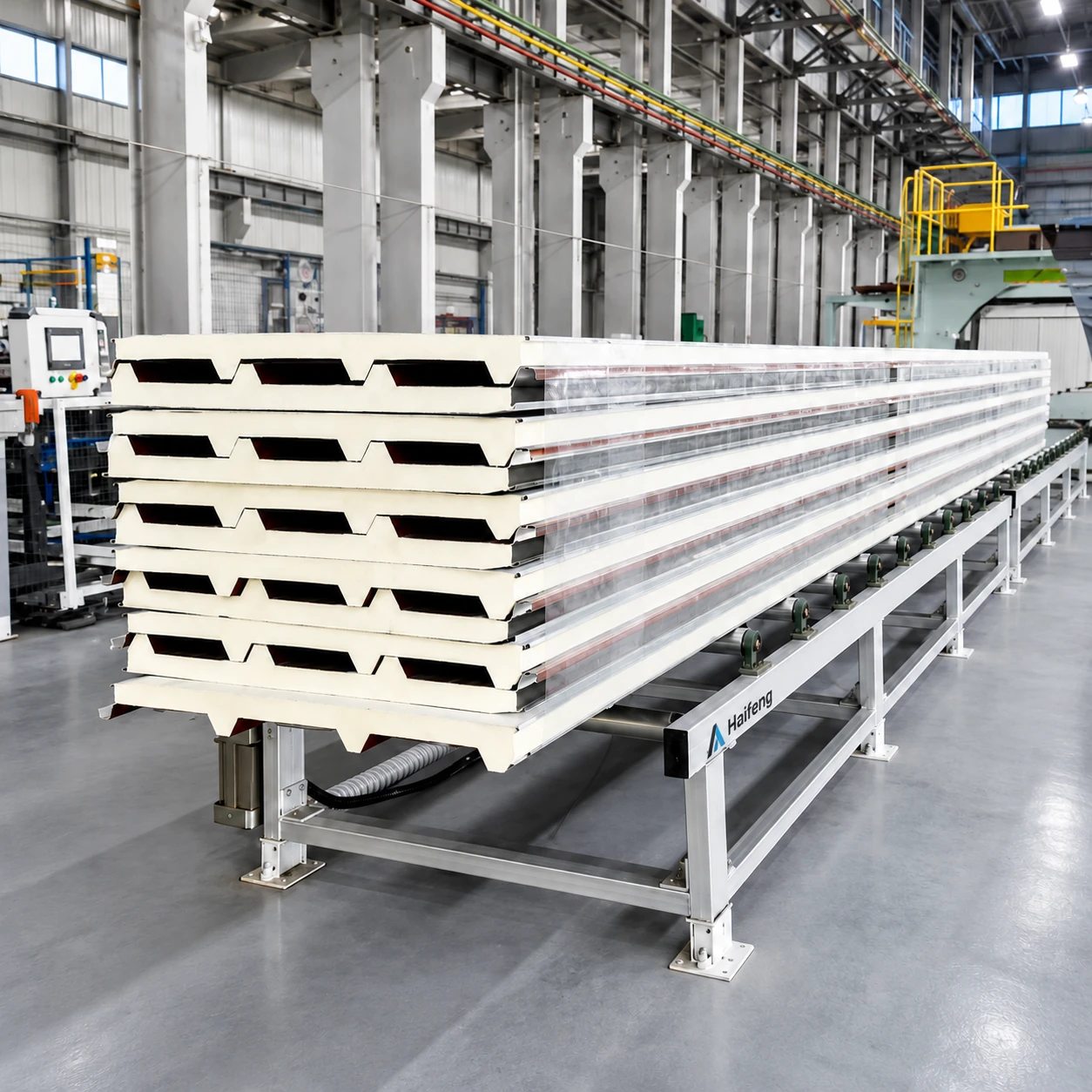
| Cooling and stacking | 45-position cooling reference and vacuum stacking | Packaging and panel handling selected for product dimensions |
| Utility reference | 250 kVA transformer; 380–415 V, 50–60 Hz; air 8 kg/cm² and 2.5 m³/min | Review full installed load and site interfaces for the final package |
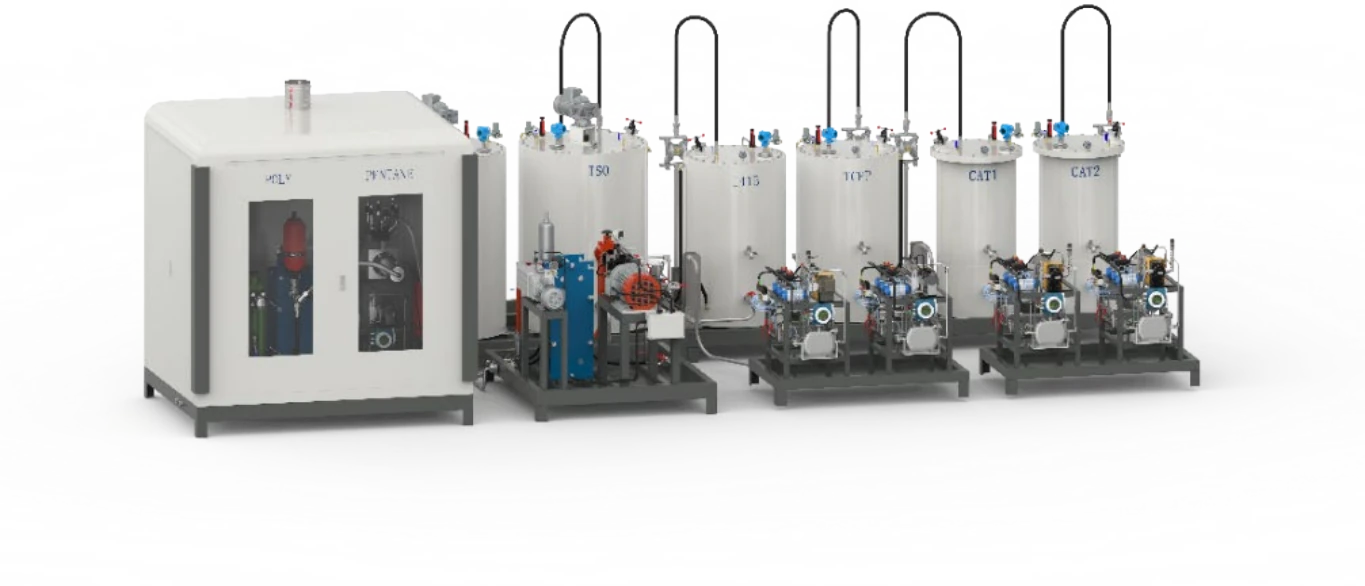
| Five-component metering | Polyol, MDI, catalyst 1, catalyst 2 and pentane | Size flow for panel density, width, thickness and line speed |
Matched Five-Component Metering Package
A dedicated five-component system can coordinate main-component dosing, additive delivery, component conditioning and panel laydown. The HF-HPC-50-CS product provides a separate reference package at 19–30 kg/min; it is selected against the required panel duty rather than assumed to cover every thickness and speed combination.
Five-Component Equipment Illustrations
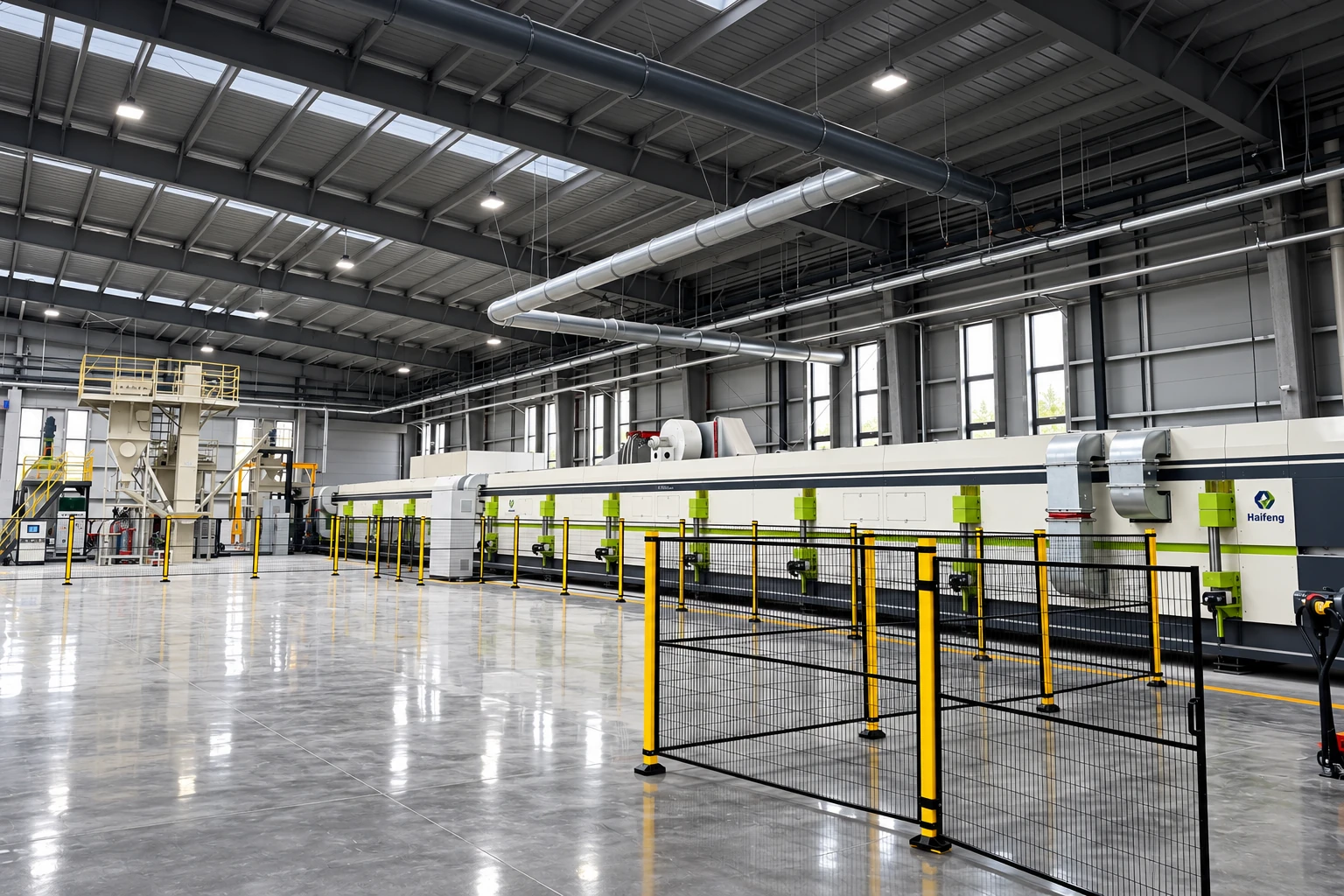
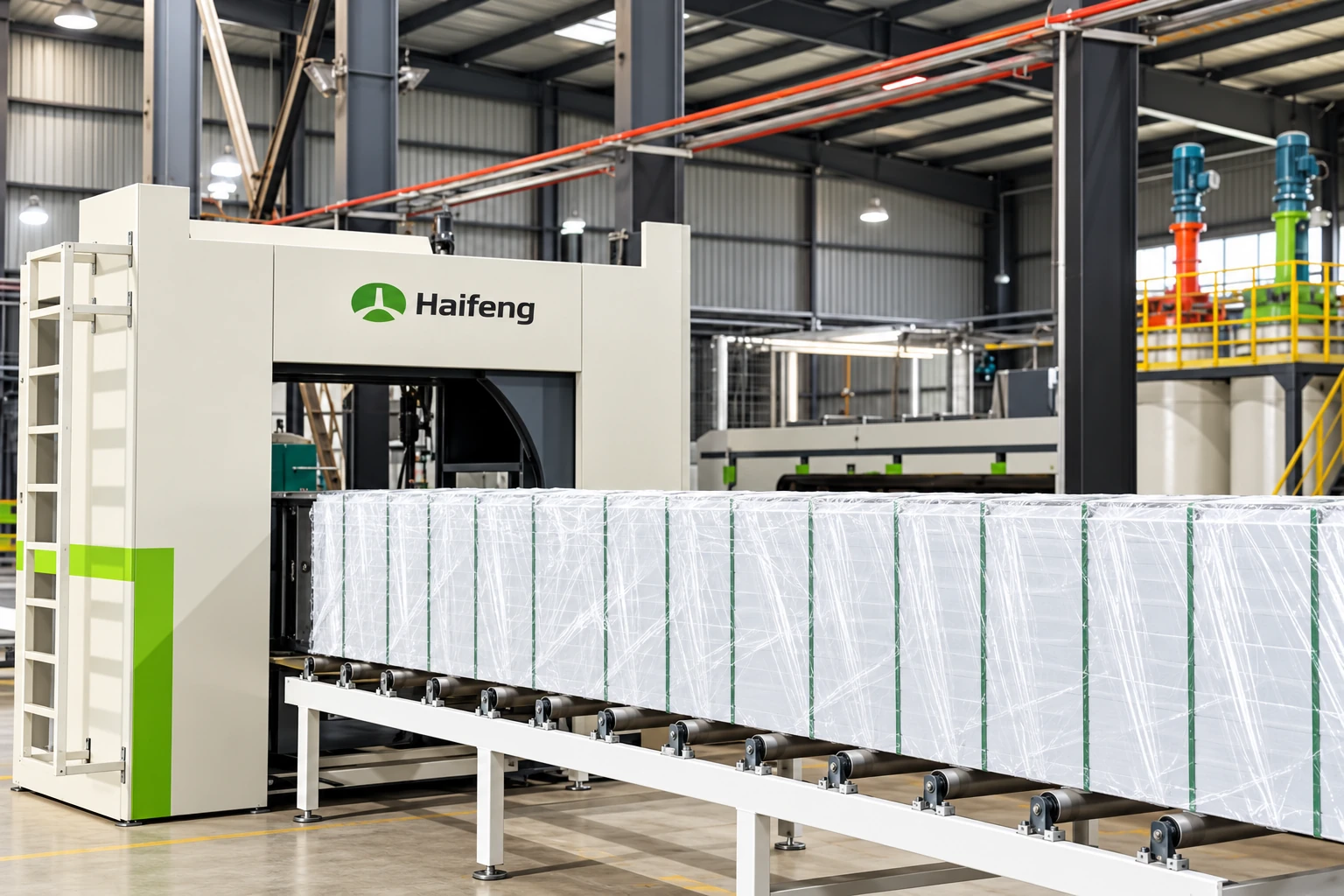
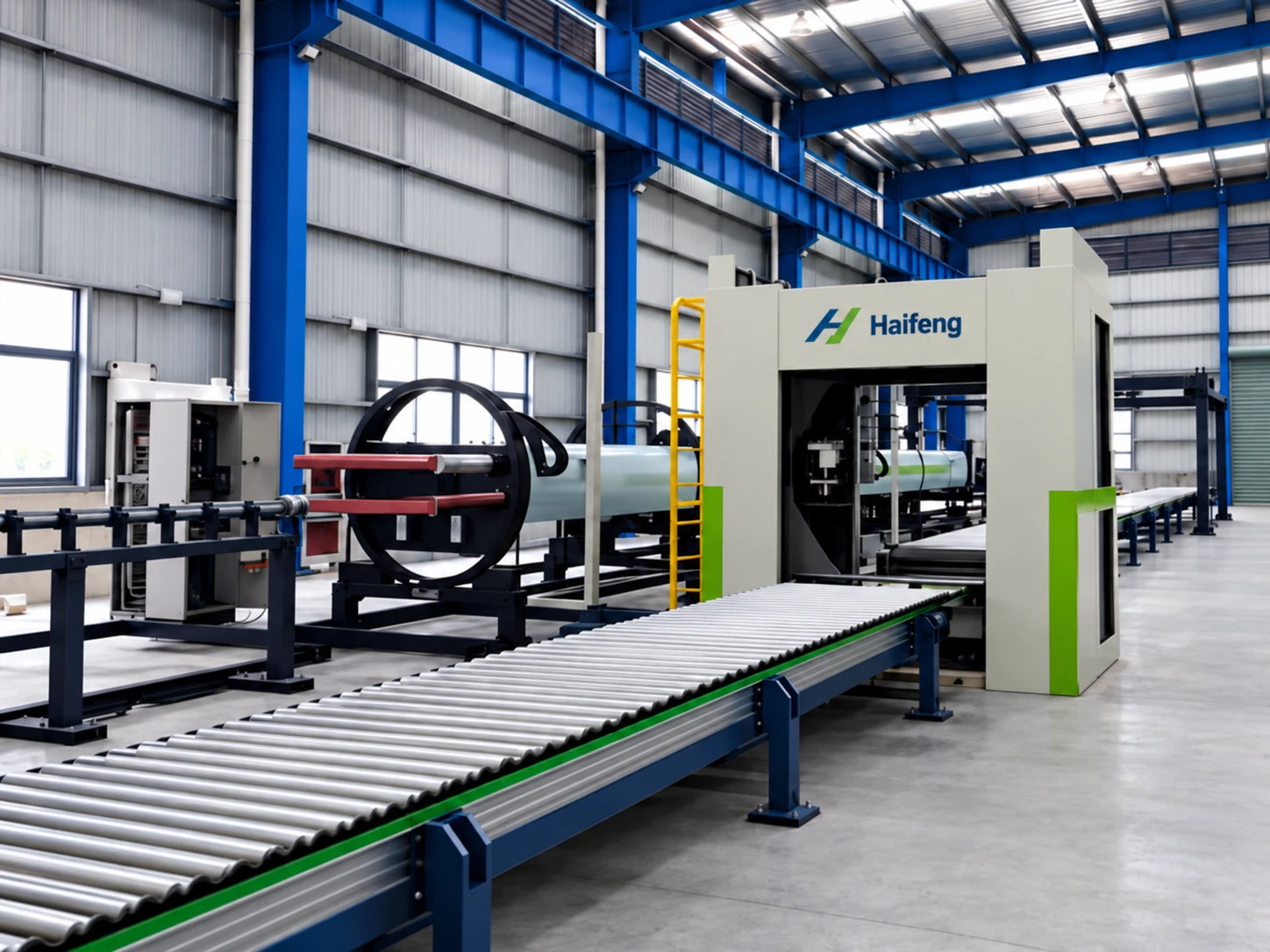
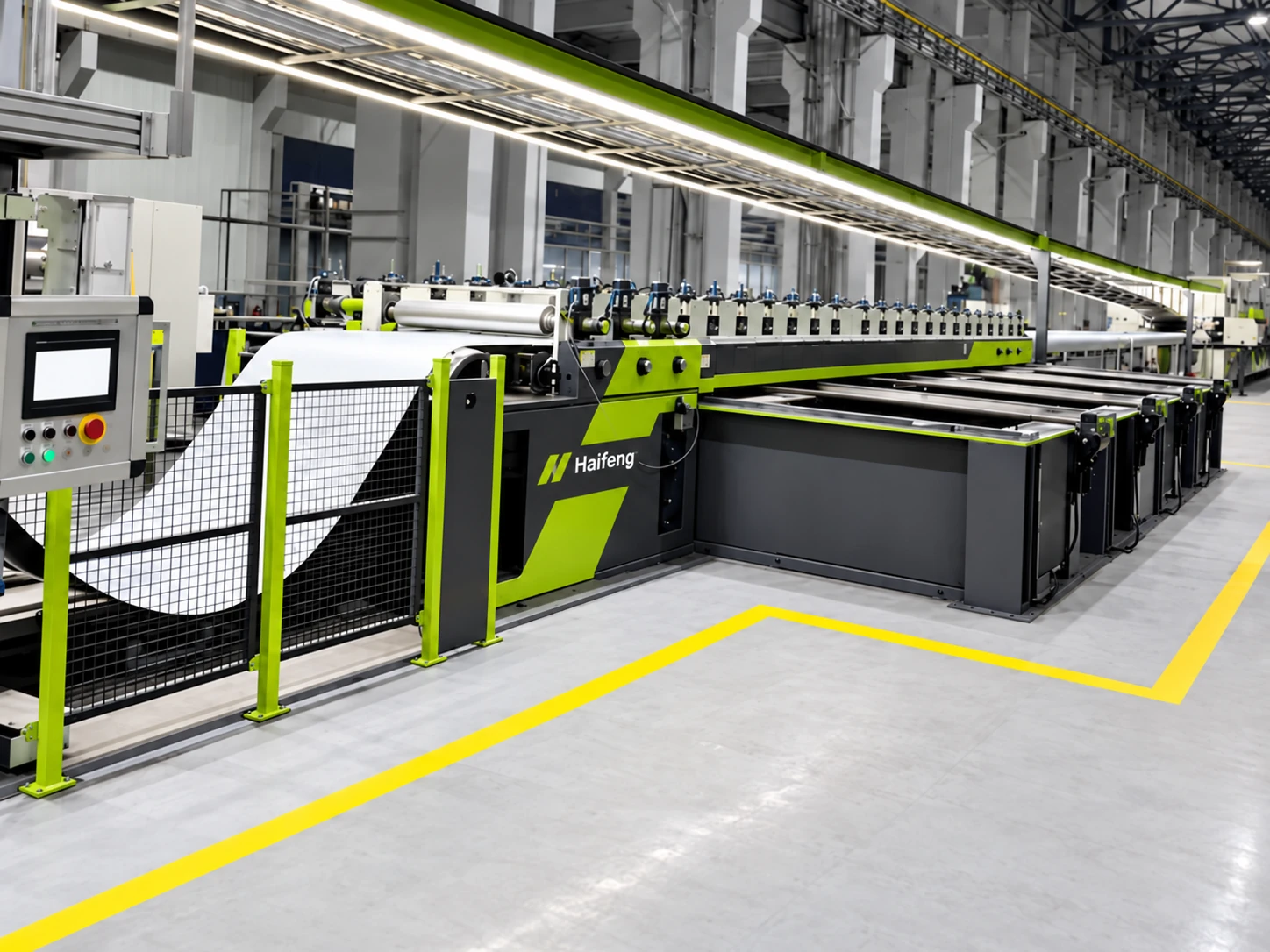
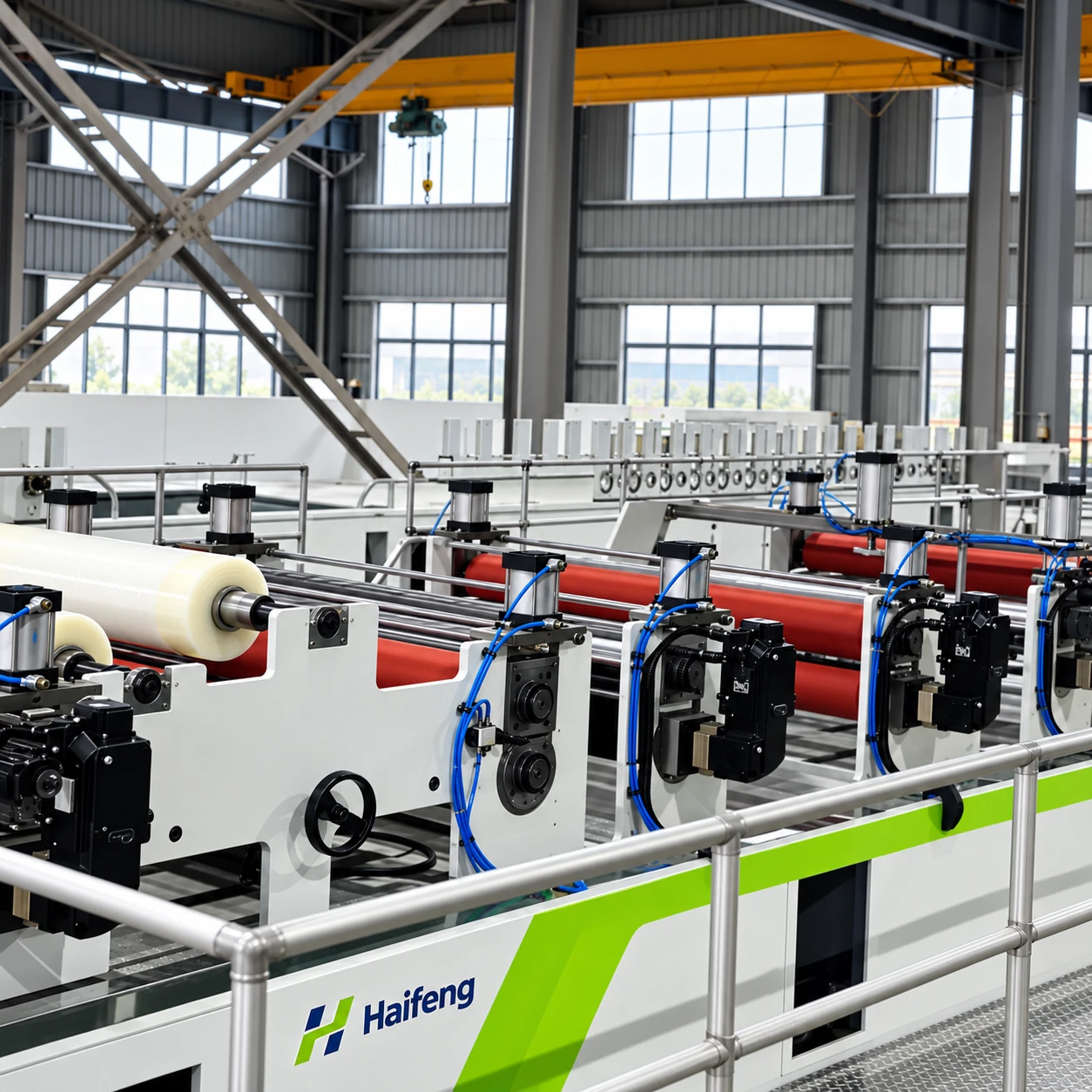
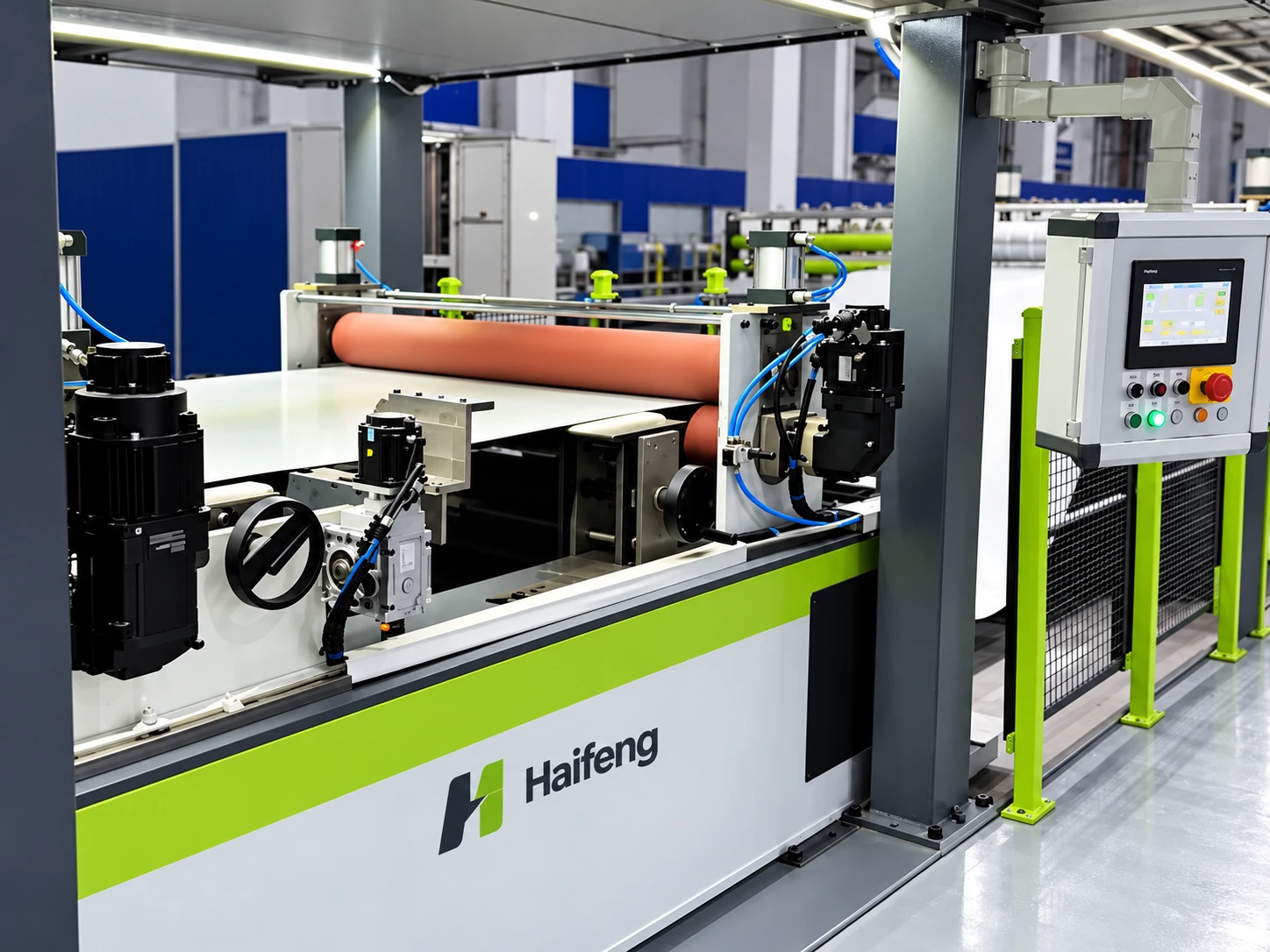
Equipment illustrations show the relevant process sections and configuration references.
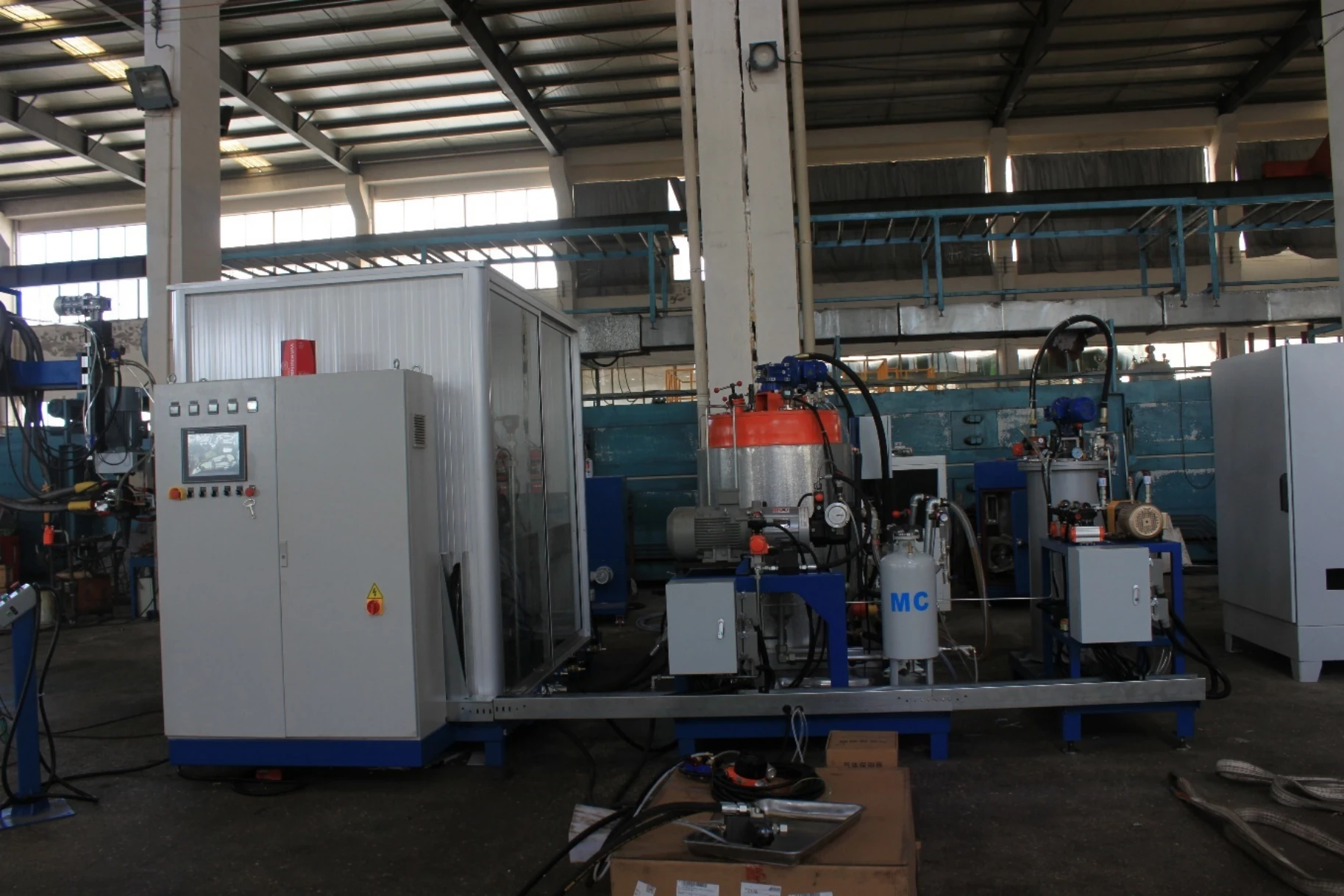
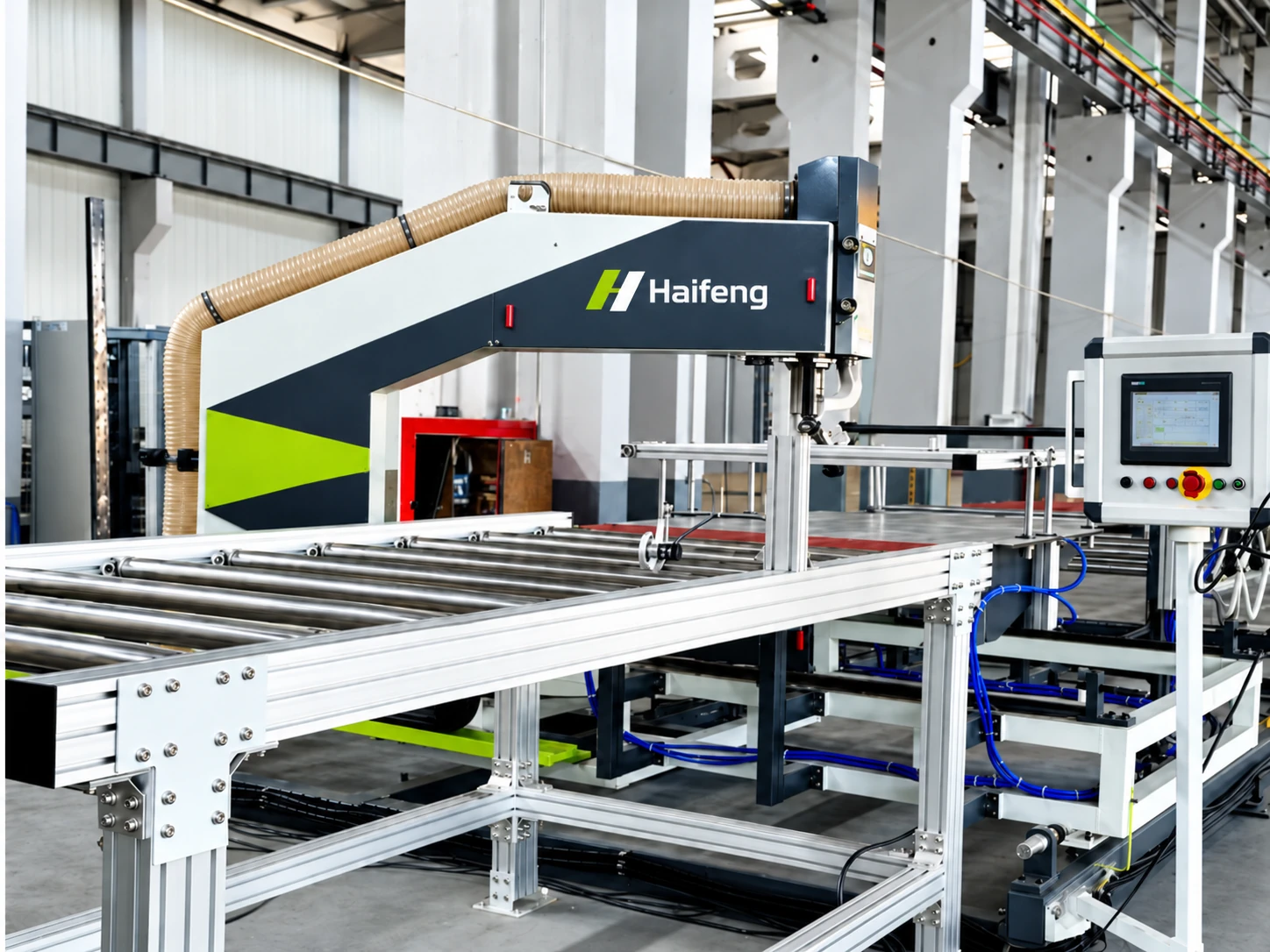
Continuous Panel Line — Main Equipment Illustrations
Equipment illustrations show the relevant process sections and configuration references.
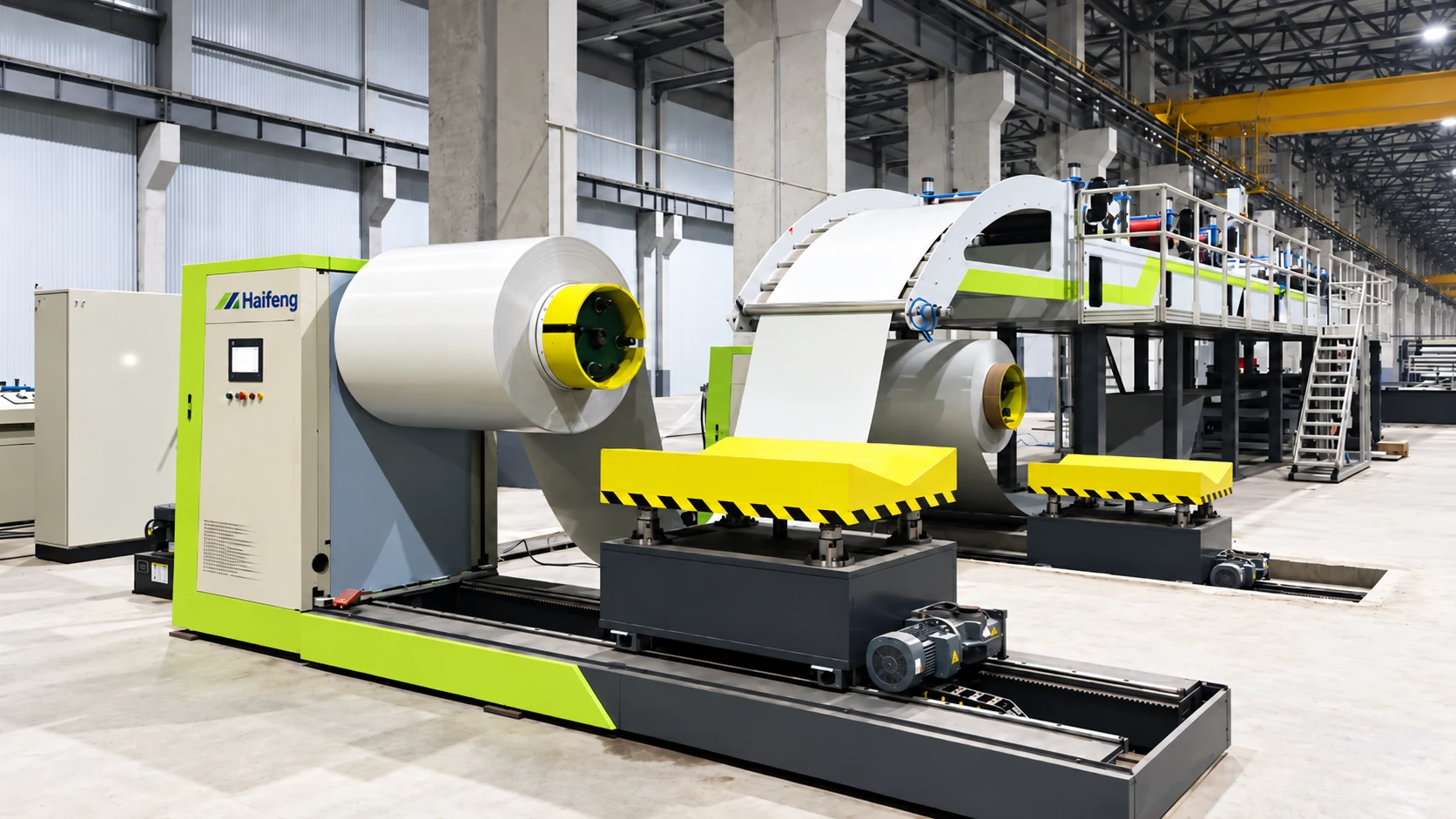
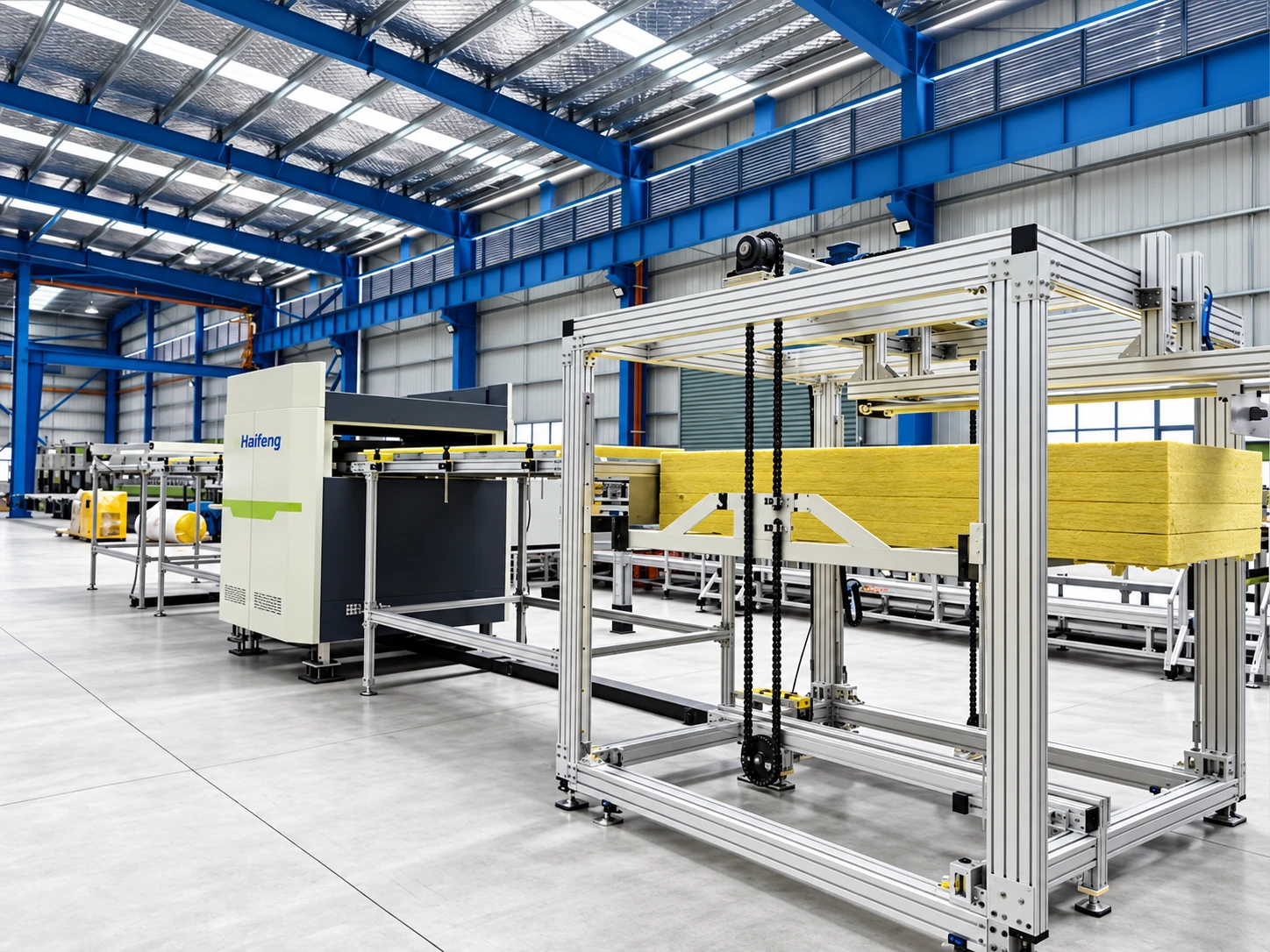
More equipment and panel-handling illustrations
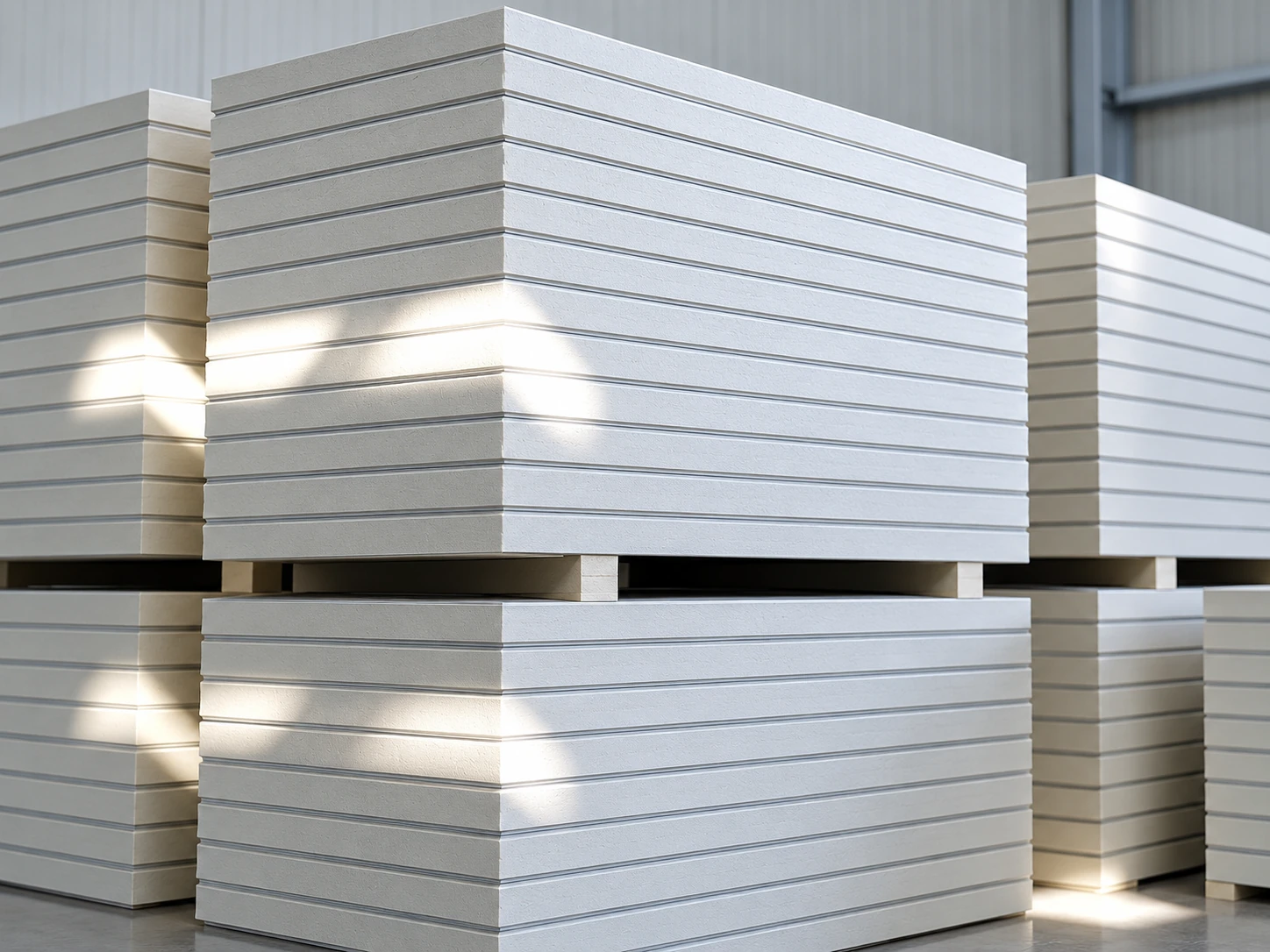
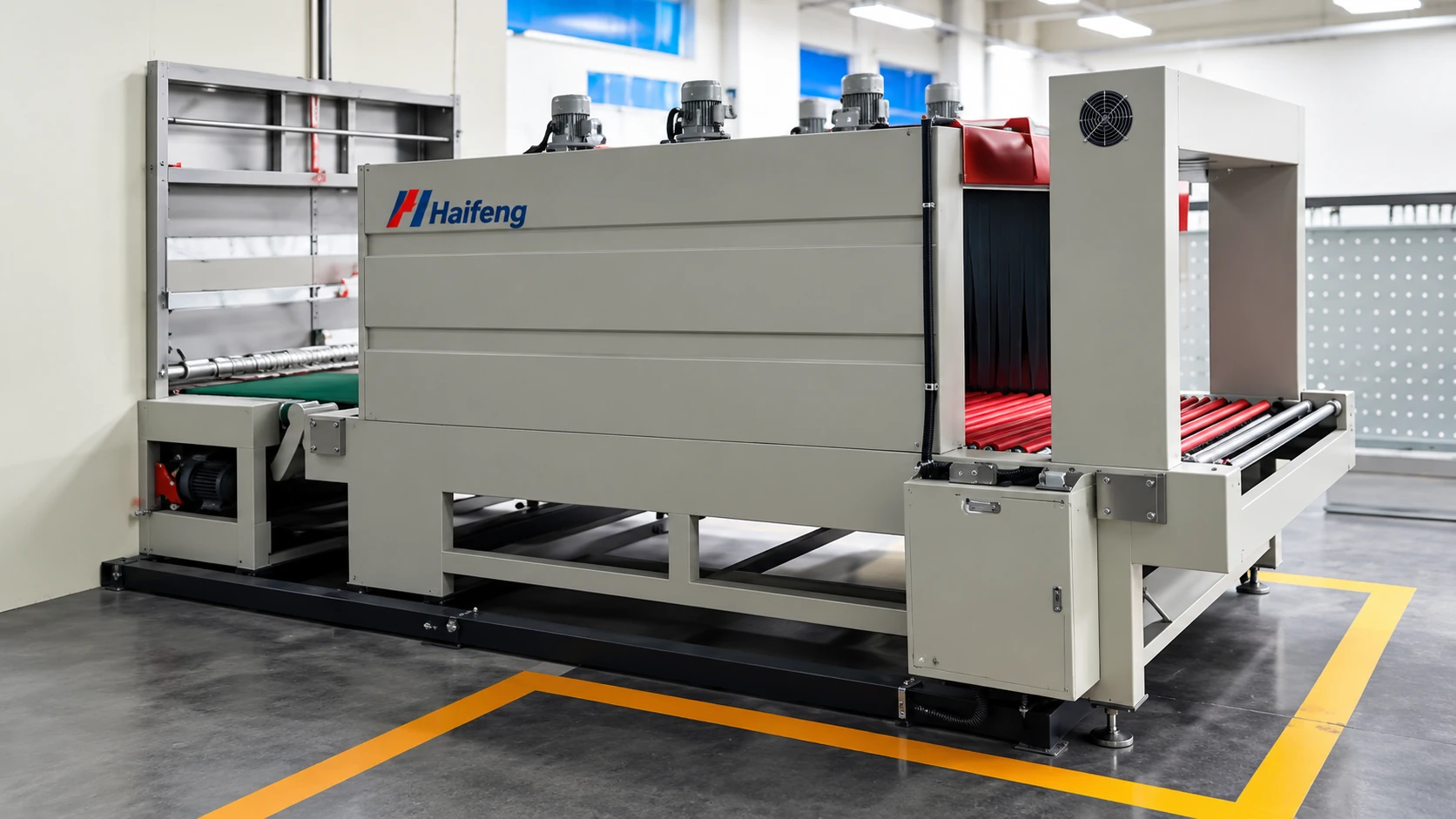
Additional Equipment Views
Equipment illustrations show the relevant process sections and configuration references.
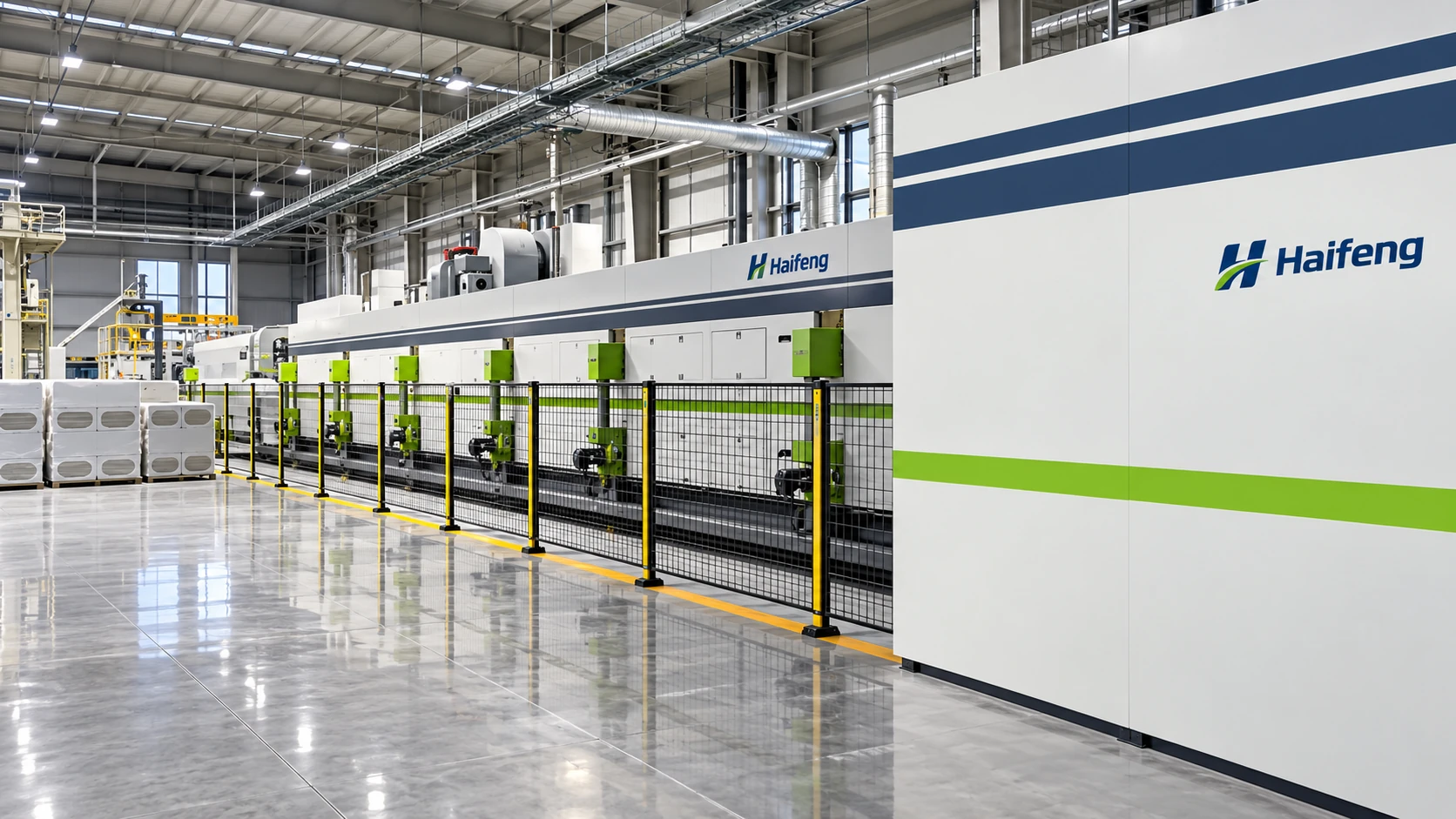
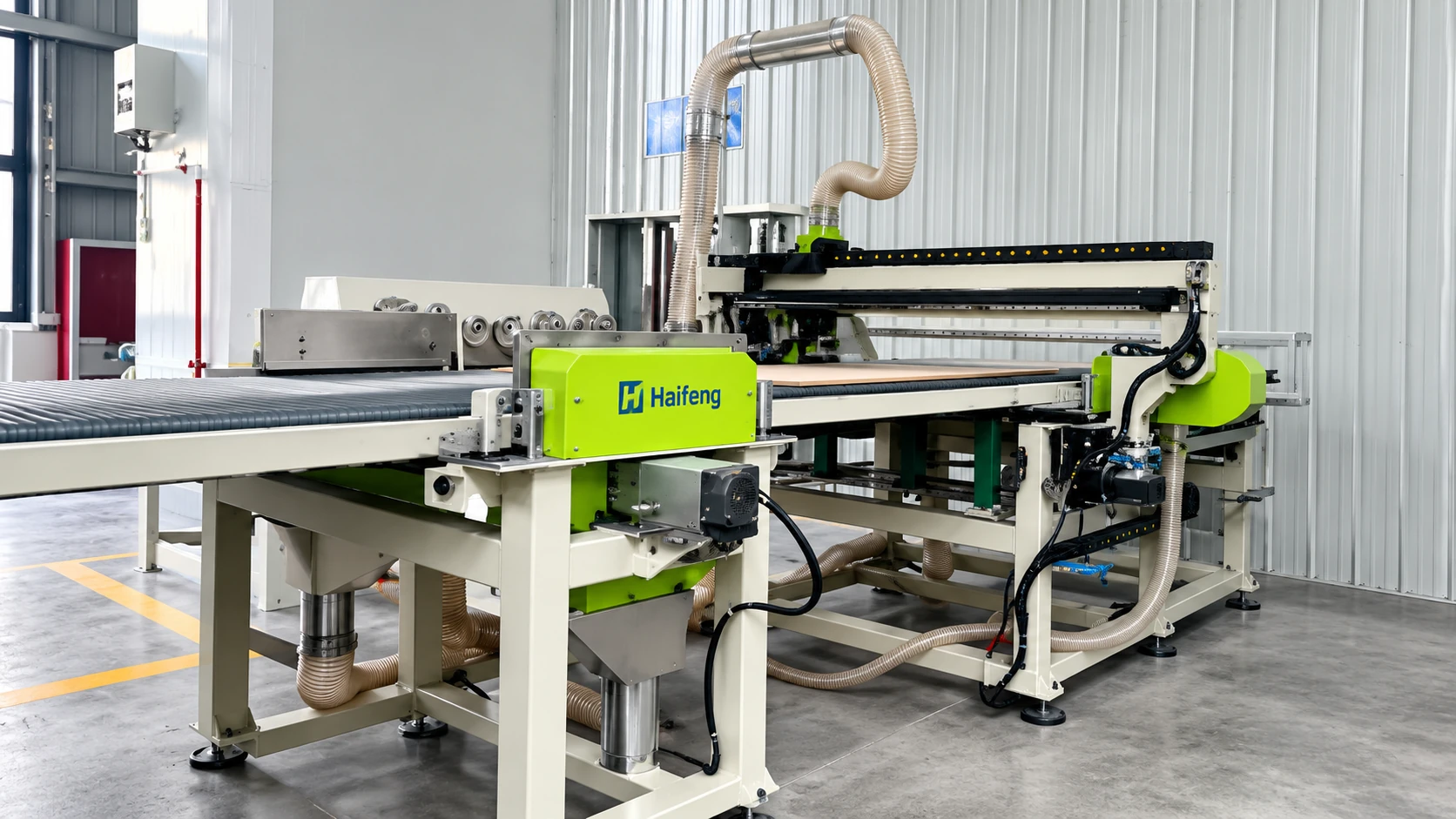
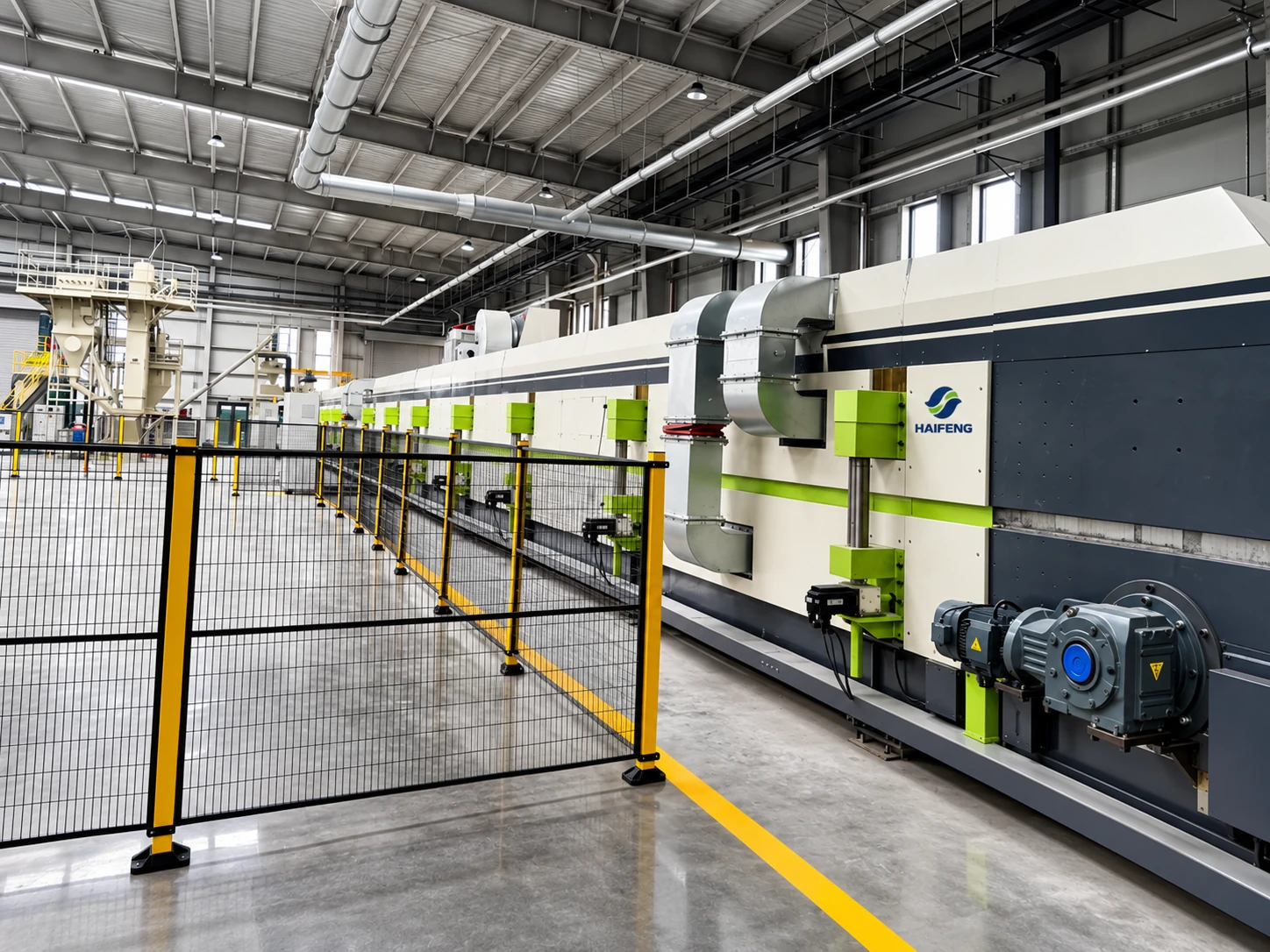
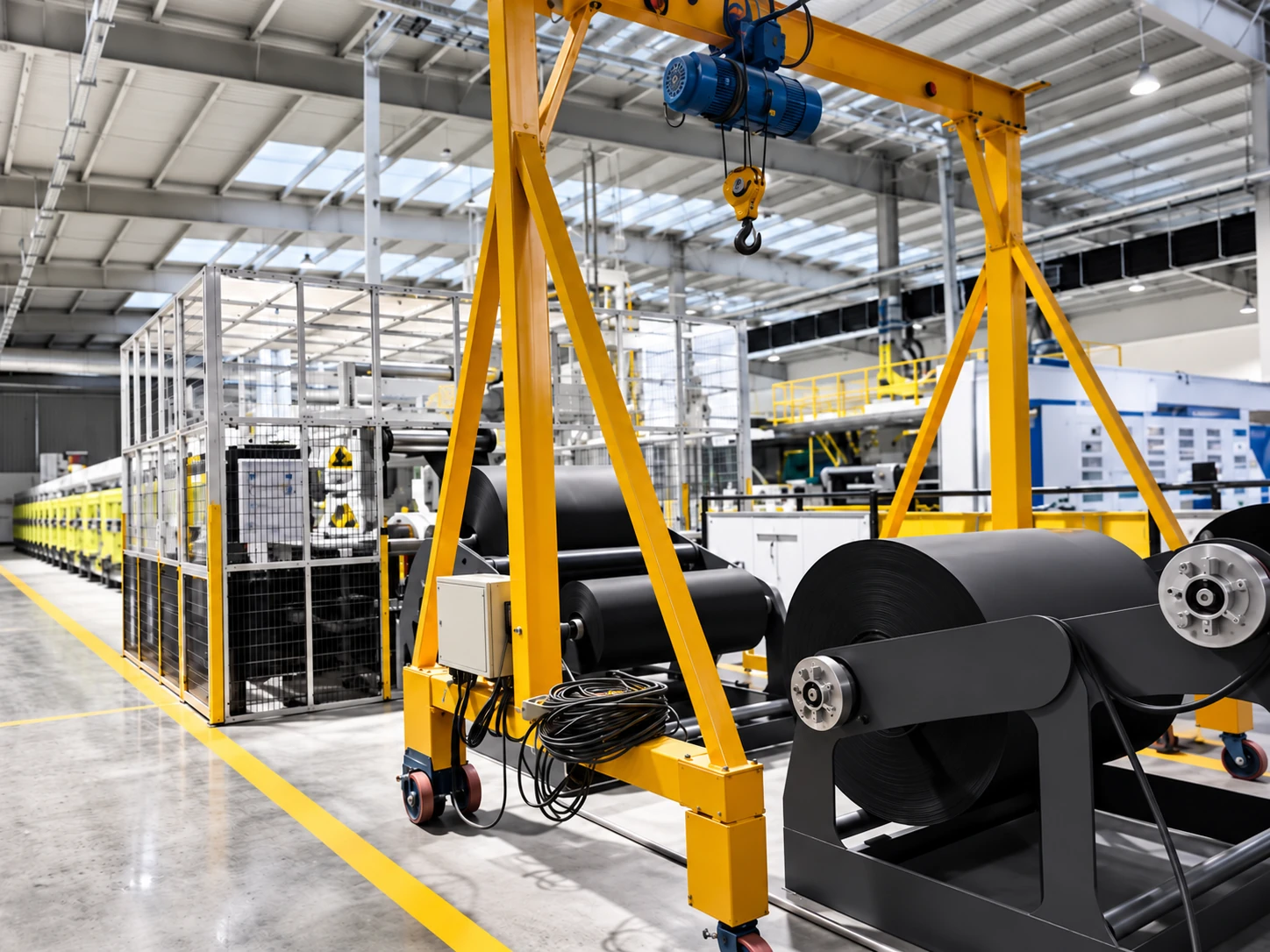
Metering capacity and panel duty
For a rectangular core, approximate foam mass flow (kg/min) = core density (kg/m³) × effective width (m) × core thickness (m) × line speed (m/min). At 40 kg/m³ and 1.2 m width, 50 mm at 9 m/min requires approximately 21.6 kg/min; 200 mm at the same speed requires approximately 86.4 kg/min. These calculated examples exclude profile corrections and process allowances. A 19–30 kg/min skid cannot be assumed to cover both duties.
Equipment for This Solution
The continuous line and its five-component metering package are reviewed together for the target panel duty. The linked HF-PIR-30M is a separate 30 m product configuration with a listed maximum speed of 15 m/min; it does not replace the 24 m, 3–9 m/min reference specification on this page.
Continuous PIR Sandwich Panel Line | Insulation Panels
30 m continuous PIR panel configuration with metering, laydown, heated lamination and synchronized cutting. Finished-panel fire classification depends on the tested construction.
Cyclopentane Safety and Premixing System | PU Foaming
Cyclopentane storage/feed, premixing or inline blending and monitoring interfaces configured for a PU/PIR panel line. The project schedule defines supply boundaries and equipment documentation.
Five-Component High-Pressure PU/PIR Foaming System | Sandwich Panels
Five-component PU/PIR metering for sandwich panels, with independent polyol, isocyanate, catalyst and blowing-agent circuits, flow monitoring and line integration.
Key Engineering Advantages
Why leading building envelope manufacturers select Haifeng continuous sandwich panel lines.
Coordinated Line Sections
Facing preparation, metering, lamination and finishing are specified as a linked equipment scope.
Formulation-Specific Metering
Independent component circuits support recipe-specific dosing and flow verification.
Conditioning and Heated Curing
Sheet preparation, component temperature and laminator heating are reviewed together.
Configured Finishing
Tracking cut, cooling, stacking and packaging are selected for panel dimensions and handling requirements.
Related Project Case
Review the production configuration, delivery and results. The related project uses a 30 m PIR line and records 12 m/min on 50 mm wall panels; these project results are separate from this page's 24 m reference configuration.
Frequently Asked Questions
Find answers about Industrial Building Sandwich Panel Production Line, including material selection, equipment configuration and the information needed to plan a production line.
What does the 3–9 m/min value represent?
Can this line produce roof and hidden-fix wall profiles?
How is the five-component metering unit sized?
How are pentane-handling functions defined?
Does the equipment specification guarantee a panel fire classification?
Discuss Your Sandwich Panel Project
For Industrial Building Sandwich Panel Production Line, send finished-product drawings or samples, material data, target output, automation needs and factory conditions. Haifeng can use these inputs to discuss the line configuration and technical interfaces.


