
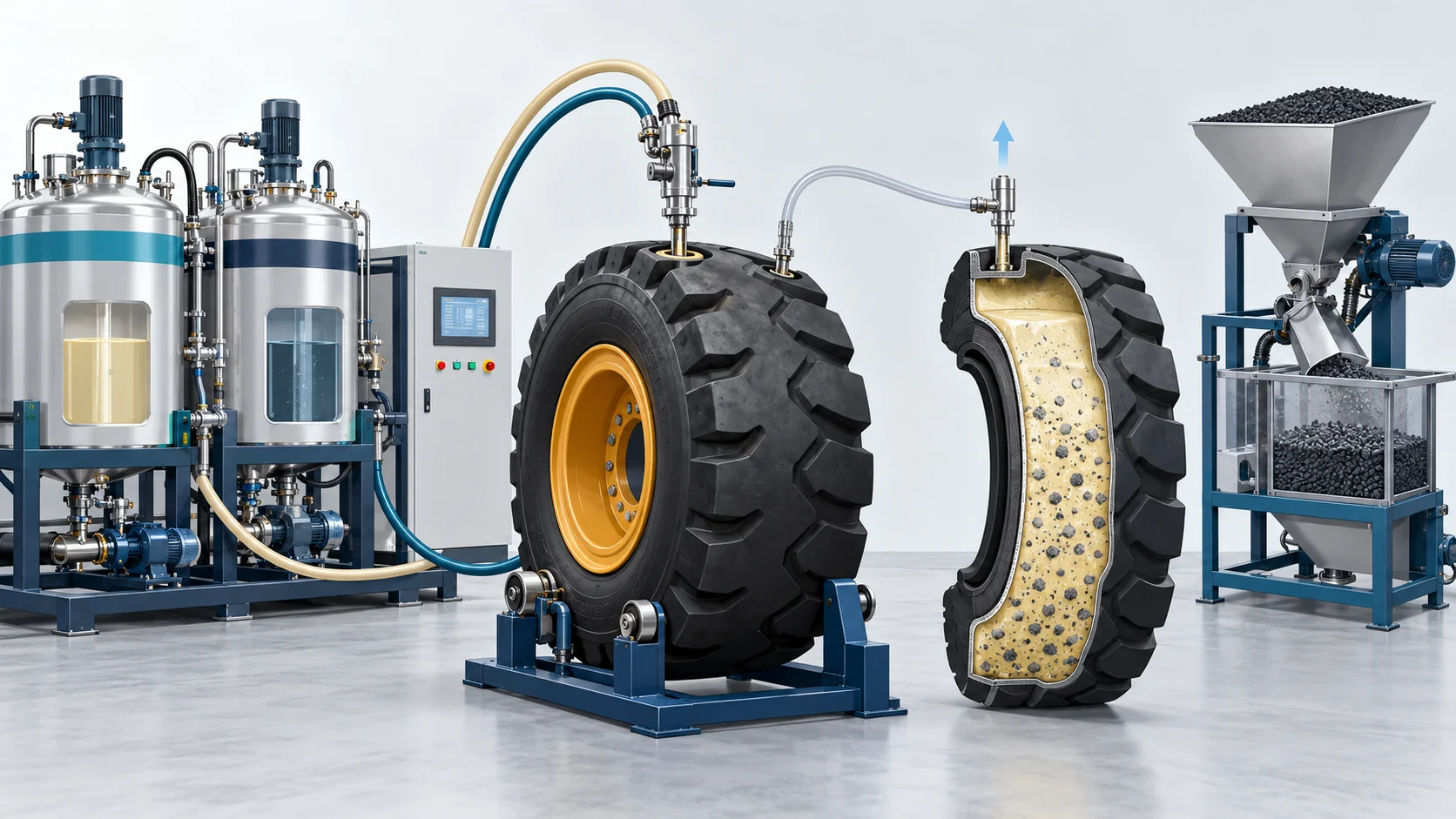
PU Tire Filling Turnkey Plant
Configure filling of existing rubber tire casings with pure polyurethane or a rubber-granule and PU mixture. Match material delivery, filling and curing to the tire assembly and operating duty.
Engineering Tire-Filling Applications
Confirm the existing tire casing, rim, fill formulation, load and operating duty before selecting a filling process. Filled-tire service performance is assessed separately from machine discharge capacity.
Construction Equipment
Define the casing, rim, load and operating duty for each filled tire.
Mining and Quarry Vehicles
Match filling formulation and material delivery to the specified OTR assembly.
Agricultural and Utility Equipment
Evaluate the original tire assembly and application-specific filling requirements.
Industrial and Material Handling
Configure the filling workflow around tire sizes, order mix and throughput.
Garden and Worksite Equipment
Select the casing and filling route for the intended duty; do not substitute molded-wheel case results.
Two Engineering Tire-Filling Routes
Both routes fill an existing rubber tire casing. Molded solid PU wheel manufacture is a separate route, with different tooling and production requirements.
Pure Polyurethane Tire Filling
Replace the air space in an existing rubber tire casing with a two-component polyurethane filling system that cures inside the casing. This route preserves the tire tread and casing and is distinct from molding an entire polyurethane tire around a wheel center. Select the filling formulation and process around tire size, duty, load and service requirements.
Process and Configuration
Recycled Rubber Granules + PU Filling
Blend selected recycled rubber granules with a polyurethane filling system and pump the composite into an existing rubber tire casing. Coordinate liquid metering, independent granule feeding, blending and the discharge path as one filling process. Granule fraction, size distribution, cleanliness and moisture are specification inputs rather than fixed universal values.
Process and Configuration
Engineering Tire-Filling Equipment
The two linked equipment pages describe liquid PU tire filling and rubber-granule/PU filling. Compare their stated output units and configurations without treating discharge flow as finished tires per hour.
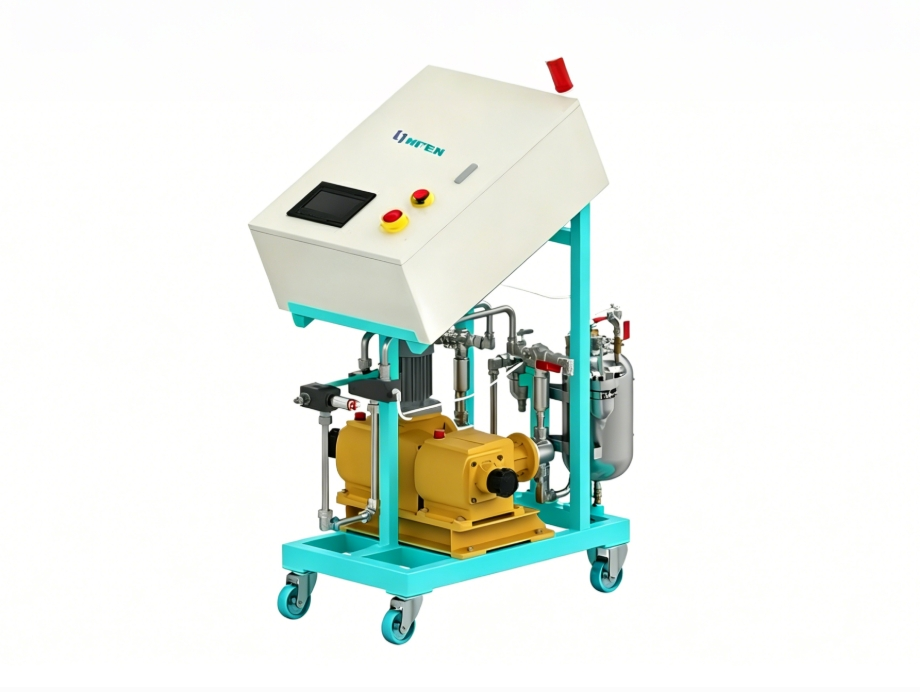
Low-Pressure PU Foaming Machine | OTR Solid Tires
Low-pressure PU foaming machine for OTR polyurethane solid tires, delivering high load capacity and wear resistance. Ideal for mining and construction vehicles.
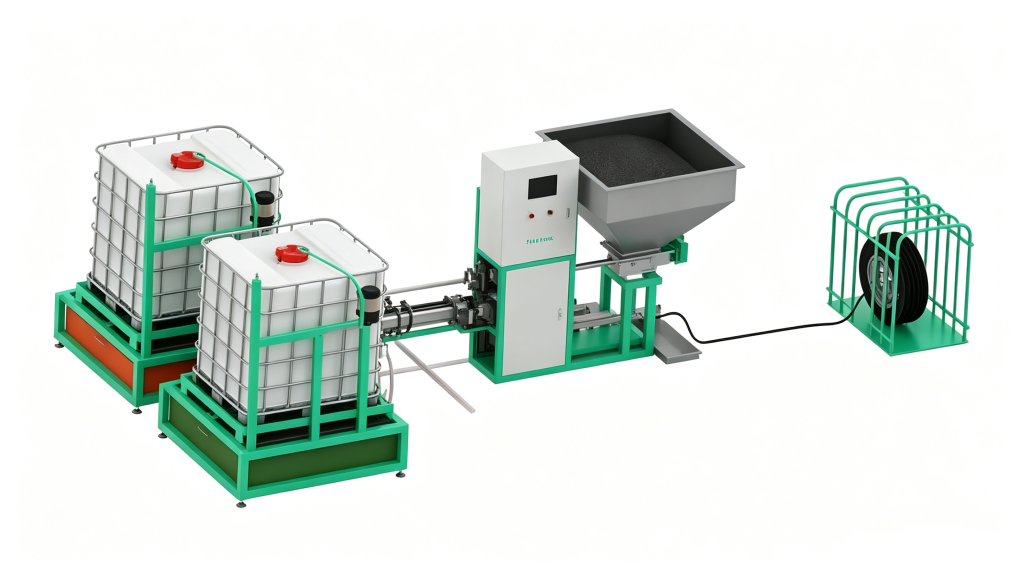
Low-Pressure PU Foaming Machine | OTR Rubber-Particle Solid Tires
PU casting equipment for OTR solid tires, delivering high load capacity, wear resistance, and impact strength. Ideal for mining, construction, and heavy-duty industrial vehicles.
Share the Tire Assembly, Filling Formulation and Daily Production Target
Polyurethane Materials and Process Guides
Technical guides on polyurethane elastomers, casting, abrasion and material durability.
Cast Polyurethane (CPU) Explained: What It Is and How It Is Processed
If you make rollers, wheels, seals, mining screens, or rail pads, you have probably seen parts described as cast polyurethane, CPU, or cast elastomer — sometimes as if all three meant the same thing. They are close, but the distinction matters when you are choosing a production process. Cast polyurethane is a liquid-cast, thermoset elastomer […]
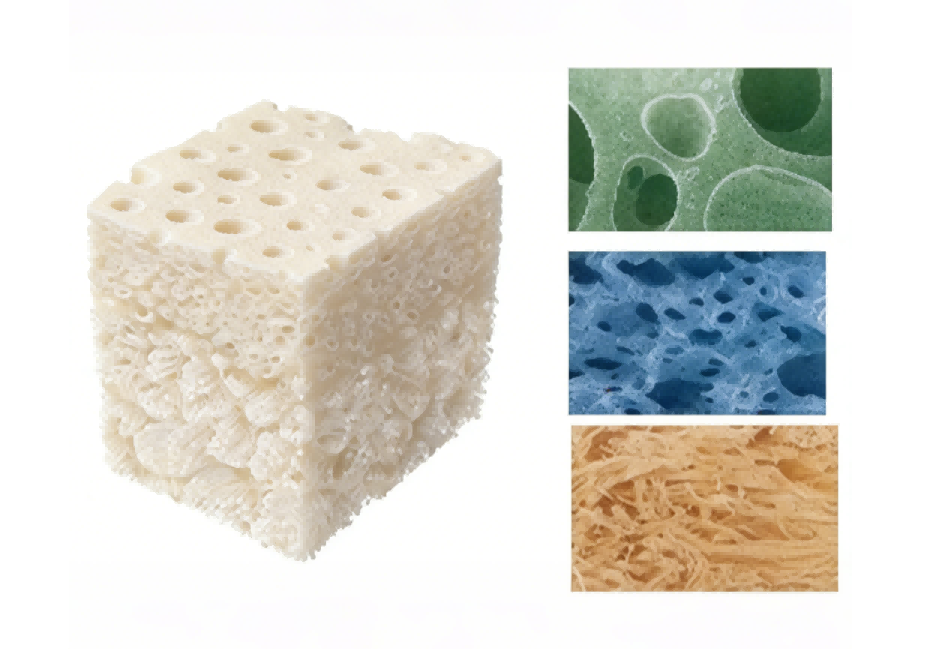
What Is a Polyurethane Elastomer? A Production Engineer’s Guide
Polyurethane elastomers sit between rubber and rigid plastic in a way that gives production teams an unusually wide design window. They are formed when a diisocyanate reacts with a long-chain polyol and a short-chain chain extender, producing a segmented polymer that can be tuned from soft, resilient parts to hard, load-bearing components without changing the […]
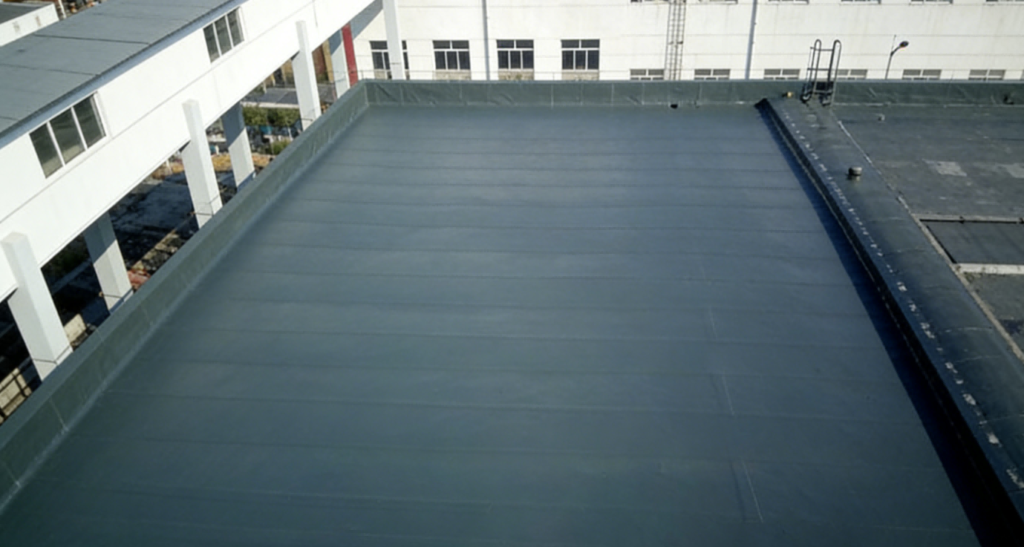
Why Polyurethane Elastomers Resist Abrasion So Well
The production line shows the same pattern again: a replacement bushing or roller comes in hard, but after a few hundred operating hours the surface is grooved, the dimensions are gone, and downtime follows. The usual conclusion is to request a harder material. That fix works only when the failure is caused by hardness; in […]
Need Help Matching Material and Equipment?
Talk with an EngineerHaifeng Equipment and Process Integration
Coordinate material preparation, liquid metering, optional granule feeding, casing filling and curing. Load, wear and service suitability are separate material and tire-assembly requirements.
Application-Specific Configuration
Define material chemistry, component geometry, output and factory conditions.
Integrated Equipment and Controls
Coordinate dosing, material handling, mixing and downstream work stages.
Commissioning and Training
Provide installation, operating setup and operator training within the delivery scope.
Warranty and Spare Parts Support
Confirm warranty coverage, commencement, spare parts and service responsibilities in the equipment agreement.
Let’s Plan Your Tire Equipment Configuration
Provide casing and rim details, tire size, fill mass, formulation, load and speed requirements, daily working hours and target quantity. Include filling and curing stages when planning throughput.


