Most OTR tire filling machine comparisons begin with pump output, and that is exactly why many selections miss. A tire fill machine is not a bulk transfer pump with a gun attached. It meters a reactive two-component polyurethane system, keeps the ratio and temperature inside a narrow working window, and pushes an air-free fill into a closed tire volume. If the tire range and daily throughput are not fixed first, pump size, pressure rating, and workstation count become guesses.
For the wider production route and equipment interfaces, explore our PU tire filling systems.
Start with the tire list and the daily target together. A one-line inquiry — 14.00-24 tires, 30 units per shift, 60 Shore A fill — tells an equipment builder more than a three-page specification comparison.
Start with Tire Volume, Not Pump Flow
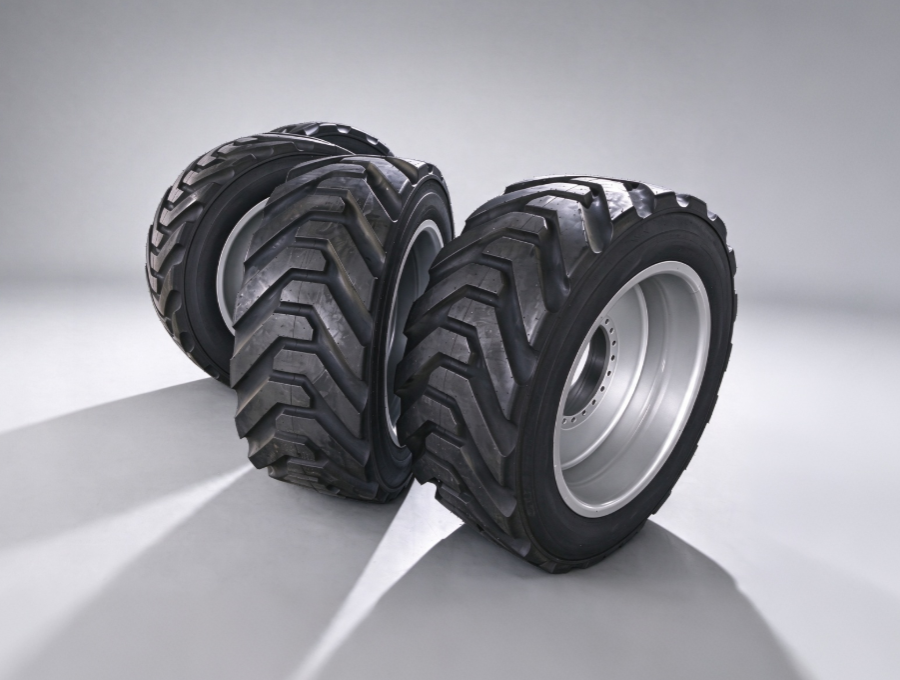
An OTR tire filling machine replaces the air chamber with polyurethane. The objective is flatproofing: the tire can run over debris and sharp rock without losing pressure because there is no pneumatic chamber left to puncture. For mining loaders, underground haulers, port equipment, and waste-handling machines, that change removes most unscheduled downtime from tire failure.
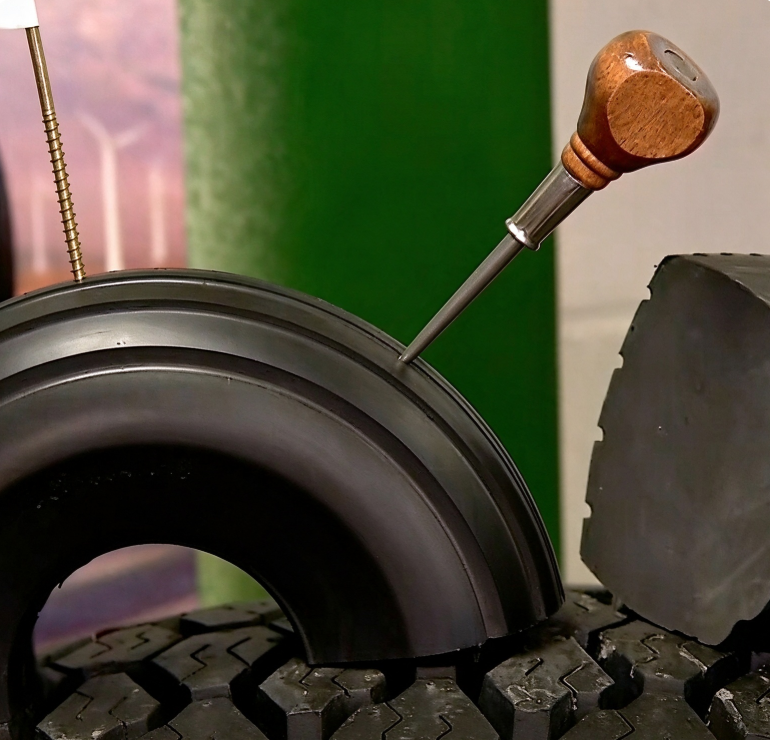
For filling an existing tire casing with a pure PU formulation, review the pure PU engineering tire filling solution.
The first selection input is the filled envelope. Tire and rim standards define that envelope: earthmover designations and dimensions follow ISO 4250-1, while rim contours and dimensional tolerances typically appear in the Tire and Rim Association Year Book [1][2]. A 16.00-25 bias tire and a 29.5-29 radial do not simply differ by a few kilograms of material; one can require several times the fill volume of the other. The machine must be able to deliver the largest shot without pushing the material past its gel time, and it must still meter accurately at the smallest shot the plant expects to fill.
Shot weight matters more than nominal flow because the fill is reactive. Once the polyurethane is mixed, the clock is running. The shot must enter the tire, displace air through the vent, and settle before the material builds enough viscosity to trap voids. For that reason, the selection process should start with the cured shot weight of the largest tire and work backward to the required machine output.
Tire volume and cured density set the shot weight, but the calculation has to use the filled envelope rather than the nominal tire size. <How To Calculate Shot Weight In Polyurethane> covers the formula inputs and the points where engineers most often overestimate capacity.
Daily Throughput Sets the Real Bottleneck
Daily throughput is not the same as pump output. A machine rated at 20 kg/min can fill a tire quickly, but if cure and handling take two hours, the plant may still produce only a dozen tires per shift. Throughput is a function of shot weight, gel time, cure time, venting, and the number of workstations served by one metering unit.
| Input | What it drives |
|---|---|
| Largest tire shot weight | Maximum fill volume and pump sizing |
| Smallest tire shot weight | Minimum accurate shot and repeatability requirement |
| Daily tire count | Required fill slots and workstation count |
| Available shift minutes | Realistic takt time after changeover and handling |
| Material gel time | Upper limit on practical fill rate |
| Hardness and cure schedule | Demold time and post-cure capacity |
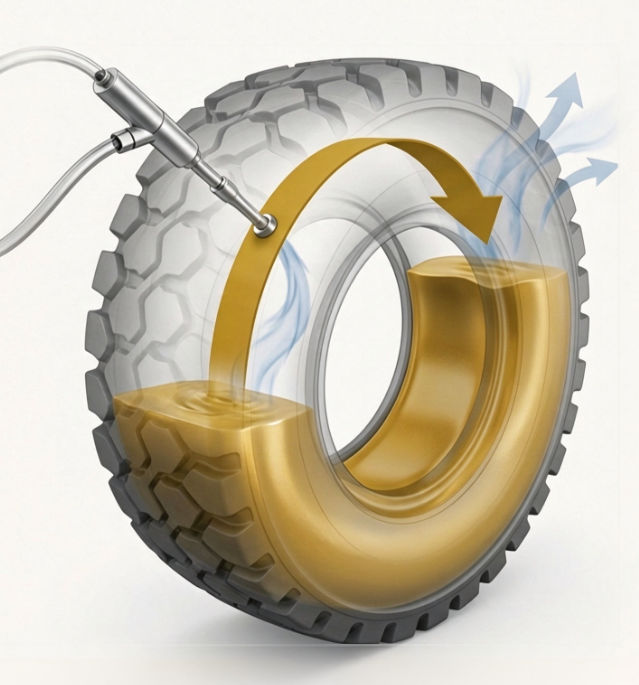
For a mid-volume operation, one well-specified metering unit can often serve two workstations through a manifold or a movable fill station. The tire is rotated during filling to distribute material, then moved into a cure area. The metering unit returns to the next tire while the first cures. If the daily target requires overlapping fill and cure, the layout matters as much as the pump.
That is why the throughput calculation should begin with available minutes, not with an optimistic full-shift number. A six-hour effective shift, a 40-minute average fill-and-cure slot, and two workstations will set a very different machine configuration than an eight-hour nominal shift with no allowance for size changeover, drum top-up, or gun flushing.
Metering, Hardness, and Shrinkage
A filled tire only performs as expected if the A-side and B-side ratio stays stable from the first kilogram to the last. Ratio drift moves hardness, changes exotherm, and can leave soft spots or uncured zones inside the tire. Look for positive-displacement metering or servo-driven gear pumps with closed-loop feedback, and ask for the accuracy figure at the smallest shot the plant will run, not only at full flow.
Hardness should be specified as Shore A or Shore D in accordance with ASTM D2240, not as a subjective “medium” or “firm” description [3]. A fill that is too soft may creep under sustained load; a fill that is too hard may transmit shock back through the axle and reduce ride quality. The correct value depends on vehicle speed, load, and whether the tire is solid-filled or foam-filled.

Hardness affects both ride quality and roll resistance, so call it out by an instrumented Shore scale rather than a verbal grade. <Shore A Vs Shore D Hardness In Polyurethane> covers Shore A, Shore D, and which one fits a given polyurethane part.
Shrinkage is the quality trap most often found after the first production batch. The material can shrink as it cures, especially in large shots with a high exotherm. If the vent is closed too early, the shrinking material pulls away from the tire crown and leaves a void. If the vent stays open too long, under-filled regions lose pressure and the final tire can run soft or out of round. Fill pressure, vent timing, and material temperature have to be treated as process parameters, not as afterthoughts.
Shrinkage in a filled tire is usually controlled by fill pressure, vent timing, and material exotherm. <Causes Of Shrinkage In Polyurethane Foam How To Control It> covers the contributing variables and the control points that stop voids before they begin.
The Selection Worksheet
Before requesting a quotation, put the following items into a single worksheet:
- Smallest and largest tire designation, rim diameter, and overall diameter.
- Target fill system: polyurethane elastomer fill or foam fill.
- Required Shore hardness and any load or speed limits.
- Largest shot weight and smallest shot weight.
- Daily tire count and effective shift minutes.
- Material gel time, cure temperature, and demold readiness.
- Number of fill stations or cure positions required.
- Drum, tote, or bulk feed preference and material preheat temperature.
Most specification mistakes come from omitting one of these items rather than from choosing the wrong pump. The worksheet forces the selection back to the process, which is where OTR tire filling equipment decisions belong.
Turn the Worksheet Into a Quotation
Once the tire range and daily throughput are known, the machine spec becomes short and testable. If you already have the worksheet filled in, send it to Info@chinahaifeng.com for a metering and workstation review. Haifeng Polyurethane Machinery can confirm whether a standard metering package fits the job or whether the fill station, preheat system, and cure handling need to be customized around the tire range.
For a direct inquiry, contact Info@chinahaifeng.com or WhatsApp: 86 13596296633 with the tire list, daily target, and required hardness. That information is enough to begin a serious technical discussion.
Frequently Asked Questions
What tire sizes can an OTR tire filling machine handle?
A properly sized machine can cover a family of rim diameters, but the widest range costs more. The limiting factors are the largest shot weight, the smallest accurate shot, and the fill gun adapter. A small skid-steer tire and a large haul-truck tire may both be fillable on one unit, but the metering package must be selected for the full spread.
How do I calculate daily throughput for an OTR fill line?
Start with effective shift minutes, then divide by the average fill-and-cure slot per tire. Include size changeover, drum top-up, gun flushing, and curing time. Pump output only determines fill time; it does not set total throughput by itself.
What pressure do I need for filling large OTR tires?
Pressure is secondary to a steady, air-free stream. The required pressure depends on material viscosity, hose length, and tire venting. Select the pump and gun to hold a stable flow rate at the required shot, not to hit a high maximum pressure number.
Which hardness should the polyurethane fill be?
There is no universal answer. Soft fills absorb shock but can creep under heavy load; harder fills improve stability and wear resistance but transmit more impact. Use Shore A or Shore D testing rather than a verbal description [3].
Can one machine switch between small and large OTR tires?
Yes, if the shot range and gun adapters are specified correctly. The key is metering accuracy at the small end of the range, not maximum flow at the large end.
What causes voids or shrinkage in filled OTR tires?
Most voids come from venting that closes too early, fill rates that exceed air evacuation, or ratio and temperature drift. Shrinkage is controlled through vent timing, fill pressure, and material exotherm management.
References
[1] ISO 4250-1, Earth-mover tyres and rims — Part 1: Tyre designation and dimensions.
[2] The Tire and Rim Association, Inc., Year Book, current edition.
[3] ASTM D2240, Standard Test Method for Rubber Property—Durometer Hardness.
If you’re interested, check out these related articles:
How Polyurethane Rollers Are Made From Casting To Cure
RRIM Vs RIM Which Process Suits Your Structural Part
SRIM Explained Structural Reaction Injection Molding Basics
Measuring Polyurethane Foam Resilience A Practical Test Guide