The wrong process route is usually discovered after installation, not before. A manufacturer pouring microcellular elastomer buffers chooses a one-shot line because the tank layout looks simpler, then finds the isocyanate-rich stream drifts at the mixing head when ambient temperature changes. Another plant selects the prepolymer route for a low-cost foam part, only to add a synthesis reactor and NCO titration step it did not need. The one-shot, prepolymer, and quasi-prepolymer routes each change metering strategy, tank configuration, recirculation requirements, and the operator’s ability to correct the process in real time.

The Route Decision Changes More Than Chemistry
The choice between one-shot and prepolymer is not simply a formulation preference. It determines how many streams the machine must meter, how wide the A:B ratio will be, which tanks need heating, whether vacuum degassing is required, and what happens when a raw material lot changes.
A production line specified without this decision will usually fail at the boundaries: first shift may run acceptably, while second shift sees ratio drift because the smaller stream is below the pump’s stable range. The route decision also affects whether the operator can correct foam density without stopping the line and whether a solid elastomer part will show trapped air, hard spots, or variable Shore hardness from cavity to cavity.
The more useful sequence is to define the part type, raw material system, and output first, then use the process route to select tank count, pump size, heating zones, mixing head design, and data logging.
How the One-Shot Process Works
In the one-shot route, the polyol, isocyanate, chain extender or crosslinker, catalyst, water or blowing agent, surfactant, and additives are metered into the mixing head at the same time [1]. Polymerization, chain extension, and gas generation happen together in the mold or on the substrate.
Because no prepolymer synthesis stage is required, the machine needs fewer heated vessels and no separate prepolymer reactor. Raw material handling is simpler, and the route works well for microcellular foams, rigid insulation, cushioning, and many dual-density applications where density and cell structure are the main control targets.
The trade-off is that the mixing head must homogenize streams with different viscosities and a wider ratio inside a very short mix window. The reaction begins immediately, so the control system must hold temperature, metering rate, and head pressure within narrow limits at the same time.
How the Prepolymer Process Works
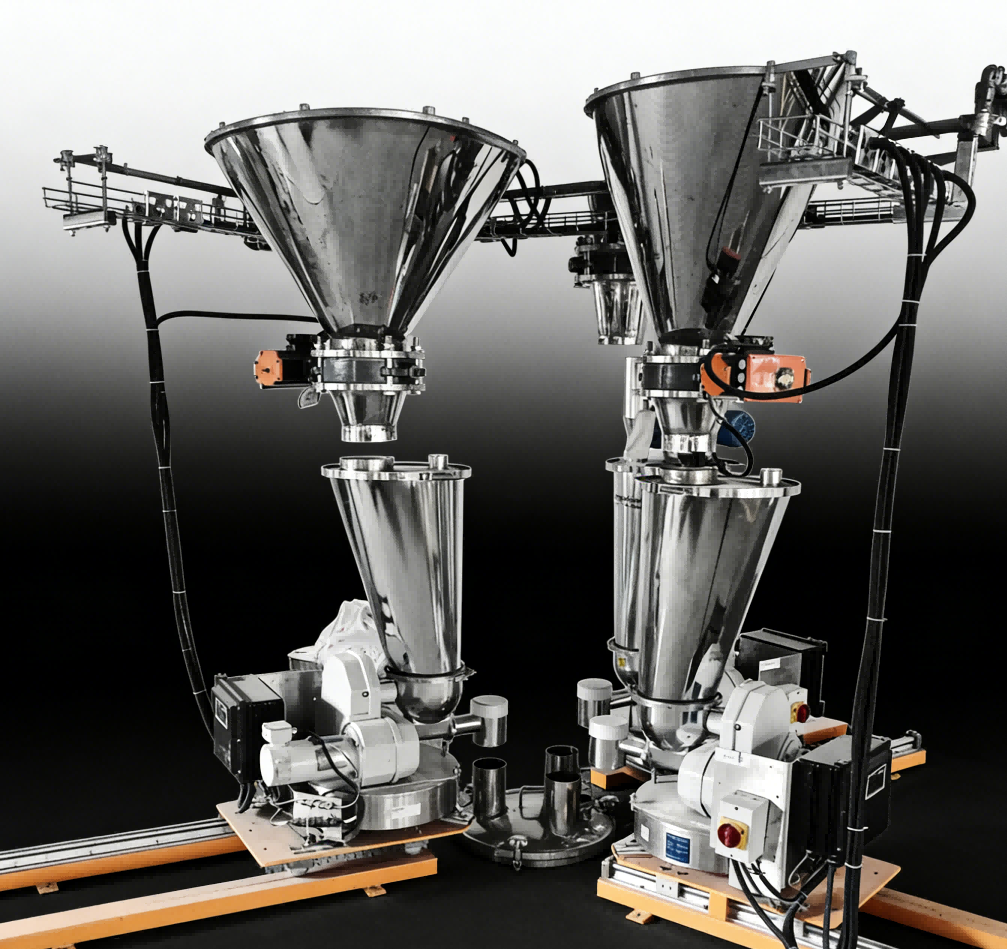
In the full prepolymer route, all or most of the polyol is first reacted with an excess of isocyanate to create an isocyanate-terminated prepolymer. The prepolymer is stored under controlled temperature and vacuum, then metered against a smaller chain-extender or curative stream, typically MOCA or BDO, in a second mixing step [2].
This front-loads part of the reaction heat and reduces direct handling of raw isocyanate at the final mixing head. The result is better control over hard-segment growth, lower free isocyanate exposure on the pouring floor, and a more predictable viscosity balance between the two streams entering the mixing head.
Prepolymer synthesis also creates a measurable control point. The prepolymer’s NCO content must be checked after reaction, and incoming polyol hydroxyl number should be measured before batching [3], [4]. That is more laboratory work than a one-shot line, but it gives the process engineer a chance to correct the batch before the material reaches the mold.
The quasi-prepolymer route sits between the two. Part of the polyol is reacted with all or most of the isocyanate to form a prepolymer, and the remaining polyol is metered as a second or third stream. This keeps viscosity more workable than a full prepolymer while still reducing the heat and free isocyanate load compared with one-shot. Many RIM and RRIM structural-part formulations operate this way because they need high-pressure mixing and reinforcement dispersion, not just chemical conversion.
Viscosity, Mixing Ratio, and Metering Tolerance
The practical difference between the routes shows up in the mixing ratio and the metering difficulty for the small stream.
| Process route | Typical component configuration | Common A:B ratio band | Main viscosity challenge | Typical machine response |
|---|---|---|---|---|
| One-shot | Polyol + additives vs isocyanate | 100:40–90 for many microcellular systems; 100:100–130 for rigid foam | Low-viscosity streams; wide ratio | Larger B-side metering capacity; head pressure around 10–18 MPa |
| Quasi-prepolymer | Isocyanate + part of polyol vs remaining polyol | 100:90–110 in many RIM/RRIM systems | Medium and more balanced viscosity | High-pressure mixing at 150–200 bar; short feed lines |
| Full prepolymer | Prepolymer vs MOCA or BDO | 100:9–12 for MOCA; 100:3–6 for BDO | High-viscosity prepolymer; low-flow curative | Low-flow precision dosing; heated tanks; vacuum degassing |
When the ratio is wide, a one-point percentage error in the smaller stream moves final foam density and hardness more than the same percentage error in a near-stoichiometric prepolymer system. That is why elastomer casting machines configured for full prepolymer still specify dynamic dosing accuracy at or below ±0.3%, even though the total shot weight may be modest.
Shot-weight control gets tighter when the process route changes because the density and viscosity of each stream affect what the pump actually delivers. <How To Calculate Shot Weight In Polyurethane> covers the calculation and the metering tolerances that keep it repeatable.
Property Differences and Cure Character
Prepolymer routes tend to produce more regular hard segments and narrower hardness scatter in dense elastomers. This makes them useful for rollers, seals, suspension parts, wheels, and other applications where load-bearing properties, tear strength, and compression set have to stay inside a tight band.
One-shot routes are more often selected where density, cell structure, cycle time, and total output matter more than exact hardness reproducibility. A well-run one-shot line can meet many foam specifications, but the control burden shifts to head pressure, cream time, mold temperature, and the balance between gelling and blowing.
Neither route automatically yields a better part. Each moves the control burden to a different variable, and both can fail when the machine is specified for the wrong viscosity or the wrong ratio range.
Hardness selection interacts with the process route because crosslink density and hard-segment ordering differ between one-shot and prepolymer systems. <Shore A Vs Shore D Hardness In Polyurethane> covers the test scales and the selection logic used on the factory floor.
Waste, Shrinkage, and Changeover Behavior
On semi-automatic lines making automotive chassis damping parts, a change from a broad-ratio manual mixing approach to a high-pressure system with closed-loop metering reduced thickness tolerance from ±1.2 mm to ±0.3 mm and cut the defect rate from 5.2% to 2%. The main effect came from matching the route and the metering architecture, not from increasing nominal throughput.
Foam shrinkage is one of the first signs that the selected route is not holding the gelling and blowing reactions together. Prepolymer systems can remove one source of that imbalance by moving early reaction heat into the synthesis step, but they introduce their own failure mode: if prepolymer temperature or NCO content is not controlled, the final part can arrive with a narrow-looking ratio but a different cure profile from batch to batch.
Shrinkage after demold is one of the first signs that the selected route is not holding the gelling and blowing reactions together. <Causes Of Shrinkage In Polyurethane Foam How To Control It> covers the mechanisms and the process changes that bring it back under control.
Changeover also differs. A one-shot line may purge quickly between color or density changes because the material streams are simpler. A full prepolymer line needs more attention to tank heating, curative line temperature, and vacuum status when changing from MOCA to BDO or from one hardness range to another.
If you are still at the specification stage, send the part drawing, target output per hour, and current raw material data to Info@chinahaifeng.com or WhatsApp 86 13566296633. State whether the part is solid elastomer, microcellular foam, or structural composite; that determines whether the line needs low-flow curing-agent dosing, high-pressure mixing, or a prepolymer synthesis stage.
How to Choose Without Guesswork
The decision can be reduced to a short list of questions.
- Is the part solid, microcellular, foam, or fiber-reinforced?
- What are the raw material viscosities at process temperature?
- What is the target A:B ratio, and how small is the smaller stream?
- Is MOCA, BDO, filler, or reinforcement involved?
- What is the required shot weight and output per hour?
- How narrow is the acceptable hardness or density band?
- What happens during a raw material lot change or a formulation change?
- Which failure costs more: occasional foam density drift or occasional elastomer hardness scatter?
For most microcellular and rigid foam work, one-shot is the first route to evaluate unless viscosity, ratio, or reinforcement handling pushes the line toward quasi-prepolymer. For solid elastomers that require MOCA, BDO, vacuum degassing, or tight Shore control, the full prepolymer route is usually the more stable base case, and the equipment cost should include the synthesis and testing step rather than hiding it.
Specify the Process Before You Buy the Machine
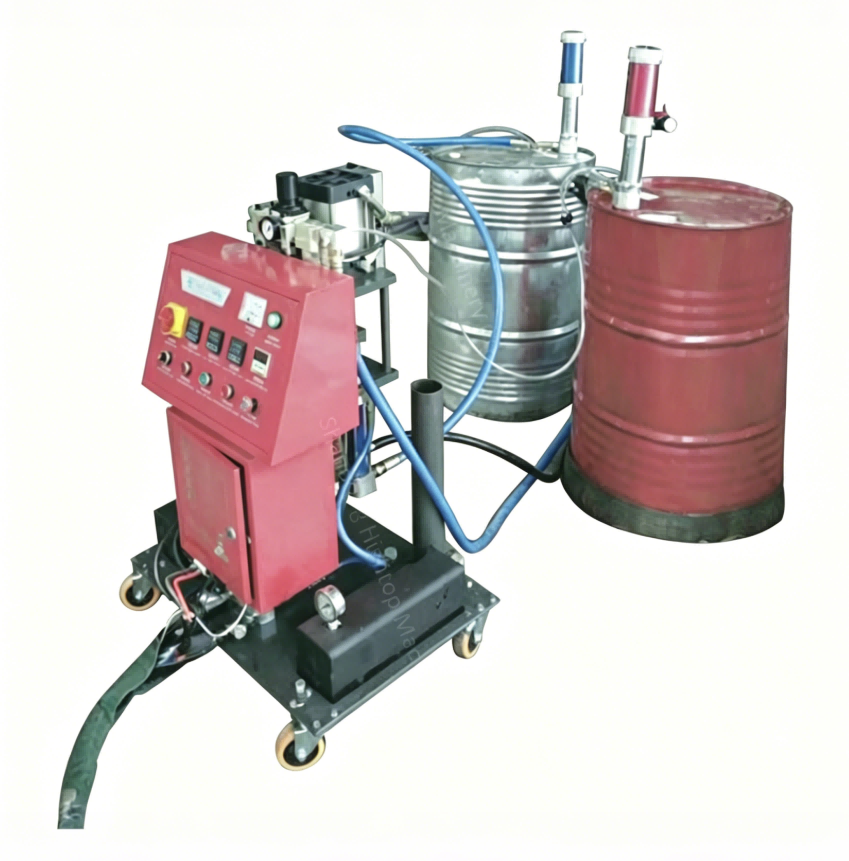
Haifeng Polyurethane Machinery supplies low-pressure and high-pressure metering systems, elastomer casting machines, and turnkey lines configured for one-shot, quasi-prepolymer, and full prepolymer production. If you are not sure which route belongs on your line, send the following to Info@chinahaifeng.com or WhatsApp 86 13566296633:
- Part type and target hardness range
- Desired output per hour and shot weight
- Current raw material system or technical data sheet
- Whether the process must handle MOCA, BDO, fillers, or reinforcements
- Factory utility and space constraints
FAQ
Can one machine run both one-shot and prepolymer formulations?
In many cases, yes, if the tank count, pump sizing, mixing head, and control system are specified for both viscosity and ratio ranges. But changeover still requires purging, temperature-profile changes, and a formula library. Not every machine is configured for both, so the requirement should be written into the purchase specification rather than assumed.
Is the prepolymer process always better for mechanical properties?
No. Prepolymer often gives more regular hard segments and narrower hardness and tear scatter in solid elastomers, but one-shot can meet many foam requirements at lower handling complexity. The better route depends on which variable the part can tolerate drifting and which one it cannot.
Why does the prepolymer route need vacuum degassing?
Prepolymers are moisture-sensitive and can trap dissolved gases. Degassing removes bubbles and dissolved moisture before mixing, reducing voids, surface pinholes, and unwanted side reactions at the casting head.
How do I choose between one-shot and quasi-prepolymer for a molding line?
Start with the mixing ratio and viscosity balance. If the streams are workable and the part is foam or lightly filled, one-shot may be sufficient. If the formulation is heavily filled, reinforcement dispersion is critical, or the ratio must be brought closer to 1:1 for metering stability, quasi-prepolymer is usually the stronger starting point.
References
[1] G. Oertel, Ed., Polyurethane Handbook, 2nd ed. Munich, Germany: Hanser Publishers, 1994.
[2] M. Ionescu, Chemistry and Technology of Polyols for Polyurethanes, 2nd ed. Shawbury, UK: Smithers Rapra Technology, 2016.
[3] ISO 14896:2009, Plastics — Polyurethane raw materials — Determination of isocyanate content.
[4] ISO 14900:2017, Plastics — Polyols for use in the production of polyurethanes — Determination of hydroxyl number.
If you’re interested, check out these related articles:
The Role Of Rise Time In Polyurethane Foaming
RRIM Vs RIM Which Process Suits Your Structural Part
How Polyurethane Rollers Are Made From Casting To Cure
SRIM Explained Structural Reaction Injection Molding Basics
Causes Of Shrinkage In Polyurethane Foam How To Control It