The moment an A-side and B-side meet in a polyurethane mix head, one reaction dominates the part’s final properties: an isocyanate group reacting with a hydroxyl group. It sounds narrow, but this single step decides hardness, crosslink density, gel time, residual tack, and how forgiving a formulation is when metering drifts by a fraction of a percent. Most polyurethane production problems that look like equipment problems are really this reaction falling out of balance.

The Urethane Reaction: One Step That Builds the Backbone
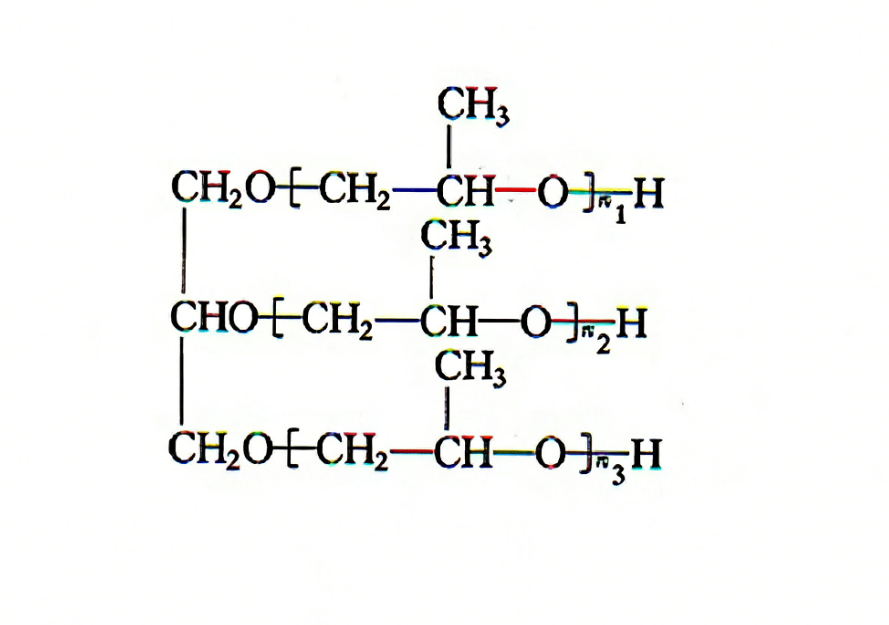
The hydroxyl group carries an O–H unit. The NCO group contains a nitrogen–carbon–oxygen sequence with two double bonds; the central carbon is electron-poor, which turns it into the reactive site. When an OH approaches, the hydrogen transfers to the nitrogen while the oxygen bonds to that central carbon. The product is a urethane linkage (–NH–CO–O–), also called a carbamate.
This is a polyaddition reaction, not a condensation. No water or other small molecule is released in the main reaction. That distinction matters in closed molds because it means the chemistry creates relatively little mass loss during cure. It also makes the reaction strongly exothermic, releasing roughly 90–100 kJ per mole of reacted NCO [1]. On a small laboratory shot that heat is easy to manage. On a 500 g automotive buffer block or a large roller casting, the exotherm moves through the part and changes both cure speed and internal stress unless the mold temperature and shot size are controlled together.
The urethane group is more than a connecting unit. Its N–H and C=O groups participate in hydrogen bonding, which raises cohesion, stiffness, and abrasion resistance. When a formulation contains enough urethane and urea groups, those interactions create the hard domains that give polyurethane elastomers their strength.
Stoichiometry: Equivalents, Not Grams
Formulators do not dose hydroxyl and NCO components by weight alone. They calculate reactive equivalents, because one hydroxyl group consumes one NCO group. Mixing 100 g of polyol with 50 g of isocyanate only works if the equivalent weights make that ratio correct.
The hydroxyl value of a polyol is usually reported as mg KOH per gram and is measured according to ISO 14900 [2]. From that value, the equivalent weight is:
Equivalent weight = 56,100 / hydroxyl number
The NCO side is often specified as weight percent NCO, determined by a method such as ASTM D5155 [3]. Its equivalent weight is:
Equivalent weight = 4,202 / % NCO
The isocyanate index compares the available NCO equivalents to the available OH equivalents:
Index = (NCO equivalents / OH equivalents) × 100
An index of 100 gives exact stoichiometry on paper. In practice, many systems run slightly above or below 100 to compensate for moisture, chain extender purity, or side reactions. The important point is that index changes are not linear in feel. Shifting from 100 to 105 may raise hardness and shorten gel time, but it may also leave unreacted isocyanate that later reacts with moisture and changes the part over time. The operating window depends on the polyol structure, chain extender, catalyst package, and mold temperature.
Competing Reactions: Moisture, Urea, and Blowing
Water is the most common competing reactant in production. It performs a two-step reaction with isocyanate: first forming an unstable carbamic acid, which then releases carbon dioxide and leaves an amine. That amine immediately reacts with another NCO to form a urea linkage [4]. This is exactly the reaction used to blow water-blown flexible and rigid foams.
In non-foam elastomer casting, that same water reaction is a defect source. Moisture consumes NCO, changes the effective index, releases gas that can create bubbles or pinholes, and introduces urea groups that stiffen the system unpredictably. The practical answer is not to dry everything aggressively without reason, but to control moisture before it reaches the mix head: dry polyols to specification, use vacuum degassing where porosity is critical, and keep storage vessels sealed or blanketed.
Catalysis and Temperature Control
This reaction is usually too slow to run uncatalyzed at production temperatures. Tertiary amine catalysts promote both the OH–NCO reaction and the water–NCO reaction. Organotin catalysts such as dibutyltin dilaurate preferentially accelerate the gel-forming OH–NCO reaction and are widely used when a fast cure and strong early green strength matter. Bismuth and other alternatives are used where hydrolysis resistance or regulatory requirements make tin unattractive.
Temperature follows Arrhenius behavior: a 10 °C rise may roughly double the reaction rate in a typical operating range. That combination of heat and catalyst produces what production people observe as cream time, gel time, and tack-free time. If the mold is too cold, the part can remain tacky or demold with low green strength. If the exotherm runs too high, allophanate and biuret side reactions become more significant, consuming NCO in ways the formulation may not have allowed for. Equipment should therefore hold component temperature within a narrow band and remove or add heat through the mold rather than relying on raw-material temperature alone.
Mixing, Metering, and Exotherm Control
The chemistry only behaves predictably when the OH and NCO streams are metered and mixed within tolerance. A metering error changes the index before the reaction starts. In a rigid foam line, for example, an A:B ratio drifting by one percentage point can shift the resulting foam density enough to fail a part specification. In an elastomer casting operation, the same kind of drift can change hardness, gel time, and residual surface tack.
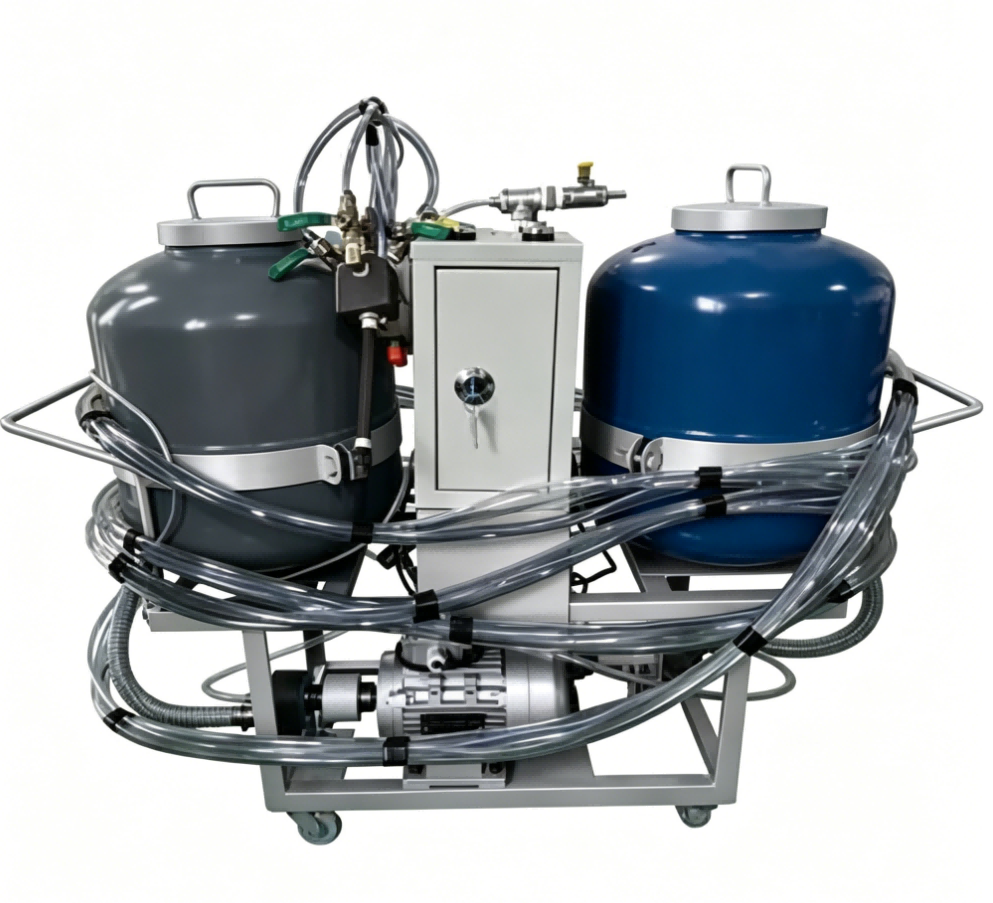
High-pressure impingement mixing is effective because it breaks the components into small, colliding streams that finish mixing in the mixing chamber before the viscosity rises. Low-pressure mechanical mixing works well at lower output and with viscous prepolymer systems, but it needs more attention to shear and cleanout. Recirculation, pressure control, and temperature-conditioned tanks matter because they keep the material being dosed the same during the first shot after a pause as in the middle of a run.
A formulation change of only a few parts in the A-side changes the NCO:OH ratio — and therefore the part weight and cavity fill. <How To Calculate Shot Weight In Polyurethane> covers the practical link between component weights and cavity fill.
An example from automotive seat production illustrates the operational difference. A manual mixing process running about ±4% ratio error produced an 11% defect rate. Moving to closed-loop servo metering brought ratio control to ±0.3% and cut the defect rate to roughly 1.5%. The formulation itself did not change; the reaction finally received the ratio it was designed for.

If you are specifying or upgrading a metering line, the useful next step is not to compare nominal throughput numbers. Send your target component ratio, viscosity range, and worst-case shot weight to Info@chinahaifeng.com or WhatsApp +86 135 6629 6633, and ask for a ratio-control review. A production issue that looks like a cure problem is often a metering or temperature-control problem wearing chemistry-colored clothing.
If uneven cure or ratio imbalance shows up as dimensional change in the mold, the fault is rarely the chemistry alone. <Causes Of Shrinkage In Polyurethane Foam How To Control It> covers how cure imbalance produces dimensional loss.
Talk to a Metering and Mixing Engineer
When the OH–NCO reaction is out of balance, the part tells you in hardness, cell structure, surface defects, or scrap rate. The most useful conversation starts with process data rather than a wish list: your current OH and NCO values, target index, shot weight, cycle time, mold temperature, and the defect you are trying to eliminate.
For an equipment-level review of metering accuracy, mixing head behavior, temperature control, or turnkey line integration, contact Haifeng Polyurethane Machinery at Info@chinahaifeng.com or WhatsApp +86 135 6629 6633. Ask specifically for a ratio and exotherm review; that usually routes the inquiry to an application engineer rather than a general sales response.
FAQ
Does the NCO–OH reaction give off gas?
No. The main urethane-forming reaction is a polyaddition and does not release carbon dioxide or other gas. Carbon dioxide comes from the secondary reaction between isocyanate and water, which is deliberately used in water-blown foam and unwelcome in bubble-sensitive elastomer casting.
Is a catalyst always required?
Not strictly, but it is almost always required in production. Uncatalyzed systems may cure too slowly, remain tacky, or require more mold residence time than the line allows. The choice between amine, tin, bismuth, and mixed catalyst packages depends on whether the formulator wants to accelerate gel, blowing, or both.
Why run the isocyanate index above 100?
An index above 100 provides a controlled excess of NCO. That excess can compensate for moisture, chain extender losses, or slow side reactions. The trade-off is that excess isocyanate may continue reacting after demold, influencing final hardness, hydrolysis resistance, and long-term dimensional stability.
What kind of metering accuracy does this reaction need?
The exact requirement depends on the formulation’s sensitivity, but high-precision polyurethane equipment commonly targets dynamic metering accuracy of ±0.3% or better for critical elastomer and foam applications. Wider drift changes the effective index and therefore the part density, hardness, or cell structure before any visual mixing defect appears.
References
[1] M. Ionescu, Chemistry and Technology of Polyols for Polyurethanes, 2nd ed. Shawbury, UK: Smithers Rapra, 2016.
[2] Plastics — Polyols for use in the production of polyurethane — Determination of hydroxyl number, ISO 14900:2017, International Organization for Standardization, Geneva, Switzerland, 2017.
[3] Standard Test Methods for Polyurethane Raw Materials: Determination of the Isocyanate Content of Aromatic Isocyanates, ASTM D5155-19, ASTM International, West Conshohocken, PA, USA, 2019.
[4] G. Oertel, Ed., Polyurethane Handbook: Chemistry, Raw Materials, Processing, Application, Properties, 2nd ed. Munich, Germany: Hanser, 1994.
[5] O. Bayer, “Das Di-Isocyanat-Polyadditionsverfahren (Polyurethane),” Angewandte Chemie, vol. 59, no. 9, pp. 257–272, 1947.
If you’re interested, check out these related articles:
SRIM Explained Structural Reaction Injection Molding Basics
Measuring Polyurethane Foam Resilience A Practical Test Guide