What a Pinhole Actually Is in a Sprayed Polyurethane Sole
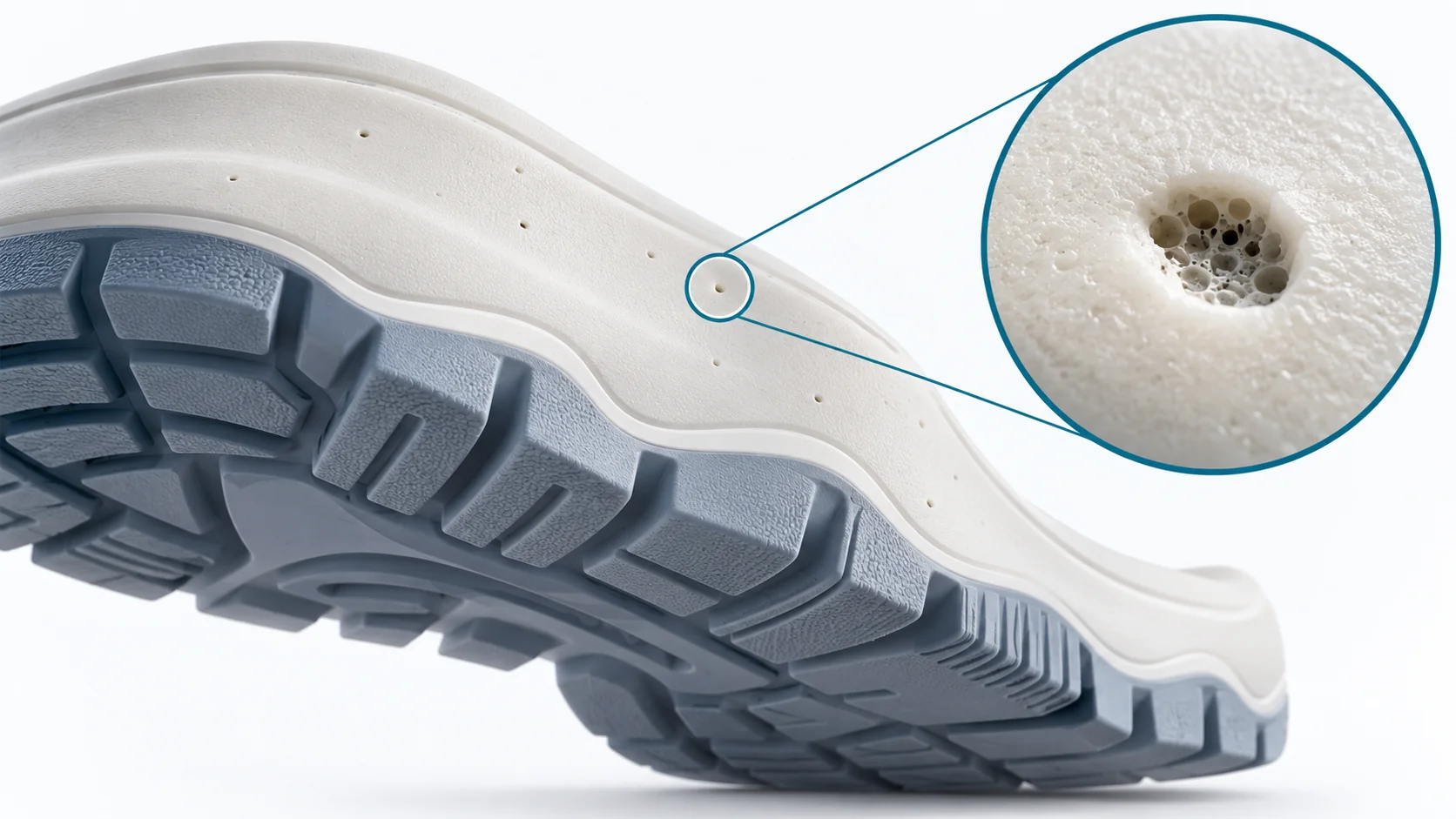
A pinhole is not the same as a blowhole, a crater, or an underfilled corner. It is a small surface void that breaks the skin of the sole instead of allowing the top layer to close cleanly. In sprayed polyurethane soles, pinholes usually appear because a gas bubble reaches the surface, ruptures late in the cream or tack-free phase, and does not heal before the surface sets.
The defect matters far more than its size suggests. Even scattered pinholes interrupt the visual quality of premium soles, reduce the usable molded skin thickness, and can create starting points for finishing problems such as polishing marks, dirt traps, or weak layers in a dual-density sole.
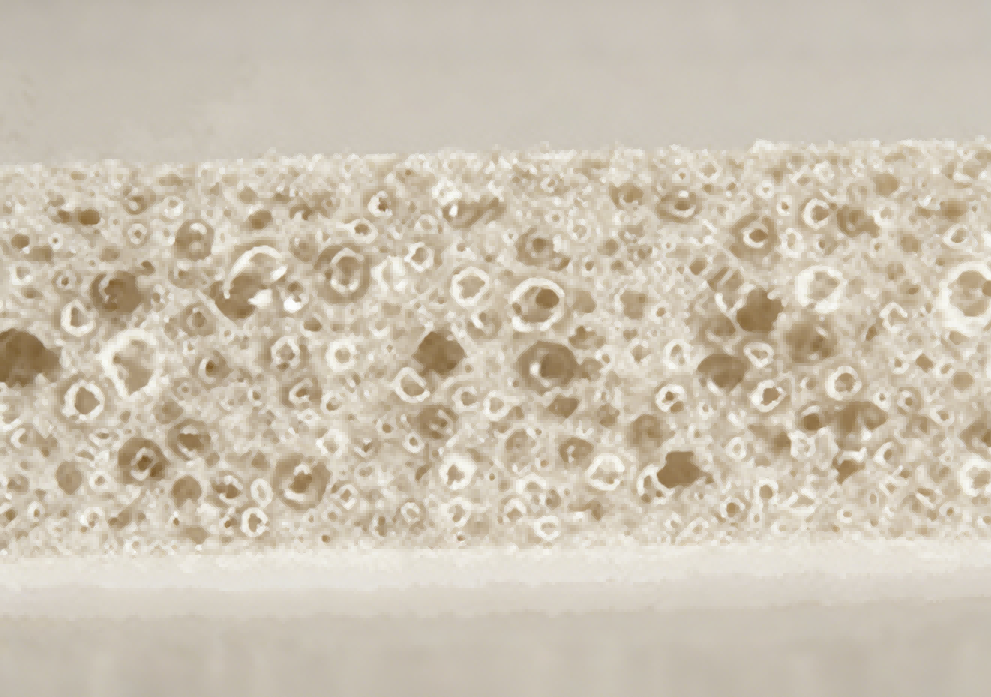
The Three Pinhole-Forming Mechanisms
Most pinhole problems trace to one of three mechanisms. The fixes are different for each, which is why a generic “increase pressure” instruction often makes the defect worse.
Moisture and Dissolved Gas
Free water in the polyol side reacts with isocyanate and releases carbon dioxide [1]. The gas may form as the material passes through the spray gun, so the bubble has no chance to separate before it reaches the mold. Any dissolved gas in the component stream expands when pressure drops at the spray nozzle [2], and that expansion can look the same as a moisture reaction on the finished sole.
The practical rule is to treat every unexplained pinhole outbreak as a possible raw-material change until the day tank, drum, and delivery line are ruled out.
Air Entrapment at the Spray Surface
When the spray fan applies a new layer over a partly reacted layer, air can be trapped at the interface. This is common when the spray overlap is wrong, the gun angle throws the fan too sharply, or the mold cavity has low spots that prevent the material from flowing together. In microcellular sole systems, the trapped air does not always migrate out; it sits under the developing skin and becomes a surface void.
Insufficient Coalescing Time
Polyurethane cream time, gel time, and tack-free time are all moving targets. If the line speed is too fast, the last pass may start to set before it can coalesce with the previous pass. The result is not always a visible seam; sometimes it is a row of microvoids where the passes meet. This is why pinholes that appear only on the final spray pass, or only along a specific gun travel path, should point first to process timing rather than chemistry.
A Root-Cause Sequence That Narrows the Problem Fast
Instead of changing five variables at once, work through the defect by location and pattern. A stable pinhole pattern usually indicates equipment or tooling. A random, batch-to-batch pattern usually indicates raw material or storage conditions.
| Observation | Likely root cause | First check |
|---|---|---|
| Pinholes evenly spaced along the spray pass | Partial gun-tip blockage or damaged fan pattern | Remove the nozzle, inspect the fan under air only, compare to a known-good pattern |
| Pinholes near mold parting lines or vents | Entrapped air with no escape path | Check vent cleanliness, vent depth, and release agent build-up |
| Pinholes concentrated on high-gloss areas | Mold surface too cold or release agent film too thick | Measure mold temperature before shot and inspect release agent coverage |
| Pinholes appear suddenly after a day-tank refill | Moisture or dissolved gas in incoming material | Take a water-content reading on the polyol and check drum storage history |
| Pinholes increase with line speed | Insufficient coalescing or spray overlap | Reduce a single pass speed, not the whole line, and inspect the skin |
| Pinholes appear on every batch in the same location | Tooling or fill pattern issue | Record shot position and compare with mold temperature map |
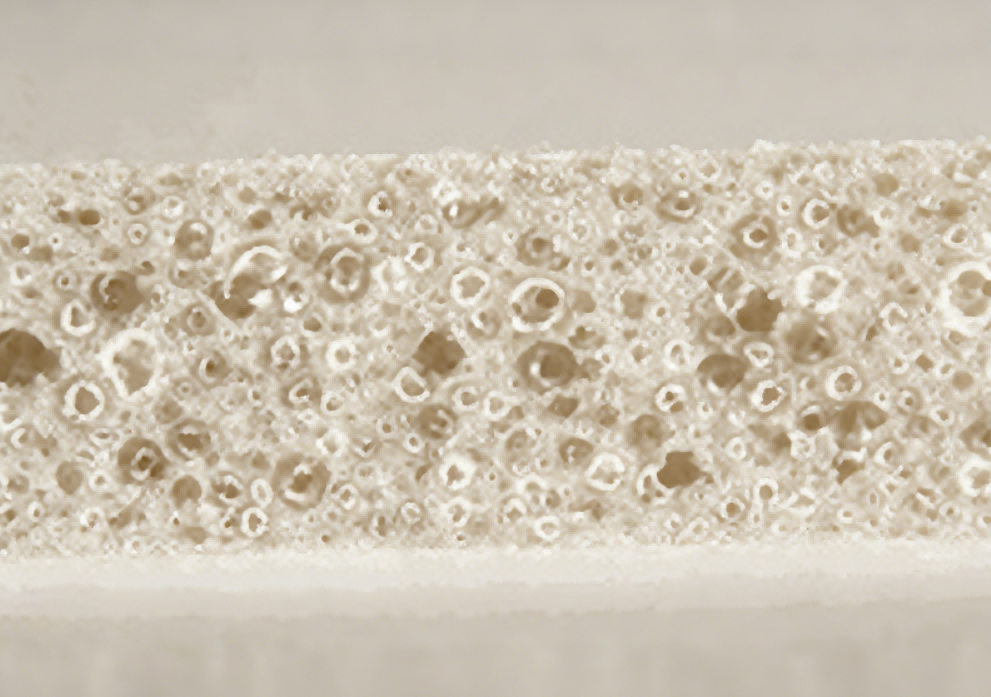
Pinholes and shrinkage often share a common trigger: gas release and temperature imbalance during cure. Causes Of Shrinkage In Polyurethane Foam How To Control It covers how shrinkage develops from similar process conditions.
Fixes: Material, Spray, and Mold Controls
Material-Side Fixes
Keep polyol drums sealed, use desiccant breathers where possible, and avoid drawing from a drum that has been opened and left in a humid area. If the system allows it, vacuum degassing removes some dissolved gas before the metering unit. Silicone surfactant can help surface leveling, but adding more surfactant is not a pinhole fix; too much can stabilize bubbles and make the skin hold them at the surface.
Two-component spray systems rely on stable isocyanate and polyol streams. What Is Spray Polyurethane Foam Composition And Application covers the composition and application details that matter before you chase a surface finish.
Spray Equipment and Mold Controls
The spray gun is the highest-value check after raw material. A worn nozzle, a leaking seal, or a dirty mixing chamber can introduce air without changing any process setting. Check the fan shape before the next production run, and confirm the component ratio at the spray pressure you actually use—not at a bench calibration condition.
Mold temperature and release agent are equally important. A cold mold can freeze the surface before bubbles escape, while a release agent film that is too thick can trap solvent or moisture at the surface. Use only the amount needed for clean demolding, and apply it evenly.
Surface finish requirements for microcellular urethane parts are usually assessed by visual inspection under magnification after demold [3]. If the pinhole is invisible under low magnification but visible in finishing, the problem may be a surface-skin issue rather than a deep foam defect.
A Practical Shot-Weight Reminder
Pinholes can also be a fill-pattern problem. If the metered shot is too small for the cavity, the last material to arrive may stretch across the surface and create a thin, easily ruptured skin. If the shot is too large, the excess material can cause overfilling and vent blockage.
Shot weight and pour timing control how much material fills the mold skin before the surface sets. How To Calculate Shot Weight In Polyurethane covers the metering math that keeps each sole within the process window.
Equipment Decisions When Pinholes Persist
When the same pinhole pattern survives a raw-material change, a spray-gun rebuild, and a mold-temperature adjustment, the next question is whether the machine itself is limiting your control range.
A low-pressure spray line can still produce good soles, but it needs tighter material conditioning and cleaner process discipline. If your team is already doing those things and pinholes remain, the issue may be metering drift, an undersized day-tank circuit, or a mixing head that cannot hold a repeatable pressure profile under your current output demand.
The most useful next step is to send the current setup data—spray pressure, material temperatures, ratio setting, line speed, and a close-up of the pinhole pattern—to info@chinahaifeng.com or WhatsApp +86 13566296633. A small set of batch records usually reveals whether the problem is in the machine envelope or in the material-handling loop around it.

Get Engineering Support Before You Rebuild the Line
At Haifeng Polyurethane Machinery, we approach this kind of defect from the metering and mixing side first, because that is where most recurring pinhole problems live. We supply low-pressure and high-pressure foaming systems, custom sole molds, and turnkey line integration for footwear producers. If your plant is fighting pinholes, changing the spray tip will not help when the root cause sits in component ratio deviation, day-tank moisture, or a mold venting design that never matched your material system.
Send your current batch record, gun settings, and defect photos to info@chinahaifeng.com or WhatsApp +86 13566296633 and our engineers will help you trace the problem before you buy new equipment.
Frequently Asked Questions
What is the fastest way to tell if moisture is causing pinholes?
Take a water-content reading on the polyol side before you change anything else. If water content has risen, dry the material or replace the batch and observe the pinhole rate on the next run.
Why do pinholes keep appearing near the mold side of the sole?
That is usually not a spray problem. The mold surface may be too cold, the venting may be blocked, or the release agent film may be too thick. Check the mold temperature map and vent condition before changing the gun.
Can release agent cause pinholes?
Yes. Too much release agent or an uneven film can trap moisture or solvent at the surface. A poorly chosen release agent can also change how the skin coalesces, leaving surface voids behind.
Do pinholes at the final spray pass mean I need a higher-pressure machine?
Not necessarily. They often mean the final pass has too little coalescing time relative to gun speed. Slow that pass first and review the fan overlap. If the problem only disappears at an output that is too low for your line, then equipment capability becomes the real discussion.
Is a small number of pinholes acceptable in footwear soles?
For commodity soles, a low defect rate may be tolerated under a visual standard, but for premium, high-gloss, or branded soles, surface pinholes are usually rejectable. The safer approach is to find the mechanism instead of writing an acceptance limit around an unstable process.
References
[1] M. Szycher, Szycher’s Handbook of Polyurethanes, 2nd ed. Boca Raton, FL, USA: CRC Press, 2012.
[2] G. Oertel, Polyurethane Handbook, 2nd ed. Munich, Germany: Carl Hanser Verlag, 1994.
[3] ASTM D3489-18, Standard Test Methods for Microcellular Urethane Materials, ASTM International, West Conshohocken, PA, USA, 2018.
If you’re interested, check out these related articles:
How To Calculate Shot Weight In Polyurethane
Causes Of Shrinkage In Polyurethane Foam How To Control It
What Is Semi Rigid Polyurethane Foam
Shore A Vs Shore D Hardness In Polyurethane
SRIM Explained Structural Reaction Injection Molding Basics