A foam that feels springy in a showroom can still fail a resilience check on the production floor. High-resilience (HR) polyurethane foam is not simply “better” foam — it is a defined flexible foam class built around high molecular weight polyols, a strong load-bearing network, and controlled cell opening so the material returns energy quickly and resists bottoming out. The word “resilience” is used loosely in selling, but in specification it means one measurable property: ball rebound [1].
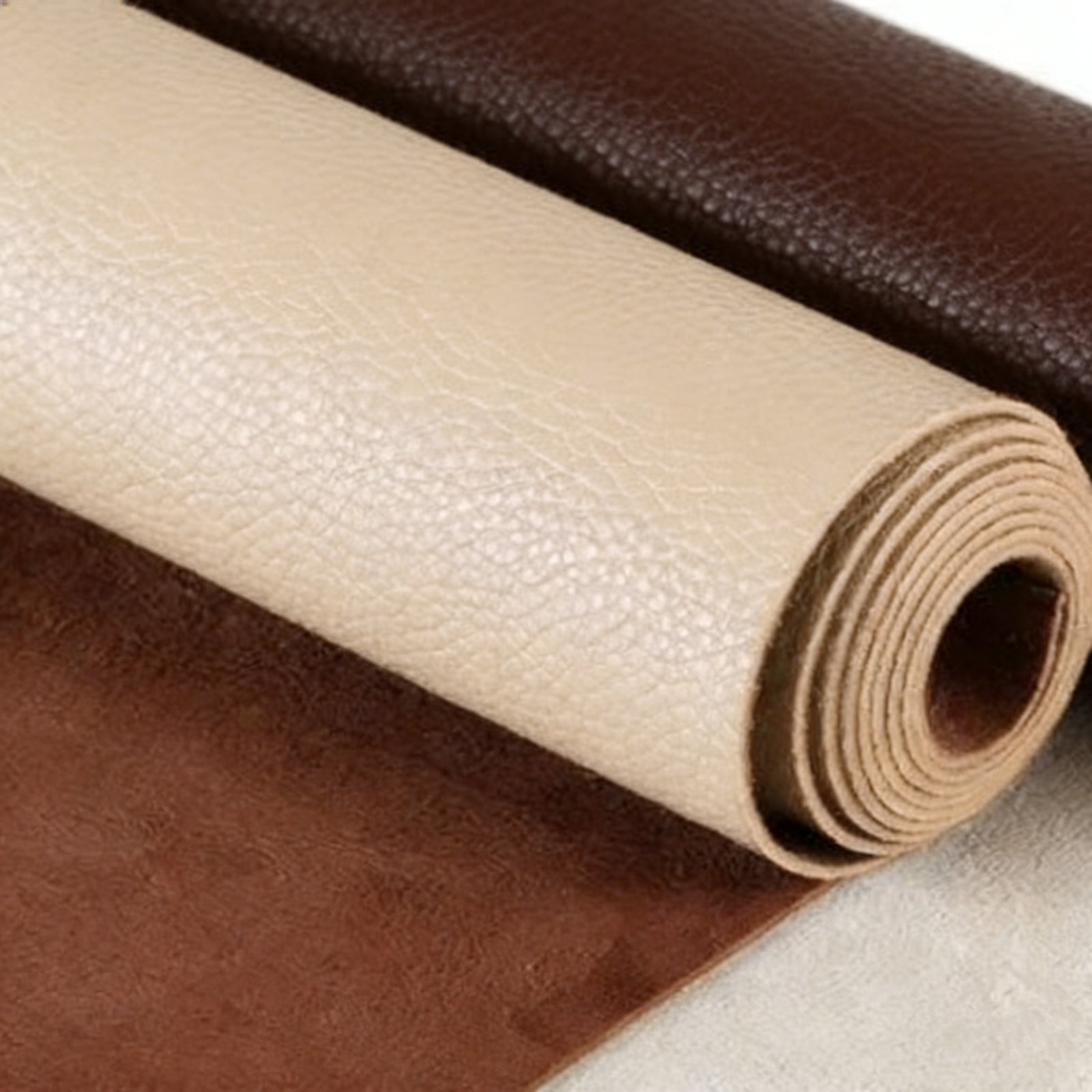
What Makes HR Foam Different from Conventional Flexible Foam
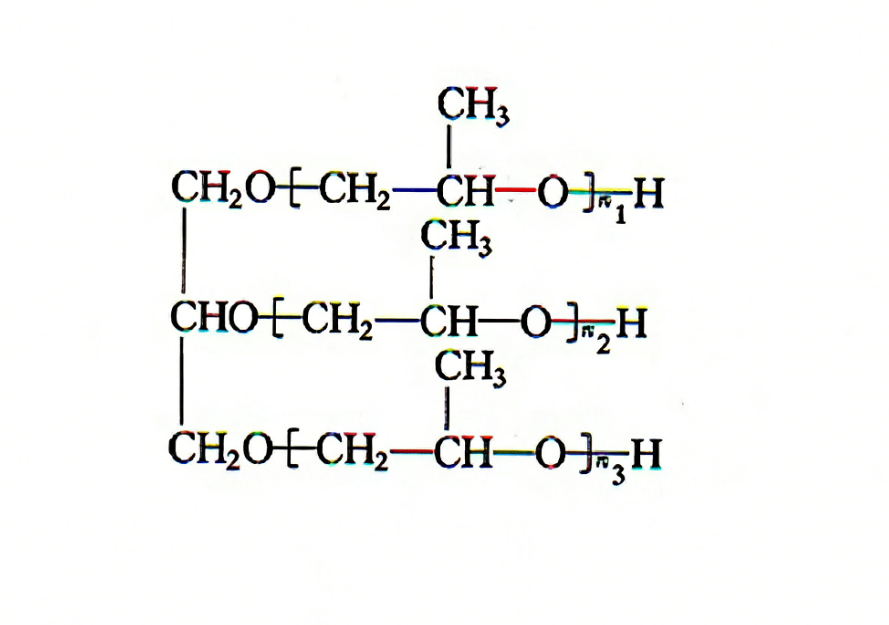
Conventional flexible slabstock foam uses medium molecular weight polyols and depends mostly on the polyol–isocyanate reaction plus blowing to form open cells. HR foam changes the chemistry and the cell architecture together. The polyol side typically uses higher molecular weight polyether polyols — commonly in the 3,000–6,000 MW range — combined with polymer polyols (SAN- or PHD-type dispersions) that add load bearing without making the foam dense [2]. The isocyanate side is often a TDI/MDI blend that shifts the gel/blow balance toward faster, more controlled network formation.
The result is a foam with more uniform, partly open cells, higher support factor, and lower hysteresis than conventional grades. Where a conventional seating foam often shows a sag factor near 2.0, HR grades typically run 2.4–3.0, meaning they firm up noticeably as compression deepens instead of collapsing [3]. That is why HR foam feels supportive rather than simply soft.
HR foam sits between conventional flexible foam and semi-rigid grades on the stiffness spectrum. <What Is Semi Rigid Polyurethane Foam> covers how semi-rigid formulations trade resilience for structural firmness in headliners and interior trim.
Key Properties That Separate HR Foam
Specifying HR foam usually comes down to six properties measured under controlled conditions:
| Property | HR foam target | Conventional flexible comparison |
|---|---|---|
| Ball rebound resilience | 55–70% | 40–50% |
| Density | 40–70 kg/m³ seating grades | 20–45 kg/m³ slabstock |
| 25% IFD hardness | application-specific, often 80–160 N | lower at equal density |
| Support factor (65%/25%) | 2.4–3.0 | 1.8–2.0 |
| Compression set | <10% | 10–15% |
| Hysteresis | ~15–25% | ~30–40% |
These bands reflect general industry targets [3]; resilience shifts with density, index, cell size, and polymer polyol loading, so a spec number has meaning only when the test method and specimen preparation are fixed.
How HR Foam Is Measured and Specified
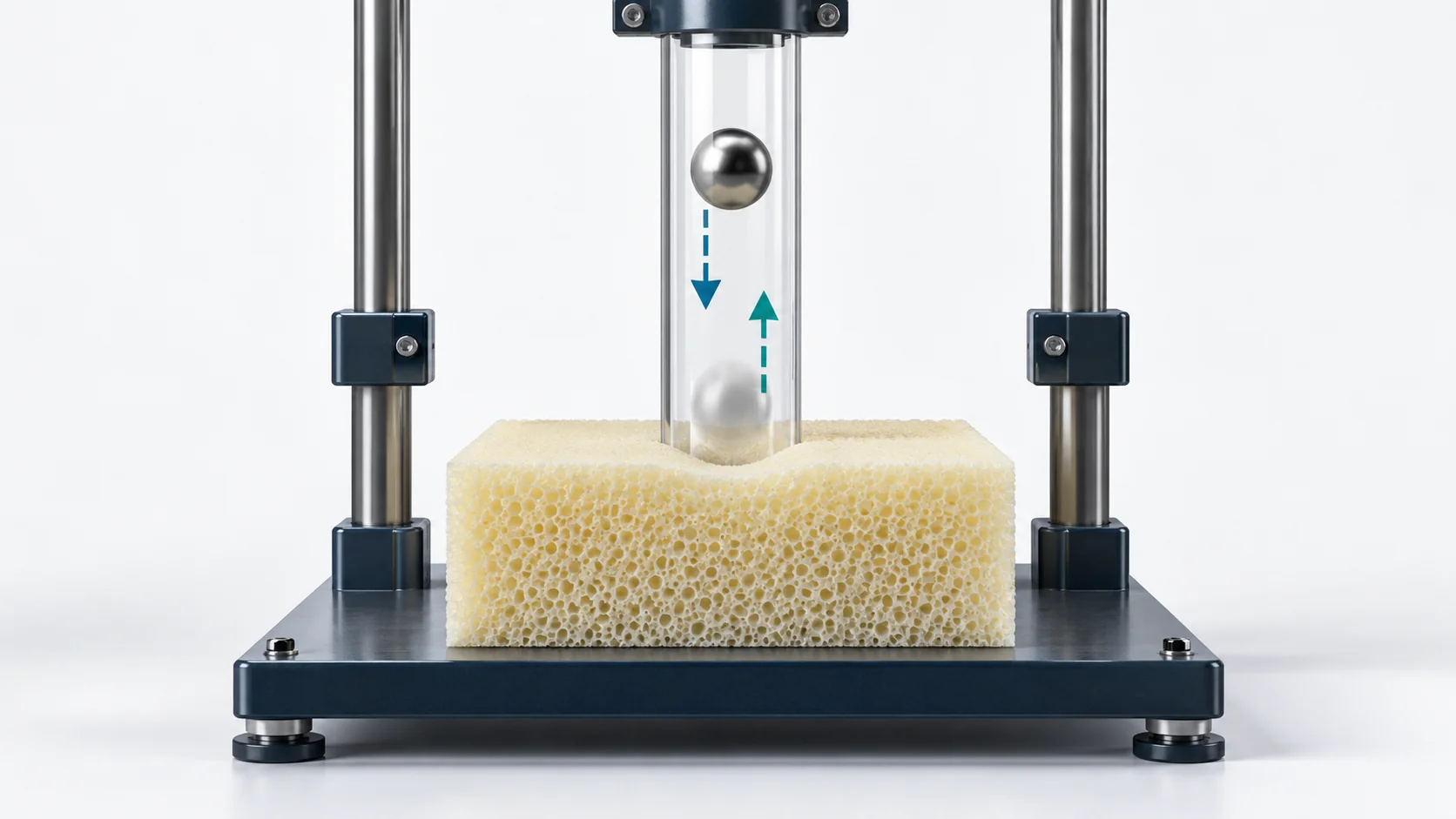
The standard resilience measurement is a ball rebound test. A steel ball — 16 mm diameter, about 16 g — drops from a fixed height onto the foam specimen, and resilience is the rebound height expressed as a percentage of the drop height [1]. ISO 8307 defines the general method, while ASTM D3574 Test H covers the equivalent U.S. practice [4]. Hardness is measured separately as indentation force deflection (IFD): the force required to compress the foam to a set percentage of thickness, typically 25% [5].
Resilience is only one half of the comfort picture; hardness and support factor determine how the spring-back actually feels in use. <Measuring Polyurethane Foam Resilience A Practical Test Guide> covers the ball rebound procedure, test variables, and how to compare readings between grades and batches.
Specifying HR foam should therefore always list four numbers: density, 25% IFD, ball rebound, and compression set. Leaving out any of the four lets two very different foams pass the same sheet.
How HR Foam Is Produced on the Line
HR foam production mixes formulation control with metering discipline. A typical formulation pairs high molecular weight polyether polyols with polymer polyols [2], uses water at roughly 2.5–5 parts per hundred polyol as the main blowing agent, and adds a small crosslinker load — DEOA or DMEA — to sharpen the load-bearing network. Amine and tin catalysts balance the gelling and blowing reactions, while a silicone surfactant stabilizes the expanding cells before gelation.
On the equipment side, the process depends on three things done consistently: accurate component ratio, stable material temperature, and disciplined mixing-head speed. A deviation of one percentage point in the component ratio can shift molded density by several kg/m³, and that density drift carries directly into the resilience reading. If the ratio wanders between shots, the same formulation can produce foam that passes at 9 a.m. and fails at 3 p.m. — a metering problem, not a chemistry problem.
For molded HR foam, high-pressure impingement mixing is usually the preferred route because it nucleates the liquid uniformly and keeps cell size narrow. Low-pressure machines can run HR foam for slabstock or smaller multi-component jobs, but mold temperature control and shot-to-shot ratio stability decide whether the spec is met.
Cream time and rise time control how the polymer network locks in around the expanding cells. <The Role Of Rise Time In Polyurethane Foaming> covers how faster or slower rise shifts cell structure, foam openness, and final resilience.

In automotive HR seat foam work, we usually size the machine by shot weight and demold cycle rather than nominal kg/min — a fast-cycle seat mold changes the pump and mixing-head decision completely. If your line is already running but resilience varies by mold position or shift, the cause is usually metering or mold temperature control, not the formulation alone. For help tracing line-side variation, contact Info@chinahaifeng.com.
Common Production Problems in HR Foam
HR foam’s open-cell structure makes it more forgiving than rigid foam, but four failure modes still repeat on the floor:
- Late collapse or shrinkage. When the blowing reaction outruns gelation, cells form but the network cannot hold them; the foam settles as it cools. This is usually an index, catalyst-balance, or premature demold problem, not a raw-material failure.
- Coarse, uneven cells. Poor nucleation or low mixing-head shear leaves a few large cells that weaken the structure and drop the rebound reading.
- Density gradients across the mold. Uneven temperature or over-packing at the pour point produces a hard base and a soft crown; IFD and resilience both scatter.
- Bottoming out in service. A formulation with the right rebound but the wrong support factor feels lively yet collapses under load. This is why resilience alone is never a complete comfort specification.
Each of these shows up differently in testing, and each traces to a controllable variable: ratio, temperature, mixing energy, or demold timing. Before changing the formulation, verify those four on the line; most “bad foam” is bad process stability wearing a chemistry costume.
How to Specify HR Foam for Your Application
A practical specification turns the properties above into a pass/fail sheet:
- Fix the test method and conditioning first — state ASTM D3574 or ISO 8307 and the specimen thickness.
- Lock density, 25% IFD, ball rebound, and compression set as a four-number set, not single isolated values.
- Choose slabstock for trimming flexibility or molded for net-shape seating and faster cycle economics.
- Match the formulation to the metering system: polymer polyol content, water level, and index all affect component viscosity and the pump/mixing-head requirement.
- Run a pilot with the actual machine settings — tank temperature, mixing-head speed, pour pattern — because lab data does not transfer automatically to the line.
- Inspect for cell uniformity and measure rebound on multiple positions before releasing the tool.
This checklist prevents the most expensive kind of spec error: buying foam that passes the data sheet but disappoints in the seat.
Talk to a Polyurethane Equipment Engineer
High-resilience foam rewards process control more than most flexible foam grades. Whether you are qualifying a new HR formulation, comparing slabstock and molded lines, or chasing resilience drift on an existing machine, the deciding variables are metering accuracy, temperature control, and mixing consistency. We work those variables with production teams instead of stopping at the data sheet.
Contact: Info@chinahaifeng.com
WhatsApp: 86 13566296633
FAQ
What does “high resilience” mean in polyurethane foam?
It means the foam returns a high percentage of the energy from a compression load. In testing terms, HR foam classifies at roughly 55% or higher ball rebound under ISO 8307 or ASTM D3574 Test H, compared with 40–50% for typical conventional flexible foam [1][4].
How is HR foam different from memory foam?
Memory foam is formulated to absorb energy and recover slowly; HR foam is formulated to return energy quickly. Memory foam has high hysteresis, while HR foam keeps hysteresis low and support factor high, which is why HR foam suits seating and memory foam suits pressure-point bedding.
What ball rebound percentage qualifies as HR foam?
There is no single legal threshold, but the working specification is generally 50% or higher ball rebound, with commercial HR grades commonly running 55–70% depending on density and formulation [3].
Can HR foam be produced on a standard low-pressure foaming machine?
Yes for many slabstock and bench-scale jobs, provided the machine holds ratio and delivers enough mixing shear for the polymer polyol. For molded automotive and high-cycle seating, high-pressure impingement mixing usually gives the narrower cell size and faster demold the application needs.
What causes HR foam to lose resilience after molding?
The most common causes are incomplete cure at demold, residual closed cells that collapse slowly, and density drift from ratio variation. Resilience measured immediately after demold can also read low before the foam finishes post-curing.
References
[1] ISO 8307:2018, Flexible cellular polymeric materials — Determination of resilience by ball rebound, International Organization for Standardization, Geneva, 2018.
[2] G. Oertel, Ed., Polyurethane Handbook, 2nd ed., Munich: Hanser Publishers, 1993.
[3] Polyurethane Foam Association, Flexible Polyurethane Foam: Industry at a Glance, PFA, 2023.
[4] ASTM D3574-17, Standard Test Methods for Flexible Cellular Materials—Slab, Bonded, and Molded Urethane Foams, ASTM International, West Conshohocken, PA, 2017.
[5] ISO 2439:2008, Flexible cellular polymeric materials — Determination of hardness (indentation technique), International Organization for Standardization, Geneva, 2008.
If you’re interested, check out these related articles:
What Is Semi Rigid Polyurethane Foam
RRIM Vs RIM Which Process Suits Your Structural Part
How To Calculate Shot Weight In Polyurethane
Shore A Vs Shore D Hardness In Polyurethane
The Role Of Rise Time In Polyurethane Foaming