PU insole automation earns its capital when measured shot weight spread, changeover frequency, and product mix have outgrown what manual pouring can hold. It does not earn it because a capacity chart says you should reach ten thousand pairs a day. Most lines I visit can already make more pairs than they ship; the losses sit in the second-quality box, the purge bucket, and the hours spent resetting a style. Volume targets hide those losses, because they count what the line produced rather than what it wasted. The decision is narrower than a capacity plan: can your records show where the current line stops holding the tolerance you sell?
Where Manual Insole Foaming Loses Money
A manual insole line rarely fails in one dramatic way. It leaks in four places, and each one leaves a different trace on the floor.
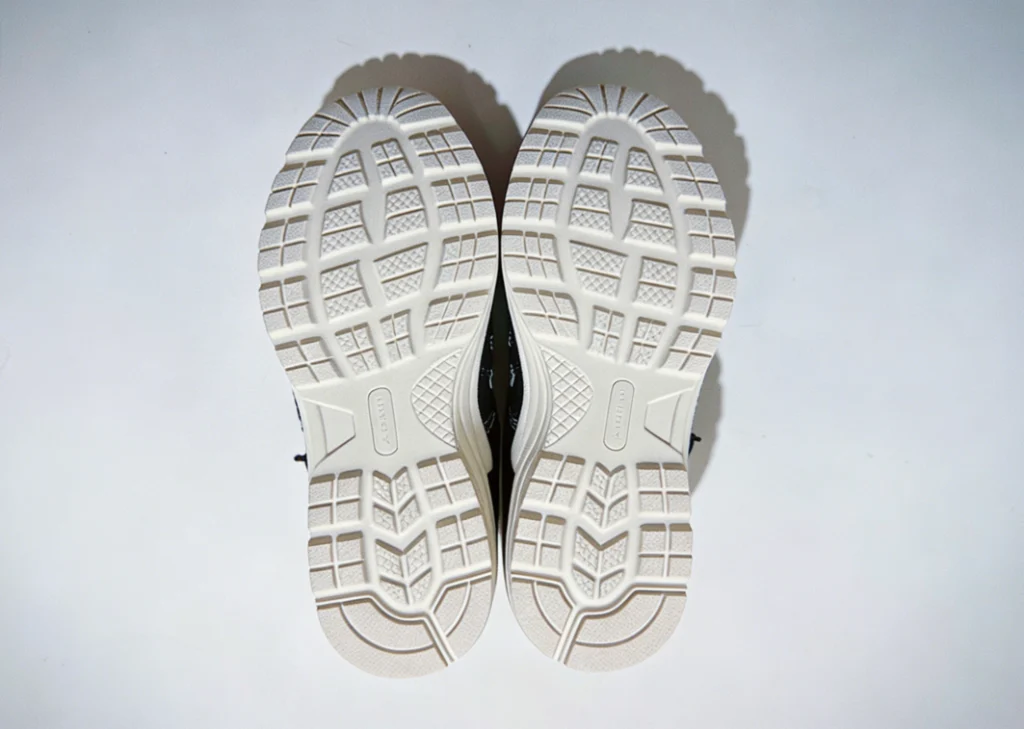
Shot weight spread is the first. A timer-based or hand-guided pour puts a slightly different shot into each cavity of a six-cavity tool. The pair that comes out has one firmer side, and the operator drops it into the second-quality box without writing anything down. In a molded insole, shot weight sets the density, density sets hardness and compression behavior, and the customer feels the result as a pair that does not match.
Ratio drift is quieter. When the A and B streams move away from the set ratio, hardness creeps through the shift and cure time shifts with it. Parts that passed at eight in the morning may not pass at three in the afternoon. Operators compensate by adjusting the pour by eye, which turns one variable into two.
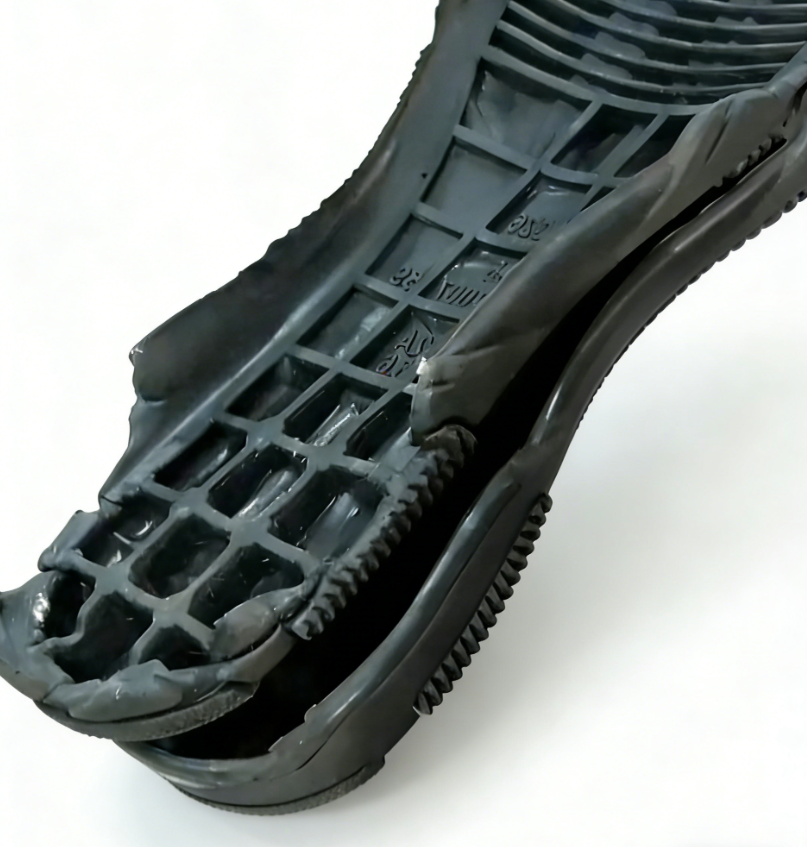
Changeover and rework are the visible costs. Purge, color changes, density changes, and mold swaps consume hours that never appear in the standard cost per pair, and trimming labor grows whenever the flash line wanders.
| Cost driver | What it looks like on the floor | What automation changes | What it does not fix |
|---|---|---|---|
| Shot weight spread across cavities | One firm side per pair, weights drifting between pairs | Closed-loop or servo metering that repeats the same shot into each cavity | Poor venting or a worn mold |
| A and B ratio drift | Hardness creep through a shift, tacky or brittle parts | Continuous ratio control with alarms and recorded values | The wrong polyol system for the hardness you sell |
| Style changeover | Half a shift lost to purge, color, density, and tool swaps | Stored formulas and a shorter, repeatable purge routine | Disorder in mold handling and tool storage |
| Rework and trimming | Extra operators at the bench, ragged edges | A consistent flash line and automated trimming where volume allows | A part design that puts flash in a functional zone |
On one functional insole project, the starting numbers were a 15% defect rate, 8% raw material waste, and a ceiling near 3,000 pairs per day on the line. After the pour and mold handling were replaced, the same project recorded a defect rate below 1%, waste at 1.5%, unit cost down 21%, and 12,000 pairs per day per line. The revealing figure is not the output. Waste and defects fell before output rose, because the pour became repeatable.
Three Signals That Say the Line Is Ready to Automate
All three signals are measurable from records you already keep. If you cannot measure them, the first investment is a balance and a stopwatch, not a machine.
Shot weight spread is wider than the tolerance you sell
Weigh 20 consecutive shots from each cavity and express the spread as a percentage of target. If that spread sits inside the density and hardness window your customer accepts, and the second-quality rate stays low, automation buys very little at this step. If the spread crosses the window, every other improvement is built on a moving floor: better molds, faster carriers, and robotic handling all reproduce a shot that is already wrong.
Dimensional drift is the second half of the same problem. Parts measured straight off the mold are not the parts that ship. Thickness and length settle over the following day, and how much they settle depends on density, demold time, and how evenly the cavity filled.
Dimensional behavior decides whether an insole fits the last it was designed for, and it is usually blamed on the mold before the material is checked. <Causes Of Shrinkage In Polyurethane Foam How To Control It> covers the process causes behind shrinkage and the controls that keep it inside a settled window.
Changeover time is eating a shift
Count styles per week, then time one full change: purge, color, density, and any mold swap. If that number multiplied by the weekly changes exceeds a shift, the line is losing capacity that no faster pour will recover. Formula storage and a dedicated second tool usually beat a higher nominal output here, because they attack the lost hours directly instead of adding speed to a line that spends them standing still.
The order book has moved to dual density
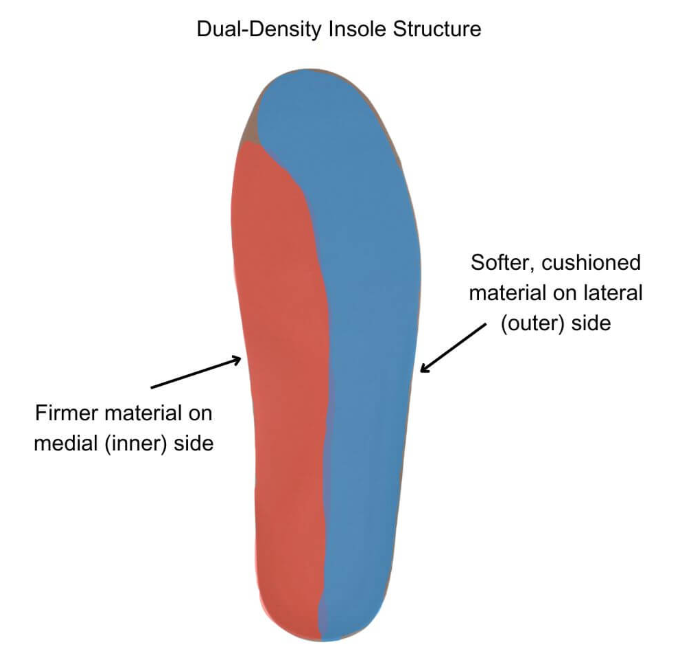
A single-density insole asks one question of a machine: can it repeat a shot. Dual density asks for sequence. Two pours into separate zones of the same tool, an alignment that survives the first pour, and a bond that holds through trimming and wear. When dual density moves from an occasional request to a routine order line, the manual sequence becomes a daily risk rather than a special job. That shift, more than any output target, is what makes sequencing control worth paying for.
Why Daily Output Is the Weakest Reason to Automate
Daily output is the product of cavity count, cycles per hour, uptime, and yield. Automation touches uptime and yield, and it touches them indirectly, through repeatability. It does not add cavities.
If your cycle is stable and your scrap is low, the remaining output gap is a tooling question. More cavities, a second mold carrier, or a second line will usually cost less than a robotic cell and deliver the same pairs. Buying automation to close an output gap that tooling created is one of the most expensive ways to solve a simple problem.
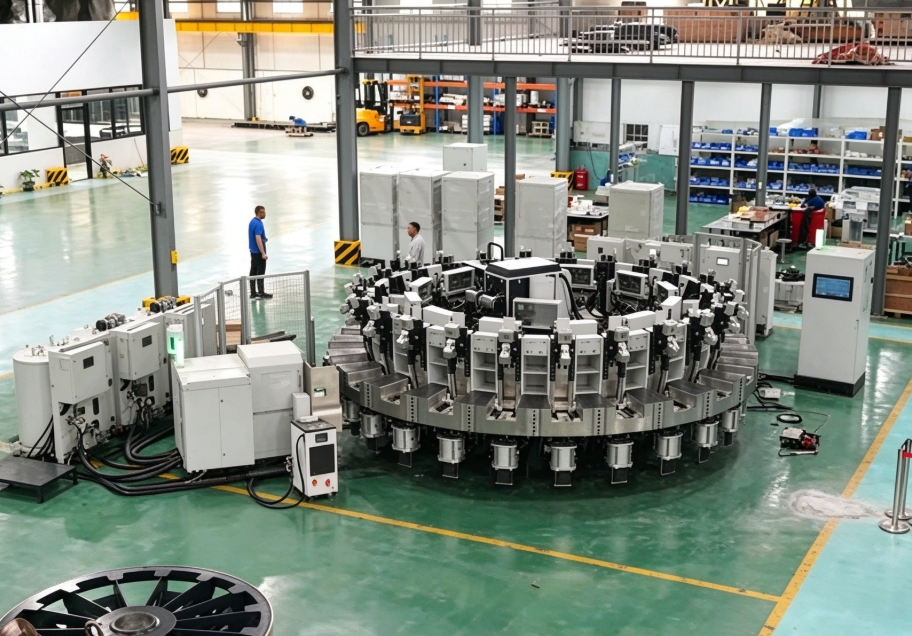
Headcount math is the most common justification and the least reliable. Automation rarely moves people out of the building. It moves them from pouring to inspection, packing, and material handling, and those roles still need to be staffed. A business case built only on removed operators tends to look weak eighteen months later, when the packing area has absorbed the savings.
One sole factory replaced a manual line with a single low-pressure machine and a stored formula library. Operators went from nine to four per line, daily output rose from 2,500 to 3,600 pairs, material waste fell from 8% to 3.5%, and style switching dropped from 60 minutes to under 15. No robot was involved. The gain came from repeatable metering and stored settings, which is the first stage of automation, not the last.
Matching Machine Scope to Insole Construction
Scope starts with the part, not the machine catalog. The variables that decide the specification are the heaviest and lightest pair weight you run, the cavity count your tooling can support, the hardness band across your catalog, whether dual density is a routine order or an occasional request, the number of styles per week, and the mold heating method you already use. A machine sized on the average style will be wrong at both ends of the range.
Shot weight per cavity is the number to fix first, because it converts pair weight into a metering requirement. Take the heaviest style, add the runner and any dead volume the tool demands, and check that the machine can deliver that shot with the accuracy you need at the low end as well. Many lines are specified on maximum output and then run most of the year at a fraction of it, where metering behaves differently.
Cavity count and pair weight set the shot the machine must deliver, and getting that number wrong shows up later as density variation rather than as a machine fault. <How To Calculate Shot Weight In Polyurethane> covers how shot weight is calculated from part volume, density, and cavity count.
Metering accuracy deserves the same skepticism. A figure quoted as plus or minus 0.3% of full range describes the machine at its rated span, not at the small shot an insole cavity takes. Ask how the figure is verified, then verify it yourself during the trial with a balance and 20 consecutive shots per cavity.
Dual density needs either two streams or dual metering modules with sequence control, and it needs formula storage that keeps each style’s settings retrievable. On the functional insole project referenced earlier, more than 90% of the catalog was single density at the start. The line moved to dual-density, breathable, and arch-support styles that reached 40% of insole sales, on the same equipment, because the settings lived in the controller rather than in an operator’s memory.
Molds and carriers finish the scope. A six-cavity tool with even runners and proper venting does more for pair consistency than an extra kilowatt of heating power. Tools for this work typically run in the 45 to 65 degrees Celsius band, and mold temperature control matters more once cycle times shorten and demold timing tightens.
| Request field | What vague buyers send | What to specify instead |
|---|---|---|
| Shot weight | “insole machine, six cavities” | Target shot weight per cavity with a tolerance, plus the lightest and heaviest style you run |
| Metering accuracy | “high precision metering” | The accuracy figure with its range condition, and how it will be checked on your material during the trial |
| Hardness range | “Shore A 30” | The full hardness band across your catalog, with the test method and the measurement point |
| Dual density | “dual density optional” | Which styles, zone thickness, pour sequence, and the cycle budget the second pour adds |
| Changeover | “fast color change” | Styles per week, purge method, and the target changeover minutes measured during the trial |
| Mold and carrier | “molds included” | Cavity count, mold material, heating method and working temperature, carrier type and station count |
What the Project Records Show and What They Do Not
Installed-line records are useful when they are read as conditions rather than promises. The table below separates what each record can support from the conclusion a buyer should not draw from it.
| Record | Method context | Responsible use | Do not infer |
|---|---|---|---|
| Functional insole line, six-cavity dual-density tooling, stored formula library | One supplier’s configuration, one product mix, measured after the change | Shows what repeatable metering and formula storage changed there: defects below 1%, waste 1.5%, 12,000 pairs per day | That any 3,000-pair line will reach 12,000; tooling, cycle time, and product mix set that ceiling |
| PU sole factory, single low-pressure machine with one-click formula library | Sole molding in East Africa, existing molds, one machine | Shows the changeover and operator effect: nine to four operators, 60 to under 15 minutes switching | That a robotic line is required for that result, or that insole bonding behaves like sole molding |
| Safety footwear line, five modular low-pressure lines | PPE manufacturer working to protective specifications with dual-density formulas | Shows how acceptance testing and modular expansion interact when certification governs the product | That the same throughput gain transfers to fashion insoles at lower volumes |
These are project records from one equipment supplier’s installations. They describe those lines under those conditions, with those molds and that order mix. They are not a forecast for a different factory, and they are not chemistry-wide recommendations.
Running a Trial That Predicts Production
A trial that only proves the machine can pour is a demonstration, not a test. The purpose is to find the point where the line stops holding tolerance, and that requires styles chosen to be difficult.
- Pick three styles, including the thinnest wall and the hardest cavity to fill.
- Write the acceptance criteria before the first shot, and have both sides sign them.
- Weigh 20 consecutive shots from every cavity on a balance that reads to 0.1 g.
- Check hardness on left and right parts at three points along the length.
- Measure dimensions after 24 hours at a controlled temperature, not off the mold.
- Time one full changeover with a stopwatch, including purge and any tool swap.
- Count every reject and rework action for the whole run, start-up included.
| Measurement | How to run it | Pass condition to set in advance |
|---|---|---|
| Shot weight spread | Weigh 20 shots per cavity, spread expressed as a percentage of target | Inside the density window your customer accepts |
| Pair hardness match | Test left and right at three points on the same day | Difference inside the tolerance your specification allows |
| Demold and cycle | Run 50 cycles with the same operator and the same settings | Stable cycle, no torn parts at the chosen demold time |
| Changeover | Time a full style change including purge and color | Within the minutes your weekly order mix can absorb |
| Dimensional check | Measure after 24 hours at controlled temperature | Within the fit and thickness specification you sell |
Hardness numbers on a data sheet describe a material. The pair in a customer’s hand describes a product, and that is where consistency gets judged.
A pair that feels different from left to right is a resilience and compression problem before it is a molding problem, and it needs a test method both sides accept. <Measuring Polyurethane Foam Resilience A Practical Test Guide> covers practical resilience measurement and how to read the results.
Staging the Investment and What to Automate First
Automation is not one purchase. It is three stages, and each one has a different prerequisite. Buying the third stage to fix a first-stage problem is the most common way these projects disappoint.
| Stage | Equipment scope | What it fixes | Prerequisite | Skip when |
|---|---|---|---|---|
| Metering and ratio control | Closed-loop metering, heated tanks, stored formulas | Shot weight and ratio repeatability, shorter and more predictable changeovers | A mold that fills evenly and a defined hardness specification | Scrap is already low and you run a single style |
| Carriers and mold temperature control | Rotary or linear carriers, mold heating, multi-cavity tooling | Cycle consistency, operator dependency, output per square meter of floor | Demand above one shift and tooling that fills without venting trouble | Your trimming capacity cannot absorb the extra cavities |
| Robotic pour, demold, and trimming | Robot, release agent control, trimming cell, recorded shot data | Labor at the pour and the bench, plus traceability per shot | Shot weight spread already measured and stable, molds releasing cleanly | You have not yet measured shot weight spread per cavity |
The sequence matters more than the individual machines. Metering without a stable tool produces consistent shots into a tool that cannot use them. Carriers without metering move bad shots faster. Robotics on top of either one automates a defect.
Start where the measurement points. If the shot weight spread crosses your customer’s density window, stage one is the answer and the other two can wait a year. If changeover is the loss and the pour is stable, formula storage and a second tool will return more than a faster machine. Only when both are tight does labor at the bench become the real constraint.
What to Send Before You Compare Insole Line Quotes
Send the construction (single or dual density), the pair weight with its tolerance, the cavity count you intend to run, your current scrap rate, the styles per week with current changeover time, the hardness band and the test method behind it, and the output per shift you need. With those numbers, the stage that addresses your actual loss becomes visible, and the stages you can postpone stay out of the quotation without weakening the line.
Haifeng Polyurethane Machinery
Email: Info@chinahaifeng.com
WhatsApp: 86 13566296633
FAQ
How many pairs per day justify an automatic insole line?
There is no pair count that decides it. A line at 2,500 pairs a day with a wide shot weight spread and four styles a week is a stronger automation candidate than a 6,000-pair line running one style with low scrap. Weigh shots per cavity, time a changeover, and count the second-quality box for a month. If the spread crosses your customer’s density window, or changeover costs more than a shift a week, the case is there. If those numbers are already tight, more cavities will beat more automation.
Can we automate only the pouring step?
Often yes, and it is the stage with the clearest return. Closed-loop metering with stored formulas fixes shot weight and ratio repeatability while your existing molds, carriers, and trimming stay in place. In one sole project, that single change cut operators from nine to four per line and changeovers from 60 minutes to under 15. The limit is mold handling. If operators still carry molds by hand, the gain stops at the pour, and carriers become the next sensible step rather than part of the first order.
What changes when we move from single-density to dual-density insoles?
Everything that touches sequencing. A dual-density insole needs two pours into defined zones of the same tool, an alignment that survives the first pour, and a bond that holds through trimming and wear. The machine needs either two streams or dual metering modules with sequence control, and the tool needs zone separation that fills evenly. Cycle time grows because the second pour waits for the first. Treat a dual-density launch as a new product introduction, not a formula change.
How accurate should metering be for insole foam?
An accuracy figure means little without its range condition and its verification method. A machine quoted at plus or minus 0.3% of full range may behave differently at the small shot weights an insole cavity uses. Ask how the figure is verified on your material and your shot size, then check it yourself by weighing 20 consecutive shots per cavity and comparing the spread with the density window you sell against. Pair hardness consistency is the outcome that matters, not the number on the sheet.
If you’re interested, check out these related articles:
Shore A Vs Shore D Hardness In Polyurethane
Measuring Polyurethane Foam Resilience A Practical Test Guide
Causes Of Shrinkage In Polyurethane Foam How To Control It
How Polyurethane Rollers Are Made From Casting To Cure