A polyurethane part can demold cleanly, pass a quick Shore A check on the shop floor, and still drift over the next several weeks. The problem is usually not the resin. It is the assumption that cure is complete when a part is hard enough to handle. Post-curing exists to close that gap.
Demolding Is a Mechanical Milestone, Not a Cure Endpoint
Polyurethane does not stop reacting the moment a mold opens. The isocyanate-hydroxyl reaction that builds molecular weight continues until the system runs out of reactive groups or the mobility of those groups becomes too limited to continue at a meaningful rate [1]. Demolding only tells you that the part has enough green strength to survive handling.
The heat released during the primary reaction drives the first stage of cure. After that exotherm fades, further reaction depends on time, temperature, and how easily unreacted groups can find each other. In thick castings, elastomer blocks, and rigid parts, that process slows dramatically at room temperature.
I have watched parts pass a hardness check at demolding and then fail a compression set test a week later. The material was not defective. It had simply not finished curing.
What Post-Curing Actually Changes in Final Properties
Post-curing does not introduce new chemistry. It uses controlled heat and time to complete the same reactions that the primary cure started. The practical effect is that the material reaches the property envelope the formulator intended.
| Property | What incomplete cure can show | What controlled post-curing typically does |
|---|---|---|
| Hardness | Low or drifting Shore A/D readings | Stabilizes final hardness and improves test repeatability |
| Tensile and tear | Underdeveloped hard segment network | Improves load transfer, tear resistance, and long-term strength |
| Compression set | High set, especially in seals and pads | Reduces set and improves recovery under load |
| Dimensional stability | Post-demold shrinkage, warp, or tolerance drift | Relieves residual stress and stabilizes dimensions |
| Environmental resistance | Under-cured regions with higher residual activity | Improves heat and hydrolysis resistance in cast elastomers |
The last row matters most in load-bearing elastomers. A casting that spends years in hot, humid service will expose weak spots that a room-temperature cure never finished. Compression set testing, in particular, is unforgiving of under-cured material [2].
Hardness measured before cure completion can drift between shifts and testing positions. Shore A Vs Shore D Hardness In Polyurethane covers why indenter choice, scale, and conditioning time all change the number.
Temperature, Time, and the Cure-Completion Trade-Off
The relationship between temperature and cure speed follows the general behavior of chemical reactions: higher temperature accelerates the reaction until side reactions or thermal degradation begin to compete [1]. As a rough operating guide, a 10 °C rise can meaningfully shorten required cure time, but the exact gain depends on the prepolymer, curative, part thickness, and thermal history.
Many cast polyurethane elastomer systems respond well to post-cure temperatures in the 80–120 °C range [3]. Time varies more than temperature. A thin test plaque may reach stable properties in a few hours. A 40 mm industrial roll cover or a thick pad may need 12–24 hours because heat must travel inward and cure advances from the surface first.
The limit is not always “more heat is better.” Sustained exposure above a system-specific ceiling can discolor the part, embrittle the surface, or degrade hard segments. If you are pushing temperature to shorten cycle time, verify the final compression set and tensile values, not just hardness.
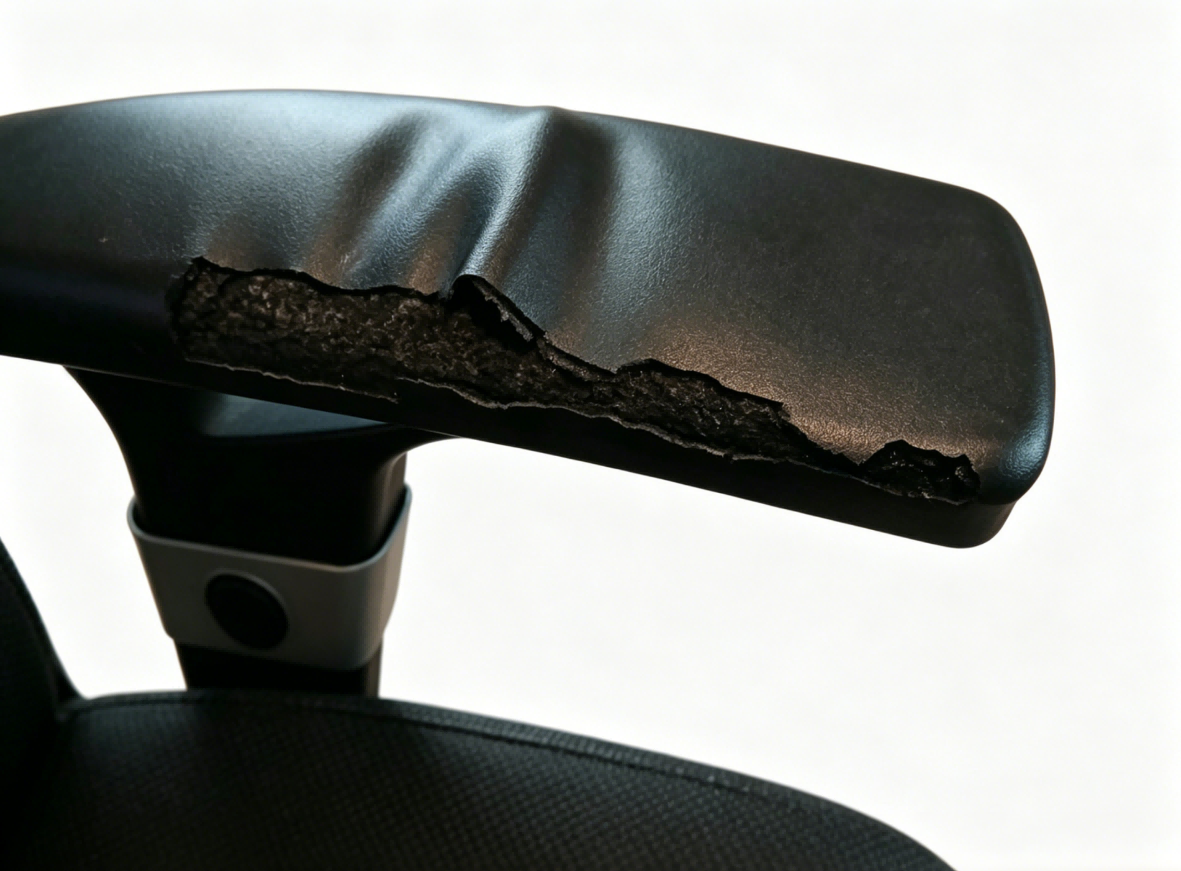
Dimensional change after demolding is not always caused by a bad A/B ratio; trapped stress and partial cure can produce the same measuring result. Causes Of Shrinkage In Polyurethane Foam How To Control It covers the process and formula factors that drive shrink.
Which Parts Benefit Most from a Real Post-Cure
Not every polyurethane part needs an extended oven cycle. Thin flexible foam often relies more on controlled cooling and maturation than on a long high-temperature post-cure [4]. The strongest case for post-curing appears in:
- MOCA- or BDO-cured cast elastomers
- Thick roller covers, wheels, pads, and suspension components
- Seals and bumpers where compression set is a release criterion
- Parts exposed to heat, oil, water, or repeated dynamic load
- Rigid structural parts with tight dimensional windows
For these applications, post-cure should be written into the production standard, not treated as an optional quality step when time allows.
A Practical Post-Curing Setup and Checks
A reliable post-cure station starts with forced-air circulation and temperature control tight enough to prevent hot spots. An industrial circulation oven with full-load uniformity within ±2 °C is a reasonable target for cast elastomer work. Air movement matters as much as setpoint because still air lets the oven map drift far from the part temperature.
Five checks keep the process stable:
- Measure temperature at the part, not only at the oven sensor.
- Keep parts spaced so air can pass across both sides.
- Use a ramp or step profile for thick parts instead of dropping them directly into high temperature.
- Define the end of post-cure by a plateau in hardness or compression set, not by a fixed number of hours.
- Re-validate the cycle whenever the curative, prepolymer, or part geometry changes.

Roller casting is a useful reference because cure history, mold temperature, and post-cure timing are all recorded in the same sequence. How Polyurethane Rollers Are Made From Casting To Cure covers how cure steps fit into an automated cast-pour line.
If you are deciding how much oven capacity to install for a new cast part, define the required hardness, compression set, service temperature, and current demold-to-pack time before buying equipment. That data makes the cure cycle calculable instead of borrowed from another resin system. For direct application support, write to Info@chinahaifeng.com or reach us on WhatsApp at 86 13566296633.
Common Mistakes That Erase the Post-Cure Benefit
The most frequent mistake is not running a post-cure at all and calling ambient storage “curing.” Room-temperature aging does continue the reaction, but it may take days or weeks to reach the same state that a controlled oven reaches in hours. During that time, parts can be assembled, shipped, or tested too early.
The second mistake is applying one generic cycle to every product. A thin gasket may need 60–80 °C for several hours. A large industrial roller cover may need a staged profile ending near 100 °C. Copying the shorter cycle from the gasket line guarantees under-cured rollers.
Over-post-curing is the opposite error. Once properties plateau, extra heat mainly risks degradation. Discoloration, surface tack, or a drop in tensile after a previously stable reading is a warning sign that the cycle has gone too far.
Finally, an oven with poor circulation can create a false pass. The sensor shows the correct setpoint while the center of the load remains cooler. Periodic mapping with thermocouples placed inside representative parts prevents this.
Sizing the Post-Cure Step Into a Production Line
Post-cure is not a standalone quality ritual. It has to fit the same flow as demolding, trimming, inspection, and packing. A well-sized cure station prevents the common bottleneck where parts stack up waiting for oven racks while downstream labor sits idle.
Haifeng Polyurethane Machinery engineers casting and foaming systems with metering precision and cure handling designed around the full production sequence, including matched oven capacity and part-flow layout. The goal is not a longer cycle. It is a cycle that reaches stable properties without wasting floor space or energy.
If you are adding post-cure capacity or replacing a borrowed cycle with a controlled one, send part geometry, target hardness and compression set, and current cycle time to:
- Email: Info@chinahaifeng.com
- WhatsApp: 86 13566296633
Frequently Asked Questions About Post-Curing Polyurethane
Is post-curing the same as curing?
Post-curing is the final stage of curing. The primary cure makes the part handleable; post-curing completes the reaction and stabilizes final properties [1].
At what temperature should I post-cure?
There is no single answer. Many cast elastomer systems run well between 80 °C and 120 °C, but the correct range depends on the prepolymer, curative, thickness, and service requirements [3]. Start with the resin supplier’s recommendation and confirm by testing.
How long does post-curing take?
Typical cycles range from a few hours for thin parts to 24 hours or more for thick castings. The safest release rule is property-based: run until hardness or compression set no longer changes meaningfully.
Can I just leave parts at room temperature longer?
Room-temperature aging helps, but it is slow and difficult to control. A part that stabilizes in 4 hours at 100 °C may take days or longer at ambient temperature, with more variation between summer and winter production.
Does post-curing help flexible foam?
Flexible foam benefits more from controlled cooling and maturation than from a long high-temperature oven cycle in most cases [4]. Applying elastomer-style post-cure to foam can cause discoloration, scorch, or surface damage.
How do I know when post-curing is sufficient?
Track a sensitive property such as compression set or tensile strength across several time points. When the value plateaus within normal test variation, the cycle is long enough. Hardness alone is not a reliable endpoint because it can stabilize before deeper cure is complete [2].
References
- Oertel, G., Polyurethane Handbook, 2nd ed., Munich: Hanser, 1994.
- Hepburn, C., Polyurethane Elastomers, 2nd ed., London: Elsevier, 1992.
- ASTM D2240-15, Standard Test Method for Rubber Property—Durometer Hardness.
- ISO 815-1:2019, Rubber, vulcanized or thermoplastic — Determination of compression set.
- ASTM D3489-23, Standard Test Methods for Microcellular Urethane Materials.
- ISO 604:2002, Plastics — Determination of compressive properties.
If you’re interested, check out these related articles:
RRIM Vs RIM Which Process Suits Your Structural Part
SRIM Explained Structural Reaction Injection Molding Basics