Pinholes in polyurethane parts rarely announce themselves as a materials crisis; they show up as small surface voids, disappear after a tooling change, and then return with the next supplier lot or the next humidity swing. In most production environments, pinholes are not one defect but two or three interacting process deviations that the same corrective loop keeps missing.
A pinhole is fundamentally a trapped gas bubble that reaches a mold or free-rise surface after the reacting mixture has built enough viscosity—or enough of a surface skin—to prevent that bubble from collapsing and being reabsorbed. [1] That distinction matters because it separates pinholes from ordinary open cells and from larger internal voids.
Where Pinholes Actually Come From
The terminology difference between a surface pinhole and a larger internal void is not just cosmetic; the corrective paths are different, even when both start with gas. [4] A pinhole usually sits at or just under the part skin, while a gross void is a bulk cavity created by short filling, severe gas evolution, or mold pack-out failure.
Gas can enter the reacting polyurethane system through four practical routes. The first is mechanical air entrainment from mixer blades, leaking seals, or a poorly designed feed port. The second is dissolved gas released as the material heats up or as pressure drops during injection. The third is carbon dioxide generated by the side reaction between moisture and isocyanate. [2] The fourth is volatile material—solvent-based mold release, wet filler, or a low-molecular-weight additive—flashing off inside the cavity.
The severity depends less on how much gas is present and more on whether the material can still vent, collapse, or absorb that gas while its viscosity is low. Once a closed skin forms, even a small bubble has nowhere to go.

Raw Material and Mixing-Head Causes
The raw-material side is where pinholes become stubborn. Water in a polyol drum, condensation inside a filler hopper, or humid plant air can all put enough moisture into the system to generate visible CO₂ during the reaction. [2] This is not a mixing fix; it is a drying, storage, and degassing fix.
Dissolved gases behave differently. Polyols and isocyanates that sit in open or partially sealed containers can carry air into the metering circuit. If the material is not vacuum-degassed—and if the vacuum level is not held long enough to matter—the gas simply re-dissolves and reappears at the mold wall or at the free-rise surface after the pressure drop. Vacuum degassing is only effective when it reaches a level that actually lowers the gas load in the liquid, not merely when the pump indicator shows a reading on the gauge.
Mixing-head design then decides whether remaining gas stays dispersed or collects into visible pockets. A high-shear head can create a vortex at the feed throat and draw in atmosphere if the return line or seal is poor. A low-speed agitator may not wet fillers fast enough, leaving dry aggregates that act as nucleation sites. In both cases, the defect appears as fine pinhole clusters rather than one repeating cavity location.
Moisture and dissolved gas are only half of the gas story; the other half is whether the rising mixture still has time to vent before it skins over. > [If you are chasing gas-related surface defects, timing is as important as gas load.] <The Role Of Rise Time In Polyurethane Foaming> covers how cream time and rise time determine whether trapped gas can escape before a closed skin forms.
Mold, Venting, and Cure-Variable Causes
Mold-related pinholes usually repeat in the same cavity, the same corner, or the same distance from the gate. That repeatability is diagnostic: if the pinhole position moves when you change pour speed or nozzle angle, the cause is fill pattern, not foam chemistry.
Venting is the most common mold-side correction that gets applied incorrectly. A vent is useful only if it is placed where gas actually collects, and only if it stays open until the last skin has formed. A vent that fills with material too early becomes a decoration. A vent that opens too late lets gas pass but leaves the part short-packed at the surface.
Mold temperature cuts both ways. A cold mold raises mixture viscosity quickly and prevents bubbles from migrating or coalescing; the result is often a dull surface with fine pinholes. An overheated mold can accelerate skin formation and trap gas just under that early skin. The useful operating range is therefore not a single number; it depends on material reactivity, cavity thickness, and demold time.
Mold release is the other hidden variable. If solvent has not flashed off before the shot enters, the release agent behaves like an additional blowing source at the mold wall. Thick release films, poorly sprayed corners, and solvent-heavy formulations all correlate with localized pinholes that disappear when the release process changes.
Pinholes and shrinkage often share a mold because both are driven by local density differences, venting, and cure timing. > [If your scrap signature moves between surface voids and dimensional loss, treat the two as related symptoms.] <Causes Of Shrinkage In Polyurethane Foam How To Control It> covers how the same cure, venting, and fill variables move both defect rates.
Equipment-Level Fixes That Keep the Defect Out
The equipment fix is where the defect stops recurring across batches. Metering accuracy, vacuum quality, and fill control are the three variables that survive raw-material changes.
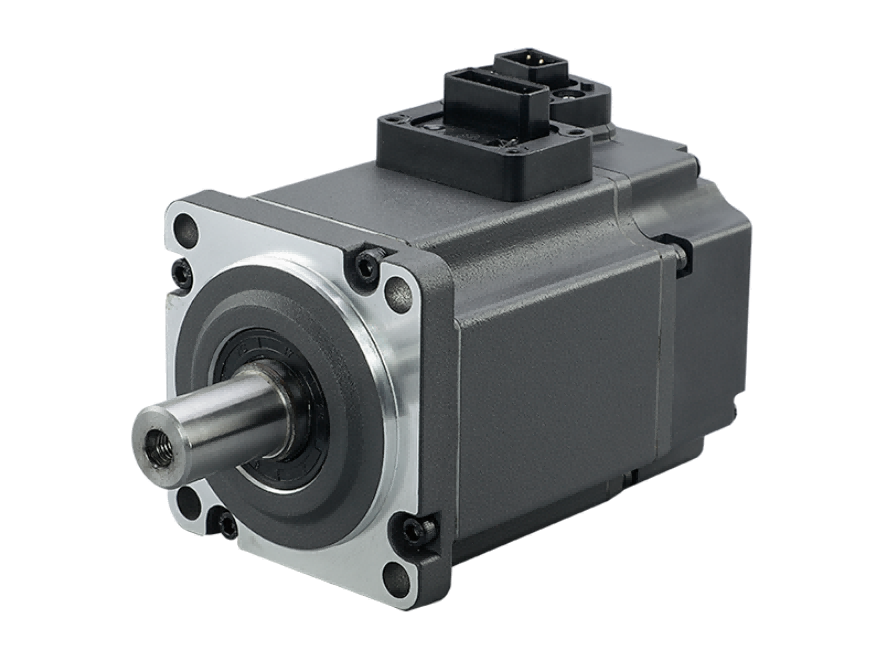
On the metering side, a drifting component ratio changes the reaction profile enough to move the window for gas escape. When ratio deviation is not corrected, every new lot appears to behave differently because the machine is amplifying ordinary lot variation. Closed-loop servo metering is valuable here precisely because it removes one variable while the operator investigates the material or mold.
Vacuum degassing works only when the entire transfer path remains sealed. A machine can hold acceptable vacuum in the tank while re-aerating the material through a leaking hose coupling or an open return line. In practice, the operator should confirm that the vacuum reading stays stable during the full degas cycle and that transfer is not reintroducing turbulence into the stream.
Pour pattern matters more than raw throughput. A single fast shot can trap air at the flow front inside a deep cavity, while the same volume delivered as a slower, continuous stream allows the flow front to push gas toward the vents. This is not a throughput problem; it is a fill-path problem.

At this point, if you have already changed mold release and venting and the pinhole rate follows the machine rather than the mold, the next checks are metering deviation and effective vacuum. You can send your pour weight, cavity count, current vacuum pressure, and a sample photo to Info@chinahaifeng.com or WhatsApp 86 13566296633. The point of that note is to identify the equipment variable before you replace a head or pump that is not the root cause.
Pinhole Troubleshooting Reference
The order below is a starting ranking, not a universal sequence. Ranking depends on line speed, material viscosity, cure temperature, and part geometry.
| Cause | Typical Appearance | Corrective Action |
|---|---|---|
| Moisture in raw material or filler | Fine, uniform pinholes across the part | Vacuum-degas raw material; dry filler; control drum sealing and plant humidity |
| Dissolved gas in the liquid stream | Pinholes that persist after mold changes | Deepen vacuum and hold time; inspect hose couplings and seals for re-aeration |
| Mixer vortex or seal leak | Pinholes appear after mixer speed change | Reduce blade speed; close feed-throat gap; replace worn mechanical seals |
| Solvent-heavy mold release | Pinholes near shiny or wet mold-wall areas | Thin the release film; lengthen flash-off; switch to a drier application pattern |
| Poor venting | Pinholes repeat at the same cavity location | Relocate or enlarge vent; change fill direction; verify vent stays open |
| Mold temperature outside range | Dull skin with fine pinholes | Record actual mold temperature per cycle; reset to the material’s range |
| Turbulent or fast fill | Pinholes at flow front or downstream of gate | Lower pour rate; adjust nozzle angle; fill low areas first |
| Demold or post-cure stress | Pinholes appear after demold or flex | Extend cure or post-cure; verify skin formation before demold |
If pinholes are associated with local density variation, an apparent-density check across the part can help separate gas retention from short filling. [3]
Before changing a mixing head, it helps to recalculate the actual pour volume for each cavity and flow path. > [If your fill volume is wrong, every mold and vent change creates a new defect pattern.] <How To Calculate Shot Weight In Polyurethane> covers the pour-volume baseline that prevents short shots, over-fill turbulence, and the flow-front hold-up that can trap gas.
Talk to a Polyurethane Equipment Engineer
Pinhole correction becomes expensive when it is done by trial and error across multiple molds and machines. The faster path is to fix the variable that the data already points to.
Haifeng Polyurethane Machinery works with metering precision, mixing-head control, degassing, and turnkey production-line integration. As the sole drafter of China’s PU pouring machine industry standard, we approach this as an equipment-and-process problem rather than a single additive recommendation.
Send the following information to Info@chinahaifeng.com or WhatsApp 86 13566296633:
- Part drawing and approximate surface area
- Pour weight and cavity count
- Current material temperatures and mold temperature
- Vacuum pressure or degassing setup
- Pinhole location, size, and scrap rate
- A sample photo showing the defect pattern
We will respond with the likely equipment variables to check before recommending any machine change.
Frequently Asked Questions
Why do pinholes show up in the same cavity every cycle?
A repeating cavity location usually means the cause is mold-specific: venting, fill path, mold release distribution, or a local hot or cold spot. Material-side causes tend to move around or affect all cavities more evenly.
Can pinholes be fixed by raising mold temperature alone?
Sometimes, but only if the dominant cause is early viscosity buildup or poor surface flow. If the cause is moisture, dissolved gas, or a solvent-heavy release film, raising mold temperature can make skin formation faster and trap more gas under the surface.
What vacuum level should polyurethane raw materials be degassed at?
There is no single universal number. The useful level depends on material viscosity, tank geometry, temperature, and batch size. In many casting systems, deep vacuum near the machine’s rated capability is needed to remove dissolved gas, but the operator should verify that the vacuum holds long enough and that transfer does not reintroduce air.
How do I tell pinholes from air entrapment versus moisture-generated CO₂?
It is difficult from appearance alone. Moisture-generated CO₂ tends to be chemically associated with the reaction and can be more uniform, while air entrapment is often tied to mixer speed, fill pattern, or seal leakage. The more practical test is to run a controlled change: dry the material, deepen vacuum, or change only the fill path and observe whether the spatial pattern shifts.
References
[1] G. Oertel, ed., Polyurethane Handbook, 2nd ed. Munich: Hanser Publishers, 1994.
[2] M. Szycher, Szycher’s Handbook of Polyurethanes, 2nd ed. Boca Raton, FL: CRC Press, 2012.
[3] ISO 845:2006, Cellular plastics and rubbers — Determination of apparent density, International Organization for Standardization, 2006.
[4] ASTM D883-23, Standard Terminology Relating to Plastics, ASTM International, West Conshohocken, PA, 2023.
If you’re interested, check out these related articles:
SRIM Explained Structural Reaction Injection Molding Basics
Shore A Vs Shore D Hardness In Polyurethane