Large PU roller casting fails at the specification stage more often than at the machine. A buyer sends a diameter and a hardness number, receives three quotations with different pour rates, tank sizes and metering accuracies, and has no basis for choosing between them. The machine envelope follows from four inputs that come from the roller itself: the shot weight of one cover, the working life of the compound measured against the pour time, the thermal path from tank to mold, and the number of rollers the line must release per shift. Put those numbers on paper and most of the selection argument disappears.
Start with the roller, not the machine
Size alone says little. A 300 mm cover on a 1.2 m face and a 300 mm cover on a 400 mm face can carry the same hardness and still need different machines, because the shot, the fill path and the handling weight all change. Treat a roller as large when its shot weight exceeds what one pour can deliver inside the compound’s working life, or when the mold needs a crane rather than two operators. Both conditions point at machine capacity, not at a nominal diameter.
Four job inputs decide more than any machine feature. The finished outside diameter and face length set the shot size and the mold handling. The core diameter sets the layer thickness, which controls how hard the cavity is to fill and how much heat the curing layer generates. The hardness band, with its test scale and method attached, sets the compound and the chain extender. The core material and surface preparation set the bonding step and the preheat. A quotation that does not reference all four is a catalogue page, not a proposal.
| Roller input | What it sets on the machine | Failure when it is left vague |
|---|---|---|
| Finished outside diameter and face length | Shot capacity, mold weight handling, pour rate range | Short shot or a cold joint near the far end of the cover |
| Core diameter and layer thickness | Cavity volume, gate and vent design, vacuum requirement | Voids trapped at the core interface and a cover that machines undersize |
| Hardness band with scale and test method | Compound, extender and ratio verification routine | Rework after hardness drifts outside the band |
| Concentricity and machining allowance | Mold precision, post-cure stability, finishing plan | Eccentric roller that vibrates at running speed |
| Core material and surface preparation | Preheat, bonding step, fixture design | Cover separation under load with no visible warning |
Hardness deserves a separate warning. A cover specified as 70 Shore A with no test method invites two suppliers to measure different things: a plaque, a machined cover, a thin section, a stacked specimen. ISO 868 and ASTM D2240 both define specimen preparation, conditioning and reading timing, so a number without that context is not comparable [1], [2]. Write the band, the scale and the method into the drawing.
Hardness numbers carry more weight in roller specifications than the test behind them usually justifies. <Shore A Vs Shore D Hardness In Polyurethane> covers how the two scales differ and why the same polymer reads differently on each.
How roller size becomes shot weight and pour time
The pour side of selection starts with mass, not volume, because every machine specification is written in grams per second and kilograms per shot. For a cover cast over a core, the layer volume is:
V = (π/4) × (Do² − Dc²) × L
where Do is the finished outside diameter, Dc the core diameter and L the face length, all in metres. Multiply by the compound density from the TDS to get the shot mass, then add the runner, the heel and the cup you will pour for a ratio check.
One worked example: a 300 mm cover on a 276 mm core with a 1.2 m face holds 0.0130 m³ of polyurethane. At a placeholder density of 1.10 kg/L that is 14.3 kg of cover, about 15.5 kg once an 8 percent allowance for runner and heel is included. At 300 g/s the pour takes a little over 50 seconds. Those three figures, 15.5 kg, 50 seconds and the working life of the compound at mold temperature, are what you compare against a machine’s rated range.
Working life is not a single number. A cup test gives a result at one temperature and one batch size; a 15 kg shot in a hot mold will not behave like a 200 g cup. Measure the working life at the temperature the material will actually see, then keep the pour inside a comfortable fraction of it. A pour that runs to the end of the working life leaves no time to distribute material, close the mold and let air escape, and the result is a cold joint or a void band.
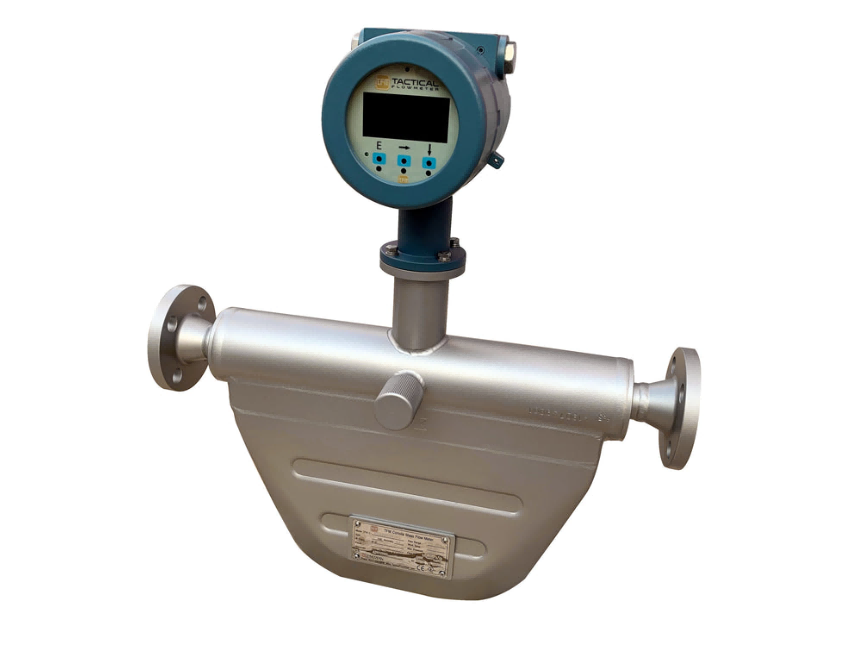
Rated pour rate is a range, and the low end matters as much as the top. A unit rated from 100 to 1500 g/s, such as the cold-rolling line machine in our own casting range, has to hold ratio at both extremes: a short test roller at the bottom, a 15 kg cover at the top. Ask for dynamic metering accuracy across the full range rather than at one comfortable set point. The figure usually quoted for this class of equipment is within ±0.3 percent.
Shot weight is where most roller enquiries stall, because the buyer quotes a roller size while the machine supplier needs a mass. <How To Calculate Shot Weight In Polyurethane> covers the volume to mass calculation and the allowances that belong in it.

MOCA or BDO is a formula decision with equipment consequences
The chain extender is where formula and machine meet. MOCA, 4,4′-methylenebis(2-chloroaniline), is a solid that has to be melted and held above its melt point before it can be metered. BDO, 1,4-butanediol, is a liquid that needs no melt circuit. That single difference changes tank design, line heating, cleaning routine and start-up time.
| Decision point | MOCA route | BDO route |
|---|---|---|
| Room-temperature state | Solid flakes, requires a melt tank | Liquid, but can solidify in a cold plant |
| Tank and line temperature | Held at 90 to 115 °C in the equipment data for this class of machine | Held at 25 to 50 °C, with trace heating for winter start-up |
| Common prepolymer pairing | Aromatic diamine with TDI-based prepolymers, confirm with the supplier | Diol with MDI and polyether or polyester systems, confirm with the supplier |
| What usually drives the choice | High hardness and tear demand on a load-bearing cover | Resilience and simpler handling on a cover that does not need the melt circuit |
| Handling burden | Melt handling, exposure controls, lines that must not freeze during a stop | Lower temperature burden, tighter ratio control because viscosity is low |
Ratio control does more work than most buyers expect. A ratio error rarely announces itself as a visible defect. It shows up as hardness drifting outside the band, a cover that stays tacky after post-cure, or compression set that fails on the test bench months later. Metering accuracy in the ±0.3 percent range is only useful if it is verified against weighed consumption, not only against the machine display.
Do not treat the two extenders as interchangeable in one prepolymer. Moving from MOCA to BDO changes stoichiometry and reaction profile and needs reformulation and a trial, not a tank swap. Confirm the cure schedule with the prepolymer supplier before writing a B-side temperature window into the machine specification.
Pour path, mold position and air removal
Air is the main process risk in a large cover, and it is removed by design rather than by vacuum alone. During filling, the flow front has to push air ahead of it to a vent. In a long annular cavity the resistance is high, the front is slow, and pockets form where the section changes or where two fronts meet.
Three arrangements cover most work. Bottom gating with a vent at the highest point lets the material rise through the cavity and push air out ahead of it. A tilted mold does the same job when the roller axis cannot be vertical. Vacuum degassing of the mix removes dissolved gas, but it cannot pull air out of a closed pocket that has no path to a vent, so the vent design still decides the outcome.
Rotational casting is one answer when the cover is long relative to its thickness. The mold turns about its axis while the material distributes and gels, which keeps the wall uniform and helps air reach the ends. It asks for a compound with enough working life to spread after pouring and a machine that can deliver the whole shot as one continuous stream. Static casting in a closed mold suits shorter, thicker covers, where the gate and vent sit close to the extremities and the cavity fills from the bottom up.
Core preheat does two jobs. It stops the first material from gelling against a cold surface, and it supports the bond. A cold core pulls heat out of the interface and can leave a weak layer that passes a handling check and fails under load in service.
Temperature is a chain from tank to mold
A machine’s temperature control is a chain: tank, pump, hose, mixing head, mold. Each link has a number, and the pour only behaves as expected when all of them are held. In the equipment data for this class of casting machine, the A tank runs 30 to 80 °C, MOCA is held at 90 to 115 °C and BDO at 25 to 50 °C, and the mold is heated separately.
Section thickness then decides how that chain behaves. A thick layer generates its own heat as it cures, so a hot mold plus a thick cover shortens gel time and raises the risk of voids and shrinkage at the core. A cold mold lengthens demold and weakens the bond. Neither problem is solved by a single set point; it is solved by matching mold temperature to layer thickness and to the pour time you calculated.
Post-cure is part of the thermal path, not an extra. Cast polyurethane continues to develop hardness and compression set after demold, and it continues to move dimensionally as it does. Machining allowance comes from your own trial with your own post-cure schedule, taken from the TDS rather than from a catalogue figure.
Casting is only half the job; the cover still has to cure without internal stress and then be machined true. <How Polyurethane Rollers Are Made From Casting To Cure> covers the full sequence from mold preparation through cure.
Throughput planning that survives a shift change
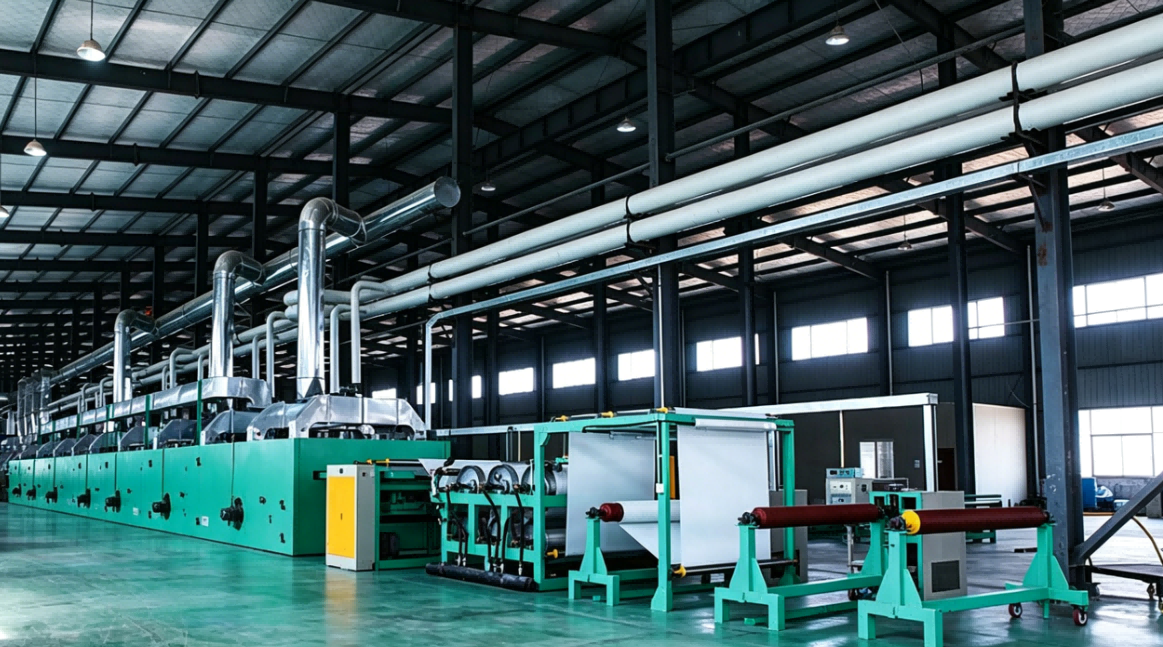
Throughput is set by how long a mold stays occupied, not by how fast the machine can pour. One roller holds one mold from preparation through demold: preheat, release agent, core placement, pour, clamped cure, demold, and often a post-cure off the mold. Add those minutes, divide the available shift time by them, and apply the utilisation you actually achieve rather than the one in the proposal.
A cover that needs 20 minutes of handling and 40 minutes of clamped cure occupies a single station for about an hour. Two molds on one station let you pour the second while the first cures. A second metering head only pays when the pour itself is the constraint, which is rarely the case for large covers.
Tank size is a refill interval decision. At a 15.5 kg shot and a 100:10 ratio, one roller consumes roughly 14 kg of prepolymer and 1.4 kg of extender. At about 1.05 kg/L, a 220 L A tank holds around 230 kg and covers roughly 16 rollers, while the extender side lasts far longer. Choose the A tank against your refill routine, not against the largest size on the list, because a tank that sits half full for a week raises material age and viscosity drift.
Changeover cost shows up in cleaning. A color paste change, or a switch between filled and unfilled compounds, adds purge time to every campaign, and a wear or corrosion additive package adds a third stream with its own tank and its own cleaning routine.
The selection inputs to put in your RFQ
A useful RFQ reads like a process description, not a purchase order. Each field below exists because a specific failure mode follows when it is missing.
| RFQ field | What to request | Why it matters |
|---|---|---|
| Roller envelope | Finished OD, face length, core OD, roller mass, drawing | An undersized shot capacity produces a short shot or a cold joint at the far end |
| Cover specification | Hardness band with scale and method, layer thickness, concentricity, finish allowance | A band without a method lets two suppliers measure different things and scrap a good cover |
| Compound and ratio | Prepolymer type, extender, mix ratio by weight, density, working life at mold temperature | The wrong ratio shows as hardness drift, tackiness or compression set failure months later |
| Shot and pour time | Shot weight per roller including runner, planned pour rate, working life | A pour that runs past the working life leaves voids and a weak knit line |
| Interface and tooling | Core material and surface prep, preheat, mold material, gate and vent arrangement | A cold or contaminated core produces a bond that fails under load |
| Output and utilities | Rollers per shift, molds available, cure and post-cure times, power, air, vacuum, floor space | An undersized station count turns cure into the bottleneck and hides it until commissioning |
A vague line usually hides behind a friendly adjective. Take this one:
Reject this RFQ line: “PU roller casting machine, up to 400 mm diameter, good quality, fast delivery.”
Replace it with: “Cover 300 mm OD × 1200 mm face on a 276 mm steel core, 12 mm layer, 70 ± 3 Shore A by ISO 868, concentricity within 0.2 mm after machining. Shot weight 15.5 kg per roller including runner. Compound TDI polyether prepolymer with MOCA at 100:10 by weight, working life 8 minutes at 35 °C. Target 20 rollers per shift with one operator and a crane for mold handling.”
The second version can be quoted, compared and tested. If the roller drawing comes from production and the compound data arrives later from the lab, the machine may be specified with the wrong tank or the wrong pour range, and the mismatch only appears at the trial.
What a trial must prove before acceptance
A trial is not a demonstration. It is a bounded test of the machine and the formula on your part, with pass conditions agreed before the first shot. Three consecutive rollers from one material lot answer more than thirty single shots, because repeatability is the property you are buying.
Write down what each record can and cannot establish. The table below keeps test results inside their proper scope.
| Record | Method context | Responsible use | Do not infer |
|---|---|---|---|
| Shore hardness to ISO 868 [1] | Indentation on a conditioned specimen of stated thickness | Screening a cover into the specified band | Load capacity, heat build-up at running speed or nip behaviour |
| Durometer reading to ASTM D2240 [2] | Same scale, same specimen preparation, same reading timing | Comparing two compounds tested identically | That a TDS value will match a machined finished cover |
| Tensile and elongation to ISO 37 [3] | Dumbbell specimens with stated conditioning | Compound release and batch consistency checks | Adhesion to the core, which is an interface property |
| Abrasion mass loss to ISO 4649 [4] | Rotating drum, defined abrasive sheet and load | Ranking compounds for wear in a defined test | Service life against a specific web, wire or grit load |
These records come from the standards bodies. They are test definitions, not specifications for any particular roller, and a result from one compound cannot be transferred to another by analogy.
Set the pass bands before the trial: shot weight repeatability across three rollers, ratio verified by weighed consumption rather than by display, hardness at defined positions, a sectioned sample checked for voids at the core, a bond test taken to failure, and concentricity after machining. If a band is missed, the log needs to show whether a parameter or the compound was changed. A trial that ends with “acceptable” and no numbers hands the argument to the next shift.
Send the roller data, not the machine request
Tell us the finished diameter and face length, the core diameter and material, the layer thickness and concentricity allowance, the hardness band with scale and method, the compound and mix ratio, the working life at mold temperature, the shot weight per roller, and the rollers per shift. Those fields map directly onto tank volume, pour rate, metering accuracy and station count, which is the only way one quotation can be compared with the next.
Send them to Info@chinahaifeng.com or WhatsApp 86 13566296633. Haifeng Polyurethane Machinery builds casting units for printing, cold-rolling, dyeing, extrusion and vacuum rollers, so the more of the roller you describe, the less of the answer has to be assumed.
FAQ
What counts as a large roller for machine selection?
It is a capacity question rather than a diameter threshold. A roller is large when its shot weight approaches or exceeds what one pour can deliver inside the compound’s working life, or when the mold needs a crane to handle. Both conditions change the machine specification: shot capacity, pour rate, mold handling and station count all move together. A 400 mm cover on a short face can be easier to cast than a 250 mm cover on a 2 m face, because the fill path and the working-life budget are what actually constrain the pour.
Should a large roller cover use MOCA or BDO?
It depends on the prepolymer and on what the cover has to do. MOCA suits TDI-based prepolymer systems where high hardness and tear resistance matter, and it brings a melt tank, hot lines and a cleaning routine that must not let material solidify during a stop. BDO is a liquid at room temperature and simplifies tank design, but it changes the reaction profile and needs reformulation. Confirm the cure schedule with the prepolymer supplier, then specify the B-side temperature window that schedule requires.
How accurate does metering need to be for roller casting?
Accurate enough that ratio error stays inside the hardness band across a full shift, not just on the first shot. Dynamic accuracy within ±0.3 percent of full range is the figure usually quoted for casting equipment in this class, but the useful check is weighed consumption: pour a shot into a cup, weigh each component separately, and compare with the set ratio. Do this at the low and high ends of the pour range, because a pump that holds ratio at 800 g/s may drift at 100 g/s.
Why do large covers show voids near the core?
Usually because air could not reach a vent before the material gelled. A long annular cavity has high flow resistance, so the front moves slowly, and pockets form where the section changes or two fronts meet. Slow the pour, gate from the bottom, vent at the highest point, and consider rotation for long thin covers. Vacuum degassing removes dissolved gas from the mix, but it cannot clear a sealed pocket that has no path out.
References
[1] ISO 868:2003, “Plastics and ebonite: determination of indentation hardness by means of a durometer (Shore hardness),” ISO, Geneva, 2003.
[2] ASTM D2240-15, “Standard test method for rubber property: durometer hardness,” ASTM International, West Conshohocken, PA, 2015.
[3] ISO 37:2017, “Rubber, vulcanized or thermoplastic: determination of tensile stress-strain properties,” ISO, Geneva, 2017.
[4] ISO 4649:2017, “Rubber, vulcanized or thermoplastic: determination of abrasion resistance using a rotating cylindrical drum device,” ISO, Geneva, 2017.
If you’re interested, check out these related articles:
Measuring Polyurethane Foam Resilience A Practical Test Guide
The Role Of Rise Time In Polyurethane Foaming
SRIM Explained Structural Reaction Injection Molding Basics