El espumado con ciclopentano parece una simple sustitución de agente de expansión hasta que el proyecto llega a la decisión sobre la premezcla. El ciclopentano hierve a unos 49 °C a presión atmosférica, una temperatura cercana a la que alcanza la exotermia de la espuma y muy por debajo de las temperaturas empleadas en los moldes de paneles y de electrodomésticos, de modo que el gas que expande las celdas es también el gas que llena la sala cuando una junta, un respiradero o un racor lo deja escapar. Esa única propiedad convierte la compra de una máquina en un alcance que incluye una zona de almacenamiento, un área clasificada, un diseño de extracción y una disposición de detectores. Dos decisiones determinan la mayor parte del presupuesto restante: cómo se mezcla el pentano con el poliol y dónde se traza el límite de la zona clasificada.
Por qué el agente espumante decide el alcance del proyecto
El ciclopentano cumple dos funciones a la vez. Es un agente de expansión físico: disuelto en el poliol, hierve a medida que el calor de la reacción del isocianato eleva la temperatura de la mezcla, el vapor expande las celdas y se condensa en la pared de la celda a medida que la pieza se enfría, dejando tras de sí un gas de baja conductividad. Por eso una espuma rígida expandida con pentano aísla mejor que una espuma expandida con agua de la misma densidad, y por eso su conductividad térmica envejecida se mantiene más cerca del valor inicial: la molécula de pentano es mayor que el CO2 generado por la reacción con agua, por lo que abandona la celda más despacio.
La segunda función es la que transforma la planta. La misma volatilidad que convierte al ciclopentano en un agente de expansión eficiente hace que el material libere vapor en condiciones ambientales allí donde entré en contacto con el aire. Los hidrofluorocarbonos a los que sustituye no son inflamables a la temperatura del taller, por lo que una planta construida en torno a ellos no tiene zona clasificada alrededor del tanque de poliol, ni extracción a baja altura en la estación de vertido, ni circuito de detectores. Nada de eso se traslada.
Una vez que el agente de expansión se disuelve en el poliol, el componente que circula por el circuito del lado B es un líquido inflamable, y su punto de inflamación se sitúa más cerca del del agente de expansión que del del poliol. El tanque, la bomba, la carcasa del filtro, la línea de retorno, el punto de muestreo y el venteo del bidón pasan todos a formar parte del inventario de inflamables. Una especificación de máquina redactada para un sistema expandido con HFC no describe este circuito, y por eso los presupuestos que difieren en gran medida a menudo difieren en lo que dejaron fuera del alcance de seguridad, no en el bastidor mecánico.
Dado que la fracción de pentano contribuye a la expansión de forma independiente de la reacción con agua, también modifica el perfil de ascenso. Dos formulaciones con el mismo nivel de agua pero distinta carga de pentano alcanzan el ascenso completo en momentos diferentes, y el punto de gelificación tiene que desplazarse con ellas.
Dos formulaciones con el mismo nivel de agua pero distinta carga de pentano alcanzan el ascenso completo en momentos diferentes. <El papel del tiempo de subida en el espumado de poliuretano> abarca lo que mide el tiempo de ascenso en el espumado de poliuretano.
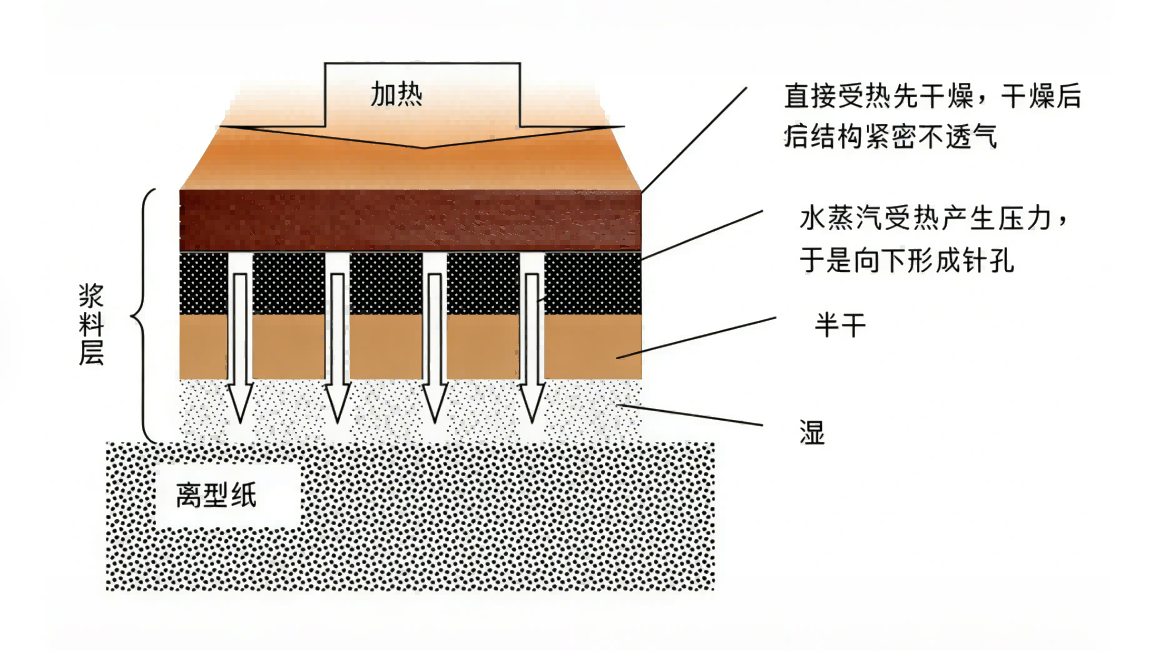
Poliol premezclado o dosificación de pentano en planta
Hay dos formas de incorporar el ciclopentano al poliol, y cada una conlleva superficies de riesgo distintas. Un sistema premezclado llega del proveedor químico con el pentano ya disuelto, de modo que su planta almacena y bombea un componente inflamable acabado. La dosificación en planta mantiene pentano puro en la instalación y lo dosifica en la corriente de poliol antes del cabezal de mezcla, lo que resulta más flexible y más exigente al mismo tiempo.
| Dato para la decisión | Poliol premezclado del fabricante de sistemas | Dosificación en planta en la línea |
|---|---|---|
| Quién mezcla el pentano | El proveedor mezcla con su propio permiso y envía contenedores cerrados y venteados | Su planta mezcla, por lo que la mezcla queda dentro de su permiso y de su evaluación de riesgos |
| Libertad de formulación | La carga de pentano y el nivel de coexpansión los fija el sistema entregado | La carga puede cambiarse por producto o por densidad objetivo |
| Huella en planta | Almacén ventilado y con cubeto para bidones o IBC; sin equipo de mezcla | Tanque de premezcla, bomba dosificadora, suministro de nitrógeno y una zona clasificada más amplia |
| Coste de inversión y de explotación | Menor costo del equipo, mayor costo de flete por kilogramo, mayor plazo de entrega del pedido | Mayor costo de equipos e instrumentación, menor costo de flete, mayor competencia del operador requerida |
| Control de calidad | Densidad y reactividad confirmadas en cada entrega; la consistencia de la mezcla es responsabilidad del proveedor | Usted es responsable del registro de la mezcla, del ensayo de pentano y de la verificación del dosificado |
La elección suele depender de tres condiciones más que del precio. Los sistemas premezclados se adaptan a una planta con producción estable, pocas formulaciones y sin experiencia con hidrocarburos, porque eliminan la mezcla de la jornada del operador. El dosificado en sitio se adapta a una planta que trabaja varias densidades o productos en una misma línea, o a una en la que el flete del poliol con pentano representa una parte importante del costo del material, o a una que ya cuenta con permiso para líquidos inflamables. En ambos casos el área clasificada sigue existiendo; solo cambian su tamaño y su ubicación.
Una fracción de pentano que varía entre lotes modifica la masa que debe inyectarse para la misma cavidad. <Cómo calcular el peso de dosificación en poliuretano> abarca cómo se calcula el peso de inyección para una pieza de poliuretano.
Lo que ambas rutas no comparten es la redacción de la especificación. Una línea vaga en una consulta genera una cotización que no se puede comparar.
Rechace esta línea en una RFQ: «Máquina de espumado soplado con pentano, versión a prueba de explosiones».
Sustitúyala por: la ruta del agente de soplado y la tolerancia de carga que aceptará; quién es responsable del plano de clasificación de áreas; la zona, el grupo de equipos y la clase de temperatura que debe cumplir cada componente; el número y la ubicación de los detectores de gas y la acción que activa cada alarma; el conjunto de documentación, incluidos los certificados de conformidad, los registros de calibración y los cálculos de venteo o alivio.

Qué debe controlar la etapa de premezcla
Una etapa de premezcla no es un tanque con un agitador. Su función es entregar un líquido de composición conocida a una temperatura conocida a la bomba dosificadora, sin ninguna vía por la que pueda entrar aire y sin ninguna bolsa donde pueda acumularse vapor. La mayoría de las fallas que llegan a producción se remontan a uno de seis puntos de control.
| Punto de control | Qué falla cuando se pasa por alto | Qué registrar |
|---|---|---|
| Temperatura de la mezcla | Tanto la presión de vapor como la solubilidad cambian, de modo que la bomba puede aspirar vapor en lugar de líquido y la proporción se desvía | Temperatura de la mezcla en cada trasvase y la banda de alarma |
| Agitación | Un agitador lento o intermitente deja que la mezcla se separe, y los primeros tambores de un lote salen pobres | Tiempo de funcionamiento y velocidad del agitador por lote |
| Vessel headspace | Air entering the tank creates a flammable mixture inside it and degrades the polyol | Nitrogen pressure or blanket verification at each fill |
| Moisture ingress | Water reacts with isocyanate and adds CO2 blowing you did not plan, so density falls and cells coarsen | Coupling condition, desiccant state and moisture results on incoming material |
| Transfer line design | Dead legs hold vapor, and a centrifugal pump cavitates as pentane flashes in the suction | Line layout review and pump type selected against the blend vapor pressure |
| Metering verification | A worn pump shows up as density scatter across a shift, not as one bad part | Calibration interval and the mass flow reading compared against a gravimetric check |
Temperature control is the one that gets discussed least and matters most. The polyol carries the pentane in solution, and the amount that stays in solution depends on temperature at every point from the drum to the mixing head. A line that runs correctly in the afternoon can run lean on a cold morning if nothing holds the blend temperature, and the operator sees only a density shift with no obvious cause.
Cell wall strength at demold decides whether a pentane-blown part keeps its dimensions or collapses after the fixture opens. <Causas de la contracción en la espuma de poliuretano y cómo controlarla> covers the causes of shrinkage in polyurethane foam and how to control them.
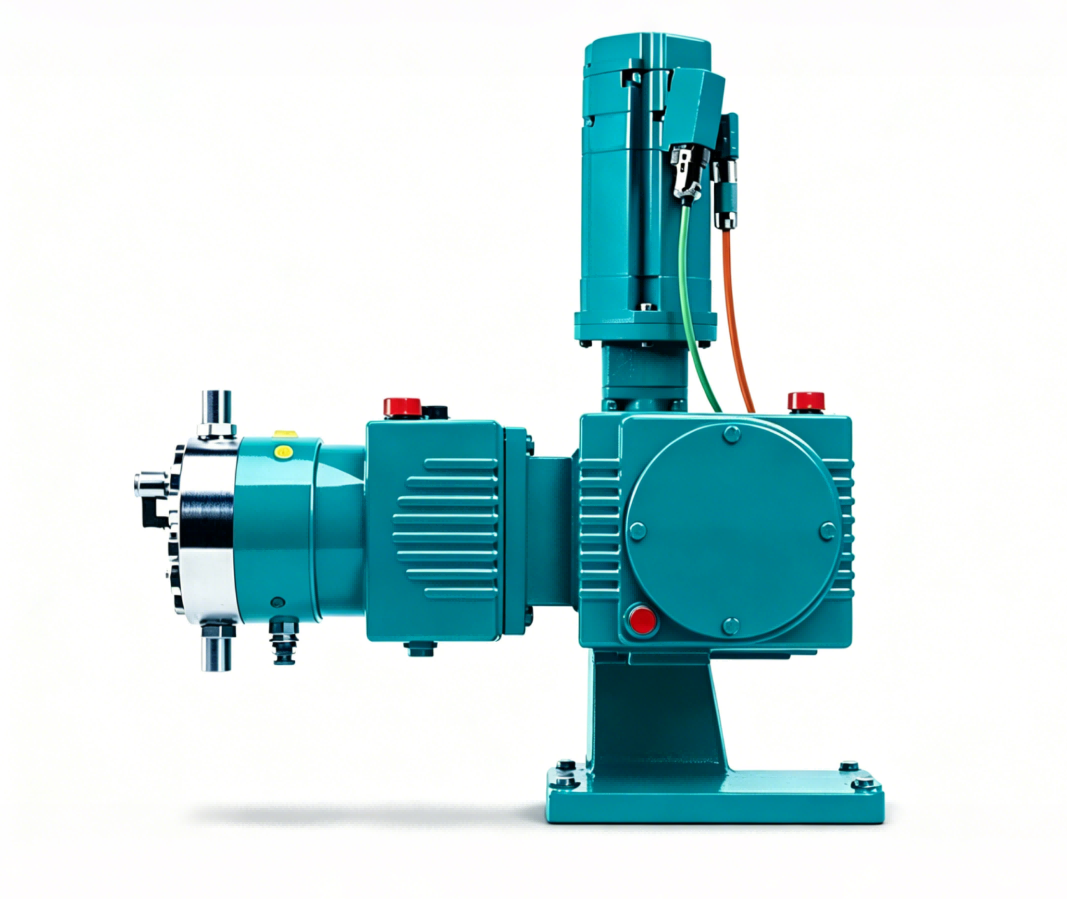
The mechanical side of metering is the easier half to specify. On a high-pressure cold-room machine such as the HF-HPM-2A2B-ColdRoom, published metering accuracy is within ±0.3% of full range and mixing pressure runs between 10 and 18 MPa, which tells you the frame can hold a ratio across a shift. It says nothing about who blends the pentane, how the tank is blanketed or where the vapor goes, and those are the items that decide whether the line passes an inspection.

Hasta dónde llega realmente la zona clasificada
Both European directives apply to a hydrocarbon foaming line: one governs the equipment placed in a potentially explosive atmosphere [1], the other governs the protection of workers exposed to it [2]. The method for deciding which parts of the building are classified, and how far the zone reaches, comes from the area classification standard [3], while the general principles of preventing an explosion rather than containing one come from the prevention standard [4].
Empezar con un mapa de puntos de fuga
Before any drawing is issued, mark every place where pentane vapor can leave a closed system: drum and IBC vents, tank vents, fill and sampling points, the pour station, the mold opening and demold position, filter changes, spill trays and floor drains. Then add the points that are usually missed, which are the cooling area where freshly demolded parts continue to release vapor and the saw or trim station where cut foam exposes fresh cells. A classification drawing that stops at the machine guard leaves those areas unclassified while the vapor is still present.
Elegir el equipo según la zona, no según la palabra antideflagrante
“Explosion-proof” is a marketing word. What an inspector checks is whether each item carries a marking that matches the zone on the drawing, with the correct gas group and temperature class, and whether the installation preserved that protection. Cable glands, opening a junction box for a repair, a replaced fan motor or a non-certified sensor all cancel the marking without changing the label on the outside.
The interior of a nitrogen-blanketed vessel is usually excluded from classification on the basis that oxygen is kept out. That exclusion rests on the blanket working, so the nitrogen supply, its pressure alarm and the purge procedure before opening become part of the safety case rather than maintenance details.
El control de la estática es una tarea de mantenimiento
Cyclopentane has an autoignition temperature several hundred degrees Celsius above any normal mold or platen temperature, so warm tooling is not the dominant ignition risk. Static discharge and electrical equipment are. Bonding and earthing therefore need a schedule: continuity verified at commissioning, re-verified after any drum, IBC or pump is moved, and recorded against the site limit. An operator in synthetic clothing who opens a venting drum indoors supplies the spark that the bonding was meant to remove.
The paperwork that arrives with a project is worth reading for what it does not say.
| Document | What it establishes | What it does not establish |
|---|---|---|
| ATEX or IECEx certificate for a motor | The item is built and marked for a stated group, category and temperature class | That the zone on your drawing matches that marking, or that the field wiring preserved the protection |
| Area classification drawing | Where the assessment placed each zone and on which release and ventilation assumptions | That the ventilation those assumptions depend on is running tonight |
| Gas detector calibration certificate | The detector responded correctly to the test gas on that date | That its response factor suits pentane, or that the sample point is where vapor collects |
| Supplier data sheet for the pre-blended polyol | The declared flash point, pentane content and storage conditions of that delivery | That a blend from another supplier or another loading carries the same hazards |
These records belong to different owners: the machine builder, the chemical supplier, the installer and the plant. A file that contains all four is not an approval, and a missing one is a question for the party that should have produced it.
Ventilación y detección adecuadas para un vapor pesado
Cyclopentane vapor is roughly 2.4 times as dense as air, so it gathers at floor level, in pits, inside bunded areas and under platforms. Extract at high level and the reading at the roof will look acceptable while the dangerous layer sits at ankle height. Low-level extraction near each release point, with make-up air entering high and away from the source, follows the physics rather than the habit.
Size the system on a release basis, not on an air-change number. An air-change figure says nothing about where the vapor is generated or whether the air actually reaches it, and a room can meet its nominal rate while a corner stays stagnant. The defensible basis is the largest credible release, such as a hose or fitting failure at the transfer point or a drum venting without extraction, with the resulting concentration kept below the lower explosive limit by a margin the risk assessment sets. Cyclopentane’s flammable range in air begins at roughly 1.1% by volume, so the margin is measured against a low number.
Two further points decide whether the design holds up in service. First, recirculation: air extracted from a classified area must not be returned to an occupied space or to another zone. Second, make-up air has to come from somewhere, and a door left open on a windy day can reverse the intended flow.
Detection is the last barrier, not the first. Detectors belong where vapor collects and where people work, which often means two different heights in the same room, plus the exhaust duct and any pit or basement. A two-stage arrangement is common practice: a pre-alarm that raises ventilation and warns, and a higher level that stops metering, closes the feed valves and keeps extraction running. Each stage needs a written action, and the detector needs a response factor checked against pentane rather than against the test gas used at commissioning. Calibration intervals and bump tests belong in the maintenance plan, because a detector that is never challenged reports zero whether the air is clean or the sensor is dead.
Preparación de la planta antes de que llegue la máquina
Layout and utilities decide the schedule more often than the machine does. Five items are worth closing before the purchase order:
- Storage and handling: which container arrives, where it sits, how it is vented, how it is bonded, and who is authorised to open it.
- Utilities: nitrogen supply and its pressure alarm, dry compressed air, chilled water, power for explosion-protected fans, and an earthing grid with test points.
- Interfaces: how the foaming machine interlock talks to the ventilation and detection system, and what happens on power failure. The fail-safe direction is extraction continuing and feed valves closing.
- People: who resets an alarm, who signs a hot-work permit, who accepts a delivery, and what training each of them has completed.
- Documentation: classification drawing, ventilation design basis, detector layout, emergency procedure and training records, held together rather than in five folders.
Qué enviar con la consulta
Send the target foam density and part geometry, the blowing-agent route you are considering, the polyol and isocyanate system, the required output per shift, the floor area and ceiling height you can give the line, whether the space is already classified, and the utilities available. That set lets an engineer size the premix stage, the metering range and the ventilation basis in one pass, instead of quoting a machine that later needs a different building.
Write to Haifeng Polyurethane Machinery at Info@chinahaifeng.com or WhatsApp +86 135 6629 6633 with those figures. A model number is not a safety case, and it is cheaper to settle the premix and classification scope before the layout is frozen than after the first drums arrive.
Preguntas frecuentes
¿Se puede convertir una máquina de espumado existente soplada con HFC a premezcla con ciclopentano?
Sometimes the mechanical frame can be reused, but the B-side circuit usually cannot. Check pump type against the blend vapor pressure, because a centrifugal pump that worked with a non-volatile polyol may cavitate once pentane flashes in the suction. Check seal and hose compatibility against the supplier’s data for the premix. Then review the electrical equipment inside the new classified area, the tank venting route, and whether the control system can accept an interlock from the gas detection loop. A conversion quote that covers only the mixing head is a partial scope.
¿Necesitamos una sala de almacenamiento de pentano independiente?
It depends on the quantity, the container type, the ventilation and the classification study. Pre-blended drums in a ventilated, bunded, bonded store may satisfy the assessment. Neat pentane in an IBC or a bulk tank usually calls for a dedicated space with fire separation, spill containment, forced ventilation and a documented unloading procedure. The authority having jurisdiction and your insurer set the final requirement, so bring them into the design before the layout is fixed rather than after.
¿Cuánto tiempo se puede almacenar el poliol con ciclopentano premezclado?
Shelf life is set by the system supplier for that formulation, so there is no general figure. Three things change in storage: pentane can be lost through vents, the polyol can pick up moisture once a container is opened, and temperature swings alter how much blowing agent stays in solution. Keep containers closed and vented as instructed, keep the store at a stable temperature, rotate stock, and re-check density and cream time on aged material before it goes into a production run.
¿Qué cambia en el desmoldeo y en las etapas posteriores?
Freshly demolded parts keep releasing pentane for a period, so the cooling area needs the same ventilation thinking as the pour station. Cutting, sawing or trimming exposes fresh cells and produces dust together with vapor, which means the extraction unit has to be suitable for a flammable atmosphere and the duct has to be bonded and earthed. Demolding too early is a separate problem: the part can post-expand after the fixture opens, which shows up as dimensional drift rather than as a visible defect.
Referencias
[1] Directive 2014/34/EU, “Harmonisation of the laws of the Member States relating to equipment and protective systems intended for use in potentially explosive atmospheres,” European Parliament and Council, 2014.
[2] Directive 1999/92/EC, “Minimum requirements for improving the safety and health protection of workers potentially at risk from explosive atmospheres,” European Parliament and Council, 1999.
[3] IEC 60079-10-1, “Explosive atmospheres. Part 10-1: Classification of areas. Explosive gas atmospheres,” International Electrotechnical Commission, 2020.
[4] EN 1127-1, “Explosive atmospheres. Explosion prevention and protection. Part 1: Basic concepts and methodology,” European Committee for Standardization, 2019.
Si te interesa, echa un vistazo a estos artículos relacionados:
Qué es la espuma de poliuretano semirrígida
Medición de la resiliencia de la espuma de poliuretano: guía práctica de ensayo
¿Qué es la espuma de poliuretano proyectada? Composición y aplicación
El papel del tiempo de subida en el espumado de poliuretano