Rigid polyurethane insulation can pass a density check on paper and still underperform in the field. The usual reason is not the foam’s gross density but its cell structure — specifically, how many cells are truly closed. A small shift in closed-cell content changes the gas trapped inside the foam, and that gas is doing most of the insulating work. This article explains the mechanism, the test methods, and the process levers that control the result.
What Closed-Cell Content Actually Measures
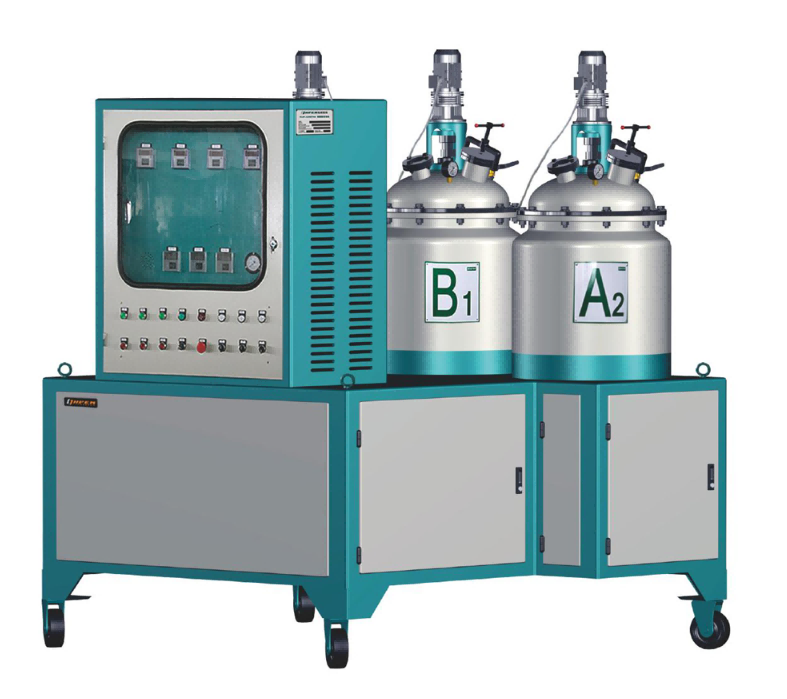
Closed-cell content is the share of foam cells that are fully enclosed by polymer walls rather than connected to neighboring cells. In rigid polyurethane and polyisocyanurate foams, the usual report is closed-cell percentage: 100% minus the open-cell percentage obtained by gas pycnometry under ASTM D6226 [1]. The method distinguishes closed cells from open paths because closed cells resist gas exchange while open cells allow gas to move through the sample.
That distinction is more useful than density alone. A panel can meet its core density target and still contain a large population of interconnected cells. When that happens, the insulation will lose its blowing-agent gas, take up moisture, and drift toward the thermal conductivity of still air rather than a designed low-k gas mixture.
Closed-cell content only matters when the formulation is designed around it. <What Is Spray Polyurethane Foam Composition And Application> covers how the two-component system and blowing-agent package set the baseline cell structure.
Thermal Conductivity: The Direct Performance Link
In a rigid foam, gas conduction often dominates heat transfer once the polymer matrix is formed. Closed cells trap the blowing-agent gas present during rise; many of these gases have lower thermal conductivity than still air. A high closed-cell fraction therefore preserves a lower initial k-value. If the cells are open or damaged, the blowing agent escapes and is replaced by air or moisture, which raises the k-value and reduces the installed R-value.
This is why the aged or declared thermal conductivity matters more than a fresh sample result. A panel measured immediately after demold may still contain a favorable gas mixture, while the same panel measured months later may have reached a new equilibrium. Steady-state performance is usually compared by heat flow meter testing under ASTM C518 [2], and product standards for sprayed rigid insulation such as EN 14315-1 [3] define declared values around that aged condition. Initial k-values for closed-cell systems often sit between 0.022 and 0.028 W/(m·K), depending on the blowing agent and density, but the relevant design number is the declared long-term value.
Moisture Uptake and Long-Term R-Value
Closed cells also function as a micro-scale vapor barrier. Water vapor moves mainly through continuous pathways, so a mostly closed-cell foam resists moisture much better than an open-cell foam of similar density. This matters in roofs, cold storage, and below-grade assemblies where repeated condensation can raise moisture content, promote freeze-thaw damage, and further erode thermal performance [3].
Dimensional stability follows the same logic. Closed cells contain gas at a pressure set during the rise and cure cycle. Over time, gas composition changes and internal pressure can decline. If cell walls remain intact, the foam usually stays dimensionally stable while k-value changes slowly. If the cells are connected or broken, the insulation can bow, shrink, or pull away from the substrate. Dimensional stability is evaluated under specified temperature and humidity exposure in standards such as EN 1604 [4].
A foam with high closed-cell content can still shrink if the internal gas pressure drops too quickly after demold. <Causes Of Shrinkage In Polyurethane Foam How To Control It> covers the pressure, temperature and cure variables behind that failure.

Process Variables That Control Closed-Cell Content
Closed-cell content is set by both chemistry and mixing. On the chemistry side, water content determines how much carbon dioxide is generated during the foaming reaction. CO₂ diffuses out of polyurethane cells faster than many physical blowing agents, so a water-blown system may show acceptable closed-cell content initially and then lose performance faster as the gas escapes. The surfactant package stabilizes cell windows during rise; if windows open too early, the foam becomes open-celled. The catalyst balance and isocyanate index influence whether gelation seals the cell walls before blowing gas can escape.
On the machine side, the A/B ratio, mixing head speed, nucleation air, and mold or line pressure all affect the result. A metering ratio deviation changes the NCO index and shifts the gel/blow balance. Higher mixing head speed produces finer nucleation and smaller cells, but smaller cells alone do not guarantee closed walls. In continuous lamination, mold pressure and free-rise density also determine whether cell windows remain intact or rupture during expansion.
Closed-cell formation is not only a formula decision; it happens during the rise profile. <The Role Of Rise Time In Polyurethane Foaming> covers how rise speed and gel balance shape the final cell population.
Need an equipment-level review? Closed-cell content is rarely corrected by a single valve change. If you are chasing a target on a new system or an existing line, send your target density, line speed, and current closed-cell test data to Info@chinahaifeng.com or WhatsApp: 86 13566296633. A process review can identify whether ratio control, mixing intensity, temperature, or mold pressure is driving the result.
Specification and QC Checklist
Do not treat closed-cell content as a single number on a certificate. Tie it to the test method, sample age, and the performance value that actually matters.
| Control point | What to specify |
|---|---|
| Test method | ASTM D6226 gas pycnometry, reported as closed-cell % |
| Sample condition | Sample age, orientation, and surface treatment |
| Frequency | First article, lot basis, and after any formulation or ratio change |
| Acceptance | Aged/declared thermal conductivity, not only fresh k-value or density |
| Process evidence | A/B ratio, temperature trend, and mixing speed record for each tested lot |
Above a practical threshold, another percentage point of closed cells may not improve installed performance enough to justify a narrower process window. Below that threshold, moisture uptake and aged R-value failures become visible fairly quickly. The goal is a stable combination of closed-cell level, aged k-value, and dimensional stability — not an isolated laboratory high.
Put the Target Into a Controllable Window
If your current foam is failing an aged thermal conductivity or closed-cell requirement, get the process parameters reviewed before changing formulations. Mail the current settings and test results to Info@chinahaifeng.com, or reach us on WhatsApp: 86 13566296633.
Frequently Asked Questions
What closed-cell content is considered good for rigid foam insulation?
Most rigid PUR and PIR insulation specifications target a closed-cell content of 90% or higher, but the exact requirement depends on the application and product standard. The more important companion values are aged thermal conductivity, moisture resistance, and dimensional stability.
Does higher closed-cell content automatically mean better insulation?
Not automatically. Above a practical range, marginal gains are small. If the foam is not dimensionally stable, a higher closed-cell count can also create shrinkage risk as internal gas pressure changes. The best target is a closed-cell level that supports the declared aged k-value without creating cure or adhesion problems.
How is closed-cell content measured?
It is measured by gas pycnometry, commonly following ASTM D6226. The method determines the volume of cells accessible to gas, and closed-cell content is calculated by difference. Sample preparation, age, and surface effects can all influence the result.
Can closed-cell content be improved on an existing line?
Usually, yes. Operators can adjust water level, surfactant/catalyst balance, isocyanate index, mixing head speed, nucleation, and mold or line pressure. Because these factors interact, changes should be made one at a time and verified with both cell-structure and aged-k testing.
References
[1] ASTM D6226-21, Standard Test Method for Open Cell Content of Rigid Cellular Plastics, ASTM International, 2021.
[2] ASTM C518-21, Standard Test Method for Steady-State Thermal Transmission Properties by Means of the Heat Flow Meter Apparatus, ASTM International, 2021.
[3] EN 14315-1:2013, Thermal insulating products for buildings — In-situ formed sprayed rigid polyurethane (PUR) and polyisocyanurate (PIR) foam products — Part 1: Specification, CEN, 2013.
[4] EN 1604:2013, Thermal insulating products for building applications — Determination of dimensional stability under specified temperature and humidity conditions, CEN, 2013.
If you’re interested, check out these related articles:
What Is Spray Polyurethane Foam Composition And Application
How Polyurethane Rollers Are Made From Casting To Cure
What Is Semi Rigid Polyurethane Foam
Causes Of Shrinkage In Polyurethane Foam How To Control It
The Role Of Rise Time In Polyurethane Foaming