

Most polyurethane defects that look like bad mixing are actually gas management problems. A line can hold stoichiometry, temperature, and shot weight within tight limits and still produce rollers, seals, and cast blocks with microvoids because the material entered the metering circuit carrying dissolved air and moisture. Vacuum degassing attacks that problem before gelation, while the liquid can still respond.
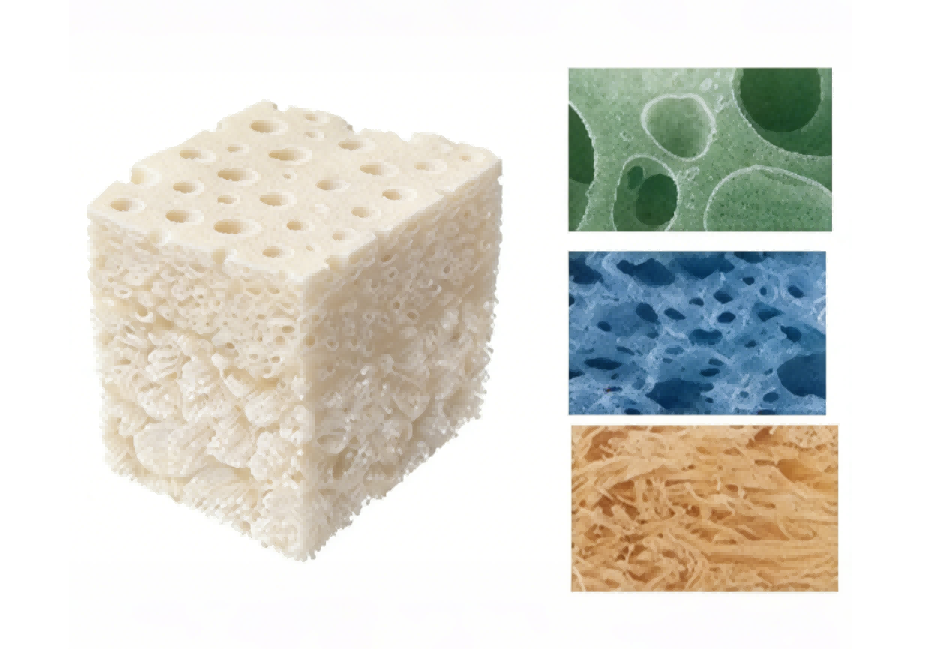
Where Gas Comes From in Polyurethane Systems
Polyols, prepolymers, chain extenders, and additives are not gas-free when they arrive. They dissolve atmospheric gases during storage and transfer, pick up moisture if drums are opened in humid air, and entrain air whenever they are pumped, stirred, or returned through recirculation loops. In isocyanate systems, dissolved moisture is especially costly because it reacts to release CO₂, which can nucleate as cells, pinholes, or trapped bubbles [1].
Temperature makes this worse. Warm material absorbs and releases gas differently from cold material, and high-viscosity systems trap bubbles mechanically because bubble rise slows as viscosity increases. Gas that is invisible in the drum becomes a structural defect once the material cures around it.
What Vacuum Degassing Does — and What It Cannot Fix
Vacuum degassing lowers the pressure above the liquid. Gas that was dissolved at atmospheric pressure becomes supersaturated, comes out of solution, and rises as bubbles; moisture removal follows a similar pressure-driven path at process temperature. Slow stirring, thin film exposure, and enough residence time turn a slow diffusion process into a repeatable batch step.
Vacuum degassing removes dissolved gas and free moisture. It does not correct an off-ratio mix, a failed metering pump, poor mold venting, or contamination already cured into the material. If gelation has progressed too far, degassing cannot pull trapped gas through a high-viscosity or partially gelled matrix reliably. It is preventive, not corrective.
Cast rollers show why this matters at the finished part level: a void-free elastomer body begins with degassed material and shows up in the cured surface. How Polyurethane Rollers Are Made From Casting To Cure covers the casting-to-cure sequence.

Process Variables That Decide Whether Degassing Works
Vacuum level, material temperature, viscosity, surface area, stirring speed, and residence time interact. A high-vacuum reading alone does not guarantee a bubble-free batch. If the material is too cold, viscosity rises and bubble release slows even under deep vacuum. If agitation is too weak, only the top layer degasses while the bulk remains gas-laden. If the batch is too deep in the tank, diffusion distance defeats a short cycle.
The useful checklist is to degas at the same temperature at which the material will be processed, keep stirring gentle enough to avoid foam buildup but strong enough to renew the surface, and hold vacuum until visible bubble collapse slows and the vacuum reading stabilizes. For many cast polyurethane systems, the vacuum specification used on production machines is around -0.095 MPa or lower gauge pressure; the equipment must actually hold that level at process temperature, not only reach it for a few seconds.

Equipment Design: Tanks, Pumps, Traps, and Control
A degassing circuit is more than a vacuum pump. It needs a sealed vessel, temperature control, a condenser or trap between the tank and pump to protect the pump from vapor and condensate, and a control loop that holds vacuum without pulling material into the line. In continuous casting and foaming applications, the same principle moves into material preparation tanks and, where required, vacuum-assisted degassing chambers.
Metering stability improves when the liquid entering the pump is degassed and has consistent density. Entrained gas makes a gear pump or servo metering system see a compressible phase, which can alter true shot mass even if the pump display stays stable. That is why degassing should be evaluated together with shot-weight control rather than treated as an isolated step.
Degassing changes the bulk density of the liquid, so shot-weight settings and degassing condition should be adjusted together. How To Calculate Shot Weight In Polyurethane covers the calculation method.
Design checkpoint: If you are adapting an existing machine or ordering a new line, the first numbers we ask for are material viscosity at process temperature, shot weight or pour rate, and current vacuum level. Send those three values to Info@chinahaifeng.com or WhatsApp 86 13566296633, and we can narrow the tank, pump, and trap configuration to your process.
How Degassing Connects to Final Part Quality
A trapped gas bubble becomes a stress concentrator. In a solid elastomer part, porosity lowers effective cross-section and gives a crack an easy start point; in foam, unintended void content shifts apparent density and makes property readings less repeatable [2]. Tests for tensile strength, tear strength, compression set, and resilience will all see the effect of a porosity distribution even when the part looks acceptable at first inspection [3].
That is why degassing is not a cosmetic step. It is a density and uniformity control. For rollers, seals, and potting compounds, a single macrovoid can force rework or scrap; for high-resilience foam, the damage often appears as scatter in indentation and resilience results rather than as a visible blowhole.
Porosity tends to show up in resilience and hardness tests before it becomes a visible surface defect. Measuring Polyurethane Foam Resilience A Practical Test Guide covers a practical test sequence for separating material variation from test error.

A Practical Decision Sequence
Start with material gas load, not with a vacuum pump catalog. The sequence I use on the plant floor is:
- Confirm whether the defect is gas, moisture, mold venting, or metering — section a failed part and look for spherical voids, pinholes near the surface, or density variation.
- Match degassing temperature to process temperature and record viscosity at that temperature.
- Define batch or inline residence time, then select vessel size and stirring so the surface renews without excessive foam.
- Size the vacuum pump and trap to hold target vacuum at process temperature, not minimum room-temperature conditions.
- Qualify by measuring bubble-free cast samples and property consistency, not by watching the vacuum gauge alone.
When the material is clean and the equipment holds stable vacuum, the result usually shows up as fewer reworked parts and more repeatable density from shot to shot.
Bring Degassing Parameters Back to Process Reality
Vacuum degassing should be specified around the material and the part, not copied from a general-purpose datasheet. To shorten the selection process, prepare the following before contacting our engineers:
- Polyol or prepolymer viscosity at process temperature and target NCO content
- Shot weight, pour rate, and cycle time or line speed
- Current vacuum level, pump capacity, and material preheating temperature
- Part geometry and failure photos if voids, pinholes, or soft spots are a current issue
Contact Haifeng Polyurethane Machinery at Info@chinahaifeng.com or WhatsApp 86 13566296633. We will recommend the degassing arrangement, metering sequence, and control settings that fit your production reality.
Frequently Asked Questions
What vacuum level is enough for polyurethane degassing?
For many cast polyurethane processes, a vacuum of -0.095 MPa or lower gauge pressure is used as a production target, but the right value depends on viscosity, temperature, and residence time. The more useful test is whether bubble release slows and the vacuum reading holds at process temperature.
How long should I degas a batch?
There is no single answer. Time depends on batch depth, surface area, stirring, temperature, and initial gas load. Run until the vacuum reading stabilizes and visible bubble collapse slows; a fixed time can work after the process is qualified, but it should be tied to those observations.
Can I over-degas polyurethane?
Yes in practical terms. Deep vacuum combined with high temperature can strip low-molecular-weight components or increase moisture uptake if the system is not sealed properly. This can shift NCO content or reactivity, so vacuum and temperature should be changed together and verified with test pours.
Does vacuum degassing remove moisture?
It removes free moisture and reduces dissolved moisture under process pressure, but it is not a dryer. Raw materials that are heavily water-saturated may still need molecular sieve, dry-air blanketing, or supplier-controlled moisture limits before degassing.
Where should vacuum be applied: material tank, mixing head, or mold?
The most common point is the material preparation tank before metering. Some processes also use vacuum-assisted casting chambers or vacuum around the mold area, but these solve different problems; the first step is usually to degas the stored liquid before it reaches the mixing head.
Will vacuum degassing fix foam that already contains cells?
No. Once gas is mechanically entrapped or gelation has advanced, degassing cannot reliably remove it. Degassing is preventive; defects already formed in cured or partially gelled material require process correction, not a longer vacuum cycle.
References
[1] D. Randall and S. Lee, The Polyurethanes Book, Wiley, 2002.
[2] ISO 845:2006, Cellular plastics and rubbers — Determination of apparent density.
[3] ASTM D3574-17, Standard Test Methods for Flexible Cellular Materials—Slab, Bonded, and Molded Urethane Foams.
If you’re interested, check out these related articles:
Shore A Vs Shore D Hardness In Polyurethane
SRIM Explained Structural Reaction Injection Molding Basics
What Is Semi Rigid Polyurethane Foam
How Polyurethane Rollers Are Made From Casting To Cure





