Filled MC nylon casting succeeds or fails before the pour. The machine does more than melt caprolactam and meter a catalyst; it must keep graphite, molybdenum disulfide, short fiber, or liquid lubricant uniformly suspended through tanks, pipes, gear pumps, and the mixing head. If dispersion fails, filler settles or agglomerates. If the transfer path is too long or too narrow, hard particles raise pressure and wear the metering path. This guide separates dispersion scope from transfer scope and shows which machine specifications determine where a filled formulation can actually run.
For the wider production route and equipment interfaces, explore our MC nylon casting systems.

What Changes When MC Nylon Is Filled
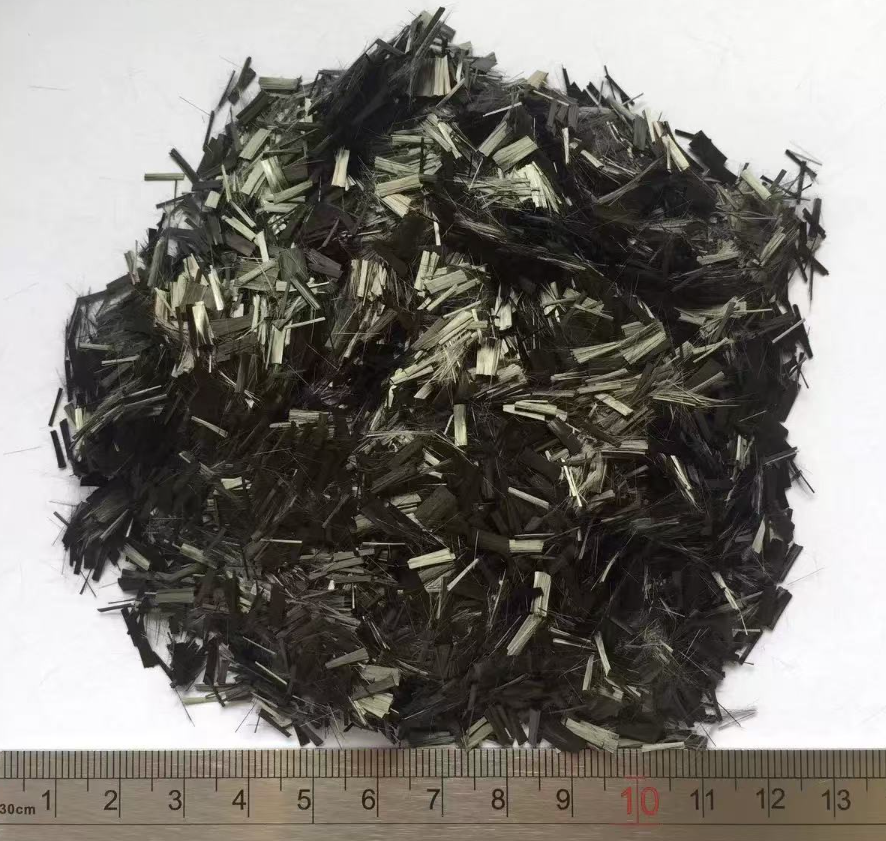
Unfilled MC nylon casting is already a controlled process. Caprolactam is melted, a small catalyst and activator stream is metered into it, and the material is poured into a heated mold where polymerization occurs. Adding graphite, molybdenum disulfide, short glass or carbon fiber, PTFE powder, liquid lubricant, or mineral filler changes the fluid, the wear path, and the way heat moves through the material. A filler may reduce friction or raise compressive strength, but it also increases apparent viscosity and can settle or agglomerate when flow slows.
For the specific MoS2 modification route, review the MoS2-modified MC nylon casting solution.
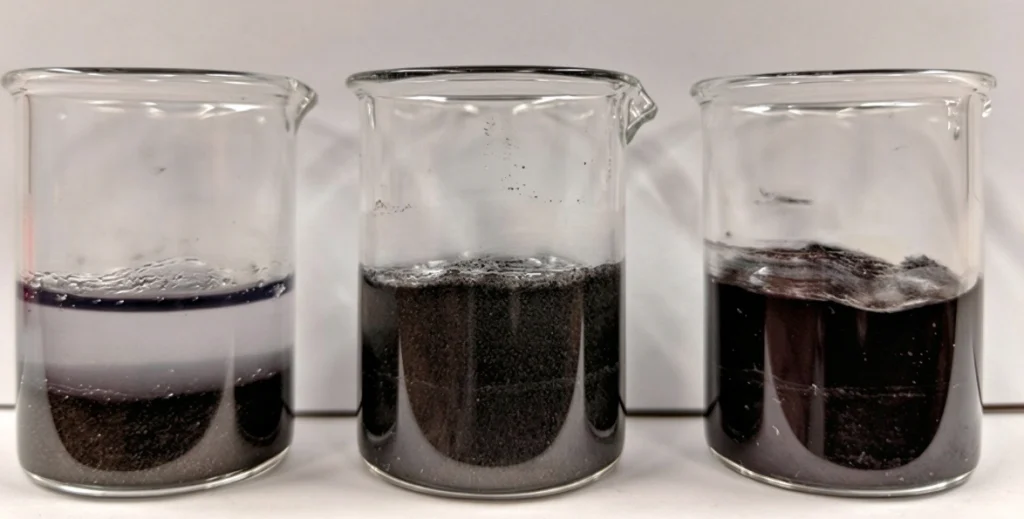
The first scope question is therefore not how fast the machine pumps, but whether the formulation remains uniform at every point where velocity drops: tank corners, pipe bends, valve seats, and the mixing chamber. A machine sized only by discharge rate may still fail a filled formulation because the filler leaves the monomer before it reaches the mold.
Dispersion First Without Losing Sight of Transfer
Dispersion scope describes the range of formulations the mixing system can keep homogeneous before transfer. It is set by filler particle size, density difference, wettability, and loading, not by filler name alone.
| Filler category | Typical function | Dispersion risk | Transfer consequence |
|---|---|---|---|
| Graphite or MoS2 | Lower friction | High density, settling | Abrasive paste, pump wear |
| Short glass or carbon fiber | Raise strength and modulus | Agglomeration, fiber breakage | Pressure peaks, narrow-passage blockage |
| PTFE powder | Reduce surface friction | Poor wetting, low density | Segregation, dead-zone buildup |
| Liquid lubricant or oil | Internal lubrication | Phase separation | Viscosity shift at pump shear |
| Metal powder | Thermal or weight control | Severe settling, abrasion | Rapid gear and pipe wear |
| Mineral or ceramic filler | Wear resistance, cost control | High viscosity, hard particles | Higher pump torque, shorter seal life |
This table is a screening guide, not a release test. Each filler grade must be checked with the actual monomer temperature, transfer distance, and pump condition.
The mixing head needs enough shear to break weak agglomerates and enough turn-down to avoid whipping air into the monomer. The relevant value is variable speed, not a single high-speed figure. On the HF-LPM-Nylon monomer casting machine, mixing head speed spans 0 to 6,000 rpm, which allows gentle movement for settling-prone fillers and higher shear for hard-to-wet powders. Temperature control within +/- 2 degrees C matters because viscosity changes with temperature, and the same filler can settle faster when a tank zone runs cool.
Transfer Scope Depends on Pumps, Pipe and Temperature
Transfer scope is the maximum distance and pressure drop through which the filled monomer can move without segregation, plugging, or unacceptable pump wear. Hard fillers are abrasive, and short fibers can bridge in a narrow passage. Gear pump clearance, pipe diameter, number of elbows, heated zones, and filters all determine transfer scope.
Gear pump temperature resistance is separate from tank temperature. The pump body may see hot monomer and filler particles during recirculation or cleaning. A pump rated for high temperature is not automatic protection against abrasive wear, so pump and seal materials must be specified for the filler hardness. Discharge rate also has to match the mold and the transfer path. The HF-LPM-Nylon machine discharges 5,000 to 10,000 g/min, but that output is useful only when the filled monomer reaches the pour point without phase change or plugging.
Short transfer distance, heated pipe zones, and minimal dead legs help more than additional pump speed. When a filler settles in an elbow or a low-velocity section, raising discharge rate may simply move the plug downstream instead of correcting the dispersion problem.

Why Tiny Catalyst Streams Make Metering the Hardest Part
MC nylon polymerization depends on a very small B stream. The standard ratio range can be as wide as A:B = 1,000:1 to 1,000:5, which leaves little room for error at small shot sizes. Filler in the A stream does not remove the need for precise B metering; it often makes the problem harder because pulsation or partial blockage changes the apparent flow of the filled stream.
At 0.5 to 1 per mille metering accuracy, the machine can hold the ratio within narrow limits when the transfer path is stable. But accuracy is only the starting point. A filled stream that has settled can deliver resin-rich or filler-rich slugs even when total mass is correct. That is why mass accuracy and dispersion must be verified together, not treated as separate checkout items.
Building a Trial That Separates Formulation Risk from Machine Risk
Before committing to a production machine, run a trial with the actual filler grade, not a generic sample. The purpose is to identify which failures come from the formulation and which come from the transfer path. Fillers that pass a laboratory stir test can still settle in a 360 L tank or wear a pump seal within days.
- Measure viscosity at casting temperature and again after a controlled settling pause.
- Recirculate the filled monomer for the planned transfer time, then sample at the pump inlet and discharge.
- Inspect the mixed material for agglomerates, fiber breakage, or filler lean areas.
- Cast test parts and cut them to check filler distribution.
- Inspect pump gears, seals, and pipe elbows after the trial for premature wear.
Shot volume is another value to fix before the trial. The filled part may require a different shot than an unfilled part with the same cavity, and each cycle must repeat the target within tolerance.
Shot volume is one of the first values to freeze before a filled casting trial. <How To Calculate Shot Weight In Polyurethane> covers shot weight calculation for polyurethane parts.
Next Step Define Your Filler and Transfer Window
Send the filler type, loading, particle size, base monomer viscosity, required shot weight, mold temperature, and transfer distance. Those inputs can be compared against the mixing head speed, gear pump path, tank arrangement, and metering accuracy before trial equipment is ordered. Contact Haifeng Polyurethane Machinery at Info@chinahaifeng.com or WhatsApp 86 13566296633.
FAQ
Does a filled MC nylon system require a special pump?
Usually yes. Fine graphite and mineral fillers can wear pump gears and seals faster than unfilled monomer. The pump needs materials suited to abrasive service, and the transfer path should be designed for inspection and replacement. Temperature resistance alone is not enough; the pump must also tolerate the filler hardness and particle size.
Can filled and unfilled MC nylon run on the same machine?
They can, but cleaning and scheduling become more demanding. Filler can remain in dead zones, filters, and pump clearances. A machine intended for both should have a defined purge, flush, and inspection procedure, and production should verify that no residual filler appears in the next unfilled batch.
What filler loading can a standard machine handle?
There is no universal number. The limiting factors are filler density, particle size, shape, wettability, viscosity rise, and transfer length. A fine lubricating powder may process well at one loading, while a dense abrasive filler can settle even at a modest addition. The practical answer comes from a settling and recirculation trial with the actual grade.
How do you know dispersion is good enough before production?
Define a measurable acceptance check before the trial. Sample at the pump inlet and discharge, inspect the material, and cut finished parts to confirm filler distribution. If filler concentration changes along the transfer path or across a part, dispersion is not production-stable.
If you’re interested, check out these related articles:
SRIM Explained Structural Reaction Injection Molding Basics
RRIM Vs RIM Which Process Suits Your Structural Part