

A polyurethane part can pass its post-cure inspection and still shift color before it reaches the customer. In white soles, clear coatings, light-gray elastomers, and even rigid foam panels, yellowing is one of the most common visual complaints. The problem is rarely a single formulation error. It is usually the combined result of aromatic chemistry, heat exposure, oxygen, and how the material was processed and stored.
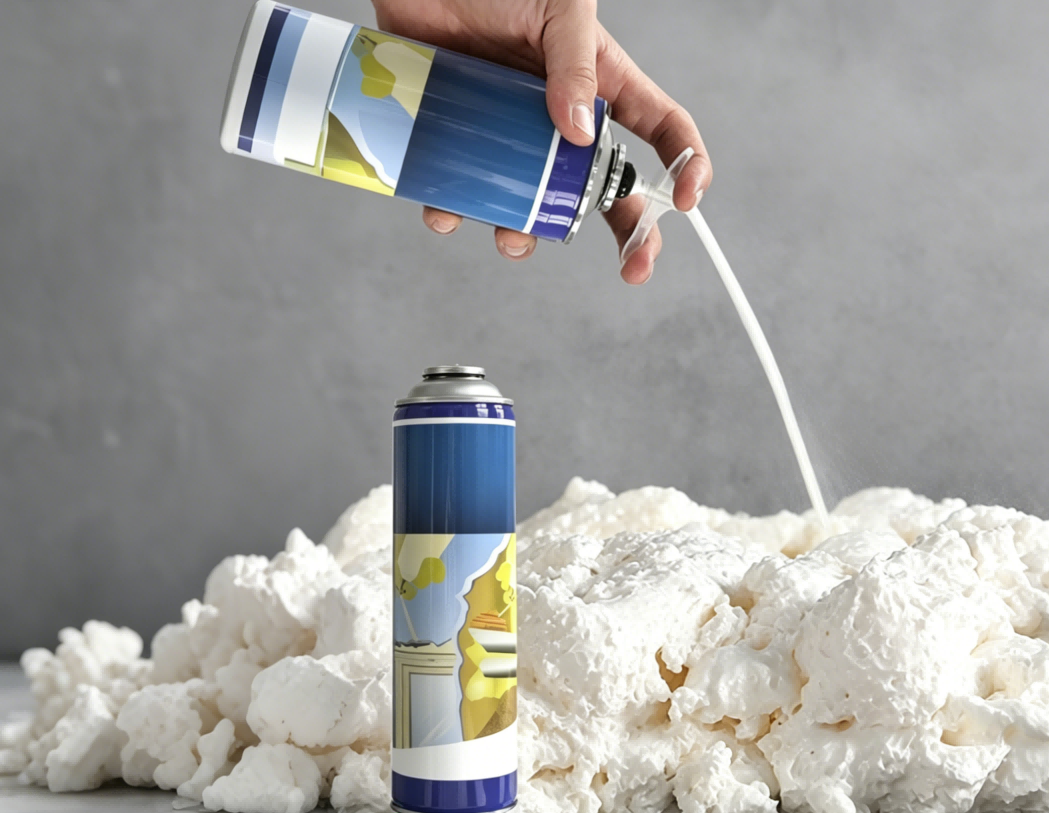
The Core Chemistry: Where the Color Starts
Polyurethane is built from two main component streams: isocyanates and polyols. The most widely used isocyanates, MDI and TDI, contain aromatic rings. During curing, trace side reactions involving aromatic amines can form conjugated oxidation products. Those products absorb blue light strongly, so the human eye reads the surface as yellow [1], [2].
The color can appear after light exposure, but it is usually accelerated by any combination of UV, heat, oxygen, and residual amine species. That mechanism also explains why yellowing is not automatically the same as mechanical failure. Some yellowed parts retain a large share of their original tensile strength because the discoloration is primarily a surface oxidation signal, not a uniform breakdown marker [1]. For parts sold on appearance, however, that signal is enough to cause rejection.
Four Conditions That Accelerate Yellowing
In a production environment, yellowing is driven by four overlapping variables: light history, heat history, oxygen exposure, and formulation imbalance.
| Accelerator | Typical appearance | Where it shows up most |
|---|---|---|
| UV or sunlight | Yellow or amber on exposed faces, often uneven | Flexible foam, coatings, TPU, spray foam |
| Heat history | Uniform honey-to-amber shift | Cast elastomers, integral skin, rollers |
| Oxygen and storage | Gradual darkening, more intense at edges | Prepolymers, raw materials, finished parts |
| Formulation imbalance | Patchy or early color with no clear exposure history | Catalyzed systems, off-ratio or moisture-contaminated mixes |
UV is often evaluated with accelerated weathering under xenon-arc or fluorescent-UV conditions [3], [4]. Heat history matters earlier in the process, though: a part that leaves the mold at an elevated temperature continues to oxidize during storage. Oxygen attacks weak carbon-hydrogen bonds and amine reaction products under sustained heat, a thermo-oxidative pathway that does not need light to occur [5].
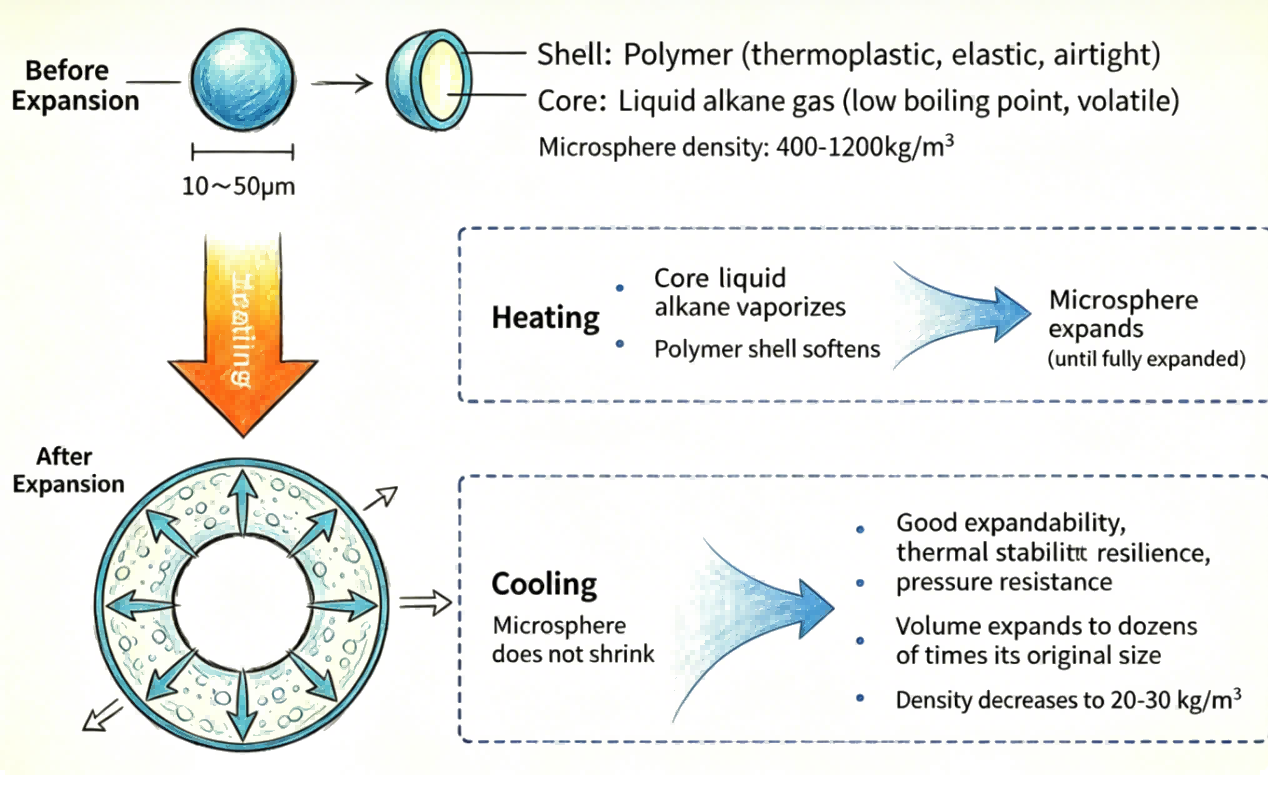
Aromatic vs. Aliphatic Isocyanates: The Material Decision
Material selection creates the largest yellowing difference before any additive is added. Aromatic systems such as MDI and TDI contain benzene rings that are inherently more prone to the color-forming oxidation pathway. Aliphatic systems such as HDI and IPDI lack that aromatic structure and therefore show substantially better resistance to UV-driven discoloration [1], [2].
| Property | Aromatic polyurethane | Aliphatic polyurethane |
|---|---|---|
| UV color stability | Moderate to poor in light colors | Substantially better, especially clear or white |
| Typical cost position | Lower | Higher |
| Common uses | Foam, soles, rollers, rigid panels | Clear coatings, exterior films, premium elastomers |
| Primary yellowing path | Aromatic amine/quinone oxidation | Slower photo-oxidation, generally yellow-resistant |
For an outdoor polyurethane part with a light color and no paint, aliphatic chemistry is often the lowest-risk choice. For cost-sensitive molded foam, elastomers, and parts that remain dark or protected, aromatic chemistry remains practical.
It is easy to read “aliphatic” as a universal answer, but most production foam and many cast parts stay on aromatic chemistry. What Is Spray Polyurethane Foam Composition And Application covers how those formulations are built and where aromatic chemistry remains the practical choice.
Formulation Levers That Reduce Yellowing
Formulation is the second control layer. Stabilizer packages generally attack two pathways: UV-initiated oxidation is slowed by UV absorbers, while radical-chain oxidation during thermal processing is slowed by antioxidants.
- UV absorbers reduce the amount of harmful UV energy reaching the aromatic reaction products.
- Hindered amine light stabilizers, or HALS, interrupt radical propagation rather than simply blocking light.
- Phenolic or phosphite antioxidants protect raw materials and molded parts during elevated process temperatures.
- Lower-free-monomer prepolymers reduce residual aromatic amine formation and can improve initial color.
These additives do not erase yellowing after it has appeared. They slow the formation of color bodies. Loading is formulation-specific, and over-dosing can affect cure speed, hardness, or tensile properties. A stabilizer package should be validated on production-sized shots, not only in laboratory plaques [2].
Color stability and dimensional stability often drift together when a formula moves off ratio. Causes Of Shrinkage In Polyurethane Foam How To Control It covers how to trace those drift conditions before they become defect patterns.
Process-Side Controls That Protect Color
Even a well-stabilized formula can yellow on an overheated or poorly metered line. The equipment must keep temperature, ratio, and mixing conditions inside the window the formulation was designed for.
- Metering accuracy matters because a persistent B-side overfeed or underfeed changes the isocyanate index and leaves unreacted species that can darken with heat.
- Temperature control matters because overheated tanks, hoses, and mixing heads accelerate amine oxidation before and during cure.
- Moisture exclusion matters because water reacts with isocyanate to form urea and aromatic amines, a route that can contribute to both bubbles and yellowing.
- Clean mixing and recirculation matter because dead spots and partially reacted residues carry color bodies into fresh material.
In white sole lines, an intermittent B-side overfeed can produce parts that look acceptable at demolding but yellow later at the flex groove during storage. When ratio verification is moved to every shift and worn metering components are corrected, that color complaint often disappears without changing the formulation.
For cast roller stock and large elastomer parts, cure schedule is central to both mechanical performance and long-term color. How Polyurethane Rollers Are Made From Casting To Cure covers how casting and cure steps interact in production.
Process question? If ratio verification or temperature control is the suspected trigger, a short email to a process engineer is usually faster than a formulation rework. Contact Info@chinahaifeng.com or WhatsApp +86 13566296633.
How to Diagnose and Prevent Yellowing
Start with the appearance pattern instead of assuming it is always UV damage. Is the yellowing uniform or patchy? Is it only on the exposed face, or does it extend through the cross-section? Is it present at demolding, or does it develop during storage?
- Uniform amber after storage usually points to heat and oxidation; check demold temperature, post-cure, and tank/hose temperature history.
- Uneven yellowing on one side usually points to end-use UV exposure; check the stabilizer package or consider an aliphatic system.
- Yellowing at edges, weld lines, or pour start areas often points to material residence, residue in the mix head, or poor purging.
A useful field test is to cut a yellowed part and observe the cross-section. Surface-only color points to photo-oxidation. Color through the full thickness points to heat history or formulation imbalance.
A practical prevention checklist for light-color production includes:
- Confirm ratio at the mix head, not only from the display value.
- Record tank, hose, and mold temperatures after long idle periods.
- Purge and clean mixing heads after color changes and downtime.
- Keep moisture-sensitive raw materials sealed with dry air or nitrogen.
- Run accelerated UV tests on light-color products before approving each lot.
Need a process-side fix? When yellowing persists after the obvious formulation options, the issue usually moves to metering, thermal history, or raw-material handling. Haifeng process engineers work on these equipment-level variables daily. Email Info@chinahaifeng.com or WhatsApp +86 13566296633 with the part type, isocyanate system, process temperature range, and a photo of the yellowed part. That information normally points to the next test or adjustment within one review.
Frequently Asked Questions About Polyurethane Yellowing
What is the main cause of polyurethane turning yellow?
The main cause is oxidation of aromatic reaction products, especially after exposure to UV, heat, or oxygen. MDI- and TDI-based systems are more prone to that pathway than aliphatic systems [1], [2].
Can polyurethane yellowing be reversed?
Generally no. The color bodies are chemical products. Cleaning or light surface sanding may remove a thin yellowed layer, but they do not restore the original formulation. Prevention has to be built into material selection and processing.
Does using an aliphatic isocyanate guarantee no yellowing?
No. Aliphatic systems resist UV-driven yellowing much better, but they can still discolor under severe heat, contamination, or prolonged oxidation. They reduce risk; they do not remove all aging effects.
Will more UV absorber solve yellowing in an aromatic system?
Not fully. A UV absorber slows one pathway, but heat and oxygen continue other oxidation routes. A balanced stabilizer package and correct processing conditions are usually needed together.
Are yellowing and physical degradation the same thing?
Not always. A part can yellow while retaining most of its mechanical properties, and a part can degrade physically without obvious yellowing. Yellowing is a visible symptom that should be investigated, not treated as the only indicator of material health.
References
[1] M. Szycher, Szycher’s Handbook of Polyurethanes, 2nd ed. Boca Raton, FL, USA: CRC Press, 2012.
[2] G. Oertel, Polyurethane Handbook, 2nd ed. Munich, Germany: Hanser Publishers, 1994.
[3] ASTM D1148-13, Standard Test Method for Rubber Deterioration—Discoloration from Ultraviolet (UV) or UV/Visible Radiation of Light-Colored Surfaces, ASTM International, West Conshohocken, PA, USA, 2013.
[4] ISO 4892-2:2013, Plastics—Methods of Exposure to Laboratory Light Sources—Part 2: Xenon-Arc Lamps, ISO, Geneva, Switzerland, 2013.
[5] J. F. Rabek, Polymer Photodegradation: Mechanisms and Experimental Methods, London, UK: Chapman & Hall, 1995.
If you’re interested, check out these related articles:
How Polyurethane Rollers Are Made From Casting To Cure
How To Calculate Shot Weight In Polyurethane
SRIM Explained Structural Reaction Injection Molding Basics
The Role Of Rise Time In Polyurethane Foaming
What Is Semi Rigid Polyurethane Foam





