
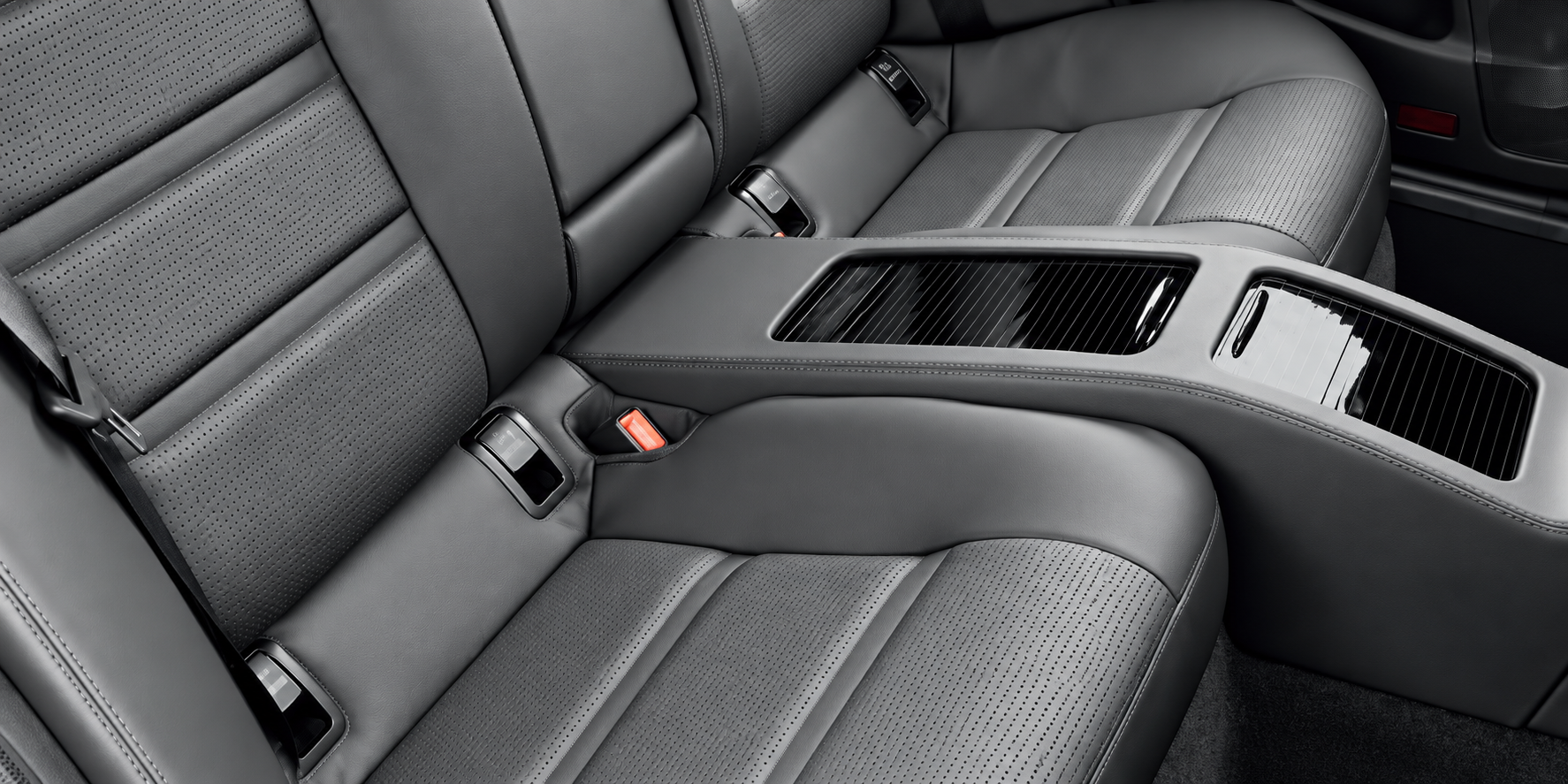
Automotive Dual-Hardness Seat PU Foaming Solution
Plan zoned automotive seat foaming around the required cushion construction, material feeds and mold sequence.
Precision Multi-Stream Solutions for Dual-Hardness Automotive Seating
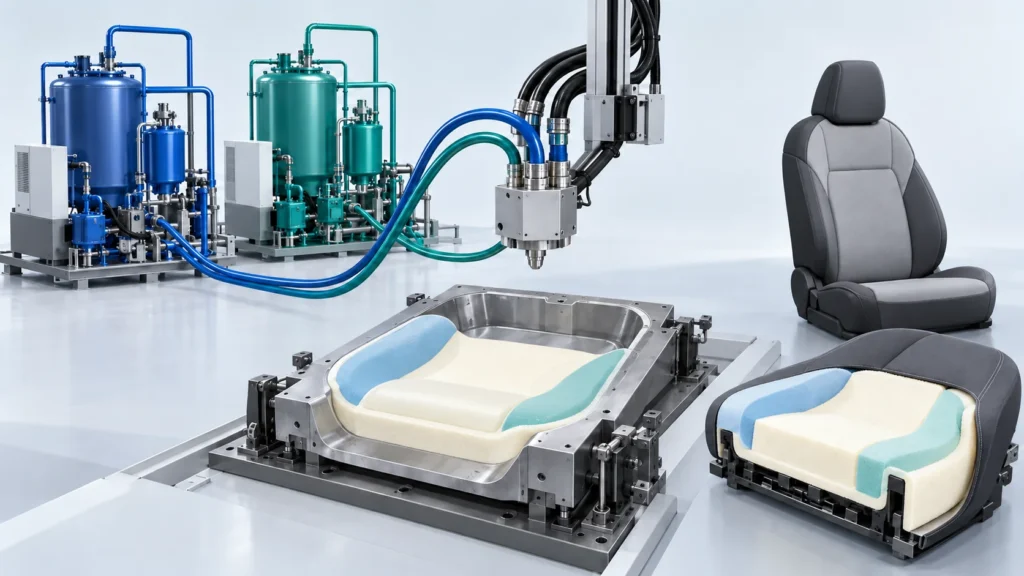
Dual-hardness seating requires a defined soft center, supporting zones and a validated interface between them. Haifeng reviews multi-stream metering, mixing-head routing and dispensing with the selected formulations and seat tooling. Density, indentation response and seating comfort are separate quantities; changing a recipe does not by itself establish all three.
Defined supply scope
Define the material circuits, mixing-head arrangement, robot, mold carriers and downstream cell-opening operations individually. Single-shot or sequential dispensing and the zone transition must be established by process trials.
Inputs for process selection
Seat drawings, zone map, formulations, shot mass, mold count, target shift output and existing carousel or press interfaces.
Equipment scope, retained factory interfaces and acceptance are agreed for the selected material and part. Define the material circuits, mixing-head arrangement, robot, mold carriers and downstream cell-opening operations individually. Single-shot or sequential dispensing and the zone transition must be established by process trials.
Automotive Dual-Hardness Seat PU Foaming Workflow
Define the seating zones → Condition and route the feeds → Dispense and mold → Condition and inspect. Define preparation, filling, cure and output timing separately for the selected configuration.
Define the seating zones
Map the cushion zones and acceptance requirements to the drawing and material data.
Condition and route the feeds
Review each polyol and isocyanate circuit, temperature control and recipe selection.
Dispense and mold
Validate the dispensing path, sequence and interface formation in representative tooling.
Engineering Specifications & Technical Parameters
Existing configuration and test references. Equipment settings, material results and finished-assembly results are separate; apply each value only to its documented configuration and conditions.
| Technical Parameter | Standard Specification / Value | Engineering Context & Verification |
|---|---|---|
| Target Application | Driver/Passenger Seat Cushions & Backrests | Ergonomic dual-hardness seating |
| Material Matrix | High-Resilience (HR) Flexible Polyurethane Foam | Multi-component MDI/TDI systems |
| Core Density Range | 45 – 65 kg/m³ (Standard 50–55 kg/m³) | Optimized comfort-to-mass ratio |
| Hardness Variation Range | Shore A 20 (Center) to Shore A 40 (Bolster) | In-mold seamless zone transition |
| Metering Output Capacity | 60 – 160 kg/min (Customizable) | Multi-stream high-pressure servo pumps |
| Demolding Cycle Time | 160 – 210 seconds (Standard 180 s) | High-throughput carousel operation |
| Ball Rebound Resilience | 65% – 75% | Verified via ISO 8307 ball rebound testing |
| Scope of Supply | Turnkey (Multi-Stream Skid, Robot, TCU + Carousel/Press) | Complete carousel or individual workcell |
Relevant Haifeng Equipment
Equipment references are selected by their documented process. Main metering, auxiliary supply and alternative routes are not a single standard package.
Process controls and application checks
Evaluate these functions with the selected material, tooling and production brief. Finished-part results require their own acceptance evidence.
Zone-specific process planning
Match feed selection and dispensing to the seat design rather than assuming one recipe serves every zone.
Defined switching sequence
Validate head routing, pressure behavior and the material transition before committing to a production configuration.
Part-level verification
Evaluate density, hardness, rebound and vibration response using their own specified tests.
Related Projects
These are related application references. Compare the actual material, process and delivered modules; reported project figures are not acceptance results for another line.
Frequently Asked Questions
Engineering and purchasing questions about this polyurethane production route.
Are density and seating hardness interchangeable?
Does the description establish single-shot zoned molding?
What information is needed for a preliminary configuration?
Discuss Your Automotive Production Project
Share the following with your production brief: Seat drawings, zone map, formulations, shot mass, mold count, target shift output and existing carousel or press interfaces. Our team will reply within one business day. Once requirements are clear, we provide a preliminary proposal within two business days.


