
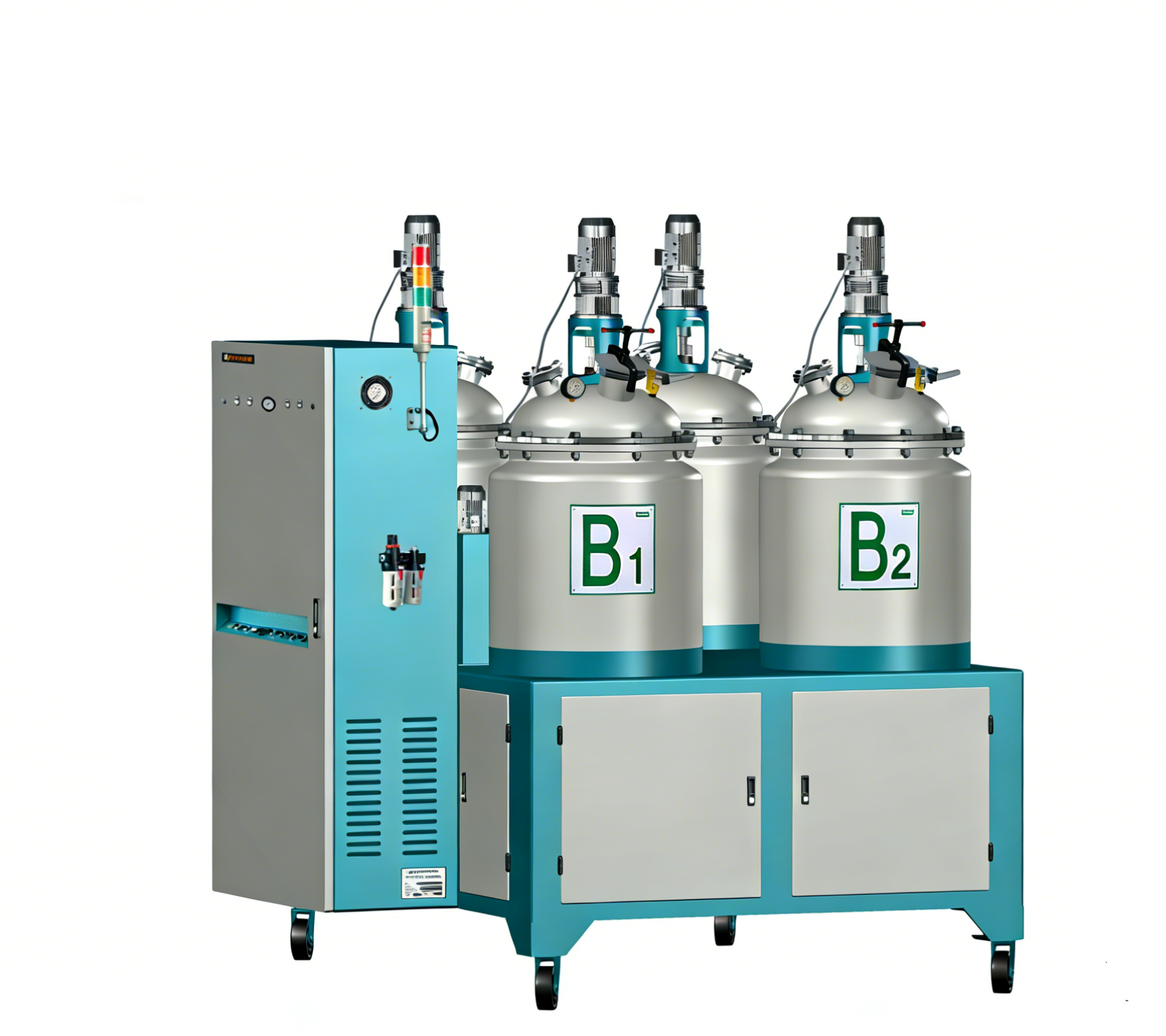
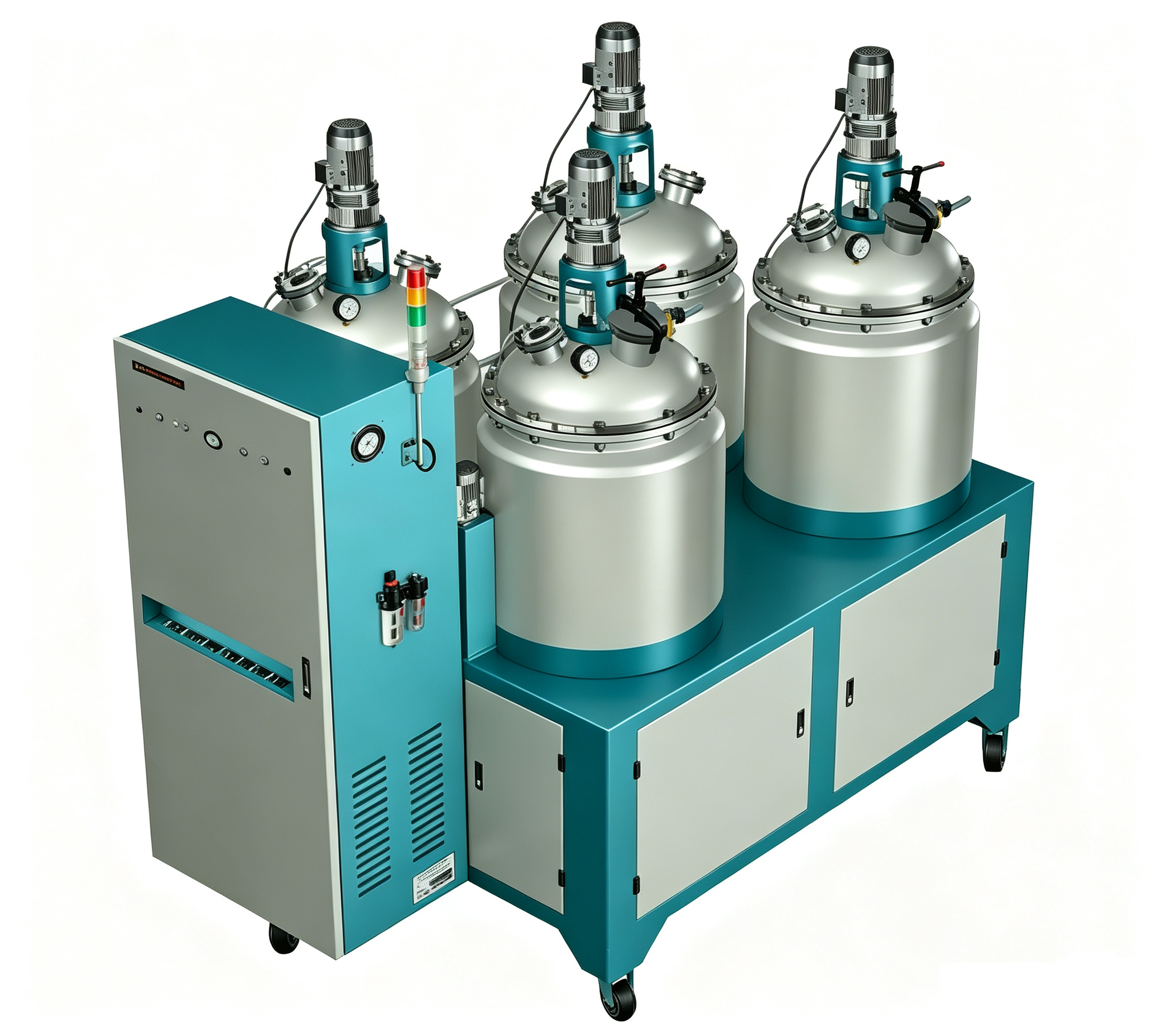

Low-Pressure PU Foaming Machine | Shoe Soles
Low-pressure PU metering and casting equipment for shoe soles, with material preparation, recipe control and configurable mold-filling interfaces. Spraying requires a separately specified spray assembly.
Discharge Flow Rate
26–120 g/s
Mix Ratio (A:B)
A:B = 1:1–1:4
Metering Accuracy Reference
±0.3%
Tank Capacity
120 L per tank
Product Overview and Selection
Review the application, material or workpiece, tooling interfaces and selected equipment scope before choosing a configuration.
The HF-LPM-2A1B-F low-pressure PU unit supports the selected single- or dual-color footwear sole configuration. Listed references include 26–120 g/s discharge, 120 L per tank and ±0.3% metering accuracy under the agreed conditions.
Coordinate polyol and isocyanate conditioning, degassing, mechanical mixing, recipe control and mold filling with the intended sole. A dedicated spray assembly, additional feed circuits and robotic handling are configured separately where required.
Sole layers, material components and color count are specified independently. Review molds, reaction time, changeovers and existing-line interfaces before defining output and staffing. Finished hardness, bonding, appearance and other properties follow the selected material and product tests.
Need a quote for your footwear equipment?
Request a QuoteProduction Workflow
Material Preparation
Condition polyol and isocyanate in their specified material circuits. Coordinate the listed 120 L-per-tank arrangement and vacuum preparation with the approved PU system.
Recipe and Metering Setup
Set the material ratio, temperatures and discharge flow for the selected sole and formulation. The listed discharge reference is 26–120 g/s; define the ratio basis and metering acceptance conditions for the order.
Mold Filling and Cure
Mechanically mix the materials and cast into the selected sole mold. Filling, venting and cure follow the formulation and tooling. Spraying is a separate configuration requiring the dedicated spray assembly.
Demolding and Head Cleaning
Demold and inspect the sole, then follow the configured head-cleaning and changeover sequence. Trimming, handling and operator tasks depend on the supplied line arrangement.
Technical Specifications
The table describes the listed HF-LPM-2A1B-F configuration. A dedicated spray assembly, additional material circuits and automated handling are specified separately. Component count, tank count, colors and sole layers are separate selection items.
| Technical Parameter | HF-LPM-2A1B-F |
|---|---|
| Discharge Flow Rate | 26–120 g/s |
| Raw Material Mix Ratio | A:B = 1:1–1:4 |
| Tank Volume | 120 L per tank |
| Total Motor Power | 10 kW |
| Mixing Head Rotational Speed | Casting mode: 4,000–10,000 rpm (adjustable)Spraying mode: 2,000–8,000 rpm (adjustable, with optional dedicated spray gun assembly) |
| Metering Accuracy | ±0.3% |
| Core Features | Configured casting, color change, metering and optional spraying; finished properties validated for the product |
| Warranty Period | 1 year whole machine warranty |
| Net Weight | 1,000 kg |
| Certifications | Confirm applicable documents for the quoted configuration |
| Brand Name | Haifeng |
Equipment Functions and Configuration
Functions and options are selected for the material, tooling and tasks included in the order.
Configured Color and Material Changes
Select material circuits, color dosing and the cleaning sequence for the intended sole range. Changeover time depends on the materials, residual-color limits and supplied arrangement.
Material Preparation and Mold Filling
Coordinate vacuum preparation, mechanical mixing, mold venting and the filling sequence with the formulation. Evaluate residual gas and finished cross-section quality in representative mold trials.
Sole Sample Validation
Evaluate hardness, abrasion, flexing, bonding and appearance on representative soles made with the selected PU system. These finished-product properties are not established by the machine specification alone.
Recipe Control and Cleaning
Touchscreen recipe settings support metering and production setup. Define the head-cleaning procedure, operator checks and training for the supplied configuration.
Equipment and Tooling Selection
Review shot size, discharge range, mold filling, utilities and maintenance access together. Compare investment and operating costs for the actual equipment and tooling package.
Specified Automation Interfaces
Conveyor, mold-handling and robotic pouring interfaces can be configured for the agreed layout. Staffing, loading, inspection and intervention points are defined for the supplied line.
Need help selecting your equipment configuration?
Share your product, materials, tooling and production target. Equipment scope and commissioning requirements are agreed for each project.
Compare Footwear Equipment
Browse footwear equipment by material, tooling and task. These listings do not establish compatibility or the supplied production-line scope.
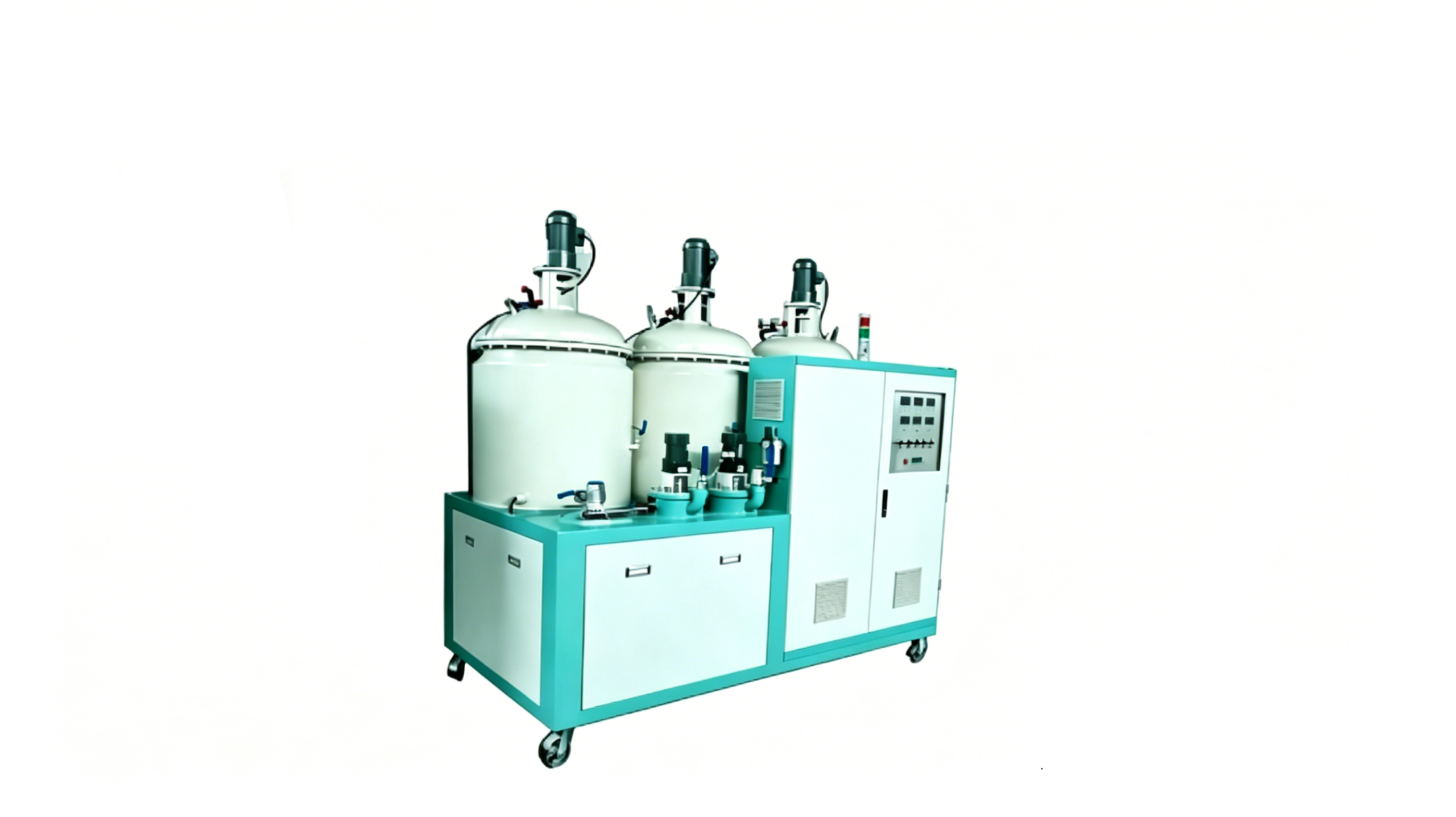
Low-Pressure PU Foaming Machine | Shoe Production
Metering, Mixing & Resin Casting Equipment
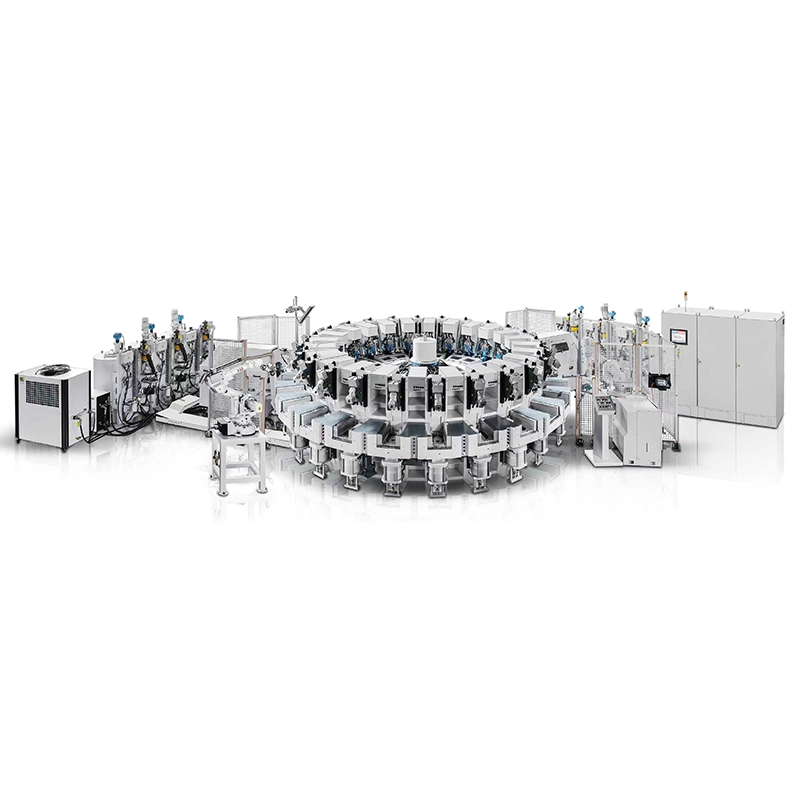
PU/PU Rotary Injection Machine | Multicolor Soles
Footwear Injection & Forming Equipment
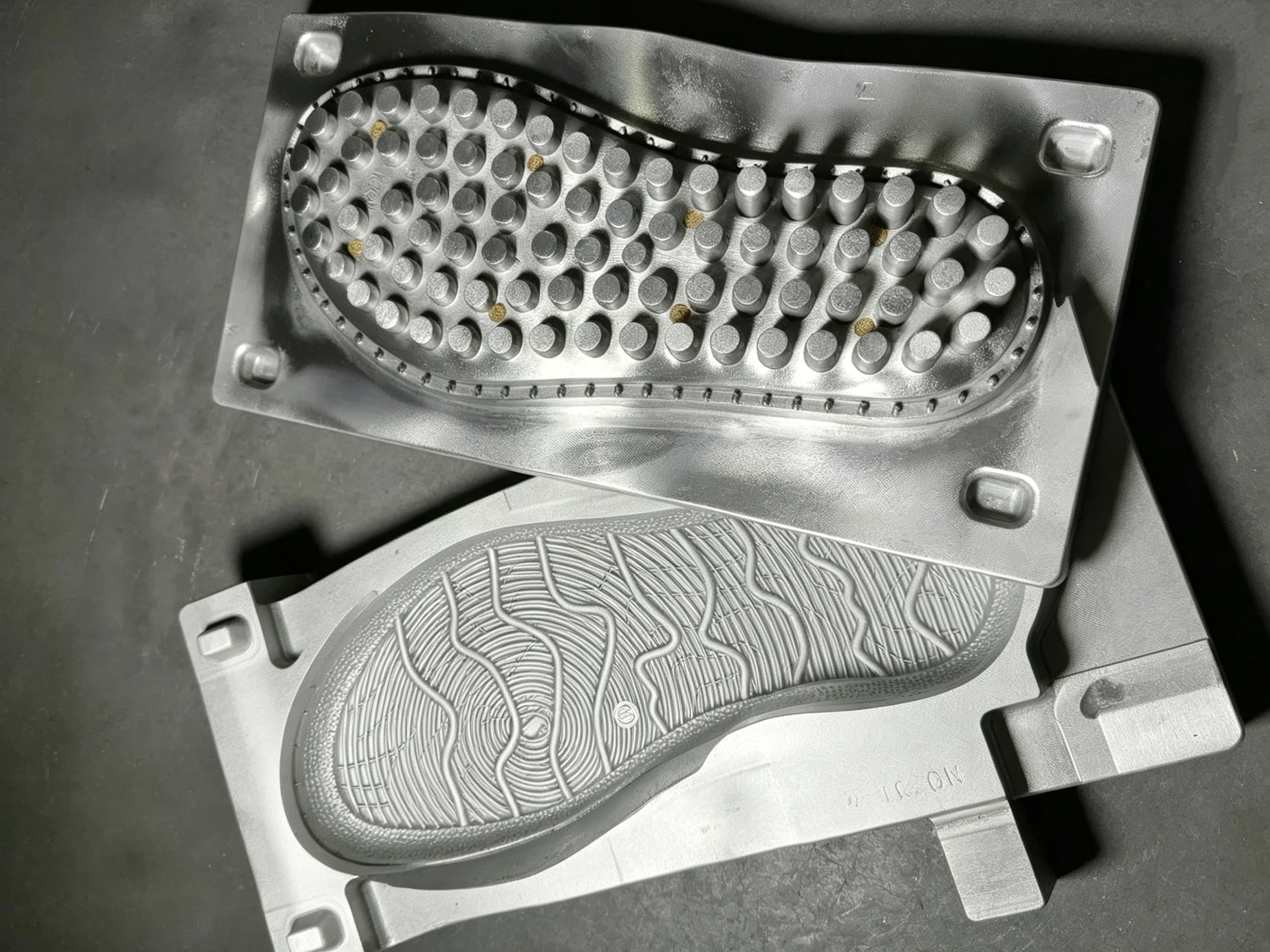
PU Sole Pouring Mold | Footwear
Footwear Moulds
Equipment Selection FAQ
How is this machine configured for a shoe sole?
Is spraying included in the described casting configuration?
What determines the color-change time?
How should the listed flow, ratio and accuracy be used?
Can it connect to automated mold handling?
How are installation and training arranged?
Ready to discuss your project?
Contact Our Team


