
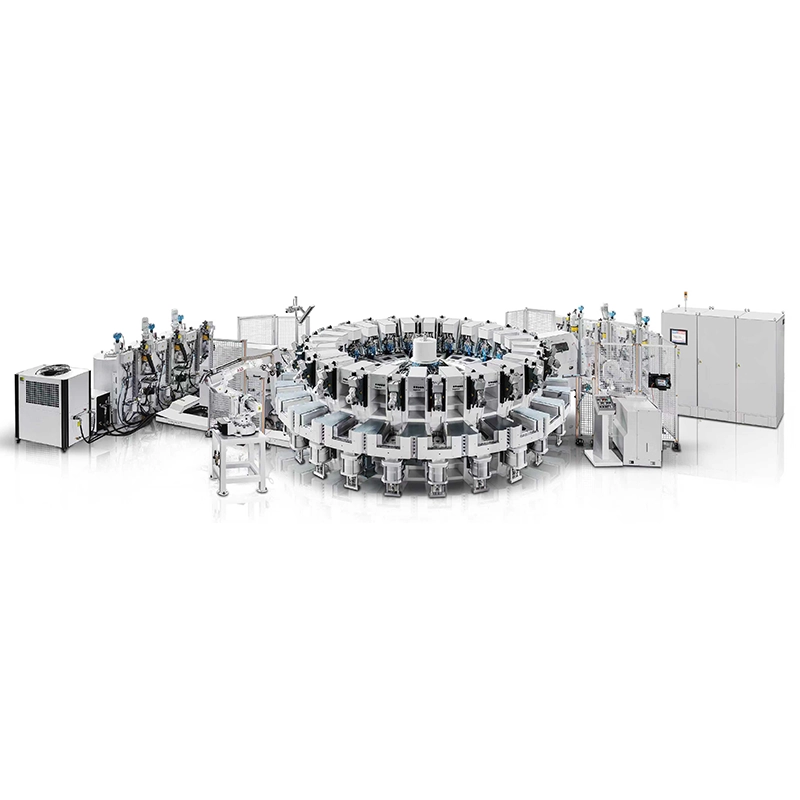
PU/PU Rotary Injection Machine | Multicolor Soles
Compare the JG116/PUPU rotary shoe injection machine for multicolor PU soles, with 18, 24 or 30 stations, a 20–60 g/s feed rate and configuration guidance.
Product, Application and Configuration
Compare the JG116/PUPU rotary shoe injection machine for multicolor PU soles, with 18, 24 or 30 stations, a 20–60 g/s feed rate and configuration guidance.
Product Overview
The JG116/PUPU is a PU PU rotary direct injection machine for multicolor, single-density or dual-density polyurethane soles. It combines metering and mixing with material circulation, temperature control and independent color dosing. Station options are 18, 24 or 30. Selection starts with the sole layers and formulation: density, color and raw-material component count describe different requirements and need separate specification. Match the material delivery system and mold sequence to the intended sole before setting the production target.
Applications
- Multicolor PU sole projects.
- Single-density and dual-density polyurethane sole structures.
- Product development from a single-density sole to a defined dual-density design.
Existing formulations and molds require a compatibility review before reuse. Finished-sole performance depends on the material system, construction and product testing.
Configuration and Selection
Define each sole layer's material system, target density, weight and color. Review the required metering circuits, mixing ratio and switching sequence against that specification. A dual-density product description does not establish how many material components or pigment circuits are needed.
Select stations by comparing molding dwell, indexing, loading and unloading for the same product. Include available floor space. More stations alone do not establish a proportional increase in output.
For formulation or color changes, define residue handling, cleaning, restart conditions and first-part approval. Check consecutive molded parts under agreed conditions to establish weight repeatability; no numerical repeatability value is specified here.
Discuss Your Project
Share a sole section drawing, formulation details, target density and weight for each layer, required colors and shift output. Include existing mold drawings to request a configuration and trial review.
Technical Specifications
Confirm the feed-rate measurement basis and stable operating range with the intended formulation. Clamping force, screw dimensions and the exact component/color configuration require technical confirmation.
| Technical Parameter | JG116/PUPU |
|---|---|
| Stations | 18, 24 or 30 |
| Mold frame dimensions | 200 × 400 mm or 200 × 430 mm |
| Feed rate | 20–60 g/s |
| Sole configurations | Multicolor single-density or dual-density PU soles |
| Color dosing | Independent color dosing; detailed configuration requires confirmation |
Key Features
Review these functions against the selected material, tooling and operating scope.
Metering and mixing
Metering and mixing for PU material delivery.
Material conditioning
Circulation filtration, insulation and temperature control for material conditioning.
Independent color dosing
Independent color dosing for multicolor production configurations.
Rotary station options
A choice of 18, 24 or 30 rotary stations.
Mold frame options
Two listed mold frame sizes for initial tooling review.


