
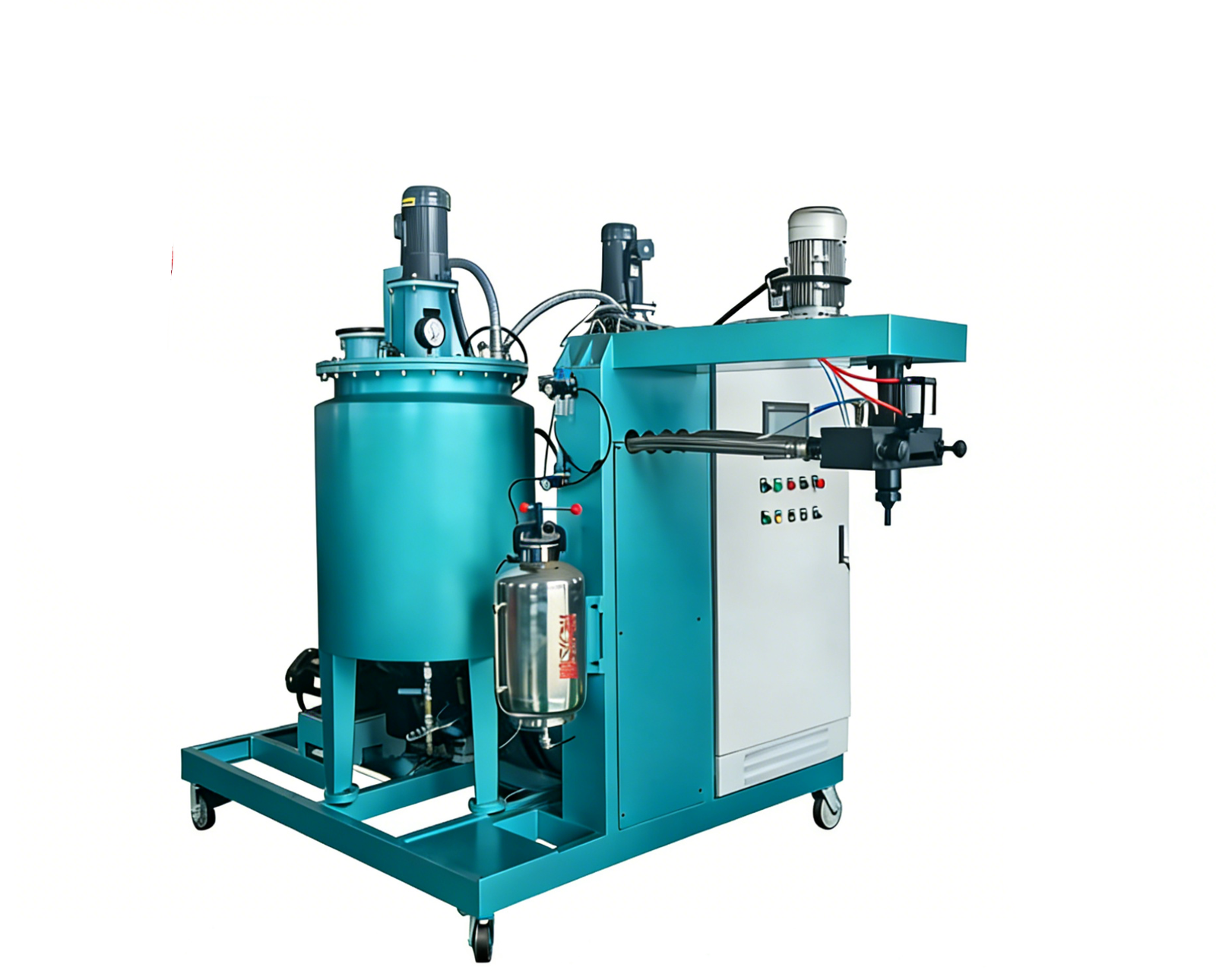
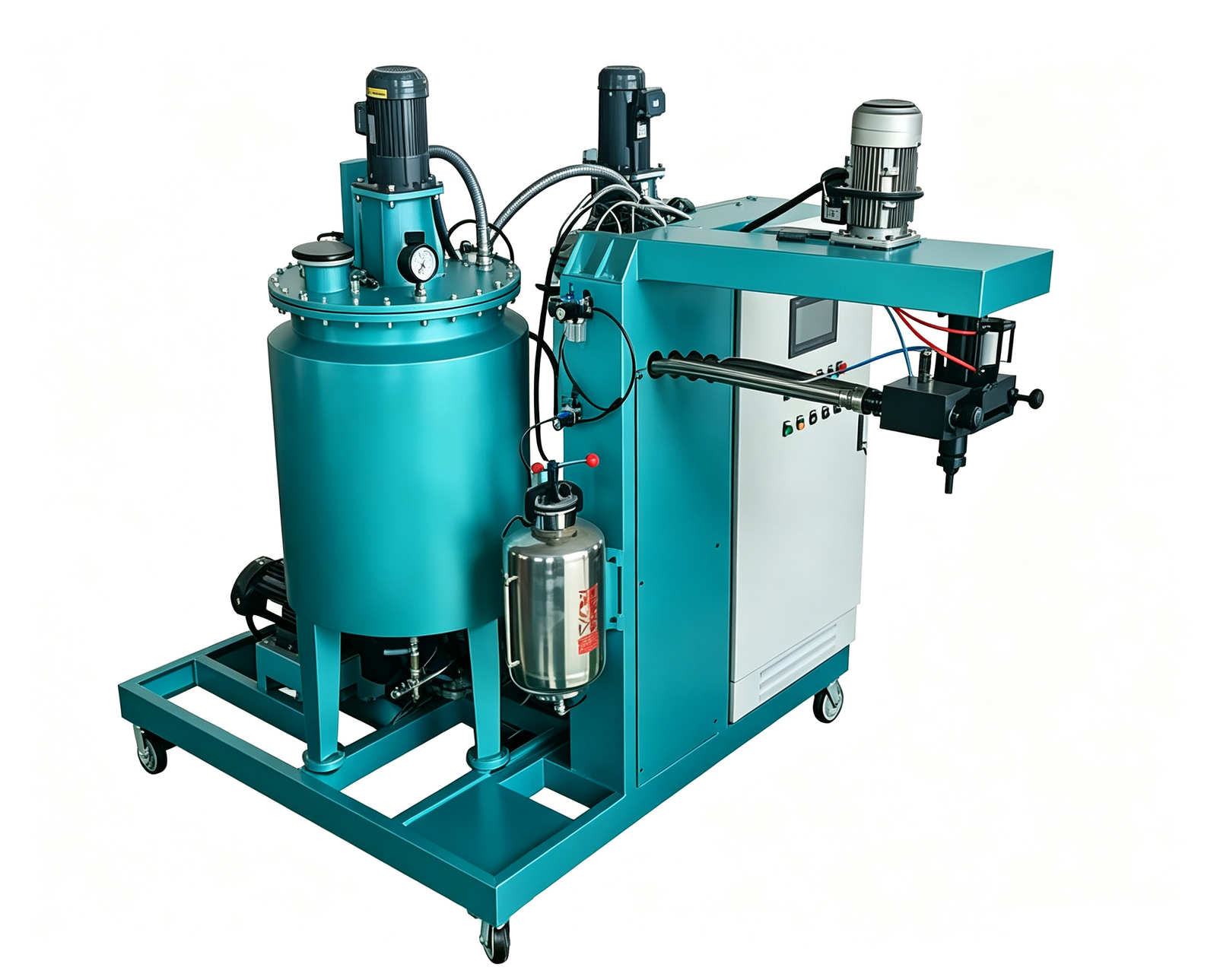
Elastomer Casting Machine | Printing Rollers
A PU elastomer casting machine for producing polyurethane printing roller coverings. Specify the configuration around the material system, roller dimensions and batch requirements.
Pouring Rate
50~1000 g/s
Metering Accuracy
≤ ±0.3% full range
Vacuum Defoaming
≤ -0.095 MPa
Mixing Head Speed
7,000‑11,000 r/min
Product Overview
Printing roller production calls for material and process choices matched to ink contact, roller specifications and batch changeovers.
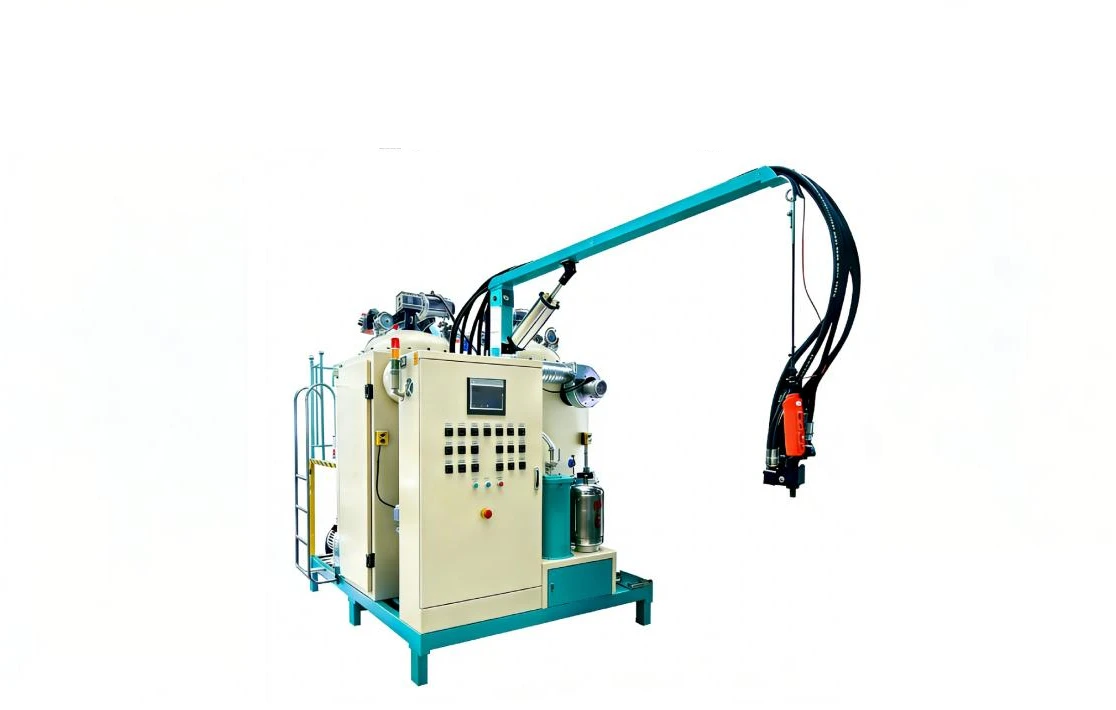
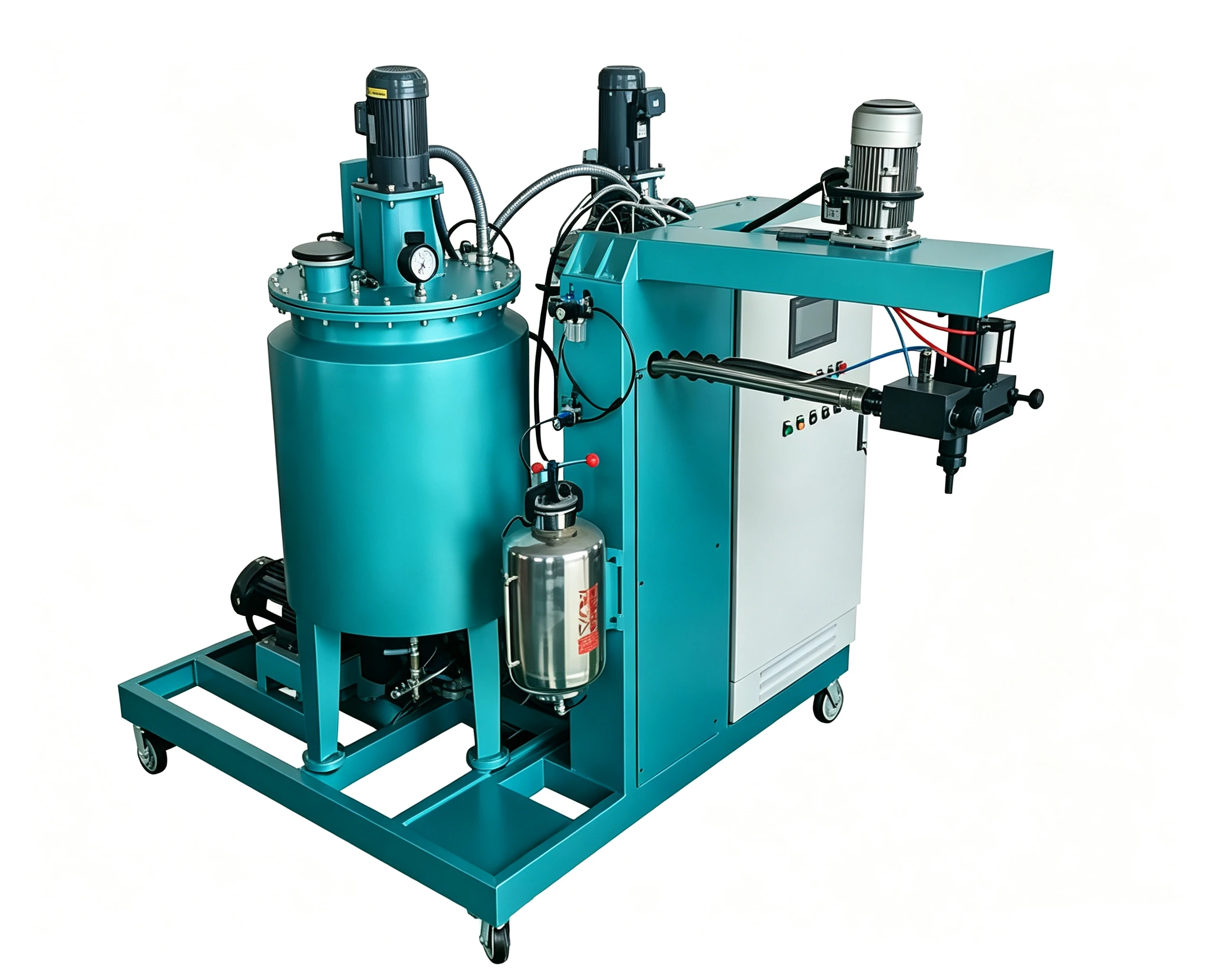
This PU elastomer casting machine is specially designed for producing polyurethane printing roller coverings for offset, gravure, flexo and UV printing. It features a 2A2B two-component configuration with a color paste tank, a pouring rate of 50–1000 g/s, a raw material ratio of MOCA at 100:9–12 and BDO at 100:3–6, a tank capacity of 150/220 L, and a mixing head speed of 7000–11000 r/min. High-precision metering pumps achieve ≤±0.3% dynamic full-range accuracy, ensuring repeatable casting settings and uniform roller thickness and hardness. Vacuum defoaming down to ≤-0.095 MPa reduces entrained air, producing dense, pore-free roller coverings with smooth surfaces for consistent ink transfer. The color paste tank enables flexible color matching, and automatic circulation and air-purge cleaning assist changeovers between materials and colors. The intelligent control system dynamically adjusts pouring temperature and ratio in real time, ensuring consistent roller quality across every batch. The PLC controller supports multi-formula storage and optional remote network access for fast fault diagnosis. Applicable conformity documentation is confirmed for the quoted configuration. A one-year warranty is offered under the contract.
Production Workflow
Material Preparation & Temperature Setting
Load CPU prepolymer (Tank A, 30‑80°C) and chain extender MOCA/BDO (Tank B, 90‑115°C / 25‑50°C) with independent temperature control.
Recipe Selection & Chain Extender Choice
Select the stored recipe on the PLC touch screen and set the ratio and pouring rate for the approved formulation. Follow the agreed changeover procedure when changing material systems.
Vacuum Degassing & Precision Pouring
Vacuum degassing helps reduce entrained air. Pour the mixed PU elastomer into the prepared roller mold at the selected metering settings.
Curing, Demolding & Automatic Cleaning
Cure and demold the roller according to the material procedure. Follow the specified cleaning procedure and inspect the first piece after a material or color change.
Technical Specifications
Specifications are based on standard configurations. Custom tank sizes, color paste configurations, and chain extender adaptability available upon request.
| Technical Parameter | HF-CPUE-2A2B-Roller-Print |
|---|---|
| Pouring Rate | 50~1000 g/s |
| Raw Material Ratio | MOCA: 100:9~12; BDO: 100:3~6 |
| Tank Capacity | 150 / 220 L |
| Mixing Head Speed | 7000~11000 r/min |
| Dynamic Metering Accuracy | ≤±0.3% (Full range) |
| Tank Configuration | 2A2B two-component + color paste tank |
| Material Temperature Control | Tank A: 30~80℃; Tank B: MOCA(90~115℃)/BDO(25~50℃) |
| Vacuum Defoaming | Vacuum ≤-0.095MPa |
| Cleaning System | Automatic circulation + air purge cleaning |
| Power | 7.5~11 kW |
| Control System | PLC + touch screen + multi-formula storage |
| Applicable System | CPU Prepolymer + MOCA/BDO Chain Extender |
| Warranty | 1 year |
| Certifications | Confirm applicable documents for the quoted configuration |
Key Advantages
Six equipment and process features to consider when configuring a PU casting unit for printing rollers.
2A2B Configuration with Color Paste Tank
The listed configuration includes a color-paste tank for color adjustment. Confirm color-paste and additive compatibility with the selected formulation and roller application.
Dynamic High‑Precision Metering & Precise Temperature Control
Metering and temperature control support repeatable casting settings. Roller thickness, hardness and yield also depend on the formulation, mold, curing and finishing conditions.
Vacuum Degassing for Material Preparation
Vacuum degassing helps reduce entrained air before casting. Inspect finished rollers for voids and surface defects against the agreed criteria.
Automatic Cleaning for Material Changeovers
Automatic circulation and air purge assist cleaning between batches. Confirm the cleaning procedure and first-piece checks for each material or color change.
Versatile Printing Industry Compatibility
Printing-roller applications considered here include offset, gravure, flexo and UV printing. Confirm the selected polyurethane formulation against the ink, cleaning agents and service conditions for each roller.
MOCA and BDO Material System
MOCA and BDO require equipment settings and changeover procedures suited to the selected formulation. Roller properties depend on the complete material system and processing conditions.
Complete Your Production Line
The casting unit may be combined with auxiliary equipment for printing-roller production. Confirm the equipment, process interfaces and supply scope for each project.
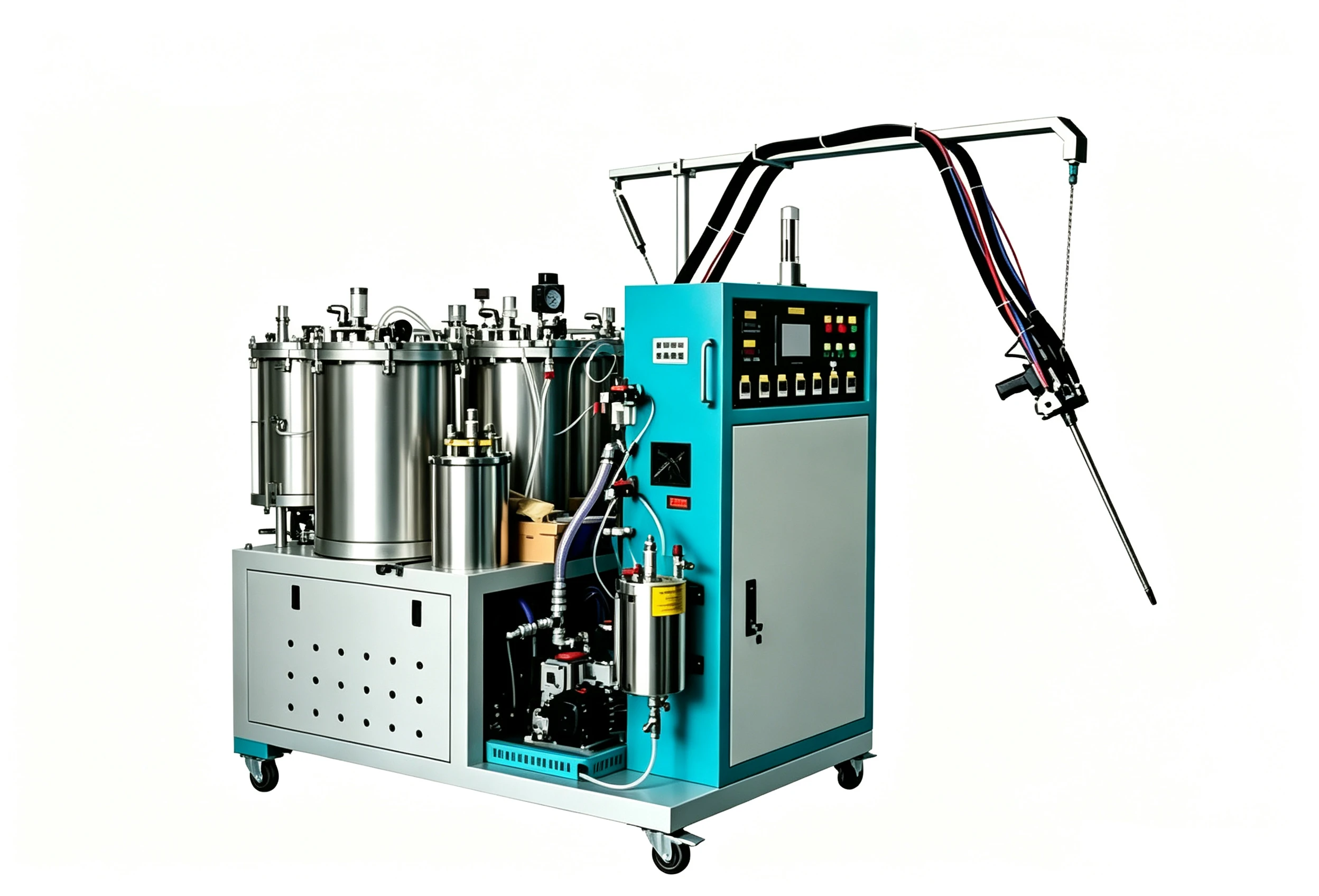
Epoxy Pouring Machine | Printing Rollers
Low Pressure Polyurethane Machine
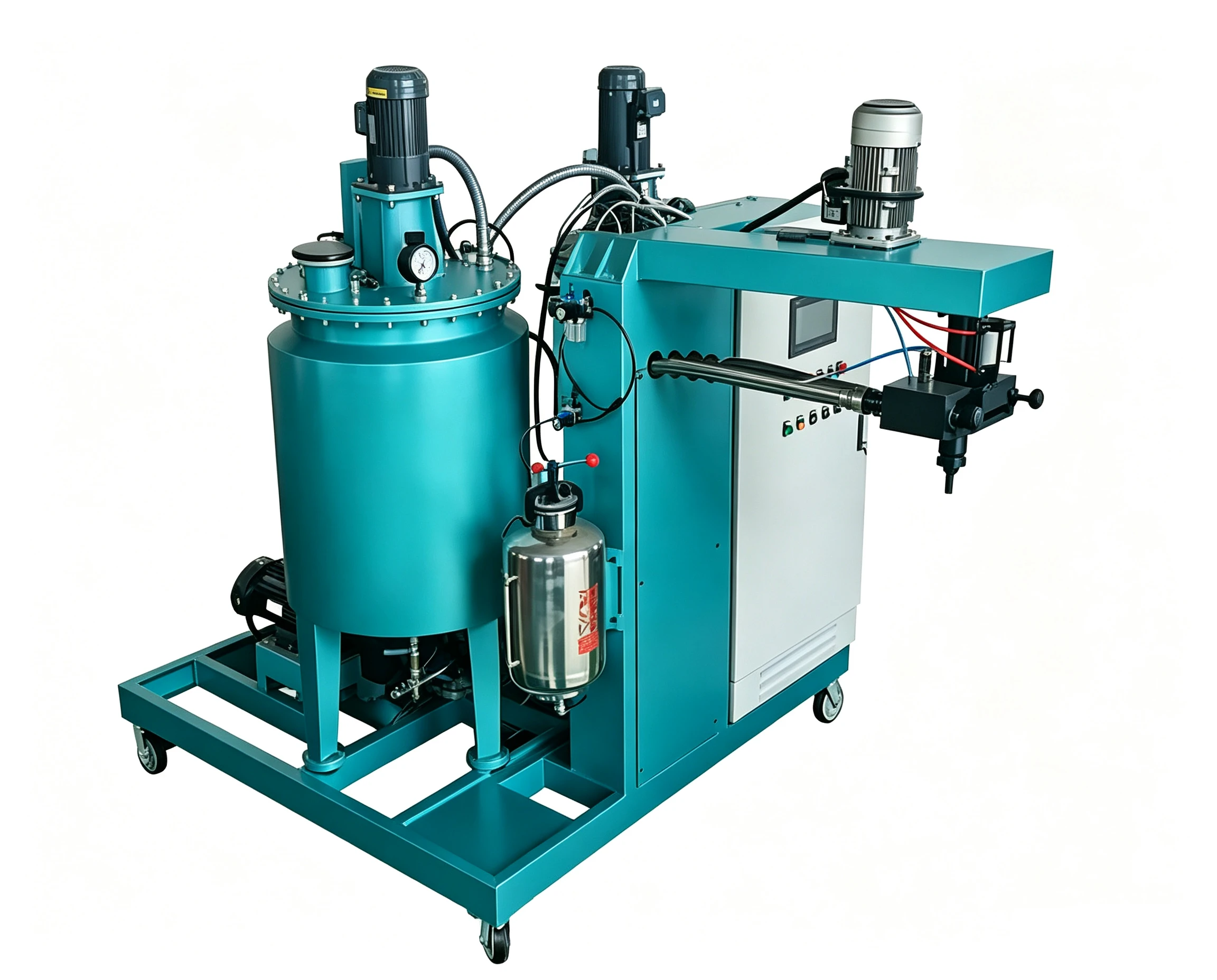
PU Elastomer Casting Machine | Hydraulic Seals
Polyurethane Machinery &Equipment
MC Nylon Casting Machine | Cast Nylon Parts
MC Nylon Casting Machines
PU Elastomer Casting Machine | Cold Rolling Rollers
Polyurethane Machinery &Equipment


