Polyurethane potting compounds rarely fail at the dispense head. They fail in the field months later, when thermal cycling has worked a crack into a solder joint, or when moisture found a path through an undetected void. The selection of a potting compound is therefore less about “which material glues electronics best” and more about matching the cured material’s behavior—hardness, shrinkage, thermal path, dielectric response—to the actual environment the assembly will face.

What Polyurethane Potting Compounds Do
A potting compound is a two-component reactive system dispensed into a housing to encapsulate a printed circuit board, transformer, sensor, connector, or coil. Unlike conformal coatings, which film over surfaces, potting fills volume. That volume does three jobs: it locks parts against vibration, blocks moisture and contaminant ingress, and conducts heat away from hot components when the formulation is filled for thermal transfer.
Polyurethane is chosen when the encapsulation needs to remain flexible, low-stress, and resistant to thermal shock. Compared with rigid epoxy, a soft urethane gel or elastomer grows and shrinks with temperature changes without transmitting the same level of stress to solder fillets and ceramic capacitors. Compared with silicone, many rigid and semi-rigid polyurethane grades offer better cut and abrasion resistance at a different cost position. The trade-off is usually temperature: general-purpose polyurethane potting is commonly specified for applications in a service window around -40°C to 120°C, while higher-temperature environments tend to move toward silicones or specialized epoxies.
Where Polyurethane Potting Compounds Are Used
Automotive electronics rely heavily on polyurethane potting. Engine-compartment sensors, ignition coils, transmission control modules, and pump controllers see constant vibration, oil mist, and wide temperature swings. A flexible polyurethane encapsulant cushions surface-mount components while sealing out the aggressive fluids that would otherwise degrade the substrate.
Power electronics represent a second major field. LED drivers, industrial power supplies, and motor drives often use thermally conductive polyurethane potting to manage component temperatures while keeping maintenance and rework possible. Systems that combine aluminum housings with filled polyurethane create a continuous thermal path from the board to the outer case without the brittleness that can crack under mechanical load.
Electrical infrastructure applications push polyurethane in a different direction. Transformer coils, chokes, and line filters benefit from the material’s ability to damp audible noise and vibration while providing electrical insulation. In outdoor junction boxes, rail signaling, and wind or solar power conversion equipment, the soft adhesion and movement capability of polyurethane reduce stress at the interface between the potting and the housing. Rail applications in particular value the balance of vibration damping and moisture sealing over years of outdoor service.

There is also a growing role for polyurethane in battery-related electronics: battery management system modules, current sensors, and cell-monitoring boards inside electric vehicles and stationary storage. The main requirement here is not extreme thermal conductivity but dimensional tolerance and low-stress protection of delicate surface-mount nodes. This is also the class of application in which processing defects matter most, because a single uncured pocket or trapped air bubble in a high-voltage board is a direct field-failure risk.
One educational example shows why the material choice must match the failure mode. A manufacturer encapsulating motor-drive boards in a rigid epoxy saw a repeating production failure: reflowed ceramic capacitors near the board edge cracked during thermal cycling from -40°C to 85°C. The failure was not the capacitor. The rigid epoxy had locked the assembly so tightly that the cycle stress concentrated on the ceramic body. Switching to a soft, low-hardness polyurethane potting reduced the stress transfer and eliminated the capacitor cracking. The lesson was not “polyurethane is better” but “the potting system must fail more slowly than the component it protects.”
Material Properties That Decide Application Fit
Hardness is usually the first filter, because it controls stress transfer and repairability. Flexible encapsulants are commonly specified from Shore A 40 to Shore A 80 when boards need cushioning and rework, while semi-rigid grades may run from Shore A 90 into Shore D territory where housings need mechanical robustness [2]. The test method matters: Shore A and Shore D are different scales, reported under the same family of durometer standards, and a number without the scale is close to useless in procurement.
Shore hardness is the most direct predictor of whether a cured potting shell protects delicate components or transmits destructive stress into them. <Shore A Vs Shore D Hardness In Polyurethane> covers the test methods and the practical selection range for soft through semi-rigid systems.
Shrinkage is the property that trips up new production lines because the harm is visible only after housing fill. Cured polyurethane can pull away from housing walls or impose residual strain on components as it contracts. Flexible systems absorb some of this movement; rigid systems concentrate it. The formulation approach, filler loading, and cure profile all influence the final dimensional behavior.
Shrinkage in a fully filled enclosure behaves differently from shrinkage in a free-rise foam, but the same underlying cure exotherm and crosslink density logic applies. <Causes Of Shrinkage In Polyurethane Foam How To Control It> covers the mechanism and how to control it before it reaches the finished part.
Thermal conductivity is the main driver for filled polyurethane grades. Unfilled urethane systems are thermal insulators, while filled systems add ceramic or mineral fillers to move heat out of a housing. The steady-state comparison should use a common reference such as ASTM D5470 [3]; comparing two “3 W/m·K” products becomes meaningful only when the test conditions and filler loading basis are the same.
Electrical and environmental behavior round out the selection. Dielectric strength is routinely characterized under IEC 60243-1 [4]. Moisture resistance depends on immersion depth, temperature, and time; polyurethane generally handles intermittent humidity well, but permanent submersion demands careful grade selection because hydrolytic stability differs among polyester- and polyether-based systems. Flame retardancy is separate from the base urethane chemistry, and many electronics applications target UL 94 V-0 at a specified thickness [1].
Gel time and pot life determine whether a chosen formulation can survive the production process. Gel time is the moment usable flow ends in the mold or housing; pot life is the usable working time in the feed system. A system with a 3-minute gel time is irrelevant if the assembly station needs 8 minutes from first mix to final placement.
Processing Requirements for Reliable Potting
The material is only as good as the dispense system that prepares it. Polyurethane potting compounds are metered as two reactive components—commonly an isocyanate side and a resin side—and the ratio precision determines the cured network.
Temperature control is the first process variable. Component viscosity changes sharply with temperature, and cold resin changes the mixing ratio because the metering pump sees different fluid resistance. Preheating tanks and recirculating material before a run keeps viscosity within a narrow band. A metering unit that cannot hold temperature on both sides will show ratio drift that no downstream check can fully recover.
Vacuum degassing is the second variable specific to potting. Air dissolves in the liquid during handling or recirculation, and it comes out as bubbles during cure or under vacuum filling. For assemblies with tight component pitch, degassing followed by vacuum-chamber fill is the most reliable production path to eliminate voids around leads and under large packages. A system with degassing to -0.095 MPa is a useful reference for filled urethane processing.
Mix quality is where high-speed mixing heads matter. Polyurethane systems are much more ratio-sensitive than many operators assume; a deviation of one percentage point in the A/B ratio can shift the final hardness and gel profile enough to move a lot. The mixing head must produce a homogeneous blend throughout the shot, including the first few grams after the shot begins, or every start-of-run housing receives under-cured material.
Shot weight calculation closes the loop from design to dispensing. The cavity volume, the part geometry, and the desired fill height determine how much material must enter the housing in one stable shot.
The shot weight calculation determines whether the dispense cycle can deliver one continuous, fully mixed fill or falls back to stop-and-start pours that trap air. <How To Calculate Shot Weight In Polyurethane> covers the practical calculation and where the safety margin belongs.
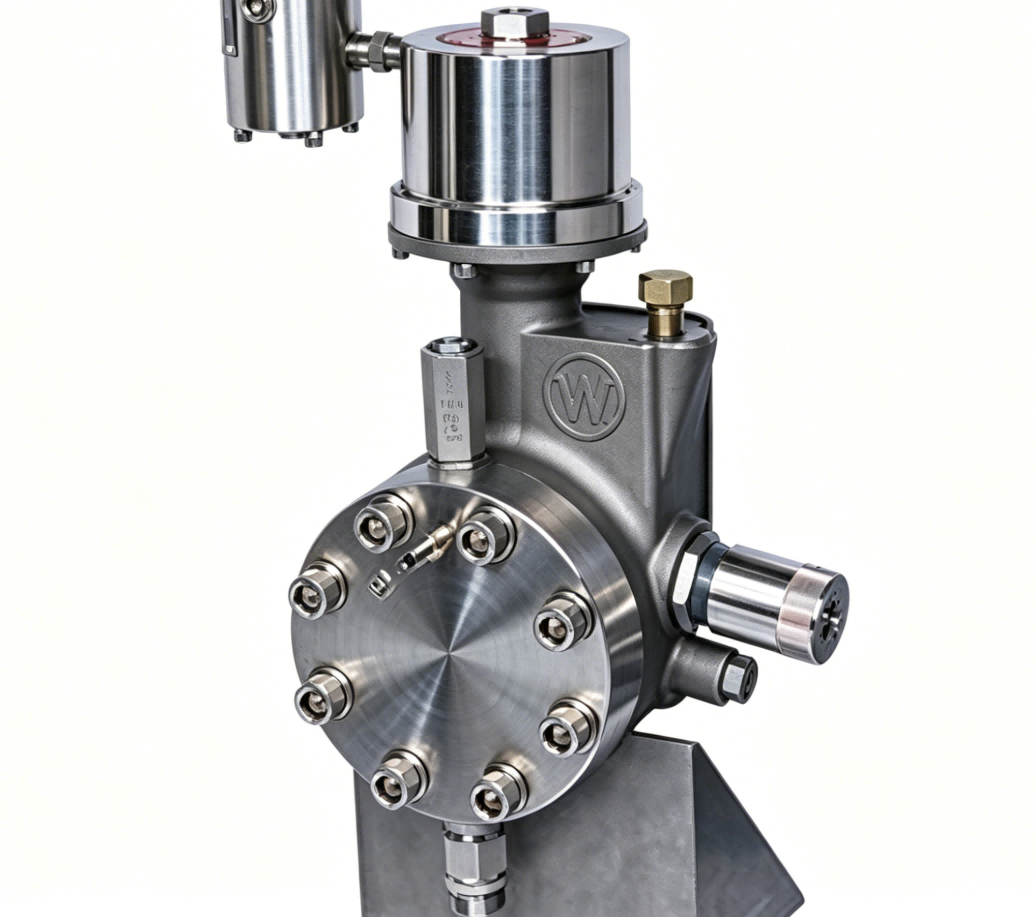
Line speed changes the trade-off. For low-volume potting of large junction boxes or transformer replacements, manual or semi-automatic delivery with a simple metering head may be enough. For high-volume EV harness modules and motor-drive boards, the line needs consistent shot-to-shot repeatability, quick material changeover, and closed-loop feedback on the metering pumps. The decision should be driven by the maximum shot volume, cycle time, and the number of different formulations that share one production station.
If your current line is moving from manual mixing into metered potting, the useful first step is to define the cavity volume, target cycle time, Shore requirement, and vacuum fill requirement as a single inquiry. Contact the process team at Info@chinahaifeng.com or WhatsApp:86 13566296633 with those four numbers, and the equipment recommendation will follow from them rather than from a catalog spec.
A Practical Selection Checklist
- State the worst-case temperature, vibration, and moisture exposure the assembly will actually see, not the nominal nameplate.
- Define the rework requirement. Soft Shore A grades allow repair; rigid Shore D grades usually do not.
- Confirm Shore scale and report thickness before comparing materials.
- Check whether the electrical design needs UL 94 V-0 at the final fill thickness, or only a value transferred from the datasheet.
- Specify thermal conductivity on a common test reference and ask about filler settling after storage.
- Test gel time and pot life on the actual feed system, not in a cup.
- Match the A/B metering accuracy and vacuum degassing capacity to the assembly’s void tolerance.
- Validate a small production run through thermal cycling and adhesion checks before committing to the formulation.

Talk to a Process Engineer
Potting compound selection usually fails when the material decision and the equipment decision are made separately. The formulation is purchased on a datasheet, the metering system is selected on a budget, and the mismatch appears later as voids, cracked terminations, or ratio drift. A cleaner path is to bring cavity data, cycle targets, and electrical requirements to one technical conversation that covers both the material behavior and the dispense line design.
Send the shot volume, cycle time, Shore range, and vacuum requirement to Info@chinahaifeng.com or WhatsApp:86 13566296633 for an equipment and process fit assessment.
FAQ
What is the difference between polyurethane potting and conformal coating?
Potting fills the entire housing and encapsulates components in volume, while a conformal coating applies a thin film over the surface. Potting provides better mechanical support, thermal mass, and moisture barrier, at higher weight and reduced accessibility.
Which Shore hardness is best for electronics potting?
It depends on the solder joints and housings. Board-level assemblies with surface-mount capacitors commonly start in the Shore A 40–80 range for low stress, while connectors or load-bearing blocks move into Shore D if the housing provides structural anchoring.
Is polyurethane potting waterproof?
Many polyurethane grades resist water and humidity well, and outdoor junction boxes commonly use polyurethane encapsulation. Permanent submersion requires specific polyether-based or hydrolysis-resistant grades tested for the actual depth and temperature.
How are bubbles removed from polyurethane potting?
Vacuum degassing before dispense and vacuum-assisted fill inside a chamber are the standard paths. Process temperature control and proper mixing head operation reduce bubble creation at the source.
How does thermal conductivity in potting compounds work?
Unfilled polyurethane potting is thermally insulating. Filled grades add mineral or ceramic particles to create a heat path from the board to the housing, with test data reported under standards such as ASTM D5470 [3].
References
[1] UL 94: Standard for Tests for Flammability of Plastic Materials for Parts in Devices and Appliances, Underwriters Laboratories.
[2] ASTM D2240: Standard Test Method for Rubber Property—Durometer Hardness, ASTM International.
[3] ASTM D5470: Standard Test Method for Thermal Transmission Properties of Thermally Conductive Electrical Insulation Materials, ASTM International.
[4] IEC 60243-1: Electric strength of insulating materials—Test methods—Part 1: Tests at power frequencies, International Electrotechnical Commission.
If you’re interested, check out these related articles:
Measuring Polyurethane Foam Resilience A Practical Test Guide
RRIM Vs RIM Which Process Suits Your Structural Part
The Role Of Rise Time In Polyurethane Foaming