Low- vs high-pressure metering for molded furniture cushions is not a simple ranking of one technology over the other. It is a decision about which failure modes your line can tolerate: ratio drift on small shots, cell-structure variation when viscosity moves, or lost cycle time from slow mold filling and long changeovers. For most automated cushion lines running standard flexible foam at high output, high-pressure impingement mixing is the safer default because it delivers the mix energy and shot-to-shot consistency those lines need. Low-pressure mechanical mixing still earns its place for short runs, filled or highly viscous systems, smaller shot weights, and shops where gentle mixing and easier maintenance matter more than peak throughput.
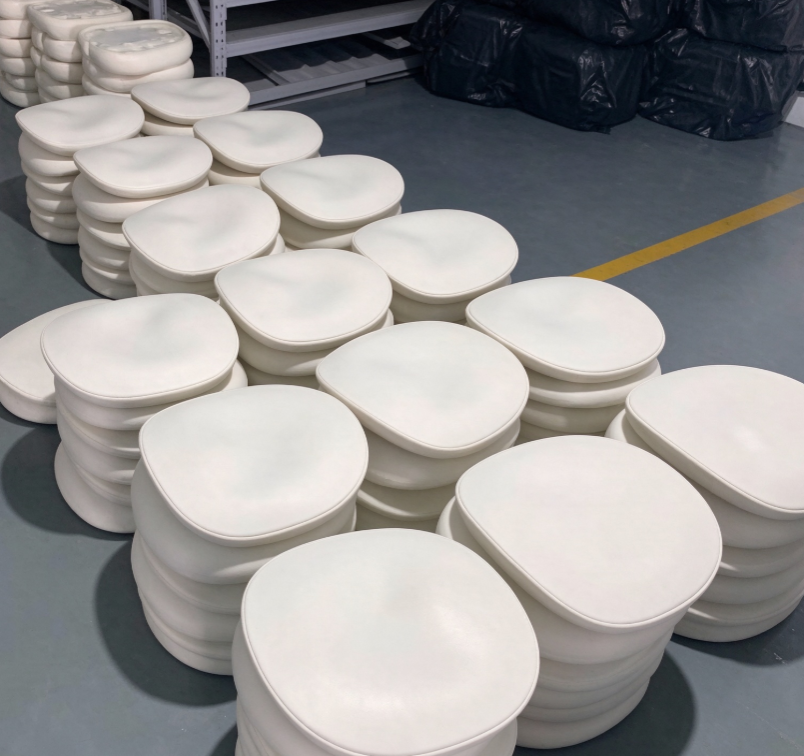
What the Pressure Label Changes at the Mixing Head
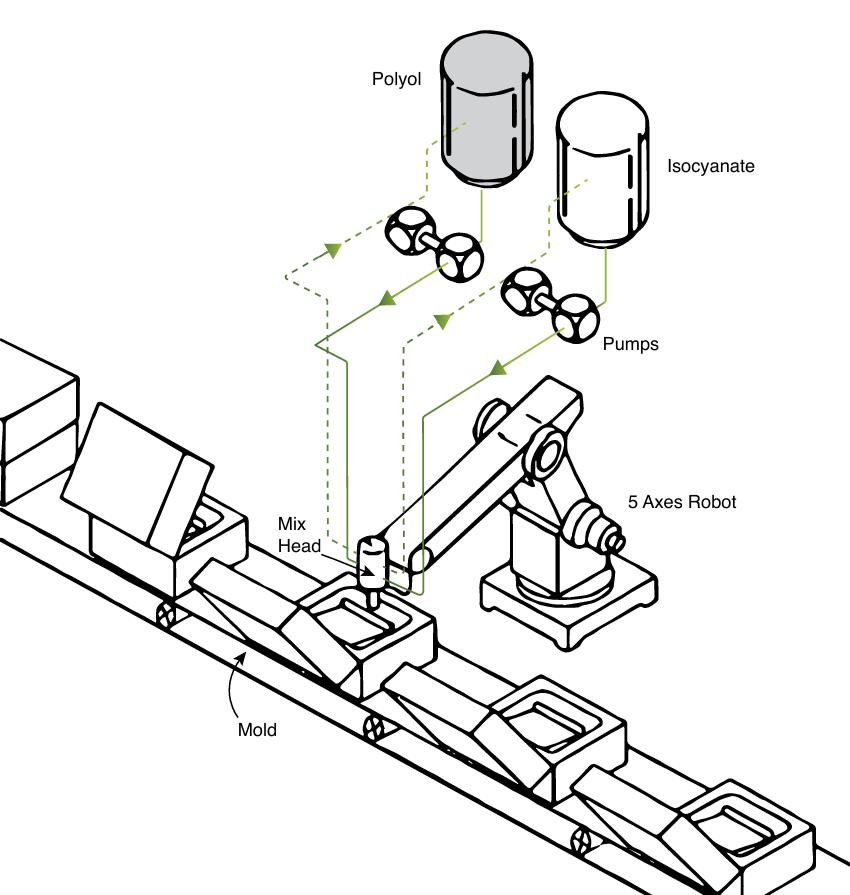
High-pressure metering gets its name from the impingement pressure created after the metering pumps, not from the mold cavity pressure. Two component streams hit each other at high velocity inside a small mixing chamber. The result is rapid mix initiation and a self-cleaning shot; the head does not need solvent flushing between every cushion pour. On Haifeng high-pressure systems, for example, the specified mixing pressure is commonly 10 to 18 MPa and dosing accuracy is rated at plus or minus 0.3% across the full dynamic range. The tradeoff is that impingement depends on both streams arriving at matched pressure and volume. If one side drifts, mixing energy changes before the operator sees a density problem.
Low-pressure metering pumps components into a motor-driven mixing chamber. Mix quality comes from rotor speed, chamber geometry, and residence time instead of stream collision. The equipment is mechanically simpler and usually lower in capital cost, but the head must be flushed or purged between shots. Mixed material can also harden in the chamber if a shot is missed or a formula gels faster than expected. For filled cushion systems that would wear impingement nozzles, low-pressure mixing can be gentler on the hardware, provided the rotor and chamber are designed for the filler load.
Shot Size, Ratio Accuracy and Density Control
Cushion molding is governed by shot weight more than by nominal machine output. A seat cushion shot may range from a few hundred grams to well over a kilogram depending on mold volume and target density. Metering accuracy matters most at the smallest and largest shots because the same percentage error creates a larger absolute mass error as shot size grows. A ratio error moves the reaction in a predictable direction: excess isocyanate can raise density and hardness while slowing gel, and excess polyol can leave a softer cushion with higher compression set and less resilience.
High-pressure lines hold ratio by running separate high-pressure pumps or axial piston metering with closed-loop control. Low-pressure lines can also reach high accuracy with servo gear pumps, but the calibration must be checked across the actual viscosity and backpressure window. A machine that holds plus or minus 0.3% on a medium shot may drift more on a very small cushion shot if the pump speed falls into a range where response slows. That is why acceptance testing should use the real part, not a convenient medium-size mold.
Shot size must be calculated from part volume, free-rise density and molded density before comparing pour rates. <How To Calculate Shot Weight In Polyurethane> covers the method for moving from mold geometry to a repeatable machine shot setting.
Viscosity, Fillers and Mold Filling Behavior
One technical factor that decides the pressure question is what else is in the liquid stream. High-pressure impingement works best when both components stay within a controlled viscosity window and the nozzles can atomize them cleanly. If the polyol side contains abrasive fillers, nozzle wear increases and pressure balance may fall off over time. A low-pressure mechanical head can often process high-viscosity or filled material with less immediate nozzle wear, but it may need a longer mix chamber and more careful air release. Most molded furniture cushions use unfilled or lightly filled flexible foam, so viscosity is rarely the main reason to choose low pressure. It becomes important when a plant moves into rebond, load-bearing, or specialty cushion materials.
Mold filling behavior is the second filter. A high-pressure shot fills the mold quickly, which reduces the chance of air traps and knit lines in complex cushion contours. The pour pattern and flow can be tuned to match the mold vents. A low-pressure shot may require a slower pour and more generous venting. If the mold has deep contours, inserts, or a fabric cover, the machine must pour smoothly as well as accurately. Filling speed can be just as important as mix quality for a cushion with a long flow path.
Production Speed, Maintenance and Changeover Tradeoffs
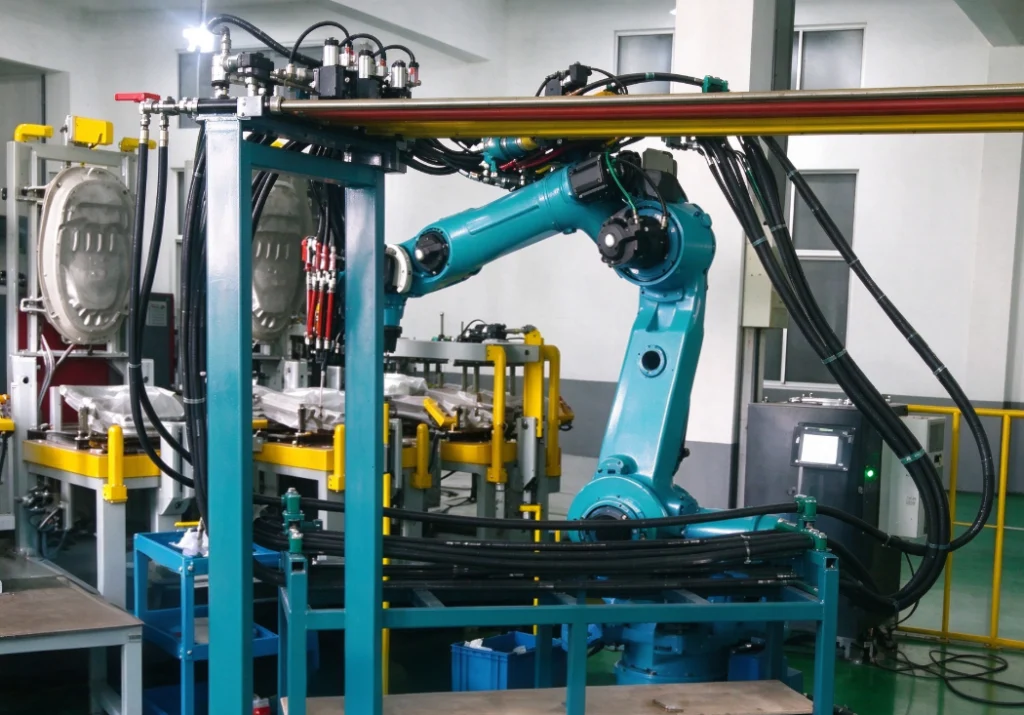
High-pressure mixing heads self-clean during the shot, so a line making many cushion styles or running continuously can start the next shot without solvent flushing. That advantage disappears if the line stops frequently, because recirculation, nozzle alignment, and high-pressure seal condition still demand discipline. A high-pressure machine is not automatically low-maintenance; it is low-maintenance only when the line runs steadily and operators follow the pressure-balance checks.
Low-pressure equipment has lower capital cost and is easier to service in many plants because the mixing chamber and drive are accessible. However, every shot leaves mixed material in the head. The head must be purged or flushed, and that cycle adds time and generates cleaning waste. For short runs or frequent grade changes, low-pressure may cost less overall because the pressure system is simpler and changeover is more forgiving. For high-throughput lines, flush time and the risk of a gelled head can erode output faster than the lower purchase price saves.
Whichever route you choose, the cushion’s final feel still has to be confirmed by measurement. Two lines with the same pressure label can produce different resilience if the mix energy, water level or release timing differs.
Once the cushion is molded, the equipment comparison is only part of the question. <Measuring Polyurethane Foam Resilience A Practical Test Guide> covers the test methods that show whether a metering setup is actually producing the required recovery and feel.
How to Specify a Cushion Line Without Overbuying
The useful comparison is not low pressure against high pressure in general. It is whether the machine you specify can hold ratio, fill the mold, and recover for the next shot within your part range and cycle time.
| Decision factor | High-pressure impingement | Low-pressure mechanical mixing | Do not choose when |
|---|---|---|---|
| Mix quality | High shear from impingement gives fine cells and fast nucleation | Rotor speed and chamber geometry control mix | High-pressure is wrong if filler or viscosity will erode nozzles or defeat pressure balance |
| Ratio accuracy | Plus or minus 0.3% full dynamic range on Haifeng high-pressure units | Accurate with servo metering, but drift risk grows with backpressure and wear | Low-pressure is wrong if you cannot measure small-shot drift on the actual cushion |
| Mold filling | Fast shot reduces air traps and knit lines | Slower pour may need more venting | High-pressure is wrong if the flow capacity does not fit the mold gate and venting design |
| Production rhythm | Self-cleaning shot supports continuous operation | Head flush adds time and cleaning waste | Low-pressure is wrong if flush time will push cycle time below target |
| Maintenance | Pressure balance, nozzle and seal checks are essential | Accessible head, but flush and purge demand operator attention | Choose based on the maintenance system your team will actually follow |
| Capital cost | Higher purchase price | Lower purchase price | Do not choose by price alone if the line runs high output for years |
This table is a decision filter, not a scorecard. Start from the cushion part, the mold layout, and the daily output target. A machine builder that supplies both low- and high-pressure metering systems should be able to show where each option breaks down against your formula and cycle time, rather than defending one technology.
Trial Plan and Acceptance Checks Before You Commit
Before ordering, define the trial in terms of outputs you can measure. Run the smallest cushion, the largest cushion, and the most complex contour. Record fill time, free-rise density, molded density, hardness, resilience and demold time. For high-pressure systems, also record component pressure balance before and after each shot. For low-pressure systems, record head flush time and the time from pour start to the next available shot.
Then measure dimensional stability after demolding and conditioning. Cushions that release too early can show shrinkage or distortion, and a machine that fills the mold quickly but does not let the part cure will not solve that problem. The trial should also include a short run at the expected production rhythm. One good shot proves accuracy; a hundred consecutive shots prove repeatability.
Mold fill and metering are only part of the dimensional result. <Causes Of Shrinkage In Polyurethane Foam How To Control It> covers the formulation, mold temperature and demold conditions that determine whether a cushion holds its shape after release.

Start From the Cushion Shot and Cycle Time
Send the polyol/isocyanate ratio window, the smallest and largest shot weight, the cycle time target, the mold layout, and whether the formulation contains fillers. Include the required density, hardness and resilience limits. That information lets us compare a low- vs high-pressure metering layout against your actual cooling, venting and output constraints.
Email: Info@chinahaifeng.com
WhatsApp: 86 13566296633
FAQ
Do I always need high-pressure metering for molded furniture cushions?
No. High-pressure impingement is usually better for high-output automated cushion lines with standard flexible foam, tight cycle times, and complex molds. Low-pressure mechanical mixing can be the better fit for short runs, frequent changeovers, smaller shots, or filled and highly viscous systems. The formulation and daily output target should decide the choice, not the pressure label alone.
Can a low-pressure machine hold ratio accuracy on small cushion shots?
It can, but only if the metering pumps, drive response and calibration are validated on the actual small shot. The risk is not the technology itself. It is that a low-pressure system may be specified from a medium-shot accuracy test and then drift when the pump speed falls into a less responsive range. Ask for witnessed accuracy tests at both the smallest and largest production shots.
Which option costs less to run over five years?
There is no fixed answer. Low-pressure equipment often has lower capital cost and simpler maintenance, but flush time, cleaning waste and cycle loss can add up on a high-output line. High-pressure equipment costs more initially, but self-cleaning shots and better high-volume stability can reduce operating cost when the line runs continuously. Compare purchase price, flush time, maintenance labor, scrap and lost output over the same five-year production plan.
What should I test before accepting a cushion line?
Test the smallest cushion, the largest cushion, and the most complex contour. Record fill time, free-rise density, molded density, hardness, resilience, demold time, and any pressure or flush data specific to the machine type. Then run a short consecutive-shot sequence at the expected production rhythm. One acceptable shot is not enough; accept the line only when the specified accuracy and part quality hold across the production shot range.
If you’re interested, check out these related articles:
The Role Of Rise Time In Polyurethane Foaming
How To Calculate Shot Weight In Polyurethane
What Is Semi Rigid Polyurethane Foam
SRIM Explained Structural Reaction Injection Molding Basics